
Reviewed · WORKSHOPS
Japanese Knife Skills & Tuna Don/Sushi Workshop in Tokyo
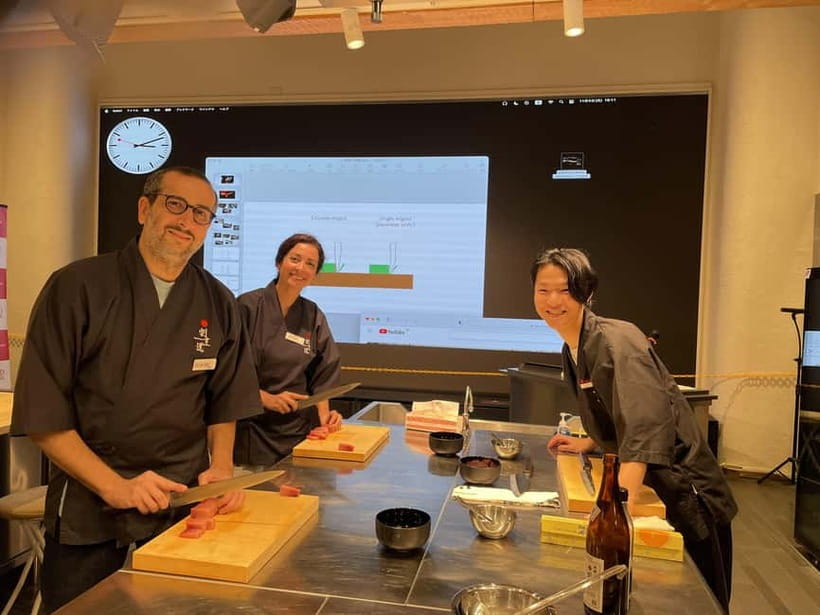
Sharp knives make Tokyo feel close. In this hands-on workshop, you learn Japanese knife sharpening and use it right away to slice tuna sashimi, then cook and eat your own meal. It’s practical, not just watching from the sidelines.
I really like the structure: you get a clear knife skills performance, then you take the knife and practice your cuts. And the food part is real work you can repeat later, because you’ll make either tuna zuke-don or a sushi set, with miso soup and sake.
One consideration: the fish used can change with availability, and it’s not suitable if you have food allergies. Also, you’ll want comfortable clothes since you’ll be standing and cooking for the full 2 hours.
In This Review
- Key Takeaways Before You Go
- Knife Skills in Tokyo: What You Actually Do
- Finding the Room: Samurai-Style Murals and a Practical Setup
- Japanese Knife Basics: Why Sharpening Is the Main Event
- Slicing Tuna Sashimi: The Moment You Get Hands-On
- Cooking Zuke-Don or Sushi Set: Turning Cuts Into a Meal
- Eating Like You Learned: Miso Soup, Sake, and Green Tea
- What You Take Home: Recipe, Certificate, and a Shop Discount
- Price and Value: What $127 Covers in Real Terms
- Who This Workshop Suits Best
- Should You Book This Knife Skills & Tuna Don Workshop?
- FAQ
- How long is the Japanese Knife Skills and Tuna Don/Sushi workshop?
- What will I make during the class?
- Is the workshop suitable for children?
- What languages are used for the instruction?
- What should I wear or bring?
- Is the fish always the same?
Key Takeaways Before You Go
- Small group (up to 8): more time with the instructor and better chances to get feedback on your slicing.
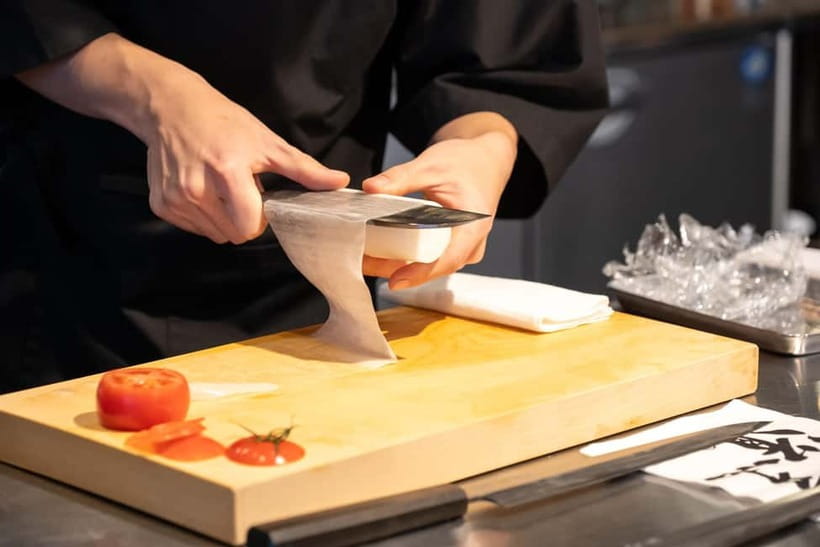
- Whetstone sharpening: you learn the technique and why a “sharp enough” knife matters for clean sashimi cuts.
- Hands-on sashimi slicing: you watch once, then do it yourself with fresh tuna.
- Cook + eat what you make: zuke-don or a 10-piece sushi set, plus miso soup, sake, and green tea.
- Take-home skills: you leave with a recipe and a participation certificate.
- Same-day shop perk: a 10% discount on items at the 1F Shop when you visit that day.
Knife Skills in Tokyo: What You Actually Do
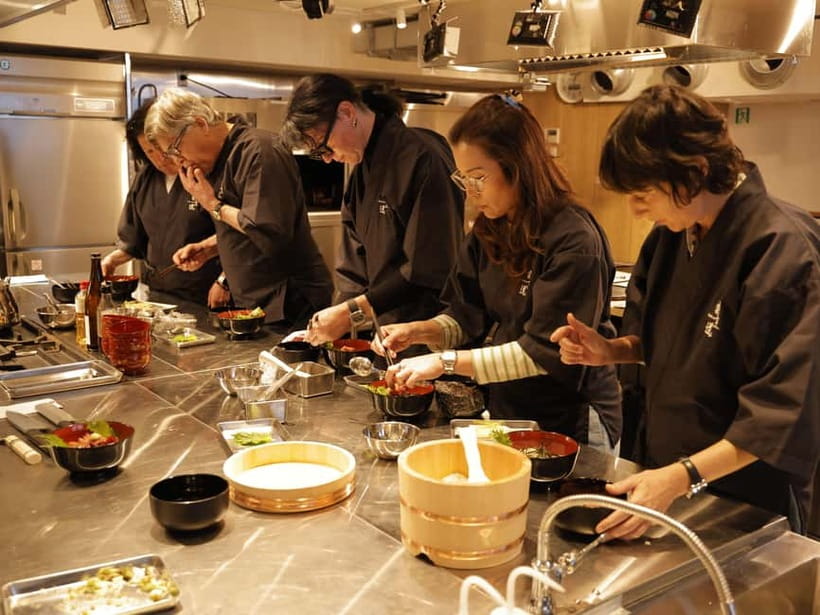
This class is set up for people who want more than food photography. In 2 hours, you’ll touch the whole chain: knife culture, sharpening, slicing, then turning that tuna into a bowl or a sushi set you can eat immediately.
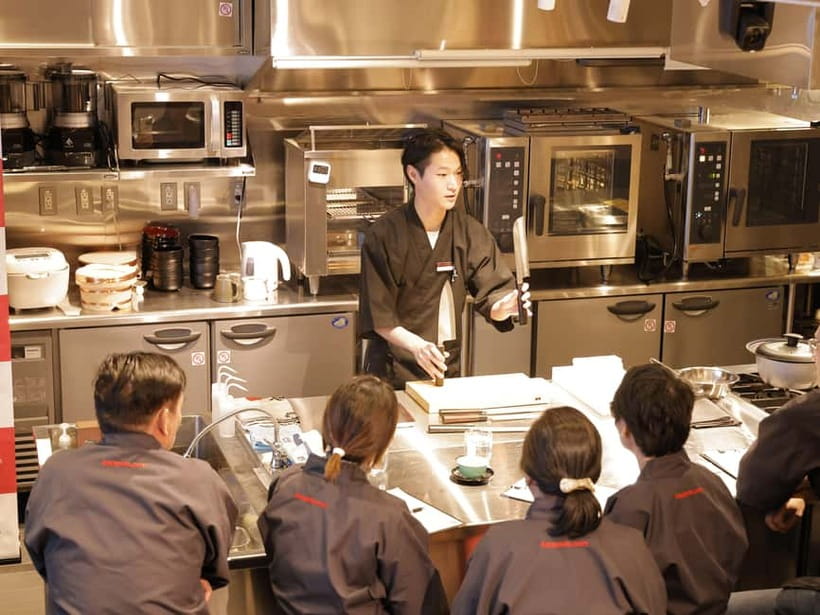
The learning style is straight to the point. You start with the idea of why Japanese blades are treated with so much respect. Then you get a live demonstration of sashimi cutting, followed by your own practice. After that comes the cooking portion, where your knife skills stop being theory and become part of the dish.
The class stays focused. You’re not trying to master every Japanese technique in one sitting. You’re learning the key moves you’ll need if you want to recreate zuke-don or sushi at home without guessing.
Readers also shortlisted these Tokyo bookings:
- Sushi Making Tokyo Roll and Authentic Japanese Sushi Class
★ 5.0 · 3,971 reviews - Tokyo: Roll and Authentic Sushi Making Class in Asakusa
★ 4.9 · 1,957 reviews - Tokyo Shinjuku Chopsticks Making Class
★ 5.0 · 1,763 reviews - Tokyo: Sushi Making Class in a Happi Coat near a Famous Spot
★ 4.9 · 1,377 reviews
Finding the Room: Samurai-Style Murals and a Practical Setup
The meeting point is simple to spot: a building with samurai-style murals painted on it. That matters because it keeps you from arriving to a generic storefront and wondering if you’re in the right place.
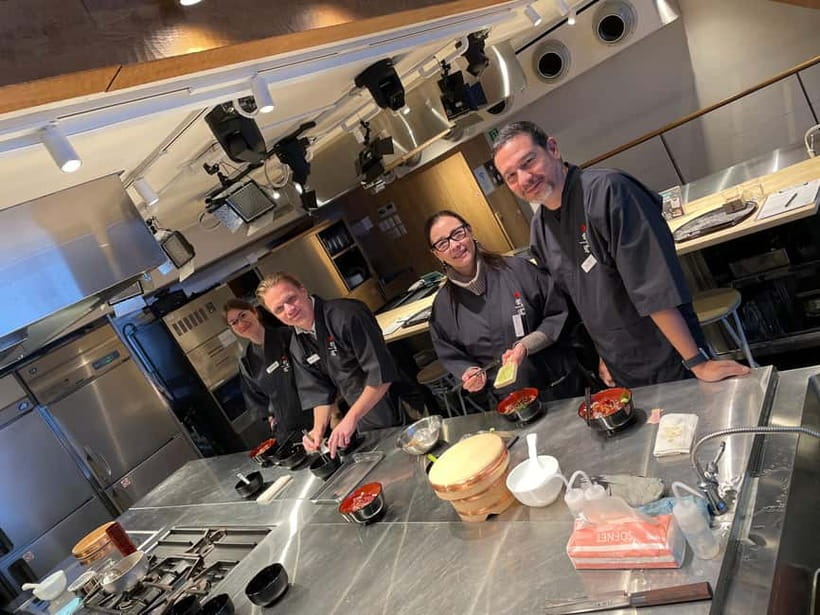
Once you’re there, the workshop vibe is tuned for learning. You’ll be given ingredients and tools, and the session has a rhythm: watch, practice, cook, eat. Since the group is limited to 8 participants, you’re less likely to feel rushed or lost while the instructor handles safety, pacing, and guidance.
Plan to wear comfortable clothes. You’ll be standing, handling utensils, and moving between prep steps, plus you might be in a formal costume for part of the experience (the class includes a Kappodo costume rental). That’s part of the fun, but comfort still wins.
Japanese Knife Basics: Why Sharpening Is the Main Event
The knife section is more than a history lesson. You learn how Japanese knives are made and you get instruction on sharpening techniques—specifically using a whetstone. This is one of the best parts of the workshop because it gives you a skill that travels with you.
Here’s the real value: with sushi and sashimi, cut quality is everything. A dull blade tears fish; a sharper edge slices cleanly. That clean cut shows up in texture right away, and it also affects how your tuna looks on the plate.
During the class, you’ll learn the sharpening workflow step by step. You’re guided through what to pay attention to so you don’t end up with a knife that looks sharp but doesn’t cut smoothly. Even if you don’t buy a knife immediately, you’ll understand what “sharp” means in practical terms.
If you’re the type who likes hands-on problem solving, this portion will feel satisfying. Sharpening is basically controlled repetition. You can feel improvement as you go.
Slicing Tuna Sashimi: The Moment You Get Hands-On
This is the part most people remember—because you’re not just watching a master cut tuna. You’ll watch a knife skills performance first, and then you’ll try your hand at slicing sashimi.
Why this matters: cutting sashimi is a skill that uses both the blade and your body mechanics. In a classroom where everyone is doing the same task, the instructor can correct angle, pressure, and control. That’s hard to get from videos.
The fish used will vary depending on availability, but the goal stays the same: learn how to slice cleanly and safely enough to work with fresh sashimi. You’ll feel the difference between average cutting and what a properly sharpened Japanese blade can do.
The small-group size helps here. If you’re learning to slice, you want feedback while your muscle memory is still forming. With a group capped at 8, you’re more likely to get that kind of attention.
Also, this is where the workshop stays true to its theme: knife skills are not an “extra.” They’re the center of the experience.
Cooking Zuke-Don or Sushi Set: Turning Cuts Into a Meal
After the sashimi practice, you shift into cooking. You’ll prepare either:
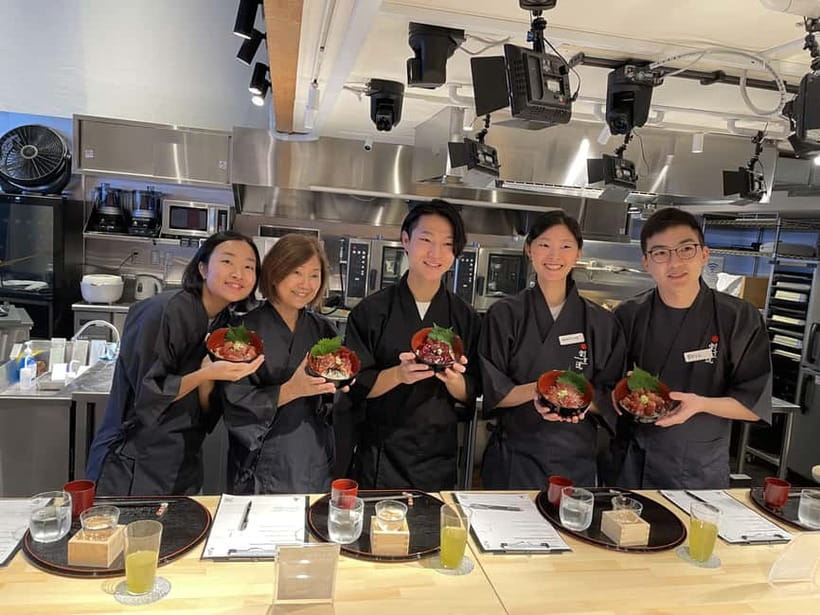
- Tuna zuke-don (a rice bowl topped with marinated sashimi), or
- A 10-piece sushi set
You’ll also learn the Japanese knife skills needed for the cooking steps. That’s a smart design. Many cooking classes teach recipes but ignore the knife component. Here, your earlier cutting practice has a payoff in the dish.
Zuke-don is a great choice if you want flavor with less fuss. Marinating sashimi and serving it over rice creates that classic comfort-meets-craft vibe. And if you’re learning, zuke-don is forgiving in a way that helps you focus on texture and timing instead of only presentation.
If you choose the sushi set path, you’ll be working through more steps tied to assembly. A 10-piece set gives you enough variety to understand how small changes in technique affect the final result.
Either way, you’ll have miso soup alongside your meal. That helps round out the flavors and keeps the whole experience feeling like an actual lunch, not a light snack after class.
- Tokyo: Shinjuku Food Tour (13 Dishes at 4 Local Eateries)★ 5.0 · 6,603 reviews
- Tokyo Mt Fuji 5th St & Hakone Cruise Bus Tour w/Bullet Train★ 4.4 · 5,024 reviews
- Flagship 2-Hours Official Street Go-Kart Tour – Tokyo Bay Shop★ 5.0 · 4,974 reviews
- From Tokyo: Mount Fuji Full-Day Sightseeing Trip★ 4.5 · 4,970 reviews
- Tokyo: Hop-On Hop-Off Sightseeing Bus Ticket★ 3.9 · 4,207 reviews
Eating Like You Learned: Miso Soup, Sake, and Green Tea
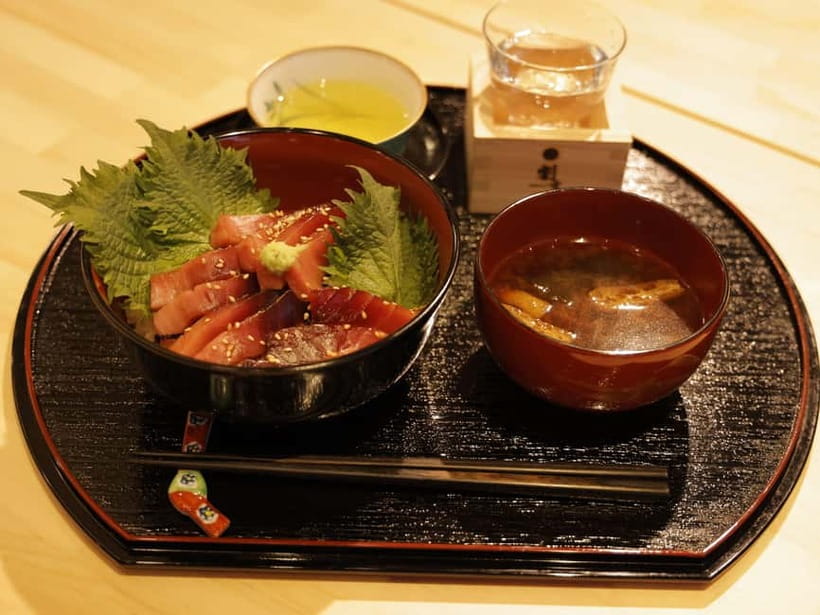
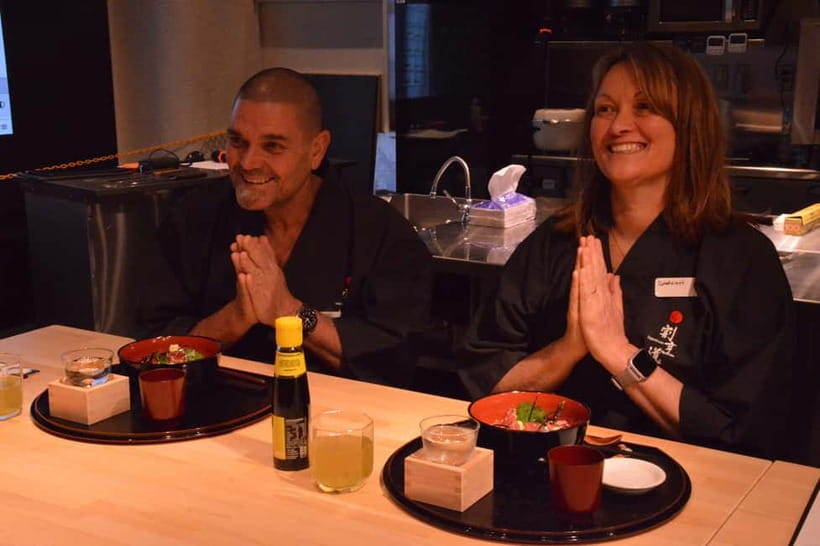
Once your bowl or sushi set is ready, you sit down and eat what you made. This isn’t “watch while someone else eats.” You get a real meal: miso soup plus your finished dish, and you’ll also taste sake. Green tea is included as well.
What I like about this part is how it closes the loop. You sharpen, you slice, you cook—and then you get to taste what all that effort produces. You’ll notice the difference between cuts that look good and cuts that actually taste clean.
The sake tasting is served in a relaxed way, so it’s more about enjoying the pairing than turning it into a formal lesson. If you don’t want to drink much, you can still enjoy the meal and treat the sake as a small part of the experience.
In short: the meal feels like Japan, but in a way you can understand because you did the work yourself.
What You Take Home: Recipe, Certificate, and a Shop Discount
The workshop is only 2 hours, so you might wonder what you actually leave with. The answer is: you get the tools to recreate the dish and the confidence to do it without freezing.
You’ll receive a participation certificate presentation and a recipe to recreate what you made at home. That recipe is the real bridge between Tokyo and your kitchen, because you’ll have a reference for the marinating approach and the way the bowl or sushi set comes together.
There’s also a 10% off perk for items at the 1F Shop on the same day you visit the workshop. It’s a nice extra if you’re tempted by knife-related goods, kitchen tools, or Japanese pantry items that make at-home cooking easier.
And don’t overlook the Kappodo costume rental. Even if you don’t think you care about costumes, the change in setting makes the workshop feel more ceremonial, which helps you stay in “learning mode” instead of “tourist mode.”
Price and Value: What $127 Covers in Real Terms
At $127 per person for a 2-hour class, this isn’t the cheapest thing you can do in Tokyo. But it’s also not priced like a generic cooking show. The value comes from what you receive during the time window.
You’re getting:
- Instruction on Japanese knife sharpening with whetstone technique
- Knife culture and blade-making context
- A sashimi knife skills performance
- Hands-on sashimi slicing practice
- A full cooking session (zuke-don or a 10-piece sushi set)
- Miso soup, sake, and green tea
- Ingredients, tools, and even a costume rental
When you break it down, you’re paying for expert guidance plus the materials and meal that follow. The price also makes sense because the group is small (up to 8), which usually means more coaching per person when you’re working with blades.
If you love food but hate fluff, this is the kind of class that justifies its cost. The skill piece isn’t an add-on—it’s the main engine.
Who This Workshop Suits Best
This workshop fits you if you:
- Want a hands-on Tokyo experience that’s more about technique than sightseeing
- Like the idea of learning sharpness and control, not just eating impressive food
- Want to recreate a specific Japanese dish at home (zuke-don or a sushi set)
- Enjoy small-group classes where you can actually ask questions and get corrections
It may not fit you if:
- You have food allergies (it’s not suitable)
- You’re traveling with kids under 12
- You’re looking for something mostly visual or low-effort
Also, if you don’t drink much, the sake tasting is still optional in spirit—you can focus on the food and the learning.
Should You Book This Knife Skills & Tuna Don Workshop?
I’d book it if you want a Tokyo class that gives you a repeatable skill, not just a good meal. The combination of whetstone sharpening, supervised sashimi cutting, and cooking a bowl or sushi set is a smart use of time, especially in a city where classes often stay either “knife-only” or “food-only.”
If your top priority is learning knife control and understanding what makes cuts matter, this is a strong pick. If you’re sensitive to changing fish availability or you have allergies, you’ll need to skip it or plan around what the class can accommodate.
For most people who enjoy Japanese food, this is one of those experiences where you leave thinking, I can actually do that.
FAQ
How long is the Japanese Knife Skills and Tuna Don/Sushi workshop?
The workshop lasts 2 hours.
What will I make during the class?
You’ll make either tuna zuke-don (a tuna marinated sashimi bowl) or a 10-piece sushi set.
Is the workshop suitable for children?
No. It’s not suitable for children under 12.
What languages are used for the instruction?
Instruction is available in English and Japanese.
What should I wear or bring?
Wear comfortable clothes suitable for cooking.
Is the fish always the same?
No. The fish used can vary depending on availability, and the workshop is not suitable for people with food allergies.
More Workshops in Tokyo
- Sushi Making Tokyo Roll and Authentic Japanese Sushi Class
★ 5.0 · 3,971 reviews - Tokyo: Roll and Authentic Sushi Making Class in Asakusa
★ 4.9 · 1,957 reviews - Tokyo Shinjuku Chopsticks Making Class
★ 5.0 · 1,763 reviews - Tokyo: Sushi Making Class in a Happi Coat near a Famous Spot
★ 4.9 · 1,377 reviews - Chopstick Making Workshop in Ginza
★ 4.8 · 1,366 reviews
More Tour Reviews in Tokyo
- Mt Fuji and Hakone 1-Day Bus Tour Return by Bullet Train
★ 5.0 · 26,383 reviews - 1-Day Tokyo Bus Tour
★ 5.0 · 14,250 reviews - Tokyo: teamLab Planets TOKYO Digital Art Museum Entry Ticket
★ 4.6 · 9,779 reviews - Mt Fuji & Hakone Cruise, Drum Show Bullet Train 1 Day from Tokyo
★ 4.0 · 7,413 reviews - Tokyo: Shinjuku Food Tour (13 Dishes at 4 Local Eateries)
★ 5.0 · 6,603 reviews
Latest Tokyo reviews off our desk






Workshops, compared.
 ★ 5.0Sushi Making Tokyo Roll and Authentic Japanese Sushi ClassFrom $593,971 reviews
 ★ 4.9Roll and Authentic Sushi Making Class in AsakusaFrom $581,957 reviews
 ★ 5.0Tokyo Shinjuku Chopsticks Making ClassFrom $201,763 reviews
 ★ 4.9Sushi Making Class in a Happi Coat near a Famous SpotFrom $421,377 reviews
 ★ 4.8Chopstick Making Workshop in GinzaFrom $251,366 reviews
 ★ 5.0Tokyo Sushi Making Class in Tsukiji with Professional ChefFrom $491,177 reviews
 ★ 5.0Ramen & Gyoza Cooking Class in Tokyo with Local Supermarket VisitFrom $122823 reviews
 ★ 5.0Matcha Making Class in Tokyo with Authentic Japanese Sweets SetFrom $21744 reviews
Browse the lists this tour appears in