
Reviewed · KAMAKURA DAY TRIPS
Kamakura Private Tour Great Buddha & Enoshima with English guide
Skip the crowds with a private coast tour. This private Kamakura and Enoshima route is built for a calmer pace, using a luxury vehicle and an English-speaking guide so you can linger where you care most. I especially like the lineup: the over-11-meter Great Buddha at Kotoku-in sets the tone fast, and the spiritual stop at Hase-dera is the kind of place you’ll remember when you go quiet for a moment.
One thing to plan for: most temple gardens charge extra. Great Buddha admission is included, but Hase-dera, Hokoku-ji, and Sankeien Gardens are not included, and lunch is also on your own, so budget time and yen (or your preferred payment) for that part of the day.
In This Review
- Key Highlights You’ll Feel Immediately
- The Value of a Private Day Trip from Tokyo
- Kotoku-in and the Great Buddha of Kamakura: Your First Big Wow
- Hase-dera’s Kannon Hall: Where the Ticket Extra Makes Sense
- Tsurugaoka Hachimangu: The Shrine Where the Walk Feels Like Part of It
- Hokoku-ji Bamboo Grove: A Different Kind of Temple Stop
- Enoshima Island: Sea Views and the Mt. Fuji Maybe Factor
- Yokohama Chinatown: Switch to Street Life
- Sankeien Gardens: The Calmer End of the Day
- Your Guide and Driver: What Quality Looks Like on This Route
- Transportation, Tickets, and the Small Details That Save Time
- Price and Logistics: Is $650 Worth It?
- Should You Book This Private Kamakura and Enoshima Tour?
- FAQ
- What’s included in the tour price?
- Is pickup included?
- Are lunch and entrance fees included?
- Do I need to pay for Hase-dera?
- How many people are in a group?
- What happens if weather is bad?
Key Highlights You’ll Feel Immediately
- Private pace with a luxury car: you’re not stuck matching someone else’s speed.
- English guide support all day: helpful explanations and smooth walking between stops.
- Big statue start at Kotoku-in: the Great Buddha is the dramatic first hit.
- Hase-dera Kannon stop: the famous eleven-headed Kannon is a major draw.
- Enoshima sea views plus shrines: coastal sights at the pace of your group.
- Yokohama pairing: Chinatown for atmosphere, then Sankeien Gardens for a quieter reset.
The Value of a Private Day Trip from Tokyo
This is the kind of day trip that works best when you’re done with train transfers, timetable stress, and the “everyone move now” energy. For a group of up to 6, the $650 price is basically paying for three things: door-to-door pickup, an English-speaking guide/driver team, and transportation that keeps the day feeling like it has room to breathe.
Duration is listed at about 8 to 10 hours, which means you’re getting a full arc: temples and shrines in Kamakura, coastal Enoshima island, then a change of gears in Yokohama. That structure can be efficient. But it also means you’ll want to go into the day with comfortable shoes and a willingness to spend time walking at several stops.
If you’re traveling as a couple, a family, or a small friend group, private often feels like good math. If you’re solo and fine with crowds, the cost can feel high—but you’re not just buying sights. You’re buying a smoother day.
Coast-and-Buddha days near Kamakura, rated
- Tokyo: Mt. Fuji, Kamakura, Big Buddha, & Lake Ashi Day Trip
★ 4.5 · 867 reviews - Tokyo:Sea of Mount Fuji, Hakone Ropeway, Ōwakudani, Enoshima
★ 4.9 · 84 reviews - Kamakura 8 hr Private Walking Tour with Licensed Guide from Tokyo
★ 5.0 · 80 reviews - Tokyo: Kamakura & Enoshima Day Tour with Pickup & Train Ride
★ 4.1 · 61 reviews
Kotoku-in and the Great Buddha of Kamakura: Your First Big Wow
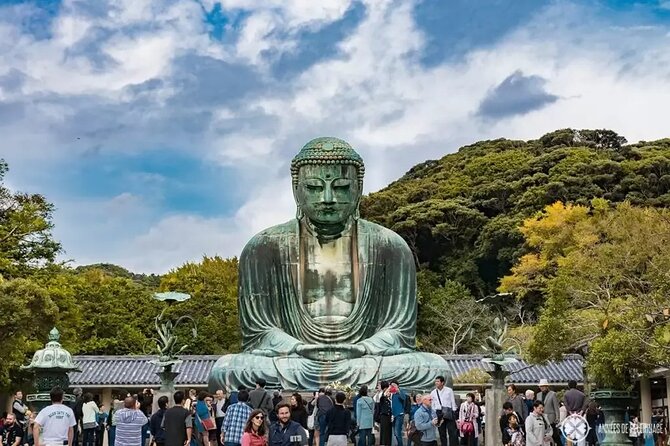
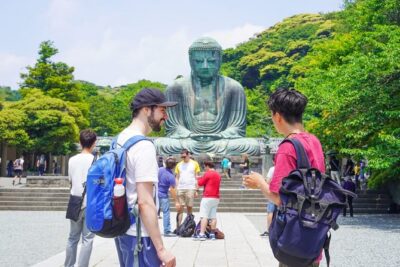
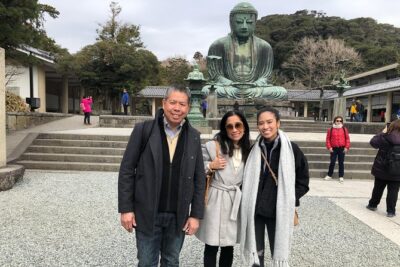
The tour begins at Kotoku-in to see the Great Buddha of Kamakura (over 11 meters tall). This is one of those moments where the scale does the talking. You’re looking at a bronze statue tied closely to Kamakura identity, and it’s the kind of sight that anchors the rest of the day.
Good news for planning: admission is included for this first stop. That matters because it reduces friction early. You can spend more energy taking photos, listening to context from your guide, and just settling into the day instead of managing tickets right away.
One practical tip: because this is the opening highlight, try to arrive ready to take your time. Even if the rest of the schedule is tight, this is the stop where you’ll likely want extra minutes—just to walk in, look up, and get oriented.
Hase-dera’s Kannon Hall: Where the Ticket Extra Makes Sense
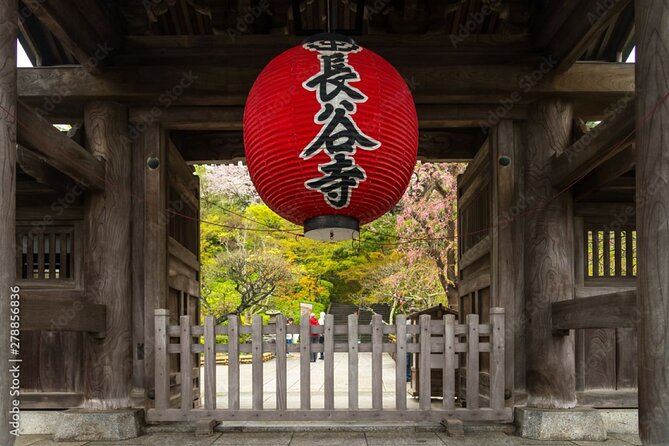
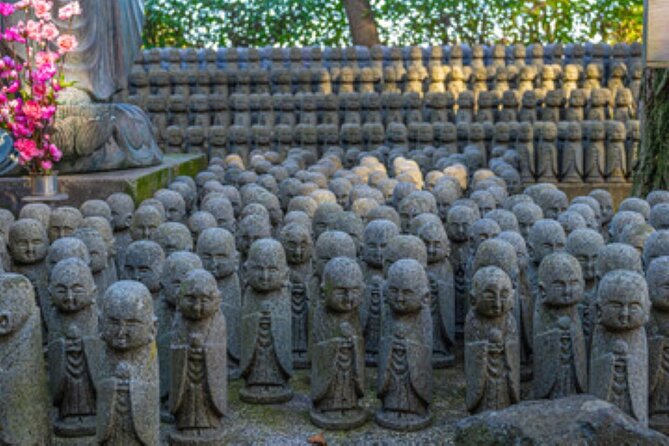
Next comes Hase-dera Temple (Kannondo), known for its famous eleven-headed statue of Kannon, the Goddess of Mercy. This is a wooden sculpture experience—big, dramatic, and very much the reason many people aim for Hase-dera.
Here’s the key detail to watch: Hase-dera admission is not included. That can be a drawback if you hate surprise costs. But it’s also a sign you’re paying for the temple’s main interior experience, not just walking by gates.
If you care about religious art, symbolism, and why certain Buddhist figures are depicted in specific ways, this is where an English guide really helps. Without explanations, you might still enjoy the visuals—but with context, you get more out of every angle, every stop, and the flow of the grounds.
Tsurugaoka Hachimangu: The Shrine Where the Walk Feels Like Part of It
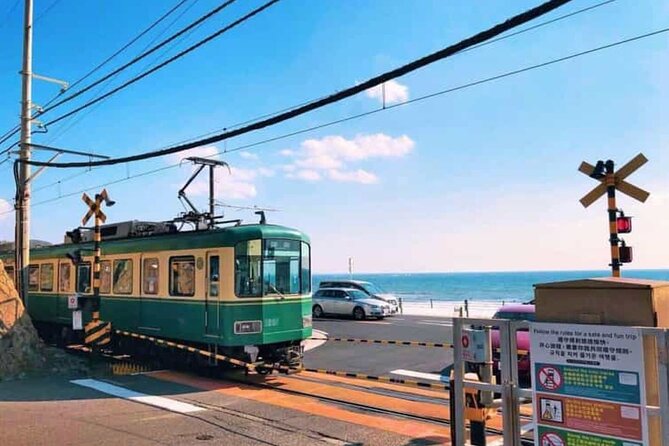
At Tsurugaoka Hachimangu, you’ll move through a classic shrine approach, including the grand torii gate. This shrine is described as Kamakura’s premier spiritual heart, and the grounds are a big part of why.
The standout here is how the space is staged: ponds with koi, elegant bridges, and calm scenery that slows your pace without anyone telling you to slow down. This is also one of the moments where private touring shines. You can pause for photos, step aside when a walkway is busy, or spend a little extra time just watching the water and birds.
Since admission isn’t listed as included for this stop, factor that into your day budget. The good part is that Tsurugaoka Hachimangu tends to be easy to enjoy even if you treat it like a scenic break rather than a long museum-style visit.
Hokoku-ji Bamboo Grove: A Different Kind of Temple Stop
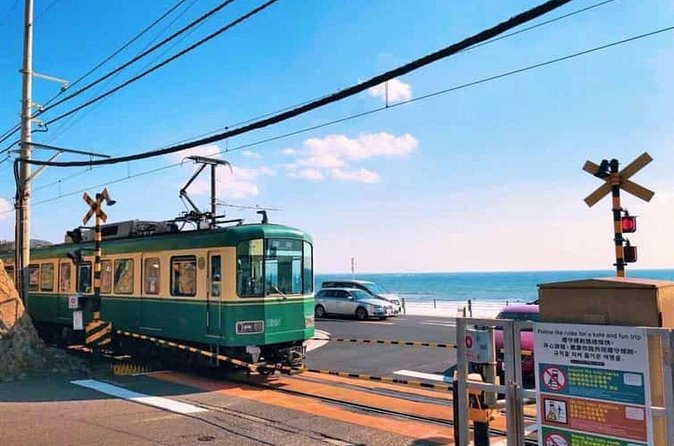
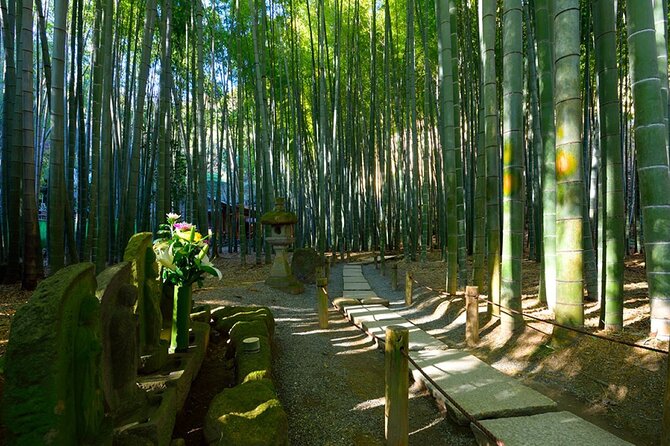
Then you’ll head to Hokoku-ji Temple, famous for its bamboo grove and its historical roots (built in the 14th century). The most practical value of this stop is variety. It’s not just another temple facade. It’s an atmosphere shift—walking through bamboo changes your whole pace and your photos.
This stop also has a small cultural flavor: the temple is known for macha green tea. Admission here is listed as not included, so you’ll want to budget for whatever entrance fee applies on the day.
The biggest “should I care?” question is simple: if you like gardens and atmospheric walking, this will be a highlight. If you’re mainly statue-and-skyline focused, you might treat it more like a short reset before the coast.
Readers also shortlisted these Tokyo bookings:
- Tokyo 6hr Private Tour with Government-Licensed Guide★ 5.0 · 3,902 reviews
- Tokyo: Shinjuku Local Bar and Izakaya Guided Walking Tour★ 4.9 · 1,794 reviews
- Tokyo: Private City Highlights Tour with Local Guide★ 4.8 · 1,433 reviews
- Tokyo: Tsukiji Fish Market Guided Walking Tour★ 4.9 · 1,397 reviews
- Tokyo 4hr Private Tour with Government-Licensed Guide★ 5.0 · 1,394 reviews
Enoshima Island: Sea Views and the Mt. Fuji Maybe Factor
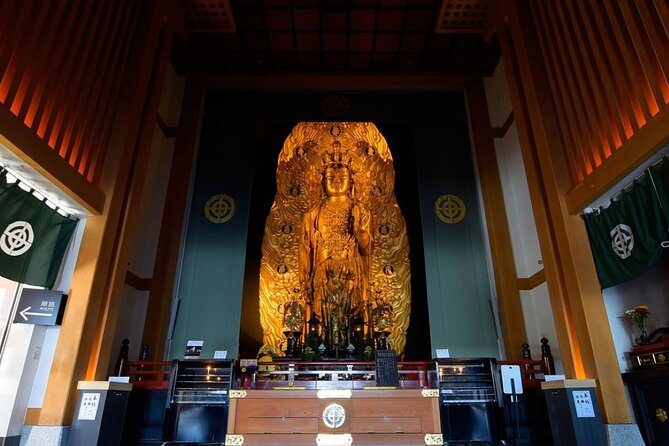
Enoshima is the emotional swing of the day. You’re leaving temple quiet and moving toward sea views and island streets. The tour notes that on clear days, you may get breathtaking views of Mt. Fuji in the distance. That’s the kind of detail that makes planning exciting because it turns Enoshima into more than a standard stop.
Admission for Enoshima is listed as free on this schedule, which is a plus. You get to spend money on snacks or coffee instead of adding another ticket.
One thing to keep realistic: the Fuji moment depends on weather. Also, sea air usually means walking a bit more. Your guide can help you choose routes that match your energy level, and with a private setup, you’re not stuck on a single rigid “follow the leader” path.
This is also a great place for a slow wander. Even if you don’t chase every shrine on the island, just taking in the coastline views and the shifting street scenes can be worth the drive.
Yokohama Chinatown: Switch to Street Life
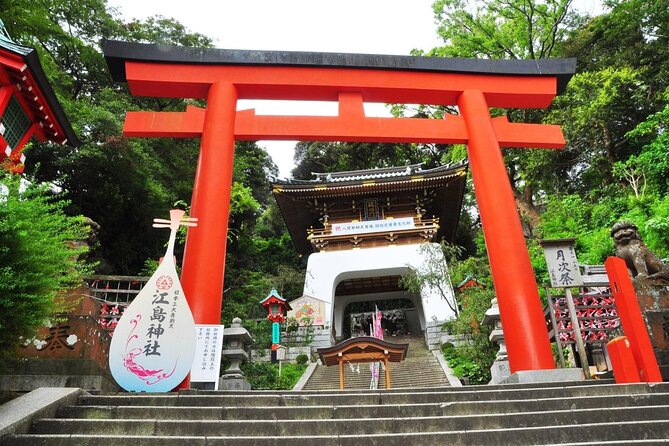
After Kamakura and Enoshima, the day turns toward city energy with Yokohama Chinatown. It’s noted as about 160 years old, with a present-day community size around 3,000 to 4,000, and the guide can give you cultural framing—today much of the community traces back to Guangzhou.
Admission is listed as free. This stop works well in a private itinerary because it’s flexible. If you want photos and atmosphere, you can keep it light. If you want to actually eat, this is where you’ll likely spend more time.
Practical advice: plan your lunch or snacks around this area rather than expecting a provided meal. Lunch is not included on the tour, though your guide may recommend places that fit your preferences and the time you have.
Sankeien Gardens: The Calmer End of the Day
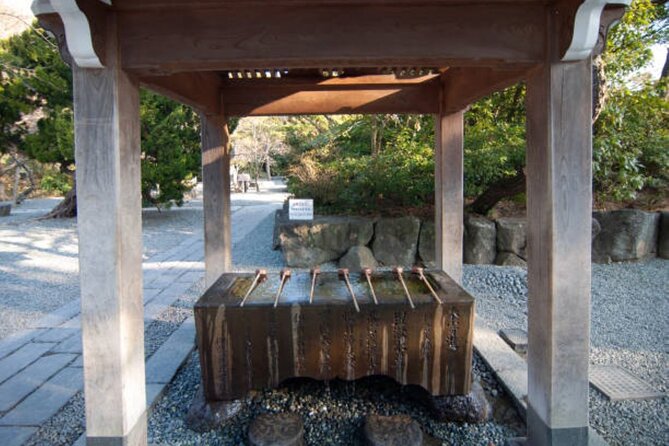
Sankeien Gardens gives you the quiet counterweight. The tour describes it as a traditional Japanese-style garden that opened in 1906, designed and built by silk trader Tomitaro Hara (known by the pseudonym Sankei Hara).
Admission here is listed as not included, so it’s another ticket item to budget. But gardens like this can be especially satisfying after a day of temple walking and coastal paths. You get a slower rhythm, more space to sit, and the chance to photograph details without rushing.
If you like Japanese garden design, this is a strong closer. If gardens aren’t your thing, you can still enjoy the overall setting, but you might want to treat it as a shorter stroll instead of a long sit-down.
Your Guide and Driver: What Quality Looks Like on This Route
The biggest “invisible” value in a private day trip is the guide’s ability to run things smoothly without feeling like a factory line. This operator’s English-speaking guide Mukarram Muhammad is highlighted as professional, knowledgeable, organized, and responsive in communication. One of the most repeated strengths is patience—not rushing you, and being flexible when you want to adjust the pace.
That matters a lot on a day like this. You’re stacking multiple neighborhoods, temples, and walkable stops in one long window. When a guide stays calm, you lose less time to confusion and you spend more time actually seeing.
Rain can also change plans. The tour notes that it requires good weather, but it’s still useful to know that the guide approach can help keep the day on track. If it’s wet, your route choices and your walking timing become extra important.
Transportation, Tickets, and the Small Details That Save Time
A few operational points can make or break the experience:
- Pickup is offered: that reduces stress on arrival and departure.
- You’ll be in an air-conditioned luxury vehicle with free Wi-Fi and water drink bottles.
- The tour uses a mobile ticket, which can speed up entry once you’re at stops that require it.
Timing-wise, plan on being on the move for most of the day. Even when a stop lasts about an hour, you’ll still account for walking time, ticket handling (where needed), and transitions. This is why private touring is so helpful: you’re not waiting around for other groups.
Also: entrance fees are split. Great Buddha admission is included. Other sites and gardens are not. Enoshima and Chinatown are listed as free stops. That mix usually works best when you treat the day as partly “ticketed highlights” and partly “free-to-walk atmosphere.”
Price and Logistics: Is $650 Worth It?
Here’s how I think about the value.
You’re paying $650 per group up to 6. That means the effective cost per person drops fast if you can fill the vehicle. The price also covers more than travel: it includes the English-speaking guide/driver, the luxury air-conditioned transport, and supportive touches like water and Wi-Fi.
What you don’t get is lunch and most entrances (except Great Buddha). So the real comparison isn’t just against another tour price. Compare against what it would cost you to cover:
- private transport and an English guide,
- tickets and meals you’d buy anyway,
- and the extra time you might waste figuring out transit and timing on your own.
If you’re the kind of traveler who hates crowd herding and prefers a day that feels custom, private is often the better deal. If you’re happy with trains and walking a lot in public transit, you might find cheaper options. But you’ll trade away the calm.
One more planning thought: this tour is commonly booked about 68 days in advance on average. If you have a specific date in mind, earlier booking gives you more certainty.
Should You Book This Private Kamakura and Enoshima Tour?
Book it if you want a full-day temple-and-coast mix without group pressure, and if you’ll actually use the English guide for context at the major stops. It’s especially strong for couples and small groups who care about pacing, want a smooth itinerary flow, and don’t want to handle logistics between areas.
Consider skipping or shopping alternatives if:
- you’re very price sensitive and don’t want to add entrance fees and lunch on top,
- you only care about one or two sights and could build a simpler DIY plan,
- or you’re traveling when weather uncertainty is a big risk for you.
The bottom line: this is a value play for people who want the same highlights, but with space to breathe.
FAQ
What’s included in the tour price?
The tour includes a luxury air-conditioned vehicle, water drink bottles, free Wi-Fi, and an English-speaking Pro Guide and driver. Great Buddha (Kotoku-in) admission is listed as included. Mobile ticket is also provided.
Is pickup included?
Yes, pickup is offered. The tour is also described as near public transportation.
Are lunch and entrance fees included?
No. Lunch is not included, and entrance fees are listed as not included overall (with Great Buddha admission noted as included).
Do I need to pay for Hase-dera?
Yes. Hase-dera Temple (Kannondo) is listed as admission not included.
How many people are in a group?
This is a private tour with your group only, up to 6 people.
What happens if weather is bad?
The experience requires good weather. If it’s canceled due to poor weather, you’ll be offered a different date or a full refund. Free cancellation is available up to 24 hours in advance for a full refund.
More Tours in Tokyo
- Mt Fuji and Hakone 1-Day Bus Tour Return by Bullet Train
★ 5.0 · 26,383 reviews - 1-Day Tokyo Bus Tour
★ 5.0 · 14,250 reviews - Tokyo: Shinjuku Food Tour (13 Dishes at 4 Local Eateries)
★ 5.0 · 6,603 reviews - Tokyo Mt Fuji 5th St & Hakone Cruise Bus Tour w/Bullet Train
★ 4.4 · 5,024 reviews - Flagship 2-Hours Official Street Go-Kart Tour – Tokyo Bay Shop
★ 5.0 · 4,974 reviews
More Tour Reviews in Tokyo
- Mt Fuji and Hakone 1-Day Bus Tour Return by Bullet Train
★ 5.0 · 26,383 reviews - 1-Day Tokyo Bus Tour
★ 5.0 · 14,250 reviews - Tokyo: teamLab Planets TOKYO Digital Art Museum Entry Ticket
★ 4.6 · 9,779 reviews - Mt Fuji & Hakone Cruise, Drum Show Bullet Train 1 Day from Tokyo
★ 4.0 · 7,413 reviews - Tokyo: Shinjuku Food Tour (13 Dishes at 4 Local Eateries)
★ 5.0 · 6,603 reviews
More Kamakura and Enoshima Days
- Tokyo: Mt. Fuji, Kamakura, Big Buddha, & Lake Ashi Day Trip
★ 4.5 · 867 reviews - Tokyo:Sea of Mount Fuji, Hakone Ropeway, Ōwakudani, Enoshima
★ 4.9 · 84 reviews - Kamakura 8 hr Private Walking Tour with Licensed Guide from Tokyo
★ 5.0 · 80 reviews - Tokyo: Kamakura & Enoshima Day Tour with Pickup & Train Ride
★ 4.1 · 61 reviews - Kamakura Private & Customizable Tour – All-in-One Experience
★ 5.0 · 49 reviews
Latest Tokyo reviews off our desk






Kamakura Day Trips, compared.
 ★ 4.5Kamakura & Enoshima Day Trip including Temple TicketsFrom $581,375 reviews
 ★ 4.5Mt. Fuji, Kamakura, Big Buddha, & Lake Ashi Day TripFrom $49867 reviews
 ★ 4.5From Tokyo: Kamakura & Enoshima 1-Day Bus TourFrom $66189 reviews
 ★ 5.0Kamakura Historical Walking Tour with the Great BuddhaFrom $98129 reviews
 ★ 5.0Kamakura Private Tour: Temples, Nature, and the Great BuddhaFrom $98121 reviews
 ★ 5.0Kamakura Walking Tour – The City of ShogunFrom $35100 reviews
 ★ 4.9Sea of Mount Fuji, Hakone Ropeway, Ōwakudani, EnoshimaFrom $5084 reviews
 ★ 5.0Kamakura 8 hr Private Walking Tour with Licensed Guide from TokyoFrom $20180 reviews
Browse the lists this tour appears in