
Reviewed · KAMAKURA DAY TRIPS
Kamakura Private Tour: Temples, Nature, and the Great Buddha
Kamakura feels like a reset button. This private 5-hour walk trades Tokyo crowds for temples in forests and a real Great Buddha visit, with paid entry covered for three major stops. I love how the route mixes quiet Zen calm with mountain-course views, and I love getting the story behind oddball places like the shrine with a torii-framed hole in the hillside. One thing to know up front: you’ll walk at least 5 km with a mountain pass, so wear proper shoes and expect some uphill.
What makes this tour work is the lack of logistics stress. You start at Kita-Kamakura Station and end at Hase Station, and your English-speaking guide keeps the pace sensible while pointing out what to notice at each stop. Guides vary, but I’ve seen names like Teiko, Yu, Yumi, Noriko, Yoko, and Naho mentioned by guests—so you’re not just following a script; you’re learning from a local.
You’ll also want good weather, because this experience is designed for walking. If conditions are poor, the plan can be adjusted or the tour may be canceled with an alternate date or a refund, so keep your schedule flexible when you can.
In This Review
- Key highlights you’ll actually feel on the day
- Entering a calmer Kamakura: what this tour gets right
- Meeting point and the simple plan: Kita-Kamakura to Hase Station
- Stop 1: Jochiji Temple and the forest-Zen feeling
- Stop 2: Kamakura hiking trails around the pass
- Stop 3: Zeniarai Benten Ugafuku Shrine and the torii-framed hole
- Stop 4: Sasuke Inari Shrine and the white-fox legend
- Stop 5: Kotoku-in Great Buddha—what to look for at 13.35 meters
- Stop 6: Hasedera Temple and ocean views over Yuigahama Beach
- Stop 7: Yuigahama Beach and a last look at the sun over the water
- Shoes, pace, and the “moderate fitness” truth
- Price and value: what $98.44 buys you in real terms
- Hotel pickup, mobile tickets, and how to avoid last-minute stress
- Guides make the day: Teiko, Yu, Yumi, Noriko, Yoko, Naho
- Weather reality: when rain or heat changes the plan
- Should you book this Kamakura private tour?
- FAQ
- How long is the Kamakura private tour?
- Where does the tour start and end?
- Is this a private tour or shared group?
- What entrance fees are included?
- What about admission for the shrines or hiking trails?
- How much walking should I expect?
- Is hotel pickup included?
- What’s the fitness level requirement?
- Are food and drinks included?
- FAQ
- Does the tour include an English-speaking guide?
- What if the weather is bad?
- Can the tour be extended?
Key highlights you’ll actually feel on the day
- Three included admissions: Jochiji, Kotoku-in (Great Buddha), and Hasedera
- Mountain-course walking: at least 5 km, including a pass with real stairs and climbs
- Daibutsu Hiking Course moments: the shrine stop with a mysterious hole through the hillside
- Spiritual stops with clear context: Shinto and Buddhism etiquette explained on the ground
- Coastal payoff at the end: Hasedera views over the ocean and Yuigahama Beach
- Private group advantage: it can be just your party, so your guide can slow down when needed
Entering a calmer Kamakura: what this tour gets right
Kamakura is an easy day trip from Tokyo, but it can still feel like a sightseeing checklist. This tour does something smarter: it strings together spiritual sites with nature, so your legs do the work and your brain gets the meaning.
I like that you’re not spending the whole day in the busiest temple lanes. You get time in quieter corners—forest surroundings at Jochiji, then a hiking pass, then smaller shrines along the way to the Great Buddha. Even if you’ve visited a temple or two in Japan, the order matters here: it starts with serenity, builds to the “wow” factor of the Buddha, and then closes with ocean views and beach air.
The private guide piece is more than a luxury. When you’re walking uphill, explanations can keep the day from feeling like chores. A good guide also helps you know how to behave—where to stand, how to approach areas respectfully, and what legends connect the stops.
Coast-and-Buddha days near Kamakura, rated
- Tokyo: Kamakura & Enoshima Day Trip including Temple Tickets
★ 4.5 · 1,375 reviews - From Tokyo: Kamakura & Enoshima 1-Day Bus Tour
★ 4.5 · 189 reviews - Kamakura Historical Walking Tour with the Great Buddha
★ 5.0 · 129 reviews - Kamakura Private Tour: Temples, Nature, and the Great Buddha
★ 5.0 · 121 reviews
Meeting point and the simple plan: Kita-Kamakura to Hase Station
You meet at Kita-Kamakura Station (Yamanouchi, Kamakura) and the tour ends at Hase Station (near Hase). That matters because it shapes your route: you’re moving south/east through Kamakura rather than backtracking.
This is also why the 5-hour duration feels realistic. You’re not wasting time figuring out which train platform goes where while you’re already tired. Your guide usually accompanies you to the next station at the end, so you can get your bearings fast.
Practical tip: if you’re doing this as a day trip from Tokyo, plan to arrive at Kita-Kamakura with buffer time. The tour is timed around walking blocks and temple entry windows, and starting on time helps the guide keep your pace comfortable.
Stop 1: Jochiji Temple and the forest-Zen feeling
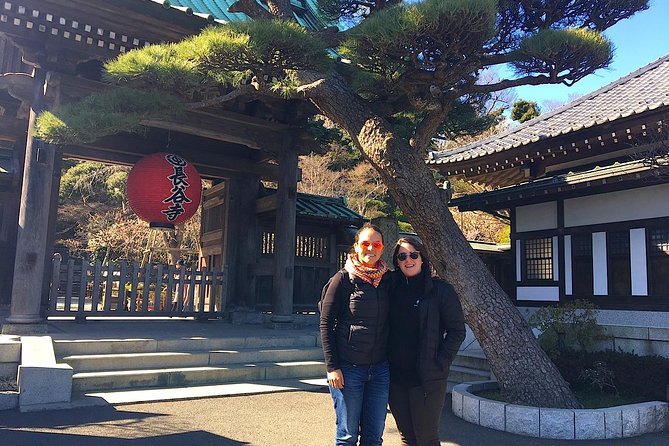
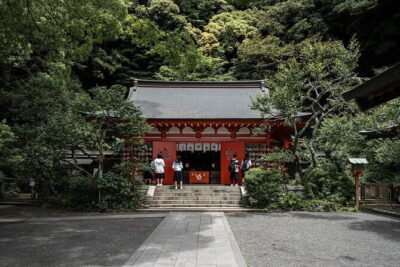
Jochiji is a quiet Zen temple with a forest setting, and it’s built history-forward: it was established in 1281 by Hojo Tokiyori, a leader of the Kamakura Shogunate, to honor his son who died young.
That background changes how you experience the place. You’re not just looking at a temple complex; you’re standing in a story about loss, memorial, and power. Expect a calmer tempo here—time to stroll, notice the garden-like feel of the grounds, and reset after arriving from the station.
Why I like this first stop: it gives you atmosphere before the hiking starts. You’ll be less rushed when you later hit the mountain-course parts of the route.
Stop 2: Kamakura hiking trails around the pass
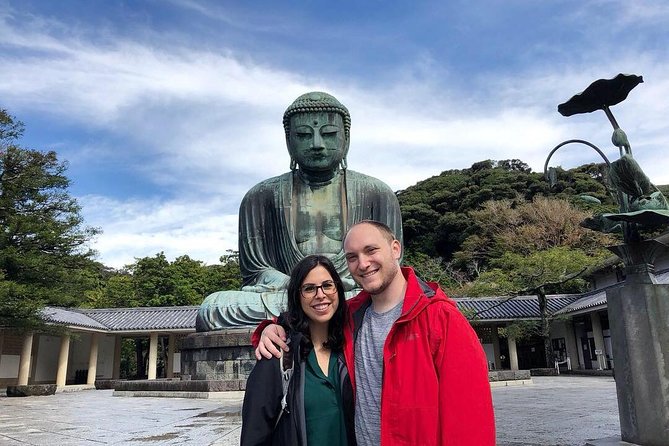
Next comes the mountain hiking segment. You get a nature break—fresh air, views changing as you move, and the sense that Kamakura is more than coastal temples.
Time on this section is about 40 minutes, and while it’s shorter than a full hike, it’s not flat. The tour includes a mountain pass overall, and the shoes warning isn’t just fine print. I’d treat this part as training: slow down, take small steps, and let your guide set a pace that matches your group.
If you’re sensitive to heat, start early if you can. One guest specifically noted how a very hot, humid day meant extra breaks and a slower pace, even though the experience stayed worthwhile.
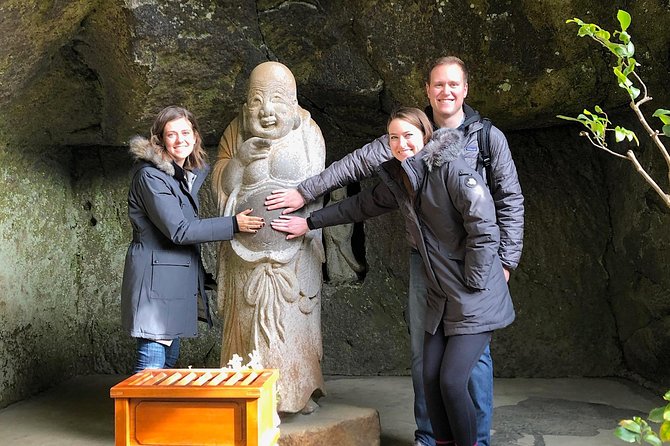
Stop 3: Zeniarai Benten Ugafuku Shrine and the torii-framed hole
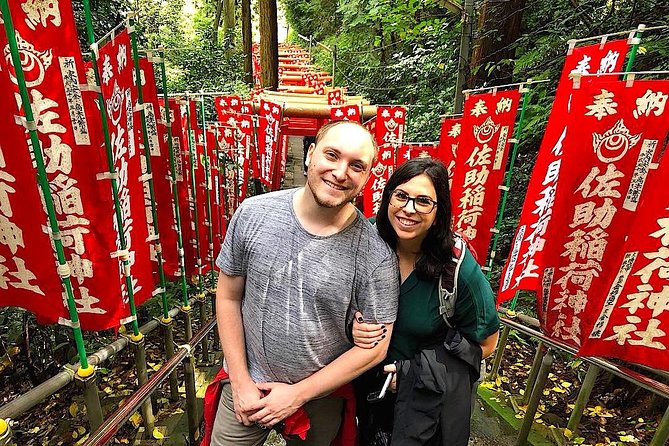
This is one of the most memorable “how is this real?” moments on the route. You walk along the Daibutsu Hiking Course through the mountains until you reach a hillside feature framed by a torii gate. There’s a mysterious hole in the hillside, and that’s where Zeniarai Benzaiten Ugafu—linked to the shrine stop—comes into play.
Even if you don’t catch every detail of the religious meaning on the first pass, the physical setting sticks: mountain wall, torii frame, and a route that feels like you’re walking into something older than a modern tourist map.
This stop is also where your guide’s storytelling pays off. The why behind Shinto-Buddhist connections is easier to grasp when someone explains it in plain language while you’re standing there.
Readers also shortlisted these Kamakura bookings:
- Kamakura: Private Guided Walking Tour with Local Guide★ 4.8 · 60 reviews
- Kamakura 4hr Private Trip with Government-Licensed Guide★ 5.0 · 58 reviews
- From Tokyo: Kamakura Private Customize Tour by Luxury Van★ 4.6 · 38 reviews
- Buddha, Bamboo & Zen – Bespoke Kamakura Private Walking Tours★ 5.0 · 25 reviews
- Kamakura Bamboo Forest and Great Buddha Private Tour★ 5.0 · 12 reviews
Stop 4: Sasuke Inari Shrine and the white-fox legend
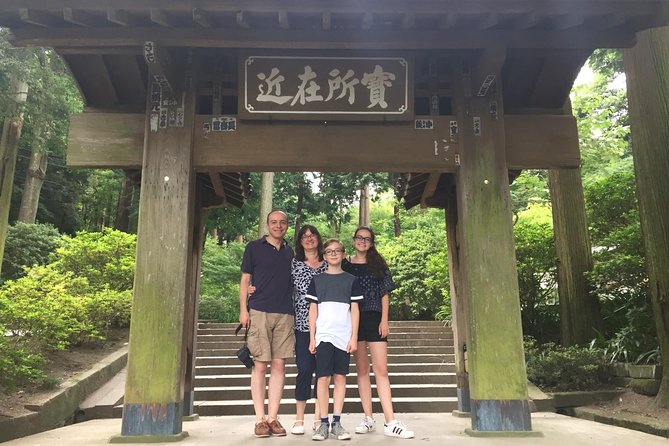
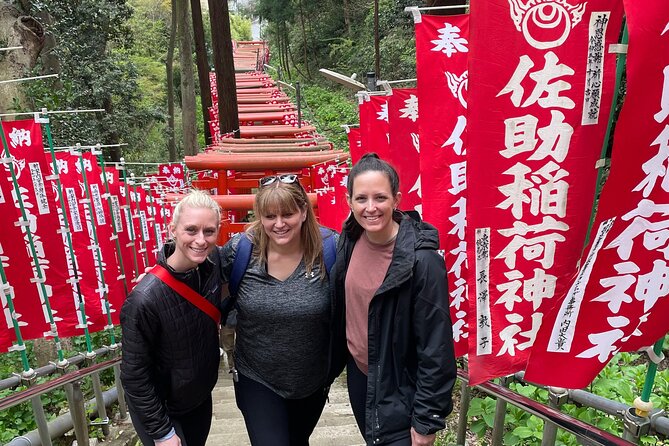
Sasuke Inari Shrine ties into a famous Kamakura-era legend. According to the story, Minamoto Yoritomo—the first shogun of Kamakura—was visited in a dream by a white fox known as Inari, who advised him how to win a battle against his enemies.
This shrine stop is shorter (around 20 minutes), but it adds a key layer: not every sacred site here is only about Buddhist statuary or Zen gardens. Inari shrines and fox legends show how Shinto beliefs and local folklore blend into historical events.
What to watch for: don’t just scan for the main hall. Let your guide show you the details that connect the legend to the setting, so you leave with a mental map of what you saw and why.
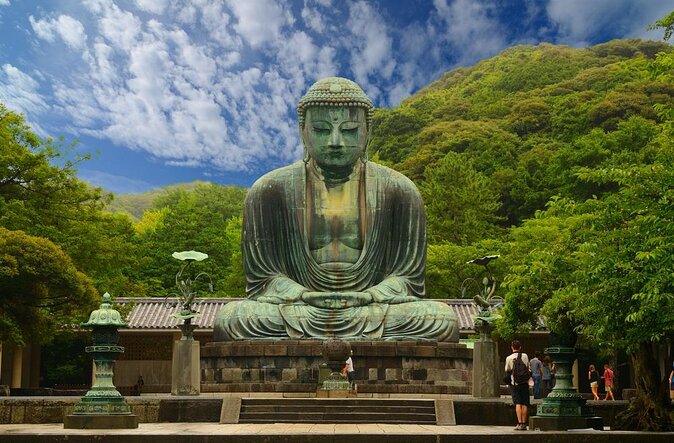
Stop 5: Kotoku-in Great Buddha—what to look for at 13.35 meters
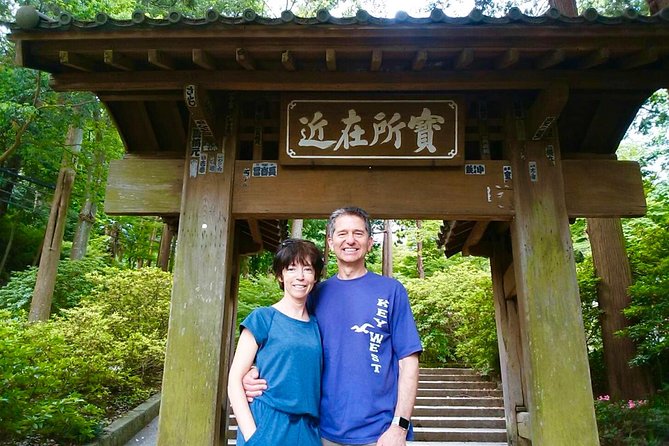
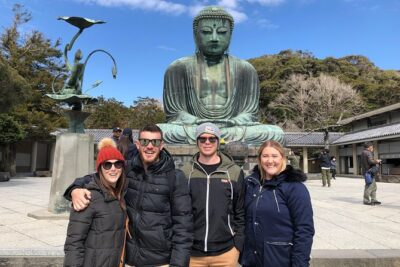
Then you hit the headline: Kotoku-in and the Great Buddha of Kamakura.
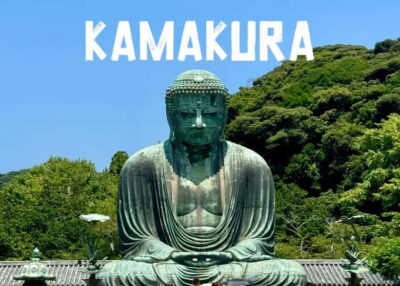
This bronze giant is about 13.35 meters tall and weighs around 121 tonnes. The construction of the statue in the form seen today dates to 1252. It’s one of the biggest Buddha statues in Japan—big enough that you’ll likely feel small in the best way.
Your guide’s job here is to help you move beyond the wow factor. You want to notice how the viewing angles work, what parts are iconic, and what the site represents as a religious and cultural landmark. Also, pay attention to how people behave around the Buddha area. You’ll be in a high-traffic zone compared to the forest temple earlier, so it’s smart to keep your posture and movement respectful and steady.
Entrance fee for Kotoku-in is included, so you’re not juggling extra payments once you’re already in the moment.
Stop 6: Hasedera Temple and ocean views over Yuigahama Beach

Hasedera sits about halfway up Mount Kamakura, which is why it delivers that classic Kamakura payoff: the views south over the ocean and Yuigahama Beach.
This stop is about 30 minutes. Expect walking within the temple area and a chance to pause with a view. If you visit around June and July, the temple is known for hydrangeas (the tour notes this seasonal highlight). Even if your timing doesn’t align, the hillside location makes Hasedera worth it.
Why I’d prioritize this: it’s the “why Kamakura is special” moment. The coastal horizon turns temple time into something less indoor and more lived-in.
Stop 7: Yuigahama Beach and a last look at the sun over the water
Finally, you finish with Yuigahama Beach. It faces south, so you generally get sun over the ocean from this side of Kamakura, depending on the time of day.
You’ll spend around 15 minutes here—enough to breathe out, look at the water, and soak in the calmer coastal rhythm. In summer, there’s an open-air market called Umi-no-ie, which can add energy if you happen to be there in season.
Don’t underestimate this ending. After temples and hills, beach time makes the day feel complete instead of rushed.
Shoes, pace, and the “moderate fitness” truth
The tour asks for moderate physical fitness, and it’s not just a polite label. You’ll walk at least 5 km and include a mountain pass. That means uphill effort, uneven ground, and lots of time on your feet.
My practical advice:
- Wear shoes that grip well on stairs and slopes.
- Bring water, even though food and drink are not included.
- If you have knee issues, plan to move slowly and ask your guide to adjust your pace.
Some guests have had to use taxi support when a knee issue flared up, so it’s not unheard of. The key is to be honest early—tell your guide how you’re feeling so you don’t force it and end up miserable.
Price and value: what $98.44 buys you in real terms
At $98.44 per person for about 5 hours, the value comes from three places:
First, you get a private walking tour experience with an English-speaking guide. That matters most when you want context, not just photos.
Second, the major admissions are included: Jochiji Temple, Kotoku-in (Great Buddha), and Hasedera Temple. If you were paying those separately, you’d feel the cost stack up fast—so included entry makes the price feel more reasonable.
Third, you’re saving time on planning and routing. You don’t need to connect multiple stops yourself, especially with the hiking segments that are harder to interpret without local guidance.
What’s not included is also clear:
- Food and drink
- Hotel pickup and drop-off (extra cost is listed)
- Private transportation by taxi/car/bus
So think of this as a guided, active half-day. If you want a comfortable “ride between stops” style tour, this isn’t that.
Hotel pickup, mobile tickets, and how to avoid last-minute stress
Hotel pickup isn’t included, but it’s available for an extra 8,000 yen per person. If you’re staying close to Kamakura rail lines, you may not need it. The meeting point is right at Kita-Kamakura Station, and the tour end is at Hase Station, so train access is part of the plan.
You’ll also receive a mobile ticket. That’s helpful for smooth entry at the included temples, since you’re not juggling paper tickets mid-walk.
If you’re traveling with family or someone who gets tired quickly, ask your guide about pace early. A private group setup makes it easier to slow down without making it feel awkward.
Guides make the day: Teiko, Yu, Yumi, Noriko, Yoko, Naho
One of the best parts of this kind of tour is that your day doesn’t feel like a lecture. Guests have shared that guides like Teiko, Yu, Yumi, Noriko, Yoko, and Naho bring the sites to life with clear explanations and thoughtful attention to group needs.
You’ll often hear the same themes: solid background on temples and shrines, practical etiquette tips, and flexibility when weather or walking conditions change. Some guides also handle small details like photo-taking during the tour and helping you finish with the right train back to where you need to go.
If you care about learning more than just seeing, this is the style that fits you.
Weather reality: when rain or heat changes the plan
This experience needs good weather. If conditions are poor, it can be canceled with a refund or offered on a different date.
On less-than-perfect days, be ready for adjustments. For example, one guest described a rainy day where the route shifted with extra bus/train use, which reduced walking and helped keep the day manageable. Another mentioned needing more breaks in intense heat.
So pack smart and keep expectations flexible. The tour is built around walking, but the guide’s job is to get you to the key places while keeping the day safe.
Should you book this Kamakura private tour?
Book it if you want a half-day in Kamakura that feels active, scenic, and meaningful—not just crowded temple hopping. It’s a strong fit if you like hiking trails, don’t mind uphill effort, and want a guide to explain the Shinto-Buddhist connections and legends behind each stop.
Skip it (or book with extra caution) if you have limited mobility or you know you struggle with stairs and mountain-pass walking. The included admissions are great, but the day’s structure assumes you can walk.
Also, if you’re the type who loves views as much as monuments, this route makes sense. You start calm at Jochiji, hit the Great Buddha, and end with Hasedera’s ocean panorama and Yuigahama Beach.
If you’re ready for a walking-focused day with real local context, this tour is a very solid choice.
FAQ
How long is the Kamakura private tour?
It’s about 5 hours (approx.).
Where does the tour start and end?
The tour starts at Kita-Kamakura Station and ends at Hase Station.
Is this a private tour or shared group?
This is a private tour/activity. Only your group participates.
What entrance fees are included?
Entrance fees are included for Hasedera Temple, Kotoku-in (Great Buddha of Kamakura), and Jochiji Temple.
What about admission for the shrines or hiking trails?
Hiking trails and several shrine stops list free admission, while the main temple admissions above are included.
How much walking should I expect?
You will walk at least 5 km, including a mountain pass.
Is hotel pickup included?
No. Hotel pickup and drop-off are available for an extra 8,000 yen per person.
What’s the fitness level requirement?
Travelers should have a moderate physical fitness level.
Are food and drinks included?
No. Food and drink are not included.
FAQ
Does the tour include an English-speaking guide?
Yes, an English-speaking guide is included.
What if the weather is bad?
This experience requires good weather. If it’s canceled due to poor weather, you’ll be offered a different date or a full refund.
Can the tour be extended?
Yes. The duration can be extended for 1,000 yen per person per half hour, payable in cash.
More Tours in Kamakura
- From Tokyo: Kamakura & Enoshima 1-Day Bus Tour
★ 4.5 · 189 reviews - Kamakura Historical Walking Tour with the Great Buddha
★ 5.0 · 129 reviews - Kamakura Walking Tour – The City of Shogun
★ 5.0 · 100 reviews - Kamakura: Private Guided Walking Tour with Local Guide
★ 4.8 · 60 reviews - Kamakura Rickshaw Tour
★ 5.0 · 53 reviews
More Tour Reviews in Kamakura
- Tokyo: Kamakura & Enoshima Day Trip including Temple Tickets
★ 4.5 · 1,375 reviews - From Tokyo: Kamakura & Enoshima 1-Day Bus Tour
★ 4.5 · 189 reviews - Kamakura Historical Walking Tour with the Great Buddha
★ 5.0 · 129 reviews - Kamakura Walking Tour – The City of Shogun
★ 5.0 · 100 reviews - Kamakura: Private Guided Walking Tour with Local Guide
★ 4.8 · 60 reviews
More Kamakura and Enoshima Days
- Tokyo: Kamakura & Enoshima Day Trip including Temple Tickets
★ 4.5 · 1,375 reviews - From Tokyo: Kamakura & Enoshima 1-Day Bus Tour
★ 4.5 · 189 reviews - Kamakura Historical Walking Tour with the Great Buddha
★ 5.0 · 129 reviews - Kamakura Walking Tour – The City of Shogun
★ 5.0 · 100 reviews - Kamakura: Private Guided Walking Tour with Local Guide
★ 4.8 · 60 reviews
Latest Kamakura reviews off our desk

Kamakura Day Trips, compared.
 ★ 4.5Kamakura & Enoshima Day Trip including Temple TicketsFrom $581,375 reviews
 ★ 4.5Mt. Fuji, Kamakura, Big Buddha, & Lake Ashi Day TripFrom $49867 reviews
 ★ 4.5From Tokyo: Kamakura & Enoshima 1-Day Bus TourFrom $66189 reviews
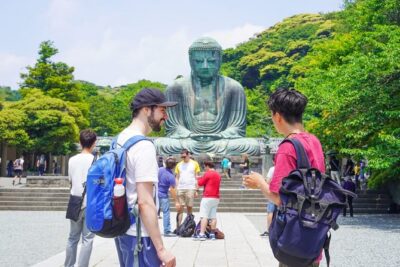 ★ 5.0Kamakura Historical Walking Tour with the Great BuddhaFrom $98129 reviews
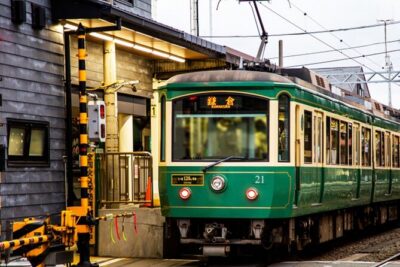 ★ 5.0Kamakura Walking Tour – The City of ShogunFrom $35100 reviews
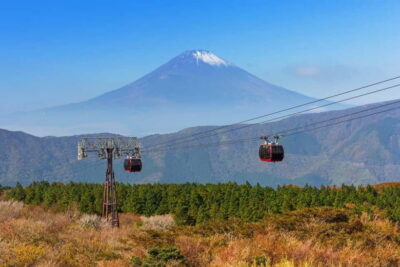 ★ 4.9Sea of Mount Fuji, Hakone Ropeway, Ōwakudani, EnoshimaFrom $5084 reviews
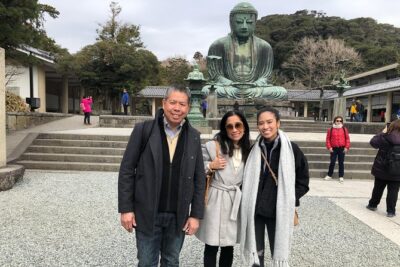 ★ 5.0Kamakura 8 hr Private Walking Tour with Licensed Guide from TokyoFrom $20180 reviews
 ★ 4.1Kamakura & Enoshima Day Tour with Pickup & Train RideFrom $1361 reviews
Browse the lists this tour appears in