
Reviewed · WORKSHOPS
Personalized Shakuhachi Lesson with a Master
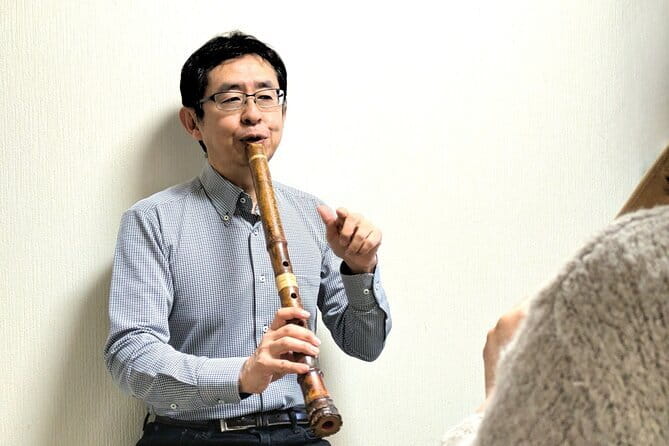
A shakuhachi lesson can change fast. In Tokyo, you’ll get hands-on coaching from Kaizan Harago, a Tozan-ryu master, focused on getting a steady sound and correcting the small things that trip beginners up. The setting is simple and practical, and the teaching aims at exactly what you want to play.
I love the personal feedback angle: posture, breath, and embouchure-style technique are addressed directly, not left to guesswork. I also like that the lesson can target real goals, from first notes to advice on a piece you’re interested in learning.
One consideration: this is a limited-size experience. The maximum group is three people, and only people with the same level can join together, so you may need to match schedules and readiness to get the most out of it.
In This Review
- Key Things to Know
- A Master’s Shakuhachi Lesson in Kameido, Tokyo
- Who Kaizan Harago Is and Why His Coaching Matters
- What Happens in the 50 Minutes: Posture, Sound, and Real Guidance
- The part beginners care about most: getting a stable sound
- The part you didn’t expect to matter: posture
- Expect a conversation, not just demonstrations
- Tozan-ryu Basics vs Kinko-ryu Options: Choosing the Right School for Your Goals
- The Rental Instrument Advantage (and What It Means for First-Timers)
- Group Size, Levels, and When Individual Coaching Takes Over
- English Support and Fast Problem-Fixing
- Price and Value for a Tokyo Shakuhachi Session
- Who This Lesson Fits Best—and Who Might Want Another Option
- Should You Book Kaizan Harago’s Shakuhachi Lesson?
- FAQ
- Where is the meeting point for the shakuhachi lesson?
- How long is the experience?
- How much does the lesson cost?
- Is the shakuhachi rental included?
- How many people are in a group?
- Can beginners participate?
- What shakuhachi style will I learn?
- Is cancellation refundable?
- Is bottled water provided?
Key Things to Know
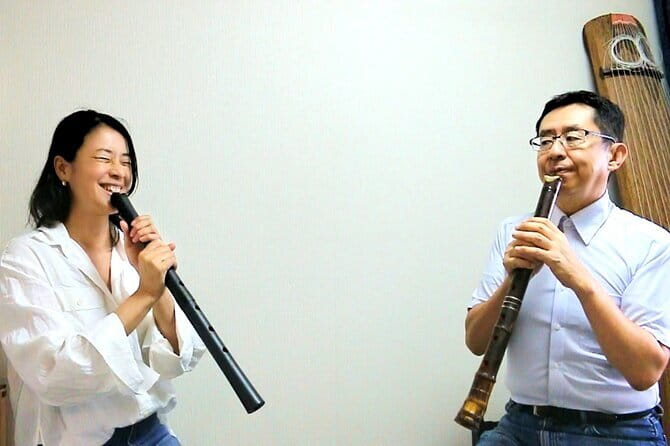
- Kaizan Harago teaches Tozan-ryu shakuhachi and can adjust the school to what you request
- Free shakuhachi rental means you can focus on learning, not sourcing an instrument
- Max 3 people per group, and same-level learning is required
- 50 minutes is enough time to fix basics like sound stability and posture
- Beginner-friendly focus covers making your first sound, then shaping it into something consistent
A Master’s Shakuhachi Lesson in Kameido, Tokyo
If you want a Tokyo culture activity that doesn’t feel like a museum tour, this fits the bill. You meet near Kameido Station in Koto City, then settle into a focused, teacher-led session centered on the shakuhachi: posture, breath control, and how to make the bamboo speak.
The value here is the direct mentorship. A shakuhachi can be surprisingly hard at first. It’s not like pressing keys on a piano where the instrument does most of the work for you. Here, you learn the mechanics and the listening skills together, so you don’t just make noise—you shape a sound.
And because the experience is private for your group (not a big shared class), your questions actually get time. That matters with a traditional instrument where tiny technique tweaks can make a noticeable difference quickly.
Readers also shortlisted these Tokyo bookings:
- Sushi Making Tokyo Roll and Authentic Japanese Sushi Class
★ 5.0 · 3,971 reviews - Tokyo: Roll and Authentic Sushi Making Class in Asakusa
★ 4.9 · 1,957 reviews - Tokyo Shinjuku Chopsticks Making Class
★ 5.0 · 1,763 reviews - Tokyo: Sushi Making Class in a Happi Coat near a Famous Spot
★ 4.9 · 1,377 reviews
Who Kaizan Harago Is and Why His Coaching Matters
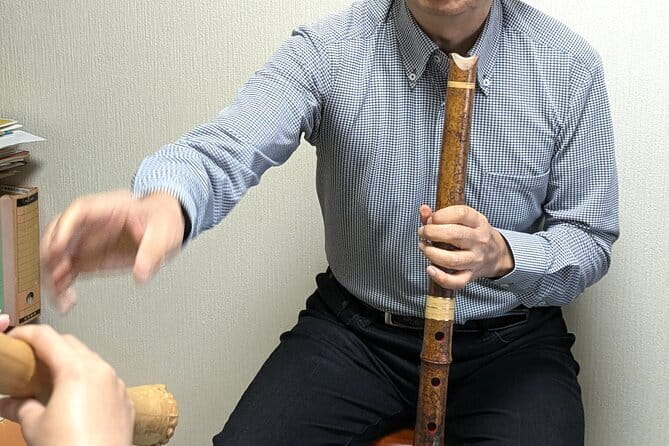
This lesson isn’t taught by a generic instructor. You learn from Kaizan Harago, a master of Tozan-ryu shakuhachi and a member of PRO MUSICA NIPPONIA. That background signals more than credentials on paper—it hints at teaching that comes from long training and active performance.
A few details that stand out:
- He was born in Tokushima, Japan, and his father taught him shakuhachi from childhood
- He studied under master Seizan Ishigaki I from 1993 to 2000
- He has performed widely and has appeared on TV and Radio
- He even co-starring with the Norwegian artist Splashgirl (a reminder that tradition and modern collaboration can meet)
Most importantly for you: nowadays, he’s dedicated to training younger generations to promote the shakuhachi. That training mindset tends to show up in how teachers explain things—especially to first-timers who need concrete steps to get from zero to usable sound.
What Happens in the 50 Minutes: Posture, Sound, and Real Guidance
You’re looking at about 50 minutes, which is just right for a first session. Long enough to cover fundamentals, short enough to keep it efficient. You’ll start at the meeting point near Kameido Station, and the experience ends back there.
Here’s what the lesson content aims to cover, whether you’re brand new or refining:
- Basics of shakuhachi posture and playing
- How to produce simple music, then improve it
- Correcting bad habits you might not even realize you’re making
- Troubleshooting your specific sound or technique problems
- Advice on a music piece you want to try
The part beginners care about most: getting a stable sound
The shakuhachi challenge isn’t only technical—it’s feedback-based. If your sound is unstable, it can feel discouraging. The coaching focus here is exactly that: identify what’s causing the wobble (posture and breath are usually the starting points), then adjust until the tone steadies.
One real example from prior learners: they taught themselves but couldn’t maintain a steady sound. With Harago’s guidance, they were able to fix it and felt comfortable enough to keep practicing with better results.
The part you didn’t expect to matter: posture
Shakuhachi playing asks your body to do specific work. If your posture is off, you can still get sound, but it often comes out inconsistent. In this lesson, posture isn’t treated like a lecture topic. It’s corrected with the goal of making your sound easier to control—fast.
- Tokyo: Shinjuku Food Tour (13 Dishes at 4 Local Eateries)★ 5.0 · 6,603 reviews
- Tokyo Mt Fuji 5th St & Hakone Cruise Bus Tour w/Bullet Train★ 4.4 · 5,024 reviews
- Flagship 2-Hours Official Street Go-Kart Tour – Tokyo Bay Shop★ 5.0 · 4,974 reviews
- From Tokyo: Mount Fuji Full-Day Sightseeing Trip★ 4.5 · 4,970 reviews
- Tokyo: Hop-On Hop-Off Sightseeing Bus Ticket★ 3.9 · 4,207 reviews
Expect a conversation, not just demonstrations
This isn’t a sit-and-watch class. The teaching is built around your questions: what you’re trying to play, what’s going wrong, and what you want next. If you’re someone who learns best by asking why something works (or doesn’t), this format should feel natural.
Tozan-ryu Basics vs Kinko-ryu Options: Choosing the Right School for Your Goals

Kaizan Harago is a master of Tozan-ryu, but the experience also notes that Kinko-ryu may be available depending on your request and lesson content.
That matters because these schools can shape how you approach technique and repertoire. You don’t have to be an expert in Japanese musical lineages to benefit. In practice, it means you can align your first lesson with your intention:
- If you want the feel and phrasing associated with Tozan-ryu, you’ll get that foundation from the master himself
- If you’re aiming for something more aligned with Kinko-ryu, you might be able to tailor the instruction accordingly
If you’re unsure, bring one or two goals: a piece you’re curious about, or the general direction you want. You’ll get guidance on what to focus on first rather than trying to build everything at once.
The Rental Instrument Advantage (and What It Means for First-Timers)
Shakuhachi rentals are free of charge. That single detail can remove a lot of friction from your planning.
For you, that means:
- You don’t need to figure out instrument rental timing or cost
- Your lesson starts with the instrument you’ll actually play in the session
- You can spend your attention on technique, not logistics
And it helps first-timers emotionally too. Some people hesitate because they assume they’ll need a personal instrument to learn properly. Here, you can try the basics right away with a rental included, so you get a real sense of what the instrument asks of your body.
Bring the right expectations: your first sound may be tricky. In prior experiences, first-timers found making a sound challenging at first, then were able to make it correctly quickly once the guidance focused on the right adjustments. That’s what good coaching does: it reduces the guesswork.
Group Size, Levels, and When Individual Coaching Takes Over
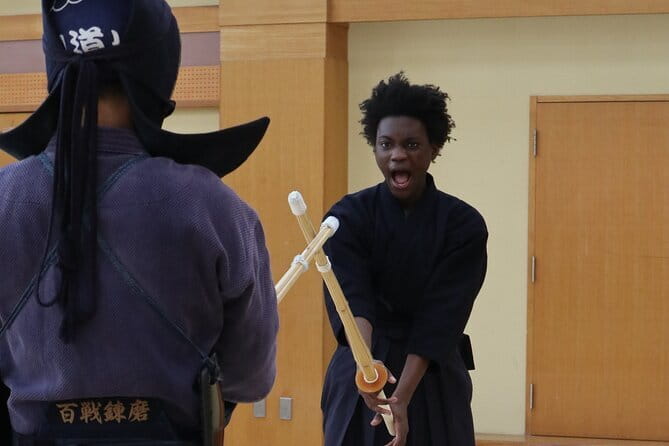
This lesson works with small groups: up to three participants, and only people with the same level can join together.
If you’re wondering whether that’s still “personal,” the answer is yes—because the group cap is low. You’re not sharing time with a dozen people while the teacher demonstrates from across the room.
There’s also an important note for advanced students: advanced students must take individual lessons. So if you’re already playing and want serious coaching, you won’t get stuck in a beginner-level group.
For most people, same-level grouping is a big deal. It makes the teaching faster. Instead of explaining the basics to someone else, the instructor can fine-tune what matters for your current stage.
English Support and Fast Problem-Fixing
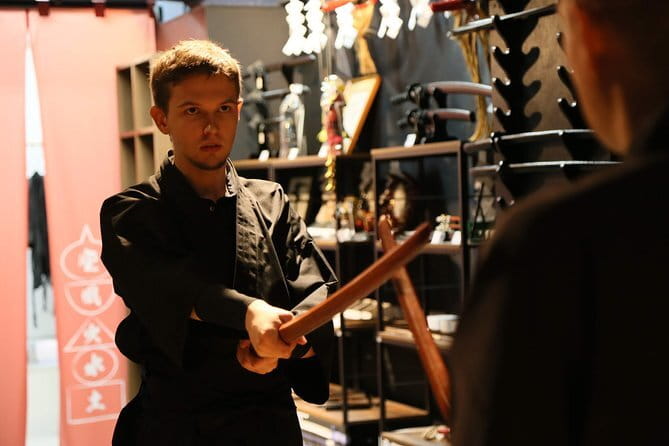
The experience includes English support through friendly staff, and that support can make a traditional instrument feel way less intimidating. When you’re trying to produce the first clear tone, clear communication matters.
The best part of this kind of lesson is that the teacher doesn’t just say practice harder. You get advice on the actual problems you’re seeing. In one example, a learner struggled with sound stability due to self-teaching. With corrections, they could play pretty well afterward and wanted to continue lessons.
That’s a pattern worth trusting:
- If you’re making inconsistent sound, you’ll likely be coached on posture and breath coordination
- If you’ve built habits that are slowing you down, you can get those corrected directly
- If you don’t know what piece to start with, you can ask for suggestions tied to your level
Also, the lesson can include advice on a piece you want to try. That’s underrated. Without repertoire guidance, many first sessions turn into “we learned how to make a sound” with no path to something musical.
Price and Value for a Tokyo Shakuhachi Session
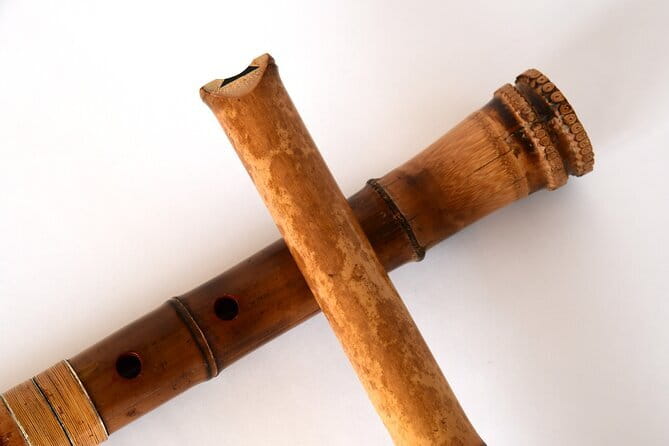
At $180 per person for about 50 minutes, this isn’t a budget activity. You’re paying for access to a master-level performer and coach, plus a small-group structure that keeps attention on you.
Here’s why the price can feel fair:
- You get instruction geared to your current level, not a generic introduction
- The teacher’s background is strong—Tozan-ryu mastery and long training
- The rental instrument is included for free, which reduces the extra costs that can surprise you with music experiences
- Small group size (max three) helps you get correction instead of just demonstrations
Is it expensive? Compared to a self-guided cultural stop, yes. But for a hands-on instrument lesson where technique corrections matter, you’re paying for coaching time with a real expert, which is hard to replace on your own.
If you like structured practice and want clear next steps, this price can make sense quickly.
Who This Lesson Fits Best—and Who Might Want Another Option
This lesson is a great match if:
- You’re a beginner who wants help getting your first stable sound
- You’ve tried self-teaching and you want specific corrections instead of trial and error
- You care about Japanese traditional music and want a concrete way to start playing rather than just listening
- You want personalized guidance on a piece you’d like to learn
It may be less ideal if:
- You want a purely observational experience with no focus on technique
- You’re expecting a long “tour + performance” format instead of a focused lesson
- You’re looking for a large group or classroom-style course
The sweet spot is hands-on learning with feedback. This is the kind of activity where you leave with adjustments you can actually practice.
Should You Book Kaizan Harago’s Shakuhachi Lesson?
Book it if you want your first shakuhachi steps to be guided by someone who can hear what’s wrong and tell you how to fix it. The combination of Tozan-ryu mastery, free rental, and small group same-level structure makes this feel practical rather than performative.
I’d skip it only if you’re strictly budget-limited or you want an experience with minimal interaction. With shakuhachi, you get the most when you’re ready to listen closely, try, and ask questions.
If you’re in Tokyo and you want a real skill, not just a photo, this is a strong choice.
FAQ
Where is the meeting point for the shakuhachi lesson?
The lesson starts near Kameido Station (5 Chome-1 Kameido, Koto City, Tokyo 136-0071, Japan) and ends back at the meeting point.
How long is the experience?
It’s about 50 minutes.
How much does the lesson cost?
The price is $180.00 per person.
Is the shakuhachi rental included?
Yes. The shakuhachi rental fee is included, and rentals are free of charge.
How many people are in a group?
The maximum number of participants is three, and only people with the same level can join.
Can beginners participate?
Yes. The lesson includes a beginner focus on posture, playing basics, simple music, and correcting common bad habits.
What shakuhachi style will I learn?
The instructor is a Tozan-ryu master, but Kinko-ryu is also available depending on the content of your request.
Is cancellation refundable?
No. The experience is non-refundable and cannot be changed for any reason.
Is bottled water provided?
No. Bottled water is not included.
More Workshops in Tokyo
- Sushi Making Tokyo Roll and Authentic Japanese Sushi Class
★ 5.0 · 3,971 reviews - Tokyo: Roll and Authentic Sushi Making Class in Asakusa
★ 4.9 · 1,957 reviews - Tokyo Shinjuku Chopsticks Making Class
★ 5.0 · 1,763 reviews - Tokyo: Sushi Making Class in a Happi Coat near a Famous Spot
★ 4.9 · 1,377 reviews - Chopstick Making Workshop in Ginza
★ 4.8 · 1,366 reviews
More Tour Reviews in Tokyo
- Mt Fuji and Hakone 1-Day Bus Tour Return by Bullet Train
★ 5.0 · 26,383 reviews - 1-Day Tokyo Bus Tour
★ 5.0 · 14,250 reviews - Tokyo: teamLab Planets TOKYO Digital Art Museum Entry Ticket
★ 4.6 · 9,779 reviews - Mt Fuji & Hakone Cruise, Drum Show Bullet Train 1 Day from Tokyo
★ 4.0 · 7,413 reviews - Tokyo: Shinjuku Food Tour (13 Dishes at 4 Local Eateries)
★ 5.0 · 6,603 reviews
Latest Tokyo reviews off our desk






Workshops, compared.
 ★ 5.0Sushi Making Tokyo Roll and Authentic Japanese Sushi ClassFrom $593,971 reviews
 ★ 4.9Roll and Authentic Sushi Making Class in AsakusaFrom $581,957 reviews
 ★ 5.0Tokyo Shinjuku Chopsticks Making ClassFrom $201,763 reviews
 ★ 4.9Sushi Making Class in a Happi Coat near a Famous SpotFrom $421,377 reviews
 ★ 4.8Chopstick Making Workshop in GinzaFrom $251,366 reviews
 ★ 5.0Tokyo Sushi Making Class in Tsukiji with Professional ChefFrom $491,177 reviews
 ★ 5.0Ramen & Gyoza Cooking Class in Tokyo with Local Supermarket VisitFrom $122823 reviews
 ★ 5.0Matcha Making Class in Tokyo with Authentic Japanese Sweets SetFrom $21744 reviews
Browse the lists this tour appears in