
Reviewed · SUSHI MAKING CLASSES
Private Sushi Making Tokyo Roll and Authentic Japanese Sushi
Cooking sushi in Tokyo hits different. This private class in Asakusa pairs real knife-and-rice skills with an easy, beginner-friendly setup right by Sensoji. I like that you learn roll sushi and authentic nigiri step by step, then you eat the results. I also like that the instruction is in English, so you do not have to translate the whole experience in your head.
One thing to consider: there’s no hotel pickup, so you’ll need to get yourself to the meeting point near public transportation. If you hate navigating train exits and short walks, plan a little buffer time.
In This Review
- Key things to know before you go
- Asakusa Meets Sensoji: Why This Location Works for Your Day
- What You’ll Make: Rolls, Nigiri, and Temari-Style Bonus Moments
- The 1 Hour 40 Minute Rhythm: How the Class Actually Flows
- English-Friendly Teaching: Names You Might Meet and Why It Matters
- Eating Your Own Sushi: Fresh Fish and the Best Part of the Lesson
- Price and Value: What $1,300.72 Really Means for Your Group
- Logistics That Matter: Mobile Ticket and No Hotel Pickup
- Is This Class Good for Families and Beginners?
- Should You Book Sushi Making Tokyo?
- FAQ
- Where is the meeting point for this sushi making class?
- How long does the experience last?
- Is hotel pickup included?
- Do I need any sushi-making experience?
- What language are the instructions provided in?
- Is this a private experience?
- What’s included in the class?
- Do I get a mobile ticket?
- How does cancellation work?
- Is service allowed for people traveling with service animals?
Key things to know before you go
- Asakusa location near Sensoji Temple for a classic Tokyo food-and-temple day
- Roll sushi and authentic nigiri taught in a beginner-friendly way
- English-speaking instructor guidance that keeps the class smooth
- Private format with only your group participating (up to 15)
- You eat what you make, so the lesson ends with a satisfying meal
- Instructor-led cultural tips plus photo time after cooking
Asakusa Meets Sensoji: Why This Location Works for Your Day
This is one of those Tokyo activities that makes planning feel easier. The class meets in Asakusa, just a short walk from Sensoji Temple. That matters because you can turn your sushi lesson into a full neighborhood visit instead of a one-stop detour.
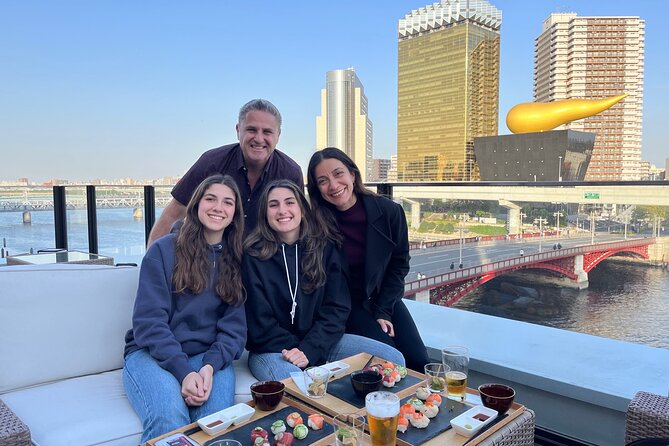
Asakusa is also where you can slow down and read the city with your senses: snack stalls nearby, river-area views that show you you’re actually in Tokyo, and a vibe that feels more traditional than the faster-moving city centers. One review specifically called out looking at the river Sumida area during the experience, which is a nice bonus when you’re doing something active.
The meeting point address is 2-chōme-17-9 Kaminarimon, Taito City. You’ll want to use a map app and be ready for a short local-walk moment. Because there’s no pickup, getting there on time is mostly about good navigation, not stress.
More sushi counters to book, ranked
- Sushi Making Tokyo Roll and Authentic Japanese Sushi Class
★ 5.0 · 3,971 reviews - Tokyo: Roll and Authentic Sushi Making Class in Asakusa
★ 4.9 · 1,957 reviews - Make Sushi and Create Unforgettable Memories in Tokyo
★ 5.0 · 1,413 reviews - Tokyo: Sushi Making Class in a Happi Coat near a Famous Spot
★ 4.9 · 1,377 reviews
What You’ll Make: Rolls, Nigiri, and Temari-Style Bonus Moments
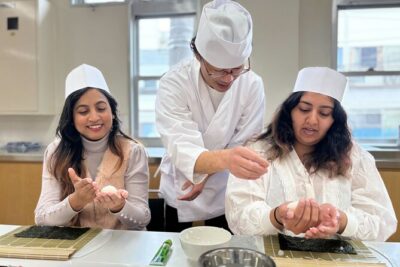
The core promise here is clear: you’ll learn how to make sushi rolls and authentic nigiri. That’s a smart combination. Rolls teach you rice handling and filling technique. Nigiri adds the shaping part and the balance between rice and fish that makes sushi feel like sushi.
The class is designed for beginners. You’re not expected to already know how to cook rice perfectly or hold a knife like a pro. Instead, you learn in steps, with guidance that focuses on what to do with your hands.
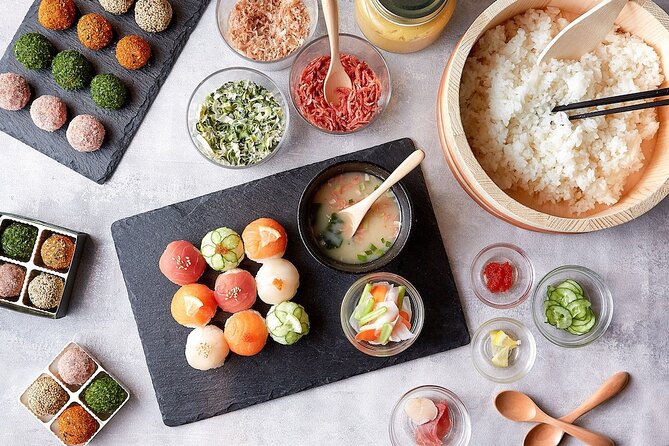
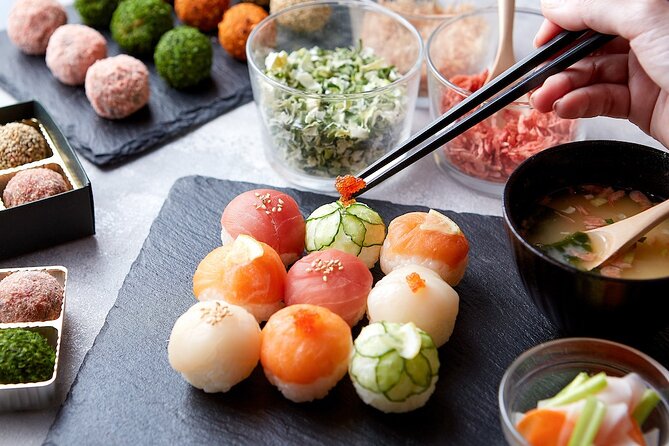
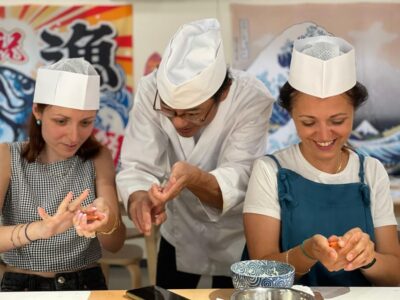
A nice detail from real sessions: one instructor named Ayu guided a student through temari sushi. That’s not listed as a separate headline feature, but it suggests the class may sometimes include a playful extra style alongside the main roll-and-nigiri focus. Even if your session sticks strictly to rolls and nigiri, you’ll still come away with a practical method you can repeat.
The 1 Hour 40 Minute Rhythm: How the Class Actually Flows
You’re looking at about 1 hour 40 minutes total. That time window is long enough to teach technique and get your hands moving, but short enough that it won’t eat your whole day.
Here’s the likely rhythm you should expect:
First comes the setup and instruction. The English-speaking instructor walks you through what you’re making and what “good” looks like in sushi form. Then you move into hands-on practice. That part is the value: you are not just watching someone else work.
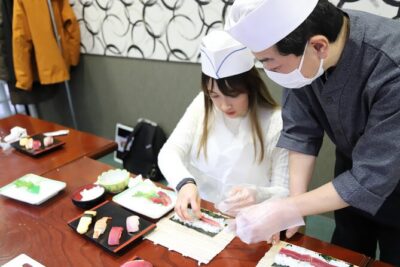
After you learn roll sushi steps, you shape and assemble. Sushi rice is the backbone, so you’ll spend time getting the feel for portioning, pressing, and keeping things neat without overworking them. With nigiri, you shift to shaping and topping. The lesson is step-by-step, and the staff guides you until you can do it on your own.
Finally, you eat what you made. The class ends with a meal and photo time so you can remember the look of your rolls and the plated nigiri you shaped yourself. One review also praised advice for making sushi look pretty, which is a reminder: sushi is part food, part presentation.
English-Friendly Teaching: Names You Might Meet and Why It Matters
This is built for international visitors. The instructor is English-speaking, and the class is described as friendly and beginner-ready. In practice, that usually means you’re not left guessing during the fiddly rice stages.
Three instructor names came up in accounts of the experience: Yui, Masaki, and Ayu. Yui was described as fun to talk with and helpful with making sushi pretty. Masaki was described as patient, enthusiastic, and joyful. Ayu was linked with temari sushi learning and a class that worked well for families.
Those details matter because sushi making is technique-heavy. If you cannot understand the instructions clearly, you end up with a frustrating mess and no confidence. English guidance removes that friction, so you spend your effort on tasting and shaping instead of decoding.
Also, the tone of instruction sounds relaxed. Reviews highlight patience and ease of understanding, which is exactly what you want when you’re doing something hands-on for the first time.
Eating Your Own Sushi: Fresh Fish and the Best Part of the Lesson
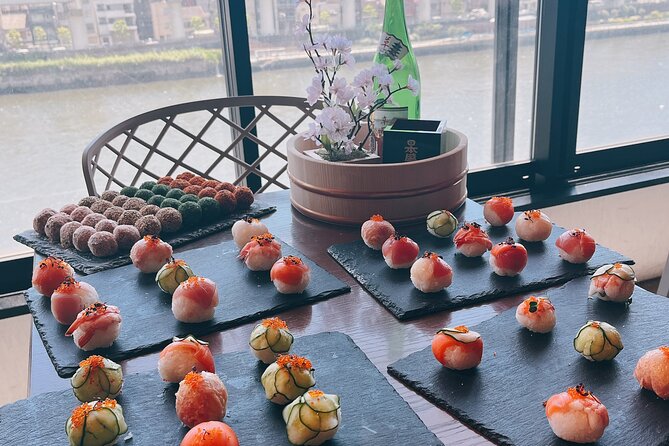
This experience ends the way great food classes should: you eat it.
Included in the experience are the ingredients and the meal. That’s more than just snacks after class. It means the time you spend learning actually turns into something you can taste immediately, and you get to compare your own results to what sushi is supposed to taste like.
One account specifically mentioned fresh fish tasting fantastic. That lines up with what you’d hope from a sushi-focused activity in Japan, and it’s also the practical reason this class feels worth it: you’re not paying just to learn theory.
If you care about photos, you’ll have time after you finish. Sushi looks better when you’re present for the whole process, and you’ll want at least a couple shots of your own rolls and nigiri before the hunger wins.
Readers also shortlisted these Tokyo bookings:
- Private Tour to Mt. Fuji and Hakone (Fully Licenced Operator)★ 5.0 · 1,910 reviews
- Tokyo Customized Private Tour (Must See Places in 1 Day)★ 5.0 · 1,499 reviews
- Mount Fuji Full-Day Private Tour from Tokyo (Customizable)★ 4.9 · 1,470 reviews
- Private Custom Tour: Tokyo in a Day★ 5.0 · 1,432 reviews
- Tokyo 4hr Private Tour with Government-Licensed Guide★ 5.0 · 1,394 reviews
Price and Value: What $1,300.72 Really Means for Your Group
The price is $1,300.72 per group, up to 15 people. That’s not cheap in a vacuum, but it becomes more reasonable depending on how many people are in your group. Since it’s private, you’re paying for exclusivity and instruction tailored to your group size.
Here’s the math you can use without guessing:
- If you fill the max of 15 people, the cost works out to about $86.71 per person.
- If it’s a small group, the per-person cost climbs fast.
So ask yourself one question: will you have enough people to make the group price feel fair? If yes, this becomes a strong value for a hands-on sushi class where you also eat what you make. If you’re just two people, it still may be worth it for the private setting and English instruction, but you’ll feel the price more.
A benefit worth calling out: it’s a top-rated class and recognized with awards on a major review platform. I don’t treat that as the only reason to book, but it does suggest consistency, especially with English instruction and the overall experience flow.
Logistics That Matter: Mobile Ticket and No Hotel Pickup
You’ll receive confirmation at booking. You’ll also get a mobile ticket, which is useful in Tokyo because you often end up using your phone for train navigation anyway.
The main practical issue is that hotel pickup and drop-off are not included. Meeting is at Sushi Making Tokyo (2-chōme-17-9 Kaminarimon…). That means you need to plan your arrival like an appointment: get yourself to Asakusa, arrive a bit early, then settle in.
Good news: it’s near public transportation. That helps a lot if you’re using trains and short walks to cover the city. If your day includes Sensoji Temple, this is a natural pairing because you’re already in the right neighborhood.
Is This Class Good for Families and Beginners?
Yes, for the right reasons.
This is described as easy for beginners, and the class supports groups and solo visitors. That matters because sushi making can either be a fun skill-building day or a frustrating experience depending on how it’s taught. Here, the structure is step-by-step and English-speaking, so you’re not stuck without support.
Family fit is also supported by how the experience is presented. One account specifically noted it was great for families, and the session with Ayu and temari sushi stood out as family-friendly.
If you’re traveling with kids, you’ll likely enjoy this because it’s active and focused. You’re doing the cooking, not just watching a show. And when the class ends, everyone gets to eat, which always helps with the post-activity mood.
If you’re traveling solo, a private format still gives you a controlled setting with your group only. If you’re pairing this with other Asakusa sights, it gives your day structure.
Should You Book Sushi Making Tokyo?
If your goal is to come home with a usable skill and a full stomach, I think this is a strong pick. You’ll learn roll sushi and nigiri, you get English guidance, and you eat your own sushi at the end. That combination is what makes it feel like more than a one-time photo stop.
Book it if:
- You want a hands-on food experience in Asakusa
- You’re a beginner and want clear instruction
- You care about eating what you make (not just watching)
- You can group up enough to make the private price feel reasonable
You might reconsider if:
- You strongly dislike navigating to meeting points without pickup
- You’re only going to have a very small party and the per-person cost makes you nervous
FAQ
Where is the meeting point for this sushi making class?
The class starts at Sushi Making Tokyo, No 1 Cooking Class in Japan, 2-chōme-17-9 Kaminarimon, Taito City, Tokyo 111-0034, Japan.
How long does the experience last?
The experience lasts about 1 hour 40 minutes.
Is hotel pickup included?
No. Hotel pickup and drop-off are not included.
Do I need any sushi-making experience?
No experience is needed. You’ll be guided step by step by the instructor.
What language are the instructions provided in?
An English-speaking instructor guides you throughout the class.
Is this a private experience?
Yes. It’s private, and only your group participates.
What’s included in the class?
An English-speaking instructor and the ingredients of the cooking class and meal are included.
Do I get a mobile ticket?
Yes. The tour includes a mobile ticket.
How does cancellation work?
You can cancel for a full refund up to 24 hours before the experience’s start time.
Is service allowed for people traveling with service animals?
Yes. Service animals are allowed.
More Private in Tokyo
- Tokyo 6hr Private Tour with Government-Licensed Guide
★ 5.0 · 3,902 reviews - Private Tour to Mt. Fuji and Hakone (Fully Licenced Operator)
★ 5.0 · 1,910 reviews - Tokyo Customized Private Tour (Must See Places in 1 Day)
★ 5.0 · 1,499 reviews - Mount Fuji Full-Day Private Tour from Tokyo (Customizable)
★ 4.9 · 1,470 reviews - Tokyo: Private City Highlights Tour with Local Guide
★ 4.8 · 1,433 reviews
More Tour Reviews in Tokyo
- Mt Fuji and Hakone 1-Day Bus Tour Return by Bullet Train
★ 5.0 · 26,383 reviews - 1-Day Tokyo Bus Tour
★ 5.0 · 14,250 reviews - Tokyo: teamLab Planets TOKYO Digital Art Museum Entry Ticket
★ 4.6 · 9,779 reviews - Mt Fuji & Hakone Cruise, Drum Show Bullet Train 1 Day from Tokyo
★ 4.0 · 7,413 reviews - Tokyo: Shinjuku Food Tour (13 Dishes at 4 Local Eateries)
★ 5.0 · 6,603 reviews
More Sushi Counters to Book
- Sushi Making Tokyo Roll and Authentic Japanese Sushi Class
★ 5.0 · 3,971 reviews - Tokyo: Roll and Authentic Sushi Making Class in Asakusa
★ 4.9 · 1,957 reviews - Make Sushi and Create Unforgettable Memories in Tokyo
★ 5.0 · 1,413 reviews - Tokyo: Sushi Making Class in a Happi Coat near a Famous Spot
★ 4.9 · 1,377 reviews - Tokyo Sushi Making Class in Tsukiji with Professional Chef
★ 5.0 · 1,177 reviews
Latest Tokyo reviews off our desk






Sushi Making Classes, compared.
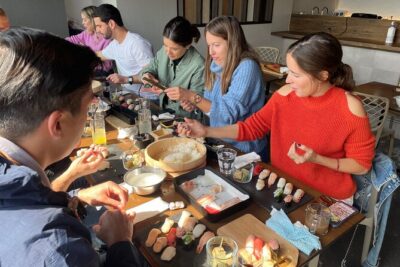 ★ 5.0Sushi Making Tokyo Roll and Authentic Japanese Sushi ClassFrom $593,971 reviews
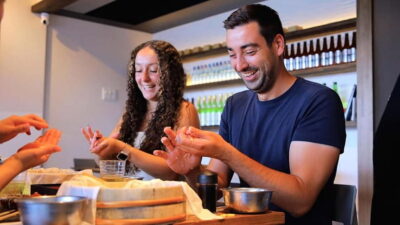 ★ 4.9Roll and Authentic Sushi Making Class in AsakusaFrom $581,957 reviews
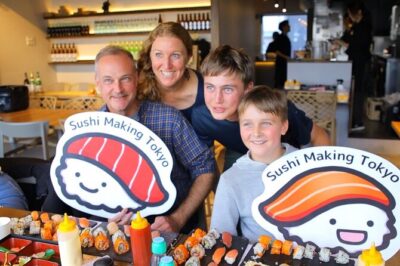 ★ 5.0Make Sushi and Create Unforgettable Memories in TokyoFrom $791,413 reviews
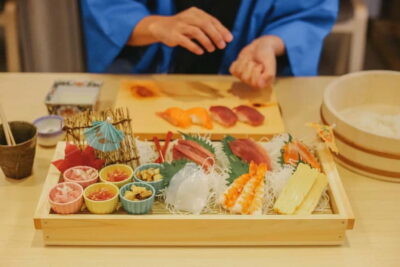 ★ 4.9Sushi Making Class in a Happi Coat near a Famous SpotFrom $421,377 reviews
 ★ 5.0Tokyo Sushi Making Class in Tsukiji with Professional ChefFrom $491,177 reviews
 ★ 5.0Tsukiji Fish Market Guided Tour and Sushi Making with Pro ChefFrom $104775 reviews
 ★ 4.9Tsukiji Fish Market Sushi Making Class with Pro ChefFrom $63506 reviews
 ★ 4.9Sushi Making ClassFrom $67390 reviews
Browse the lists this tour appears in