
Reviewed · YANAKA OLD TOWN WALKS
The Old Quarter of Tokyo – Yanaka Walking Tour
Yanaka feels like old Tokyo, not a postcard. This 3-hour walking tour is a smart way to see quieter neighborhoods on foot, with stories tied to religion and everyday life. I especially like the small-group size (max 10), which makes it easier to ask questions and get real context, and I love how the route mixes major sites with normal back streets. The only real drawback is simple: it’s mostly walking, so plan for heat and bring comfortable shoes.
You start at Nippori Station and end around Yanaka Ginza, so the tour doesn’t feel like a loop that wastes your time. You’ll also get plenty of photo chances without rushing, plus an English-speaking local guide who knows the neighborhood. If you’re allergic to religious sites or hate walking between short stops, this might feel a bit slow—but for most people, it’s the perfect pace.
In This Review
- Key highlights you’ll feel on this Yanaka walk
- Why Yanaka feels like old Tokyo in the middle of Tokyo
- Price and what $40 buys you (and what it won’t)
- Small-group walking keeps it conversational, not lecture-y
- From Nippori Station to Yanaka Ginza: a route that makes sense
- Stop 1: Tennoji Temple and the Yanaka Buddha from 1690
- Stop 2: Yanaka Cemetery and the customs that shape the place
- Stop 3: Ueno-Sakuragi Atari, old wooden houses turned community spots
- The 100-year-old cider tree symbol of Yanaka
- Stop 4: Enju-ji Temple, the strong-legs wish tradition
- Stop 5: Nezu Shrine torii gates and shrine etiquette
- Stop 6: Hebimichi back street walks you through everyday Japan
- Stop 7: Yanaka Ginza shopping street and a snack-friendly finish
- Guides matter here: the English, the photos, and the neighborhood pride
- Pacing, comfort, and when weather will affect your walk
- Who should book the Yanaka walking tour
- Should you book this Yanaka walk?
- FAQ
- FAQ
- How long is the Yanaka walking tour?
- What does the $40 price include?
- What is not included in the tour price?
- Are admission tickets included for every stop?
- How many people are in a group?
- Where do I meet the guide?
- Where does the tour end?
- Do I get a ticket on my phone?
- Is the tour good for most travelers?
- Are service animals allowed?
- What if the weather is bad?
Key highlights you’ll feel on this Yanaka walk
- Max 10 people keeps the tour human-sized, with time for questions
- Temples + shrines explain how Shinto and Buddhism show up side by side
- Local streets like Hebimichi give you daily-life Tokyo, not just sightseeing
- Nezu Shrine torii views are a top photo stop in the quieter parts of town
- Ueno-Sakuragi Atari turns old wooden houses into community spaces like cafes and a bakery
- Guides like Aya, Polina, Junko, Mei, and Kiyo are repeatedly praised for clear English and answering everything
Why Yanaka feels like old Tokyo in the middle of Tokyo
Yanaka is one of those neighborhoods that makes you stop and look around. While most of Tokyo screams modern, this area reads like a letter from the past: wooden homes, small lanes, and religious sites that don’t feel staged for tourists.
What I like is that the tour doesn’t treat Yanaka like a museum. You walk through a real residential patch of the city, where the rhythm is slower and the details are the point: the shape of a gate, the feel of a shrine lane, the customs people follow in places that are quiet on purpose. It’s also a strong contrast to the big-name districts most people sprint through.
More slow walks through old Yanaka
- Yanaka Walking Tour: Historic and Traditional District of Tokyo
★ 5.0 · 530 reviews - Tokyo: Old Quarter Yanaka Walking Tour
★ 4.8 · 406 reviews - Tokyo:Stroll in Old traditional culture towns~Yanaka & Nezu
★ 4.9 · 186 reviews - Yanaka Historical Walking Tour in Tokyo’s Old Town
★ 5.0 · 182 reviews
Price and what $40 buys you (and what it won’t)
At $40 per person, this isn’t the cheapest way to walk around Tokyo. But it does include a guided experience with an English-speaking local expert, plus the time-saving value of having someone explain what you’re seeing.
The big trade-off: food isn’t included, and a couple of stops note admission isn’t included. That means you’ll likely spend a little extra if you want snacks or drinks, especially near Yanaka Ginza. Still, you can keep it under control—think of the $40 as paying for context, pacing, and route planning, not a full meal.
Small-group walking keeps it conversational, not lecture-y
This tour caps at 10 travelers, which is exactly the kind of number that makes a difference. When a group is small, your guide can slow down for questions and adjust the pace based on the group’s energy.
That’s also why guide quality shows up so often in the reviews. Names like Paulina, Polina, Aya, Junko, Mei, Kiyo, and Rei come up with the same pattern: strong English, clear explanations, and patience. One review even mentioned laminated photos, which is a great trick for historical details when the scene you’re standing in doesn’t match the past exactly.
From Nippori Station to Yanaka Ginza: a route that makes sense
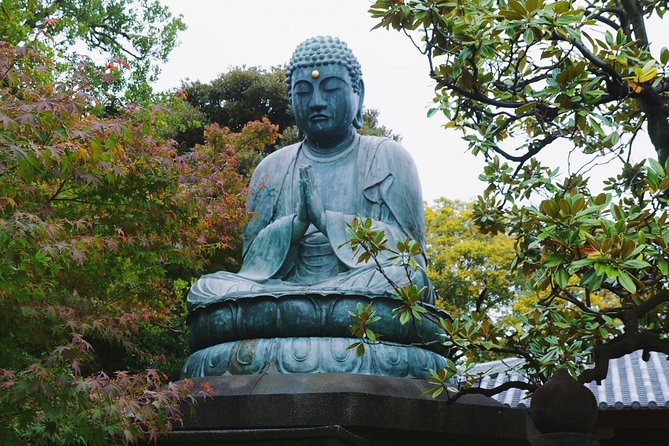
You meet at Nippori Station (near public transportation) and you finish in the Yanaka Ginza area. That matters because you don’t end up back where you started, and you get a natural place to keep exploring or grab something on your own.
The duration is about 3 hours, and the stops are short enough to keep moving but long enough to absorb the stories. It’s the kind of walking plan that fits well as a mid- to late-day activity when you want something meaningful but not exhausting.
Stop 1: Tennoji Temple and the Yanaka Buddha from 1690
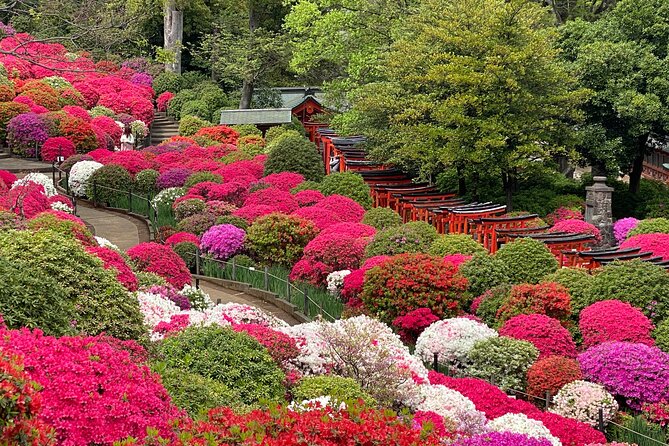
The tour opens at Tennoji Temple, where you’ll hear about the Yanaka Buddha, created in 1690. A good guide here makes the timeline feel real, not like a date you forget after lunch.
You’ll also get some useful background on Japanese religion in general. Even if you’re not chasing spiritual sites, this is a helpful way to understand why temples and shrines look the way they do—and why people treat these spaces with care. Expect about 15 minutes and a lot of talking focused on the meaning behind the place.
Readers also shortlisted these Tokyo bookings:
- Tokyo Tsukiji Fish Market Food and Culture Walking Tour★ 5.0 · 3,184 reviews
- Tokyo: Imperial Palace and Shogun Historical Walking Tour★ 5.0 · 2,251 reviews
- Tokyo: Shinjuku Local Bar and Izakaya Guided Walking Tour★ 4.9 · 1,794 reviews
- Tokyo: Tsukiji Fish Market Food and Walking tour★ 5.0 · 1,724 reviews
- Tokyo: Asakusa Walking Tour with Sensoji Temple Visit★ 4.8 · 1,583 reviews
Stop 2: Yanaka Cemetery and the customs that shape the place
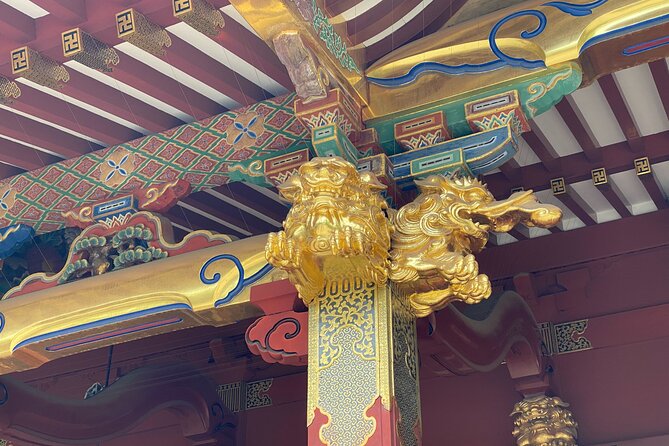
Next is Yanaka Cemetery, and the key value here is learning what a Japanese cemetery is like and how local customs work. Cemeteries can look confusing if you don’t know the patterns, and a guide turns it from eerie sightseeing into cultural understanding.
This stop is about 15 minutes, so you won’t get buried in details. But you will leave with a better read of etiquette: what people do, what they don’t do, and why the layout matters. It’s also one of the places where the neighborhood’s quiet mood really shows.
Stop 3: Ueno-Sakuragi Atari, old wooden houses turned community spots
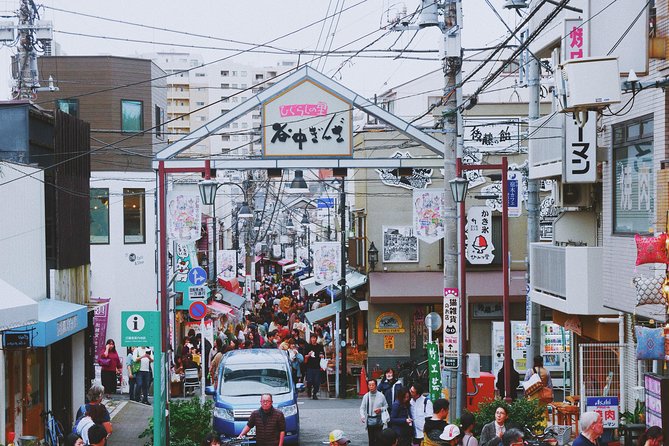
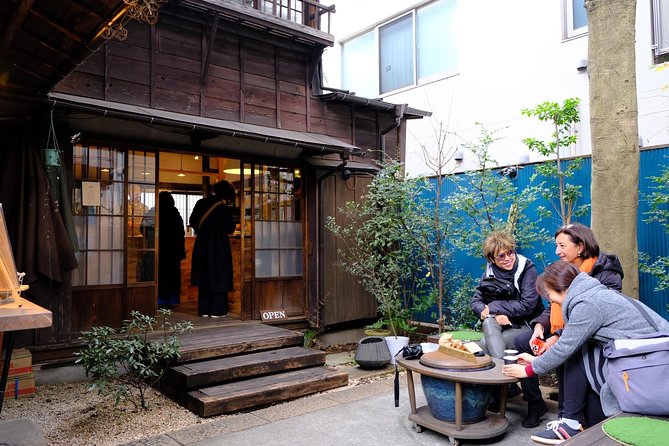
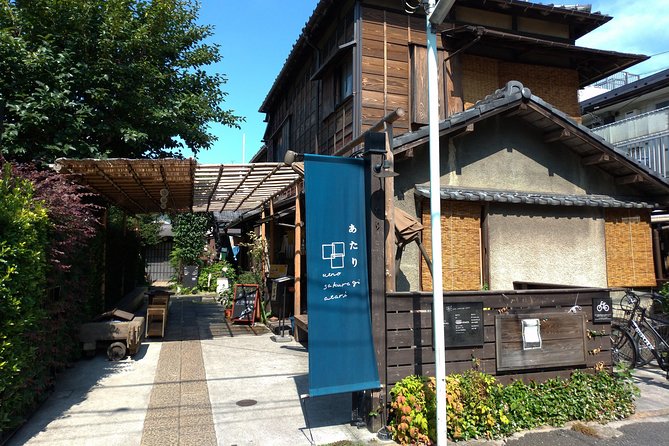
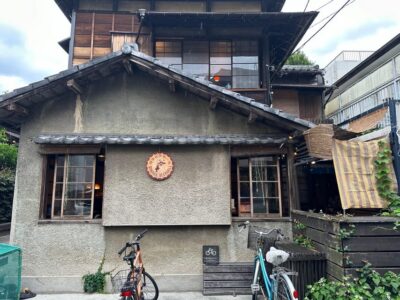
Ueno-Sakuragi Atari is a nice palate cleanser after the heavier religious stops. You’ll see older wooden houses—some about 80 years old—that have been renovated into spaces like a cafe, bakery, and beer hall, forming a community hub.
The admission at this stop is noted as not included, and that’s worth knowing so it doesn’t surprise you later. Even if you don’t spend money inside, the point is the setting: how older buildings can keep living as part of daily neighborhood life, not just preserved facades.
The 100-year-old cider tree symbol of Yanaka
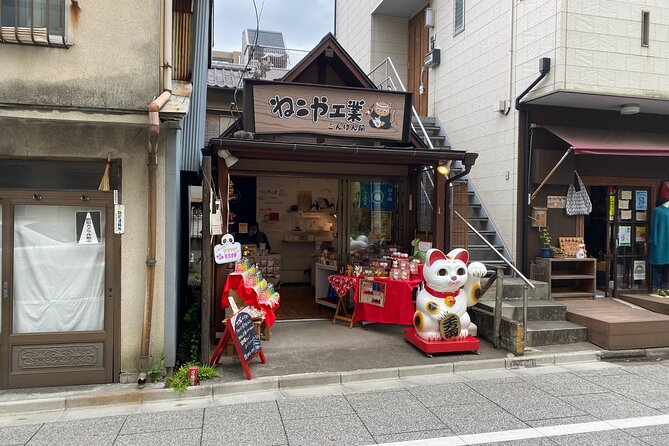
Between stops, you’ll encounter a 100-year-old cider tree, described as a symbol of Yanaka. This is the kind of small detail that makes walking tours worthwhile: you notice it because someone pointed it out, and then you start seeing how locals attach meaning to ordinary streets.
Don’t rush past it. Even short stops work best when you pause long enough to actually register what makes this place distinct.
Stop 4: Enju-ji Temple, the strong-legs wish tradition
At Enju-ji Temple, the focus isn’t a typical god. You’ll hear about a deity associated with strong legs, tied to the idea of writing wishes for foot problems on wooden boards.
This is a quick stop—around 5 minutes—so it works as a concentrated burst of story rather than a long sit-down. The practical value is understanding why these boards exist and what the visitors are doing. It’s easy to see religious artifacts with your eyes, but a guide helps you interpret them with your brain.
Stop 5: Nezu Shrine torii gates and shrine etiquette
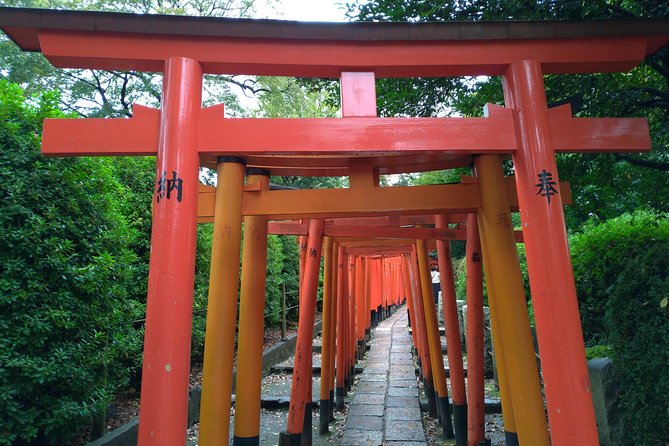
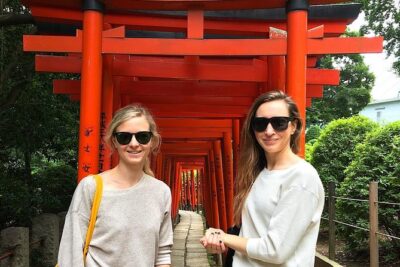
Nezu Shrine is one of the tour’s most photo-friendly sections. You’ll see lots of red torii gates, and the tour notes the similarity people often compare to Fushimi Inari in Kyoto. The difference is that this feels calmer and more local than the famous crowds most people line up for.
You’ll also learn shrine etiquette, which is a huge part of not feeling lost. The visit is about 20 minutes and usually hits both the visual wow-factor and the practical rules of how to behave respectfully. Bring your camera, but also bring the willingness to pause and follow instructions.
Stop 6: Hebimichi back street walks you through everyday Japan
After the big shrine stop, the tour shifts into a more residential feel with Hebimichi, described as a back street in the neighborhood. This part matters because it shows the Tokyo that lives between famous landmarks: the tight lanes, the daily routines, and the texture of ordinary life.
You’re not trying to cross a city on this walk. You’re learning how a neighborhood actually works, so you can recognize it when you pass it later on your own. This stop is also where a guide’s local knowledge makes the difference between seeing streets and understanding them.
Stop 7: Yanaka Ginza shopping street and a snack-friendly finish
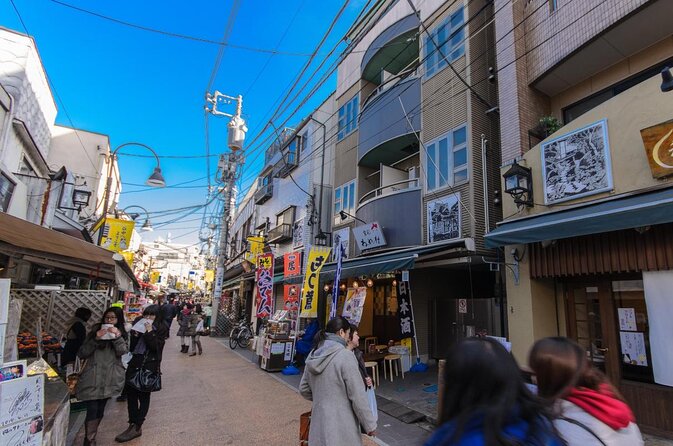
The tour wraps up at Yanaka Ginza Shopping Street, where the guide explains what’s going on and where to look. This is the right time to decide if you want snacks, sweets, or small gifts, since food costs aren’t included.
If you want ideas, reviews mention guides recommending places to try street food and sweets, along with bakery stops in old houses. The point isn’t to overspend—it’s to give you a shortcut to what’s worth tasting once you’re standing in the right area.
Guides matter here: the English, the photos, and the neighborhood pride
What’s consistently praised is how much the guide does beyond basic directions. Multiple reviews highlight excellent English and answers to questions, which is exactly what you want in a tour that mixes culture, religion, and small details.
Names like Aya, Polina, Junko, Mei, Kiyo, and Rei show up in positive comments. Some guides are described as warm and funny; others are praised for thoughtful explanations and even bringing visual aids like laminated photos. There’s also a strong theme of neighborhood familiarity—one review notes a guide living in the area, which makes sense because the tour style is intimate, not generic.
If you care about getting context instead of just photos, this part of the experience is the engine.
Pacing, comfort, and when weather will affect your walk
This is a walking tour, and the duration is about 3 hours. Reviews repeatedly advise comfortable shoes, and at least one mentions heat and humidity around 35 degrees—so don’t treat this like a casual stroll in perfect weather.
My practical advice: schedule it for a cooler time of day when possible, bring sun protection, and expect you’ll spend more energy than you think because you’re stopping to look closely. The route is paced, but it still adds up.
Also remember: some stops don’t include admission. That’s normal for walking tours in religious and small venues—just pack a little flexibility into your budget and time.
Who should book the Yanaka walking tour
This tour is a great fit if you want:
- A quieter Tokyo experience that isn’t just big-sight hustle
- Real cultural context around Shinto and Buddhism, not just names on signs
- Photography with meaning, especially around Nezu Shrine torii gates
- A small group where questions feel welcome
It’s also ideal if you’re staying near central Tokyo and want a different side of the city without planning a whole day of connections. On the other hand, if you strongly dislike religious sites or you need fully accessible, low-walking content, you should think twice based on the mostly walking format.
Should you book this Yanaka walk?
If you’re spending any serious time in Tokyo, I’d book this. It’s one of the better ways to see the Old Quarter feel without doing all the research yourself. The small-group size, the guide-led explanations, and the mix of temples, shrines, and daily streets make it more than a checklist.
Choose it especially if you want to understand how Tokyo’s religious spaces connect to everyday life—and if you like walking somewhere that doesn’t feel designed just for visitors. It won’t replace a major landmark day. It will balance it out.
FAQ
FAQ
How long is the Yanaka walking tour?
It runs for about 3 hours.
What does the $40 price include?
You get a guided walking tour with an English-speaking local expert and photo opportunities throughout.
What is not included in the tour price?
Food, drinks, personal expenses, and optional gratuities are not included.
Are admission tickets included for every stop?
Some stops are listed as free, while others are listed as admission not included. The tour includes free admission at Tennoji Temple, Yanaka Cemetery, and Nezu Shrine, while stops like Ueno-Sakuragi Atari and Enju-ji Temple note admission is not included.
How many people are in a group?
The tour has a maximum of 10 travelers.
Where do I meet the guide?
The meeting point is Nippori Station (2 Chome-19 Nishinippori, Arakawa City, Tokyo 116-0013, Japan).
Where does the tour end?
The tour ends at Yanaka Ginza (3-chōme-13-1 Yanaka, Taito City, Tokyo 110-0001, Japan).
Do I get a ticket on my phone?
Yes, it uses a mobile ticket.
Is the tour good for most travelers?
The tour notes that most travelers can participate.
Are service animals allowed?
Yes, service animals are allowed.
What if the weather is bad?
The experience requires good weather. If it’s canceled due to poor weather, you’ll be offered a different date or a full refund.
More Tours in Tokyo
- Mt Fuji and Hakone 1-Day Bus Tour Return by Bullet Train
★ 5.0 · 26,383 reviews - 1-Day Tokyo Bus Tour
★ 5.0 · 14,250 reviews - Tokyo: Shinjuku Food Tour (13 Dishes at 4 Local Eateries)
★ 5.0 · 6,603 reviews - Tokyo Mt Fuji 5th St & Hakone Cruise Bus Tour w/Bullet Train
★ 4.4 · 5,024 reviews - Flagship 2-Hours Official Street Go-Kart Tour – Tokyo Bay Shop
★ 5.0 · 4,974 reviews
More Tour Reviews in Tokyo
- Mt Fuji and Hakone 1-Day Bus Tour Return by Bullet Train
★ 5.0 · 26,383 reviews - 1-Day Tokyo Bus Tour
★ 5.0 · 14,250 reviews - Tokyo: teamLab Planets TOKYO Digital Art Museum Entry Ticket
★ 4.6 · 9,779 reviews - Mt Fuji & Hakone Cruise, Drum Show Bullet Train 1 Day from Tokyo
★ 4.0 · 7,413 reviews - Tokyo: Shinjuku Food Tour (13 Dishes at 4 Local Eateries)
★ 5.0 · 6,603 reviews
More Old Yanaka on Foot
- Yanaka Walking Tour: Historic and Traditional District of Tokyo
★ 5.0 · 530 reviews - Tokyo: Old Quarter Yanaka Walking Tour
★ 4.8 · 406 reviews - Tokyo:Stroll in Old traditional culture towns~Yanaka & Nezu
★ 4.9 · 186 reviews - Yanaka Historical Walking Tour in Tokyo’s Old Town
★ 5.0 · 182 reviews - Private Home Cooking in Yanaka – Local Flavors in a Warm Setting
★ 5.0 · 173 reviews
Latest Tokyo reviews off our desk






Yanaka Old Town Walks, compared.
 ★ 5.0Yanaka Walking Tour: Historic and Traditional District of TokyoFrom $72530 reviews
 ★ 4.8Old Quarter Yanaka Walking TourFrom $32406 reviews
 ★ 4.9Stroll in Old traditional culture towns~Yanaka & NezuFrom $29186 reviews
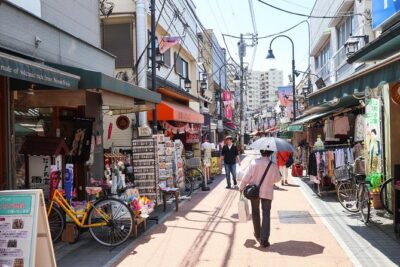 ★ 5.0Yanaka Historical Walking Tour in Tokyo’s Old TownFrom $81182 reviews
 ★ 5.0Private Home Cooking in Yanaka – Local Flavors in a Warm SettingFrom $122173 reviews
 ★ 5.0Let’s experience calligraphy in YANAKA, Taito-ku, TOKYO !!From $75127 reviews
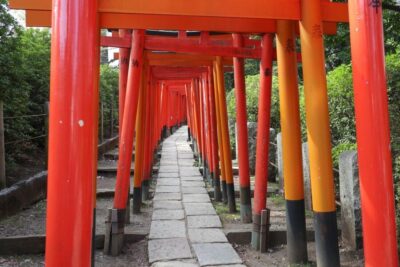 ★ 4.8Yanaka District: Historical Walking Tour in Tokyo’s Old TownFrom $79117 reviews
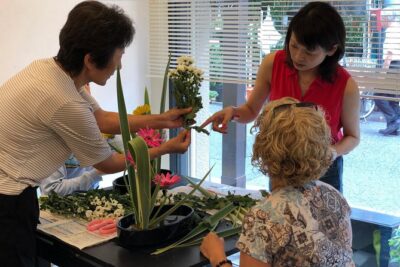 ★ 5.0Discover the Art of Ikebana in Tokyo’s Historic Yanaka DistrictFrom $10860 reviews
Browse the lists this tour appears in