
Reviewed · MEIJI SHRINE TOURS
Tokyo: Meiji Jingu Shrine & Inner Garden Guided Tour (2h)
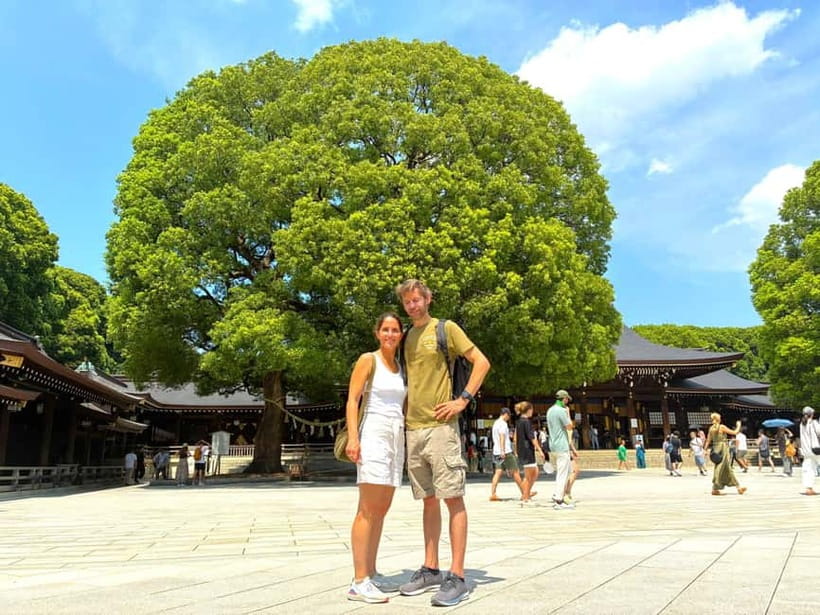
Forest quiet, with rules explained fast. This Meiji Jingu and Shinen Garden tour is interesting because it turns a sacred place into something you can actually follow: what to do at the shrine, why you’re doing it, and where to look as sunlight filters through the trees. What I like most is the hands-on temizu handwashing ritual, plus the guided storytelling around the sake barrel offering and the Eternal Forest concept, so you’re not just looking—you’re understanding.
The main drawback to consider is time. In just 2 hours, you’ll hit the big moments—torii gates, prayers, fortune-telling, and the South Pond walk—but you won’t have hours to slow-walk at your own pace.
In This Review
- Key points worth knowing before you go
- Entering Meiji Jingu and Shinen Garden in 2 Hours
- Meeting at Ichinotorii: The Easiest Start Point
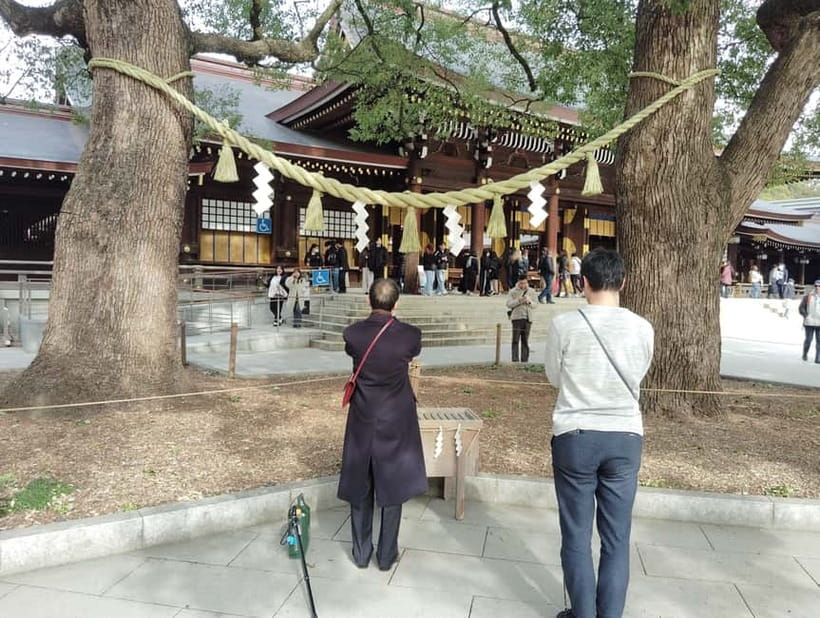
- The Sake Barrel Offering and the Eternal Forest Theme
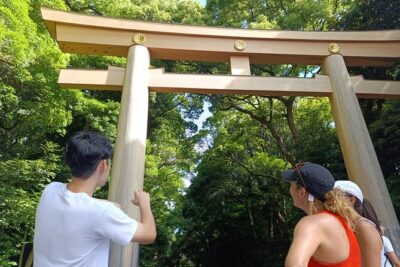
- Walking Under the Grand Torii Gates and Preparing to Pray
- Temizu Handwashing: Doing It Correctly and Without Anxiety
- Omikuji Fortune-Telling and Optional Protective Charms
- South Pond Garden Walk: Calm, Structure, and Good Looking Time
- Kiyomasa’s Well: Getting the Extra Stop When There’s Time
- What You Learn from Different Guides (Minoru-San, Kai, Kyo, Takashi)
- Price and Value: Does $48 Actually Make Sense?
- Who Should Book This Tour (and Who Might Skip)
- Should You Book This Meiji Jingu and Shinen Garden Tour?
- FAQ
- How long is the Meiji Jingu Shrine and Shinen Garden guided tour?
- Where is the meeting point?
- What’s included in the price?
- Is the tour offered in English?
- Do I need to pay for fortune-telling?
- Will there be time to take photos?
- Is a protective charm included?
- Is food and drinks included?
- Is private transportation included?
- Can I cancel if my plans change?
Key points worth knowing before you go
- Start at Ichinotorii so you build the route in the right order, not by guesswork
- Sake barrel offering + Eternal Forest gives meaning to what you see right away
- Temizu handwashing and shrine praying tips help you act correctly without rushing
- Omikuji fortune-telling adds a fun, interactive break in the middle of the calm
- South Pond focus means you spend your time where the garden experience lands
Entering Meiji Jingu and Shinen Garden in 2 Hours
If you’re short on time in Tokyo, this is a smart way to see Meiji Jingu without feeling lost in the details. The tour is built around a clear rhythm: start at the first torii, do the key shrine moments in sequence, then finish with a peaceful garden loop. You get structure, but you still get quiet time to look around.
The biggest value here is practical cultural guidance. Meiji Jingu can feel like a beautiful place where you’re expected to know the script. With this guide-led format, you learn how to pray and what to do at the handwashing ritual, so you don’t stand there wondering. And because it’s guided, you also get the “what is this and why does it matter” layer—especially with the sake barrel offering and its Eternal Forest theme.
At the same time, keep expectations realistic. This isn’t a full-day retreat. It’s a focused 2-hour experience, so if you want to sit and read every sign or take long breaks, you’ll need extra independent time before or after.
More quiet hours at Meiji Shrine
- Tokyo: Meiji Shrine, Asakusa, Skytree Bus Tour and Cruise
★ 4.7 · 1,986 reviews - Tokyo Panoramic 1 Day: Meiji Shrine, Asakusa, Odaiba and SKYTREE®
★ 4.5 · 1,222 reviews - Tokyo: Meiji Shrine Walking Tour — Shinto & Imperial System
★ 4.9 · 266 reviews - Tokyo: Meiji Jingu Shrine and Shinto Culture Walking Tour
★ 5.0 · 245 reviews
Meeting at Ichinotorii: The Easiest Start Point
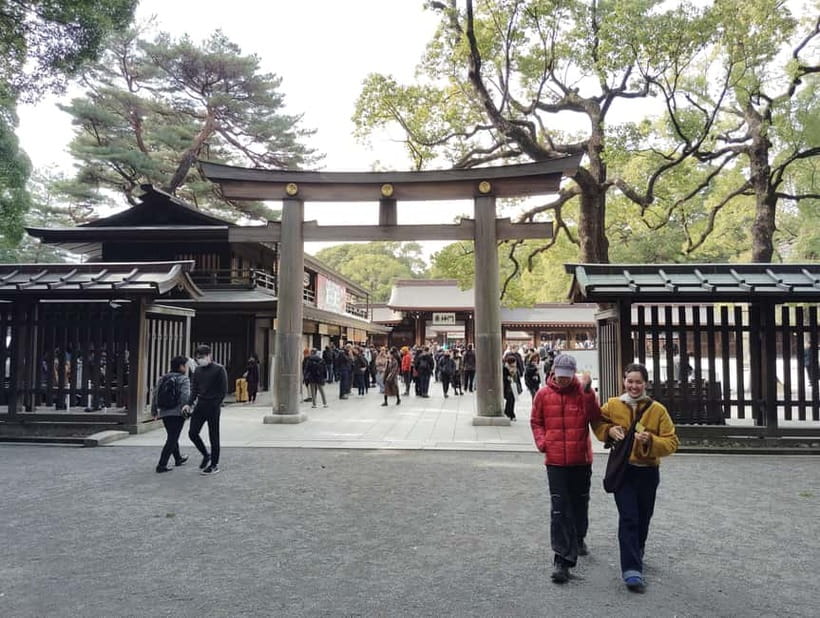
You meet in front of Meiji Jingu’s first torii (明治神宮 一の鳥居). The guide holds a yellow sign with the DeepExperience logo, so it’s relatively simple to spot your group and get moving.
Why that matters: starting at Ichinotorii sets you on the route the shrine expects you to follow. Even if you’re not a first-timer, that small thing helps you “get your bearings fast” and keeps you from wandering into the wrong flow. And because the tour duration is only 2 hours, a smooth start makes a real difference.
This also helps with stress if you’re navigating Tokyo transit and sidewalks the day you go. You aren’t trying to meet inside a complicated area and hunt for your guide. You’re meeting at a clear landmark—the torii you’ll recognize once you’re there.
The Sake Barrel Offering and the Eternal Forest Theme
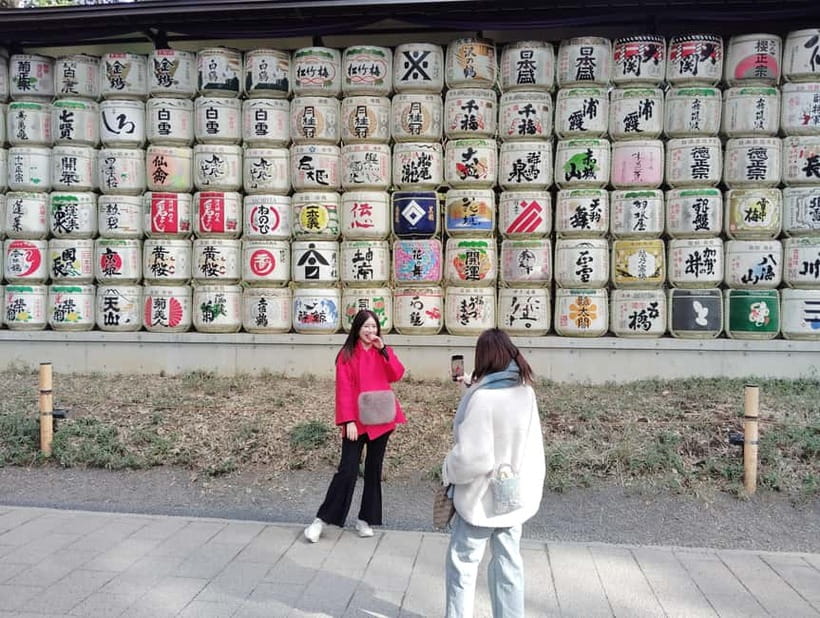
One of the tour’s strongest moments is the stop around the sake barrel offering area. This is where the guide connects the visuals to the idea of the Eternal Forest. You’ll also get a photo moment here, which is handy because the architecture and mood at this stage are often exactly what you came for.
For me, the best guided stops do two things at once: they point out what to notice and they give you a reason to care. The Eternal Forest explanation helps you look at the place as more than scenery. You can treat it as a living spiritual concept rather than just a set of pretty gates and paths.
A small practical note: photo stops are time-boxed. If photography is your priority, bring patience—and don’t plan to spend 30 minutes on one shot. Use the time you get well: take one wide shot, one close-up, and then turn back toward the guided flow so you don’t miss the next ritual moment.
Walking Under the Grand Torii Gates and Preparing to Pray
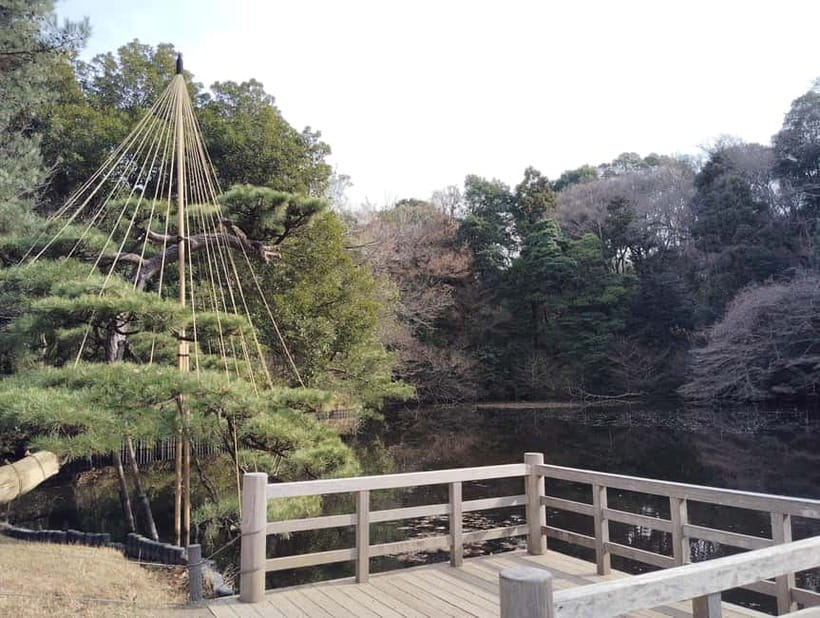
After the early photo and offering area, you move toward the grand torii gate. This is where the tour shifts from observation to participation.
You’ll have an opportunity to take part in a traditional handwashing ritual before heading into the shrine. The guide doesn’t leave you guessing either—you learn the proper way to pray at Meiji Jingu and you’re given a chance for a quiet moment of reflection.
That reflection piece is underrated. Too many shrine visits become a checklist: see torii, take photo, move on. Here, the structure makes room for stillness—so you’re not only doing actions, you’re also pausing at the point where the place asks you to slow down.
If you’re the type who likes to know the “how” before you do something, this tour style suits you. The guide sets the tone and pace so you don’t accidentally treat a sacred moment like a sightseeing stop.
Temizu Handwashing: Doing It Correctly and Without Anxiety
The handwashing ritual (temizu) is one of the most valuable parts of this experience. It’s simple in concept, but most people feel awkward when they don’t know what’s expected. This tour solves that by guiding you through the process, and then linking it to prayer etiquette.
What I like about this approach is how it reduces hesitation. Instead of standing there trying to copy strangers or figure out timing, you follow the guide’s instructions and you learn what the steps are for. That makes the ritual feel purposeful, not performative.
You’ll also be taught how to pray at Meiji Jingu. The point isn’t memorizing a script like a school assignment. It’s understanding the flow well enough that you can focus on the meaning, not the mechanics. And since the guide includes time for quiet thought, you leave with a calmer experience than the typical rush-through.
Readers also shortlisted these Tokyo bookings:
- Tokyo 6hr Private Tour with Government-Licensed Guide★ 5.0 · 3,902 reviews
- Tokyo: Shinjuku Local Bar and Izakaya Guided Walking Tour★ 4.9 · 1,794 reviews
- Tokyo: Private City Highlights Tour with Local Guide★ 4.8 · 1,433 reviews
- Tokyo: Tsukiji Fish Market Guided Walking Tour★ 4.9 · 1,397 reviews
- Tokyo 4hr Private Tour with Government-Licensed Guide★ 5.0 · 1,394 reviews
Omikuji Fortune-Telling and Optional Protective Charms
After the shrine moment, the tour turns lighter with fortune-telling. You’ll experience omikuji—written fortunes that people use for guidance.
This part tends to be fun because it’s interactive. You don’t need special knowledge to participate, and it breaks up the calm atmosphere with something playful. The guide can help you understand what you’re doing and what to expect from the fortune-telling part.
If you want, you can also receive a protective charm. The tour data indicates you’ll have the chance to get one if you’d like, and the overall tour package includes Omikuji and other experience fees. So in many cases, this is a low-effort way to add a personal keepsake to the visit.
Tip for your mindset: treat the fortune as reflection, not a command. I like using it as a way to ask yourself what you should pay attention to right now, then move on.
South Pond Garden Walk: Calm, Structure, and Good Looking Time
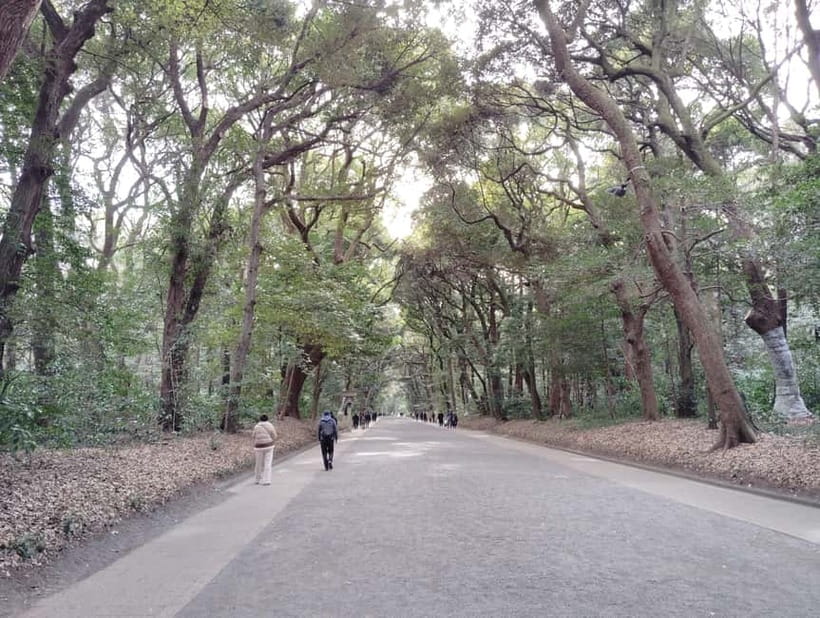
Next comes the Meiji Jingu Garden, with a focus on the South Pond area. This is where the tone changes from ritual to scenery—but not in a random way. You’re guided through the garden with attention on where to look and what makes this section special.
The guided garden walk is valuable because gardens can be easy to “miss.” If you wander alone, you might walk past the best views while trying to find the exit. Here, the tour gives the route and a gentle spotlight—so you actually get to the spots that make the garden experience work.
Sunlight through trees is a big part of why Meiji Jingu feels different from other Tokyo stops. Even if the day is bright, the forest atmosphere slows you down. The tour ends with a peaceful conclusion back near the first torii, with time for a quiet walk through the area.
Photo note: garden photography often takes longer than you expect because the mood changes with your position. You’ll have time, but you should still keep an eye on your guide so you don’t get left behind at the next point.
Kiyomasa’s Well: Getting the Extra Stop When There’s Time
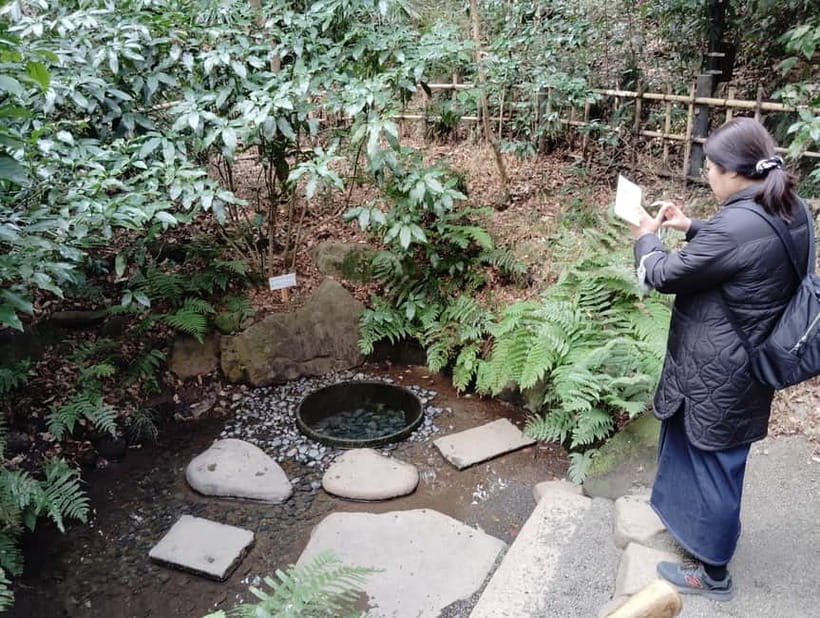
If time allows, you may also visit Kiyomasa’s Well. This is the kind of bonus stop that can make the tour feel flexible—more like a guided walk than a rigid production.
Because it depends on timing, don’t assume it’s guaranteed. Still, it’s a good sign that the tour has enough flow to add in an extra feature for people who want it.
If Kiyomasa’s Well is important to you specifically, it’s smart to go in with a plan for a little extra waiting and movement. Short tours like this can’t promise every optional detail, but they can usually fit it in if the schedule stays smooth.
What You Learn from Different Guides (Minoru-San, Kai, Kyo, Takashi)
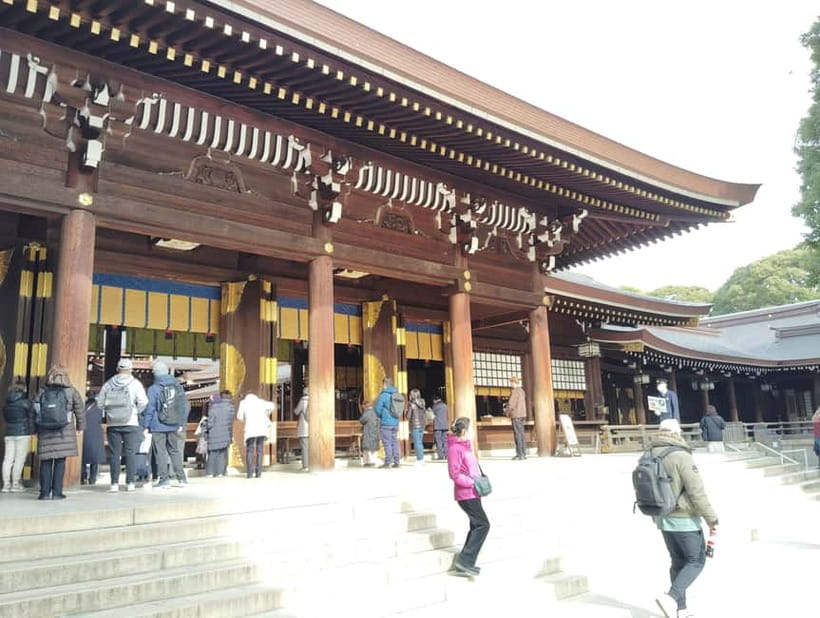
One of the quiet strengths of this tour is the guide lineup. In the feedback tied to this experience, I’m seeing repeated praise for people who explain clearly and add human context—not just facts.
You might be guided by Minoru-San, who shares detailed explanations and anecdotes, or Kai, who is described as very kind and good at connecting the shrine to Japanese culture itself. Another name that comes up is Kyo, praised for being accommodating, sharing fresh perspectives, and bringing humor and an easygoing style that makes cultural context feel approachable. Takashi is also noted for being passionate and extremely friendly, with a lot of background that helps you make sense of what you’re seeing.
Even if you don’t get one of those exact guides, the pattern is useful. Look for a guide who can answer simple questions on the spot, not just recite a script. This tour’s format (rituals, praying tips, garden focus) makes that ability especially helpful. When the explanation is good, the place feels more personal instead of like a museum you walked through.
Price and Value: Does $48 Actually Make Sense?
At $48 per person for a 2-hour guided experience, the price can feel reasonable once you see what’s included. The tour covers the entrance fee to the Meiji Jingu Garden and includes Omikuji and other experience fees, along with the guide fee. That means you’re not paying separately for key activities you’d probably want to do anyway.
What’s not included is also clear: food and drinks and private transportation. Tokyo day plans often already include lots of walking and small purchases, but it’s still useful to plan ahead. If you’ll be hungry after, grab something nearby before you meet—or plan a post-tour meal.
Value-wise, I’d think of this as paying for confidence. You’re buying the ability to participate in the shrine rituals correctly, enjoy the garden with less wandering, and leave with a better understanding of what you experienced. If you’re the kind of traveler who enjoys learning cultural etiquette and wants the route shaped for you, the price feels easier to justify.
Who Should Book This Tour (and Who Might Skip)
This is a great fit if you want a guided introduction to Japanese spirituality through real actions—handwashing, praying etiquette, and fortune-telling—without needing to do extra research first.
It also works well for people who:
- Feel overwhelmed at shrines and want clear steps
- Want a short, high-impact plan in a limited time window
- Like gardens but would prefer a route with meaningful stops
- Appreciate small-group or private-style pacing
I’d consider skipping or pairing it with extra solo time if you:
- Want to linger for long periods in one spot
- Are comfortable figuring out shrine etiquette independently
- Prefer long, free-form wandering over structured stops
For most first-time visitors, though, this guided pacing is exactly the sweet spot.
Should You Book This Meiji Jingu and Shinen Garden Tour?
I’d book it if your goal is to leave Meiji Jingu feeling like you understood the visit, not just that you saw it. The combination of sake barrel offering + Eternal Forest explanation, ritual guidance for temizu handwashing, and the added experience of omikuji fortune-telling gives you a well-rounded 2-hour journey. Then the South Pond garden walk finishes the mood with calm rather than rushing.
If you’re sensitive to crowds or you want lots of personal space, remember it’s a guided group activity and the timing is structured. But the tour ends with a peaceful walk back, and the focus on reflection helps it feel more respectful than a fast sightseeing loop.
FAQ
How long is the Meiji Jingu Shrine and Shinen Garden guided tour?
It lasts 2 hours.
Where is the meeting point?
You meet in front of the first torii (明治神宮 一の鳥居). The guide will hold a yellow sign with the DeepExperience logo.
What’s included in the price?
Entrance fee to Meiji Jingu Garden, Omikuji and other experience fees, and the guide fee.
Is the tour offered in English?
Yes. The live tour guide is English (and Japanese is also listed).
Do I need to pay for fortune-telling?
The tour includes Omikuji and other experience fees.
Will there be time to take photos?
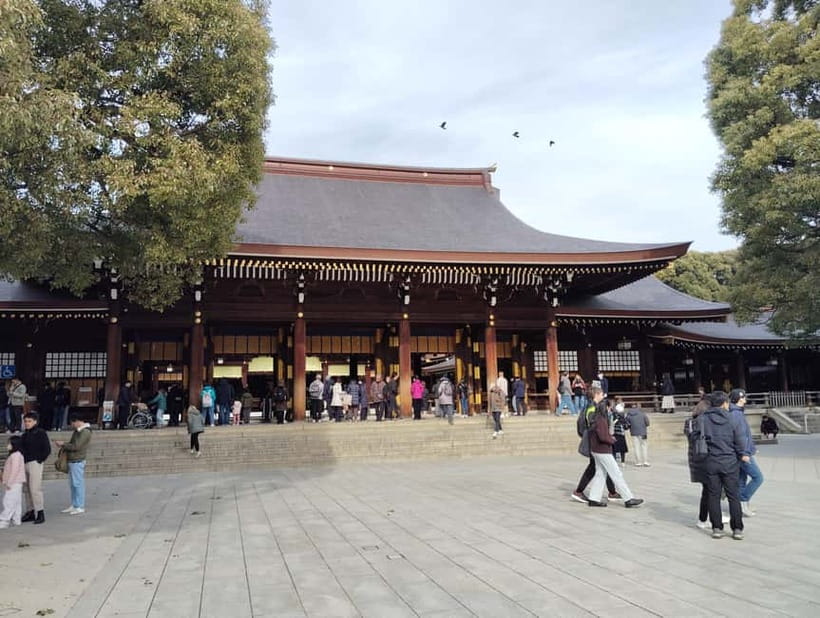
Yes. There are photo stops, including at the sake barrel offering area and at Meiji Shrine.
Is a protective charm included?
You can receive a protective charm if you’d like. The tour includes Omikuji and other experience fees, but the charm is described as optional.
Is food and drinks included?
No. Food and drinks are not included.
Is private transportation included?
No. Private transportation is not included.
Can I cancel if my plans change?
Free cancellation is available up to 24 hours in advance for a full refund. Reserve now & pay later is also offered.
More Tours in Tokyo
- Mt Fuji and Hakone 1-Day Bus Tour Return by Bullet Train
★ 5.0 · 26,383 reviews - 1-Day Tokyo Bus Tour
★ 5.0 · 14,250 reviews - Tokyo: Shinjuku Food Tour (13 Dishes at 4 Local Eateries)
★ 5.0 · 6,603 reviews - Tokyo Mt Fuji 5th St & Hakone Cruise Bus Tour w/Bullet Train
★ 4.4 · 5,024 reviews - Flagship 2-Hours Official Street Go-Kart Tour – Tokyo Bay Shop
★ 5.0 · 4,974 reviews
More Tour Reviews in Tokyo
- Mt Fuji and Hakone 1-Day Bus Tour Return by Bullet Train
★ 5.0 · 26,383 reviews - 1-Day Tokyo Bus Tour
★ 5.0 · 14,250 reviews - Tokyo: teamLab Planets TOKYO Digital Art Museum Entry Ticket
★ 4.6 · 9,779 reviews - Mt Fuji & Hakone Cruise, Drum Show Bullet Train 1 Day from Tokyo
★ 4.0 · 7,413 reviews - Tokyo: Shinjuku Food Tour (13 Dishes at 4 Local Eateries)
★ 5.0 · 6,603 reviews
More Meiji Shrine Hours, Rated
- Tokyo: Meiji Shrine, Asakusa, Skytree Bus Tour and Cruise
★ 4.7 · 1,986 reviews - Tokyo Panoramic 1 Day: Meiji Shrine, Asakusa, Odaiba and SKYTREE®
★ 4.5 · 1,222 reviews - Tokyo: Meiji Shrine Walking Tour — Shinto & Imperial System
★ 4.9 · 266 reviews - Tokyo: Meiji Jingu Shrine and Shinto Culture Walking Tour
★ 5.0 · 245 reviews - Tokyo: Meiji Shrine and Shinto Culture Walking Tour
★ 5.0 · 225 reviews
Latest Tokyo reviews off our desk






Meiji Shrine Tours, compared.
 ★ 4.7Meiji Shrine, Asakusa, Skytree Bus Tour and CruiseFrom $1221,986 reviews
 ★ 4.5Tokyo Panoramic 1 Day: Meiji Shrine, Asakusa, Odaiba and SKYTREE®From $851,222 reviews
 ★ 4.9Meiji Shrine Walking Tour — Shinto & Imperial SystemFrom $23266 reviews
 ★ 5.0Meiji Jingu Shrine and Shinto Culture Walking TourFrom $19245 reviews
 ★ 5.0Meiji Shrine and Shinto Culture Walking TourFrom $18225 reviews
 ★ 5.0Meiji Shrine Walking Tour — Shintoism & Imperial SystemFrom $21209 reviews
 ★ 5.0Tokyo Morning Tour: Asakusa, Meiji Shrine and Tsukiji Fish MarketFrom $157128 reviews
 ★ 5.0Tokyo Morning Tour : Meiji Shrine, Asakusa and Fish MarketFrom $72102 reviews
Browse the lists this tour appears in