
Reviewed · MEIJI SHRINE TOURS
Tokyo: Meiji Shrine Walking Tour — Shintoism & Imperial System
Tokyo slows down at Meiji Shrine. I love how the guide explains Shinto rituals in a practical, human way, and I love that you’re in a small group that makes the whole visit feel un-rushed. One possible drawback: you still do a fair amount of walking on forest paths and around shrine grounds, so comfortable shoes matter.
You’ll start at Harajuku Station, use a mobile ticket, and spend about 1 hour 30 minutes moving through the forest toward the main shrine. I also like that the tour time is flexible with two departures, and the guides get specific praise by name for clear English and patient answers, including Yuuki A, Nana, Nonoka, Keiko, and Nanami.
In This Review
- Key highlights you’ll actually feel
- Why Meiji Shrine feels like a Tokyo reset
- Where you start: Harajuku Station and the gentle “okay, we’re here” moment
- The forest approach and the Harajuku Gate entrance
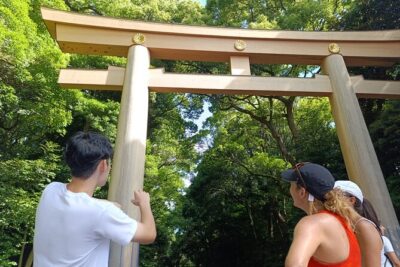
- The Big Torii: a giant made from ancient cypress
- Inside the main shrine: omikuji, ema, and omamori time
- The Meiji Shrine Garden: included admission and a calmer tempo
- Café Mori no Terrace: a peaceful ending near the shrine grounds
- Price and value: what $21.22 buys you (and why it adds up)
- Group vibe and guide style: why the names matter
- Who should book this tour (and who might skip it)
- Quick practical advice before you go
- Should you book the Meiji Shrine walking tour?
- FAQ
- How long is the Meiji Shrine walking tour?
- Where is the meeting point?
- Is the tour a small group?
- Does the price include admission fees?
- Do I need to bring a paper ticket?
- Are there different tour times available?
- What do you do at the main shrine?
- Is there time at the garden?
- Is there food during the tour?
- What is the main landmark on the route?
Key highlights you’ll actually feel
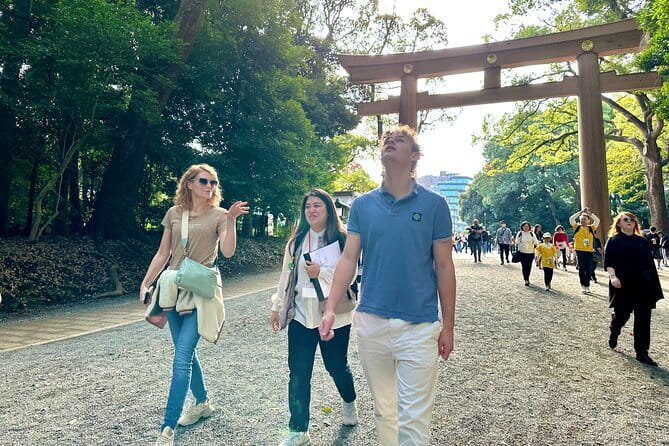
- Harajuku Gate to the main shrine: you enter through the Harajuku gate and walk into a quieter world fast
- One huge wooden torii: one of Japan’s largest, made from ancient cypress brought from Taiwan
- Rituals you can try: prayer, omikuji (a fortune draw), ema (wish plaques), and omamori charms
- Garden time included: admission fees for the Meiji Shrine Garden are part of the price
- Small group pace: up to 15 people, so questions don’t get lost
- Café Mori no Terrace stop: a calm place to grab light food and browse shrine-themed goods
Why Meiji Shrine feels like a Tokyo reset
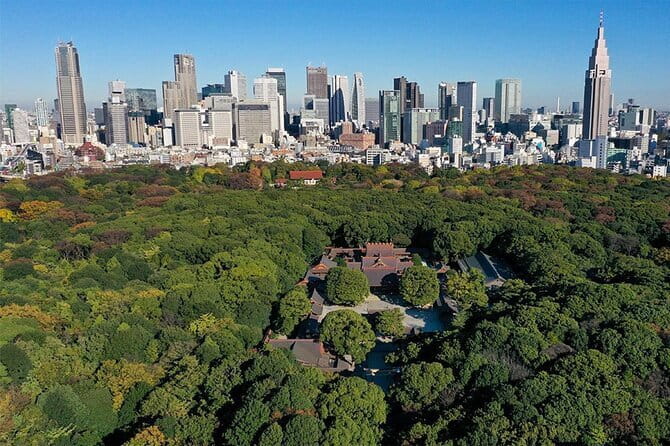
Meiji Shrine is the kind of place where Tokyo noise doesn’t just fade. It changes shape. You go from trains and streets to a wide path under tall trees, with the air feeling cooler even on hot days. That shift is exactly why a guided walk works so well here.
This tour is built around more than photos. You’re not just ticking off a famous site. You’re learning the why behind what you see as you move—especially the religious side of the shrine and how the Japanese Imperial system connects to the Meiji-era story. It helps your visit stop being random sightseeing and start feeling like understanding.
And it’s paced with an easy rhythm: forest walking, a signature landmark, then time at the main shrine, plus a short break at the end.
More quiet hours at Meiji Shrine
- Tokyo: Meiji Shrine, Asakusa, Skytree Bus Tour and Cruise
★ 4.7 · 1,986 reviews - Tokyo Panoramic 1 Day: Meiji Shrine, Asakusa, Odaiba and SKYTREE®
★ 4.5 · 1,222 reviews - Tokyo: Meiji Shrine Walking Tour — Shinto & Imperial System
★ 4.9 · 266 reviews - Tokyo: Meiji Jingu Shrine and Shinto Culture Walking Tour
★ 5.0 · 245 reviews
Where you start: Harajuku Station and the gentle “okay, we’re here” moment
You meet near Harajuku Station at 1 Chome-18 Jingumae, Shibuya. The tour ends back at the meeting point, so you don’t have to worry about getting yourself across town afterward.
That matters in Tokyo, where the easiest plans often go wrong. Starting at Harajuku also gives you a sense of where you are in the city—because Harajuku is still close. You can come from shopping streets, cafés, or train connections and then step into the shrine area without a long transfer.
The practical win here is the mobile ticket. Less paper to manage, less stress when you arrive.
The forest approach and the Harajuku Gate entrance
The walk begins at Meiji Jingu through the Harajuku gate. Right away, you’re pointed onto a wide path that feels intentionally designed to slow you down. Along the way, you pass through giant torii gates and you’ll see sake barrel displays.
This is where having a guide pays off. Even if you’ve read about Japanese shrines online, you’ll often miss the flow—what you’re looking at and why it’s placed there. A good guide helps you see the sequence as something meaningful, not just decoration.
You also stop for the purification moment. The description includes a visit to the purification fountain area, which is one of those things people notice but don’t always understand. With guidance, it becomes part of the story instead of just a quick glance.
What to watch for: this opening stretch is where you’ll feel the “forest cool.” If you’re visiting in summer, plan to start early in the day if you can.
The Big Torii: a giant made from ancient cypress

Soon you reach one of the stand-out moments: the Big Torii. You’ll walk past one of Japan’s largest wooden torii gates, made from ancient cypress brought all the way from Taiwan.
A tour is useful here because size alone doesn’t tell the full story. You’ll hear about the torii’s background and history, and you’ll have a short stop long enough to look up, take in the scale, and feel the quiet weight of it.
This torii also works like a psychological marker. It tells you you’re “really inside” the shrine approach now, not just walking around the grounds.
Possible drawback: the stop is brief (about 5 minutes). If you’re the type who needs lots of time for photos, you’ll want to do your main shutter-burn later, after you’ve finished the guided flow.
Inside the main shrine: omikuji, ema, and omamori time
The heart of the experience is your time at the Meiji Jingu Shrine. Here, you can take part in several classic shrine activities, with the guide helping explain what they are and how they fit the atmosphere.
Your time includes:
- Offering a prayer
- Drawing an omikuji (a type of fortune paper)
- Writing a wish on an ema (wooden plaque)
- Exploring omamori charms
This is a big reason the tour gets such strong ratings. Most shrine visits can turn into a “see, bow, leave” routine. Here, the guided explanation turns it into something active. You’re not just watching others participate.
Also, you’ll get context for the emotional side of it—the feeling people describe as special presence at a shrine. Even if you don’t treat omikuji or ema as personal fate, the ritual structure gives your visit meaning.
Tip for getting the most out of your time here: arrive mentally ready to slow down. The shrine space works better when you’re not racing through it like a checklist.
Readers also shortlisted these Tokyo bookings:
- Tokyo Tsukiji Fish Market Food and Culture Walking Tour★ 5.0 · 3,184 reviews
- Tokyo: Imperial Palace and Shogun Historical Walking Tour★ 5.0 · 2,251 reviews
- Tokyo: Shinjuku Local Bar and Izakaya Guided Walking Tour★ 4.9 · 1,794 reviews
- Tokyo: Tsukiji Fish Market Food and Walking tour★ 5.0 · 1,724 reviews
- Tokyo: Asakusa Walking Tour with Sensoji Temple Visit★ 4.8 · 1,583 reviews
The Meiji Shrine Garden: included admission and a calmer tempo
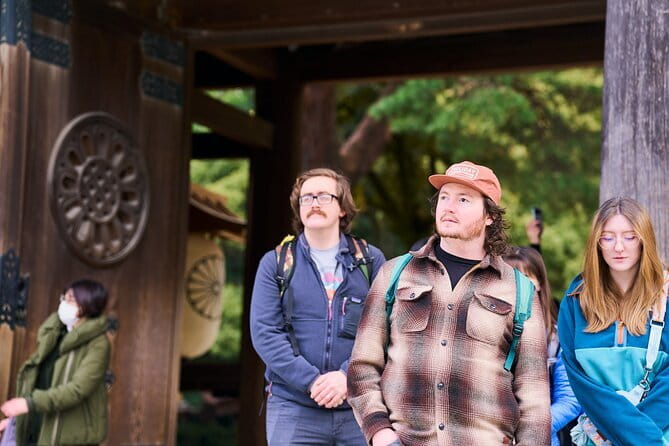
After the main shrine experience, the tour includes time for the Meiji Shrine Garden (admission fees included). This is where the day shifts again—from prayer-and-ritual mode into garden-walk mode.
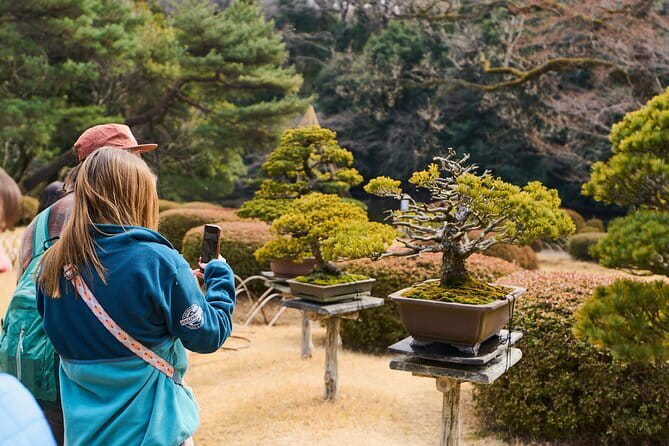
Why this inclusion matters: gardens in Japan can be serene, but they can also be easy to rush if you’re short on time. Paying attention with a guide helps you notice what you came for—composition, seasonal feel, and the way the garden supports the shrine’s quiet purpose.
You’ll also get the broader theme woven in: Shinto practice isn’t just about ceremonies. It’s tied to a worldview and a historical system that includes the Imperial story. That combination is what turns this visit from pretty scenery into something you can explain to a friend later.
Café Mori no Terrace: a peaceful ending near the shrine grounds
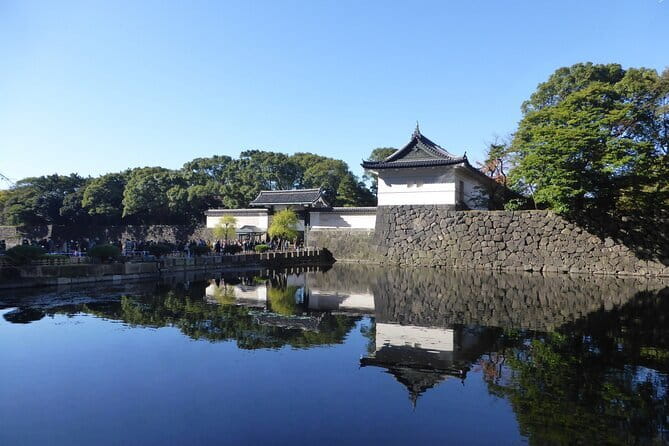
At the end, you’ll reach CAFÉ Mori no Terrace. This isn’t a chaotic food stop designed to move groups fast. It’s described as being near the shrine grounds, with a quiet setting.
You’ll have around 15 minutes here—enough for light meals and drinks, plus a chance to browse the gift side. The shop is noted for offering charms and traditional goods, including Meiji Jingu–exclusive items.
If you want a practical souvenir that doesn’t feel like generic tourist junk, this stop is one of your best bets. You’re buying in the context of the shrine itself, not across town after you’ve already gotten overwhelmed.
Watch the time: 15 minutes disappears fast if you’re hungry and browsing at the same time. Decide if you’re there for food first, or mementos first.
Price and value: what $21.22 buys you (and why it adds up)

At $21.22 per person, this tour is priced like a “small spend, big payoff” experience. The big value drivers are:
- Small group size (maximum 15 travelers)
- Local guide who explains Shinto and the Imperial system as you walk
- Admission fees included for the Meiji Shrine Garden
- A guided pace that helps you experience the shrine as a sequence, not a blur
- A practical finish with café and shop time near the grounds
Also, the tour is around 1 hour 30 minutes. That’s a sweet spot in Tokyo. It’s long enough to absorb meaning and take part in omikuji/ema activities, but short enough that it won’t steal your entire day.
One consideration: because it’s only about 90 minutes, you won’t have unlimited free time in every corner. If you want hours alone for photography and wandering at your own speed, you might prefer going independently. But if you want understanding plus participation without planning, this price makes sense.
Group vibe and guide style: why the names matter
The best part of the experience isn’t the torii alone. It’s the way the guide helps you connect dots.
In the provided feedback, specific guide names are repeatedly praised—Yuuki A, Nana, Nonoka, Keiko, and Nanami—for being friendly, patient, and clear in English. That kind of guide matters because Shinto concepts can sound vague until someone explains them in plain terms and answers questions in a way that feels respectful.
Since the group stays small, you’re more likely to get real answers instead of hearing explanations from far away.
Who should book this tour (and who might skip it)
This tour is a great fit if you:
- Want a calmer, meaningful shrine visit that includes participation
- Appreciate context about Shintoism and the Imperial system rather than just images
- Like small groups, with room for questions
- Don’t want to spend time figuring out how to structure your visit
You might skip it if you:
- Prefer complete freedom to wander for a long time on your own
- Need lots of “extra time” at photo spots beyond what the tour schedule allows
- Are extremely sensitive to walking and steady movement (some walking is built into every stop)
Quick practical advice before you go
This is one of those Tokyo experiences where your attitude counts. Even without religious background, you can make it better by being ready to slow down and participate at least in the main shrine activities.
If you draw an omikuji or write an ema, treat it like part of the atmosphere, not a prop. You’ll feel the difference immediately.
Also, since the route includes forest paths, plan on comfort over fashion. Your feet will thank you.
Should you book the Meiji Shrine walking tour?
If you want the Meiji Shrine experience to feel guided, explained, and genuinely memorable, I think this is an easy yes. The included garden admission, the chance to try things like omikuji and ema, and the small-group approach make it a strong value for $21.22. Plus, it’s short enough that you can still enjoy the rest of Tokyo without rushing yourself.
Book it if your goal is understanding, not just sightseeing. Skip it only if you’re looking for hours of solo roaming and don’t care about the Shinto and Imperial context.
FAQ
How long is the Meiji Shrine walking tour?
It lasts about 1 hour 30 minutes.
Where is the meeting point?
The tour starts at Harajuku Station, at 1 Chome-18 Jingumae, Shibuya, Tokyo 150-0001, Japan.
Is the tour a small group?
Yes. The maximum group size is 15 travelers.
Does the price include admission fees?
Yes. Admission fees for the Meiji Shrine Garden are included.
Do I need to bring a paper ticket?
No. The tour uses a mobile ticket.
Are there different tour times available?
Yes. You can choose from two tour times to fit your schedule.
What do you do at the main shrine?
You can offer a prayer, draw an omikuji fortune, write a wish on an ema plaque, and look at omamori charms.
Is there time at the garden?
Yes. The tour includes the Meiji Shrine Garden, with admission fees included.
Is there food during the tour?
There is a stop at CAFÉ Mori no Terrace, where you can have light meals and drinks for about 15 minutes.
What is the main landmark on the route?
You’ll pass through a major wooden torii gate, including one of Japan’s largest torii made from ancient cypress brought from Taiwan.
More Tours in Tokyo
- Mt Fuji and Hakone 1-Day Bus Tour Return by Bullet Train
★ 5.0 · 26,383 reviews - 1-Day Tokyo Bus Tour
★ 5.0 · 14,250 reviews - Tokyo: Shinjuku Food Tour (13 Dishes at 4 Local Eateries)
★ 5.0 · 6,603 reviews - Tokyo Mt Fuji 5th St & Hakone Cruise Bus Tour w/Bullet Train
★ 4.4 · 5,024 reviews - Flagship 2-Hours Official Street Go-Kart Tour – Tokyo Bay Shop
★ 5.0 · 4,974 reviews
More Tour Reviews in Tokyo
- Mt Fuji and Hakone 1-Day Bus Tour Return by Bullet Train
★ 5.0 · 26,383 reviews - 1-Day Tokyo Bus Tour
★ 5.0 · 14,250 reviews - Tokyo: teamLab Planets TOKYO Digital Art Museum Entry Ticket
★ 4.6 · 9,779 reviews - Mt Fuji & Hakone Cruise, Drum Show Bullet Train 1 Day from Tokyo
★ 4.0 · 7,413 reviews - Tokyo: Shinjuku Food Tour (13 Dishes at 4 Local Eateries)
★ 5.0 · 6,603 reviews
More Meiji Shrine Hours, Rated
- Tokyo: Meiji Shrine, Asakusa, Skytree Bus Tour and Cruise
★ 4.7 · 1,986 reviews - Tokyo Panoramic 1 Day: Meiji Shrine, Asakusa, Odaiba and SKYTREE®
★ 4.5 · 1,222 reviews - Tokyo: Meiji Shrine Walking Tour — Shinto & Imperial System
★ 4.9 · 266 reviews - Tokyo: Meiji Jingu Shrine and Shinto Culture Walking Tour
★ 5.0 · 245 reviews - Tokyo: Meiji Shrine and Shinto Culture Walking Tour
★ 5.0 · 225 reviews
Latest Tokyo reviews off our desk




Meiji Shrine Tours, compared.
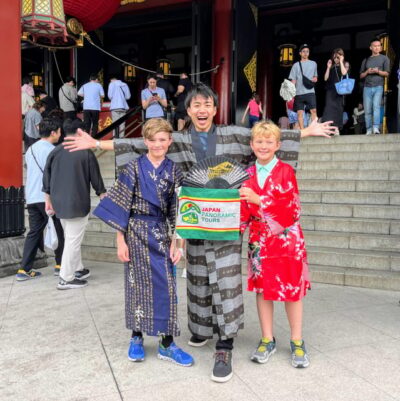 ★ 4.7Meiji Shrine, Asakusa, Skytree Bus Tour and CruiseFrom $1221,986 reviews
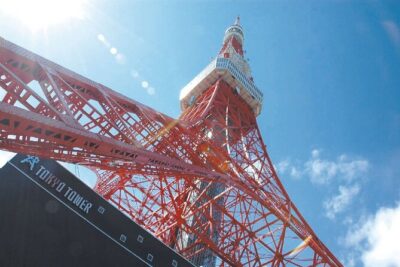 ★ 4.5Tokyo Panoramic 1 Day: Meiji Shrine, Asakusa, Odaiba and SKYTREE®From $851,222 reviews
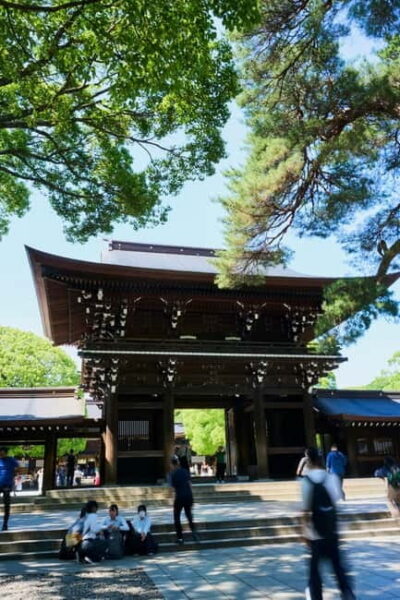 ★ 4.9Meiji Shrine Walking Tour — Shinto & Imperial SystemFrom $23266 reviews
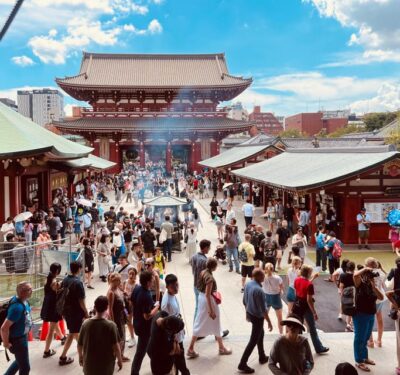 ★ 5.0Meiji Jingu Shrine and Shinto Culture Walking TourFrom $19245 reviews
 ★ 5.0Meiji Shrine and Shinto Culture Walking TourFrom $18225 reviews
 ★ 5.0Tokyo Morning Tour: Asakusa, Meiji Shrine and Tsukiji Fish MarketFrom $157128 reviews
 ★ 5.0Tokyo Morning Tour : Meiji Shrine, Asakusa and Fish MarketFrom $72102 reviews
 ★ 5.0Full Tokyo: Meiji Shrine, Imperial Palace, Asakusa & SkytreeFrom $3978 reviews
Browse the lists this tour appears in