
Reviewed · ASAKUSA & SENSOJI TOURS
Tokyo Morning Tour : Meiji Shrine, Asakusa and Fish Market
Tokyo mornings feel slower and smarter. This tour strings together Meiji Jingu’s quiet shrine paths, Tsukiji’s outer-market food bites, and Asakusa’s major temple sights in just four hours, so you get variety without burning the whole day. I like that the pacing feels relaxed and guided, not random wandering. The only real drawback to plan for is the extra public transport cost (around 550 yen), since it isn’t included.
I also appreciate the small group limit of up to 8 people. That size makes it easier to ask questions, and it helps the guide take photos during the walk instead of you constantly saying, wait, for the camera.
In This Review
- Key Highlights You’ll Care About
- Meiji Jingu Shrine: A Calm Start Under Torii Gates
- Tsukiji Jogai Market: Street Food Hits and Outer-Market Energy
- Senso-ji Temple and Nakamise-dori: Old Tokyo With Clear Landmarks
- The Small-Group Advantage: Real Guidance, Real Pace
- Price and Value: What $72.67 Buys You
- Timing, Meeting Point, and How to Plan Your Morning
- Best Fit: Who This Tour Works For
- Should You Book This Tokyo Morning Tour?
- FAQ
- How long is the Tokyo Morning Tour?
- What stops are included on the tour?
- Is the tour guide English-speaking?
- Are admission tickets included?
- What street foods are you tasting?
- What is the tour price?
- Where does the tour start and end?
- Is public transportation included?
- What is the group size limit?
- Is free cancellation available?
Key Highlights You’ll Care About
- Meiji Jingu in the forest: torii gates, shrine rituals, and a calm start that sets the tone for the rest of the day
- Tsukiji Jogai Market food time: street snacks like sweet mochi, sweet potato, and savory cutlet
- Senso-ji basics that actually help: Kaminarimon Thunder Gate and Nakamise-dori explained in context
- Up-close guidance with a small group (max 8): better questions, better timing, and less waiting around
- Photos taken during the tour: handy when you want shots without constantly handing off your phone
- English-speaking guide with history: you’ll understand what you’re seeing instead of just ticking boxes
Meiji Jingu Shrine: A Calm Start Under Torii Gates
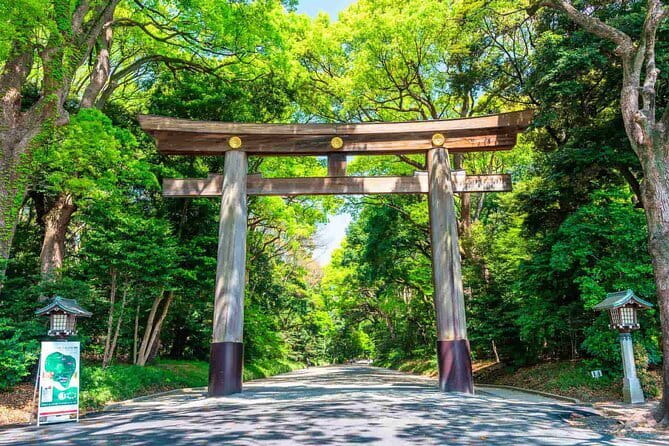
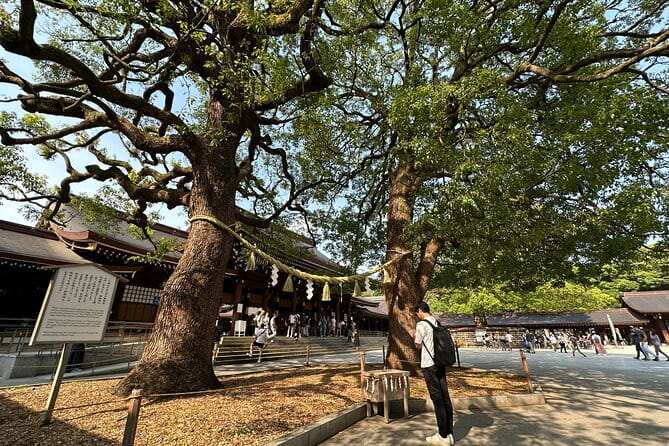
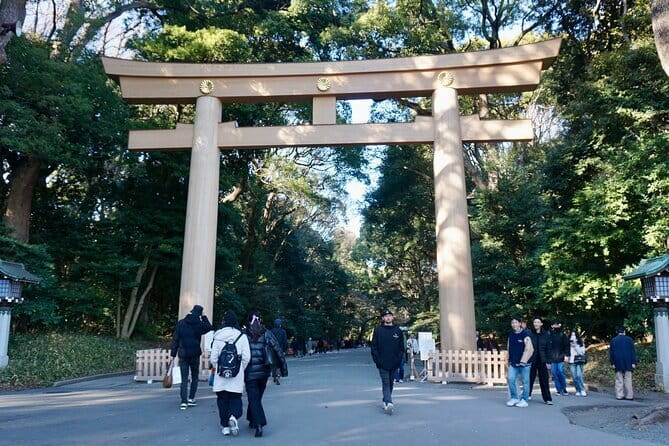
Meiji Jingu is the best kind of first stop for a morning tour: peaceful, green, and emotionally different from the train-station pace Tokyo is famous for. You walk through the shrine’s forested approach and pass under torii gates, which is both dramatic and meaningful. The shrine is dedicated to Emperor Meiji and Empress Shoken, and the guide’s historical insights help you notice details you might otherwise miss.
This part lasts about an hour, which is long enough to soak in the atmosphere without turning it into a slow slog. You’re not just looking at architecture. You’re learning the rhythm of the place: how people move, what people focus on, and why the setting matters. That context is what makes the shrine feel more than a photo stop.
One practical consideration: shrines and temple grounds tend to be busiest around certain times, even in the morning. The good news is that a guided morning format usually keeps you moving steadily and helps you avoid that awkward “we’re standing in the wrong spot” feeling.
More temple mornings in old Asakusa
- Tokyo: Japanese Dance Cabaret Theater Asakusa-Kaguwa Ticket
★ 4.8 · 2,270 reviews - Tokyo: Meiji Shrine, Asakusa, Skytree Bus Tour and Cruise
★ 4.7 · 1,986 reviews - Tokyo: Roll and Authentic Sushi Making Class in Asakusa
★ 4.9 · 1,957 reviews - Tokyo: Asakusa Walking Tour with Sensoji Temple Visit
★ 4.8 · 1,583 reviews
Tsukiji Jogai Market: Street Food Hits and Outer-Market Energy
Next comes Tsukiji Jogai Market, the outer-market area that still carries that classic old-school Tokyo food vibe. Even though the inner wholesale auction area moved to Toyosu, the outer market remains a food destination, with stalls and snack options right where you can see them.
This stop also runs about an hour, and that’s exactly the right length for a market segment during a short tour. Markets can eat time fast if you’re trying to read menus, compare prices, and search for the best bite. An hour keeps it focused on the experience rather than letting it turn into homework.
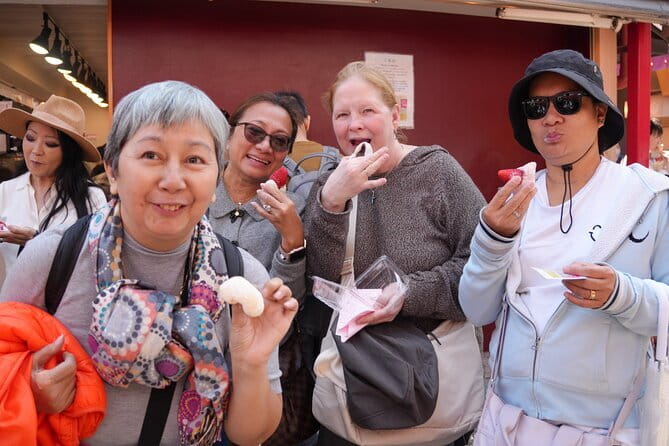
The tour includes street-food tasting, including sweet mochi (sweet rice cake), sweet potato, and a savory cutlet. I like that mix because it covers different cravings without forcing you into a full meal plan. It’s also a smart way to sample local flavors in a place where written labels and menus can be confusing if you’re on your own.
A subtle value here is what the guide adds. Food markets are easy to treat like a theme park. With historical insights, Tsukiji becomes a window into how Tokyo thinks about food: sourcing, daily eating, and the culture of grabbing something quick and good on the way to something else.
If you’re the type who wants to shop for ingredients or linger for a second round of snacks, you might feel slightly “time-boxed” at the one-hour mark. That’s not a flaw of the tour so much as how short tours work. If you’re craving extra time in Tsukiji, treat the guided stop as your warm-up and leave yourself room for a self-guided return later.
Senso-ji Temple and Nakamise-dori: Old Tokyo With Clear Landmarks
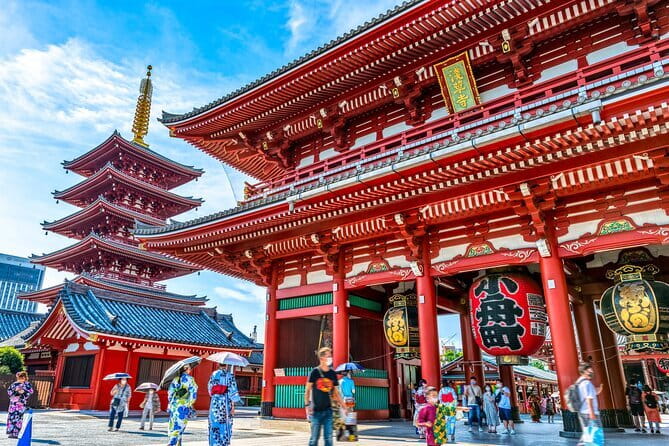
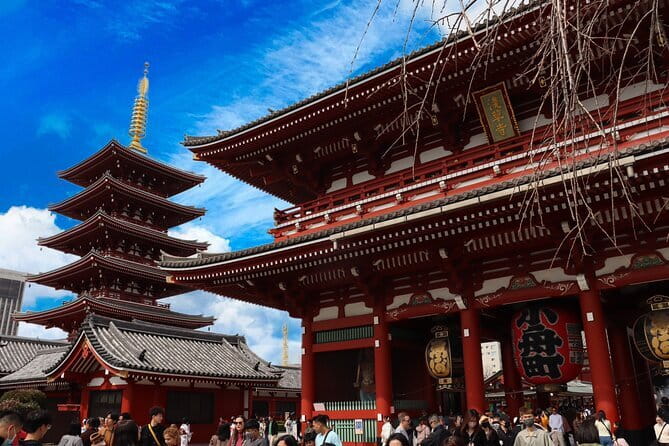
The final stop is Senso-ji, Tokyo’s oldest Buddhist temple. This is where the tour shifts from quiet shrine vibes to classic Asakusa energy—still walkable, but more lively. You enter through Kaminarimon (Thunder Gate), one of the most recognizable temple gates in Japan. Seeing that gate with a guide’s context helps it land differently than a quick photo: you understand why it’s such a key entry point and what it signals when you arrive.
Then you explore Nakamise-dori, the shopping street that runs toward the temple grounds. This is where you’ll see the “souvenir meets snacks” style that Asakusa is known for. The guide’s historical insights keep it grounded, so it doesn’t feel like you’re just walking past stalls.
The tour gives about an hour at Senso-ji, which works well as a capstone. You get time to see the main highlights and still end your morning with energy left for breakfast after the tour. Also, the tour finishes at Asakusa Station, which makes it convenient to continue on without the hassle of figuring out your next move right away.
If you hate crowded walkways, aim to keep your pace steady and listen for what the guide suggests. The street naturally gets busier closer to peak hours, and even a one-hour visit can feel more intense during the busiest times.
The Small-Group Advantage: Real Guidance, Real Pace
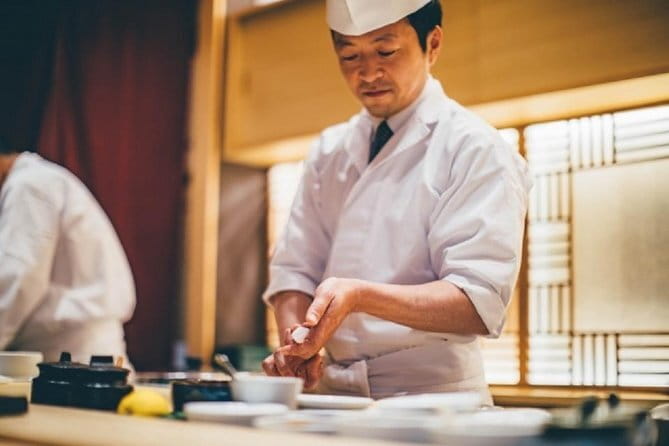
One reason this tour earns such strong marks is the human factor: the guide quality. In the reviews, I saw repeated praise for guides who are fun and professional, and who explain what you’re seeing clearly. Names that came up included Shoma Sato and Yosuke, and what stood out was their patience and flexibility with pacing.
In plain terms, small-group tours are easier to enjoy because the guide can react. If someone needs a moment, the group doesn’t just steamroll ahead. If the timing shifts, you don’t get stuck. One review also pointed out that breaks were scheduled and adjusted as needed, which matters when you’re moving through three very different areas back-to-back.
I also like the idea of photos being taken during the tour. In Tokyo, you’ll run into the problem of always grabbing your camera one-handed while standing in line. A guide capturing a few group shots lets you enjoy the sights without turning every stop into a self-timer production.
Max 8 travelers also makes questions more likely. You’re not shouting over a crowd. You can ask about what a gate signifies, what a ritual means, or even just where the best snack style is for your tastes. That turns the tour from sightseeing into actual understanding.
Price and Value: What $72.67 Buys You
At $72.67 per person, this is not a “cheap and cheerful” street walk. But it is also not overpriced for what it packs into a morning.
Here’s how the value usually adds up:
- Guide + English support: you’re paying for interpretation, not just movement.
- Photos included: small cost to you, big convenience payoff.
- Entry fees included for three major stops: Meiji Jingu Shrine, Tsukiji Market area, and Senso-ji Temple are covered in the listed inclusions.
- Street-food tastings included: you’re sampling multiple items rather than hoping you stumble into the right stall.
The one line item you should remember is that public transportation fare isn’t included (around 550 yen). For many people, that’s manageable and predictable, but it’s still money you should factor into your morning budget.
What I think makes the price feel fair is the structure. You’re not just buying access to famous places. You’re buying someone to sequence them and explain what to look for, and you get it in about four hours. If you’re short on time or you’d rather not spend your morning charting transit + translations + priorities, this format can save effort and reduce decision fatigue.
More quiet hours at Meiji Shrine
- Tokyo: Meiji Shrine Walking Tour — Shinto & Imperial System★ 4.9 · 266 reviews
- Tokyo: Meiji Jingu Shrine and Shinto Culture Walking Tour★ 5.0 · 245 reviews
- Tokyo: Meiji Shrine and Shinto Culture Walking Tour★ 5.0 · 225 reviews
- Tokyo: Meiji Shrine Walking Tour — Shintoism & Imperial System★ 5.0 · 209 reviews
- Tokyo Morning Tour: Asakusa, Meiji Shrine and Tsukiji Fish Market★ 5.0 · 128 reviews
Timing, Meeting Point, and How to Plan Your Morning
This tour runs about 4 hours and uses a mobile ticket. That’s helpful in Tokyo, where last-minute paper tickets are annoying and station signage can be a lot.
You meet at IKEA Sweden Cafe in Harajuku (IKEA スウェーデンカフェ 原宿), specifically listed near Jingūmae, in Shibuya. It’s a clear landmark meeting point, and it’s noted as near public transportation. You’ll end in Asakusa at Asakusa Station, so you don’t have to navigate out of Asakusa with tired legs.
My advice: plan your day so the tour is an anchor. Put breakfast before or after, not during the tour window. Markets and temple approaches both move on their own schedules, and you’ll enjoy the flow more if you’re not trying to squeeze in a separate reservation.
Also, bring something for early-morning weather swings. Morning in Tokyo can be cool before it warms up. Layers make it easier to stay comfortable from the shrine forest to market streets.
Best Fit: Who This Tour Works For
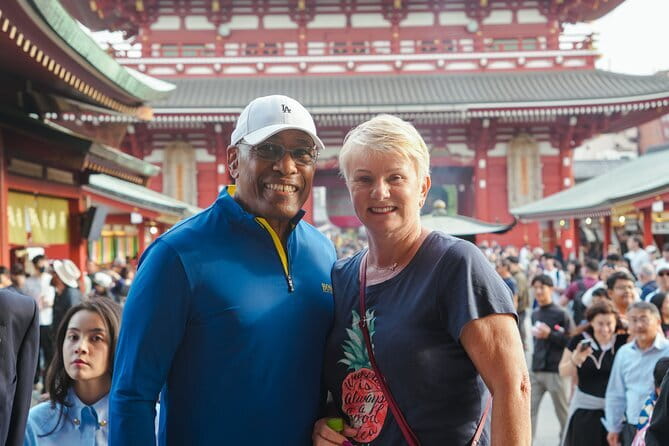
This is a great choice if you want a morning that feels like Tokyo history meets Tokyo food, without turning your day into a logistical puzzle.
It’s especially suitable for:
- Short stays (if you only have time to hit a few big areas)
- People who want clear context at landmarks like Meiji Jingu and Senso-ji
- Food-focused visitors who like tasting street foods rather than committing to sit-down meals
- Anyone who values a small group experience (max 8) with an English guide
If your travel style is purely independent and you love wandering without structure, you might find the time limits at each stop feel a bit strict. But if you’re okay with a guided “greatest hits” morning and you want the food bites as part of the deal, this tour fits nicely.
Should You Book This Tokyo Morning Tour?
If you’re aiming for an efficient, high-impact morning—calm shrine, outer-market snacks, and a major temple—then yes, you should book it. The combination of three standout areas, English guidance, included admissions, and street-food tastings makes the package feel practical, not just scenic.
I’d especially recommend it if you like having a guide who can explain what you’re seeing and keep the pace comfortable. The guide praise in the reviews for clarity and flexibility matters here, because it’s what turns a good itinerary into a good morning.
Just remember the one big planning point: factor in the public transport fare on top of the tour price, and keep your schedule light so you can enjoy the full four hours without rushing afterward.
FAQ
How long is the Tokyo Morning Tour?
It runs about 4 hours.
What stops are included on the tour?
The tour includes Meiji Jingu Shrine, Tsukiji Jogai Market, and Senso-ji Temple in Asakusa.
Is the tour guide English-speaking?
Yes. The tour includes an English-speaking guide.
Are admission tickets included?
Yes. Entry and admission are included for Meiji Jingu Shrine, the Fish Market, and Senso-ji Temple.
What street foods are you tasting?
You’ll try street foods such as sweet mochi, sweet potato, and savory cutlet.
What is the tour price?
The price is listed as $72.67 per person.
Where does the tour start and end?
It starts at IKEA スウェーデンカフェ 原宿Japan and ends in Asakusa, finishing at Asakusa Station.
Is public transportation included?
No. Public transportation fare is not included, and it’s noted as around 550 yen.
What is the group size limit?
The tour has a maximum of 8 travelers.
Is free cancellation available?
Yes. You can cancel up to 24 hours in advance for a full refund.
More Tour Reviews in Tokyo
- Mt Fuji and Hakone 1-Day Bus Tour Return by Bullet Train
★ 5.0 · 26,383 reviews - 1-Day Tokyo Bus Tour
★ 5.0 · 14,250 reviews - Tokyo: teamLab Planets TOKYO Digital Art Museum Entry Ticket
★ 4.6 · 9,779 reviews - Mt Fuji & Hakone Cruise, Drum Show Bullet Train 1 Day from Tokyo
★ 4.0 · 7,413 reviews - Tokyo: Shinjuku Food Tour (13 Dishes at 4 Local Eateries)
★ 5.0 · 6,603 reviews
More Meiji Shrine Hours, Rated
- Tokyo: Meiji Shrine, Asakusa, Skytree Bus Tour and Cruise
★ 4.7 · 1,986 reviews - Tokyo Panoramic 1 Day: Meiji Shrine, Asakusa, Odaiba and SKYTREE®
★ 4.5 · 1,222 reviews - Tokyo: Meiji Shrine Walking Tour — Shinto & Imperial System
★ 4.9 · 266 reviews - Tokyo: Meiji Jingu Shrine and Shinto Culture Walking Tour
★ 5.0 · 245 reviews - Tokyo: Meiji Shrine and Shinto Culture Walking Tour
★ 5.0 · 225 reviews
More Mornings in Old Asakusa
- Tokyo: Japanese Dance Cabaret Theater Asakusa-Kaguwa Ticket
★ 4.8 · 2,270 reviews - Tokyo: Meiji Shrine, Asakusa, Skytree Bus Tour and Cruise
★ 4.7 · 1,986 reviews - Tokyo: Roll and Authentic Sushi Making Class in Asakusa
★ 4.9 · 1,957 reviews - Tokyo: Asakusa Walking Tour with Sensoji Temple Visit
★ 4.8 · 1,583 reviews - Tokyo Asakusa Rickshaw Tour
★ 5.0 · 1,375 reviews
Latest Tokyo reviews off our desk

Asakusa & Sensoji Tours, compared.
 ★ 4.8Japanese Dance Cabaret Theater Asakusa-Kaguwa TicketFrom $492,270 reviews
 ★ 4.7Meiji Shrine, Asakusa, Skytree Bus Tour and CruiseFrom $1221,986 reviews
 ★ 4.9Roll and Authentic Sushi Making Class in AsakusaFrom $581,957 reviews
 ★ 4.8Asakusa Walking Tour with Sensoji Temple VisitFrom $221,583 reviews
 ★ 5.0Tokyo Asakusa Rickshaw TourFrom $421,375 reviews
 ★ 4.5Tokyo Panoramic 1 Day: Meiji Shrine, Asakusa, Odaiba and SKYTREE®From $851,222 reviews
 ★ 5.0Tokyo Go Kart: Asakusa, Skytree, and Akihabara **IDP MUST**From $99988 reviews
 ★ 4.7Asakusa, Skytree & Akhihabara Go-Kart City ExperienceFrom $96761 reviews
Browse the lists this tour appears in