
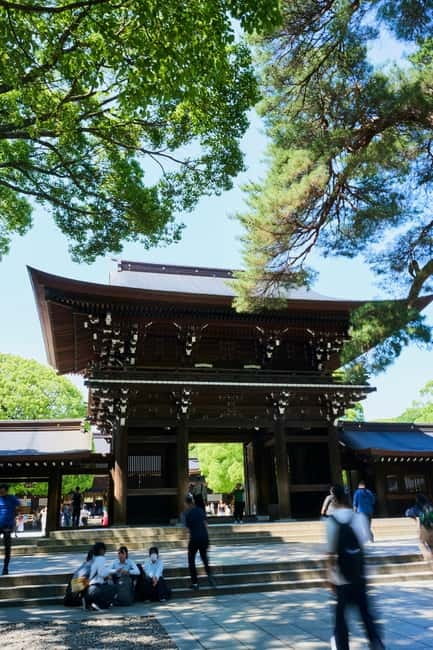
Reviewed · MEIJI SHRINE TOURS
Tokyo: Meiji Shrine Walking Tour — Shinto & Imperial System
Noise vanishes fast once you enter. I loved the deep-quiet forest path and how our guide made Shinto etiquette feel practical, not mysterious, from the torii area to the shrine steps. One consideration: this tour is English-only, so if you want help in Japanese, you may feel limited.
With a small group (up to 10), you get room to ask questions and take your time without feeling rushed. Guides like Tomo, Keiko, and Ayaka show up in many bookings for this route, and the common thread is clear explanations and a pace that keeps the day enjoyable, even with lots of photos.
In This Review
- Key Points I’d Prioritize Before You Go
- Why Meiji Shrine Feels Different in the Middle of Tokyo
- Small-Group Setup: What Your $23 Really Buys
- Harajuku Station Start, Then the Walk Into Silence
- Meiji Jingu Ichino Torii and the Edge-Walking Rule (Seichu)
- The Wine Barrels and Sake Barrels: Sacred Offerings You’ll Understand
- The Big Torii: Why That Giant Gate Hits So Hard
- Imperial Poetry of Emperor Meiji: Omigokoro with English Translations
- Meiji Jingu Main Shrine Time: Respectful Visits and Shopping
- Café Mori no Terrace at Forest Terrace Meiji Jingu: A Calm Finish
- Who Should Book This Meiji Shrine Tour (And Who Might Skip)
- Quick Practical Tips Before You Go
- Should You Book This Meiji Shrine Walking Tour?
- FAQ
- Is the tour in English?
- How long is the Meiji Shrine walking tour?
- How big is the group?
- Where does the tour start and end?
- What do we do at the torii gates?
- What is the seichu rule?
- Are there offerings or charms to purchase?
- Do you stop for food or tea?
- What’s included in the price?
- Can I cancel or change plans?
Key Points I’d Prioritize Before You Go
- A city-to-forest reset: the walk is designed to make Tokyo noise fade away.
- That giant 12-meter torii from 1,500-year-old Taiwanese cypress, plus the rule about walking the edges.
- Consecrated wine and sake barrels explained in context, not just as scenery.
- Omigokoro fortunes with English translations based on poems by Emperor Meiji and Empress Shoken.
- Small-group attention: guides help with customs, offerings, and respectful wishing.
- Tea + snacks in the Forest Terrace area, plus gift options tied to the shrine.
Why Meiji Shrine Feels Different in the Middle of Tokyo
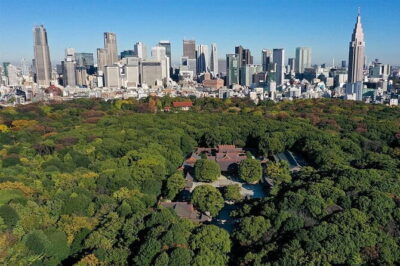
Tokyo is loud. Meiji Shrine is not. The big surprise here is how quickly the setting changes once you step into the grounds. You’re walking through a forested area of roughly 100,000 trees, and the air feels cooler, calmer, and oddly focused—like you’ve left the city without actually going anywhere far.
This tour also helps you read what you’re looking at. Meiji Jingu isn’t only a photo stop for the torii. It’s a functioning spiritual site, and the Shinto rhythm is visible in small details: where people pause, how they move, and how offerings connect to nature and harmony.
Finally, the imperial angle is a real payoff. The tour ties Meiji Shrine to Japan’s 2,600-year-old imperial system and the Meiji era’s shift from samurai traditions to modern life. If you’ve ever wondered how a country holds centuries of tradition while rapidly modernizing, this is one of the clearest ways to see it in person.
More quiet hours at Meiji Shrine
- Tokyo: Meiji Shrine, Asakusa, Skytree Bus Tour and Cruise
★ 4.7 · 1,986 reviews - Tokyo Panoramic 1 Day: Meiji Shrine, Asakusa, Odaiba and SKYTREE®
★ 4.5 · 1,222 reviews - Tokyo: Meiji Shrine Walking Tour — Shinto & Imperial System
★ 4.9 · 266 reviews - Tokyo: Meiji Jingu Shrine and Shinto Culture Walking Tour
★ 5.0 · 245 reviews
Small-Group Setup: What Your $23 Really Buys
At $23 per person and 90–135 minutes, this is one of those Tokyo activities that feels like good value because it’s not trying to do everything. The tour keeps the group to 10 people, which matters at a site like this where lines and etiquette rules can make independent visits feel confusing.
You’re also paying for guidance on the stuff that’s hard to guess on your own:
- which parts of the shrine path people use,
- how to treat the space respectfully,
- and what symbols mean once you’re standing in front of them.
And since it runs in English only, you’ll get clear context without translation games. If you’re someone who hates standing in front of a landmark with no idea what you’re seeing, you’ll likely appreciate what the guide brings.
Harajuku Station Start, Then the Walk Into Silence
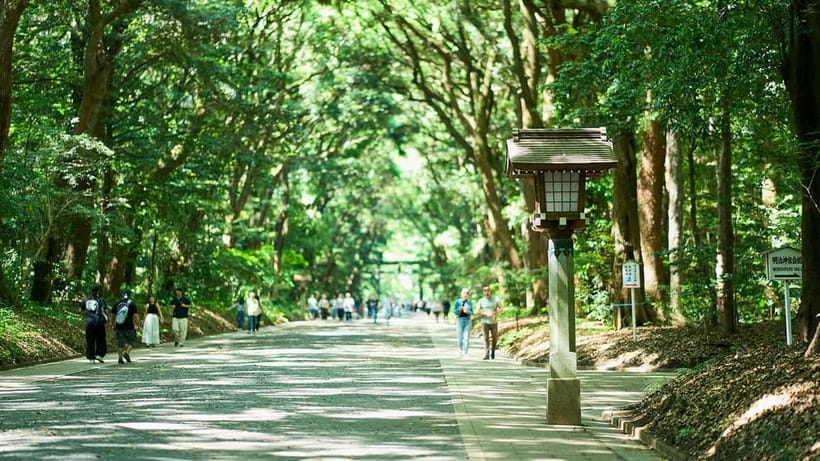
Most bookings start at Harajuku Station, and you’ll return to Harajuku Station at the end. Meeting point can vary by the option you choose, but the end result is the same: you begin near a major transit hub and finish back there.
From there, the day is built around an easy walking pace, with short segments that keep you moving but not exhausted. Expect frequent stopping points for photos and explanations. One of the biggest practical wins is that you don’t have to figure out the route yourself while managing crowd flow.
The whole experience has a “step-by-step mental reset” feel. First you get that forest quiet. Then you start seeing the structure—torii, offerings, imperial links—so the shrine isn’t just pretty. It’s legible.
Meiji Jingu Ichino Torii and the Edge-Walking Rule (Seichu)
A major anchor of this experience is the Meiji Jingu Ichino Torii, the first big landmark where the city fades for good. You’ll get time for a photo stop and a guided look. It’s a good moment to slow down because the next parts of the walk will feel more meaningful once you know what you’re spotting.
Here’s one etiquette detail you should plan on using: when you pass through the torii, people commonly walk along the edges to avoid the sacred central route called seichu, which is reserved for deities. It’s not a “tourist rule” invented for visitors—this is part of Shinto practice, so following it makes your visit feel smoother and more respectful.
You’ll also hear the why, which helps. Instead of treating it like a quiz question, you start understanding how the space channels attention. The structure of the walk is doing spiritual work, and the guide helps you notice it.
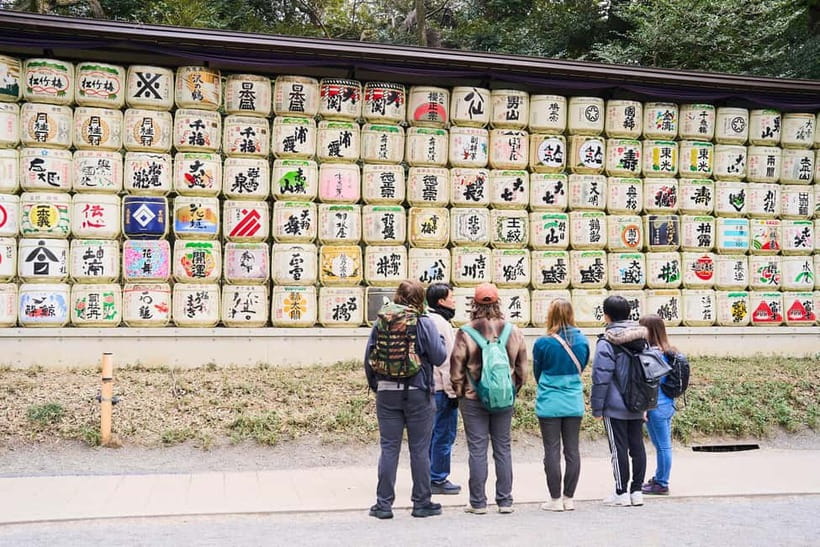
The Wine Barrels and Sake Barrels: Sacred Offerings You’ll Understand
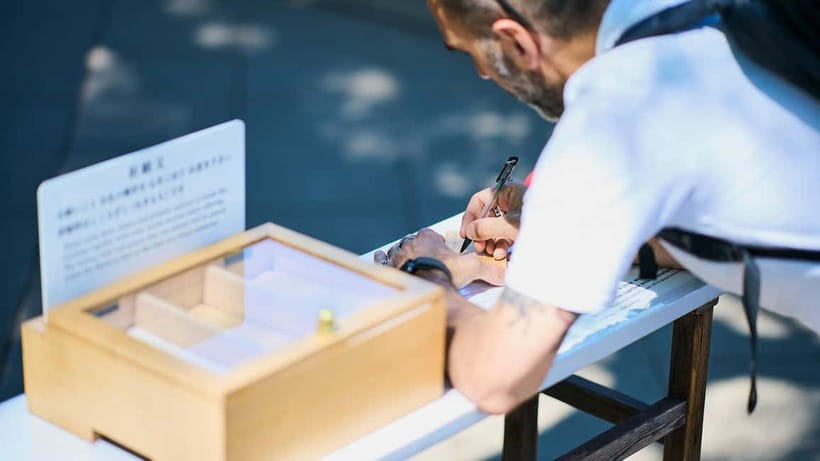
After the first torii, you move through a set of consecrated stops that many people miss if they rush. This tour gives you short photo moments plus guided explanations, including:
- Meiji Jingu consecrated wine barrels
- consecrated sake barrels
The key value here is interpretation. Offerings like wine and sake are not just objects. They’re part of the shrine’s relationship with the divine and nature, and the guide ties them into the bigger Shinto picture. The experience stays grounded, too—these stops aren’t turned into a lecture marathon. They’re quick points on a walking route that adds up.
Also, you’re not left to guess how to participate. Some guides in recent groups have even provided coins for offerings when people didn’t have any. That small kind of help can make a difference, especially if you’re traveling light or you’re unsure what you’re supposed to do at the moment.
Readers also shortlisted these Tokyo bookings:
- Tokyo Tsukiji Fish Market Food and Culture Walking Tour★ 5.0 · 3,184 reviews
- Tokyo: Imperial Palace and Shogun Historical Walking Tour★ 5.0 · 2,251 reviews
- Tokyo: Shinjuku Local Bar and Izakaya Guided Walking Tour★ 4.9 · 1,794 reviews
- Tokyo: Tsukiji Fish Market Food and Walking tour★ 5.0 · 1,724 reviews
- Tokyo: Asakusa Walking Tour with Sensoji Temple Visit★ 4.8 · 1,583 reviews
The Big Torii: Why That Giant Gate Hits So Hard
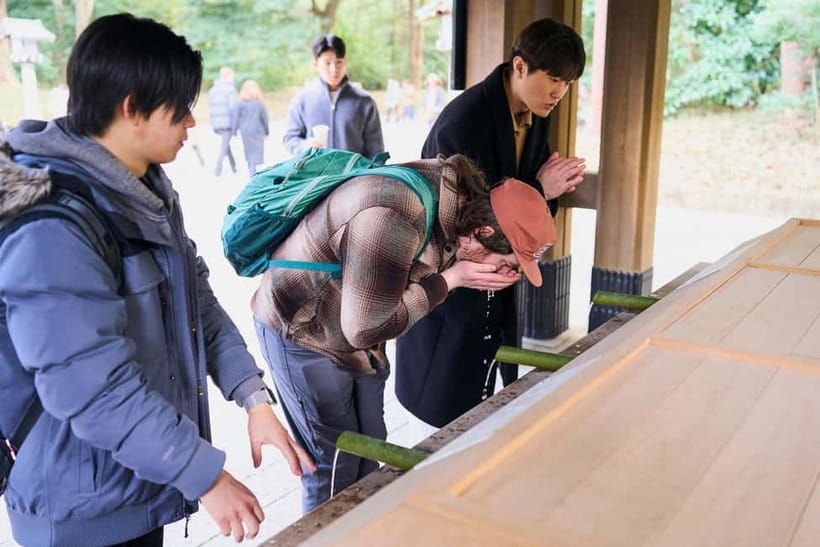
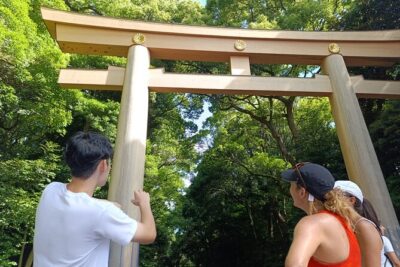
Then you reach the big centerpiece: the 12-meter torii gate made from 1,500-year-old Taiwanese cypress. This is where the “you’re standing in something important” feeling becomes physical.
It’s worth remembering that torii gates aren’t just decoration. They mark a transition—moving from ordinary space to sacred space. When you see the scale up close, you can feel why people react the way they do. It’s not subtle.
This stop is also a good time to slow your pace. Use the guided explanation to place the gate in context, then take a few photos from different angles if you can. The forest light can change quickly, and you’ll get better results when you’re not sprinting to the next stop.
Imperial Poetry of Emperor Meiji: Omigokoro with English Translations
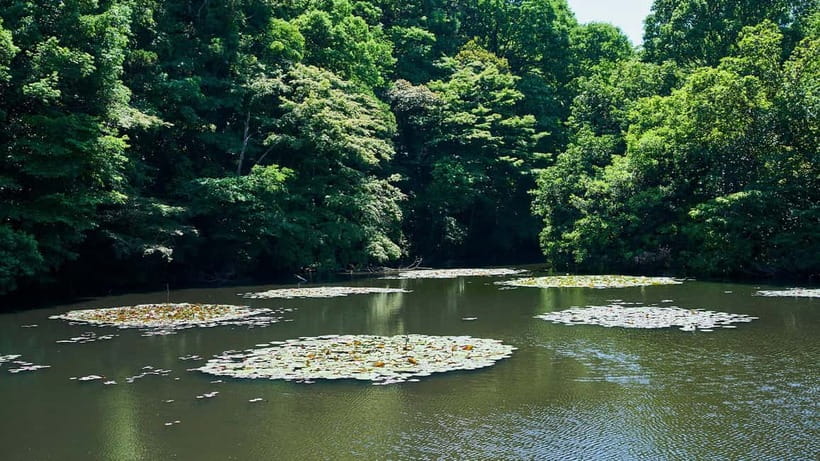
Here’s a surprisingly practical part of the tour: the imperial connection doesn’t stop at historical references. You’ll get to Imperial Poetry of Emperor Meiji, and later you’ll have the chance to draw a fortune tied to imperial poems.
At the main shrine area, you can purchase:
- omamori, protective charms
- an omikuji-style fortune called Omigokoro, featuring poems written by Emperor Meiji and Empress Shoken
- importantly, those poems come with English translations
That translation detail matters. Too many shrine fortunes are fun for photos but hard to process. With English translations, you can actually reflect on what you drew and use it as a personal takeaway, not a visual souvenir.
The tour also connects this imperial element to the wider story: how Japan moved from the samurai era toward modern life. You’ll likely leave with a clearer sense of why Meiji era symbols still show up in daily spiritual practice.
Meiji Jingu Main Shrine Time: Respectful Visits and Shopping
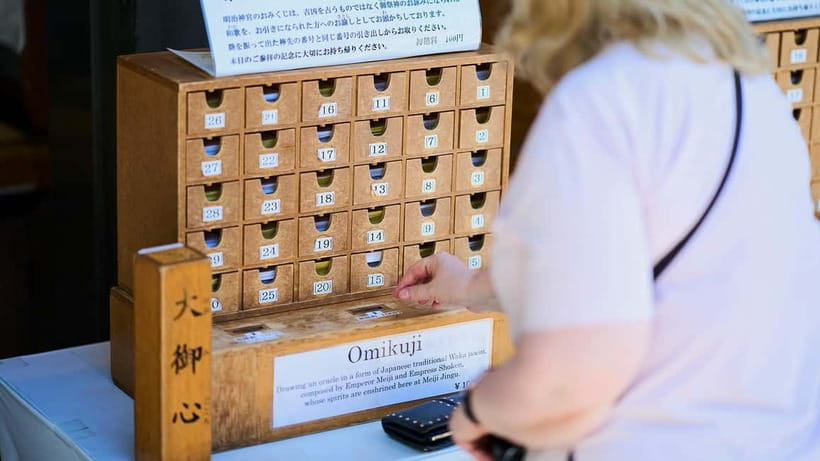
After the highlighted photo-and-explanation points, you’ll spend meaningful time at the main shrine area. You’ll typically get a 45-minute window that includes sightseeing, respectful visiting, and free time for shopping.
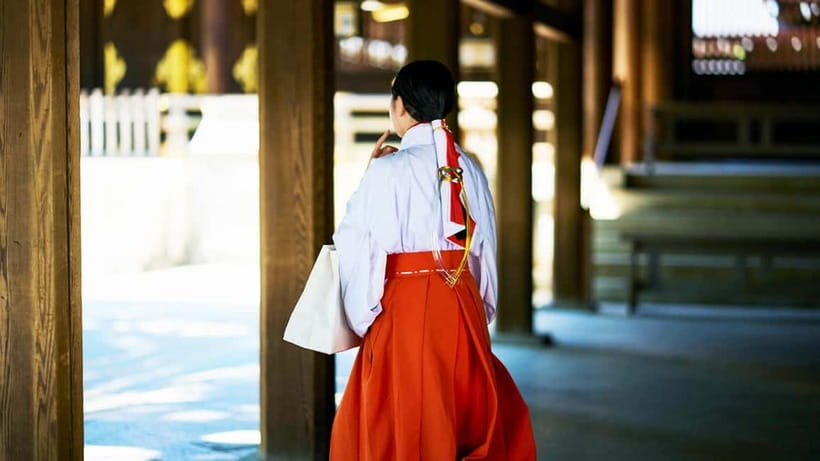
This is where the tour earns its keep. You’ll know what you’re doing because the guide walks you through key etiquette. In past groups, guides like Keiko and Ayaka were praised for making customs feel clear, including how to enter properly and where to get fortunes and amulets.
This is also where you can spot things that aren’t obvious without guidance:
- where people gather for specific ritual moments,
- how the flow of prayer works in practice,
- and what to buy that actually matches your interests (charm vs. fortune).
There’s also a “no-pressure” side to this time. You’re not locked into one ritual sequence. You can use the space quietly, take photos where appropriate, then head to the shops when you’re ready.
Café Mori no Terrace at Forest Terrace Meiji Jingu: A Calm Finish
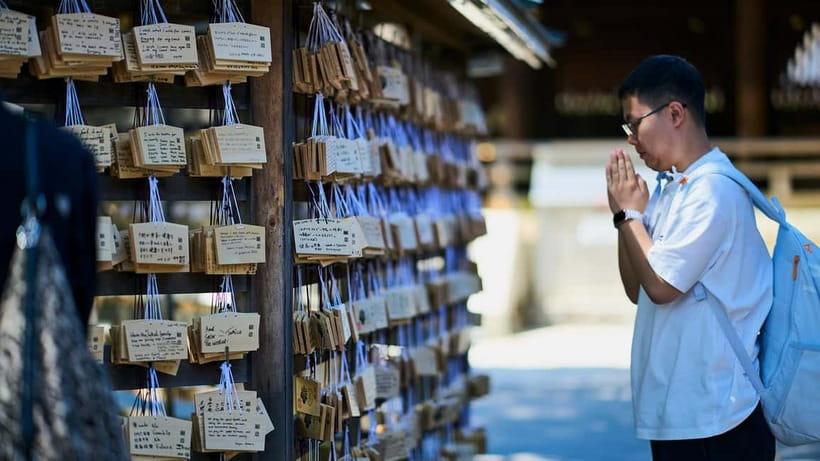
The tour doesn’t end at the shrine gates. You’ll unwind at Forest Terrace Meiji Jingu, including a stop at Café Mori no Terrace.
Plan on a break with Japanese tea and light snacks, plus time to take in the scenery. This part is valuable because it prevents shrine fatigue. Walking through a sacred space can make you feel mentally “switched on.” Tea and a seat help reset your attention so the day lands better.
It’s also where you can browse gifts with a connection to the shrine. The shop options mentioned include:
- eco-blocks made from fragrant Japanese camphor
- miniature barrels of sacred sake
Those are the kind of souvenirs that feel less generic. They connect to the environment and to the shrine’s offering traditions.
Who Should Book This Meiji Shrine Tour (And Who Might Skip)
You’ll probably love this tour if:
- you want to understand Shinto etiquette without feeling awkward,
- you enjoy walking tours where the guide explains what you’re looking at,
- you like combining spiritual sites with historical context,
- and you want a calm, small-group experience near major Tokyo transit.
You might consider skipping if:
- you already know shrine etiquette and want total freedom to wander alone,
- you’re hoping for a Japanese-language guide (this one is English only),
- or you’re short on time and want a pure self-guided torii-and-photos plan.
Also, keep your expectations realistic. This is not a huge 6-hour Tokyo mega-tour. It’s a focused route that aims to make Meiji Jingu make sense.
Quick Practical Tips Before You Go
- Wear comfortable walking shoes. The route is light to moderate, but you’ll still be on your feet.
- Bring small cash if you can, especially if you like making offerings, though guides may help in situations where people don’t have any.
- Keep your manners game strong. The edge-walking seichu rule is easy to follow once you remember it.
- If Omigokoro sounds interesting, factor in time to actually read the English translation and not just snap a photo.
Should You Book This Meiji Shrine Walking Tour?
If you want Meiji Shrine as more than a scenic backdrop, book it. For $23 and a small group, you get the kind of guided context that helps the shrine feel meaningful: Shinto customs, consecrated offerings, and the imperial-poetry angle with English translations for Omigokoro.
I’d especially recommend it for first-timers to Tokyo who want a strong start to the trip. Harajuku is convenient, the forest walk is a mental reset, and the guide’s job is to help you participate respectfully without guesswork.
FAQ
Is the tour in English?
Yes. The tour is conducted in English only, and Japanese language support is not available.
How long is the Meiji Shrine walking tour?
It runs 90 to 135 minutes, depending on the starting time and availability.
How big is the group?
The tour is a small group limited to up to 10 participants.
Where does the tour start and end?
The meeting point may vary by the option booked, with start options including Harajuku Station. The tour drops you off at Harajuku Station.
What do we do at the torii gates?
You’ll have photo stops and a guided look at major torii points, including the 1,500-year-old Taiwanese cypress torii and the larger main gate. The guide also explains proper etiquette for passing through.
What is the seichu rule?
When passing through the torii, it’s customary to walk along the edges and avoid the sacred central route called seichu, reserved for deities.
Are there offerings or charms to purchase?
Yes. At the shrine, you can purchase omamori and an omikuji-style fortune called Omigokoro. Omigokoro includes poems by Emperor Meiji and Empress Shoken with English translations.
Do you stop for food or tea?
Yes. After the shrine visit, you’ll spend time at Café Mori no Terrace for Japanese tea and light snacks.
What’s included in the price?
Included are an English guide, a sightseeing tour, and the guide.
Can I cancel or change plans?
You can cancel up to 24 hours in advance for a full refund, and there is also a reserve now & pay later option.
More Tours in Tokyo
- Mt Fuji and Hakone 1-Day Bus Tour Return by Bullet Train
★ 5.0 · 26,383 reviews - 1-Day Tokyo Bus Tour
★ 5.0 · 14,250 reviews - Tokyo: Shinjuku Food Tour (13 Dishes at 4 Local Eateries)
★ 5.0 · 6,603 reviews - Tokyo Mt Fuji 5th St & Hakone Cruise Bus Tour w/Bullet Train
★ 4.4 · 5,024 reviews - Flagship 2-Hours Official Street Go-Kart Tour – Tokyo Bay Shop
★ 5.0 · 4,974 reviews
More Tour Reviews in Tokyo
- Mt Fuji and Hakone 1-Day Bus Tour Return by Bullet Train
★ 5.0 · 26,383 reviews - 1-Day Tokyo Bus Tour
★ 5.0 · 14,250 reviews - Tokyo: teamLab Planets TOKYO Digital Art Museum Entry Ticket
★ 4.6 · 9,779 reviews - Mt Fuji & Hakone Cruise, Drum Show Bullet Train 1 Day from Tokyo
★ 4.0 · 7,413 reviews - Tokyo: Shinjuku Food Tour (13 Dishes at 4 Local Eateries)
★ 5.0 · 6,603 reviews
More Meiji Shrine Hours, Rated
- Tokyo: Meiji Shrine, Asakusa, Skytree Bus Tour and Cruise
★ 4.7 · 1,986 reviews - Tokyo Panoramic 1 Day: Meiji Shrine, Asakusa, Odaiba and SKYTREE®
★ 4.5 · 1,222 reviews - Tokyo: Meiji Jingu Shrine and Shinto Culture Walking Tour
★ 5.0 · 245 reviews - Tokyo: Meiji Shrine and Shinto Culture Walking Tour
★ 5.0 · 225 reviews - Tokyo: Meiji Shrine Walking Tour — Shintoism & Imperial System
★ 5.0 · 209 reviews
Latest Tokyo reviews off our desk






Meiji Shrine Tours, compared.
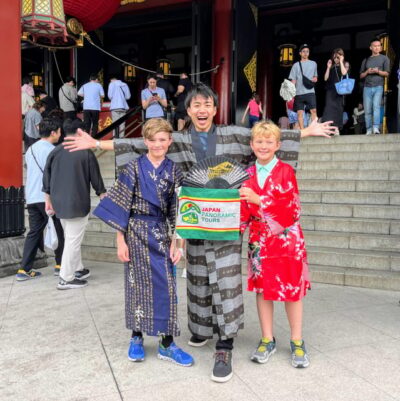 ★ 4.7Meiji Shrine, Asakusa, Skytree Bus Tour and CruiseFrom $1221,986 reviews
 ★ 4.5Tokyo Panoramic 1 Day: Meiji Shrine, Asakusa, Odaiba and SKYTREE®From $851,222 reviews
 ★ 5.0Meiji Jingu Shrine and Shinto Culture Walking TourFrom $19245 reviews
 ★ 5.0Meiji Shrine and Shinto Culture Walking TourFrom $18225 reviews
 ★ 5.0Meiji Shrine Walking Tour — Shintoism & Imperial SystemFrom $21209 reviews
 ★ 5.0Tokyo Morning Tour: Asakusa, Meiji Shrine and Tsukiji Fish MarketFrom $157128 reviews
 ★ 5.0Tokyo Morning Tour : Meiji Shrine, Asakusa and Fish MarketFrom $72102 reviews
 ★ 5.0Full Tokyo: Meiji Shrine, Imperial Palace, Asakusa & SkytreeFrom $3978 reviews
Browse the lists this tour appears in