
Reviewed · WORKSHOPS
Tokyo: Rice Ball Making Class
Learning to shape rice into onigiri beats watching it. You get real onigiri-making skills, then you eat your warm creation in a classic garden.
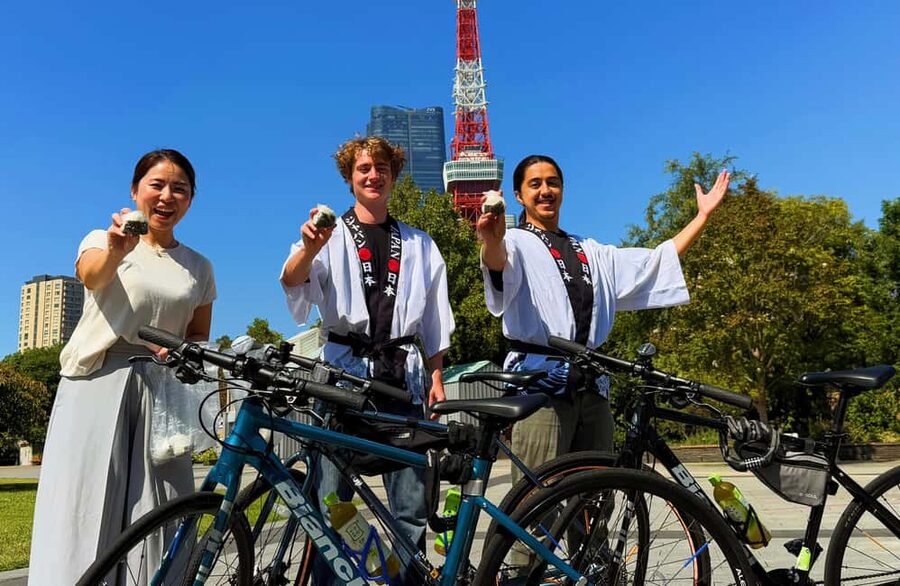
You’ll also enjoy a guided bike ride that takes you past big sights like Tokyo Tower and the Imperial Palace without the usual rush-and-wait feeling. The only catch: this is a bike-focused outing, so it’s not a good match if you can’t comfortably ride.
Expect a hands-on start, an outdoors picnic, and a short Tokyo loop with an English-speaking guide for a small group. Do plan for modest physical activity; the ride is why the experience works. Also note that strollers aren’t allowed, so if you’re coming with a baby in tow, you’ll need an alternate plan.
In This Review
- Key Things to Know Before You Go
- Onigiri-Making Class: Where the Real Skill Shows Up
- Your Picnic Moment at Hamarikyu Gardens
- The Bike Tour: Tokyo at Human Speed
- Fillings That Teach You How Onigiri Thinks
- Small Group Size: Learning Moves Faster
- Price and Value: What You’re Really Paying For
- Timing, Flow, and How the Day Feels
- What to Bring and Wear (So You Don’t Feel Rushed)
- Who This Onigiri + Bike Experience Fits Best
- Should You Book This Tour?
- FAQ
- How long is the Tokyo Rice Ball Making Class plus bike tour?
- What’s the meeting point for the tour?
- Is the tour conducted in English?
- What’s included in the price?
- What is not included?
- What should I bring?
- Is this suitable for children?
- Is there free cancellation?
- What’s the maximum group size?
Key Things to Know Before You Go
- Small group (up to 6) keeps the class hands-on, not lecture-y
- English live guide helps you follow the steps for both cooking and cycling
- Onigiri fillings you can pick like salmon, pickled plum, and tuna-mayo
- Hamarikyu Gardens entry included so you can picnic right afterward
- You’ll bring a homemade snack and eat it still warm
- Wear comfy cycling clothes and bring water
Onigiri-Making Class: Where the Real Skill Shows Up
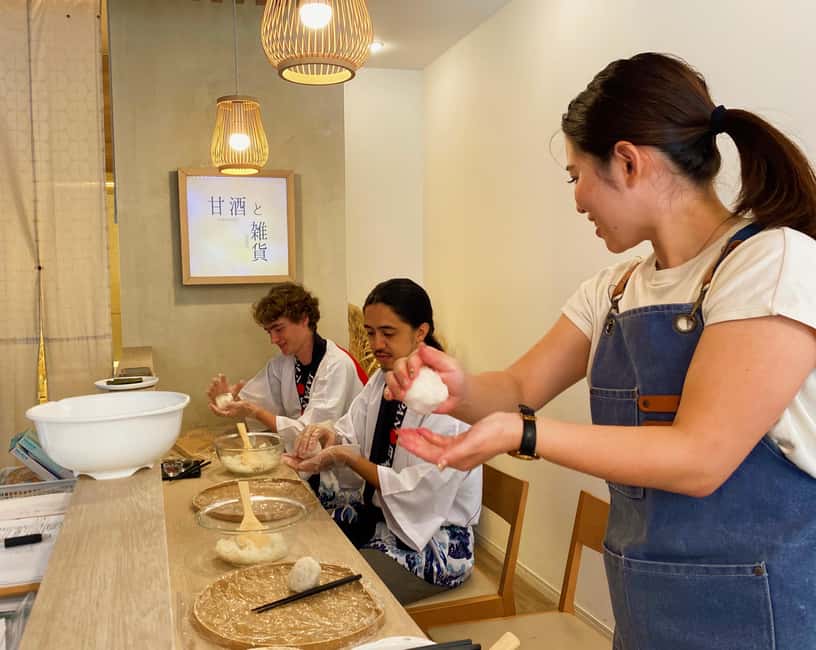
This experience starts with the core idea: onigiri is more than rice balls. It’s technique, seasoning, and a little rhythm. You’ll learn how to take freshly steamed rice, add the right seasoning, and shape it so it holds together and tastes like the real thing.
The class is guided by an expert who helps you work with hot rice without turning it into a sticky mess. That matters, because the texture is the whole point. Rice that’s handled with the right moisture and pressure becomes firm and compact. Rice that’s handled too roughly falls apart or feels gummy.
You’ll also get to experiment with classic fillings. The options listed include savory salmon, tangy pickled plum, and creamy tuna-mayo. Even if you’re only trying one, the teaching approach makes it clear how different fillings change the balance: salty and rich versus bright and tangy versus creamy and comforting.
One more thing I like about this start: it’s not just watching someone else do it. You do it. If you’ve ever wanted to bring home a food skill instead of a photo, this is the kind of activity that actually sticks.
Readers also shortlisted these Tokyo bookings:
- Sushi Making Tokyo Roll and Authentic Japanese Sushi Class
★ 5.0 · 3,971 reviews - Tokyo: Roll and Authentic Sushi Making Class in Asakusa
★ 4.9 · 1,957 reviews - Tokyo Shinjuku Chopsticks Making Class
★ 5.0 · 1,763 reviews - Tokyo: Sushi Making Class in a Happi Coat near a Famous Spot
★ 4.9 · 1,377 reviews
Your Picnic Moment at Hamarikyu Gardens
After you make your onigiri, you move to Hamarikyu Gardens, where you eat what you made. This is the smart part of the day. Instead of “activity then lunch later,” you get a planned payoff while the rice is still warm.
Hamarikyu is known for its calm setting where the city meets the bay. You’ll have saltwater ponds, strolling paths, and seasonal flowers to look at. Traditional teahouses and the modern Tokyo skyline create a visual contrast that feels distinctly Tokyo: old forms and daily city energy side by side.
What you’ll do here is simple and very Japanese in spirit: you spread out, unwrap your onigiri, and take a pause. You’re not racing between attractions. You’re eating and noticing details.
If you want this portion to feel extra rewarding, keep your expectations realistic. The group stays moving enough to stay on schedule, but you do get that quiet window to eat outdoors. That’s often what turns a food class into a memory.
The Bike Tour: Tokyo at Human Speed
Then comes the bike part, and it’s where the whole experience becomes more than food. Tokyo by foot can be slow, and Tokyo by bus can feel like you’re watching a screen. A bike tour hits a sweet spot: you move faster than walking, but you’re still close enough to see day-to-day life.
Your guide leads a route that combines backstreets and riverside paths. That means you’re not stuck only on main roads. You’ll pass local neighborhoods where everyday routines happen quietly, then you’ll open out onto broader waterfront lanes for views toward Tokyo Bay.
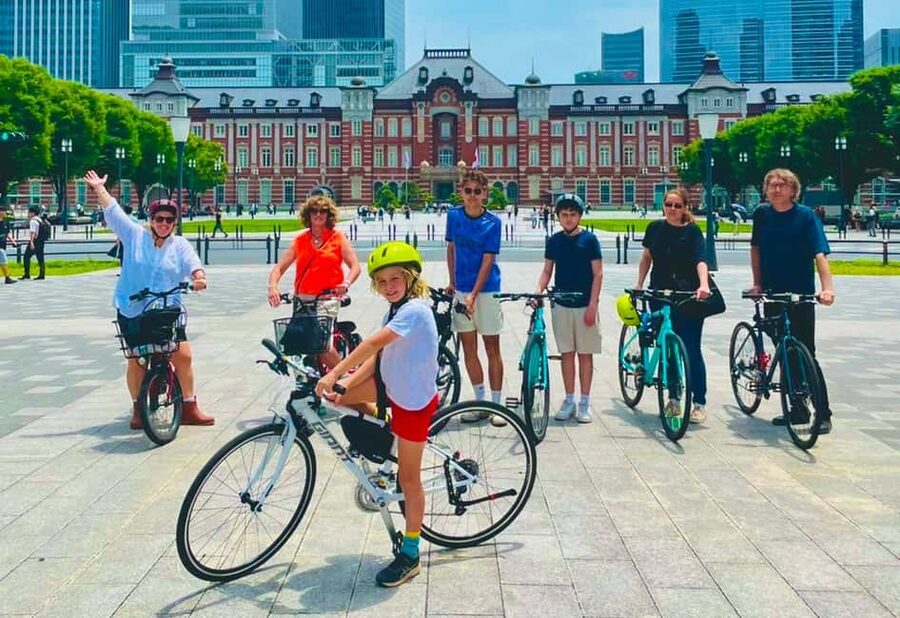
Along the ride, you may catch sights of Tokyo Tower, the Imperial Palace, and Zozoji Temple. These are big markers, but the value is in how they appear along the way, not as a single rushed stop. You get a sense of Tokyo’s layers—quiet residential streets, then wider water-facing roads with iconic skyline views.
Also, this is one reason the small group size matters. With only up to six participants, your guide can keep an eye on the pace and make adjustments without slowing everyone to a crawl.
Fillings That Teach You How Onigiri Thinks
One of the more useful parts of the class is that the fillings aren’t random. They connect to how onigiri is built to be portable and satisfying.
Here’s what you can learn in practice from the options provided:
- Savory salmon tends to feel rich and salty, pairing well with rice that’s seasoned enough to stand alone.
- Pickled plum brings brightness. It helps cut through the rice and keeps the snack from feeling heavy.
- Tuna-mayo leans creamy and comforting, like a familiar sandwich filling made travel-friendly.
Even if you choose one filling, you’ll likely see how the guide frames the balance. Onigiri is a grab-and-go food, so the flavor has to work even without fancy setup. That’s exactly the lesson you’ll take with you if you ever try making it later at home.
Small Group Size: Learning Moves Faster
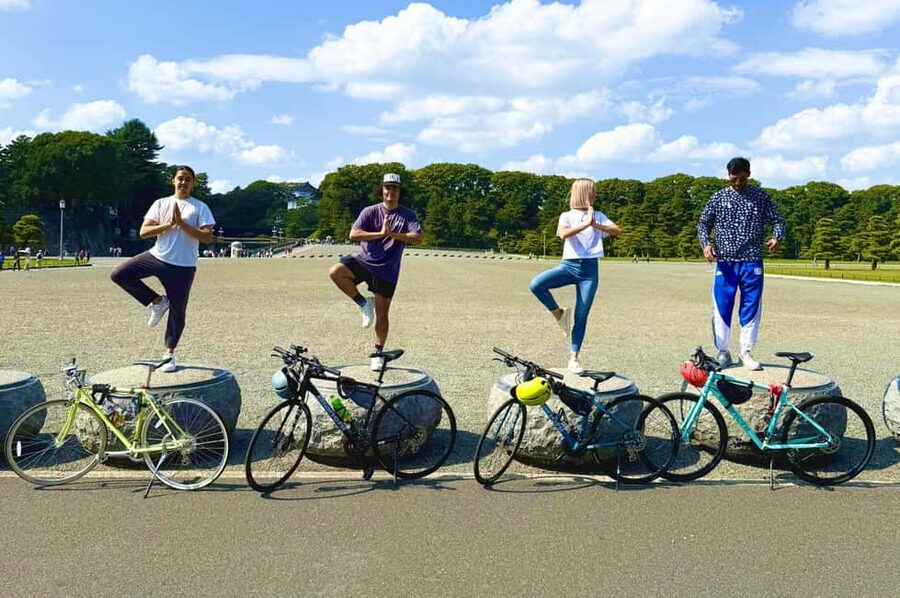
This tour caps at six participants, and it changes the feel. In a bigger group, you can end up waiting your turn while the rice cools down. Here, you get more time actively shaping and asking questions.
In the class portion, a small group also means the guide can correct form quickly—pressure, shape, and how you pack the filling so the onigiri stays intact. It’s the difference between getting a rice ball and getting a rice ball that looks right and tastes right.
In the bike portion, the same logic holds. If there’s any small issue—like spacing, turns, or the best way to handle a street transition—your guide can manage it without the group falling apart.
In one recent group, the bike guide was Sho, and he was described as friendly, informative, and fun. That kind of guidance is what turns a bike ride from transportation into part of the story.
- Tokyo: Shinjuku Food Tour (13 Dishes at 4 Local Eateries)★ 5.0 · 6,603 reviews
- Tokyo Mt Fuji 5th St & Hakone Cruise Bus Tour w/Bullet Train★ 4.4 · 5,024 reviews
- Flagship 2-Hours Official Street Go-Kart Tour – Tokyo Bay Shop★ 5.0 · 4,974 reviews
- From Tokyo: Mount Fuji Full-Day Sightseeing Trip★ 4.5 · 4,970 reviews
- Tokyo: Hop-On Hop-Off Sightseeing Bus Ticket★ 3.9 · 4,207 reviews
Price and Value: What You’re Really Paying For
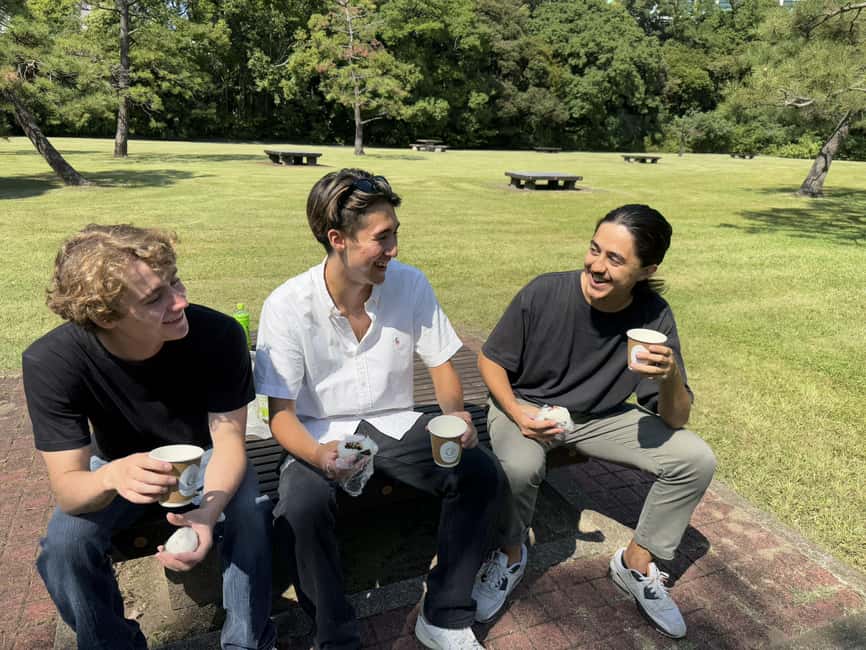
At $51 per person, this doesn’t look like a cheap snack class, and it isn’t trying to be. The value comes from bundling three things that usually cost separately in Tokyo: a guided cooking lesson, garden entry, and bike support.
You’re getting:
- Onigiri-making class with an expert
- Ingredients for the onigiri
- A local bike tour guide and a bike
- Entrance to Hamarikyu Gardens
Then there’s the practical advantage: you don’t need to plan lunch or coordinate separate tickets and transit. You’re moving through the day with the structure built in.
The one thing not included is extra snacks and drinks at the shop. That’s normal for many activities like this. I’d budget for water and any drink you want, because the tour specifically says to bring water.
If you compare this to paying for a standalone food workshop plus a garden plus bike rental, the pricing starts to make more sense. This is a good pick if you want a “Tokyo day with substance,” not just an hour of tasting.
Timing, Flow, and How the Day Feels
The duration listed is 1 to 3 hours, and it depends on the starting time and how the day runs with your group. Either way, it’s built as a clean arc: learn, eat, then move.
The flow matters. You make the onigiri while the instructions are fresh in your head. Then you eat soon enough that the rice still tastes like the rice you just handled. Finally, you ride while you’re energized, not after you’ve hit a long midday slump.
If you’re the kind of traveler who gets frustrated when food experiences end with a take-home box and no payoff, this structure helps. You get the payoff. You also get a short Tokyo route that doesn’t require you to understand all the bike logistics yourself.
What to Bring and Wear (So You Don’t Feel Rushed)
This is an easy tour to prepare for, but don’t wing it.
Bring:
- Water (explicitly recommended)
Wear:
- Comfortable clothes for cycling (also explicitly recommended)
That’s it for essentials, but I’d add a common-sense thought. If you don’t normally ride a bike, plan for at least mild exertion. You don’t need to be an athlete, but you do need to feel comfortable on the saddle.
If you’re sensitive to crowds, keep in mind it’s a small group, not private. You’ll still share space with other garden visitors and the natural Tokyo flow near major sights.
Who This Onigiri + Bike Experience Fits Best
This tour is ideal if you want a mix of food learning and local sightseeing without the typical ticket-chasing.
You’ll probably love it if you:
- want a hands-on Japanese cooking skill you can repeat
- enjoy cycling and want a guided route with interesting sights
- like eating in a meaningful place, not just next to a landmark
- prefer small groups (up to 6) and an English guide
You should think twice or skip it if you:
- can’t ride a bike
- have mobility impairments, use a wheelchair, or have other constraints listed as not suitable
- have back problems, issues with high blood pressure, or a low fitness level
- are traveling with children under 12
Also, baby strollers aren’t allowed, so families with small kids should plan another option.
Should You Book This Tour?
Book it if you want a real taste of Tokyo that isn’t limited to photos. The onigiri-making class gives you an actual technique, and the picnic at Hamarikyu Gardens turns that skill into a lived moment. Then the bike tour adds movement and context, with a route that can include major landmarks like Tokyo Tower and the Imperial Palace.
Skip or reconsider if biking isn’t comfortable for you, or if your health needs make the activity a strain. This isn’t built as an accessible, seated sightseeing day.
If you’re a planner who likes value, this one is hard to beat: class + ingredients + garden entry + bike and guide in a compact time window. It’s the kind of Tokyo activity that makes the city feel local in a way that a museum ticket alone can’t.
FAQ
How long is the Tokyo Rice Ball Making Class plus bike tour?
The duration is listed as 1 to 3 hours. Check availability to see the starting times.
What’s the meeting point for the tour?
Meet your guide at the onigiri making class.
Is the tour conducted in English?
Yes. There is a live tour guide speaking English.
What’s included in the price?
Included are the onigiri making class with an expert, onigiri ingredients, a local bike tour guide, the bike, and entrance to Hamarikyu Gardens.
What is not included?
Extra snacks and drinks at the shop are not included.
What should I bring?
Bring water. Comfortable cycling clothes are also recommended.
Is this suitable for children?
No. It is not suitable for children under 12 years.
Is there free cancellation?
Yes. You can cancel up to 24 hours in advance for a full refund.
What’s the maximum group size?
It’s a small group limited to 6 participants.
More Workshops in Tokyo
- Sushi Making Tokyo Roll and Authentic Japanese Sushi Class
★ 5.0 · 3,971 reviews - Tokyo: Roll and Authentic Sushi Making Class in Asakusa
★ 4.9 · 1,957 reviews - Tokyo Shinjuku Chopsticks Making Class
★ 5.0 · 1,763 reviews - Tokyo: Sushi Making Class in a Happi Coat near a Famous Spot
★ 4.9 · 1,377 reviews - Chopstick Making Workshop in Ginza
★ 4.8 · 1,366 reviews
More Tour Reviews in Tokyo
- Mt Fuji and Hakone 1-Day Bus Tour Return by Bullet Train
★ 5.0 · 26,383 reviews - 1-Day Tokyo Bus Tour
★ 5.0 · 14,250 reviews - Tokyo: teamLab Planets TOKYO Digital Art Museum Entry Ticket
★ 4.6 · 9,779 reviews - Mt Fuji & Hakone Cruise, Drum Show Bullet Train 1 Day from Tokyo
★ 4.0 · 7,413 reviews - Tokyo: Shinjuku Food Tour (13 Dishes at 4 Local Eateries)
★ 5.0 · 6,603 reviews
Latest Tokyo reviews off our desk






Workshops, compared.
 ★ 5.0Sushi Making Tokyo Roll and Authentic Japanese Sushi ClassFrom $593,971 reviews
 ★ 4.9Roll and Authentic Sushi Making Class in AsakusaFrom $581,957 reviews
 ★ 5.0Tokyo Shinjuku Chopsticks Making ClassFrom $201,763 reviews
 ★ 4.9Sushi Making Class in a Happi Coat near a Famous SpotFrom $421,377 reviews
 ★ 4.8Chopstick Making Workshop in GinzaFrom $251,366 reviews
 ★ 5.0Tokyo Sushi Making Class in Tsukiji with Professional ChefFrom $491,177 reviews
 ★ 5.0Ramen & Gyoza Cooking Class in Tokyo with Local Supermarket VisitFrom $122823 reviews
 ★ 5.0Matcha Making Class in Tokyo with Authentic Japanese Sweets SetFrom $21744 reviews
Browse the lists this tour appears in