
Tuna in the spotlight, in Tokyo. This tour takes you into Toyosu Market at work, then into a hands-on lesson with tuna cutting before you eat it. Two big wins: you see how the fish trade really works, and you get the chef-side skill of turning a block into portions. One heads-up: Toyosu Market has strict photography rules, and the schedule is tight, so don’t plan on lingering everywhere.
I also like that it’s built around a small group (up to 6) with an English guide, so questions don’t get lost in a crowd. In guides who have led this tour, names like Amy and Risako show up in the praise, with focus on history, facts, and a lively sushi-chef teaching style. You’ll come away with both a fuller stomach and a clearer answer to where restaurant tuna really comes from.
In This Review
- Key Things to Know Before You Go
- Toyosu Market Access: Seeing the 500-Buyer Fish Economy Up Close
- Tsukiji Outside Market: A Short, Practical Break for Snacks and Views
- Azabujuban Sushi Class: Cutting a Block of Tuna into Nigiri Portions
- The Lunch You’ll Actually Remember: Where Restaurant Tuna Comes From
- Price and Value: Is $309 Worth a 4-Hour Tuna-Driven Day?
- Practical Tips: Market Rules, Shoes, and What to Do About Photos
- Who This Tour Suits Best (and Who Should Skip It)
- Should You Book This Toyosu Tuna Cutting and Sushi Tour?
- FAQ
- Where is the meeting point for this tour?
- How long is the tour?
- How much does the tour cost?
- What language is the tour guide?
- How big is the group?
- What’s included in the price?
- What are the items not included?
- Is photography allowed in Toyosu Market?
- Who should not book this tour?
- What should I do if I have allergies?
Key Things to Know Before You Go
- Non-tourist access to Toyosu Market means you’ll see the machinery of fish trading up close
- Tuna cutting is the star: you’ll watch how a block becomes individual portions
- Tsukiji Outer Market gets you shopping and sightseeing time before the class
- Chef-led sushi making turns the morning’s tuna into nigiri you help prepare
- Small group format keeps the experience focused and question-friendly
Toyosu Market Access: Seeing the 500-Buyer Fish Economy Up Close
Toyosu Market is huge, and it isn’t a movie set. It’s an active fish supply hub, with hundreds of people doing the work that makes Tokyo restaurant life possible. On this tour, you head there first and get time to observe the scene—buyers, moving inventory, and the fast pace of a place that runs on accuracy more than show.
One of the best parts is the scale you notice quickly. You’ll pass sights connected to the buying process, and you’ll hear context about how the system works. The tour description also flags that you’ll see over 500 fish buyers, which helps you understand why the market world has its own rhythm. Even if you’re not a seafood expert, it becomes obvious why tuna quality and handling matter so much.
There’s also an etiquette reality check. Inside the market, photography is prohibited, so plan to rely on your guide’s explanations and your memory. The upside: it keeps your attention on what’s happening rather than on phone screens.
Finally, don’t assume you’ll treat this like a normal tourist stroll. Think of it more like a guided look at how fish moves—use comfortable shoes, keep your voice respectful, and be ready to follow the guide’s pace.
More market breakfasts our reviewers scored
- Tokyo Tsukiji Fish Market Food and Culture Walking Tour
★ 5.0 · 3,184 reviews - Tokyo: Tsukiji Fish Market Food and Walking tour
★ 5.0 · 1,724 reviews - Tokyo: Tsukiji Fish Market Guided Walking Tour
★ 4.9 · 1,397 reviews - Tokyo Sushi Making Class in Tsukiji with Professional Chef
★ 5.0 · 1,177 reviews
Tsukiji Outside Market: A Short, Practical Break for Snacks and Views
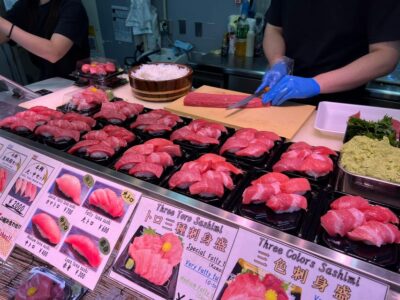
After Toyosu, the tour shifts to Tsukiji Outside Market area for about an hour of walking, sightseeing, and shopping time. This is the moment where you get to swap “market work” energy for “market neighborhood” energy.
Why this stop is valuable: Tsukiji Outside Market is where you can connect the dots between raw supply and what people actually eat. Even without a formal lesson there, your brain starts making links: what you saw in tuna handling and portioning earlier now shows up as food options, storefront displays, and the simple question of what Japanese customers look for in everyday seafood.
You’ll also appreciate the practical timing. You’re not spending all day there, so you’re less likely to feel lost or overwhelmed. Instead, it’s a focused break before the class in Azabujuban.
Tip for enjoyment: if you want snacks, keep it light. You’ll have a tuna lunch later, plus you’ll be working with your hands in the sushi-making portion. Going too heavy at Tsukiji can make the class feel harder than it needs to be.
Azabujuban Sushi Class: Cutting a Block of Tuna into Nigiri Portions
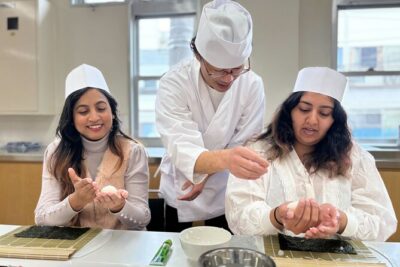
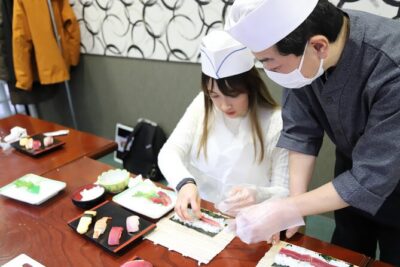
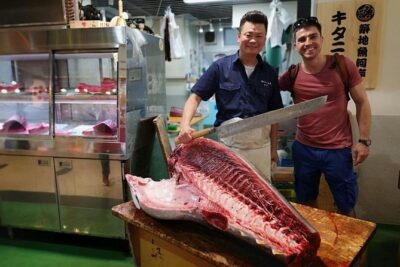
The main event is the sushi making with the tuna you purchased from Toyosu. This isn’t just a “watch and then eat” class. The highlight is seeing the process of cutting a block of tuna into individual portions—work that takes serious skill and judgment.
The tour info points out something important: this is a job even young sushi chefs aren’t allowed to do. That detail matters because it frames the lesson as more than a gimmick. You’re seeing a craft step that separates casual cutting from the kind of precise portioning sushi depends on.
You’ll work with a sushi chef during the class period, which is about 1.5 hours. Expect a mix of instruction and hands-on time. You’ll learn what to look for and how the tuna’s form affects the final pieces. When you’re holding and working with the fish yourself, it’s easier to understand why sushi chefs talk about texture, cut size, and consistency as much as flavor.
Even if you’ve eaten nigiri all your life, this part changes your perspective. You stop seeing tuna as a menu item and start seeing it as a raw material with requirements. That shift is why the tour feels educational without being boring.
The Lunch You’ll Actually Remember: Where Restaurant Tuna Comes From
At the end of the market and prep work, you eat the tuna you cut yourself in a variety of ways, with a sushi and tuna lunch included. This is where the morning stops being abstract.
The tour is designed to answer a real question: where do the tuna you eat at restaurants come from? By connecting your market purchase to your chef-guided cutting and the sushi you assemble, you get a direct line from source to plate.
This is also where the chef lecture pays off. You’re not just tasting tuna; you’re hearing the context that helps you taste with better understanding. And because you made parts of it, it’s easier to notice differences in how each preparation handles the fish.
Another perk is the “you leave full” factor. The lunch isn’t presented as a small side. It’s part of the core experience, and it gives you a clear payoff for the hands-on work.
One realistic caution: tuna can be strong for some people, especially if you don’t usually eat much raw fish. The tour asks you to tell them in advance about allergies or what you can’t eat, which is worth doing early.
Price and Value: Is $309 Worth a 4-Hour Tuna-Driven Day?
At $309 per person for a 4-hour experience, you should evaluate this like you would any premium class in Tokyo: you’re paying for access, instruction, and the ingredient itself.
Here’s what you’re getting for the price, based on what’s included:
- English guide throughout
- Sushi and tuna lunch
- Sushi chef lecture during the class
And what you’re getting that’s harder to DIY:
- Non-tourist access to Toyosu Market (with the buying-floor view)
- A structured, chef-led tuna cutting and sushi making session
- Tuna purchased from Toyosu Market and used in the food you eat
Your biggest “value lever” is the tuna cutting portion. It’s presented as a skill step that even less senior chefs don’t do, and you get to experience it in an instructional setting. You’d have trouble recreating that insight on your own, even if you can reach the general market area.
The trade-off: transportation fees and personal expenses aren’t included, so you’ll still want to budget a bit for getting from stop to stop. Also, the tour has a short overall duration, so it’s not for people who want a slow, free-form day.
If you love fish and specifically tuna, this price starts making more sense fast. If you’re only mildly curious about seafood, the cost may feel steep compared with a general Tsukiji food tour plus a casual sushi meal elsewhere.
More sushi counters to book, ranked
- Sushi Making Tokyo Roll and Authentic Japanese Sushi Class★ 5.0 · 3,971 reviews
- Tokyo: Roll and Authentic Sushi Making Class in Asakusa★ 4.9 · 1,957 reviews
- Make Sushi and Create Unforgettable Memories in Tokyo★ 5.0 · 1,413 reviews
- Tokyo: Sushi Making Class in a Happi Coat near a Famous Spot★ 4.9 · 1,377 reviews
- Tokyo Sushi Making Class in Tsukiji with Professional Chef★ 5.0 · 1,177 reviews
Practical Tips: Market Rules, Shoes, and What to Do About Photos
This tour has clear on-the-ground rules, and following them makes the day smoother for everyone.
First: wear comfortable walking shoes. You’ll spend time walking through market and market-side areas, then moving to the class location in Azabujuban. Sneakers are the right call.
Second: don’t plan on smoking breaks. Smoking is not allowed on the tour.
Third: photography inside Toyosu Market is prohibited. That means your plan should be “watch closely, ask smart questions.” If you’re unsure about photo rules for any particular vendor area, ask your guide what’s allowed and follow their lead. (In at least one guide experience, a vendor stop for questions and pictures came up in the feedback, but the official market rule is still no photos inside.)
Fourth: communicate dietary needs early. If you have allergies or foods you can’t eat, let them know in advance so the chef can adjust the lunch and sushi portion.
Finally: if you like taking notes, bring a tiny notepad. In a class like this, small details about texture and cutting can be easier to remember when you write them down.
Who This Tour Suits Best (and Who Should Skip It)
This tour is a strong fit if you want Tokyo with a purpose: fish sourcing, real industry steps, and a hands-on sushi-making class that uses tuna you bought and cut yourself.
It’s especially suited to:
- Adults who love seafood, and tuna fans in particular
- People who enjoy learning craft skills, not just eating meals
- Travelers who want a guided look behind how sushi gets made
It may not be a great match for:
- Children under 6 years (not suitable)
- Pregnant women (not suitable)
- Wheelchair users (not suitable)
Also, this isn’t the kind of tour where you can stroll at your own pace. You’ll follow a guide’s movement between stops, including public transport and short coach segments, so it’s best for people comfortable with standing, walking, and staying on schedule.
Should You Book This Toyosu Tuna Cutting and Sushi Tour?
Book it if you want a Tokyo food experience that goes beyond eating. This tour links Toyosu Market access, a chef-led tuna cutting lesson, and the sushi lunch into one coherent day. If the idea of seeing how tuna is portioned and then tasting what you made appeals to you, you’ll likely feel the “this is why it costs more” quickly.
Skip it if you’re mainly after Tsukiji browsing and casual sushi with minimal structure. You’ll still see Tsukiji Outside Market, but the class and the market access are the core. Also, if you dislike raw fish flavors or you’re worried about tuna intensity, consider how you handle tuna in real life before paying for a tuna-focused experience.
If you’re ready to spend a focused half-day learning the tuna story from source to nigiri, this is a very solid choice—small group, English guidance, and a sushi chef teaching a skill step you probably won’t see anywhere else in Tokyo.
FAQ
Where is the meeting point for this tour?
The meeting point is in front of the gate at SHIJOMAE station.
How long is the tour?
The duration is 4 hours.
How much does the tour cost?
The price is $309 per person.
What language is the tour guide?
The tour is guided in English.
How big is the group?
It’s a small group limited to 6 participants.
What’s included in the price?
English guide, sushi and tuna lunch, and a lecture from the sushi chef are included.
What are the items not included?
Transportation fee and personal expenses are not included.
Is photography allowed in Toyosu Market?
Photography is prohibited inside the Toyosu Market.
Who should not book this tour?
Children under 6 years, pregnant women, and wheelchair users are listed as not suitable for this experience.
What should I do if I have allergies?
Let the provider know in advance about any allergies or foods you cannot eat.
More Tour Reviews in Tokyo
- Mt Fuji and Hakone 1-Day Bus Tour Return by Bullet Train
★ 5.0 · 26,383 reviews - 1-Day Tokyo Bus Tour
★ 5.0 · 14,250 reviews - Tokyo: teamLab Planets TOKYO Digital Art Museum Entry Ticket
★ 4.6 · 9,779 reviews - Mt Fuji & Hakone Cruise, Drum Show Bullet Train 1 Day from Tokyo
★ 4.0 · 7,413 reviews - Tokyo: Shinjuku Food Tour (13 Dishes at 4 Local Eateries)
★ 5.0 · 6,603 reviews
More Sushi Counters to Book
- Sushi Making Tokyo Roll and Authentic Japanese Sushi Class
★ 5.0 · 3,971 reviews - Tokyo: Roll and Authentic Sushi Making Class in Asakusa
★ 4.9 · 1,957 reviews - Make Sushi and Create Unforgettable Memories in Tokyo
★ 5.0 · 1,413 reviews - Tokyo: Sushi Making Class in a Happi Coat near a Famous Spot
★ 4.9 · 1,377 reviews - Tokyo Sushi Making Class in Tsukiji with Professional Chef
★ 5.0 · 1,177 reviews
More Tsukiji Market Breakfasts
- Tokyo Tsukiji Fish Market Food and Culture Walking Tour
★ 5.0 · 3,184 reviews - Tokyo: Tsukiji Fish Market Food and Walking tour
★ 5.0 · 1,724 reviews - Tokyo: Tsukiji Fish Market Guided Walking Tour
★ 4.9 · 1,397 reviews - Tokyo Sushi Making Class in Tsukiji with Professional Chef
★ 5.0 · 1,177 reviews - Tsukiji Fish Market Guided Tour and Sushi Making with Pro Chef
★ 5.0 · 775 reviews
Latest Tokyo reviews off our desk






Tsukiji Market Food Tours, compared.
 ★ 5.0Tokyo Tsukiji Fish Market Food and Culture Walking TourFrom $993,184 reviews
 ★ 5.0Tsukiji Fish Market Food and Walking tourFrom $301,724 reviews
 ★ 4.9Tsukiji Fish Market Guided Walking TourFrom $221,397 reviews
 ★ 5.0Tokyo Sushi Making Class in Tsukiji with Professional ChefFrom $491,177 reviews
 ★ 5.0Tsukiji Fish Market Guided Tour and Sushi Making with Pro ChefFrom $104775 reviews
★ 4.7Tsukiji Fish Market Food and Culture Walking TourFrom $96757 reviews
 ★ 5.0Tsukiji Fish Market: Street Food & Culture Walking TourFrom $33669 reviews
 ★ 5.0Tsukiji Fish Market Small-Group Food Walking TourFrom $87621 reviews
Browse the lists this tour appears in