
Reviewed · WORKSHOPS
Tokyo’s Authentic and Finest Taiko Drumming Workshop
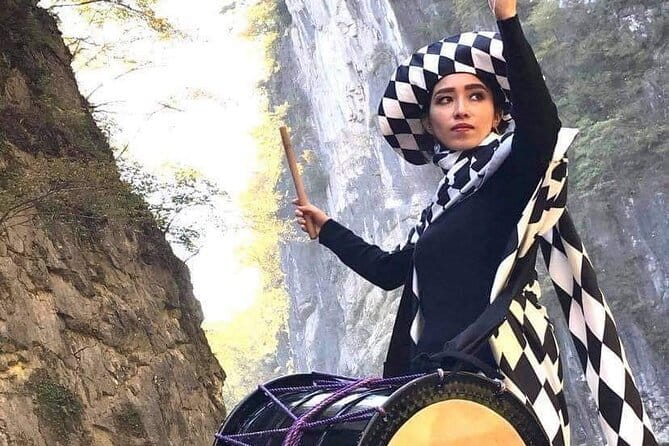
If you think taiko is just a show, think again. This workshop turns it into hands-on rhythm training with a pro drummer instructor in Tokyo.
I especially like the small-group size (max 15) and the way you get personal attention while you’re actually playing. I also like that you leave with a personalized video of your performance, not just a memory.
The class is designed to be start-to-finish, even if you’re brand new. You don’t need to hunt for gear because all equipment is provided (drums and sticks), and the rhythm lessons are taught in English, with English/Japanese support available.
One drawback to plan for: it’s a physical, loud workout. Wear comfy clothes and expect your hands to work hard.
In This Review
- Key Points I’d Plan Around
- Taiko Drumming in Tokyo That Feels Practical, Not Performative
- Meet Eva Kestner and the Teaching Credentials You Can Feel
- What Happens During the 90-Minute Workshop
- Traditional Meets Contemporary: Why the Song Choice Matters
- Loud, Physical, and Surprisingly Teachable: What to Wear and Bring
- Small-Group Format and Personal Attention (Max 15)
- Location Near Shibuya: Easy to Combine With the Rest of Your Day
- Price and Value: Why $120 Can Actually Make Sense
- Who Should Book This Taiko Workshop in Tokyo?
- Should You Book It?
- FAQ
- How long is the taiko drumming workshop?
- What is included in the $120 price?
- Do I need taiko drumming experience?
- What language is the workshop taught in?
- How big is the group?
- Where does the workshop start?
- Is the workshop accessible?
- Can I cancel for a refund?
Key Points I’d Plan Around
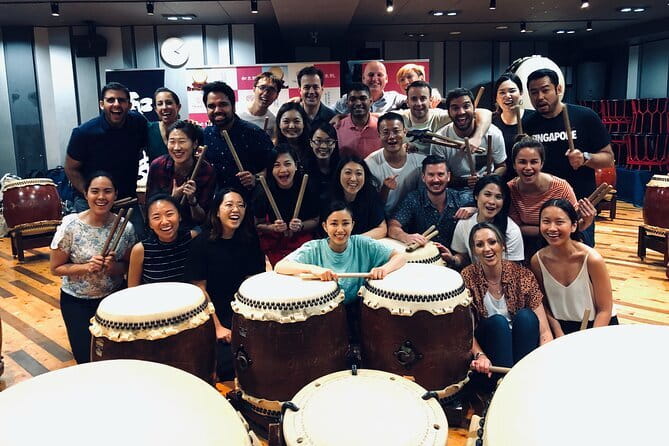
- 90 minutes of hands-on rhythm training with foundation and practice before the final piece
- Max 15 people, so you’re not lost in a crowd
- All gear provided, meaning you can travel light and focus on learning
- Professional demonstration + brief taiko history to connect what you’re doing to the culture
- Personalized video so you can actually track what you improved
- Physical effort matters: bring water and expect a challenge for your legs and hands
Taiko Drumming in Tokyo That Feels Practical, Not Performative
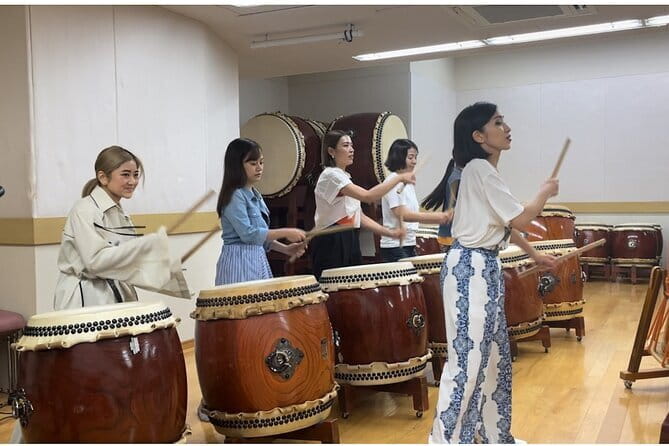
Tokyo already has plenty of music experiences, but this one is built like training. You’re not just watching someone hit a drum from across the room. You’re learning rhythm skills, repeating patterns, and then playing a traditional or contemporary taiko piece as a group.
What makes it feel authentic is the balance of structure and energy. The workshop has foundation training, rhythm training, and then a real performance segment. That matters because taiko can look simple until you try it—timing, posture, and coordination all kick in fast.
And yes, it can be loud. That’s part of the fun and part of why you feel the drumming in your body. Just know you’ll want to treat it like an activity day, not a quick stop.
Readers also shortlisted these Tokyo bookings:
- Sushi Making Tokyo Roll and Authentic Japanese Sushi Class
★ 5.0 · 3,971 reviews - Tokyo: Roll and Authentic Sushi Making Class in Asakusa
★ 4.9 · 1,957 reviews - Tokyo Shinjuku Chopsticks Making Class
★ 5.0 · 1,763 reviews - Tokyo: Sushi Making Class in a Happi Coat near a Famous Spot
★ 4.9 · 1,377 reviews
Meet Eva Kestner and the Teaching Credentials You Can Feel
This workshop is led by Eva Kestner, a professional taiko drummer and instructor. Her background isn’t background noise—it’s part of why the lesson structure works.
Eva founded and served as the first musical director of Cornell University’s taiko drumming group. She also received an excellency award from the Tokyo University of Arts New Artists Competition. Her original music is published by Harper Collins and the Cambridge International Curriculum. That mix of performance and education shows up in how the class is paced: you get clear steps, demonstration, then practice.
Another detail I appreciate: she teaches in English. On top of that, there’s English and Japanese support, which can be a big help if your Japanese is limited and you want to ask quick clarifying questions.
What Happens During the 90-Minute Workshop

The workshop is about 1 hour 30 minutes and runs once at the studio, returning you to the same meeting point afterward. There’s only one main stop: Japan, 150-0032 Tokyo, Shibuya, Uguisudanichō, 111 太洋レジデンス代官山 (at the Eva Kestner International Taiko Drum Academy).
Here’s the flow you should expect:
1) You start with basics and technique.
You’ll begin with foundation training and rhythm training. The point here is to give you the building blocks early, so you can join in without guessing.
2) You get a demonstration (and some context).
Eva performs for you during the class, plus there’s a brief explanation of taiko drum history. That’s useful because taiko isn’t one monolithic style. The history gives meaning to why the rhythm and performance style developed the way it did.
3) You practice short segments.
The workshop is designed so you can play almost right away, then sharpen timing and coordination. A few reviews mention repeated practice with recorded drum tracks—one set for working through the pattern, and another to support the more traditional number.
4) You learn and perform a traditional or contemporary piece.
You’ll work on a specific piece during the session. Some classes focus more on traditional drumming; others lean contemporary. Either way, you’ll go from taught rhythm to group performance within the same workshop window.
5) You leave with a personalized video.
This is a big value-add. The personalized video makes it easier to remember what you actually did and what to practice later. It also tends to boost motivation—because you’re not just making noise; you’re creating a take-home record of your performance.
Traditional Meets Contemporary: Why the Song Choice Matters
Taiko can be intimidating, mostly because people think it’s either ancient ritual or modern festival power. This workshop helps you experience both sides in one session.
You’ll learn a piece that’s either traditional or contemporary, and the structure supports both styles. Traditional pieces tend to reward precision and coordination. Contemporary pieces can feel more dynamic and dramatic, but the same basics still matter: timing, body mechanics, and listening as a group.
I like that the lesson connects technique to performance rather than treating them as separate activities. You’re not just collecting information—you’re building rhythm awareness until it becomes music you can play with others.
Loud, Physical, and Surprisingly Teachable: What to Wear and Bring
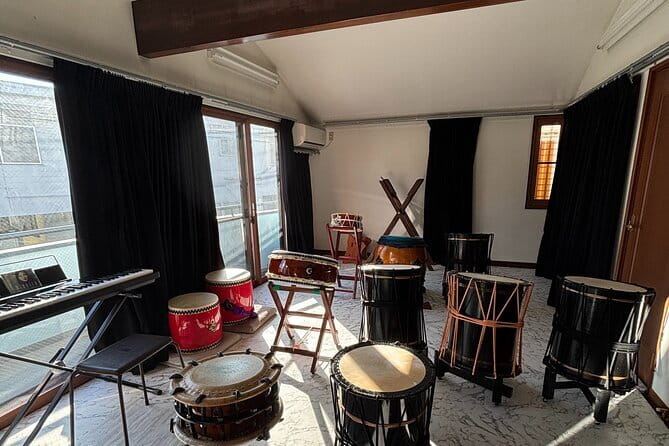
The workshop is moderate physical fitness level. That’s not a polite label—it matches what taiko does to your body.
Expect:
- Legs and core working hard as you move and stabilize
- Hands working with sticks and repeated hits
- A louder sound environment than you’d get from most indoor classes
Practical tips from the experience vibe:
- Wear comfortable, breathable clothing so you can move.
- Bring water. The class can be energizing enough that you’ll feel it.
- If you have sensitive skin, consider bringing band-aids. Some participants reported getting blisters on hands.
Also, because the workshop gives you drums and sticks, you won’t be dealing with carrying equipment. But you will want to be physically prepared for the effort.
- Tokyo: Shinjuku Food Tour (13 Dishes at 4 Local Eateries)★ 5.0 · 6,603 reviews
- Tokyo Mt Fuji 5th St & Hakone Cruise Bus Tour w/Bullet Train★ 4.4 · 5,024 reviews
- Flagship 2-Hours Official Street Go-Kart Tour – Tokyo Bay Shop★ 5.0 · 4,974 reviews
- From Tokyo: Mount Fuji Full-Day Sightseeing Trip★ 4.5 · 4,970 reviews
- Tokyo: Hop-On Hop-Off Sightseeing Bus Ticket★ 3.9 · 4,207 reviews
Small-Group Format and Personal Attention (Max 15)
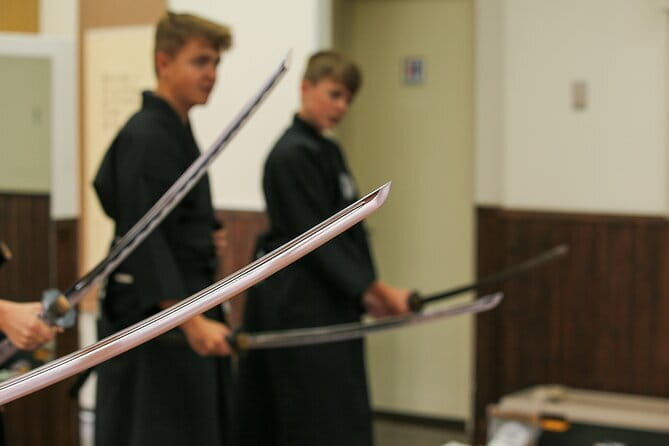
The workshop caps at 15 travelers, and it’s described as boutique-style and intimate. That small group size matters more than it sounds.
When you’re learning taiko, timing is everything. In a larger group, you can get lost. In a small group, you’re more likely to:
- Get quick corrections
- Follow along with the rhythm pattern more confidently
- Hear how your part should fit into the group
The result is that you feel like you’re actively learning, not waiting for your turn.
And because the workshop is built for beginners through intermediate rhythm levels, it’s a good choice if you’re not sure you can do it. Eva’s teaching style is patient and step-by-step by design.
Location Near Shibuya: Easy to Combine With the Rest of Your Day
The meeting point is in the Shibuya area (Uguisudanichō / Daikanayama). It’s near public transportation, and the class ends back at the meeting point.
This is a good timing option for a Tokyo day because:
- It’s only 90 minutes
- It doesn’t require a long commute out of the center
- You can slot it before dinner or between museum visits
One more practical note: the exact studio spot can be a little tricky to locate from directions alone. I’d strongly suggest using Google Maps to get your bearings, especially on a first visit.
For larger groups (over 20 people), there’s a different setup: the class location will be about 20 minutes from Shibuya. If you’re booking with a big party, confirm which slot you’re on so you don’t plan your day around the wrong meeting area.
Price and Value: Why $120 Can Actually Make Sense
At $120 per person for about 1.5 hours, the question is whether you’re paying for a performance or paying for instruction. This workshop leans instruction.
Here’s what you’re getting that supports the price:
- All equipment provided (drums and sticks), so no rental hassle
- A professional instructor with serious credentials
- English teaching plus English/Japanese support
- A structured lesson (foundation, rhythm training, and a learned piece)
- Your own personalized video of you playing
That last point is quietly valuable. A video turns an intense, forgettable “one-time experience” into something you can review. It also makes the experience feel more personal, since it isn’t just group footage.
If you’re the type who wants hands-on cultural activities in Tokyo—something you can’t replicate from home—this is one of the more convincing options for the cost.
Who Should Book This Taiko Workshop in Tokyo?
This workshop is a strong match if you want:
- A hands-on cultural activity rather than a passive show
- A small-group class where you get attention
- A workout that doesn’t feel like the gym—more like rhythmic fun with structure
- A Tokyo experience that teaches technique and context, not just spectacle
It can also work well for families and mixed ages. Some participants attended with teenagers and a tween, and the class was described as enjoyable for different experience levels. Just remember it’s physical and loud, so plan accordingly for kids’ comfort and stamina.
If you’re someone who hates noise, this probably isn’t your best match. But if you like energy, movement, and learning a skill you can replay later, it’s a great fit.
Should You Book It?
I’d recommend booking this taiko workshop if you want a real skill-based class in Tokyo, led by a professional who teaches step-by-step in English. The combination of small-group attention, all equipment provided, and a personalized video makes it more than a fun afternoon—it becomes something you can remember and practice.
If you’re sensitive to loud sound or you dislike physical effort, you’ll want to think twice. This isn’t a gentle cultural chat. It’s taiko—so your body and hands will be part of the story.
If you decide to go, book ahead. It’s commonly booked about 31 days in advance on average, so earlier planning helps you lock in the time you want.
FAQ
How long is the taiko drumming workshop?
It runs for about 1 hour 30 minutes.
What is included in the $120 price?
The workshop includes taiko drums and taiko drumming sticks, instruction with English and Japanese support, and you receive a personalized video of you playing.
Do I need taiko drumming experience?
You do not need experience. The session is taught starting from the basics through rhythm training and then a traditional or contemporary piece.
What language is the workshop taught in?
Eva teaches in English. The experience also provides English and Japanese support.
How big is the group?
The workshop has a maximum of 15 travelers.
Where does the workshop start?
It starts at the Eva Kestner International Taiko Drum Academy meeting point in Shibuya, Uguisudanichō / Daikanayama area, and it ends back at the same meeting point.
Is the workshop accessible?
Accessibility support is offered for visual, audio, mobility, and neurodivergents.
Can I cancel for a refund?
Yes, you can cancel for a full refund up to 24 hours before the experience’s start time. If you cancel less than 24 hours before, the amount paid is not refunded.
More Workshops in Tokyo
- Sushi Making Tokyo Roll and Authentic Japanese Sushi Class
★ 5.0 · 3,971 reviews - Tokyo: Roll and Authentic Sushi Making Class in Asakusa
★ 4.9 · 1,957 reviews - Tokyo Shinjuku Chopsticks Making Class
★ 5.0 · 1,763 reviews - Tokyo: Sushi Making Class in a Happi Coat near a Famous Spot
★ 4.9 · 1,377 reviews - Chopstick Making Workshop in Ginza
★ 4.8 · 1,366 reviews
More Tour Reviews in Tokyo
- Mt Fuji and Hakone 1-Day Bus Tour Return by Bullet Train
★ 5.0 · 26,383 reviews - 1-Day Tokyo Bus Tour
★ 5.0 · 14,250 reviews - Tokyo: teamLab Planets TOKYO Digital Art Museum Entry Ticket
★ 4.6 · 9,779 reviews - Mt Fuji & Hakone Cruise, Drum Show Bullet Train 1 Day from Tokyo
★ 4.0 · 7,413 reviews - Tokyo: Shinjuku Food Tour (13 Dishes at 4 Local Eateries)
★ 5.0 · 6,603 reviews
Latest Tokyo reviews off our desk




Workshops, compared.
 ★ 5.0Sushi Making Tokyo Roll and Authentic Japanese Sushi ClassFrom $593,971 reviews
 ★ 4.9Roll and Authentic Sushi Making Class in AsakusaFrom $581,957 reviews
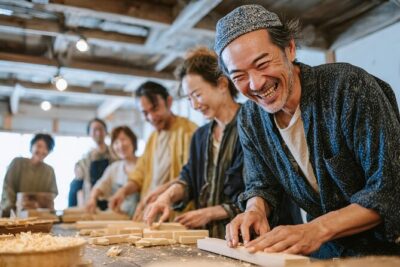 ★ 5.0Tokyo Shinjuku Chopsticks Making ClassFrom $201,763 reviews
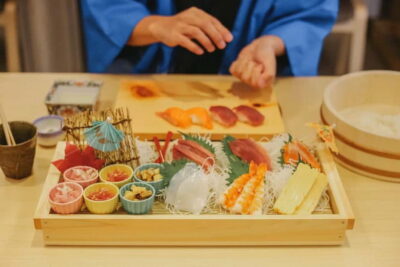 ★ 4.9Sushi Making Class in a Happi Coat near a Famous SpotFrom $421,377 reviews
 ★ 4.8Chopstick Making Workshop in GinzaFrom $251,366 reviews
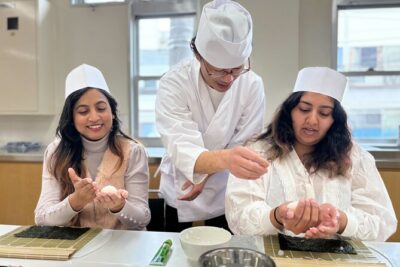 ★ 5.0Tokyo Sushi Making Class in Tsukiji with Professional ChefFrom $491,177 reviews
 ★ 5.0Ramen & Gyoza Cooking Class in Tokyo with Local Supermarket VisitFrom $122823 reviews
 ★ 5.0Matcha Making Class in Tokyo with Authentic Japanese Sweets SetFrom $21744 reviews
Browse the lists this tour appears in