
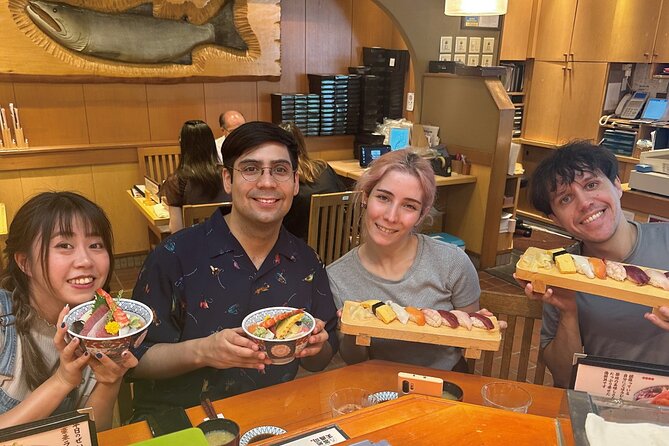
Reviewed · TSUKIJI MARKET FOOD TOURS
Tsukiji Market Eating Tour, Authentic Sushi & Sake Comparison
Sushi starts before you even eat it. This Tsukiji Market eating tour turns a confusing crowd into a clear, food-focused route, with authentic sushi and a sake comparison that’s made for people who want more than a quick bite.
Two things I love: the tour stays small (max 6 people) so you can actually ask questions, and you get a structured sake tasting with three traditional types matched to your lunch and snacks. I also like that the included menu covers classic market hits, from egg omelet to strawberry daifuku.
One consideration: Tsukiji Station can feel like a maze when you arrive. Go early, have your mobile ticket ready, and aim for the exact meeting spot so you don’t lose time.
In This Review
- Key highlights you’ll care about
- How the Tsukiji Market Tour Fits Together in About 3 Hours
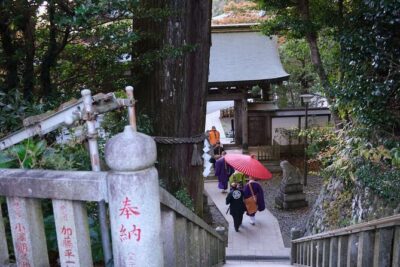
- Tsukiji Hongwanji Temple: A Calm Start Before the Food Rush
- Jogai Market: Stalls, Tools, Soup Stock, and the Fun Part of Browsing
- Tsukiji Fish Market: Close-Up Seafood and Possible Tuna Dismantling
- Namiyoke Inari Shrine: Where Market Workers Pray for Safety
- The Ending You’ll Remember: Real Sushi Lunch Plus Sake Comparison
- The snack lineup: small bites, big variety
- Value and Price: Why $30 Can Feel Like a Bargain Here
- Meeting Point Reality Check: Tsukiji Station, Exact Spot, No Guessing
- Your Guide’s Role: Questions, Pace, and a Friendly Tokyo Voice
- Tips to Make This Tour Taste Better (and Stress Less)
- Who Should Book This Tsukiji Market Eating Tour
- Should You Book? My Take
- FAQ
- What’s included in the Tsukiji Market eating tour?
- Does the tour include sake?
- How long is the tour and how big is the group?
- Where do I meet the guide?
- Are admission tickets required for the temple and shrine stops?
- What is the cancellation policy?
Key highlights you’ll care about
- Max 6 travelers keeps the pace friendly and the guide’s attention on you
- Real sushi lunch at an authentic restaurant makes the ending feel worth the walk
- Sake drinking comparison lets you compare multiple sake types from several brands
- Included market snacks cover sweet, savory, and tea breaks so you don’t guess what to order
- Temple and shrine stops add a traditional reset inside the market area
- A guided route through Tsukiji helps you find the good stalls without wandering for hours
How the Tsukiji Market Tour Fits Together in About 3 Hours
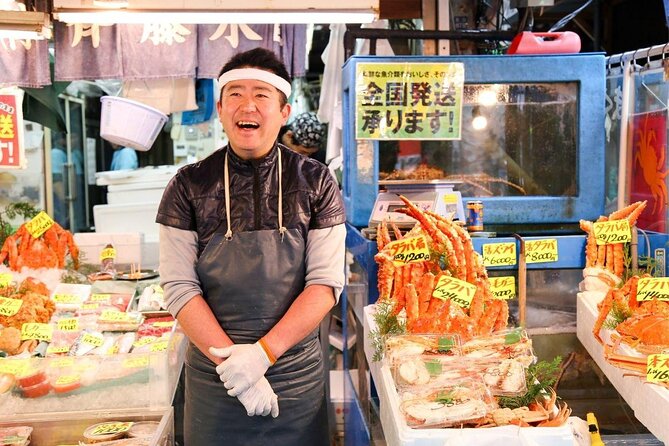
This is a 3-hour, small-group Tokyo food tour built around three things: eating, learning where to look, and getting your bearings fast. With a maximum of 6 people, it doesn’t feel like a cattle line through narrow aisles. You can ask questions and hear the answers clearly—big deal in a place where everyone is moving and talking.
You also get a built-in structure. Instead of trying to plan which stalls to hit and what to order, you follow your English local guide from one pocket of Tsukiji to the next. The stops are short, but the tour keeps feeding you along the way—snacks first, then a full sushi lunch.
The biggest practical win is this: you leave knowing what you actually like. By the time you hit lunch, you’ve already sampled multiple flavors and textures, plus sake pairings. If you love it, great. If you’re unsure about sake, the comparison format helps you sort out what style you prefer.
More market breakfasts our reviewers scored
- Tokyo Tsukiji Fish Market Food and Culture Walking Tour
★ 5.0 · 3,184 reviews - Tokyo: Tsukiji Fish Market Food and Walking tour
★ 5.0 · 1,724 reviews - Tokyo: Tsukiji Fish Market Guided Walking Tour
★ 4.9 · 1,397 reviews - Tokyo Sushi Making Class in Tsukiji with Professional Chef
★ 5.0 · 1,177 reviews
Tsukiji Hongwanji Temple: A Calm Start Before the Food Rush
Most people think Tsukiji is only seafood and smoke—this stop gives you a different angle. You begin at Tsukiji Hongwanji Temple, a temple with an “old world” feel that sits right in the market zone. The exterior draws on ancient Buddhist architecture from India and other parts of Asia, and the entrance has stained glass at the main hall.
Why this start works: it slows your brain down. Before you’re surrounded by knives, fish cuts, and nonstop activity, you get a quick breath of tradition and atmosphere. You also see animal sculptures, which makes it feel more like a living place than just a photo spot.
Admission is free, and the stop is short (about 10 minutes). So don’t expect a long cultural lecture—but do expect a visual palate cleanser before the market crowds pick up.
Jogai Market: Stalls, Tools, Soup Stock, and the Fun Part of Browsing
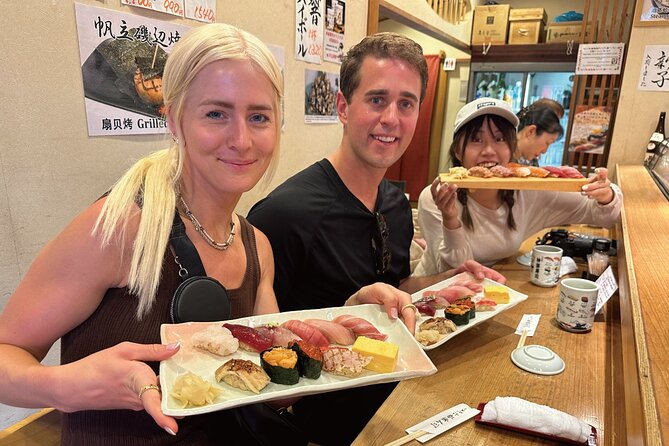
Next comes the Jogai Market area. This part matters because it’s not only for fish. It’s lined with stalls that support Japan’s food culture—about 80 years since the market opened—and it’s packed with more than 400 stores along a long row.
Here’s what you’ll notice as you walk:
- Fresh seafood and prepared items
- Cooking tools like knives
- Sweets and everyday favorites
- Soup stock
- Sake
The guide’s job here is huge. Tsukiji can be overwhelming fast. A good guide helps you look at the right stalls, and they also steer you toward what makes sense to taste in a short time. The tour is described as tailored to your wishes, which is another practical point: if you care more about seafood, they’ll push you in that direction. If you’re more about sweets or drinks, you’ll likely get those stops too.
You’ll also get some tastings and actual food during this market segment. In other words, you won’t just “look and learn.” You’ll taste your way through the market’s flavor range while you’re still fresh enough to enjoy it.
Tsukiji Fish Market: Close-Up Seafood and Possible Tuna Dismantling
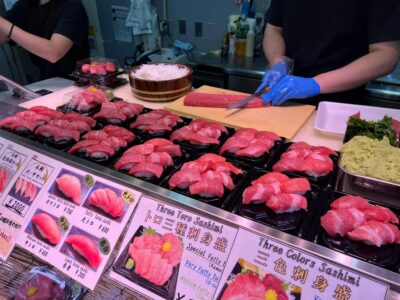
After Jogai, you move to the Tsukiji Fish Market area, which is more specialty-store focused—fresh seafood, plus buyers from culinary establishments who come to shop. This stop gives you the close-up feel that makes Tsukiji special.
You might also see a tuna dismantling show if timing lines up. That’s not guaranteed, but it’s part of the experience when the schedule cooperates. Even without the show, the market energy and the scale of what’s sold is the point.
A practical note: this segment is about 45 minutes. That’s enough time to get a strong feel for what’s here and taste what you’re guided to try. It’s not enough time to shop for everything you dream about, so you’ll want to treat it like a guided “taste and observe” block, not a do-it-all shopping spree.
Namiyoke Inari Shrine: Where Market Workers Pray for Safety
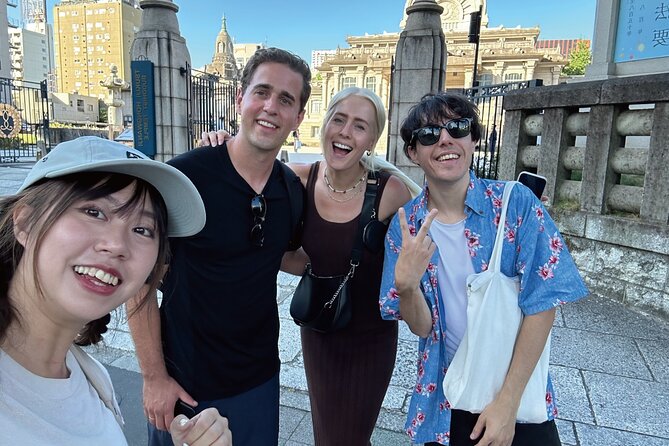
In one corner of the Tsukiji Market area sits Namiyoke Inari Shrine, tied directly to the people who work here. Fishermen and market workers pray there for safety—so it’s not just decorative. You’ll also spot a unique lion statue, which is a nice visual break from all the seafood imagery.
This stop is quick (about 10 minutes) and admission is free. Think of it as a reset button. You’re eating and walking nonstop, and this shrine gives you a moment where the focus shifts from consumption to respect and routine.
It’s also a reminder of something easy to miss: markets aren’t just for tourists. They’re workplaces, and shrines like this sit right inside the working rhythm.
More sushi counters to book, ranked
- Sushi Making Tokyo Roll and Authentic Japanese Sushi Class★ 5.0 · 3,971 reviews
- Tokyo: Roll and Authentic Sushi Making Class in Asakusa★ 4.9 · 1,957 reviews
- Make Sushi and Create Unforgettable Memories in Tokyo★ 5.0 · 1,413 reviews
- Tokyo: Sushi Making Class in a Happi Coat near a Famous Spot★ 4.9 · 1,377 reviews
- Tokyo: Tsukiji Fish Market Sushi Making Class with Pro Chef★ 4.9 · 506 reviews
The Ending You’ll Remember: Real Sushi Lunch Plus Sake Comparison
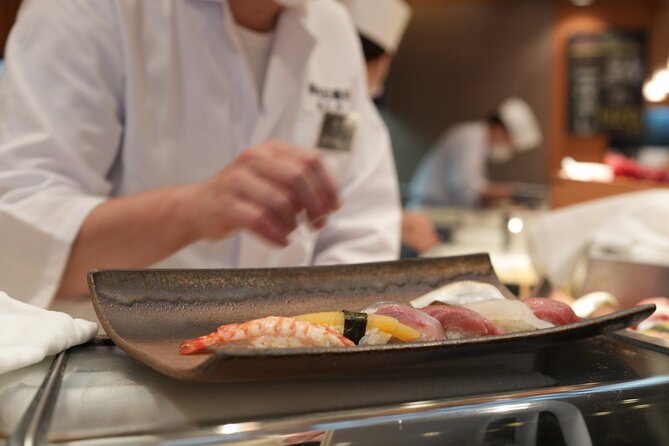
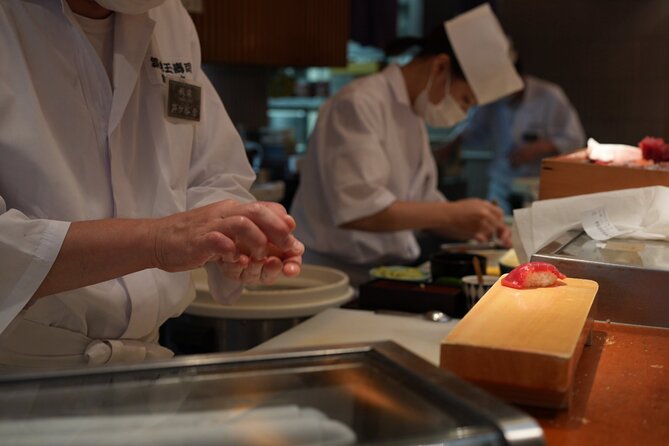
The tour finishes with a real sushi lunch—45 minutes at an authentic sushi restaurant. This is where the whole experience comes together. If you’re considering a Tsukiji tour mainly for food, this is the portion that makes the price feel justified.
The lunch is described as high quality sushi using fresh seafood from Tsukiji. And it’s not a sit-down for one tiny roll. You’re eating your way into a proper meal after sampling earlier snacks.
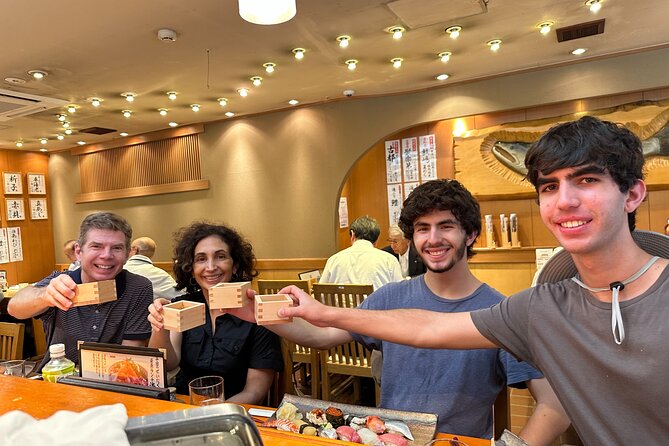
Then there’s the drinks. You can choose a sake tasting option that compares three types of sake your guide presents as part of a structured comparison across several brands. The key is that it’s not just one sake pour and done. The idea is to help you notice differences in styles and flavors while you’re eating sushi and market snacks.
If you’re new to sake, this format helps a lot because it forces comparison. If you already like sake, it turns into a mini lesson in what to look for next time you shop.
The snack lineup: small bites, big variety
Before lunch, you get a distinctive menu of included snacks such as:
- Egg omelet
- Strawberry daifuku
- Dashi
- Japanese tea
- Nuts
…and other select market items
This matters because it keeps you from relying on “whatever looks good.” You’ll get sweet, savory, and comforting warm flavors like dashi. The tea break also helps you reset between tastings so everything doesn’t blur together.
Value and Price: Why $30 Can Feel Like a Bargain Here
At $30 for roughly 3 hours, the value depends on what you usually spend when you travel. In Tokyo, paying for a guided walk plus multiple tastings and a real sushi lunch is often where costs add up.
Here’s what you’re getting that most unguided self-walks struggle to replicate:
- An English local guide who can route you through Tsukiji efficiently
- Included snacks across sweet and savory categories
- A real sushi lunch at a restaurant using fresh seafood from Tsukiji
- Optional sake comparison with multiple sake types and brands
- Temple/shrine stops with free admission
Also, your name gets turned into Kanji characters on a sticker. It’s a small touch, but it helps break the ice and makes the tour feel more personal.
The tour doesn’t include hotel pickup or private transportation, so you’ll rely on nearby public transit. But if you’re already using the subway, that’s not a drawback—it keeps the cost lower.
Meeting Point Reality Check: Tsukiji Station, Exact Spot, No Guessing
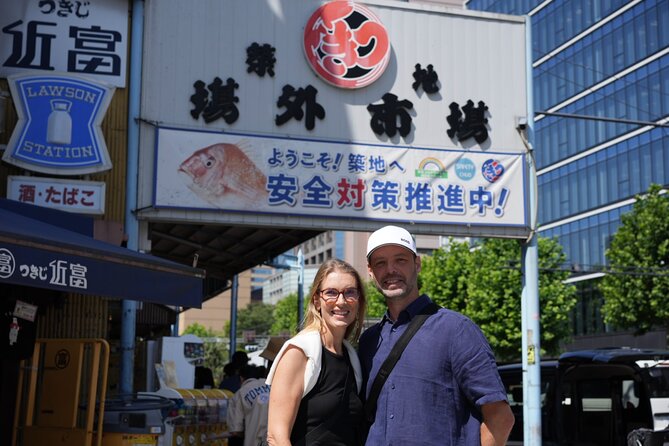
The meeting point is at Tsukiji Station 3 Chome-9, Tsukiji, Chuo City, Tokyo. That’s clear, but Tsukiji Station is still a place where you can walk in the wrong direction for 10 minutes without noticing.
My advice: give yourself buffer time and confirm where that 3 Chome-9 marker is on your map before you go. Have your mobile ticket ready on your phone. When you show up early, you’re not stressed, and you can start enjoying the market instead of hunting for your guide.
The tour is near public transportation, which is a plus. Just plan for a bit of walking inside the area once you arrive.
Your Guide’s Role: Questions, Pace, and a Friendly Tokyo Voice
With small groups, the guide’s personality changes the experience. In the best version of this tour, your guide answers questions clearly and keeps momentum without rushing you. One guide name that shows up strongly in past experiences is Ariel, who’s described as fun and energetic while pointing out highlights and explaining what you’re looking at.
Even if you don’t get Ariel, the format still matters: the tour is built so you can ask questions and you won’t feel lost. That’s the real value in a place like Tsukiji. A guided walk isn’t just about convenience—it’s about understanding what to notice and what to taste.
Also, the tour is designed to meet your interests. You’re not stuck with one rigid checklist.
Tips to Make This Tour Taste Better (and Stress Less)
A few practical things help a lot:
- Eat lightly before you go. You’ll get multiple snacks and then a sushi lunch.
- Go in with curiosity about sake, even if you’re unsure. The comparison format is meant to teach your taste preferences.
- Keep your questions simple: ask what to try next, ask what the guide recommends for your sake style, and ask what the market is known for beyond seafood.
- Bring comfortable shoes. You’ll be walking between stops for about 3 hours.
And if you’re the kind of person who wants photos, do it fast. In market areas, crowds move. You’ll get more from being present than from trying to stop for long shots.
Who Should Book This Tsukiji Market Eating Tour
This tour is a great fit if you want:
- A guided introduction to Tsukiji without the stress of planning
- A sushi lunch you don’t have to pick yourself
- A structured sake tasting comparison rather than random sips
- A small-group experience (max 6) in a busy area
It’s also a solid pick for couples and groups who enjoy food but don’t want to spend half the day figuring out logistics. The temple and shrine stops make it feel less like a single-food crawl and more like a cultural walk with tastings.
If you already know Tsukiji well and plan to do all your own shopping, you might find you don’t need a guide. But if you want the best use of a short Tokyo visit, the guided route makes a lot of sense.
Should You Book? My Take
Yes, if you want a Tokyo food experience that’s efficient and guided without being stiff. The combination of included snacks, a real sushi lunch at the end, and a sake comparison makes the price feel fair. Add in the short temple and shrine stops, and you get more than just eating—you get context.
Skip it only if you hate organized tastings, don’t want any alcohol (since sake tasting is an option/choice), or you’re hoping to spend unlimited time shopping. This tour is built for a tight time window and a strong tasting payoff.
If you’re on the fence, book with confidence and come hungry.
FAQ
What’s included in the Tsukiji Market eating tour?
The tour includes market snacks (with items such as egg omelet, strawberry daifuku, dashi, Japanese tea, and nuts), an included real sushi lunch, an English local guide, and a sticker with your name translated into Kanji characters.
Does the tour include sake?
Sake is included if you choose the Sake Drinking Comparison option. That option lets you compare multiple types of sake from several different sake brands.
How long is the tour and how big is the group?
The tour runs about 3 hours. It’s a small-group experience with a maximum of 6 travelers.
Where do I meet the guide?
You meet at Tsukiji Station 3 Chome-9, Tsukiji, Chuo City, Tokyo 104-0045, Japan.
Are admission tickets required for the temple and shrine stops?
The temple and shrine stops listed are free of charge (admission ticket free).
What is the cancellation policy?
You can cancel for a full refund if you cancel at least 24 hours in advance. If you cancel less than 24 hours before the start time, the amount paid is not refunded.
More Tour Reviews in Tokyo
- Mt Fuji and Hakone 1-Day Bus Tour Return by Bullet Train
★ 5.0 · 26,383 reviews - 1-Day Tokyo Bus Tour
★ 5.0 · 14,250 reviews - Tokyo: teamLab Planets TOKYO Digital Art Museum Entry Ticket
★ 4.6 · 9,779 reviews - Mt Fuji & Hakone Cruise, Drum Show Bullet Train 1 Day from Tokyo
★ 4.0 · 7,413 reviews - Tokyo: Shinjuku Food Tour (13 Dishes at 4 Local Eateries)
★ 5.0 · 6,603 reviews
More Sushi Counters to Book
- Sushi Making Tokyo Roll and Authentic Japanese Sushi Class
★ 5.0 · 3,971 reviews - Tokyo: Roll and Authentic Sushi Making Class in Asakusa
★ 4.9 · 1,957 reviews - Make Sushi and Create Unforgettable Memories in Tokyo
★ 5.0 · 1,413 reviews - Tokyo: Sushi Making Class in a Happi Coat near a Famous Spot
★ 4.9 · 1,377 reviews - Tokyo Sushi Making Class in Tsukiji with Professional Chef
★ 5.0 · 1,177 reviews
More Tsukiji Market Breakfasts
- Tokyo Tsukiji Fish Market Food and Culture Walking Tour
★ 5.0 · 3,184 reviews - Tokyo: Tsukiji Fish Market Food and Walking tour
★ 5.0 · 1,724 reviews - Tokyo: Tsukiji Fish Market Guided Walking Tour
★ 4.9 · 1,397 reviews - Tokyo Sushi Making Class in Tsukiji with Professional Chef
★ 5.0 · 1,177 reviews - Tsukiji Fish Market Guided Tour and Sushi Making with Pro Chef
★ 5.0 · 775 reviews
Latest Tokyo reviews off our desk




Tsukiji Market Food Tours, compared.
 ★ 5.0Tokyo Tsukiji Fish Market Food and Culture Walking TourFrom $993,184 reviews
 ★ 5.0Tsukiji Fish Market Food and Walking tourFrom $301,724 reviews
 ★ 4.9Tsukiji Fish Market Guided Walking TourFrom $221,397 reviews
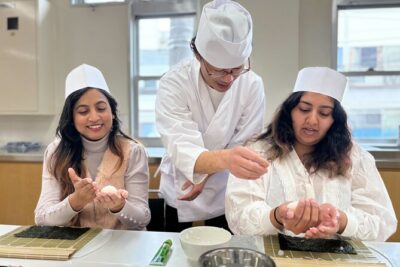 ★ 5.0Tokyo Sushi Making Class in Tsukiji with Professional ChefFrom $491,177 reviews
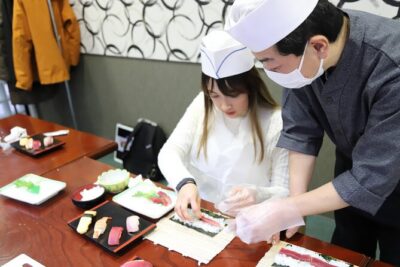 ★ 5.0Tsukiji Fish Market Guided Tour and Sushi Making with Pro ChefFrom $104775 reviews
★ 4.7Tsukiji Fish Market Food and Culture Walking TourFrom $96757 reviews
★ 5.0Tsukiji Fish Market Guided Tour and Sushi Making with Pro ChefFrom $104775 reviews
★ 4.7Tsukiji Fish Market Food and Culture Walking TourFrom $96757 reviews
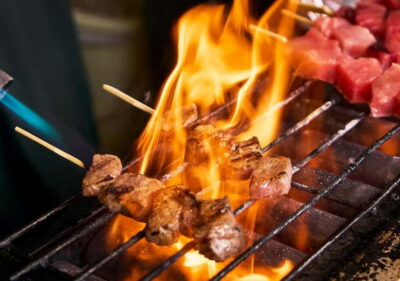 ★ 5.0Tsukiji Fish Market: Street Food & Culture Walking TourFrom $33669 reviews
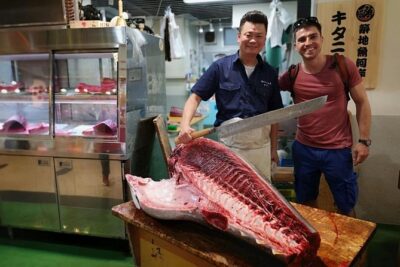 ★ 5.0Tsukiji Fish Market Small-Group Food Walking TourFrom $87621 reviews
Browse the lists this tour appears in