
Reviewed · CRAFT & ARTISAN WORKSHOPS
Calligraphy Culture SHODO Experience in Tokyo
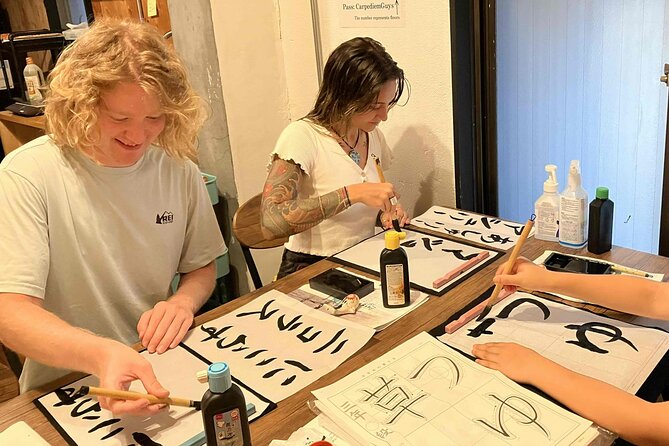
Brush strokes beat selfies in this tiny class. Shodo calligraphy feels personal fast, because you learn brush basics and quickly move to writing your own name or a favorite word in kanji. I especially love how the class ends with an autograph board made from your work, and I also like the small-group feel where you’re not rushed. One possible drawback: the lesson space can be part of a shared building, so you might hear everyday activity in the background.
This workshop is set up for foreign visitors and keeps things practical, from posture to how to draw confident lines. You’re also close to major sights, since the studio is in Iriya, about a 5-minute walk from Iriya Station, with Asakusa and Ueno not far away.
In This Review
- Quick hits: what makes this Shodo lesson worth your time
- Shodo in Tokyo: how the 90 minutes are structured
- Getting to Tokyo Iriya Shodo Club near Iriya Station
- First lesson: holding the brush and drawing lines that look right
- What you’ll write: your name, katakana, and a kanji word
- How to choose your word
- The teacher factor: patient English and a relaxed pace
- A note on where the class happens
- Your take-home autograph board: a souvenir that’s actually personal
- Price and value: is $33.03 a fair deal?
- Best fit: who should book this Shodo experience
- Should you book Tokyo Iriya Shodo Club?
- FAQ
- How long is the calligraphy (shodo) experience?
- Where does the activity take place?
- What will I be able to write during the lesson?
- Is calligraphy supplies included?
- What group size should I expect?
- Do I need a paper ticket?
- What if plans change and I need to cancel?
Quick hits: what makes this Shodo lesson worth your time
- Learn brush basics and posture first, so your characters start looking intentional, not accidental
- Write your name in Japanese (often katakana) or choose a kanji word to practice
- Small group, max 5 people, which usually means more hands-on guidance
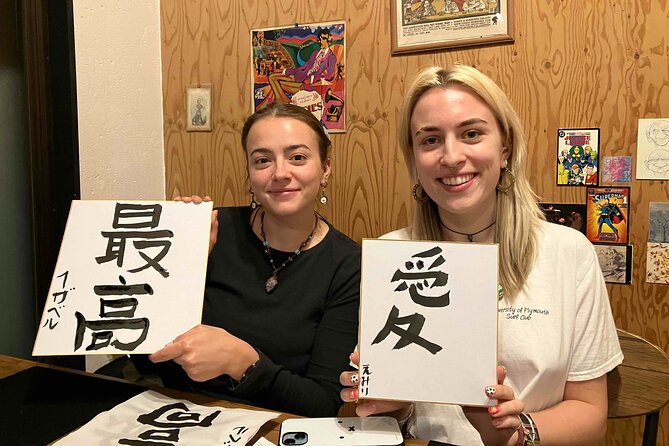
- Take home your finished work on a board, so you have something real from your trip
- Supplies are included, so you don’t need to hunt for gear or worry about what to bring
- Tutor-led practice with patient, English-friendly instruction (names you might hear include Sachie and Zuisen)
Shodo in Tokyo: how the 90 minutes are structured
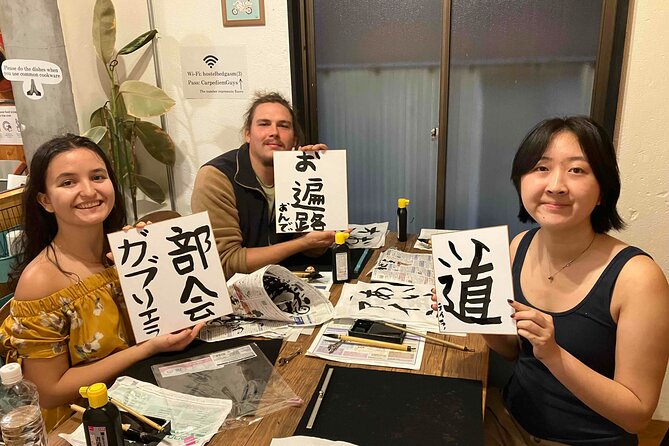
A shodo lesson sounds simple on paper, but the value here is the order. You don’t just copy characters and hope they stick. You start with the basics of how the brush behaves and how your body supports the motion—so your strokes become smoother and more controlled.
In roughly 1 hour 30 minutes, the flow typically goes like this: you’ll begin with the fundamentals (how to hold the brush, basic posture, and how to form lines). Then you’ll practice specific shapes that build into the writing you want to make. Finally, you’ll produce a take-home piece—your own board with your finished character set.
For you, that time box matters. At this length, it’s not a huge commitment after a long day of sightseeing. And because the class is small, you’re more likely to get corrections you can actually apply immediately, rather than a one-time demonstration that feels distant.
More hands-on studios our readers booked
- Tokyo Shinjuku Chopsticks Making Class
★ 5.0 · 1,763 reviews - Chopstick Making Workshop in Ginza
★ 4.8 · 1,366 reviews - Kintsugi Experience: Art of Golden Joinery in Tokyo
★ 5.0 · 467 reviews - Tokyo Chopstick Making Workshop with Artisan
★ 5.0 · 466 reviews
Getting to Tokyo Iriya Shodo Club near Iriya Station
The meeting point is Tokyo Iriya Shodo Club, located at 2-chōme 292 2階, Taito City, Iriya, Tokyo 110-0013. The big practical win: it’s near public transportation, and you’re looking at only about a 5-minute walk from Iriya Station.
This matters because calligraphy sessions aren’t the kind of thing you want to sprint to in a panic. With a close walk from the station, you can arrive calm, use the bathroom beforehand, and get settled with your supplies.
Also, you’re positioned well for combining this with sightseeing. The area is convenient for Asakusa and Ueno, which means you can plan shodo as either a daytime activity between neighborhoods or an evening creative reset after walking Tokyo for hours.
First lesson: holding the brush and drawing lines that look right
Most people assume calligraphy is about artistic talent. In practice, it’s a technique game. And that’s where the lesson earns its keep.
Expect instruction on:
- How to hold the brush so you control pressure and angle
- Posture, because your body affects stroke direction and consistency
- How to draw lines, including how starts and finishes shape the character
When those basics click, everything after gets easier. You can think of it like learning how to drive before you tackle traffic. If you just jump into writing kanji, the brush might feel slippery or unpredictable. But with posture and grip adjustments, the brush starts behaving like a tool instead of a mystery object.
One helpful detail from the way this class is taught: you’ll practice “building blocks” (basic shapes) before you write the full word or name you want. That approach is a real confidence booster, especially if your Japanese is beginner-level.
What you’ll write: your name, katakana, and a kanji word
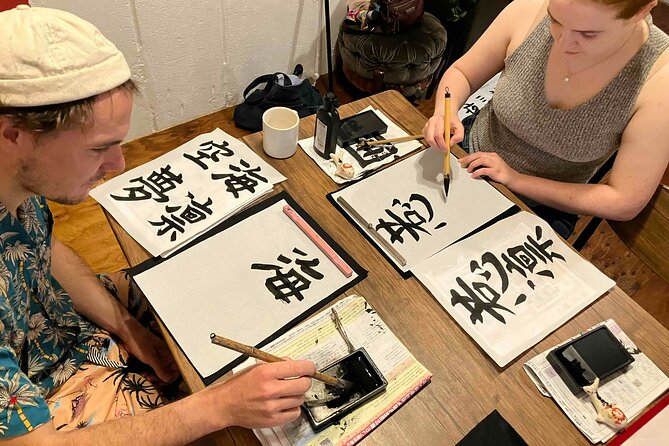
The core promise is straightforward: write your name in Japanese or a favorite word in kanji. In real life, this is where you get options depending on your comfort level.
If you’re more comfortable sticking to easy-to-translate sounds, you may choose katakana. One example from the experience is writing a name in katakana calligraphy, with recognition from a translation tool afterward—so you can verify what you actually produced.
If you want something with extra meaning, you can pick a kanji word. That’s more work because kanji characters require precision, and the lesson time is limited. Still, it’s a great choice if you want your souvenir to feel personal, not generic.
How to choose your word
If you want the smoothest experience, pick a word that:
- you already know how to pronounce
- you can describe simply (so it’s easy for your instructor to confirm the intent)
- has only a few characters if you’re aiming for accuracy in one session
If you’re thinking of writing something complex, you’ll still be able to participate, but you may find yourself focused on getting the stroke shapes correct rather than trying to recreate something fancy.
- Tokyo: Shinjuku Food Tour (13 Dishes at 4 Local Eateries)★ 5.0 · 6,603 reviews
- Tokyo Mt Fuji 5th St & Hakone Cruise Bus Tour w/Bullet Train★ 4.4 · 5,024 reviews
- Flagship 2-Hours Official Street Go-Kart Tour – Tokyo Bay Shop★ 5.0 · 4,974 reviews
- From Tokyo: Mount Fuji Full-Day Sightseeing Trip★ 4.5 · 4,970 reviews
- Tokyo: Hop-On Hop-Off Sightseeing Bus Ticket★ 3.9 · 4,207 reviews
The teacher factor: patient English and a relaxed pace
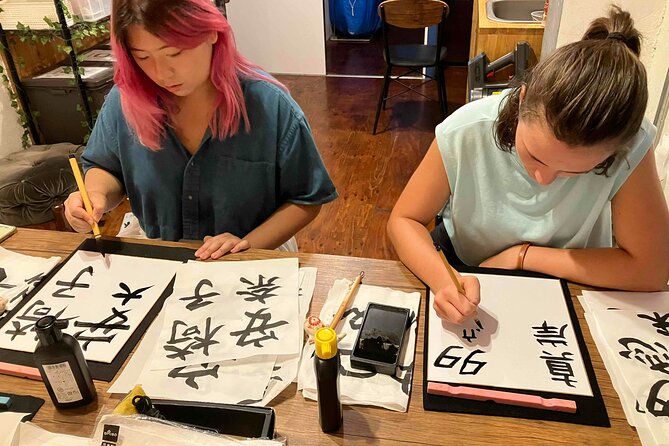
A big part of why this works for foreign visitors is the teaching style. Names that show up in the experience include Sachie and Zuisen. In both cases, the common thread is patient guidance and an ability to explain what your hand needs to do.
This is not just “here’s what the character looks like.” It’s more like: adjust your grip, try again, then look at the difference. In a good calligraphy lesson, feedback is immediate, and you can see improvement quickly.
The small-group format also helps the atmosphere. With up to 5 people, you’re less likely to feel like you’re competing for attention. If you want to ask questions—about brush control, stroke order, or how to correct a mistake—this format makes it easier.
A note on where the class happens
The workshop appears to be in a cozy classroom within a shared building. That can be part of the charm: you get an every-day Tokyo setting instead of a sterile studio. The trade-off is that the space can be active with normal life happening around you, like people moving through the building or doing routine chores. If you’re sensitive to noise, plan to stay flexible.
Your take-home autograph board: a souvenir that’s actually personal
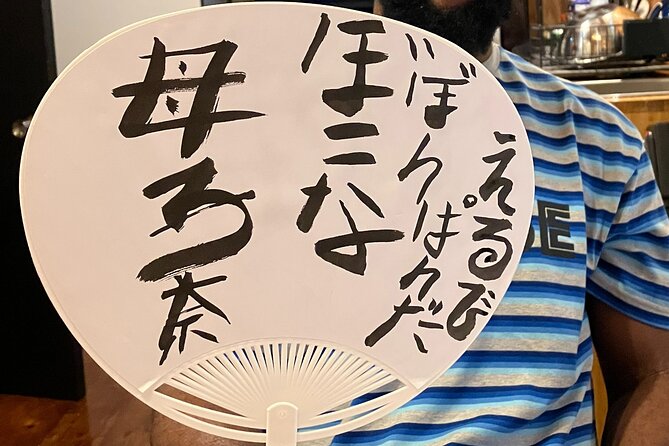
Most souvenirs are mass-produced. A calligraphy board is different. What you take home isn’t just a picture of your trip—it’s the result of your own practice, made with real brush technique.
The class includes the supplies, and you’ll end with a board containing your work. This is why the lesson feels like a memory you can hold. Even if your characters aren’t perfect, the board reflects your choices: the name you wrote, the kanji word you selected, and the moment you learned how the brush stroke changes under guidance.
Also, the board is a great conversation piece later. You can point at it and explain what you wrote. It turns into a small story: why that name or word mattered, and how you learned to form it.
If you’re traveling with family or friends, this is one of the few activities where everyone leaves with an item that looks distinctly theirs.
Price and value: is $33.03 a fair deal?
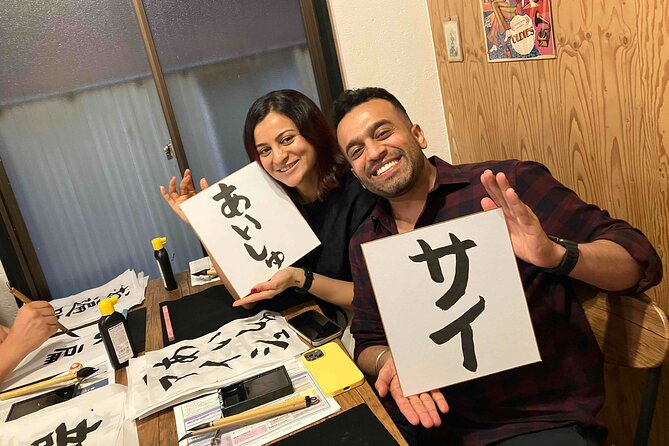
At $33.03 per person for about 1 hour 30 minutes, this workshop is priced like a high-value cultural activity—especially because the essentials are covered.
Here’s what you’re paying for, beyond the instruction:
- Calligraphy supplies included
- A guided lesson, not just a self-service craft
- A take-home board made with your own writing
- A small group size, with room for corrections
When you compare this to many Tokyo cultural experiences, the value comes from “hands-on time.” You’re not only watching; you’re making. And because shodo relies on correct hand technique, the guidance and feedback part is what makes the souvenir worth keeping.
One more practical value point: the workshop is often booked about 27 days in advance on average. That tells me it’s a popular slot for visitors who plan ahead. If you’re visiting during peak seasons, it’s wise to lock it in earlier rather than waiting for last-minute availability.
Best fit: who should book this Shodo experience
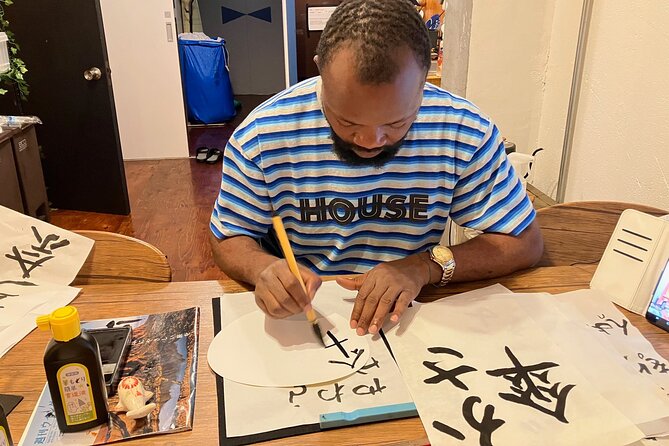
You’ll likely enjoy this most if you:
- want a short, meaningful Tokyo activity (not a half-day commitment)
- like hands-on culture, not just museum culture
- want a personalized keepsake without needing to plan supplies or tools
- are curious about how hiragana/katakana/kanji feel in real writing (even at beginner level)
This is also a good choice for people who feel uneasy about language barriers. The lesson is designed for foreign visitors, and the teaching style is described as English-friendly and patient.
If you’re the type who needs quiet spaces, consider that the lesson may take place in a shared building and everyday activity can intrude. That’s not a deal-breaker for most people, but it’s the main “read the room” factor.
Should you book Tokyo Iriya Shodo Club?
I’d book it if you want a true Tokyo craft that actually teaches you something you can use again. For the price, you get structured instruction, included materials, a take-home board, and a small-group setting near convenient transit.
I would pause only if:
- you strongly need a silent, private studio environment
- you’re expecting a long, deep cultural lecture rather than technique practice
- you’re arriving late or rushed, since calligraphy rewards calm focus
If you want a souvenir with your own strokes on it, this is one of the better “do it once, love it forever” activities in Tokyo. Plan for a relaxed attitude, bring curiosity, and pick a name or kanji word you’ll be happy to live with on your wall later.
FAQ
How long is the calligraphy (shodo) experience?
The experience lasts about 1 hour 30 minutes.
Where does the activity take place?
It meets at Tokyo Iriya Shodo Club in Taito City, Iriya. The address given is 2-chōme 292 2階, Tokyo 110-0013. It’s also described as being near public transportation and about a 5-minute walk from Iriya Station.
What will I be able to write during the lesson?
You can write your name in Japanese or a favorite word in kanji.
Is calligraphy supplies included?
Yes. Calligraphy supplies are included.
What group size should I expect?
The experience has a maximum of 5 travelers.
Do I need a paper ticket?
No. You’ll have a mobile ticket.
What if plans change and I need to cancel?
The experience offers free cancellation and you can cancel up to 24 hours in advance for a full refund.
More Tour Reviews in Tokyo
- Mt Fuji and Hakone 1-Day Bus Tour Return by Bullet Train
★ 5.0 · 26,383 reviews - 1-Day Tokyo Bus Tour
★ 5.0 · 14,250 reviews - Tokyo: teamLab Planets TOKYO Digital Art Museum Entry Ticket
★ 4.6 · 9,779 reviews - Mt Fuji & Hakone Cruise, Drum Show Bullet Train 1 Day from Tokyo
★ 4.0 · 7,413 reviews - Tokyo: Shinjuku Food Tour (13 Dishes at 4 Local Eateries)
★ 5.0 · 6,603 reviews
More Artisan Workshops in Tokyo
- Tokyo Shinjuku Chopsticks Making Class
★ 5.0 · 1,763 reviews - Chopstick Making Workshop in Ginza
★ 4.8 · 1,366 reviews - Kintsugi Experience: Art of Golden Joinery in Tokyo
★ 5.0 · 467 reviews - Tokyo Chopstick Making Workshop with Artisan
★ 5.0 · 466 reviews - Tokyo: Shinjuku Chopstick Making Class
★ 4.9 · 440 reviews
Latest Tokyo reviews off our desk






Craft & Artisan Workshops, compared.
 ★ 5.0Tokyo Shinjuku Chopsticks Making ClassFrom $201,763 reviews
 ★ 4.8Chopstick Making Workshop in GinzaFrom $251,366 reviews
 ★ 5.0Kintsugi Experience: Art of Golden Joinery in TokyoFrom $59467 reviews
 ★ 5.0Tokyo Chopstick Making Workshop with ArtisanFrom $26466 reviews
 ★ 5.0Authentic Pure Gold Kintsugi Workshop with Master Taku in TokyoFrom $142217 reviews
 ★ 5.0Calligraphy on Kanji Fan & Scroll with DrinkFrom $53210 reviews
Browse the lists this tour appears in