
Reviewed · TEA CEREMONY & MATCHA
EDOCCO Tea House–A Quick Dive into Japanese Traditional Culture
Five Japanese crafts in one Tokyo hour. I like the matcha tea ceremony taught step-by-step and the chance to wear kimono cosplay in a beautifully restored studio space. One watch-out: the Geisha-style dance is included in the hour, but it can feel brief if you want a longer performance.
With a small group (max 20) and an all-in 1 hour schedule, you get a fast, well-paced sampler: tea, dance, calligraphy, and origami. It’s a smart pick when you want culture that’s hands-on, not just something to look at.
In This Review
- Key Highlights You Should Not Miss
- EDOCCO Tea House: a Tokyo arts studio built for short attention spans
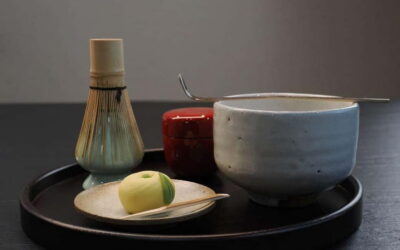
- Tea Ceremony and Sweets: matcha that’s part ritual, part snack
- The Japanese Dance Show (Geisha-style): what to watch in a short slot
- Kimono Cosplay: the easiest way to make your Tokyo day feel different
- Shodo Calligraphy: writing one character with real brush technique
- Origami Mini Workshop: from cranes to more detailed folds
- Price and time: is $72.48 a good deal for Tokyo?
- Location and getting there: Sotokanda / Ochanomiza area basics
- Who this experience suits best (and who might want a different format)
- Should you book EDOCCO Tea House?
- FAQ
- How long is the EDOCCO Tea House experience?
- What’s included in the ticket price?
- What’s the meeting point address?
- Is there English support during the activities?
- Can I buy matcha tools after the ceremony?
- What happens if the experience can’t run due to weather or minimum travelers?
Key Highlights You Should Not Miss
- Restored Edo-meets-modern setting that makes the arts feel real, not staged
- Matcha and Japanese sweets served as part of the tea experience
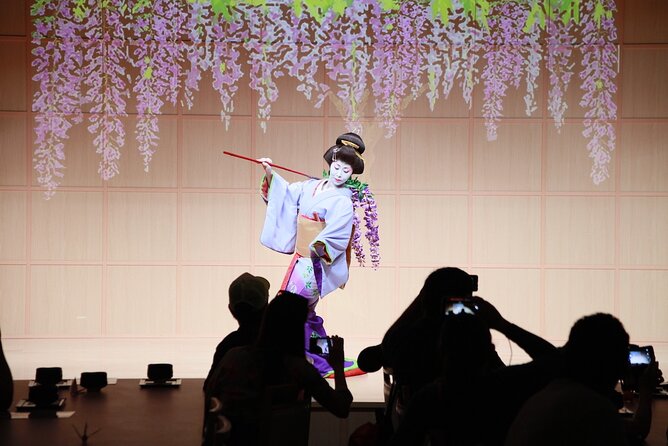
- Geisha-style dance with English explanations, so you know what you’re watching
- Kimono dressing that turns the studio visit into an instant photo moment
- Shodo basics + a mini origami workshop you can bring home (ink and paper skills included)
EDOCCO Tea House: a Tokyo arts studio built for short attention spans
EDOCCO Tea House in Chiyoda City is built around one clear idea: you can learn a lot of Japanese culture without spending half a day in a classroom. The venue is described as a beautifully restored space that blends the spirit and aesthetics of the past with a comfortable, visitor-friendly setup. That matters in Tokyo, where a lot of cultural experiences are either super formal or very touristy. Here, the tone feels calm and structured.
The format also helps. You’re not sitting through a lecture and waiting for a single highlight. You rotate through multiple traditions—tea, dance, dress-up, calligraphy, and paper folding—within about an hour. And because the group size tops out at 20, the instruction stays personal enough that beginners can keep up.
If you’re worried about time, good news: it returns to the meeting point at the end, so you don’t need to weave this into complex transit plans.
More tea rooms our readers rated
- Matcha Making Class in Tokyo with Authentic Japanese Sweets Set
★ 5.0 · 744 reviews - Tokyo: Traditional Tea Ceremony with a Tea Master
★ 5.0 · 528 reviews - Tokyo: Matcha Making Experience with Mochi Sweets in Asakusa
★ 4.9 · 388 reviews - Tokyo: Matcha and Kimono Experience
★ 4.7 · 219 reviews
Tea Ceremony and Sweets: matcha that’s part ritual, part snack
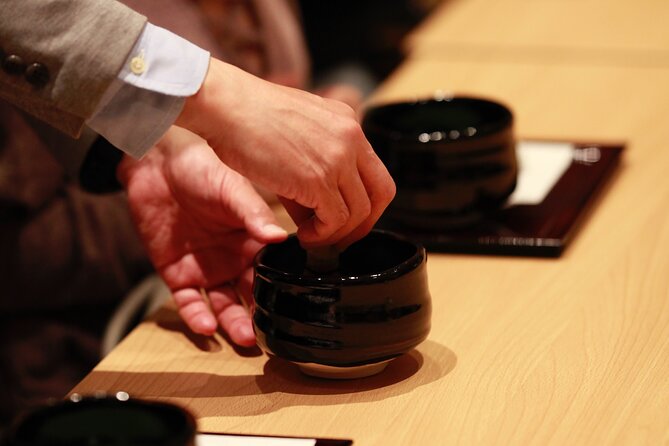
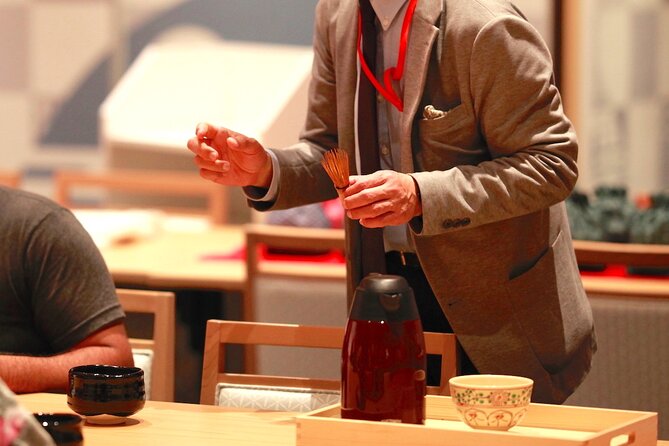
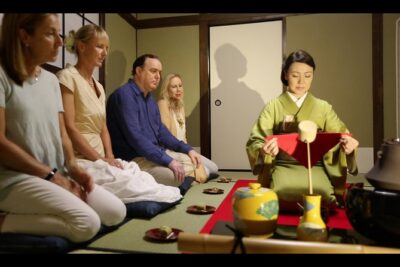
The core of the experience is a guided tea ceremony focused on matcha. You’ll learn the delicate steps of preparing and serving matcha with an instructor. The key word here is guidance: you’re not just handed a cup and told to figure it out.
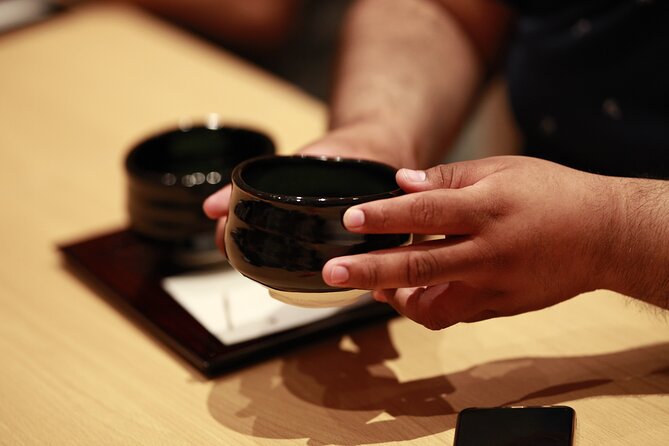
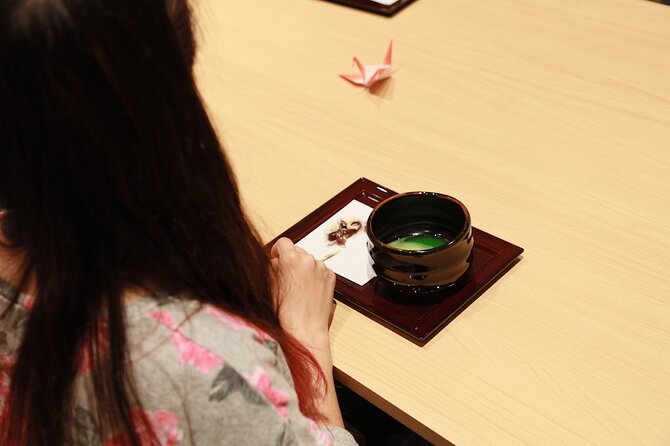
You also get a snacks set that includes matcha and Japanese sweets. That’s a practical touch. Matcha isn’t always everyone’s favorite at first sip—especially if you’re used to sweeter drinks—so having the sweets alongside gives you an easy on-ramp. The sweet also keeps the hour from feeling too “classroom” and helps the tea portion land as a real break in your day.
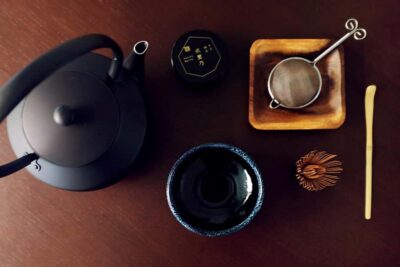
One important note: the matcha tools and set components (like a tea bowl, matcha powder, and whisk) are not included for take-home. If you want to buy a set after the experience, tools are available for purchase, but that’s optional and separate.
The Japanese Dance Show (Geisha-style): what to watch in a short slot
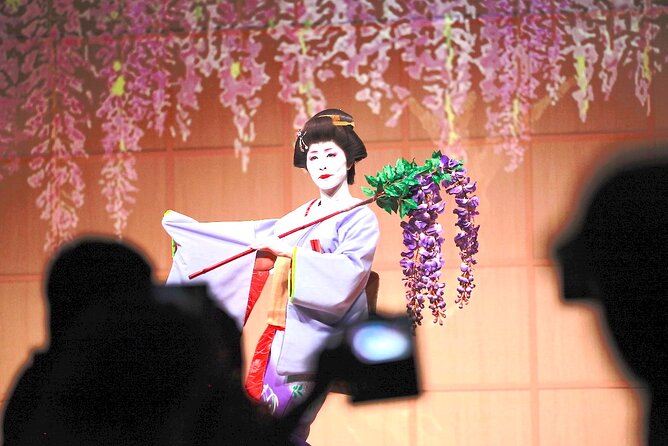
Next comes the Japanese dance portion, shown alongside the tea and sweets. The dance is explained in English, so you’re not relying on guesswork to understand what the performers are communicating through movement. That’s a big win for first-timers, especially if you’re not already familiar with the cultural context behind traditional dance.
Now for the one consideration I’d flag: the dance segment can be very short within the one-hour total. Some people love that it’s efficient; others may wish they could linger longer. If you’re the type who wants a long, uninterrupted performance, you might wish you had scheduled a separate longer show elsewhere.
Still, the dance works well inside this format because it gives you a visual “payoff” right after learning about tea and before you switch into the hands-on arts. And there are small details that make it feel educational: in one experience described for kids, the instructors even connected dance moves to fans and helped participants understand what they’re seeing.
Kimono Cosplay: the easiest way to make your Tokyo day feel different
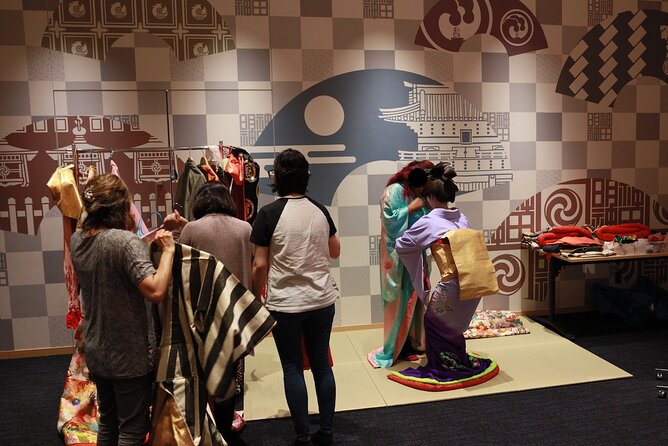
The kimono portion is one of the fastest ways to change your whole experience of a culture center. You’ll don a kimono and join the Edo-style atmosphere while you savor the moment. Even if your goal is just a photo, this part has value beyond the picture, because you’re learning to slow down and act a little differently in a garment that changes your posture and presence.
From the way the experience is set up, this isn’t a “put it on and run away” activity. The dressing time is part of the overall flow, and it ties into the other arts: tea, dance, calligraphy, and paper folding all reflect different ways of paying attention. In practice, that’s what you’re doing during the hour—switching modes between careful ritual and creative making.
If you want a good result for photos, plan to take your time with the kimono moment. Straighten your stance, hold your hands comfortably, and enjoy the outfit while you’re still fresh after tea and sweets.
Shodo Calligraphy: writing one character with real brush technique
Then you move into shodo, Japanese calligraphy. This isn’t framed as a performance of perfect handwriting. It’s taught as a skill: you learn the basics of brush strokes and create your own character with instruction from the calligraphy instructor.
There’s something satisfying about this step because it’s measurable. After the dance show and kimono dress-up, you start doing something physical and precise. Your hand learns the motion, and you see a result you made yourself. And because you’re creating a character, it feels more meaningful than a generic craft.
The teaching tone matters here too. The experience description and the overall feedback highlight patient, attentive instruction. In a class like this, patience is what separates a fun souvenir from a real learning moment.
- Tokyo: Shinjuku Food Tour (13 Dishes at 4 Local Eateries)★ 5.0 · 6,603 reviews
- Tokyo Mt Fuji 5th St & Hakone Cruise Bus Tour w/Bullet Train★ 4.4 · 5,024 reviews
- Flagship 2-Hours Official Street Go-Kart Tour – Tokyo Bay Shop★ 5.0 · 4,974 reviews
- From Tokyo: Mount Fuji Full-Day Sightseeing Trip★ 4.5 · 4,970 reviews
- Tokyo: Hop-On Hop-Off Sightseeing Bus Ticket★ 3.9 · 4,207 reviews
Origami Mini Workshop: from cranes to more detailed folds
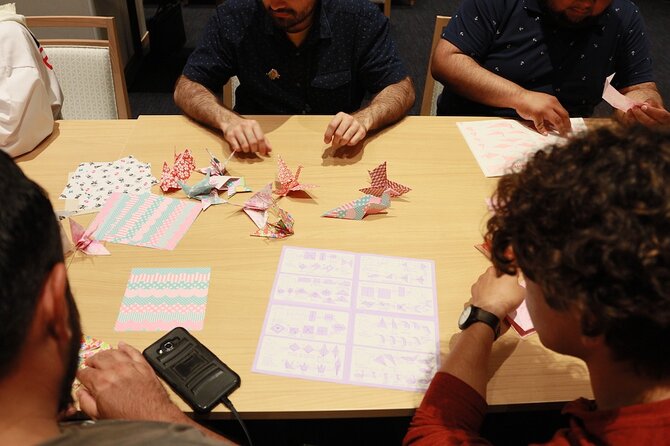
Origami follows right after calligraphy. You’ll get guided practice in traditional paper folding, starting with simpler designs and moving toward more intricate ones. The example given includes everything from cranes to more detailed folds, depending on the workshop flow and what you choose to make.
Origami is a great pairing with shodo because both are about controlled motion and patience. You’re training your hands to follow steps precisely. And unlike something you watch, origami gives you a take-home object you can show later and explain without needing perfect Japanese.
If you like arts that feel calm and focused, this is the part that often “sticks” in memory. Even if you struggle with the first fold, you’ll usually get unstuck quickly with help.
Price and time: is $72.48 a good deal for Tokyo?
At $72.48 per person for about one hour, you might ask if it’s worth it. Here’s the practical angle: the price covers instruction across several different activities plus the included snacks and the kimono dressing. You’re not just paying for one craft. You’re getting a structured sequence of cultural experiences—tea, dance, shodo, and origami—plus the snack set.
What raises the value is also what reduces stress. In Tokyo, it’s easy to spend time bouncing between separate venues: tea place here, calligraphy there, craft somewhere else. This compresses that into one stop near public transportation.
The “possible extra cost” is only one part: you can buy a matcha set for tools separately, but it’s not required. If you stay disciplined and only bring home your origami and your calligraphy piece, you can keep the budget simple.
One more detail: the experience sells out sometimes. The average booking lead time is about 17 days, which suggests it’s popular for people planning a tight itinerary. If your trip is near a weekend or holiday, booking earlier is the smart move.
Location and getting there: Sotokanda / Ochanomiza area basics
The meeting point is at EDOCCO2-chōme-16-2 Sotokanda, Chiyoda City, Tokyo 101-0021, Japan. The venue is noted as being near public transportation, which is a relief in central Tokyo where walking can still add up.
If you’re using the Marunouchi Line, Ochanomiza (M20) is a natural subway target. A helpful navigation tip shared for reaching the studio is to use the station steps up to a flyover road bridge, then turn left and go right at the first intersection. That kind of street-level guidance is what saves time once you’re above ground.
I also suggest planning to arrive a few minutes early. When the schedule is tight (and it is, because everything happens within about an hour), you’ll feel calmer when you start.
Who this experience suits best (and who might want a different format)
This is a strong match for:
- First-time visitors to Japanese culture who want multiple traditions in a single, guided visit
- People who like hands-on learning more than watching from the sidelines
- Families, since the activities are structured and the cultural explanations are available in English
- Anyone who wants a quick win on photos without turning the day into a costume marathon
If you want only one deep specialty—like a long tea ceremony with more theory—or you want a long, uninterrupted dance performance, you might prefer booking a dedicated tea or performance event instead. EDOCCO is designed for breadth in one hour, not for extreme depth.
Should you book EDOCCO Tea House?
I’d book it if your goal is a well-run, English-friendly introduction to Japanese arts you can actually do with your own hands. The mix is the selling point: matcha and sweets, a dance show with context, kimono dressing, and two craft workshops in shodo and origami.
Skip it (or pair it with something longer) if you’re sensitive to time and you specifically want a longer stage performance. The dance segment is part of the hour, so it won’t feel like an extended production.
If you’re planning Tokyo days packed with neighborhoods and transit, this one stop is a good reset button: cultural, calm, structured, and productive.
FAQ
How long is the EDOCCO Tea House experience?
It runs for about 1 hour and ends back at the meeting point.
What’s included in the ticket price?
Your ticket includes a snacks set with matcha and Japanese sweets, a Japanese dance show, calligraphy (shodo), origami, and Japanese dress (kimono) cosplay.
What’s the meeting point address?
The meeting point is EDOCCO2-chōme-16-2 Sotokanda, Chiyoda City, Tokyo 101-0021, Japan.
Is there English support during the activities?
The dance show includes explanations in English, and the overall experience is presented with English-friendly instruction.
Can I buy matcha tools after the ceremony?
Yes. A full matcha set (tea bowl, matcha powder, bamboo whisk, and other tools) is available for purchase, but it isn’t included.
What happens if the experience can’t run due to weather or minimum travelers?
The activity requires good weather. If it’s canceled due to poor weather, you’ll be offered a different date or a full refund. It also requires a minimum number of travelers; if that minimum isn’t met, you’ll be offered a different date/experience or a full refund.
More Tour Reviews in Tokyo
- Mt Fuji and Hakone 1-Day Bus Tour Return by Bullet Train
★ 5.0 · 26,383 reviews - 1-Day Tokyo Bus Tour
★ 5.0 · 14,250 reviews - Tokyo: teamLab Planets TOKYO Digital Art Museum Entry Ticket
★ 4.6 · 9,779 reviews - Mt Fuji & Hakone Cruise, Drum Show Bullet Train 1 Day from Tokyo
★ 4.0 · 7,413 reviews - Tokyo: Shinjuku Food Tour (13 Dishes at 4 Local Eateries)
★ 5.0 · 6,603 reviews
More Tea and Matcha Rooms
- Matcha Making Class in Tokyo with Authentic Japanese Sweets Set
★ 5.0 · 744 reviews - Tokyo: Traditional Tea Ceremony with a Tea Master
★ 5.0 · 528 reviews - Tokyo: Matcha Making Experience with Mochi Sweets in Asakusa
★ 4.9 · 388 reviews - Tokyo: Matcha and Kimono Experience
★ 4.7 · 219 reviews - Tea Ceremony Workshop in Tokyo by the Experienced Instrucor
★ 5.0 · 189 reviews
Latest Tokyo reviews off our desk






Tea Ceremony & Matcha, compared.
 ★ 5.0Matcha Making Class in Tokyo with Authentic Japanese Sweets SetFrom $21744 reviews
 ★ 5.0Traditional Tea Ceremony with a Tea MasterFrom $38528 reviews
 ★ 4.9Matcha Making Experience with Mochi Sweets in AsakusaFrom $22388 reviews
 ★ 4.7Matcha and Kimono ExperienceFrom $57219 reviews
 ★ 5.0Tea Ceremony Workshop in Tokyo by the Experienced InstrucorFrom $38189 reviews
 ★ 4.9Asakusa Kimono Dressing and Matcha ExperienceFrom $56173 reviews
 ★ 4.9Asakusa: Kimono Tea Ceremony with Matcha and SweetFrom $66153 reviews
 ★ 5.0Make Traditional Nerikiri Sweets & Matcha experience in ShibuyaFrom $60130 reviews
Browse the lists this tour appears in