
Reviewed · CRAFT & ARTISAN WORKSHOPS
Furoshiki Cloth Wrapping
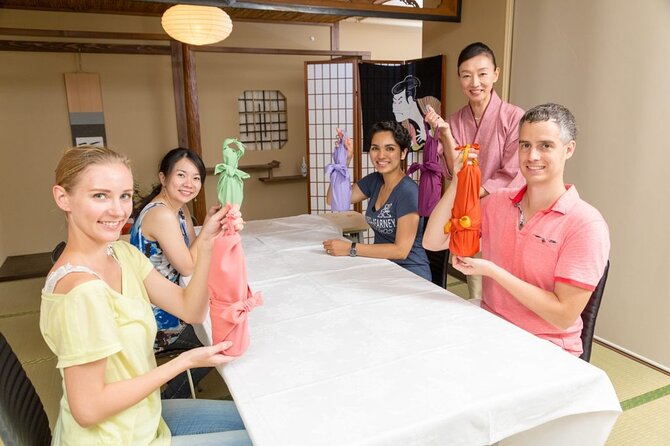
Wrapping paper gets a makeover. In this Tokyo workshop, you’ll learn seven furoshiki techniques using cloth instead of disposable wrapping, plus you get a take-home piece to keep practicing. I like that the class is hands-on and practical, and I really appreciate the included souvenir furoshiki you can use right after you leave.
One thing to consider: this is a craft class, not a sightseeing wander. Plan on focusing for the full 90 minutes, and remember food and drinks aren’t included.
In This Review
- Key highlights to know before you go
- Entering Kikai Shinkō Kaikan: Your Minato Workshop Start
- Why Furoshiki Still Matters: Eco-Friendly Knots in Everyday Japan
- The 90-Minute Flow: Seven Techniques, From Basics to Advanced
- Step 1: Getting your folds and knots to cooperate
- Step 2: Moving to more useful patterns
- Step 3: Learning sustainable reuse as a skill
- What You’ll Actually Make: Bags, Hats, Covers, and More
- Your Keepsake Furoshiki Cloth: Practice After the Class
- The Instructor Factor: Friendly Guidance That Keeps Your Hands Moving
- Price and Value in Tokyo: What $77.26 Gets You
- Who This Furoshiki Workshop Is Perfect For
- Quick logistics you should know (without the stress)
- Should You Book This Furoshiki Workshop in Tokyo?
- FAQ
- What is included in the furoshiki workshop?
- How long does the workshop last?
- How many wrapping techniques will I learn?
- Will I make items besides gift wrap?
- What is the group size?
- Is food or drink included?
- What’s the cancellation policy?
- FAQ
- When will I receive confirmation after booking?
- Where does the workshop start and end?
- Is a mobile ticket provided?
- Is the workshop suitable for most travelers?
- Are there transportation details provided?
- How far in advance is it commonly booked?
- Does the class include cultural history?
Key highlights to know before you go
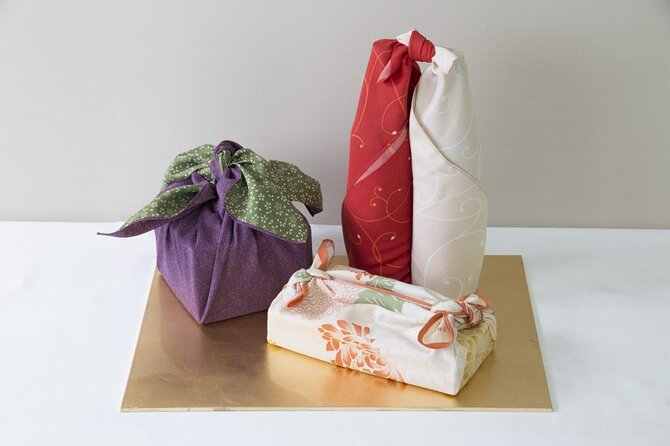
- Master 7 techniques: you start with basic folds and knots, then move into more advanced wrapping
- Take-home keepsake cloth: you leave with your own furoshiki for future wrapping practice
- Learn the why, not just the how: short stories on culture and modern eco significance in Japan
- Reusable gift wrap and carry ideas: you’ll make practical items like bags, covers, and hats
- Small group size: capped at 28 travelers, so instruction stays personal
Entering Kikai Shinkō Kaikan: Your Minato Workshop Start
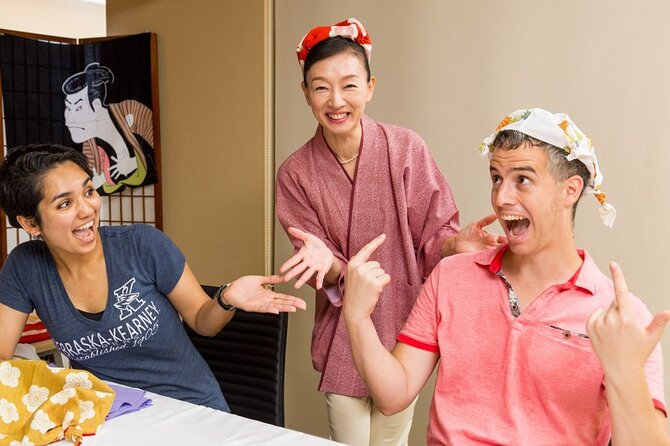
This workshop meets at Kikai Shinkō Kaikan, 3-chōme-5-8 Shibakōen, Minato City, Tokyo (105-0011). It’s a straightforward “show up and get to work” experience, and it’s near public transportation, which matters in Tokyo where time and trains can get addictive.
The session runs about 1 hour 30 minutes, so you’re not committing a full half-day. You’ll be in a group setting, but the class size is capped at 28, which keeps things from turning into a lecture where you watch and hope your hands follow along.
You’ll also want to know up front: food and beverages aren’t included. That’s not a dealbreaker, but it does mean you should eat beforehand if you’re prone to craft-induced hunger.
More hands-on studios our readers booked
- Tokyo Shinjuku Chopsticks Making Class
★ 5.0 · 1,763 reviews - Chopstick Making Workshop in Ginza
★ 4.8 · 1,366 reviews - Kintsugi Experience: Art of Golden Joinery in Tokyo
★ 5.0 · 467 reviews - Tokyo: Shinjuku Chopstick Making Class
★ 4.9 · 440 reviews
Why Furoshiki Still Matters: Eco-Friendly Knots in Everyday Japan
Furoshiki is basically Japanese cloth wrapping—gift wrap, carry wrap, and sometimes wearable accessories. The best part is that the workshop frames it as practical art with an eco angle you can use at home, not a vague feel-good concept.
You’ll hear about the craft’s culture and history, and you’ll also connect it to modern life in Japan—especially the idea that cloth wraps can replace disposable materials again and again. When you learn the knots and folds, you’re not just copying a style. You’re building a toolset you can reuse when birthdays sneak up, when you need to transport something neatly, or when you want to avoid extra waste.
The instructors also talk about alternatives to common household items. The details aren’t presented as scolding. It’s more like: here’s what you can do instead, and it actually works.
The 90-Minute Flow: Seven Techniques, From Basics to Advanced
This isn’t a “one wrap only” class. The whole point is that you’ll master 7 wrapping techniques within one workshop. You start simple and build up, which is exactly how you learn something with knots—by getting small wins early.
Step 1: Getting your folds and knots to cooperate
You’ll begin with basic folding methods and the core knot ideas behind furoshiki. This is where most people breathe easier, because once you understand the logic, it stops feeling like origami math and starts feeling like repeatable technique.
Step 2: Moving to more useful patterns
After the foundation, you’ll shift into techniques that handle real-life situations: wrapping gifts, carrying items, and making practical shapes. The class structure matters here—start with what’s easiest, then increase complexity so you’re not lost halfway through.
- Tokyo: Shinjuku Food Tour (13 Dishes at 4 Local Eateries)★ 5.0 · 6,603 reviews
- Tokyo Mt Fuji 5th St & Hakone Cruise Bus Tour w/Bullet Train★ 4.4 · 5,024 reviews
- Flagship 2-Hours Official Street Go-Kart Tour – Tokyo Bay Shop★ 5.0 · 4,974 reviews
- From Tokyo: Mount Fuji Full-Day Sightseeing Trip★ 4.5 · 4,970 reviews
- Tokyo: Hop-On Hop-Off Sightseeing Bus Ticket★ 3.9 · 4,207 reviews
Step 3: Learning sustainable reuse as a skill
You’ll also get guidance on reusable wrapping methods. That’s the part that turns furoshiki from a cute novelty into something you can realistically use at home for years.
What You’ll Actually Make: Bags, Hats, Covers, and More
The workshop isn’t only about wrapping a box. You’ll create multiple types of cloth projects, with the goal of showing you different ways furoshiki can function.
You can expect examples like:
- Bags made from cloth wrapping logic
- Hats and head-cover styles
- Covers for different items
- Plus other useful wraps that can handle gifts and carrying
Even if you don’t plan to become a cloth-art machine, this variety is useful. It helps you match the technique to the situation. A wrap that looks clever for a gift might not be the best option for carrying something awkward. Seeing multiple solutions helps you build your own go-to repertoire.
One more smart detail: the class includes making items you can give or use. That makes the learning sticky. If you only practice one formal bow-style gift wrap, it’s easy for the skill to fade. If you make a bag or cover you can use, the skill sticks around.
Your Keepsake Furoshiki Cloth: Practice After the Class
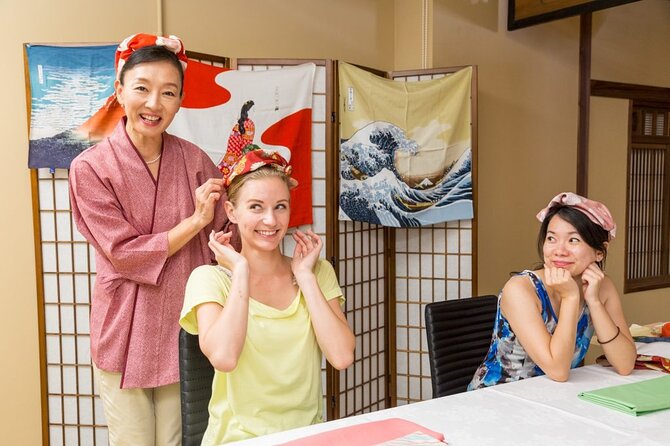
You don’t leave empty-handed. The workshop includes your own souvenir furoshiki cloth, so you can replay what you learned without scrambling for materials at home.
That take-home cloth is one of the biggest value drivers in the experience. Gift wrapping is easy to forget when it’s taught as a one-time demo. Having the cloth in your hands right away means you can test the folds while the steps are still fresh in your mind.
I also like that the instruction aims at long-term use. They’re not trying to impress you with something you’ll never repeat. You’re meant to enjoy these wraps for years.
The Instructor Factor: Friendly Guidance That Keeps Your Hands Moving
The workshop is led by a nationally accredited furoshiki instructor. In craft classes, the instructor quality changes everything: it’s the difference between struggling through a knot for 15 minutes and getting the right correction fast.
Based on the consistent feedback, the instruction style is a major strength. You’re taught by people who are friendly and knowledgeable, and that matters because it makes it easier to ask questions while your cloth is in mid-collapse.
Since the class is capped at 28 people, you’re also less likely to feel like you’re stuck in the back of the room watching someone else succeed. You’ll have a real chance to practice the knots and wraps while guidance is still relevant.
Price and Value in Tokyo: What $77.26 Gets You
At $77.26 per person, this workshop isn’t cheap, but it’s also not overpriced when you look at what’s included.
You’re paying for:
- instruction from a nationally accredited teacher
- seven techniques (not just one or two)
- a keepsake furoshiki cloth to practice at home
- cultural context on why the craft still matters in Japan
If you’ve ever bought a finished gift wrap set after the fact, you know how quickly it vanishes. Here, you’re building a repeatable skill plus a usable cloth. That turns the cost into something closer to a tool purchase than a disposable souvenir.
Also, because the class is about 90 minutes, it’s a low-time commitment for a high-skill payoff. For many people, that’s the sweet spot in Tokyo: you want meaningful cultural time without losing an entire afternoon.
Who This Furoshiki Workshop Is Perfect For
This is a strong fit if you like learning a hands-on craft and you enjoy practical takeaways. It’s also a great choice if you’re the kind of traveler who likes bringing a new skill home, not just photos.
It works well for:
- couples and solo travelers who want a calm, creative activity
- families looking for something structured and fun
- people who want gift-wrapping that looks thoughtful and reduces waste
One reason it’s especially enjoyable is that furoshiki is simple enough to feel manageable quickly, but clever enough that you can keep improving afterward.
If you’re coming mainly for scenery, this might feel too workshop-focused. But if you’re into making something real—knots, wraps, and usable shapes—you’ll probably enjoy the process.
Quick logistics you should know (without the stress)
You’ll get a confirmation after booking, typically within 48 hours (depending on availability). Expect a mobile ticket, and plan to use the start point at Kikai Shinkō Kaikan for timing.
The session ends back at the meeting point, so you’re not juggling transit between stops during the class.
Accessibility is described broadly as: most travelers can participate. If you have specific mobility needs, it’s smart to check directly with the operator before you book.
Should You Book This Furoshiki Workshop in Tokyo?
If you want a Tokyo activity that’s creative, useful, and actually changes what you do at home, this one makes a lot of sense. The mix of seven techniques, an instructor-led practice style, and a take-home cloth gives you real value, not just a momentary cultural experience.
I’d skip it only if you’re short on time and need something purely sightseeing-based, or if you strongly dislike hands-on crafts. Otherwise, this is exactly the kind of small-class workshop that turns travel into skills, not clutter.
FAQ
What is included in the furoshiki workshop?
You get a souvenir furoshiki cloth and instruction from a nationally accredited furoshiki instructor.
How long does the workshop last?
The duration is approximately 1 hour 30 minutes.
How many wrapping techniques will I learn?
You’ll learn seven furoshiki wrapping techniques, starting with basic folds and knots and then moving into more advanced methods.
Will I make items besides gift wrap?
Yes. The workshop includes making items like bags, hats, covers, and other practical wraps.
What is the group size?
The activity has a maximum of 28 travelers.
Is food or drink included?
No. Any food or beverages are not included.
What’s the cancellation policy?
Free cancellation is available up to 24 hours in advance for a full refund.
FAQ
When will I receive confirmation after booking?
Confirmation is typically received within 48 hours of booking, subject to availability.
Where does the workshop start and end?
It starts at Kikai Shinkō Kaikan in Minato City and ends back at the same meeting point.
Is a mobile ticket provided?
Yes, the experience includes a mobile ticket.
Is the workshop suitable for most travelers?
The information provided says most travelers can participate.
Are there transportation details provided?
Transportation to the venue is not included, though the meeting point is near public transportation.
How far in advance is it commonly booked?
On average, it’s booked about 40 days in advance.
Does the class include cultural history?
Yes. You’ll learn about Japanese culture and the craft’s history, including its modern eco significance.
More Tour Reviews in Tokyo
- Mt Fuji and Hakone 1-Day Bus Tour Return by Bullet Train
★ 5.0 · 26,383 reviews - 1-Day Tokyo Bus Tour
★ 5.0 · 14,250 reviews - Tokyo: teamLab Planets TOKYO Digital Art Museum Entry Ticket
★ 4.6 · 9,779 reviews - Mt Fuji & Hakone Cruise, Drum Show Bullet Train 1 Day from Tokyo
★ 4.0 · 7,413 reviews - Tokyo: Shinjuku Food Tour (13 Dishes at 4 Local Eateries)
★ 5.0 · 6,603 reviews
More Artisan Workshops in Tokyo
- Tokyo Shinjuku Chopsticks Making Class
★ 5.0 · 1,763 reviews - Chopstick Making Workshop in Ginza
★ 4.8 · 1,366 reviews - Kintsugi Experience: Art of Golden Joinery in Tokyo
★ 5.0 · 467 reviews - Tokyo Chopstick Making Workshop with Artisan
★ 5.0 · 466 reviews - Tokyo: Shinjuku Chopstick Making Class
★ 4.9 · 440 reviews
Latest Tokyo reviews off our desk






Craft & Artisan Workshops, compared.
 ★ 5.0Tokyo Shinjuku Chopsticks Making ClassFrom $201,763 reviews
 ★ 4.8Chopstick Making Workshop in GinzaFrom $251,366 reviews
 ★ 5.0Kintsugi Experience: Art of Golden Joinery in TokyoFrom $59467 reviews
 ★ 5.0Tokyo Chopstick Making Workshop with ArtisanFrom $26466 reviews
 ★ 5.0Authentic Pure Gold Kintsugi Workshop with Master Taku in TokyoFrom $142217 reviews
 ★ 5.0Calligraphy on Kanji Fan & Scroll with DrinkFrom $53210 reviews
Browse the lists this tour appears in