
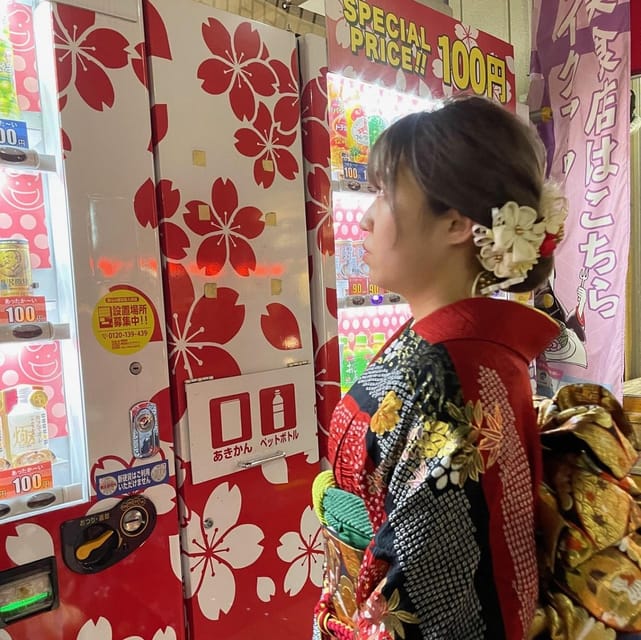
Reviewed · ASAKUSA & SENSOJI TOURS
Guided Tour of Walking and Photography in Asakusa in kimono
Kimono, photos, and Asakusa in four hours. This guided walk pairs kimono dressing with smart photo planning, so you get images that actually match the street scenes and temple angles.
I love the way the kimono fitting is handled step-by-step, including hairstyle guidance and getting everything adjusted properly. I also love the hands-on photo help, since the guide takes pictures for you with your camera while you focus on posing and enjoying the stroll.
One possible drawback: the timing is tight, and you’ll be walking on foot most of the way. In a reported case, a start mix-up led to a 45-minute wait, so it’s smart to confirm the meeting point and plan to arrive a bit early.
In This Review
- Key things that make this Asakusa kimono photo tour special
- Why Asakusa feels made for kimono photos
- Meeting at Asakusa Station: where to show up
- Kimono fitting and hairstyle: the first hour that changes everything
- Photo stops with your kimono: turning landmarks into real images
- Kaminarimon Gate and Nakamise: the classic Asakusa loop
- Sensō-ji Temple: what you do there, and what photos work
- Sumida River Terrace and Shirahige Bridge: the skyline + tradition combo
- How Emiko’s style shows what to look for in a good guide
- Price and value: does $116 make sense for four hours?
- Walking time and group size: comfort vs. pace
- Potential downsides (and how to reduce your risk)
- Should you book this Asakusa kimono walking and photography tour?
- FAQ
- How long is the Guided Tour of Walking and Photography in Asakusa in kimono?
- Where do we meet for the tour?
- Is the kimono included in the price?
- Are entrance fees included?
- What languages are available for the live guide?
- Is the tour wheelchair accessible?
- What if I need to cancel?
Key things that make this Asakusa kimono photo tour special
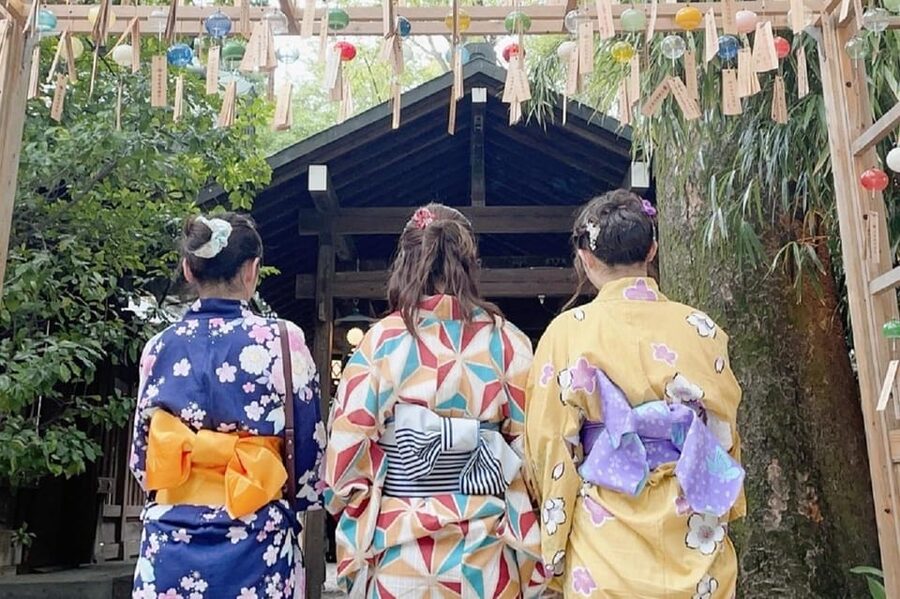
- A guide trained for both kimono dressing and guiding means you’re not just wearing clothing, you’re getting proper setup and context.
- Photo planning built around Asakusa scenes helps your kimono look intentional in every shot.
- Your camera stays in your hands less because the guide will take the photos for you.
- Small group size (up to 7) keeps the pace friendly and the photo stops less chaotic.
- Temple + shopping + skyline views in one loop, with time at major landmarks.
- Optional next-day return guidance if you choose that option through the provider.
Why Asakusa feels made for kimono photos
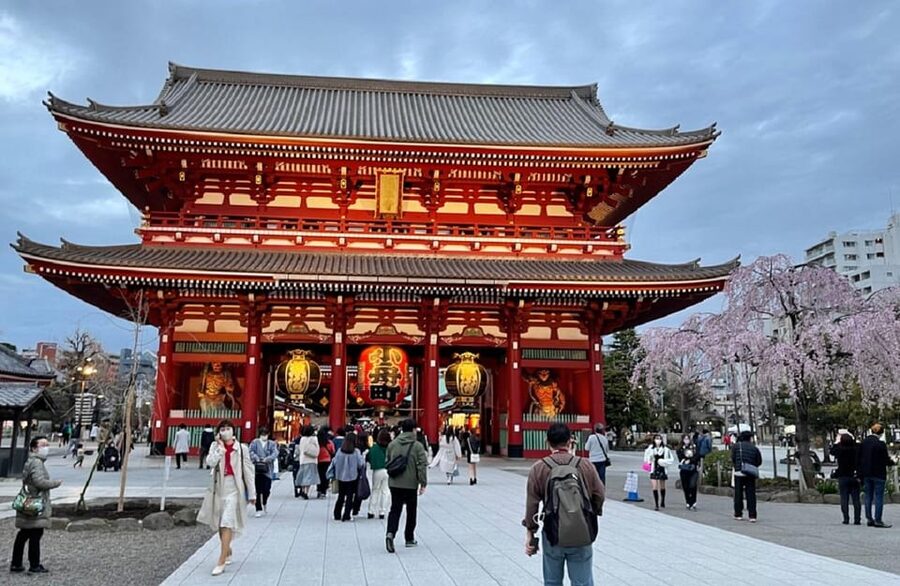
Asakusa has the kind of visual mix that turns a normal tourist route into something cinematic. You’ve got the classic temple entrance (Kaminarimon), the old-school shopping lane (Nakamise), and big river/skyline backdrops that look great with traditional outfits.
What you’re paying for isn’t just walking. You’re paying for someone to help you look right and stand in the right places at the right time. A kimono can feel a little awkward at first, but when a guide adjusts it and coaches you on poses and photo angles, the whole experience clicks.
And yes, I like that the tone is practical: you’re not stuck in a lesson. You’re dressed, guided, and then out there capturing your look where it actually fits.
More temple mornings in old Asakusa
- Tokyo: Japanese Dance Cabaret Theater Asakusa-Kaguwa Ticket
★ 4.8 · 2,270 reviews - Tokyo: Meiji Shrine, Asakusa, Skytree Bus Tour and Cruise
★ 4.7 · 1,986 reviews - Tokyo: Roll and Authentic Sushi Making Class in Asakusa
★ 4.9 · 1,957 reviews - Tokyo: Asakusa Walking Tour with Sensoji Temple Visit
★ 4.8 · 1,583 reviews
Meeting at Asakusa Station: where to show up
The tour meets at Asakusa Station (Ginza Line) Exit/Gate 1, and the guide will stand with the company’s Lightspeedstar logo (orange). This matters more than you’d think because the day runs on a schedule: you’ll want to check in, get grouped, and head to the kimono shop with minimal waiting.
It’s also worth knowing the guide contacts you about 7 days before the date about the kimono. Communication is set up through WhatsApp, so keep an eye out for that message so your fitting day goes smoothly.
Kimono fitting and hairstyle: the first hour that changes everything
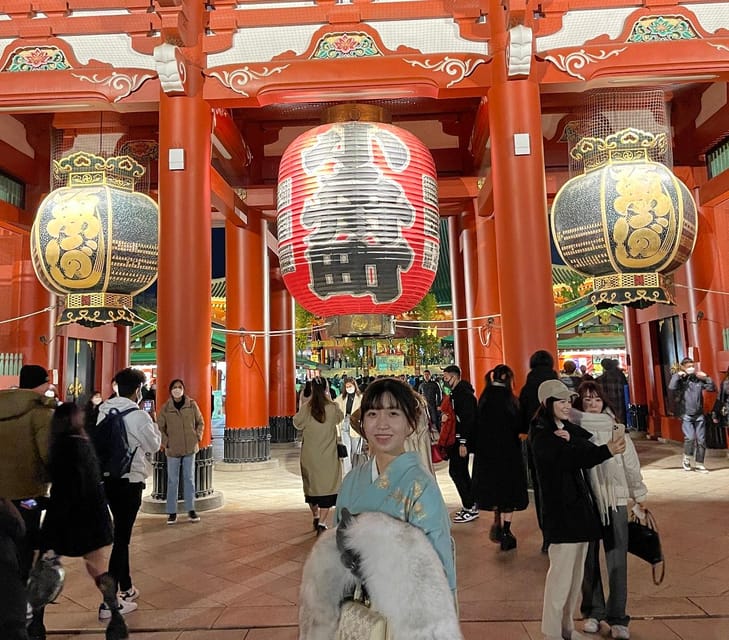
Before you ever hit the streets, the experience starts with kimono selection and setup. You’ll go to the kimono shop, choose a kimono, decide on a hairstyle, and have the outfit adjusted to fit you. The guide also shares Japanese cultural perspective as part of the process.
This is the part I consider the real value-maker. Kimonos look best when they fit and lay properly, and getting adjusted on-site helps you walk comfortably and photograph well. If you’ve ever seen kimono photos where the sleeves or front panel look off, that’s usually a fit issue—not a camera issue.
You might also have options for hairstyle customization, and in at least one reported experience the shop offered extra choices that weren’t required (so you can keep costs under control if you want).
Expect this setup to take around one hour, and after that, you’ll look ready to walk straight into the Asakusa postcard route.
Photo stops with your kimono: turning landmarks into real images
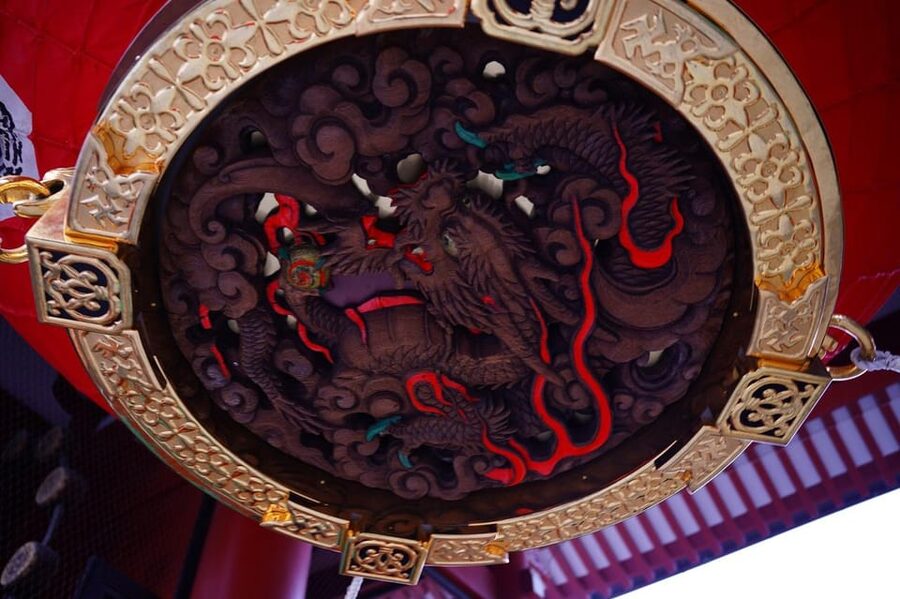
After dressing, your guide takes you toward early photo opportunities designed for how kimonos sit in the frame. The experience explicitly focuses on the best spots to take pictures that blend with your outfit—so instead of random snapping, you’re getting guided composition.
A key detail: the guide will take photos for you using your camera. That sounds simple, but it changes everything. You don’t have to sprint between poses and camera settings. You can relax into the moment while someone else handles timing and angles.
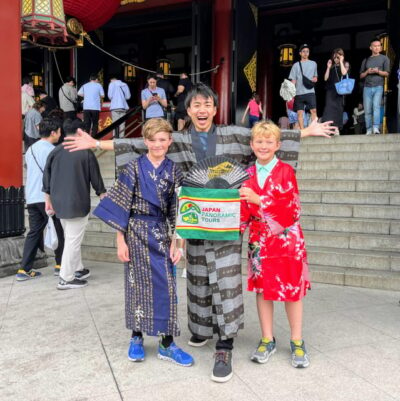
In one account from a family trip, the guide (Emiko) was especially helpful and kind, and the small child in the group still enjoyed the flow. That’s a good sign that the pace and attention stay personal, not assembly-line.
If you want photos that look like they belong to Asakusa—rather than looking like a quick costume change—this built-in photo focus is what you’re really booking.
Kaminarimon Gate and Nakamise: the classic Asakusa loop
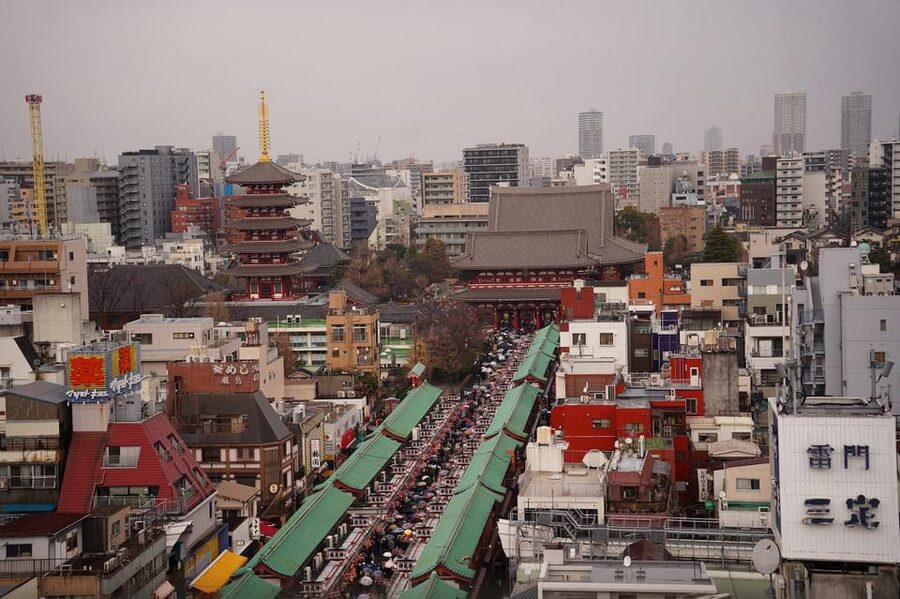
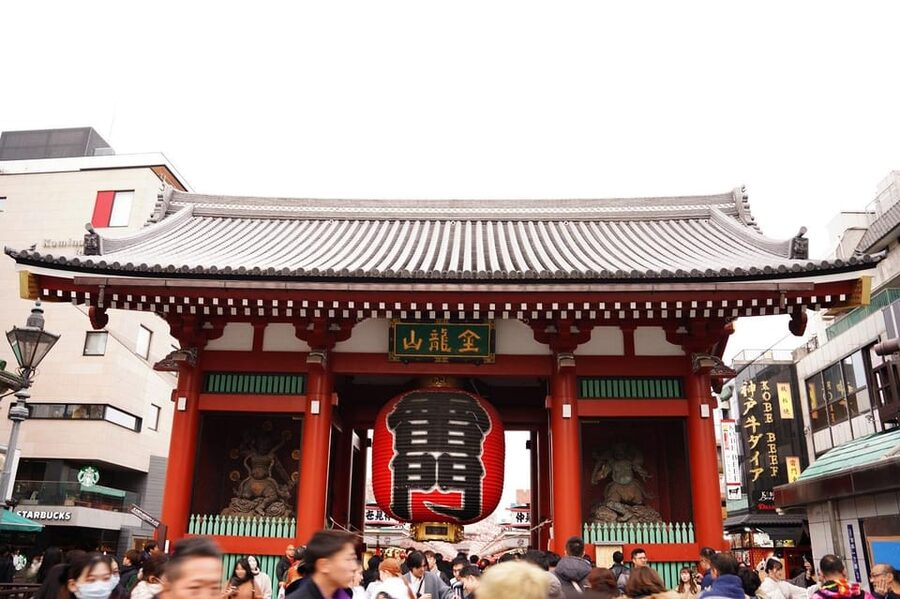
Once you’re out in the main area, you’ll hit Kaminarimon Gate first. You’ll have time for sightseeing and a walk-through at the gate area, which is the most recognizable Asakusa entry point. It’s the kind of background that instantly signals your trip, especially when you’re dressed traditionally.
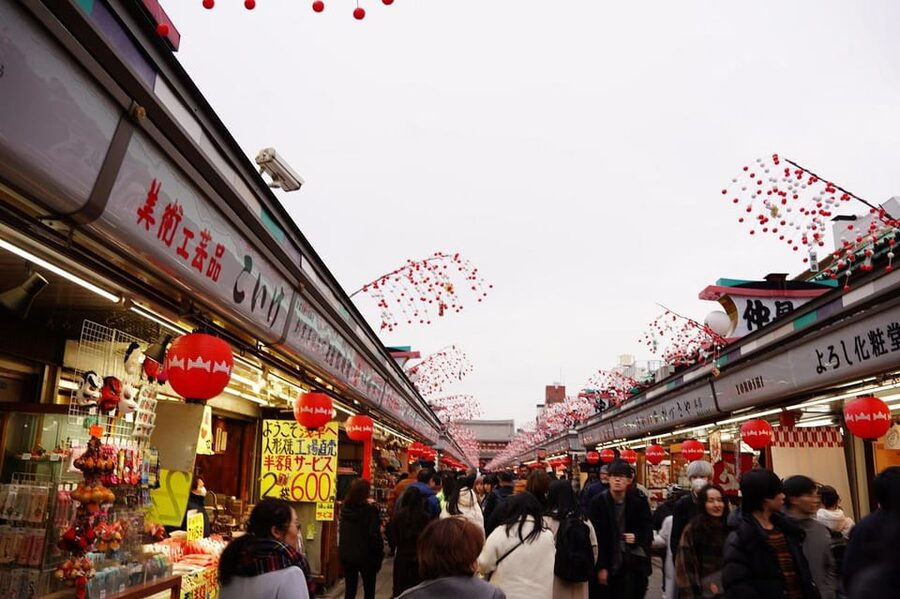
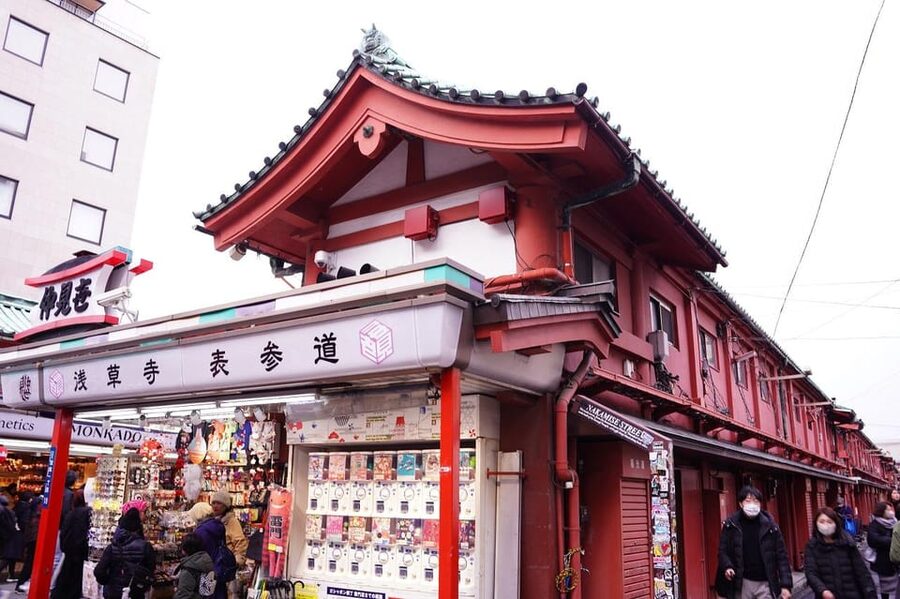
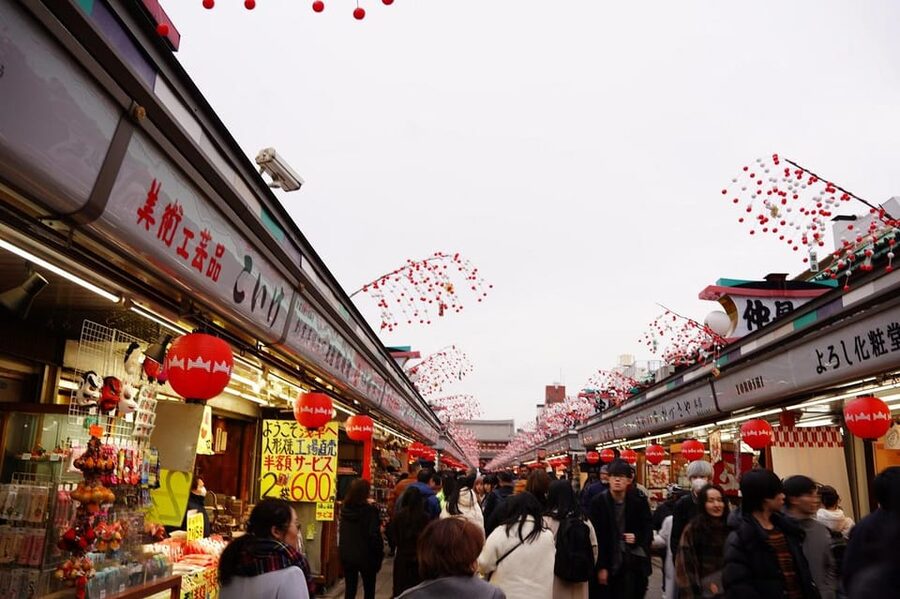
Next comes Asakusa Nakamise Shopping Street, one of Japan’s older shopping streets. You’ll have time to browse long-established shops and grab souvenirs that feel tied to the neighborhood rather than generic retail. This is also where you get a little breathing room between major temple visuals.
A practical note: Nakamise can be busy depending on the day. Your guide helps you time where you stop so your kimono photos don’t feel like you’re constantly moving or fighting foot traffic. With a group capped at 7 people, the stops feel manageable rather than cramped.
There’s also time later on for another Kaminarimon moment with free time. That second visit is useful because it gives you a chance to revisit the gate without rushing through it the first time.
More kimono shoots, compared
- Tokyo: Kimono Dressing, Walking, and Photography Session★ 4.9 · 427 reviews
- Let’s make kimono !(Kimono is a gift for you★ 5.0 · 252 reviews
- Tokyo: Matcha and Kimono Experience★ 4.7 · 219 reviews
- Tokyo: Asakusa Kimono Dressing and Matcha Experience★ 4.9 · 173 reviews
- Asakusa: Kimono Tea Ceremony with Matcha and Sweet★ 4.9 · 153 reviews
Sensō-ji Temple: what you do there, and what photos work
At Sensō-ji Temple, you’ll spend time sightseeing and walking through the grounds. The tour also includes the chance to offer prayers, which gives the stop more meaning than just sightseeing.
Sensō-ji is one of those places where the visual payoff is obvious. The temple’s five-story pagoda is a major landmark and shows up in a lot of art and posters of Asakusa. When you’re in a kimono, that pagoda background can look especially harmonious because both the architecture and outfit draw on older Japanese aesthetics.
The tour also calls out a photo setup that can include Sensō-ji and Tokyo Skytree together in one frame. That’s the kind of shot you’d struggle to plan solo, especially if you’re busy juggling your outfit, your camera, and the flow of pedestrians.
Depending on the season and crowds, you’ll also have a photo target involving cherry blossoms. If blossoms aren’t out, you’ll still get the core temple-and-skyline composition, which is the main point.
Sumida River Terrace and Shirahige Bridge: the skyline + tradition combo
After the temple and shopping moments, the tour moves toward the Sumida River Terrace on the left bank, near Shirahige Bridge (downstream). This is where your kimono starts to look less like costume and more like part of the city scene.
The skyline backdrop—especially Tokyo Skytree—is the big reason this stop makes sense. A traditional outfit against a modern landmark is a fun Tokyo contrast, and it photographs well because you get depth: foreground you, midground walkway, and a big background anchor.
You’ll take photos of yourself in the kimono with Skytree and seasonal elements like cherry blossoms as the backdrop when conditions allow. Again, the guide’s job is to steer you to the right spots so you’re not just standing somewhere that’s convenient for foot traffic.
This part of the experience also tends to feel like a breather. You’ve done temple and shopping, and now you’re in a more open view area where the photos can look more relaxed and less crowded.
How Emiko’s style shows what to look for in a good guide
Some names you might hear on this tour include Emiko. In multiple accounts, she stood out for kindness, clear guidance during the kimono fitting, and cultural explanations that made the outfit feel connected to the place.
What I think is most useful in those comments: the guide didn’t only focus on pictures. Emiko also offered suggestions on places to eat and cultural things to learn. That’s a big deal because once your tour ends, the hardest part is deciding what to do next.
If you get a guide like that, you’ll leave with more than photos—you’ll have a short list of practical next moves that fit your interests and the neighborhood.
Price and value: does $116 make sense for four hours?
At $116 per person for a 4-hour tour, the price is less about pure sightseeing and more about packaging several hard-to-sync pieces into one service.
Here’s what you’re getting that you might otherwise have to assemble yourself:
- Kimono included via a fixed standard fee (but note that option fees are separate)
- A guide who handles both kimono dressing expertise and touring
- English-speaking guidance (and the tour also runs in Chinese and Japanese)
- Photo assistance, including taking pictures with your camera
- A curated route that hits major Asakusa landmarks plus river/skyline viewpoints
What’s not included matters too. You’ll still pay for entrance fees if any come up, and transportation, food, and drinks are on you. So think of the tour as a one-stop way to get set up and guided for the best photo moments, not a full meal-and-ticket package.
If your top priority is photography and you want the kimono to look right (fit, styling, and placement), this price can feel fair. If your priority is only cheap shopping and you don’t care about guided photo stops, you might feel it’s more than you need.
Walking time and group size: comfort vs. pace
The route is mostly on foot, with short walking legs between stops. The overall timing is structured, so you’re not strolling at your own pace for hours.
The upside is efficiency: you’ll hit the key sights without spending extra time figuring out where to go. The downside is you’ll have less freedom to wander spontaneously.
With a small group size of up to 7, the pacing is usually easier than big group tours. You should still plan to wear comfortable shoes. Even if you’re in a kimono, you’re moving through real streets and sidewalks, and comfort keeps your photos from feeling like you’re rushing.
Potential downsides (and how to reduce your risk)
This is a thoughtful experience, but it’s still a schedule-based tour. Two things to watch:
First, timing matters. One reported issue involved the guide forgetting and a guest waiting 45 minutes. That’s not something you can fully control, but you can reduce the chance of confusion by:
- Arriving early at Asakusa Station Gate 1
- Keeping the day-of communication channel ready (WhatsApp)
- Asking a quick confirmation if anything feels off at check-in
Second, kimono day can be more physical than you expect. Kimonos are beautiful, but they can restrict movement compared with normal clothes. The fitting and adjustments help a lot, but you’ll still want to pace yourself and avoid long, steep detours outside the planned route.
Should you book this Asakusa kimono walking and photography tour?
Book it if:
- You want kimono photos that look placed, not random
- You’d rather have a guide handle photo angles and landmark timing
- You like the idea of combining Sensō-ji, Nakamise, and Skytree/riverside views in one outing
- You appreciate cultural context during the dressing process
Skip it or choose something else if:
- You want total freedom to linger in shops without a schedule
- You’re not interested in photo direction and would rather explore solo
- You’re extremely sensitive to delays and don’t like any chance of schedule hiccups
My practical take: if kimono styling and photography are your reason for coming, this tour is built for that. It saves you planning time, reduces photo hassle, and gives you a route that makes sense for your outfit.
FAQ
How long is the Guided Tour of Walking and Photography in Asakusa in kimono?
It lasts 4 hours.
Where do we meet for the tour?
You meet at Asakusa Station (Ginza Line) Gate 1, where the guide stands with the company’s Lightspeedstar logo in orange.
Is the kimono included in the price?
A fixed standard kimono fee is included, but kimono option fees are not included.
Are entrance fees included?
No, entrance fees to facilities and tourist spots are not included.
What languages are available for the live guide?
The tour offers live guidance in English, Chinese, and Japanese.
Is the tour wheelchair accessible?
Yes, the tour is listed as wheelchair accessible.
What if I need to cancel?
You can cancel up to 24 hours in advance for a full refund.
More Tour Reviews in Tokyo
- Mt Fuji and Hakone 1-Day Bus Tour Return by Bullet Train
★ 5.0 · 26,383 reviews - 1-Day Tokyo Bus Tour
★ 5.0 · 14,250 reviews - Tokyo: teamLab Planets TOKYO Digital Art Museum Entry Ticket
★ 4.6 · 9,779 reviews - Mt Fuji & Hakone Cruise, Drum Show Bullet Train 1 Day from Tokyo
★ 4.0 · 7,413 reviews - Tokyo: Shinjuku Food Tour (13 Dishes at 4 Local Eateries)
★ 5.0 · 6,603 reviews
More Kimono Photo Shoots
- Tokyo: Kimono Dressing, Walking, and Photography Session
★ 4.9 · 427 reviews - Let’s make kimono !(Kimono is a gift for you
★ 5.0 · 252 reviews - Tokyo: Matcha and Kimono Experience
★ 4.7 · 219 reviews - Tokyo: Asakusa Kimono Dressing and Matcha Experience
★ 4.9 · 173 reviews - Asakusa: Kimono Tea Ceremony with Matcha and Sweet
★ 4.9 · 153 reviews
More Mornings in Old Asakusa
- Tokyo: Japanese Dance Cabaret Theater Asakusa-Kaguwa Ticket
★ 4.8 · 2,270 reviews - Tokyo: Meiji Shrine, Asakusa, Skytree Bus Tour and Cruise
★ 4.7 · 1,986 reviews - Tokyo: Roll and Authentic Sushi Making Class in Asakusa
★ 4.9 · 1,957 reviews - Tokyo: Asakusa Walking Tour with Sensoji Temple Visit
★ 4.8 · 1,583 reviews - Tokyo Asakusa Rickshaw Tour
★ 5.0 · 1,375 reviews
Latest Tokyo reviews off our desk






Asakusa & Sensoji Tours, compared.
 ★ 4.8Japanese Dance Cabaret Theater Asakusa-Kaguwa TicketFrom $492,270 reviews
 ★ 4.7Meiji Shrine, Asakusa, Skytree Bus Tour and CruiseFrom $1221,986 reviews
 ★ 4.9Roll and Authentic Sushi Making Class in AsakusaFrom $581,957 reviews
 ★ 4.8Asakusa Walking Tour with Sensoji Temple VisitFrom $221,583 reviews
 ★ 5.0Tokyo Asakusa Rickshaw TourFrom $421,375 reviews
 ★ 4.5Tokyo Panoramic 1 Day: Meiji Shrine, Asakusa, Odaiba and SKYTREE®From $851,222 reviews
 ★ 5.0Tokyo Go Kart: Asakusa, Skytree, and Akihabara **IDP MUST**From $99988 reviews
 ★ 4.7Asakusa, Skytree & Akhihabara Go-Kart City ExperienceFrom $96761 reviews
Browse the lists this tour appears in