
Reviewed · TEA CEREMONY & MATCHA
Japanese Traditional Sweets making and Tea Ceremony
In This Review
- Nerikiri looks hard. It isn’t once you’re guided.
- Key things to know before you go
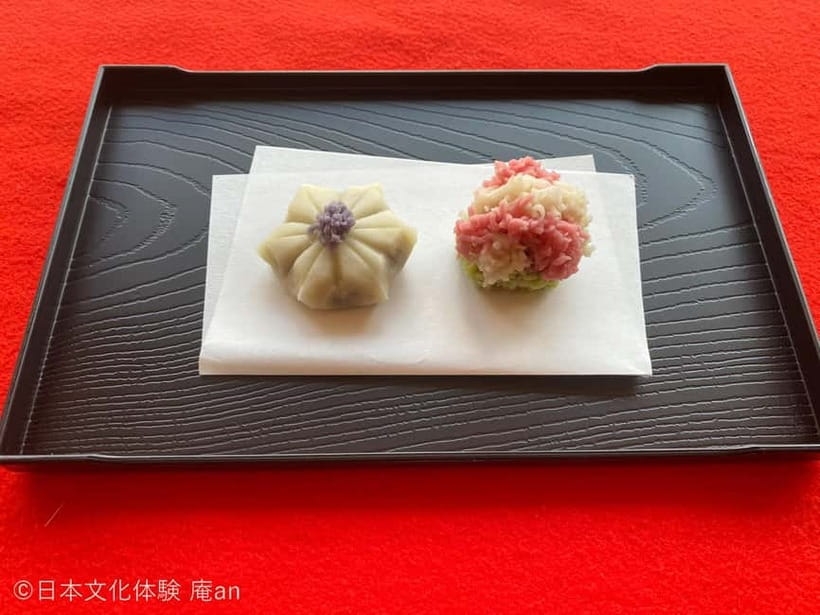
- Nerikiri Wagashi: Making 2 Season-Matched Sweets (Flower + Kinton)
- Why Kyoto bean paste matters more than you’d expect
- Uji Matcha Tea Ceremony: Grinding, Making Tea, and Drinking It Right
- What you should watch for during the ceremony
- How the 95 Minutes Run: From Coloring Paste to Sitting with Tea
- Price and Value: Does $18 Pay Off for Wagashi + Uji Matcha?
- The hidden value: learning the method, not just the look
- Language and Instructor Style: How to Follow the Class in Japanese
- Tip for smoother participation
- Meeting Point in Tokyo: Finding AN TOKYO Japanese Culture Experience
- Who this works best for
- Should You Book This Japanese Traditional Sweets Making and Tea Ceremony?
- FAQ
- How long is the Japanese Traditional Sweets making and Tea Ceremony experience?
- What is the price per person?
- What will I make during the class?
- What kind of matcha is used?
- Are take-out boxes included?
- What is the cancellation policy?
Nerikiri looks hard. It isn’t once you’re guided.
This class turns Kyoto-style wagashi craft into a hands-on, learn-by-doing experience, then caps it with an Uji matcha tea ceremony you can actually taste. I like that you’re not just watching food culture happen; you’re shaping it with your own hands.
What I’d pick for you first is the chance to work with white/red bean paste sourced from Kyoto’s long-established shops, plus the fact that you make two sweets matched to the season.
One thing to consider: the pace can feel brisk if the room is busy, and you’ll rely heavily on clear demonstrations (not lots of back-and-forth English).
Key things to know before you go
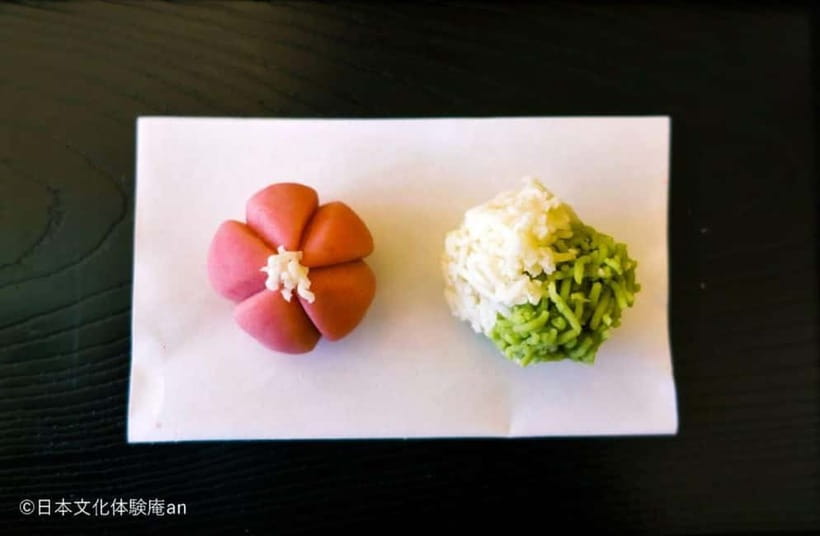
- You’ll shape season-matched Nerikiri: expect flower and Kinton nerikiri styles as part of your two-sweet set.
- Kyoto bean paste is a big deal here: white/red bean paste is the foundation, and quality matters for the final flavor balance.
- Single-origin Uji matcha is the tea star: you grind, then participate in the tea ceremony and drink your own cup.
- The break is built in: there’s time to reset before the tea portion starts.
- Pacing depends on the group: if it’s crowded, it helps to arrive on time and follow the flow.
More tea rooms our readers rated
- Matcha Making Class in Tokyo with Authentic Japanese Sweets Set
★ 5.0 · 744 reviews - Tokyo: Traditional Tea Ceremony with a Tea Master
★ 5.0 · 528 reviews - Tokyo: Matcha Making Experience with Mochi Sweets in Asakusa
★ 4.9 · 388 reviews - Tokyo: Matcha and Kimono Experience
★ 4.7 · 219 reviews
Nerikiri Wagashi: Making 2 Season-Matched Sweets (Flower + Kinton)
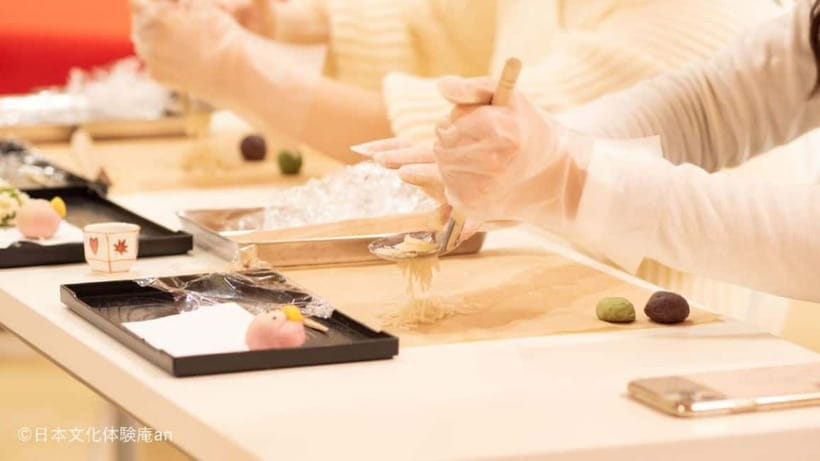
The fun starts with nerikiri, a high-grade Japanese sweet known for its sculpted look. It’s not the sort of wagashi you just buy and toss into a bag. This one asks you to pay attention to texture, shape, and color—then it rewards you with something that looks like edible art.
You begin by coloring white bean paste. That’s a small step that changes everything. When you color and handle the paste yourself, you start to understand why wagashi feels so intentional in Japan: the color isn’t decoration only. It’s part of the seasonal theme and the overall impression.
Then you move into shaping. The experience focuses on two styles of nerikiri that match the season:
- A flower-shaped Nerikiri
- Kinton Nerikiri
In practical terms, you’re learning the basic method behind forming seasonal motifs with bean paste. You’ll also learn how to work patiently, because nerikiri is forgiving in small moments and frustrating in big ones. If you rush, it can lose shape. If you go slow, your pieces tighten up and look cleaner.
What I like for you here is the input you get before you start hands-on. The first portion is explanation about Japanese traditional sweets, so you’re not just copying motions. You’ll understand the why behind what you’re making: nerikiri is designed around seasonal flowers/fruits and carefully colored paste, so the craft is tied to the calendar and the culture of gift-giving and tea time.
And yes, you’ll likely come away with that satisfying feeling that you can do this again at home. You don’t leave with vague memories of tasting something. You leave with a process you can picture step-by-step.
Why Kyoto bean paste matters more than you’d expect
This class uses white/red bean paste produced by Kyoto’s long-established shops. That’s not marketing fluff. Bean paste quality affects the paste texture you’re shaping, and it affects how the sweetness lands later when paired with matcha.
When you taste your finished sweets with your tea, the difference shows. Higher-quality paste tends to taste smoother and less cloying. You don’t want a sweet that fights your matcha; you want one that makes the tea taste brighter.
Uji Matcha Tea Ceremony: Grinding, Making Tea, and Drinking It Right
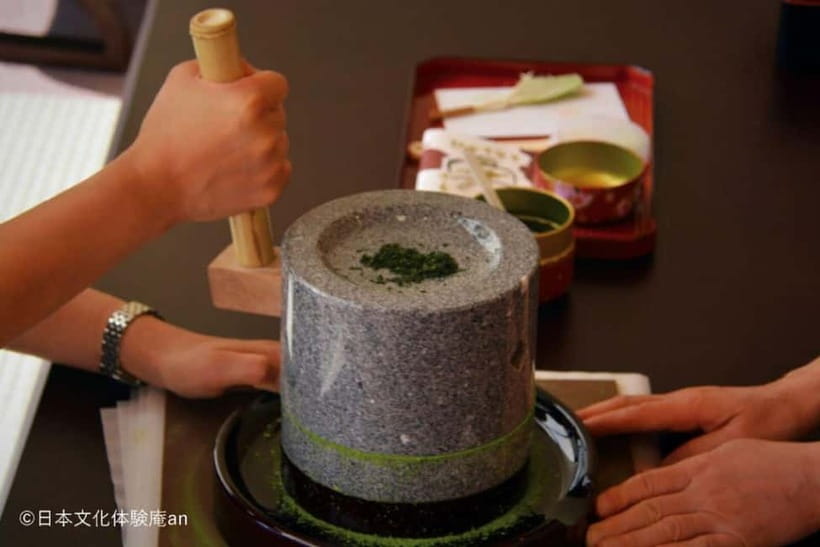
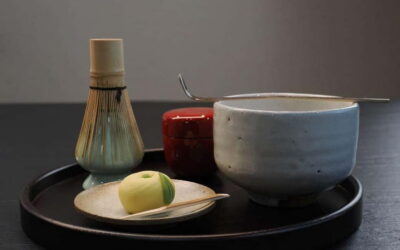
After sweets, the experience pivots to tea. You get an Uji matcha experience, starting with a matcha grinding demonstration. That’s a useful detail because it makes the ceremony make more sense. When you see how the matcha is handled, you’re less likely to think of it as just green tea. You start to feel it as a prepared ingredient.
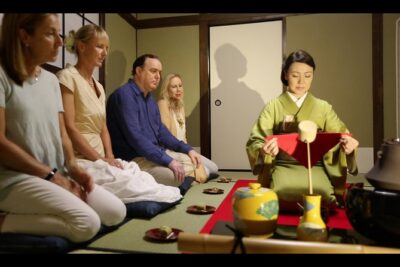
Then it moves into a tea-ceremony experience with your own prepared cup. The format is designed to be participatory without requiring you to already know the traditions.
The tea portion is where the earlier work pays off. Once your matcha is prepared, you enjoy it alongside the Japanese sweets you made. In other words, you get an instant match-making lesson:
- Bean paste sweetness meets matcha bitterness
- The matcha’s grassy notes feel sharper when the sweet is lighter
- The finishing experience feels balanced instead of one-note
The class is very direct about this pairing: the sweetness of the high quality bean paste is meant to balance the taste of single-origin Uji matcha. That’s exactly what you should look for in a wagashi-and-tea pairing in Japan: not “sweet + sweet,” but sweet that frames the tea.
What you should watch for during the ceremony
Even if the English translation is limited, you can still follow along because tea ceremony teaching here leans on demonstrations. Focus on your timing and attention. Small differences in how you pour or handle the tea will change the feel of the drink.
Also, take a minute to notice aroma first, then taste. Matcha is the kind of flavor where your first sip sets expectations for the whole cup. When you eat your sweet immediately after, you’ll start to taste how the sweetness changes the matcha’s edge.
And yes, there’s a picture time built in. So plan to pause after the tea setup so you can capture your sweets and your cup before you eat everything.
Readers also shortlisted these Tokyo bookings:
- Matcha Making Class in Tokyo with Authentic Japanese Sweets Set★ 5.0 · 744 reviews
- Tokyo: Matcha Making Experience with Mochi Sweets in Asakusa★ 4.9 · 388 reviews
- Make Traditional Nerikiri Sweets & Matcha experience in Shibuya★ 5.0 · 130 reviews
- Private Mochi Sweets Making class near Shibuya area★ 5.0 · 93 reviews
- Japanese Traditional Sweets making and Tea Ceremony★ 4.7 · 50 reviews
How the 95 Minutes Run: From Coloring Paste to Sitting with Tea
This is a 95-minute experience, and it’s structured in a way that keeps you moving rather than waiting around. Here’s how the flow feels in real terms:
- Start and intro: explanation of Japanese traditional sweets
- Sweets making: you’ll work through the nerikiri portion, including the coloring process and shaping (with the flower-shaped and Kinton nerikiri elements)
- Break time: a pause before tea starts
- Tea instruction and participation: tea explanation, matcha grinding demonstration, then the tea ceremony experience
- Picture time
- Eating/drinking: you enjoy what you made with your matcha
- Room departure
Two things matter for your planning:
1) Arrive on time. The experience says they can’t accommodate delays, so if you’re late, the class may continue without you.
2) Don’t treat the break like a reset button. You’ll want your head and hands ready for the second half. Tea steps are shorter, but they come quickly after sweets.
Also, remember that the ceremony portion is not separate from the sweets. The class is designed like one story: make the wagashi first, then use the tea to understand why the craft and ingredients matter.
Price and Value: Does $18 Pay Off for Wagashi + Uji Matcha?
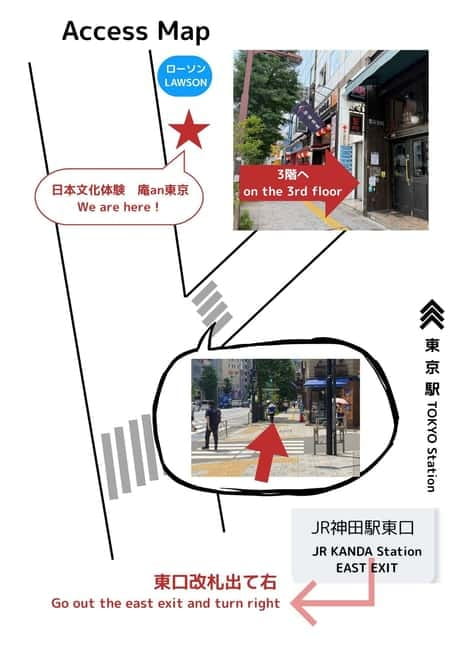
At $18 per person, this class is a pretty straightforward deal because you’re getting two major experiences in one sitting:
- Hands-on Japanese traditional sweets making (you make two nerikiri sweets)
- A participatory tea ceremony with Uji matcha, including a grinding demonstration and then drinking the matcha you prepare
In value terms, the money goes toward materials and skill instruction, not just a meal. Many cultural classes charge similar rates for a “watch and taste” format. Here, you shape the sweets and you actively make the tea, which changes the whole value equation.
Then there are optional add-ons:
- A take-out box for sweets is 100 JPY if you want to bring your work home.
- An optional experience completion certificate is 300 JPY, and nominative certificates require you to provide names in advance. If you don’t, it leaves a blank space at your name.
My advice: if you care about documenting the day, the certificate can be nice. If not, skip it and spend your energy eating the sweets while they’re at their best.
The hidden value: learning the method, not just the look
The best part of paying for this isn’t the ingredients list. It’s that you learn a technique: coloring bean paste and sculpting nerikiri. That’s the sort of knowledge you can carry home in your head, even if you never make the exact same seasonal design again.
Language and Instructor Style: How to Follow the Class in Japanese
The experience lists Japanese as the main language, with English translation provided as much as possible. If you want additional translation, you can contact in advance.
So what should you expect as a non-Japanese speaker?
- You’ll depend on effective demonstrations.
- You’ll likely catch more than you think just by watching the method closely.
- You should feel comfortable asking questions if possible, but the session may not pause for long explanations.
One instructor was praised for being helpful and patient, even though English wasn’t perfect. The key theme there was that the teaching was still easy to follow because the technique was shown clearly. That’s exactly what you want in a class like this: visuals that guide you, not just spoken instructions.
Tip for smoother participation
Come with a mindset of doing more than talking. If you focus on the actions—coloring paste, shaping, then tasting—you’ll get a better result even if the language is partly unfamiliar.
If your goal is to take notes and understand every detail in English, you might find it more comfortable to ask a few targeted questions before the hands-on work begins (when there’s likely more time for clarification).
Meeting Point in Tokyo: Finding AN TOKYO Japanese Culture Experience
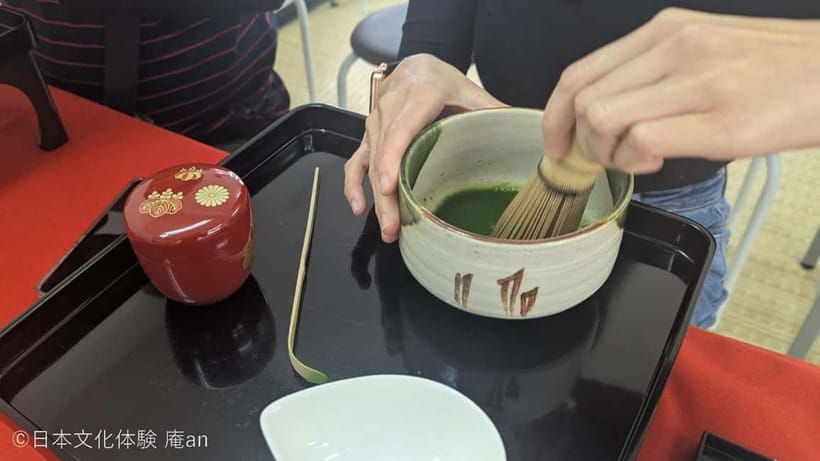
You’ll meet at AN TOKYO Japanese Culture Experience. The coordinates provided are 35.6916541, 139.7715022.
This matters because class timing is tight. Since delays aren’t accommodated, give yourself extra time to locate the venue and settle in before the start. If you’re using a map app, double-check the pin before you leave so you don’t waste minutes in the wrong hallway.
Also, note the operating hours are 10:00 to 17:00. Reservations received after 17:00 are processed the next day, so don’t assume a late booking means an immediate confirmation.
Who this works best for
This is ideal if you want:
- A hands-on food experience, not a passive tasting
- A skill tied to seasonal Japanese culture
- A tea experience that’s more than just drinking matcha
- A class format that gives you a finished edible result by the end
It can also be a good choice if you travel with family. Children who sit on their parents’ laps are free of charge (under 2 years old only).
Should You Book This Japanese Traditional Sweets Making and Tea Ceremony?
Book it if you want a practical, skill-based Japanese food experience where the “tea part” actually connects to what you made. For value, you’re paying for two real activities: sculpting nerikiri (including the flower and Kinton styles) and participating in an Uji matcha tea ceremony that ends with tasting.
Skip it or consider another option if you need lots of room for questions and a slower pace. If the room is busy, the class can move on quickly, and you’ll get the best experience if you’re comfortable following demonstrations and staying focused.
My final take: this is the kind of activity that makes Japan’s food culture feel tangible. You won’t just remember the flavors—you’ll remember the shape of the sweet and the way matcha tasted with it.
FAQ
How long is the Japanese Traditional Sweets making and Tea Ceremony experience?
It runs for 95 minutes.
What is the price per person?
The price is $18 per person.
What will I make during the class?
You’ll make 2 Japanese sweets matching the season, including flower-shaped Nerikiri and Kinton Nerikiri, starting from coloring the bean paste.
What kind of matcha is used?
The tea uses single-origin special Matcha from Uji.
Are take-out boxes included?
No. Take-out boxes are 100 JPY if you want them.
What is the cancellation policy?
You can cancel up to 24 hours in advance for a full refund.
More Dessert Tours in Tokyo
- Matcha Making Class in Tokyo with Authentic Japanese Sweets Set
★ 5.0 · 744 reviews - Tokyo: Matcha Making Experience with Mochi Sweets in Asakusa
★ 4.9 · 388 reviews - Make Traditional Nerikiri Sweets & Matcha experience in Shibuya
★ 5.0 · 130 reviews - Private Mochi Sweets Making class near Shibuya area
★ 5.0 · 93 reviews - Tokyo Local Food Tour: Noodles, Skewers, Dumplings, Sweets
★ 5.0 · 48 reviews
More Tour Reviews in Tokyo
- Mt Fuji and Hakone 1-Day Bus Tour Return by Bullet Train
★ 5.0 · 26,383 reviews - 1-Day Tokyo Bus Tour
★ 5.0 · 14,250 reviews - Tokyo: teamLab Planets TOKYO Digital Art Museum Entry Ticket
★ 4.6 · 9,779 reviews - Mt Fuji & Hakone Cruise, Drum Show Bullet Train 1 Day from Tokyo
★ 4.0 · 7,413 reviews - Tokyo: Shinjuku Food Tour (13 Dishes at 4 Local Eateries)
★ 5.0 · 6,603 reviews
More Tea and Matcha Rooms
- Matcha Making Class in Tokyo with Authentic Japanese Sweets Set
★ 5.0 · 744 reviews - Tokyo: Traditional Tea Ceremony with a Tea Master
★ 5.0 · 528 reviews - Tokyo: Matcha Making Experience with Mochi Sweets in Asakusa
★ 4.9 · 388 reviews - Tokyo: Matcha and Kimono Experience
★ 4.7 · 219 reviews - Tea Ceremony Workshop in Tokyo by the Experienced Instrucor
★ 5.0 · 189 reviews
Latest Tokyo reviews off our desk




Tea Ceremony & Matcha, compared.
 ★ 5.0Matcha Making Class in Tokyo with Authentic Japanese Sweets SetFrom $21744 reviews
 ★ 5.0Traditional Tea Ceremony with a Tea MasterFrom $38528 reviews
 ★ 4.9Matcha Making Experience with Mochi Sweets in AsakusaFrom $22388 reviews
 ★ 4.7Matcha and Kimono ExperienceFrom $57219 reviews
 ★ 5.0Tea Ceremony Workshop in Tokyo by the Experienced InstrucorFrom $38189 reviews
 ★ 4.9Asakusa Kimono Dressing and Matcha ExperienceFrom $56173 reviews
 ★ 4.9Asakusa: Kimono Tea Ceremony with Matcha and SweetFrom $66153 reviews
 ★ 5.0Make Traditional Nerikiri Sweets & Matcha experience in ShibuyaFrom $60130 reviews
Browse the lists this tour appears in