
Reviewed · KAMAKURA DAY TRIPS
Kamakura Private Custom Tour
Kamakura is compact, but it hides. This private custom tour turns that spread-out shrine-and-temple town into a smooth day using local train and bus routes, so you can realistically hit 3 or 4 key sights. I especially like the way an English-speaking guide can shape the day around what you care about, from Buddha views to lunch-time breaks.
I also like that it feels comfortable and controlled: it’s a private group, so you’re not stuck pacing with strangers. The guides’ ability to work the local transport system is a big part of the value, and names that come up include Akira and Nobuo Kono. One thing to consider: you’ll have some extra spending on your own transport in the area and a few temple fees, and you should be ready for moderate walking.
In This Review
- Key Things to Know Before You Go
- Kamakura’s 12th-Century Sights, Done Without the Chaos
- Meeting at Kamakura Station and Building a Realistic Route
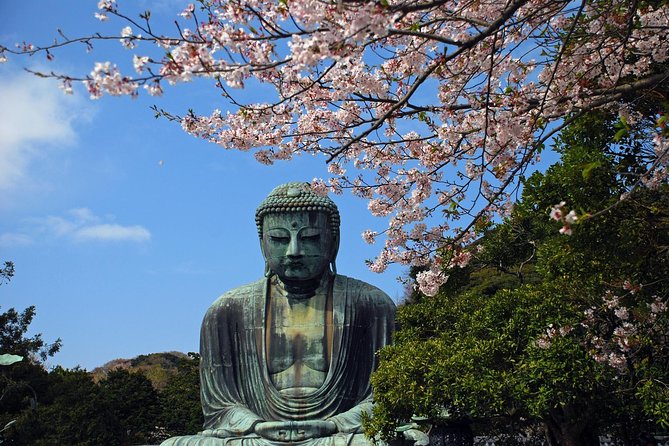
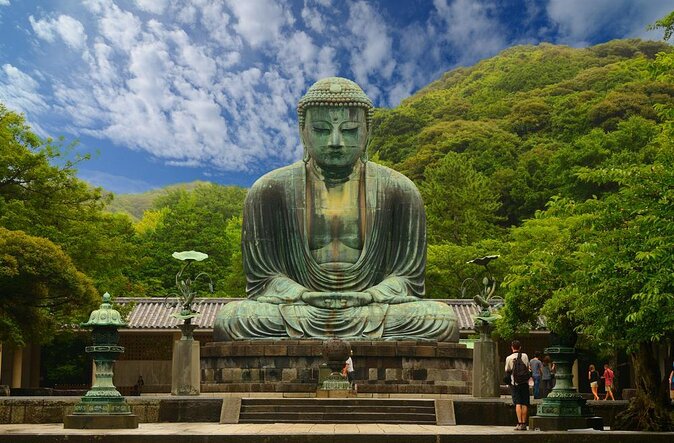
- Kotoku-in and the Great Buddha You Can Climb Inside
- Tsurugaoka Hachimangu: Shinto Roots and Shogun Connections
- Hasedera Temple: Eleven-Faced Kannon and a Garden Break
- Jomyo-ji: Zen Temple Calm and Matcha With Sweets
- Komachidori: The Main Street Where Food Feels Like Part of the Story
- Price and Value: What You’re Really Paying For
- Who This Tour Fits Best
- Should You Book This Kamakura Private Custom Tour?
- FAQ
- How long is the Kamakura Private Custom Tour?
- What time does the tour start, and where is the meeting point?
- Is this tour private?
- What is included in the price?
- What costs should I budget for that are not included?
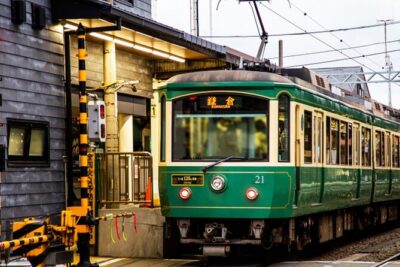
- Do you use public transportation during the tour?
- Is free cancellation available?
Key Things to Know Before You Go
- Custom pacing with public transit: expect a smart route built to reduce backtracking.
- Kotoku-in’s Great Buddha, plus an inside look: it’s famous for letting you climb inside the statue.
- Tsurugaoka Hachimangu at the center of power stories: built in the 12th century, tied to Minamoto no Yoritomo.
- Hasedera’s eleven-faced Kannon: a standout Buddhist stop, with a temple garden vibe.
- Jomyo-ji matcha moment: you’ll be able to enjoy Japanese powdered green tea with sweets.
- Komachidori for snacks and seafood: the main street where it’s easy to find casual eats.
Kamakura’s 12th-Century Sights, Done Without the Chaos
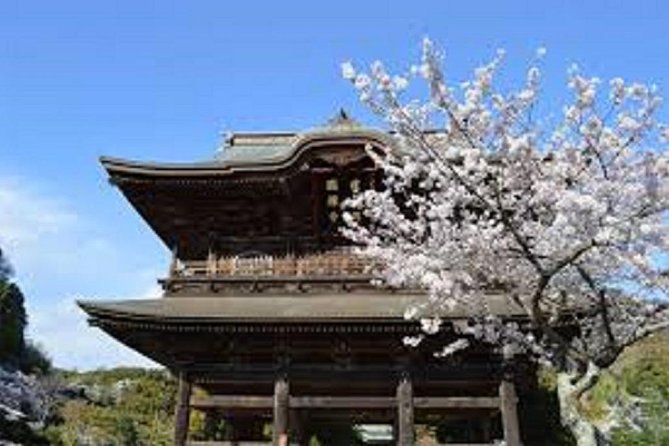
Kamakura used to run on politics and power in the 12th century, and that era still shows up in the town’s layout and spiritual landmarks. The magic here is that the sites aren’t all stacked neatly together—you get a real sense of how the town grew around temples and shrines.
That’s why I like this format. You’re not just hopping on a bus and hoping for the best. Your guide builds your day around public transportation, which keeps the schedule believable. And because it’s private, you can slow down when something grabs you—like a view from a temple approach—or speed up when you’re temple-circling with purpose.
Also, Kamakura is one of those places where the details matter. A good guide can point out what you’re actually looking at (and what it means), not just where to stand for a photo. Guides who work well with different interests make a noticeable difference—especially when you’re moving across multiple neighborhoods.
Coast-and-Buddha days near Kamakura, rated
- Tokyo: Kamakura & Enoshima Day Trip including Temple Tickets
★ 4.5 · 1,375 reviews - From Tokyo: Kamakura & Enoshima 1-Day Bus Tour
★ 4.5 · 189 reviews - Kamakura Historical Walking Tour with the Great Buddha
★ 5.0 · 129 reviews - Kamakura Private Tour: Temples, Nature, and the Great Buddha
★ 5.0 · 121 reviews
Meeting at Kamakura Station and Building a Realistic Route
The tour starts at 9:00 am at Kamakura Station (1-chōme-1-15 Onarimachi). That early start matters in Japan’s rail network, because you’ll be riding through the time of day when stations feel busy but still manageable if you’re moving with a plan.
You’ll use a mix of train and bus to reach temples and shrines. Practically, this means you’re not spending your day lost between stops. You also get more flexibility, because your guide can adjust the order depending on your interests and needs—within the overall goal of fitting in about 7 hours total.
One more thing: this is set up for people with moderate physical fitness. The sights are temple-and-shrine steeped and stair-heavy in places, and you’ll likely do a fair amount of walking across uneven areas. If that sounds like you, great. If you want a mostly flat, low-walking day, you might need to manage expectations.
Kotoku-in and the Great Buddha You Can Climb Inside
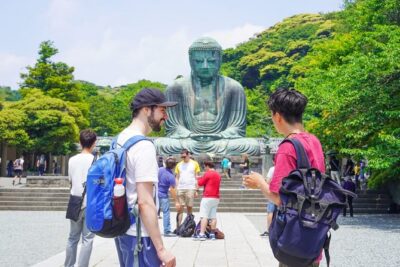
Kotoku-in is where the day earns its postcard reputation. The star is the open-air Great Buddha, and the standout detail is that you can climb inside the Buddha the way you would inside the Statue of Liberty in the U.S.
That’s the sort of thing you don’t forget. It changes how you experience the statue because you’re not just looking at it from the outside—you’re physically inside a major landmark. It also gives you a natural flow for photos and viewpoint breaks, because once you’ve done the inside portion, you can take a step back and re-orient yourself in the space.
Here’s the value/price angle: Kotoku-in has an admission fee listed at ¥200 per adult, and that fee is specifically noted as not included for you. So when you plan your budget, treat that as a must-pay for anyone who wants the full experience.
A practical tip: go in with time to slow down. This stop is popular, and the experience hits best when you’re not trying to sprint through just to check a box.
Tsurugaoka Hachimangu: Shinto Roots and Shogun Connections
From there you move to Tsurugaoka Hachimangu Shrine—one of Kamakura’s biggest spiritual magnets. This Shinto shrine originally goes back to the middle of the 12th century, which is why it fits so well with the town’s old power center reputation.
The connection that makes this shrine more than scenery is Minamoto no Yoritomo. The shrine’s later association with the first shogun gives you a clearer story arc for why Kamakura became so important. In plain terms: you’re not only seeing sacred architecture—you’re seeing the cultural stage where political legitimacy was reinforced through religion.
This stop is also nice because it tends to give you a sense of place. Even if you’re not deep into Shinto, the layout and main approach help you understand how Kamakura organizes its sacred space.
As for pacing: it’s about an hour in this plan, which is usually enough to see the key areas without turning it into a rushed check-list day.
Hasedera Temple: Eleven-Faced Kannon and a Garden Break
Hasedera Temple is famous for its eleven-faced statue of Kannon. Kannon is often described as the goddess of mercy in Buddhist tradition, which helps explain why this statue draws people in with a sense of protection and compassion.
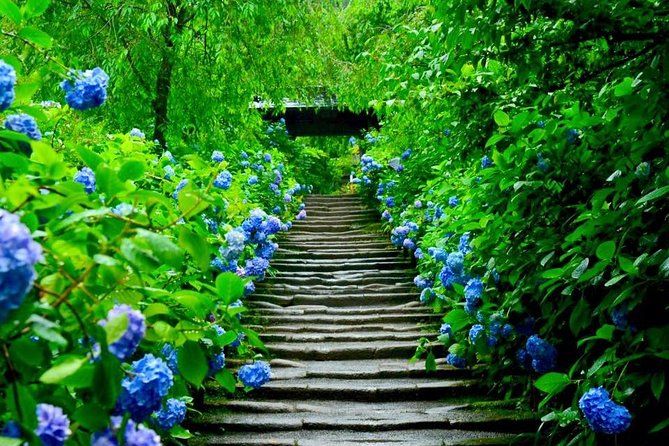
What I like about Hasedera is that it isn’t only about one object. The temple experience also includes a garden element, and in June you might find hydrangea mentioned as part of the seasonal charm. Even if you’re visiting outside that window, the garden idea adds breathing room between more intense stops.
This is a stop that benefits from context. When you understand why the eleven faces matter, you look at the statue differently. And when you’re ready for a pause, you’re not just waiting—you’re in a space designed for quiet, not speed.
The plan allots about 1 hour 30 minutes here. That longer block is smart, because temples like this often need a bit of unhurried wandering.
Budget note: the entrance fee for Hasedera is listed at ¥300 per person and noted as not included.
Readers also shortlisted these Kamakura bookings:
- Kamakura: Private Guided Walking Tour with Local Guide★ 4.8 · 60 reviews
- Kamakura 4hr Private Trip with Government-Licensed Guide★ 5.0 · 58 reviews
- From Tokyo: Kamakura Private Customize Tour by Luxury Van★ 4.6 · 38 reviews
- Buddha, Bamboo & Zen – Bespoke Kamakura Private Walking Tours★ 5.0 · 25 reviews
- Kamakura Bamboo Forest and Great Buddha Private Tour★ 5.0 · 12 reviews
Jomyo-ji: Zen Temple Calm and Matcha With Sweets
Jomyo-ji is one of those quieter stops that can become a highlight if you enjoy Zen aesthetics and simple rituals. The temple was built in 1188 and is identified as one of the fifth great Zen temples.
What makes this stop especially friendly for a tour day is the tea moment. You can have Japanese powdered green tea, macha, with sweets here. It’s not just a snack break—it’s a small ritual that fits the atmosphere, and it gives your legs a chance to recover while you keep the day moving.
Also, this is a good stop for customizing. If you’re more about architecture, the Zen setting gives you something to study. If you’re more about experience, the tea and sweets provide an easy, memorable moment.
Expect about 1 hour. That’s enough time to see the main area, sit briefly, and enjoy the tea without feeling like you’re stuck waiting around for the rest of the route.
Entrance fee note: Jomyo-ji has an admission fee listed in the tour information (¥100 for adults over 14, ¥50 for children under 15). The general list of what’s not included highlights only certain fees, so plan to pay what applies when you’re there.
Komachidori: The Main Street Where Food Feels Like Part of the Story
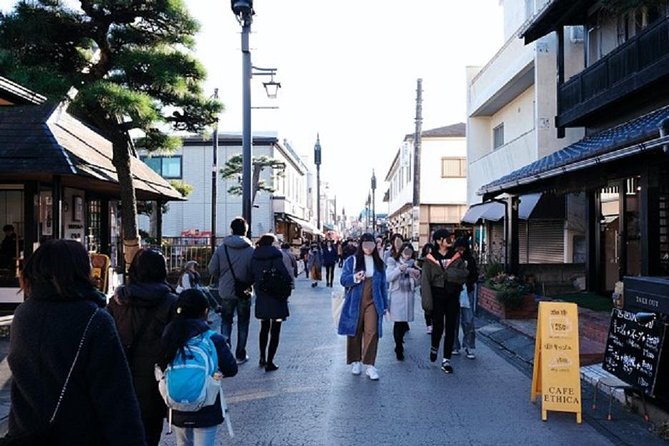
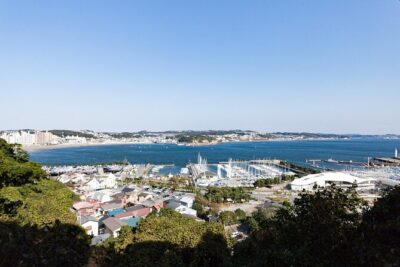
After temples, Kamakura Komachidori is your energy reset. This street is described as the main street, lined with shops, stalls, and restaurants. It’s also close to the sea, and that matters for what you’ll want to eat.
If you’re the kind of traveler who plans meals like excursions, this area is practical. The seafood focus means you can choose something casual and local without needing a reservation and without dragging a schedule behind you.
Komachidori also works as a stroll stop. Even if you don’t shop heavily, you’ll get the rhythm of the town—what locals and day-trippers buy, what’s being set out, what smells good right now.
In this tour plan, Komachidori is about an hour, which is a good amount of time to walk, snack, and browse without turning it into a second tourism day.
Price and Value: What You’re Really Paying For
The tour price is $149.58 per person for about 7 hours. On average, it’s booked about 29 days in advance, which usually suggests people want this as a planned highlight rather than a last-minute fix.
Here’s what you’re getting for the money, in practical terms:
- An English-speaking professional guide
- The guide’s transportation fee and lunch fee
- The guide’s admission fees if any
What you’re not getting (so you should budget):
- Your own local transportation fee in Kamakura: ¥2,000 per person
- Entrance fees specifically listed as not included: Kotoku-in (¥200) and Hasedera (¥300)
In other words, the base price covers the guided structure and the guide’s costs. You still fund your own travel between stops and pay the specific site entries. That can actually be fair, because temple pricing varies and you’ll pay only what you visit.
Is it good value? For me, it depends on how you handle transit and routing. If you’re comfortable navigating trains and buses and you don’t mind figuring out stop order yourself, you might compare against doing it solo. But if you want someone to handle the sequence, reduce guesswork, and keep the day efficient, the private format plus smart transit planning usually feels worth it.
Also, because this is private, group size is doing real work for the value. If you’re traveling as a couple or family, you spread the cost across people while keeping the schedule calm and tailored.
Who This Tour Fits Best
This tour is a strong fit if you want:
- A private, custom-feeling day with a guide who can adjust to your interests
- A route built around public transportation rather than taxis
- A mix of major sights (Great Buddha and major shrines) plus a tea-and-temple pause
- A manageable plan that aims for about 3 to 4 stops
It’s also a good match for people who care about stories behind the sights. Kamakura isn’t just pretty buildings. When someone connects places to the 12th-century political role of the town, your visit clicks into focus.
If you hate stairs, heavy walking, or you’re only interested in one or two tiny sights, you might find the full route too much. But if you’re up for moderate walking and you want a well-paced greatest-hits day, this is a practical choice.
Should You Book This Kamakura Private Custom Tour?
I’d book it if you want Kamakura without the stress of planning a transit-heavy day. The combination of private time, an English-speaking guide, and a route that actually uses trains and buses helps you see the key sites without feeling rushed or stranded.
Skip it if you’re the type who prefers total DIY freedom and you already know your way around Kamakura’s rail-and-bus rhythm. Also consider the extra on-the-ground costs for local transport and certain temple entry fees, since those will add to the base price.
If you can handle moderate walking and you want a smooth, story-driven shrine-and-temple day, this is the kind of tour that makes Kamakura feel effortless.
FAQ
How long is the Kamakura Private Custom Tour?
The tour duration is approximately 7 hours.
What time does the tour start, and where is the meeting point?
It starts at 9:00 am, and the meeting point is Kamakura Station (1-chōme-1-15 Onarimachi, Kamakura, Kanagawa 248-0012, Japan).
Is this tour private?
Yes. It’s a private tour/activity, and only your group participates.
What is included in the price?
The tour includes an English-speaking professional guide, the guide’s transportation fee, the guide’s lunch fee, and the guide’s admission fee if any.
What costs should I budget for that are not included?
Your transportation fee in Kamakura is listed as ¥2,000 per person. Entrance fees listed as not included include Kotoku-in (¥200 per adult) and Hase-dera Temple (¥300 per person).
Do you use public transportation during the tour?
Yes. The plan uses train and bus to get around the area.
Is free cancellation available?
Yes. Free cancellation is available up to 24 hours in advance for a full refund.
More Tours in Kamakura
- From Tokyo: Kamakura & Enoshima 1-Day Bus Tour
★ 4.5 · 189 reviews - Kamakura Historical Walking Tour with the Great Buddha
★ 5.0 · 129 reviews - Kamakura Private Tour: Temples, Nature, and the Great Buddha
★ 5.0 · 121 reviews - Kamakura Walking Tour – The City of Shogun
★ 5.0 · 100 reviews - Kamakura: Private Guided Walking Tour with Local Guide
★ 4.8 · 60 reviews
More Tour Reviews in Kamakura
- Tokyo: Kamakura & Enoshima Day Trip including Temple Tickets
★ 4.5 · 1,375 reviews - From Tokyo: Kamakura & Enoshima 1-Day Bus Tour
★ 4.5 · 189 reviews - Kamakura Historical Walking Tour with the Great Buddha
★ 5.0 · 129 reviews - Kamakura Private Tour: Temples, Nature, and the Great Buddha
★ 5.0 · 121 reviews - Kamakura Walking Tour – The City of Shogun
★ 5.0 · 100 reviews
More Kamakura and Enoshima Days
- Tokyo: Kamakura & Enoshima Day Trip including Temple Tickets
★ 4.5 · 1,375 reviews - From Tokyo: Kamakura & Enoshima 1-Day Bus Tour
★ 4.5 · 189 reviews - Kamakura Historical Walking Tour with the Great Buddha
★ 5.0 · 129 reviews - Kamakura Private Tour: Temples, Nature, and the Great Buddha
★ 5.0 · 121 reviews - Kamakura Walking Tour – The City of Shogun
★ 5.0 · 100 reviews
Latest Kamakura reviews off our desk

Kamakura Day Trips, compared.
 ★ 4.5Kamakura & Enoshima Day Trip including Temple TicketsFrom $581,375 reviews
 ★ 4.5Mt. Fuji, Kamakura, Big Buddha, & Lake Ashi Day TripFrom $49867 reviews
 ★ 4.5From Tokyo: Kamakura & Enoshima 1-Day Bus TourFrom $66189 reviews
 ★ 5.0Kamakura Historical Walking Tour with the Great BuddhaFrom $98129 reviews
 ★ 5.0Kamakura Private Tour: Temples, Nature, and the Great BuddhaFrom $98121 reviews
 ★ 5.0Kamakura Walking Tour – The City of ShogunFrom $35100 reviews
 ★ 4.9Sea of Mount Fuji, Hakone Ropeway, Ōwakudani, EnoshimaFrom $5084 reviews
 ★ 5.0Kamakura 8 hr Private Walking Tour with Licensed Guide from TokyoFrom $20180 reviews
Browse the lists this tour appears in