
Reviewed · KAMAKURA DAY TRIPS
Whispers of Kamakura: Jean’s Full-Day Daibutsu & Hidden Walk
Kamakura feels like a living shrine map. This 5-hour outing strings together Kotoku-in’s Great Buddha and several smaller stops that explain how Kamakura’s faith really works. I love the way the day is paced so you don’t just see sights, you get the meaning behind them, without turning it into a lecture. One heads-up: it’s still a walk between sites, so comfortable shoes matter.
What I like most: the tour’s tone is human and story-driven, with guides like Jean leading the day as a true storyteller and history keeper. I also really appreciate the lunch at La Terrasse Zen, because it’s included and it’s a full recharge break, not an afterthought.
The only drawback I’d flag is timing. Starting at 10:00 am means you’ll want to be ready for the sites to feel more active and the walking to be slightly warmer, depending on the season.
In This Review
- Key highlights you’ll care about
- The 5-hour Kamakura plan: walking pace and how to win the day
- Where you start: Hotel New Kamakura and the easy logistics
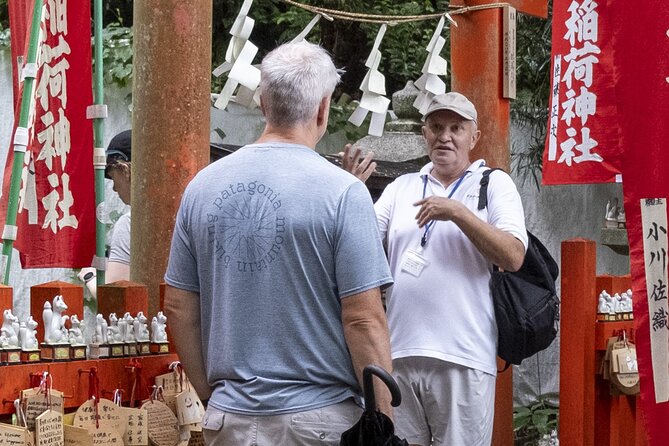
- Stop 1: Sasuke Inari Shrine and its fox-focused story
- Stop 2: Zeniarai Benten Shrine and the coin-washing idea
- Stop 3: Kotoku-in and the Great Buddha of Kamakura
- Lunch at La Terrasse Zen: bento with tea, in a quiet reset
- Stop 4: Eishoji Temple, the nunnery, and the bamboo forest walk
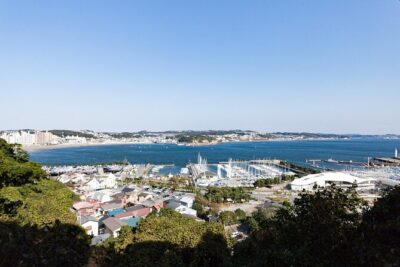
- Finishing at Yuigahama Beach: end with sea air
- Guides like Jean (and the team): why the storytelling matters
- Value for money: what you’re really paying for
- Who should book Whispers of Kamakura
- Should you book this tour? My honest call
- FAQ
- FAQ
- How long is the Whispers of Kamakura tour?
- Where is the meeting point?
- Does the tour offer pickup?
- What time does the tour start?
- What is included in the price?
- What lunch is provided?
- Are there any dietary options?
- Is this tour private?
- What is the cancellation policy?
Key highlights you’ll care about
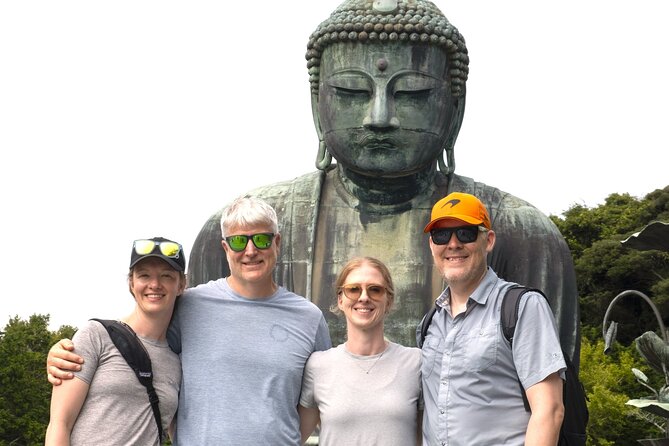
- Great Buddha at Kotoku-in: a classic Kamakura must, including time to look closely at the bronze statue area
- Sasuke Inari Shrine: a fox shrine stop that’s easy to reach and quick to enjoy
- Zeniarai Benten Shrine: the coin-washing tradition gives you a fun, grounded reason to pause
- La Terrasse Zen lunch: a included bento-style meal with Japanese tea, plus a calm place to sit
- Eishoji Temple and bamboo forest walk: a quiet nunnery visit with a slower pace
- Private tour feel: your group is just your group, led by guides such as Jean, Sr. Yamazaki, and Bruno
The 5-hour Kamakura plan: walking pace and how to win the day
This is a compact Kamakura day with a clear rhythm: shrine, shrine, big temple landmark, lunch, then a quieter temple stop before finishing by the coast. Five hours is a sweet spot. Long enough to feel like you saw the essentials and learned what to notice, but not so long that you’re exhausted before you even get your photos.
You’ll be moving on foot between sites, and the stops are timed at about 40 minutes each for the main temple/shrine moments, with more “quick visit” style timing at the first two shrines. If you’re someone who likes to wander with your own pace, you’ll still get time to do that—but the guide will help you avoid the most common time-wasters, like staring at the wrong area or missing the point of what you’re looking at.
One small practical win: bottled water and a restroom on board are included. That matters more than it sounds, especially in Japan where you can find restrooms, but not always at the exact moment you need one.
If you’re planning your day around photos and calm, aim to treat each stop like two layers: first the “big obvious thing” (Great Buddha, main shrine grounds), then the “why it matters” layer that the guide explains while you’re standing there. That second layer is where the day turns from sightseeing into understanding.
Coast-and-Buddha days near Kamakura, rated
- Tokyo: Kamakura & Enoshima Day Trip including Temple Tickets
★ 4.5 · 1,375 reviews - From Tokyo: Kamakura & Enoshima 1-Day Bus Tour
★ 4.5 · 189 reviews - Kamakura Historical Walking Tour with the Great Buddha
★ 5.0 · 129 reviews - Kamakura Private Tour: Temples, Nature, and the Great Buddha
★ 5.0 · 121 reviews
Where you start: Hotel New Kamakura and the easy logistics
The meeting point is Hotel New Kamakura in Kamakura, and the tour ends back at the same location. There’s a start time of 10:00 am, so you’ll want to build your morning so you’re not rushing through coffee and transit.
Pickup is offered, which is a big deal if your hotel is close but you don’t want to think about trains, buses, and short transfers. Since the tour is described as near public transportation, you’re not locked into needing pickup, but if you can get it, I’d take the convenience.
This is listed as a private tour/activity, meaning it’s only your group. That changes the whole vibe. Questions don’t feel like interruptions, and the guide can adjust the pace to your group’s energy—especially useful when one person is slow at stairs or someone wants extra time looking at details.
Stop 1: Sasuke Inari Shrine and its fox-focused story
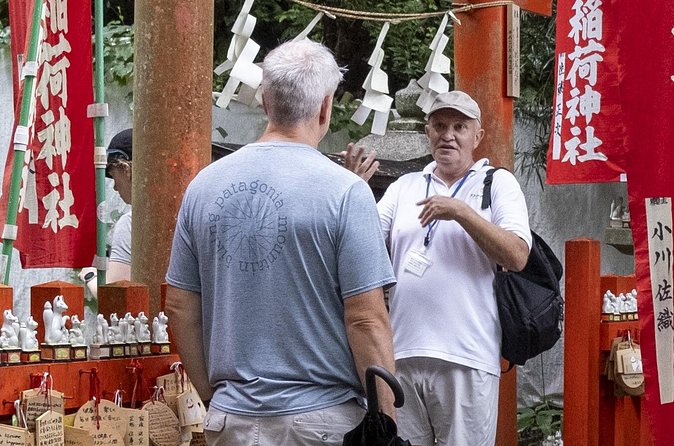
You’ll begin at Sasuke Inari Shrine, about a 20-minute walk from Kamakura Station. This shrine is dedicated to the fox, and that theme isn’t just decorative. In Japan, shrine symbols often point to a specific set of beliefs and local meaning, and Sasuke Inari is one of those stops where the guide helps you connect what you see on the grounds with why it’s there.
This is also a “get your bearings” stop. It’s early enough in the day that you’ll still be fresh, and it helps you shift your mindset from tourist mode into respectful, observant mode. Since the visit is around 40 minutes, you don’t feel trapped in a long stop, but you do get time to look without hurrying.
What to do here: slow down for the fox theme elements the guide mentions, then do a quick scan of the area so you know where the main approach points are before you move on. That makes the next shrines less confusing and your whole day smoother.
A small consideration: shrine visits can involve quiet rules about where to stand or how to move. You’ll be guided on the spot, but it’s wise to keep your phone use gentle and not let it crowd the moment.
Stop 2: Zeniarai Benten Shrine and the coin-washing idea
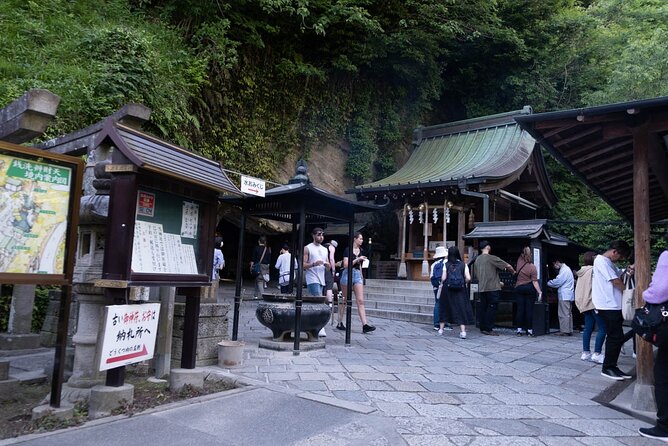
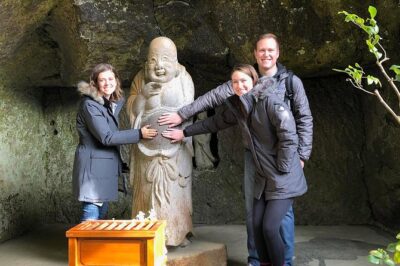
Next is Zeniarai Benten Shrine, where the tradition is tied to washing coins in the spring water. Even if you don’t treat the ritual as literal luck, it’s still a fascinating snapshot of how everyday people connect faith with practical goals—money, good fortune, stability.
The tour gives this stop about 40 minutes, and that feels right. You get time to watch the flow of people, understand what the coin-washing is about, and then step back to enjoy the shrine setting without feeling like you’re just standing in a line.
Because the admission is free here, you’ll mainly be paying with your time and attention. I love these kinds of stops: they’re not about expensive entry tickets or big showpieces. They’re about local practice and a clear, human ritual.
If you plan to participate in any ritual actions, follow the guide’s instructions closely. With these traditions, it’s better to do it correctly than to wing it.
Stop 3: Kotoku-in and the Great Buddha of Kamakura

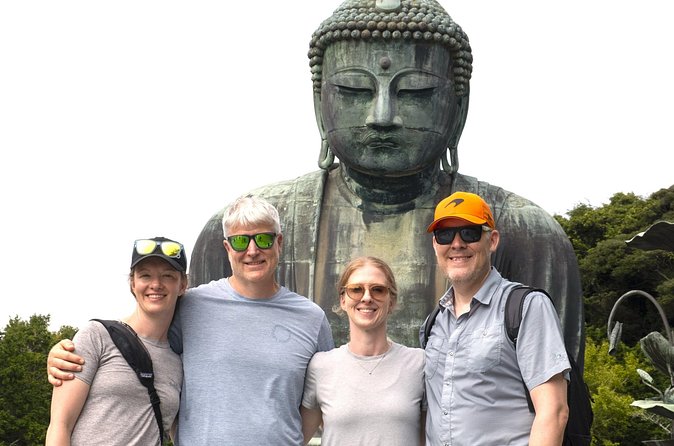
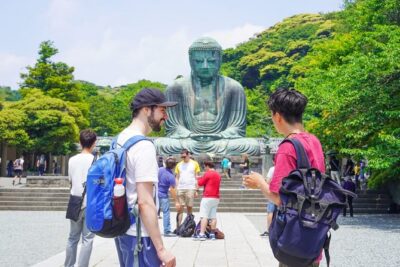
Then comes the star of the day: Kotoku-in (Great Buddha of Kamakura). You’ll spend about 40 minutes here, and it’s time well used. The centerpiece is the bronze statue of Amitabha Buddha, commonly known as the Great Buddha of Kamakura. The statue dates back to the 13th century, and that age shows in the way the space feels. It’s big, still, and strangely intimate at the same time.
This is the stop where a guide earns their keep. Without explanation, it’s easy to treat the Great Buddha as a photo opportunity. With the right context, you start noticing what the statue represents, how the site is arranged around it, and how the surrounding details connect to the broader tradition.
Here’s how to enjoy it more:
- Walk in and spend a minute just looking before you start counting photo angles.
- Let the guide point out key visual elements.
- Then go back and look again with that new context in mind.
That’s the trick that keeps the visit feeling fresh, even if you’ve seen Buddha statues before.
Entrance fees for this stop are included, which is one less thing to manage. And since the day flows toward lunch right after, you’ll be able to recover before the calmer temple segment.
Readers also shortlisted these Kamakura bookings:
- Kamakura Walking Tour – The City of Shogun★ 5.0 · 100 reviews
- Buddha, Bamboo & Zen – Bespoke Kamakura Private Walking Tours★ 5.0 · 25 reviews
- Kamakura: Walking Tour through the City of Samurai★ 4.9 · 12 reviews
- Kamakura: Half day Walking tour & Japanese sweets★ 5.0 · 11 reviews
- Kamakura Heritage Bike or Walk Tour with ex-Rickshaw guide★ 5.0 · 11 reviews
Lunch at La Terrasse Zen: bento with tea, in a quiet reset
Lunch is served at La Terrasse Zen, and it’s included. You’ll get a special bento lunch with Japanese tea, and there’s a clear option to note dietary requirements at booking time.
I’m picky about tours that include food, because it can easily become rushed or generic. This one feels more considered. There’s a peaceful atmosphere built into the break, and it’s the kind of meal that makes sense after shrine walking. You’re not just eating to survive the next stop—you’re actually resting.
Practical tip: treat lunch as your “reset moment.” Put your phone away for a bit, hydrate after the meal, and take a couple minutes to slow your pace before the bamboo forest walk later. It makes the last portion of the tour feel like a retreat instead of an endurance test.
If you have dietary needs, do not wait until the day-of to ask. The tour information specifically says to indicate requirements in advance, so plan ahead and you’ll get a smoother meal.
Stop 4: Eishoji Temple, the nunnery, and the bamboo forest walk
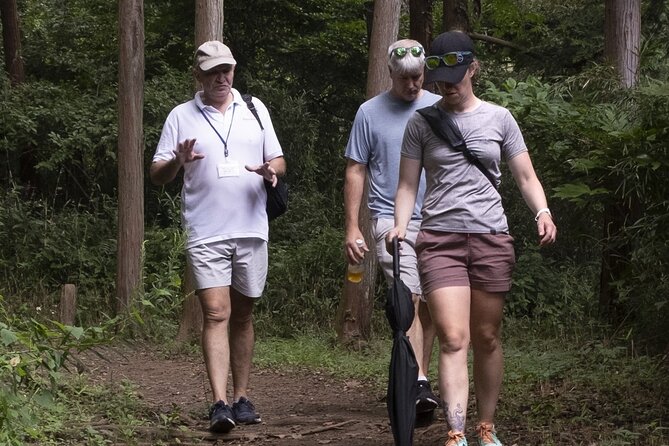
After lunch, the tone shifts to quieter reflection at Eishoji Temple, noted as the only nunnery in Kamakura. You’ll visit the temple and take a pleasant walk through a serene bamboo forest, with about 40 minutes allotted for this part of the day.
This is the stop that many people remember longest—not because it’s loud or flashy, but because it feels like a break in the day’s tempo. Bamboo forests have a way of shrinking the noise in your head. When you add the setting of a nunnery, it becomes more than a pretty walkway. You get a sense of disciplined calm.
What I like about this final stretch is how it changes your relationship with the earlier stops. At the beginning, you’re learning about shrines, rituals, and landmark Buddhism. Here, you’re offered a different perspective: a place for quiet practice and a slower mind.
How to enjoy the bamboo walk:
- Keep your eyes forward and let the light shift under the trees guide your pace.
- Pause when the guide points something out, then continue.
- Don’t rush to “finish the walk.” This is a linger moment.
Entrance fees for this stop are included too, which keeps the whole day feeling straightforward.
Finishing at Yuigahama Beach: end with sea air

The tour ends at Yuigahama Beach, where you can enjoy the seaside and take it easy as long as you like. This is a smart ending. A lot of temple days end with a last stop that leaves you still in “tour energy.” Here, the sea air gives you a natural cool-down.
If you want a simple plan after the tour: take a short walk along the beach line, grab a snack or drink nearby, and don’t over-schedule your evening. You’ll want time for your photos and for the day’s new context to settle in.
Guides like Jean (and the team): why the storytelling matters
The biggest praise for this experience isn’t just the sites. It’s the people running it.
Jean is described as a fantastic host and a master storyteller—also a real historian type. That combination matters in Kamakura, where there are many shrines and temples, and it’s easy to lose the thread. When the guide connects the symbolism (like the fox dedication and the coin-washing ritual) to what you’re actually seeing, you remember it later.
There can also be other guides on the day. Names mentioned include Sr. Yamazaki and Bruno, and the common thread is friendliness and attention—people who make the day feel welcoming, not distant.
A good sign: you’ll learn more than you expected. That’s usually because the guide isn’t just reciting facts. They’re choosing the details that help you understand the place while you’re there.
If your travel style is “tell me what I’m looking at,” this tour is built for you.
Value for money: what you’re really paying for
At $130.07 per person, this isn’t a bargain-basement deal. But it also isn’t just a ticket to temples. You’re paying for a full guided day with:
- transport support through pickup option,
- a private group feel,
- bottled water and restroom on board,
- lunch at La Terrasse Zen (bento plus tea),
- and entrance fees included for key stops.
When food and admissions are bundled, the “real cost” comparison changes. If you tried to do the same day on your own, you’d still spend time and money on navigating between sites, figuring out the best order, and paying admission fees one by one. You’d also lose the benefit of having someone explain what’s important at the moment you’re standing in front of it.
So I see it as good value if you want guidance and structure, especially for a first visit to Kamakura. If you already know the temples deeply and you’re a confident self-planner who loves wandering without interpretation, then you might prefer DIY. But if you want the meaning and the smooth flow, this price starts to look fair.
Who should book Whispers of Kamakura
This experience fits best if you:
- want a 5-hour taste of major Kamakura highlights without a full-day commitment,
- like learning through stories, not just reading signs,
- care about included lunch in a calm setting,
- appreciate a tour where your group gets real attention (private setup),
- and you’re open to a mix of big landmark time and quieter temple reflection.
It’s also a good match for couples and small groups. The pacing and the story-led approach help everyone stay connected.
Should you book this tour? My honest call
Book it if you want a guided Kamakura day that feels organized but not stiff, and you care about understanding what you’re seeing. The Great Buddha stop plus the smaller shrine traditions make the day feel complete. Add the bamboo nunnery walk and a proper lunch at La Terrasse Zen, and you get a mix that’s hard to replicate easily on your own.
Skip it (or switch to DIY) if you don’t want to follow a schedule at all, or if you’re traveling with a group that hates walking between stops. Also, because the start is 10:00 am, plan your morning so you’re ready to begin on time.
FAQ
FAQ
How long is the Whispers of Kamakura tour?
The tour runs about 5 hours.
Where is the meeting point?
You meet at Hotel New Kamakura, 13-2 Onarimachi, Kamakura, Kanagawa 248-0012, Japan.
Does the tour offer pickup?
Yes, pickup is offered.
What time does the tour start?
The start time is 10:00 am.
What is included in the price?
The included items listed are restroom on board, bottled water, lunch, and entrance fees.
What lunch is provided?
Lunch is served at La Terrasse Zen and includes a special bento with Japanese tea.
Are there any dietary options?
If you have dietary requirements, you should indicate them in the Special Requirements at the time of booking.
Is this tour private?
Yes. It’s described as a private tour/activity, so only your group participates.
What is the cancellation policy?
Free cancellation is available up to 24 hours in advance of the experience start time for a full refund.
If you tell me your travel month and how much walking you like on temple days, I can suggest the best way to dress and plan your rest stops around this 5-hour route.
More Walking Tours in Kamakura
- Kamakura Historical Walking Tour with the Great Buddha
★ 5.0 · 129 reviews - Kamakura Walking Tour – The City of Shogun
★ 5.0 · 100 reviews - Kamakura: Private Guided Walking Tour with Local Guide
★ 4.8 · 60 reviews - Buddha, Bamboo & Zen – Bespoke Kamakura Private Walking Tours
★ 5.0 · 25 reviews - Kamakura: Walking Tour through the City of Samurai
★ 4.9 · 12 reviews
More Tour Reviews in Kamakura
- Tokyo: Kamakura & Enoshima Day Trip including Temple Tickets
★ 4.5 · 1,375 reviews - From Tokyo: Kamakura & Enoshima 1-Day Bus Tour
★ 4.5 · 189 reviews - Kamakura Historical Walking Tour with the Great Buddha
★ 5.0 · 129 reviews - Kamakura Private Tour: Temples, Nature, and the Great Buddha
★ 5.0 · 121 reviews - Kamakura Walking Tour – The City of Shogun
★ 5.0 · 100 reviews
More Kamakura and Enoshima Days
- Tokyo: Kamakura & Enoshima Day Trip including Temple Tickets
★ 4.5 · 1,375 reviews - From Tokyo: Kamakura & Enoshima 1-Day Bus Tour
★ 4.5 · 189 reviews - Kamakura Historical Walking Tour with the Great Buddha
★ 5.0 · 129 reviews - Kamakura Private Tour: Temples, Nature, and the Great Buddha
★ 5.0 · 121 reviews - Kamakura Walking Tour – The City of Shogun
★ 5.0 · 100 reviews
Latest Kamakura reviews off our desk

Kamakura Day Trips, compared.
 ★ 4.5Kamakura & Enoshima Day Trip including Temple TicketsFrom $581,375 reviews
 ★ 4.5Mt. Fuji, Kamakura, Big Buddha, & Lake Ashi Day TripFrom $49867 reviews
 ★ 4.5From Tokyo: Kamakura & Enoshima 1-Day Bus TourFrom $66189 reviews
 ★ 5.0Kamakura Historical Walking Tour with the Great BuddhaFrom $98129 reviews
 ★ 5.0Kamakura Private Tour: Temples, Nature, and the Great BuddhaFrom $98121 reviews
 ★ 5.0Kamakura Walking Tour – The City of ShogunFrom $35100 reviews
 ★ 4.9Sea of Mount Fuji, Hakone Ropeway, Ōwakudani, EnoshimaFrom $5084 reviews
 ★ 5.0Kamakura 8 hr Private Walking Tour with Licensed Guide from TokyoFrom $20180 reviews
Browse the lists this tour appears in