
Reviewed · KAMAKURA DAY TRIPS
Kamakura Rickshaw Tour
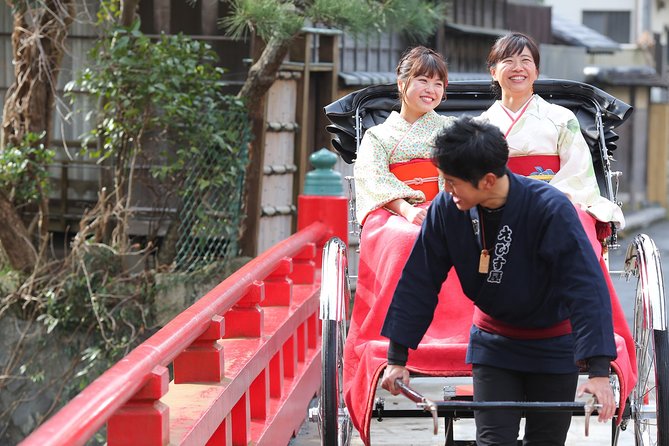
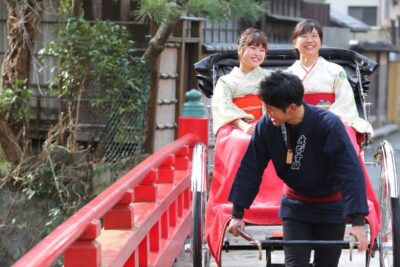
Kamakura by rickshaw feels like a time machine with brakes. You get a comfortably paced ride, plus a guide who can explain what you’re seeing in plain, practical terms. It’s a short window of sightseeing that still feels personal, thanks to the private format for your group and the rickshaw’s easy rhythm.
What I like most is the guided context at key sites, not just photo stops. I also love that the plan builds in quick, manageable visits (about 20 minutes each at major shrines), so you’re not stuck rushing or waiting around.
One watch-out: rickshaws are only about 29.1 inches (74 cm) wide, so if you’re on the larger side, you may feel cramped sharing. In that case, planning for one rickshaw per person can make the ride a lot more relaxing.
In This Review
- Key things to know before you go
- A Rickshaw Pace That Lets You Actually Look
- Meeting at Ebisuya and Customizing the Finish
- Tsurugaoka Hachimangu: The Shrine Overlooking the Samurai Past
- Zeniarai Benten: Washing Money for Better Fortune
- The Buddhist Temple Stop That Breaks Up the Route
- How the Tour Duration Changes Your Experience
- Price and Value: What $43.04 Buys You
- Rickshaw Reality Check: Fit, Comfort, and Seating Rules
- Language, Guides, and Getting What You Want
- What a Perfect Day Around This Tour Looks Like
- Should You Book the Kamakura Rickshaw Tour?
- FAQ
- What does the Kamakura rickshaw tour include?
- What is not included in the price?
- How long is the tour?
- Where does the tour start?
- What are the main stops?
- Is admission required for the shrines?
- Is this a private tour?
- Can I request a driver who speaks my language?
- How many people can ride in one rickshaw?
- What is the cancellation policy?
Key things to know before you go
- A guide-led route: you’ll see major sights plus smaller, less obvious angles the guide points out
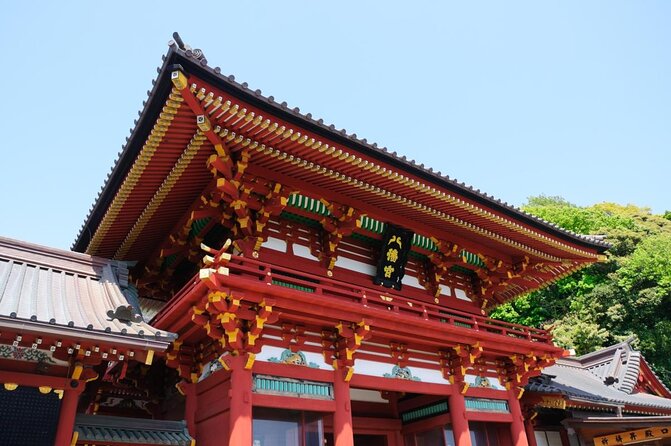
- Two shrine highlights: Tsurugaoka Hachimangu and Zeniarai Benten (Zeniarai is free)
- Short stops that work: around 20 minutes at the big shrine moments
- Comfortable pace: faster than walking, slower than cycling, ideal for looking and chatting
- Small vehicle capacity: max 2 adults per rickshaw, with lap rules for kids
- Private for your group: you’re not trading attention with strangers
A Rickshaw Pace That Lets You Actually Look
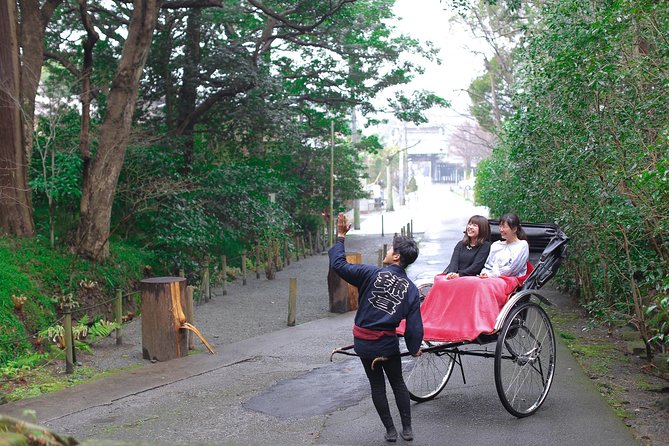
Kamakura moves fast on foot if you’re trying to fit temples and shrines into one day. This rickshaw format hits a sweet spot: quicker than walking, slow enough that you can notice details, and smooth enough to enjoy the ride instead of treating it like a sprint.
That pace matters at shrines and temples. When you can slow down, you start to see patterns. You notice how people approach, where they pause, and how the space is designed for prayer. The guide’s job is to translate the meaning of what you’re looking at, without turning it into a lecture. If you like history but hate feeling trapped in a museum voice, you’ll probably appreciate this.
There’s also a practical side to rickshaw sightseeing. If your legs get tired (or your day is already full), you still keep momentum. You avoid the “one more stop and I’m done” problem.
One more detail I’m glad you’ll have: the service level is framed around omotenashi, which is Japanese hospitality. In real terms, that usually means the driver/guide is tuned into making the experience feel smooth, not awkward.
Coast-and-Buddha days near Kamakura, rated
- Tokyo: Kamakura & Enoshima Day Trip including Temple Tickets
★ 4.5 · 1,375 reviews - From Tokyo: Kamakura & Enoshima 1-Day Bus Tour
★ 4.5 · 189 reviews - Kamakura Historical Walking Tour with the Great Buddha
★ 5.0 · 129 reviews - Kamakura Private Tour: Temples, Nature, and the Great Buddha
★ 5.0 · 121 reviews
Meeting at Ebisuya and Customizing the Finish
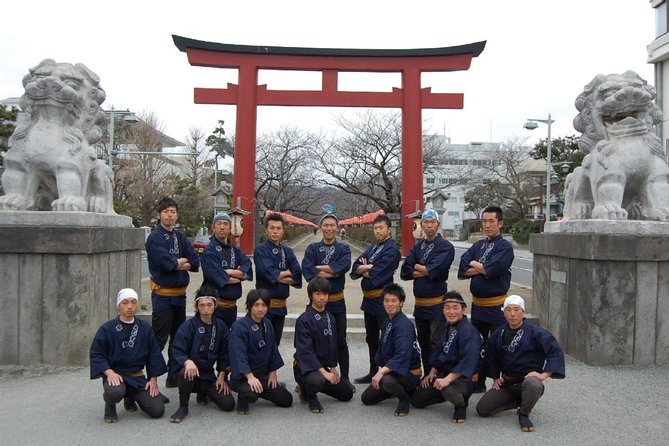
Your starting point is Ebisuya Kamakura Rickshaw, located at 〒248-0005 Kanagawa, Kamakura, Yukinoshita, 1-chōme−12, 雪ノ下1丁目12−3 フロント アベニュー 雪ノ下 1F. It’s also described as being near public transportation, which is a big win in a place where you might be bouncing between stations and temple entrances.
The tour is private, so the ride is built around your group rather than a big conveyor-belt schedule. You’ll also have flexibility: the meeting end location can vary by tour option, and it can be customized if you talk with your guide. That’s useful if you’re planning a wider day of sightseeing and want to end closer to your next stop.
One thing to keep in mind: finishing somewhere other than the rickshaw stand can involve an additional drop-off fee, paid on the day. It’s not a deal-breaker, just something to factor into how you plan the rest of your afternoon.
Tsurugaoka Hachimangu: The Shrine Overlooking the Samurai Past
Your first major stop is Tsurugaoka Hachimangu Shrine. You’ll spend about 20 minutes there, and the shrine ticket is not included, so you’ll want to budget time and money for the admission on-site.
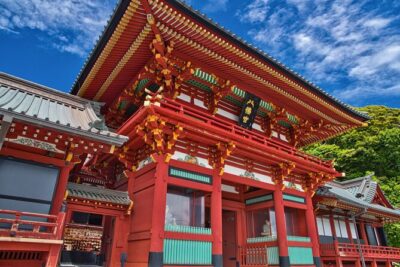
This is the kind of place where the setting does half the explaining. Tsurugaoka Hachimangu sits overlooking what was once the former samurai town. When you’re riding up and then walking a short distance inside the shrine grounds, the view helps you understand why this site became a cultural and religious anchor for Kamakura.
In a short visit, the goal is focus. At 20 minutes, you’re not trying to see everything. You’re catching the main moments: the entrance approach, the feeling of the grounds, and the most important spaces for worship. If you’re the type who likes to get your bearings fast, this timing works.
Possible drawback: if you’re the sort of visitor who hates skipping anything and wants a full deep-reading tour, 20 minutes may feel tight. In that case, choose a longer rickshaw duration option when available.
Zeniarai Benten: Washing Money for Better Fortune
Next comes Zeniarai Benten Shrine, also about 20 minutes. The good news here is admission is free.
This shrine has a specific practice: it’s known as the place where people wash money, with the belief that doing so multiplies your fortune. Even if you don’t treat the superstition as literal, the ritual is still interesting. It’s a window into how everyday people connect spirituality to practical hope.
What I like about this stop is that it’s short and visual. You can understand the idea quickly because the action is right there. You’re not just looking at architecture; you’re seeing a tradition that people still take seriously.
If you’re sensitive to crowds, note that religious sites can get busy during peak times. The tour timing helps, but you may still want to go with a calm mindset and accept that you’re sharing the moment with other visitors and locals.
The Buddhist Temple Stop That Breaks Up the Route
Between the two shrine highlights, your plan includes a Buddhist temple stop. The exact temple name isn’t specified in the information you’re working from, but the intent is clear: you get more than just Shinto sights.
This pause is valuable because it keeps the cultural picture wider. Kamakura is strongly associated with temple traditions, and adding a Buddhist stop gives you a more balanced snapshot of what shaped the area.
It also helps the “riding rhythm.” After Tsurugaoka Hachimangu, you’ve had your first big landmark moment. The temple stop acts like a breather before you shift into the energetic, ritual-focused vibe at Zeniarai Benten.
Because the temple isn’t named here, you should treat this as a flexible portion of the itinerary that can vary by the tour option and duration you select. The benefit is that you’re still getting variety, not just repeats of the same style of site.
More rickshaw runs through the old town
- Kamakura Heritage Bike or Walk Tour with ex-Rickshaw guide★ 5.0 · 11 reviews
- Kamakura: Private History and Heritage Tour by Rickshaw★ 4.9 · 7 reviews
How the Tour Duration Changes Your Experience
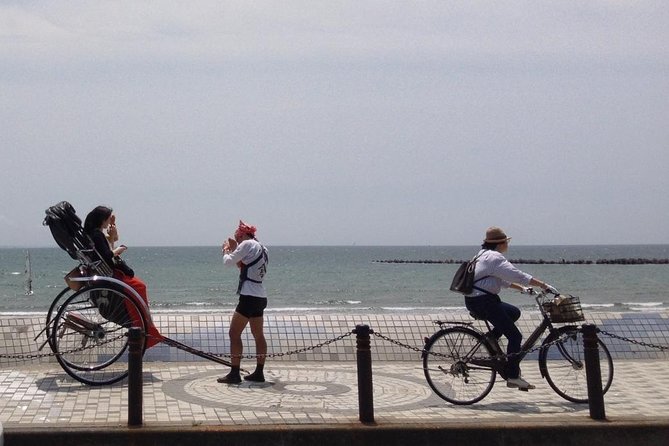
The tour runs from 30 minutes to about 2 hours, depending on the option you choose. That range matters because it affects what you can absorb.
A shorter option usually means tighter time at each stop. You’ll spend less time strolling, and you’ll likely focus on the main sights: the core shrine areas, the most significant views, and the ritual moment you came for.
A longer option can give you more breathing room. You’ll still likely follow the same core highlights (Tsurugaoka Hachimangu and Zeniarai Benten), but you may get extra time for questions, slower viewing, or additional route segments.
One hint from feedback is that routes can include a bamboo forest segment. That’s not guaranteed based on the fixed stops alone, but it’s something your guide may incorporate depending on the route and duration option. If bamboo is on your wish list, it’s worth asking when you book or when you confirm your time.
Price and Value: What $43.04 Buys You
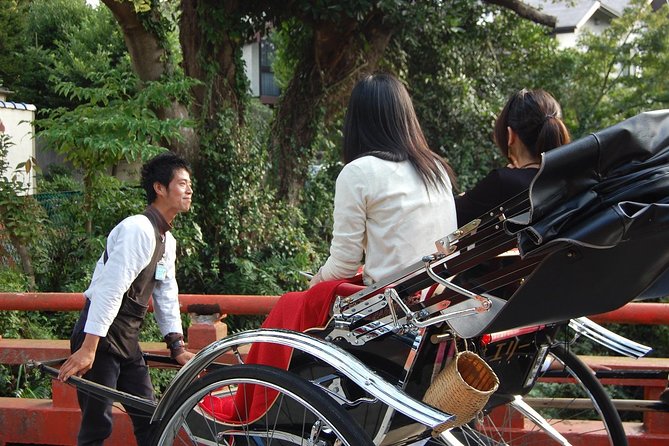
At $43.04 per person, this tour isn’t the cheapest way to “get around,” but it can be strong value if you want two things: comfort and interpretation.
Here’s what’s included:
- Local driver/guide
- Rickshaw ride
Here’s what typically isn’t:
- Food and drinks, unless specified
- Hotel pickup and drop-off
- Admission ticket for Tsurugaoka Hachimangu
- (Zeniarai Benten admission is free)
So you’re paying mostly for guided time plus the rickshaw experience itself. If you were to self-tour, you’d be doing more walking between spots and relying on your own research to understand what you’re seeing. This tour reduces that friction. You also trade planning stress for a simple itinerary with a set pace.
Demand is another value clue. This activity is commonly booked about 54 days in advance on average, which suggests a lot of people want specific time slots. Booking earlier helps you lock in the option that matches your preferred pace.
Rickshaw Reality Check: Fit, Comfort, and Seating Rules
Rickshaws can fit two adults, but it’s not a wide car. Each rickshaw is 29.1 inches (74 cm) wide, and the guidance notes that it can be more comfortable to book one rickshaw per person if you’re larger in size.
Also, capacity rules are specific:
- Max of 2 adults per rickshaw
- Up to 2 children age 5 and under can ride, but they must sit on an adult’s lap
If you’re traveling with kids, the lap rule is crucial for planning. It’s not just about whether your child can sit; it’s about whether it will feel safe and comfortable for everyone.
Comfort tip: if you’re at all unsure about fit, I’d rather you plan for the extra rickshaw and relax than try to “make it work” and end up tense for the whole ride. The ride is part of the point.
There’s also a safety/eligibility note: expecting mothers in their first 16 weeks are not permitted to ride. If that applies to your group, you’ll want to adjust plans.
Language, Guides, and Getting What You Want
Your driver/guide is local, and the experience is described as staffed by people with rich knowledge of Kamakura. They’ll help you see interesting things you might not find in guidebooks or on websites, and they’ll do it in a way that fits the short format.
Language can vary: the tour may be operated by a multi-lingual driver, depending on availability. The practical move is to ask for a driver who speaks your language at the departure point when you’re there.
Because the tour is private, you can also use that time efficiently. If you want clarification on what a shrine term means, or why something is arranged a certain way, ask early. You’ll get more out of the ride if you treat the guide like a resource instead of just a driver.
What a Perfect Day Around This Tour Looks Like
I like this tour when you want structure but still want flexibility. Kamakura has lots to do, so a rickshaw tour can serve as your anchor moment: you hit the key religious sites, get context, and avoid turning your whole day into a long walk-fest.
A simple flow idea:
- Do the rickshaw first (or mid-morning) so you start the day with stories you can carry into later wandering.
- If your tour ends somewhere you can connect easily, use that as your jump-off point to explore nearby areas on foot.
If you’re planning a full day, consider the admissions: you’ll likely need to pay for Tsurugaoka Hachimangu since it’s not included, while Zeniarai Benten is free. That affects how smooth your timing feels as you hop from stop to stop.
Also, because your selected starting time isn’t automatically guaranteed, confirm what you’re sent by email. The time is confirmed within 24 hours after booking, so keep an eye on your inbox.
Should You Book the Kamakura Rickshaw Tour?
Book it if you want:
- Comfort that’s faster than walking but not exhausting
- A guide who helps you understand what you’re seeing at Tsurugaoka Hachimangu and Zeniarai Benten
- A short plan (even 30 minutes) that still feels like you got value
Consider skipping or switching options if:
- You’re expecting a long, totally unhurried walk-through of every detail at each shrine
- Your group needs extra seating comfort and you’d rather not book additional rickshaws
- You’re traveling with someone ineligible to ride (first 16 weeks of pregnancy)
My bottom line: this is a smart choice for Kamakura newcomers, couples, and small families who want a scenic, guided highlight route without spending the whole day buffering between train stations and temple entrances.
If you book, go with one mindset: treat it like a story walk you can ride. Ask questions. Look at details. Then use your extra energy for the rest of Kamakura.
FAQ
What does the Kamakura rickshaw tour include?
It includes a local driver/guide and the rickshaw ride itself.
What is not included in the price?
Food and drinks aren’t included unless specified, and hotel pickup and drop-off are not included. Also, Tsurugaoka Hachimangu has an admission ticket that is not included.
How long is the tour?
It runs from about 30 minutes to around 2 hours, depending on the tour option you select.
Where does the tour start?
The tour starts at Ebisuya Kamakura Rickshaw, 〒248-0005 Kanagawa, Kamakura, Yukinoshita, 1-chōme−12, 雪ノ下1丁目12−3 フロント アベニュー 雪ノ下 1F.
What are the main stops?
You’ll visit Tsurugaoka Hachimangu Shrine, Zeniarai Benten Shrine, and also a Buddhist temple stop. The exact locations beyond those can vary by tour option and duration.
Is admission required for the shrines?
Tsurugaoka Hachimangu’s admission ticket is not included. Zeniarai Benten Shrine admission is free.
Is this a private tour?
Yes. Only your group participates.
Can I request a driver who speaks my language?
You can ask for a driver who speaks your language at the departure point, since operation may be by a multi-lingual driver depending on availability.
How many people can ride in one rickshaw?
A rickshaw can accommodate up to 2 adults. Up to 2 children age 5 and under can ride if they sit on an adult’s lap.
What is the cancellation policy?
You can cancel for a full refund up to 24 hours before the experience’s start time. If you cancel less than 24 hours before, the amount paid is not refunded.
More Tour Reviews in Kamakura
- Tokyo: Kamakura & Enoshima Day Trip including Temple Tickets
★ 4.5 · 1,375 reviews - From Tokyo: Kamakura & Enoshima 1-Day Bus Tour
★ 4.5 · 189 reviews - Kamakura Historical Walking Tour with the Great Buddha
★ 5.0 · 129 reviews - Kamakura Private Tour: Temples, Nature, and the Great Buddha
★ 5.0 · 121 reviews - Kamakura Walking Tour – The City of Shogun
★ 5.0 · 100 reviews
More Rickshaw Rides in Kamakura
- Kamakura Heritage Bike or Walk Tour with ex-Rickshaw guide
★ 5.0 · 11 reviews - Kamakura: Private History and Heritage Tour by Rickshaw
★ 4.9 · 7 reviews
More Kamakura and Enoshima Days
- Tokyo: Kamakura & Enoshima Day Trip including Temple Tickets
★ 4.5 · 1,375 reviews - From Tokyo: Kamakura & Enoshima 1-Day Bus Tour
★ 4.5 · 189 reviews - Kamakura Historical Walking Tour with the Great Buddha
★ 5.0 · 129 reviews - Kamakura Private Tour: Temples, Nature, and the Great Buddha
★ 5.0 · 121 reviews - Kamakura Walking Tour – The City of Shogun
★ 5.0 · 100 reviews
Latest Kamakura reviews off our desk
Kamakura Day Trips, compared.
 ★ 4.5Kamakura & Enoshima Day Trip including Temple TicketsFrom $581,375 reviews
 ★ 4.5Mt. Fuji, Kamakura, Big Buddha, & Lake Ashi Day TripFrom $49867 reviews
 ★ 4.5From Tokyo: Kamakura & Enoshima 1-Day Bus TourFrom $66189 reviews
 ★ 5.0Kamakura Historical Walking Tour with the Great BuddhaFrom $98129 reviews
 ★ 5.0Kamakura Private Tour: Temples, Nature, and the Great BuddhaFrom $98121 reviews
 ★ 5.0Kamakura Walking Tour – The City of ShogunFrom $35100 reviews
 ★ 4.9Sea of Mount Fuji, Hakone Ropeway, Ōwakudani, EnoshimaFrom $5084 reviews
 ★ 5.0Kamakura 8 hr Private Walking Tour with Licensed Guide from TokyoFrom $20180 reviews
Browse the lists this tour appears in