
Reviewed · MEIJI SHRINE TOURS
Personal prayer at Meiji Shrine!
Shinto can feel mysterious, but this prayer makes it orderly. You get a guided, personal Meiji Jingu Shinto session focused on wishes and the practices that support them. It’s private, timed to about 1 hour 30 minutes, and built for people who want the meaning without fumbling the rules.
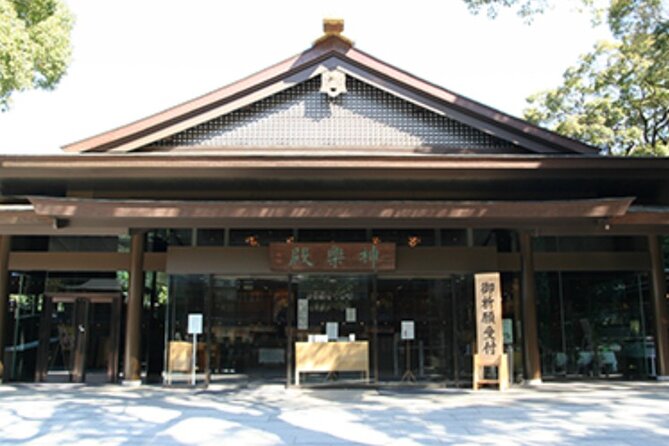
I especially love the hands-on coaching at the start: you’ll meet at the big torii area, get photo-friendly context, and learn how to move through the gates the right way. I also like that the experience doesn’t stay theoretical—you go through the purification and worship rhythm, then watch the gagaku performance and a miko dance in the Kaguraden setting.
One consideration: the ritual involves sitting straight, so this isn’t recommended if that position causes pain. Also, the key paperwork for your prayer intentions is in Japanese, though you’ll be assisted with translation.
In This Review
- Key things to know before you go
- Your personal Shinto prayer at Meiji Jingu: what you’re actually getting
- Start at the Big Torii and the second gate: photos, barrels, and the waka poem
- Walking to Kaguraden: torii gate etiquette you’ll actually use
- Purification fountain basics: hands, mouth, and the coin + bow-clap routine
- Kagura Hall wish form: your intentions, written clearly with help
- The ceremony: purification with drums, gagaku on ancient instruments, and miko dance
- What you take home: ofuda, shinsen souvenirs, and omiki sake
- Price and value: $98 plus the 5,000 yen prayer fee
- Timing, weather, and the meeting point reality check
- Who should book—and who should skip
- Should you book this personal prayer tour?
- FAQ
- How long is the tour?
- Where do I meet the guide?
- Is the tour price enough for the prayer?
- What happens during the purification at the shrine?
- Do I get an amulet or prayer keepsake?
- What performances will I see?
- Is the application form for the prayer in English?
- Are photos allowed everywhere?
- Can I participate if I have trouble sitting straight?
Key things to know before you go
- Meeting at the torii matters: you’re directed to the second torii gate to start the walk and photo stops.
- You’ll be coached on etiquette: especially how to approach and pass through torii gates without doing the rituals wrong.
- Purification has a set routine: hands and mouth cleansing, then coin offering with the bow, clap, bow pattern.
- Your wishes get turned into the prayer: you’ll write intentions and submit them with the offering fee.
- You’ll see UNESCO-listed gagaku: ancient court music performed alongside miko dance.
- Plan for the 5,000 yen prayer fee: it’s not included in the tour price, and it’s part of how the prayer is completed.
Your personal Shinto prayer at Meiji Jingu: what you’re actually getting
This tour is designed to solve two problems at once. First, Meiji Jingu is iconic and highly photogenic—but the Shinto steps can be confusing if you don’t already know what you’re looking at. Second, people often want a personal prayer, not just a quick look around.
You’ll get guided support through the whole flow: start with the shrine’s symbolic gateways, move into the approach and worship etiquette, then arrive at the Kaguraden area for your own wish-based prayer. It’s structured to give you peace of mind: you’re not guessing what comes next.
The experience also brings in performance and ritual elements that aren’t just background noise. You’ll watch priests purify the space, hear gagaku on ancient instruments and flutes, and see a miko dance. Then you take home what you prayed for in the form of an ofuda—plus additional sacred offerings and a small cup of sacred sake.
More quiet hours at Meiji Shrine
- Tokyo: Meiji Shrine, Asakusa, Skytree Bus Tour and Cruise
★ 4.7 · 1,986 reviews - Tokyo Panoramic 1 Day: Meiji Shrine, Asakusa, Odaiba and SKYTREE®
★ 4.5 · 1,222 reviews - Tokyo: Meiji Shrine Walking Tour — Shinto & Imperial System
★ 4.9 · 266 reviews - Tokyo: Meiji Jingu Shrine and Shinto Culture Walking Tour
★ 5.0 · 245 reviews
Start at the Big Torii and the second gate: photos, barrels, and the waka poem
You begin at the Big Torii meeting point in Shibuya (Big Torii, 1-1 Yoyogikamizonochō). From there, the key start moment is meeting under the second torii gate. This is where the guide gives you the first layer of meaning—fast.
What I like here is how practical it is. You’re pointed to specific visual details worth your attention: the torii’s unique features, and nearby sake barrel and wine barrel displays. You’ll also be directed to the waka poem prominently shown at the front. Even if you can’t read the script, having someone point out what to look for helps you stop treating it like a generic landmark and start treating it like a shrine.
There’s also built-in time for photos at this stop. Don’t be shy. If you want a clean shot of torii architecture or the poem placement, this is the easiest moment, because you’re not yet juggling ceremony timing or photo restrictions inside the deeper areas.
Walking to Kaguraden: torii gate etiquette you’ll actually use
After the second torii gate, you walk to the third torii gate. This section is where the tour becomes more than sightseeing. The guide teaches you the proper etiquette for walking along the approach and passing through torii gates.
This matters more than it sounds. Many visitors accidentally do things in a way that can look careless in a shrine space. The tour’s whole point is to help you avoid that by giving you the right behavior step-by-step—so you can focus on your intention instead of your confusion.
You’ll also learn about waka poems and buildings you encounter along the way. If you like photographing details, this is a good stretch to do it. You’ll be encouraged to take photos at locations you pass, and the guide is there to help you get it right without getting in the way of worshippers.
Timing for this walk-and-etiquette portion is about 15 minutes. It’s long enough to learn, short enough that you won’t feel rushed.
Purification fountain basics: hands, mouth, and the coin + bow-clap routine
Before you go into the main shrine worship area, you stop at the purification fountain. This is the moment where Shinto stops being symbolic and becomes physical.
You’ll cleanse your hands and mouth before proceeding. Then comes the common worship method used by the general public. The guide walks you through the sequence: you’ll offer a coin, then perform two bows, two claps, and one final bow. It’s rhythmic, clear, and easy to follow once you’re guided through it.
I like that the tour doesn’t frame this as a performance for tourists. It’s presented as a normal worship routine. That perspective helps you show respect even if you’re praying for very personal things like family safety, health, marriage, academic success, or safe travel.
One practical note: there are areas where photography isn’t allowed. The guide will direct you on where to stop shooting. In other words, you’re not left guessing with a camera in your hand.
This segment is about 10 minutes, and it’s one of the most valuable parts because it teaches the “how” you can remember for any future shrine visit in Japan.
Kagura Hall wish form: your intentions, written clearly with help
Next, you move into the Kagura Hall area where you receive individual blessings. This part is where your prayer becomes official.
You’ll fill out an application form at the entrance. The form asks for your prayer intentions—examples include world peace, household safety, travel safety, recovery from illness, business success, finding a good match, safe childbirth, and academic achievement. You’ll also provide your address and name.
The offering fee starts from 5,000 yen for personal prayer, and you submit the form along with that fee to the shrine priest to complete the process.
Here’s the key practical detail: the forms are available only in Japanese. That’s exactly why translation support is part of what the tour includes. Even if you can’t read Japanese, you’re not expected to figure it out alone. You’ll be assisted so everything is handled smoothly.
This stop is about 20 minutes. The time is there for you to write clearly, submit properly, and settle into the mindset of prayer before the ceremony starts.
- Tokyo: Shinjuku Food Tour (13 Dishes at 4 Local Eateries)★ 5.0 · 6,603 reviews
- Tokyo Mt Fuji 5th St & Hakone Cruise Bus Tour w/Bullet Train★ 4.4 · 5,024 reviews
- Flagship 2-Hours Official Street Go-Kart Tour – Tokyo Bay Shop★ 5.0 · 4,974 reviews
- From Tokyo: Mount Fuji Full-Day Sightseeing Trip★ 4.5 · 4,970 reviews
- Tokyo: Hop-On Hop-Off Sightseeing Bus Ticket★ 3.9 · 4,207 reviews
The ceremony: purification with drums, gagaku on ancient instruments, and miko dance
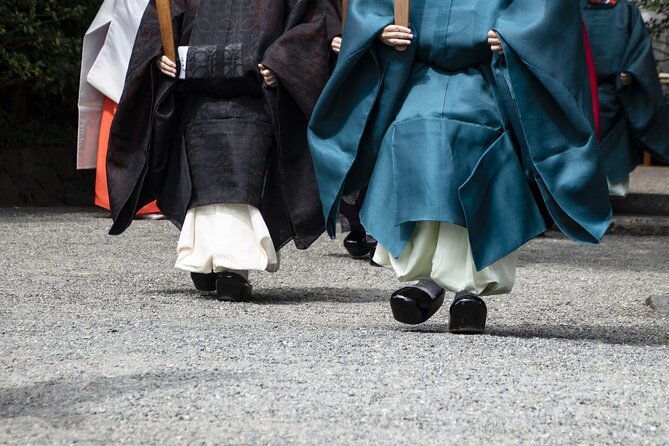
Now you get inside the altar space in the Kagura Hall for the ceremony. You’ll hear a drum resonate while shrine priests, dressed in traditional Japanese attire, perform a purification ritual using sacred tools. The goal is cleansing—both for the space and for your mindset.
After that purification, traditional court music known as gagaku is performed. It uses ancient instruments and flutes, and it’s designated as a UNESCO Intangible Cultural Heritage. In plain terms: you’re not just watching a nice performance. You’re experiencing a ceremonial tradition that’s meant to carry meaning alongside the ritual.
You’ll also see a dance by shrine maidens, called miko. The guide helps you understand what’s happening and how it connects to the prayer atmosphere.
This ceremony portion runs about 20 minutes. It’s the heart of the tour, and it’s also where the tour earns its value—because the guide ensures you’re present for the right moments, not just standing around wondering what to do next.
What you take home: ofuda, shinsen souvenirs, and omiki sake
After the ceremony concludes, the ritual is completed through sacred offerings and a drink of sacred sake.
The tour explains two components:
Shinsen refers to offerings presented to the deities during the ceremony. You receive these as a souvenir. The tour notes these offerings are often in the form of nori (seaweed), meant to be enjoyed at home.
Omiki is sacred sake offered to the deities. You get a portion shared with participants. At the exit, a shrine maiden pours the sake for you to drink on the spot, and you receive a small cup.
You’ll also receive an ofuda (an amulet filled with your wishes along with the power of the day’s prayer). This is the item people usually think of when they want a personal Shinto experience: something tangible that represents what you asked for.
If you’re wondering whether this becomes “just a souvenir run,” it doesn’t have to. The value is that these items are connected to your specific intentions, submitted in the prayer form earlier in the process.
Price and value: $98 plus the 5,000 yen prayer fee
The tour costs $98 per person. That price covers the guide experience and includes translation support for the information and the application form. The big thing to understand is that the actual prayer fee is separate.
You should plan for the 5,000 yen personal prayer offering fee (starting from 5,000 yen). That’s not included, and it’s part of how your wish prayer is processed with the shrine priest.
From a value perspective, the math is simple:
- If you’re even a little unsure about torii etiquette, purification steps, or what to write for a wish form, the translation + coaching can save you time and reduce the stress of getting it wrong.
- If you already know the Shinto routine and can read the Japanese form, you might not need the guided translation. But most people don’t come in with that confidence.
Think of the $98 as paying for clarity and confidence—so you can participate respectfully without turning the visit into a frantic guessing game.
Timing, weather, and the meeting point reality check
This is roughly 1 hour 30 minutes, and it uses a mobile ticket. Confirmation happens at booking. It’s near public transportation, which helps on a day when Tokyo travel can be a little chaotic.
Also, plan ahead. The experience is commonly booked about 65 days in advance on average, so don’t wait until the last minute if your dates matter.
Weather matters, too. The experience requires good weather, and if it’s canceled for poor weather, you’ll be offered a different date or a full refund.
Finally, meeting location matters. You start at the Big Torii area and then begin under the second torii gate. If you arrive late, you may miss the early explanation that sets the tone for the whole prayer flow.
Who should book—and who should skip
This tour is private, so only your group participates. If you prefer quiet learning without crowds, that’s a big plus.
It’s a great fit if:
- You want a personal prayer experience and don’t want to guess the process.
- You like cultural performances and want to understand what you’re seeing while it’s happening.
- You appreciate step-by-step etiquette support (especially for torii approach and worship steps).
It’s not a great fit if:
- You have pain sitting straight. The tour notes it’s not recommended for that.
- You dislike ceremonies and prefer free-form wandering. This is guided and ritual-driven, by design.
Should you book this personal prayer tour?
I’d book it if your goal is to participate in Shinto in a way that feels respectful and understandable, not just to tick a shrine off your list. The biggest value is the combination of etiquette coaching, the guided purification and worship routine, and the fact that the gagaku and miko dance are tied to a personal prayer, not random add-ons.
Skip it if you’re confident doing the rituals on your own and you’d rather spend your time freely walking Meiji Jingu at your own pace. But if you want peace of mind—and someone to help you get the steps right—this tour is set up for exactly that.
FAQ
How long is the tour?
It runs about 1 hour 30 minutes (approx.), with multiple short stops during the walk, purification, and ceremony.
Where do I meet the guide?
You meet at the Big Torii meeting point in Shibuya, then you’ll begin under the second torii gate.
Is the tour price enough for the prayer?
The $98 price includes translation support, but the personal prayer fee is not included. The offering fee starts from 5,000 yen.
What happens during the purification at the shrine?
You cleanse your hands and mouth at the purification fountain, then you follow the common worship routine: offering a coin and performing two bows, two claps, and one final bow.
Do I get an amulet or prayer keepsake?
Yes. After the prayers are completed, you receive an ofuda filled with your wishes along with the power of the day’s prayer.
What performances will I see?
You’ll see gagaku (ancient court music on traditional instruments and flutes) and a miko dance. Gagaku is designated as a UNESCO Intangible Cultural Heritage.
Is the application form for the prayer in English?
No. The form is available only in Japanese, but you’ll receive thorough assistance to complete it and submit it properly.
Are photos allowed everywhere?
There are areas where photography is not allowed. The guide will show you where you can and can’t take photos.
Can I participate if I have trouble sitting straight?
The experience is not recommended if you have pain in sitting straight.
More Tour Reviews in Tokyo
- Mt Fuji and Hakone 1-Day Bus Tour Return by Bullet Train
★ 5.0 · 26,383 reviews - 1-Day Tokyo Bus Tour
★ 5.0 · 14,250 reviews - Tokyo: teamLab Planets TOKYO Digital Art Museum Entry Ticket
★ 4.6 · 9,779 reviews - Mt Fuji & Hakone Cruise, Drum Show Bullet Train 1 Day from Tokyo
★ 4.0 · 7,413 reviews - Tokyo: Shinjuku Food Tour (13 Dishes at 4 Local Eateries)
★ 5.0 · 6,603 reviews
More Meiji Shrine Hours, Rated
- Tokyo: Meiji Shrine, Asakusa, Skytree Bus Tour and Cruise
★ 4.7 · 1,986 reviews - Tokyo Panoramic 1 Day: Meiji Shrine, Asakusa, Odaiba and SKYTREE®
★ 4.5 · 1,222 reviews - Tokyo: Meiji Shrine Walking Tour — Shinto & Imperial System
★ 4.9 · 266 reviews - Tokyo: Meiji Jingu Shrine and Shinto Culture Walking Tour
★ 5.0 · 245 reviews - Tokyo: Meiji Shrine and Shinto Culture Walking Tour
★ 5.0 · 225 reviews
Latest Tokyo reviews off our desk






Meiji Shrine Tours, compared.
 ★ 4.7Meiji Shrine, Asakusa, Skytree Bus Tour and CruiseFrom $1221,986 reviews
 ★ 4.5Tokyo Panoramic 1 Day: Meiji Shrine, Asakusa, Odaiba and SKYTREE®From $851,222 reviews
 ★ 4.9Meiji Shrine Walking Tour — Shinto & Imperial SystemFrom $23266 reviews
 ★ 5.0Meiji Jingu Shrine and Shinto Culture Walking TourFrom $19245 reviews
 ★ 5.0Meiji Shrine and Shinto Culture Walking TourFrom $18225 reviews
 ★ 5.0Meiji Shrine Walking Tour — Shintoism & Imperial SystemFrom $21209 reviews
 ★ 5.0Tokyo Morning Tour: Asakusa, Meiji Shrine and Tsukiji Fish MarketFrom $157128 reviews
 ★ 5.0Tokyo Morning Tour : Meiji Shrine, Asakusa and Fish MarketFrom $72102 reviews
Browse the lists this tour appears in