

Reviewed · KAMAKURA DAY TRIPS
Private Full-Day Kamakura-Enoshima Tour with Bilingual Driver
Kamakura and Enoshima are an easy day trip. The twist here is doing it by private car with a bilingual driver, so you spend less energy routing trains and more time actually seeing. I love how the day strings together big-name icons like the Great Buddha of Kamakura and the Enoshima sights without making you play transportation Tetris.
Second, I like that you get real flexibility at key stops. Drivers like Mukarram (as some guests have shared) will often let you set your own pace—useful when you’re lingering over gardens or taking photos. One thing to consider: this is a long, packed day, and some of the temple areas involve stairs and walking.
If you want a smooth, high-value day in Kanagawa—especially if you’d rather not study schedules—this style of tour makes a lot of sense.
In This Review
- Key reasons this tour works so well
- The value of a private Kamakura–Enoshima day (price, pace, and what you’re really buying)
- Getting out of Tokyo the easy way: pickup and how it changes your day
- Yokohama between temples: why the mix is a smart move
- Kotoku-in and the Great Buddha: what to expect and how to enjoy it
- Tsurugaoka Hachimangū: the shrine centerpiece of Kamakura
- Hasedera: gardens, Kannon statues, and the stairs factor
- Komachi Street (Komachi-dori): shopping with a cultural pulse
- Enoshima Benten Bridge and Enoshima Beach: sea air, shrine iconography, and views
- What the driver adds: language help and flexible pacing (and why it matters)
- How to plan your day: timing, tickets, and what to pack
- Who this tour is best for (and who might want a different style)
- Should you book this Private Full-Day Kamakura–Enoshima Tour?
- FAQ
- FAQ
- Is this tour private or shared?
- How many people can be in the group?
- What’s included in the price?
- What’s the duration of the tour?
- Where does the tour start?
- Are tickets for the Great Buddha included?
- Are there admissions for the other stops?
- Does the tour include stops in Yokohama?
- Is weather important for this experience?
- What is the cancellation policy?
- What kind of guide support do you get?
Key reasons this tour works so well
- Private, air-conditioned door-to-door transportation saves hours of planning
- A bilingual driver helps you move confidently and understand what you’re seeing
- Kamakura classics in one loop: Great Buddha, Tsurugaoka Hachimangū, Hasedera
- Enoshima adds seaside variety via the Benten Bridge and Enoshima Beach
- Time for Komachi-dori lets you browse food shops and souvenir streets without rushing
- Driver flexibility at stops can be a big quality-of-life upgrade
The value of a private Kamakura–Enoshima day (price, pace, and what you’re really buying)
At $448.10 per group (up to 6), you’re not paying per person like many ticketed tours. You’re essentially buying a full-day vehicle and bilingual driving/hosting time that gets you out of central Tokyo and into Kanagawa efficiently.
The big value isn’t just comfort. It’s time. Kamakura and Enoshima sit on the coast, and getting between them by train can be workable—but it’s also the kind of trip where a small delay turns into a late start, which then turns into rushed temple visits. With a private car, you can keep the day moving and spend your energy on what you came for: the sights.
The pace is about balance. Expect a schedule that hits multiple landmarks, not just one “deep and slow” experience. That means you should plan to walk, and you should wear comfortable shoes. If you’re the kind of traveler who likes to slow down mid-day—especially around shrines, gardens, and shopping streets—this tour usually supports that better than a fixed-group bus ride.
Also, admissions are only partially included. The Great Buddha has a ¥300 fee per person, and other stops may involve their own ticket requirements depending on what you choose to do on-site. So it’s smart to bring some cash or a payment method you’re comfortable using for small fees.
Coast-and-Buddha days near Kamakura, rated
- Tokyo: Mt. Fuji, Kamakura, Big Buddha, & Lake Ashi Day Trip
★ 4.5 · 867 reviews - Tokyo:Sea of Mount Fuji, Hakone Ropeway, Ōwakudani, Enoshima
★ 4.9 · 84 reviews - Kamakura 8 hr Private Walking Tour with Licensed Guide from Tokyo
★ 5.0 · 80 reviews - Tokyo: Kamakura & Enoshima Day Tour with Pickup & Train Ride
★ 4.1 · 61 reviews
Getting out of Tokyo the easy way: pickup and how it changes your day
This tour includes pickup from your address in Tokyo and round-trip transfers. That detail matters more than it sounds.
When you’re traveling by public transport, you spend time:
- walking to stations,
- aligning connections,
- and then backtracking if the timing doesn’t work.
With pickup, you start already in motion. You also reduce the “where exactly is the meeting point?” stress that can hit right at the start of your day. Add a private, air-conditioned vehicle and bottled water, and the morning feels less like logistics and more like travel.
A small practical tip: if you have even one tight connection later in your trip (dinner reservations, a show, a train to another city), a door-to-door tour helps you keep the day predictable. You won’t be fully insulated from traffic, but you’ll avoid the compounding effect of missed train links.
Yokohama between temples: why the mix is a smart move
Even though the heart of the day is Kamakura and Enoshima, you also get a chance to visit Yokohama. The highlight described includes walking through one of the world’s largest Chinatown districts.
That mix is a big reason this day tour feels more complete than the typical “temples only” outing. You get:
- Japanese historical and religious sites in Kamakura,
- then a different atmosphere in Yokohama with food shops, street energy, and architecture that changes the visual rhythm.
It’s also a nice way to break up the religious sightseeing with something that feels more everyday and social. You’ll likely find it easier to eat, snack, and shop when the day includes a lively district rather than only sacred spaces.
Kotoku-in and the Great Buddha: what to expect and how to enjoy it
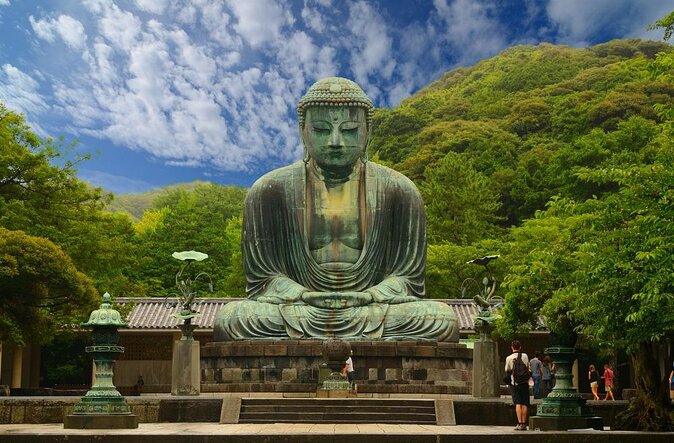
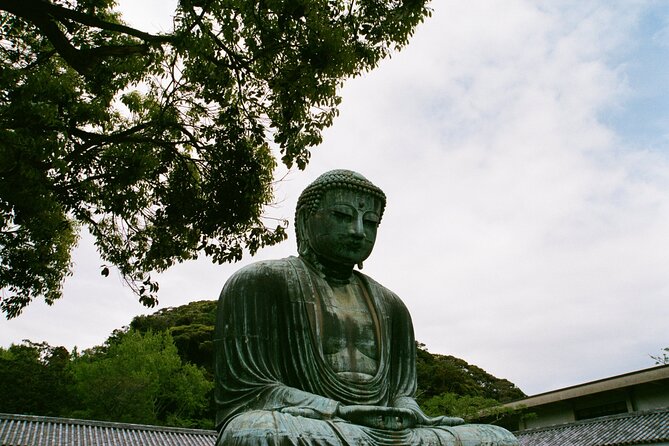
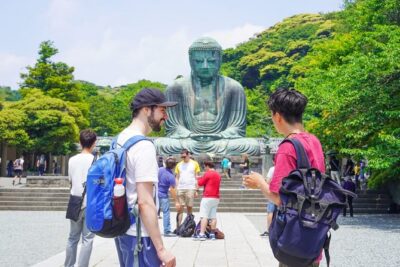
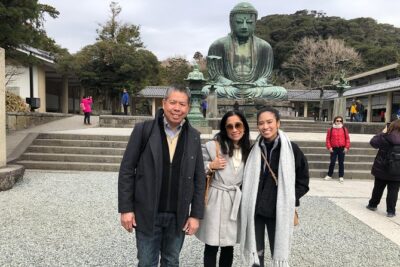
Your first major stop is Kotoku-in, famous for the Great Buddha of Kamakura—a monumental outdoor bronze statue of Amitābha. It’s a National Treasure, which tells you this isn’t just a “pretty landmark.” It’s one of Japan’s defining cultural icons.
Here’s what you should plan for:
- Being outside means you’ll feel the weather more. Bring a light layer or sun protection, depending on the season.
- Since it’s a major draw, there can be a lot of visitors. The advantage of a private tour is that you’re not trapped in a big group flow—you can linger.
Admission for the Great Buddha is not included, and it’s listed as ¥300 per person. Budget for it, and you won’t get surprised on arrival.
How to make this stop more satisfying: don’t treat it like a quick photo moment. If you take a minute to look at the scale and the setting—how the statue sits in its outdoor space—you’ll appreciate why this is such a repeated icon in travel photos for a reason. It’s one of those sights that looks impressive in pictures, but better when you’re actually standing close enough to notice details.
Tsurugaoka Hachimangū: the shrine centerpiece of Kamakura
Next comes Tsurugaoka Hachimangū, described as the most important Shinto shrine in Kamakura. It sits at the geographical and cultural center of the city, so it works like a hub for understanding Kamakura’s identity.
You’ll spend about two hours here. That’s a good length of time for a shrine visit because it gives you room to:
- walk the approach,
- slow down if you want photos,
- and take in the shrine’s setting rather than just passing through.
Because this is a major shrine, plan to see people moving in both directions—some there for ceremonies and others for sightseeing. If you’re someone who likes calm moments, you can make it easier by timing your photos thoughtfully rather than shooting everything as fast as possible.
Also, admission tickets aren’t listed as included for this stop, so treat it as a “tickets may apply on-site” situation. If you’re traveling with a tight budget, you can plan to focus on what’s open and free to access, then decide there.
Readers also shortlisted these Tokyo bookings:
- Private Tour to Mt. Fuji and Hakone (Fully Licenced Operator)★ 5.0 · 1,910 reviews
- Tokyo Customized Private Tour (Must See Places in 1 Day)★ 5.0 · 1,499 reviews
- Mount Fuji Full-Day Private Tour from Tokyo (Customizable)★ 4.9 · 1,470 reviews
- Private Custom Tour: Tokyo in a Day★ 5.0 · 1,432 reviews
- Tokyo 4hr Private Tour with Government-Licensed Guide★ 5.0 · 1,394 reviews
Hasedera: gardens, Kannon statues, and the stairs factor
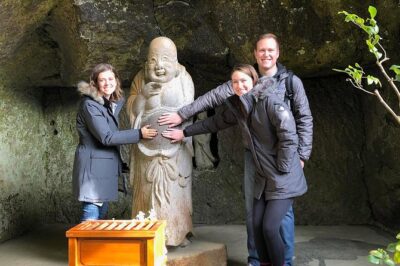
Hasedera is one of those stops that has a strong “you remember it later” effect. The story here is that Kannon statues were carved from a sacred tree around 1300 years ago, and one of the statues is enshrined at Hasedera and is commonly called the Eleven-headed Kannon.
You’ll have around one hour. That sounds short until you’re inside the experience—because Hasedera tends to reward careful wandering. It’s the kind of place where the layout and the views can make you slow down without meaning to.
A practical heads-up: some guests have specifically mentioned stairs in their experience. So if you’re not great with uphill walking or steps, bring a strategy:
- take breaks,
- go steady,
- and don’t force a sprint-through of every viewpoint.
How to get more out of the hour: don’t only chase the most photographed statue or angle. Look for garden moments and stillness. Even in busy periods, temple grounds can feel quieter than the street scenes outside.
Admission tickets aren’t included for Hasedera. Still, the combination of history, religious art, and the temple’s atmosphere tends to feel worth it if you enjoy this style of sightseeing.
Komachi Street (Komachi-dori): shopping with a cultural pulse
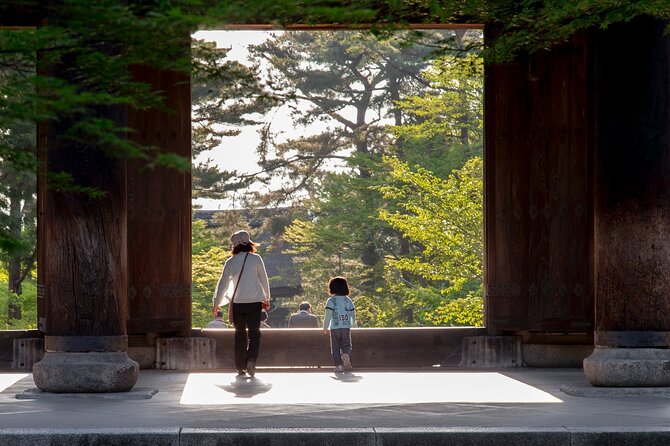
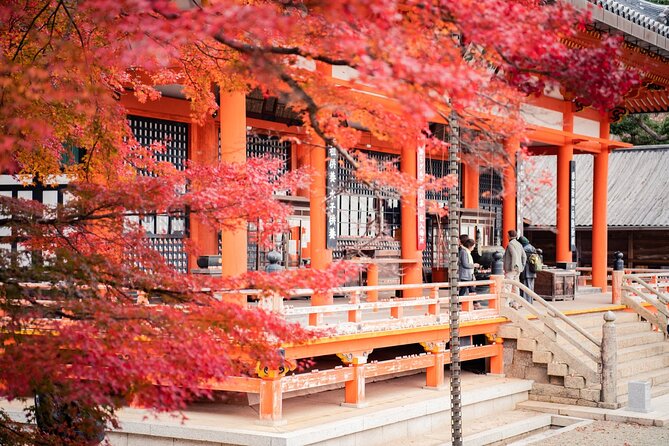
After the temples, you head to Komachi-dori and Komachi Street Honten. This is the classic Kamakura shopping strip—often crowded, and known for food shops and bargains. It’s the kind of place that’s easy to rush, but it’s more fun if you use it as a reset.
You’ll have about 45 minutes and free admission. Use that time for:
- a snack or light meal if you need it,
- browsing small souvenirs,
- and watching the local “daytrip” energy from a comfortable pace.
Because it’s frequently busy, keep your priorities simple. You don’t need to visit every single shop in a 45-minute window. Pick one or two streetside goals—like a snack you’ve been craving or a souvenir style you actually want—then enjoy the walking without treating it like a checklist.
If you’re traveling with kids or friends who get restless in temples, Komachi-dori often makes the day feel more balanced.
Enoshima Benten Bridge and Enoshima Beach: sea air, shrine iconography, and views
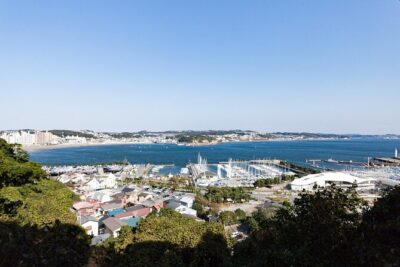
Then you shift to Enoshima. First stop is the Enoshima Benten Bridge, linking Enoshima Island to Katase Town. Since the bridge is the only way to go over, it works like a natural “gateway” moment. You’ll cross it and get that immediate coastal sense that the day is changing tone.
You’ll have about 30 minutes at the bridge area, with free admission. Even if you’re not a big fan of scenic walking, bridges here can be photogenic and useful for orienting yourself before you step into the island area.
Next is Enoshima Beach for about one hour. The tour description frames Enoshima as a small offshore island with a circumference of about 4 km, sitting near the mouth of the Katase River.
Here’s a detail worth knowing: Enoshima’s appeal isn’t only the water. It’s that it can offer unexpected views. In the experience shared by one guest, they mentioned a possible view of the top of Mount Fuji from Enoshima. That means if you see a clear moment in the sky, try to position yourself for a longer look rather than moving on immediately.
You should also treat Enoshima as a place to slow down. After shrine steps and temple grounds, this is a chance to reset your legs and let the day’s energy settle into “vacation mode.”
What the driver adds: language help and flexible pacing (and why it matters)
This is a private tour with a bilingual driver, and that’s more than a comfort perk. Language makes a difference in small, practical ways:
- You can confirm timing and ticket questions without awkward guesswork.
- You can ask what you’re seeing and why it matters.
- You can adjust your schedule when you want to linger.
In one shared experience, the driver named Mukarram was obliging and let the group take their own time seeing what they wanted. That flexibility is exactly what turns a good itinerary into a satisfying day.
Another shared experience mentions Abdul as the driver and guide, with friendly personality and knowledge that helped make the day work well. When your guide understands the story of the Great Buddha, the shrine significance, and what’s worth focusing on at Hasedera, you’ll likely spend less time feeling like you’re “just sightseeing,” and more time feeling like you understand your stops.
Bottom line: with multiple stops, the driver becomes your time manager and your context provider. That’s why the day feels easier than a self-planned route.
How to plan your day: timing, tickets, and what to pack
This is an approximately 10-hour day. That’s a full day in every sense, even if the transfers are smooth.
Here’s how I’d plan to make it comfortable:
- Wear shoes you can walk in. Hasedera includes stairs, and Komachi-dori can involve steady walking through crowds.
- Bring a light layer. You’ll spend time outdoors at places like the Great Buddha and Enoshima bridge/shoreline.
- Bring payment for small admissions. The Great Buddha fee is specifically listed as ¥300 per person; other stops may require tickets not included.
- Plan for snacks. Komachi-dori is a natural place for a bite, and Enoshima can also work well for a casual break. The tour doesn’t list meals as included.
- Use your best-weather mindset. The experience notes it requires good weather. If weather is iffy, you’ll want your day to be flexible.
If you’re traveling in a group of up to six, this format is also easier to manage. You can move together without waiting for train schedules, and you can keep energy levels consistent across everyone.
Who this tour is best for (and who might want a different style)
This tour is a strong fit if you:
- want a private day without the stress of public transportation,
- like classic Kamakura landmarks plus Enoshima seaside time,
- value having someone help you understand what you’re seeing,
- and prefer a route that still gives you breathing room at stops.
It’s less ideal if you:
- want a super-slow “one temple at a time” day,
- dislike walking stairs,
- or hate crowds at popular shopping and shrine areas.
Also, if you’re the type who really enjoys building a route yourself and you love trains, you might save money DIY. But if you want to reduce friction and maximize time on-site, the private setup is the point.
Should you book this Private Full-Day Kamakura–Enoshima Tour?
Yes, I’d book it if you want a smooth, well-paced day that hits the headline sights with minimal transportation hassle. The private door-to-door pickup, the bilingual driver, and the mix of Kamakura history with Yokohama Chinatown and Enoshima coastal scenery make it feel like a complete Kanagawa sampler.
I’d think twice only if you’re very sensitive to long days or stairs, or if you’re traveling when weather is unpredictable. Otherwise, for families, friend groups, and anyone who wants a reliable itinerary without wasting time on logistics, it’s a strong choice.
FAQ
FAQ
Is this tour private or shared?
It’s a private tour/activity, so only your group participates.
How many people can be in the group?
The price is per group and the tour is for up to 6 people.
What’s included in the price?
The tour includes round-trip transportation from your address in Tokyo, a private air-conditioned vehicle, bottled water, and a mobile ticket.
What’s the duration of the tour?
It runs for about 10 hours.
Where does the tour start?
Pickup is offered from your address in Tokyo, and the tour includes round-trip transfers.
Are tickets for the Great Buddha included?
No. The Great Buddha of Kamakura has a listed admission fee of ¥300 per person, and it’s not included.
Are there admissions for the other stops?
For several stops, admission tickets are listed as not included. Some areas are noted as free, but it’s safest to plan for possible on-site tickets depending on what you choose to do.
Does the tour include stops in Yokohama?
Yes. The experience includes a stop in Yokohama, including walking in one of the world’s largest Chinatown districts.
Is weather important for this experience?
Yes. The experience requires good weather. If it’s canceled due to poor weather, you’ll be offered a different date or a full refund.
What is the cancellation policy?
You can cancel for a full refund up to 24 hours in advance of the experience’s start time.
What kind of guide support do you get?
The driver is bilingual, and the tour highlights help you handle the day’s sightseeing without relying on public transport.
More Tours in Tokyo
- Mt Fuji and Hakone 1-Day Bus Tour Return by Bullet Train
★ 5.0 · 26,383 reviews - 1-Day Tokyo Bus Tour
★ 5.0 · 14,250 reviews - Tokyo: Shinjuku Food Tour (13 Dishes at 4 Local Eateries)
★ 5.0 · 6,603 reviews - Tokyo Mt Fuji 5th St & Hakone Cruise Bus Tour w/Bullet Train
★ 4.4 · 5,024 reviews - Flagship 2-Hours Official Street Go-Kart Tour – Tokyo Bay Shop
★ 5.0 · 4,974 reviews
More Tour Reviews in Tokyo
- Mt Fuji and Hakone 1-Day Bus Tour Return by Bullet Train
★ 5.0 · 26,383 reviews - 1-Day Tokyo Bus Tour
★ 5.0 · 14,250 reviews - Tokyo: teamLab Planets TOKYO Digital Art Museum Entry Ticket
★ 4.6 · 9,779 reviews - Mt Fuji & Hakone Cruise, Drum Show Bullet Train 1 Day from Tokyo
★ 4.0 · 7,413 reviews - Tokyo: Shinjuku Food Tour (13 Dishes at 4 Local Eateries)
★ 5.0 · 6,603 reviews
More Kamakura and Enoshima Days
- Tokyo: Mt. Fuji, Kamakura, Big Buddha, & Lake Ashi Day Trip
★ 4.5 · 867 reviews - Tokyo:Sea of Mount Fuji, Hakone Ropeway, Ōwakudani, Enoshima
★ 4.9 · 84 reviews - Kamakura 8 hr Private Walking Tour with Licensed Guide from Tokyo
★ 5.0 · 80 reviews - Tokyo: Kamakura & Enoshima Day Tour with Pickup & Train Ride
★ 4.1 · 61 reviews - Kamakura Private & Customizable Tour – All-in-One Experience
★ 5.0 · 49 reviews
Latest Tokyo reviews off our desk






Kamakura Day Trips, compared.
 ★ 4.5Kamakura & Enoshima Day Trip including Temple TicketsFrom $581,375 reviews
 ★ 4.5Mt. Fuji, Kamakura, Big Buddha, & Lake Ashi Day TripFrom $49867 reviews
 ★ 4.5From Tokyo: Kamakura & Enoshima 1-Day Bus TourFrom $66189 reviews
 ★ 5.0Kamakura Historical Walking Tour with the Great BuddhaFrom $98129 reviews
 ★ 5.0Kamakura Private Tour: Temples, Nature, and the Great BuddhaFrom $98121 reviews
 ★ 5.0Kamakura Walking Tour – The City of ShogunFrom $35100 reviews
 ★ 4.9Sea of Mount Fuji, Hakone Ropeway, Ōwakudani, EnoshimaFrom $5084 reviews
 ★ 5.0Kamakura 8 hr Private Walking Tour with Licensed Guide from TokyoFrom $20180 reviews
Browse the lists this tour appears in