
Reviewed · KAMAKURA DAY TRIPS
Private Kamakura plus Yokohama Tour – English Speaking Driver
A day like this is easy to mess up. With a private vehicle and an English-speaking driver, you get smooth door-to-door transfers and a well-paced hit list—Hokoku-ji’s bamboo, the Great Buddha at Kotoku-in, Yokohama Chinatown, and Sankeien Garden. The one real catch: it’s not a full guided tour, so you’ll get less narration depth than with a dedicated guide.
If you want an efficient day with zero train transfers and minimal stress, this tour fits. You’ll spend time on the big-name Kamakura sights and then shift gears to Yokohama’s waterfront energy (plus optional Minatomirai if timing allows). The trade-off is that some sites have admission fees you’ll pay separately, and your experience depends a lot on how comfortable you are navigating on your own.
In This Review
- Key takeaways before you go
- From Tokyo to Kamakura: why the ride is part of the value
- Hokoku-ji Bamboo Temple: slow down before you hit the crowds
- Hase-dera’s Kannon statue: one big face, a lot of meaning
- Kotoku-in (Great Buddha): the iconic stop you’ll remember
- Tsurugaoka Hachimangu Shrine + Komachidori: culture meets street life
- Yokohama Chinatown: a different rhythm after temple time
- Sankeien Gardens: the calm reset you’ll be glad you kept
- Minatomirai if time permits: the fast waterfront finish
- English-speaking driver vs. real guide: what to expect
- Price and tickets: figuring out real value per person
- Getting the most out of the day: practical pacing advice
- Who this private Kamakura plus Yokohama tour suits best
- Should you book this tour?
- FAQ
- What’s the group size for this private tour?
- How long is the tour?
- What time does the tour start?
- Do I get pickup from my hotel in Tokyo?
- Is this a guided tour?
- Are admission tickets included?
- Is there a mobile ticket?
- Is the driver English speaking?
- Does it run in any weather?
- What’s the cancellation window?
Key takeaways before you go
- English-speaking driver + private car: You skip public-transport juggling and keep control of your day.
- Kamakura’s must-sees, in sensible order: Bamboo temple, Kannon temple, Great Buddha, then shrine and shopping streets.
- Yokohama variety in one trip: Chinatown for atmosphere, Sankeien Garden for a slower pace, and Minatomirai if there’s time.
- Customizable stops for your interests: Some drivers can adjust the plan for special needs if you ask clearly.
- Bring a plan for extra tickets: Several major temples/gardens are listed as admission not included.
- You get driving help, not a formal guide: If you want deep historical storytelling, you may need a guide added on request.
From Tokyo to Kamakura: why the ride is part of the value
This is a long day—about 10 hours including commuting—but that’s exactly why the private-vehicle format matters. The trip out of Tokyo involves real road navigation, and a careless drive can turn a beautiful day into a stressful one fast. The payoff with a good English-speaking driver is simple: you can focus on the sights, not the directions, not the transfers, not the timing.
I also like that the plan builds in a clear morning start at 8:00 am and then keeps moving through Kamakura before switching to Yokohama. That keeps your energy working with the daylight rather than against it.
Coast-and-Buddha days near Kamakura, rated
- Tokyo: Mt. Fuji, Kamakura, Big Buddha, & Lake Ashi Day Trip
★ 4.5 · 867 reviews - Tokyo:Sea of Mount Fuji, Hakone Ropeway, Ōwakudani, Enoshima
★ 4.9 · 84 reviews - Kamakura 8 hr Private Walking Tour with Licensed Guide from Tokyo
★ 5.0 · 80 reviews - Tokyo: Kamakura & Enoshima Day Tour with Pickup & Train Ride
★ 4.1 · 61 reviews
Hokoku-ji Bamboo Temple: slow down before you hit the crowds
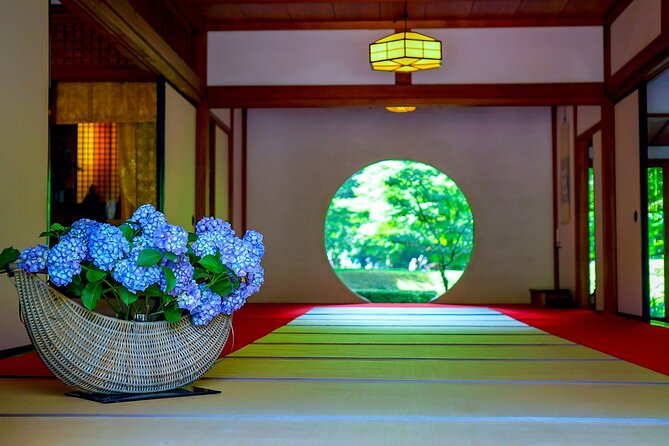
Stop one is Hōkoku-ji (the Bamboo Temple) for about 1 hour. This is a Kenchō-ji school Rinzai Zen temple, and it’s especially famous for its bamboo garden. That detail matters because it sets expectations. You’re not just ticking off a temple name—you’re stepping into a specific kind of calm.
The only drawback here is also simple: bamboo-garden sights tend to attract attention, and you can feel that in how tight your time windows can be. Still, one hour is enough to look around without feeling like you’re sprinting.
Tip: when you arrive, take a minute to orient yourself inside the grounds before you start photographing everything. It’s an easy way to avoid walking in circles when you’re excited.
Hase-dera’s Kannon statue: one big face, a lot of meaning
Next is Hase-dera Temple (Hase-kannon) for about 45 minutes. This stop is known for a massive wooden statue of Kannon. That’s the sort of detail that makes a temple visit feel more personal than generic sightseeing—because you’re going to stand there and actually see scale.
With a short time slot, you’ll want to be clear about what matters to you:
- Do you want time for photos?
- Or do you want time to stand and take it in?
Either way, 45 minutes is workable if you’re not trying to do everything at once. Admission isn’t included here, so expect to pay on-site.
Kotoku-in (Great Buddha): the iconic stop you’ll remember
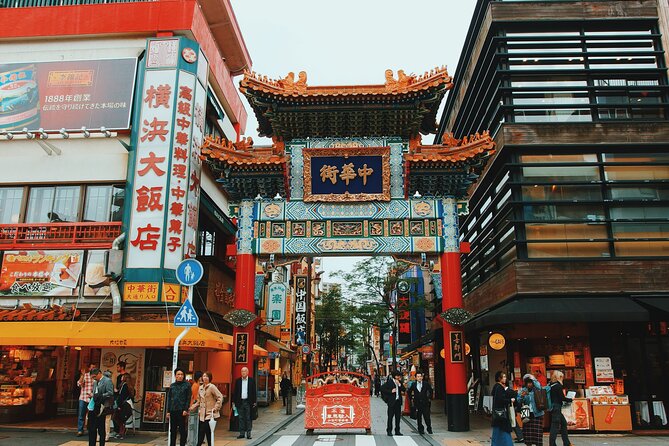
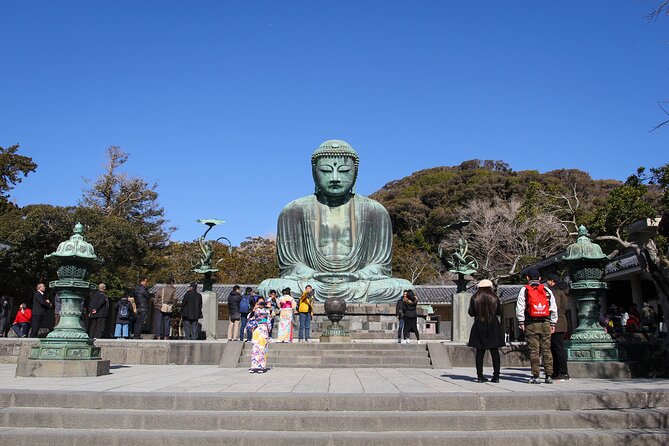
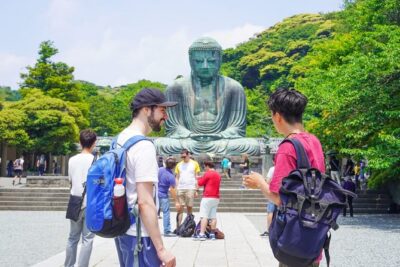
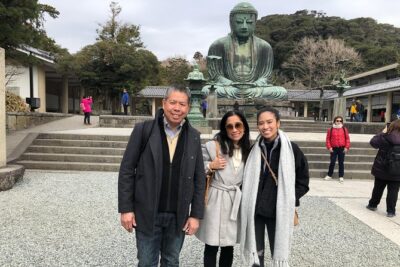
Then comes Kotoku-in, home to the Great Buddha of Kamakura, for about 30 minutes. Thirty minutes sounds short until you realize this stop’s strength is directness: there’s one focal point, and it’s unforgettable.
This is one of those places where time is less about studying and more about experiencing. I like that the schedule keeps it from swallowing the day, especially since you still have shrine grounds and then a shopping street right after.
Quick practical note: because it’s a “big icon” stop, it can draw groups. If you prefer quieter viewing, plan to spend your first moments taking in the main view, then slowly reposition for a less crowded look.
Tsurugaoka Hachimangu Shrine + Komachidori: culture meets street life
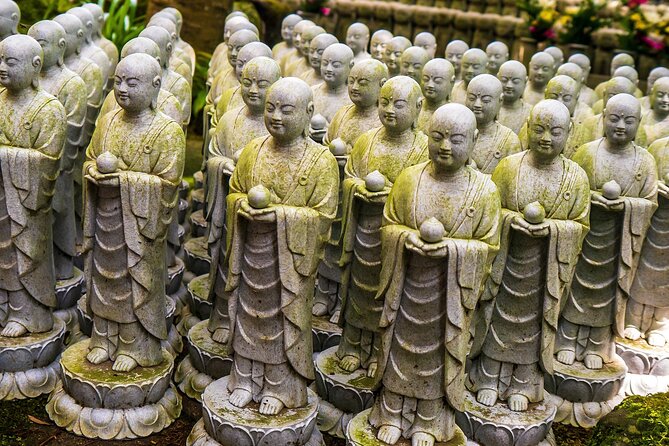
After the Buddha stop, you shift to Tsurugaoka Hachimangu Shrine for about 1 hour. This shrine is a cultural center for Kamakura and hosts major festivals, plus it has two museums. Two ponds also represent the Taira and Minamoto clans, giving the grounds a layered, historical feel even if you only have an hour.
One practical consideration: museums aren’t described as included or required in your time block, so don’t count on getting through everything inside. Use your time to enjoy the outdoor shrine atmosphere and then decide on the museum choice based on your interests.
Next is Kamakura Komachidori, about 1 hour 30 minutes. This is the main pedestrian walkway lined with apparel, gifts, and places to eat and snack. This is a good “breather” between religious sites and Yokohama’s urban energy.
If you like souvenirs, this is where you’ll actually have time to browse. If you don’t, use the stretch as a reset: grab a drink, check your photos, and keep your legs comfortable for the next transfer.
The harbour city next door, reviewed
- Narita Airport: One Way Private Transfer to Tokyo|Yokohama Hotels★ 4.5 · 69 reviews
- Tokyo/Yokohama: Mt. Fuji and Hakone Private Day Tour★ 5.0 · 64 reviews
- Tokyo: Private One-Way Transfers to/from Yokohama Port★ 4.5 · 50 reviews
- Private Car Tour to see Highlights of Kamakura, Enoshima, Yokohama from Tokyo★ 5.0 · 48 reviews
- Haneda Airport: One Way Private Transfer to Tokyo|Yokohama Hotels★ 4.0 · 28 reviews
Yokohama Chinatown: a different rhythm after temple time
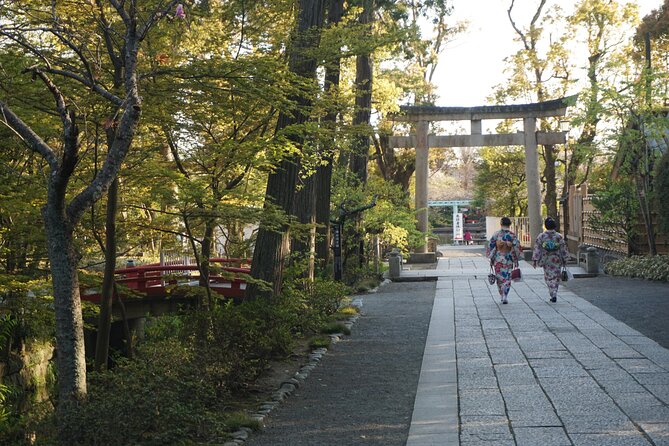
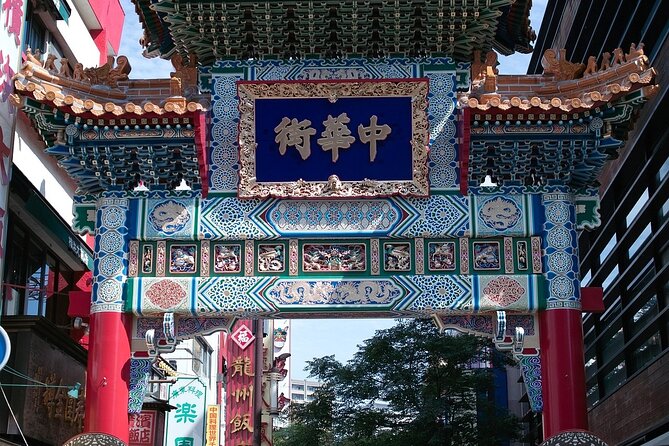
Now you head to Yokohama Chinatown for about 1 hour. It’s about 160 years old, and today the area’s population is mostly associated with people from Guangzhou, even though only a portion of residents are described as ethnically Chinese.
What you’ll feel here is tempo. Kamakura gives you temples and walking paths; Chinatown gives you dense streets and constant motion. One hour is a sweet spot: enough time to eat something, look around, and still not feel trapped in crowds.
Free time at Chinatown also gives your group flexibility—if you want noodles, snacks, or just a walk-through to people-watch, you can do it without the tour needing to steer you every minute.
Sankeien Gardens: the calm reset you’ll be glad you kept
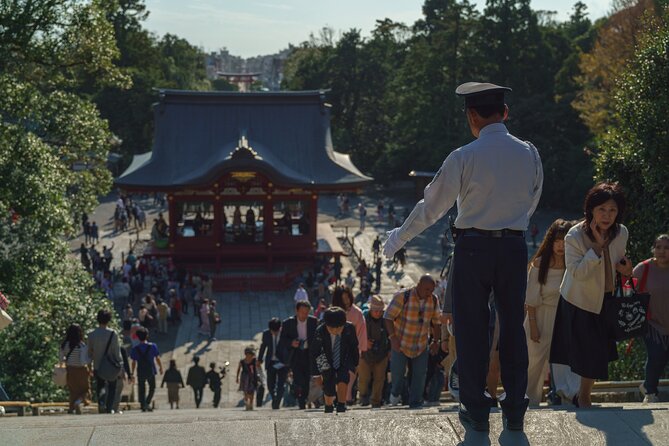
After Chinatown, you visit Sankeien Gardens for about 1 hour. Opened in 1906 and created by silk trader Tomitaro Hara (under the name Sankei Hara), it’s a traditional Japanese-style garden.
This is the stop that often makes the whole day feel balanced. You’ve been moving through major sights with clear “anchors,” and a garden works as a slower pace option—more breathing room, more looking slowly, less rushing.
Admission isn’t included, so plan for that extra ticket cost. Also, gardens reward patience. If you try to power through like it’s a museum hallway, you’ll miss why the place is worth your time.
Minatomirai if time permits: the fast waterfront finish
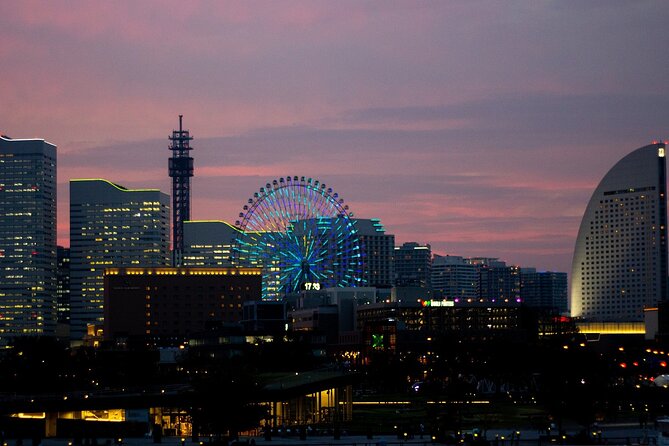
You’ll visit Minatomirai only if there’s time—around 30 minutes. This is Yokohama’s waterfront area with modern towers and the Landmark Tower and Plaza area, plus an observation deck.
Because it’s conditional, treat it like a bonus rather than a certainty. If you get it, you’ll enjoy a quick skyline vibe and some easy photo spots. If you don’t, your day still works because the rest of Yokohama is already covered by Chinatown and Sankeien.
English-speaking driver vs. real guide: what to expect
This tour is built around an English-speaking driver, not a formal guided tour. That matters for your expectations.
A driver can absolutely help you understand what you’re seeing, and you may get helpful pointers. Some drivers have even shared links ahead of each stop so you can know what’s coming. That kind of prep turns the day from random sightseeing into something that feels organized.
But if you want deep historical storytelling, or if you rely on a guide to explain the “why” behind every temple detail, you may feel the gap. The option to arrange a guide on request exists, but it costs extra—so you’ll want to decide early if you’re the type who reads every label or the type who prefers just experiencing and moving.
Price and tickets: figuring out real value per person
The tour costs $650 per group, up to 5 people. That means the value depends heavily on group size.
- If you book with a full group, your per-person cost becomes much easier to swallow.
- If you’re only one or two people, it’s still a good deal for door-to-door convenience, but you’re paying for the private car and driver.
Several stops are listed with admission not included, including major sites like Hōkoku-ji, Hase-dera, Kotoku-in, Tsurugaoka Hachimangu, and Sankeien Gardens. That doesn’t mean it’s overpriced—it just means your final total depends on what you choose to do inside and what tickets are required at each location.
One more value point: this itinerary reduces the stress of coordinating trains, transfers, and timing between two cities. In a day trip like this, that time-savings is often the difference between enjoying the trip and tolerating it.
Getting the most out of the day: practical pacing advice
This schedule is packed but not impossible. The biggest success factor is pacing: don’t let any one stop balloon and steal time from the rest.
Here’s how I’d run it:
- Start with a calm, early arrival mindset for the morning temple stops.
- At Komachidori and Chinatown, decide quickly if you’re browsing or eating—then commit.
- At Sankeien Gardens, slow down on purpose. Use the garden as your mid-afternoon “reset,” not another rushed photo stop.
- If Minatomirai comes up, keep it light. Don’t force it.
Also, because the day involves custom requests sometimes, I recommend you confirm any add-on ideas with your driver clearly before you do anything that could add cost or change the plan. Keep payment discussions tied to what the company is aware of.
Who this private Kamakura plus Yokohama tour suits best
This is a strong fit if you:
- Want a stress-free day with hotel pickup and no train wrangling.
- Are traveling in a small group (up to 5) and can spread the cost.
- Love a classic Kamakura set of icons—bamboo temple, Kannon, Great Buddha—followed by Yokohama’s mix of streets and gardens.
- Prefer to ask questions when you want them, rather than having a full guided narrative every minute.
It’s less ideal if you:
- Want a true guide experience with continuous, deep commentary at every stop.
- Hate paying on-site admission at multiple locations.
- Need a flexible schedule because you have lots of independent stops you want to insert without tradeoffs.
Should you book this tour?
I’d book it if you want the simplest possible way to get from Tokyo into Kamakura and then over to Yokohama in one day—without public-transport stress—and you’re okay with a format that relies on a great driver more than a dedicated guide.
Skip it or adjust expectations if you’re the type who needs constant interpretation and tight historical explanations. And whatever you decide, do this one small thing: plan to confirm any special requests or extra services up front so the day stays smooth.
FAQ
What’s the group size for this private tour?
It’s priced per group up to 5 people. If you have more than 5 people, it can be facilitated for an additional cost.
How long is the tour?
The duration is approximately 10 hours, including commuting time.
What time does the tour start?
The start time is 8:00 am.
Do I get pickup from my hotel in Tokyo?
Yes, pickup is offered, including transfers from your Tokyo hotel or other location.
Is this a guided tour?
This is not a guided tour by default, but a guide can be arranged on request for an additional cost.
Are admission tickets included?
No. Several stops are listed with admission ticket not included. Some areas are free (like Komachidori and Yokohama Chinatown), while others like temples and gardens may require tickets.
Is there a mobile ticket?
Yes, mobile ticket is included.
Is the driver English speaking?
The tour is listed as English speaking driver.
Does it run in any weather?
The experience requires good weather. If it’s canceled due to poor weather, you’ll be offered a different date or a full refund.
What’s the cancellation window?
You can cancel for free up to 24 hours in advance for a full refund. Less than 24 hours before start time is not refunded.
More Tour Reviews in Tokyo
- Mt Fuji and Hakone 1-Day Bus Tour Return by Bullet Train
★ 5.0 · 26,383 reviews - 1-Day Tokyo Bus Tour
★ 5.0 · 14,250 reviews - Tokyo: teamLab Planets TOKYO Digital Art Museum Entry Ticket
★ 4.6 · 9,779 reviews - Mt Fuji & Hakone Cruise, Drum Show Bullet Train 1 Day from Tokyo
★ 4.0 · 7,413 reviews - Tokyo: Shinjuku Food Tour (13 Dishes at 4 Local Eateries)
★ 5.0 · 6,603 reviews
The Harbour City Next Door, Rated
- Narita Airport: One Way Private Transfer to Tokyo|Yokohama Hotels
★ 4.5 · 69 reviews - Tokyo/Yokohama: Mt. Fuji and Hakone Private Day Tour
★ 5.0 · 64 reviews - Tokyo: Private One-Way Transfers to/from Yokohama Port
★ 4.5 · 50 reviews - Private Car Tour to see Highlights of Kamakura, Enoshima, Yokohama from Tokyo
★ 5.0 · 48 reviews - Haneda Airport: One Way Private Transfer to Tokyo|Yokohama Hotels
★ 4.0 · 28 reviews
More Kamakura and Enoshima Days
- Tokyo: Mt. Fuji, Kamakura, Big Buddha, & Lake Ashi Day Trip
★ 4.5 · 867 reviews - Tokyo:Sea of Mount Fuji, Hakone Ropeway, Ōwakudani, Enoshima
★ 4.9 · 84 reviews - Kamakura 8 hr Private Walking Tour with Licensed Guide from Tokyo
★ 5.0 · 80 reviews - Tokyo: Kamakura & Enoshima Day Tour with Pickup & Train Ride
★ 4.1 · 61 reviews - Kamakura Private & Customizable Tour – All-in-One Experience
★ 5.0 · 49 reviews
Latest Tokyo reviews off our desk


Kamakura Day Trips, compared.
 ★ 4.5Kamakura & Enoshima Day Trip including Temple TicketsFrom $581,375 reviews
 ★ 4.5Mt. Fuji, Kamakura, Big Buddha, & Lake Ashi Day TripFrom $49867 reviews
 ★ 4.5From Tokyo: Kamakura & Enoshima 1-Day Bus TourFrom $66189 reviews
 ★ 5.0Kamakura Historical Walking Tour with the Great BuddhaFrom $98129 reviews
 ★ 5.0Kamakura Private Tour: Temples, Nature, and the Great BuddhaFrom $98121 reviews
 ★ 5.0Kamakura Walking Tour – The City of ShogunFrom $35100 reviews
 ★ 4.9Sea of Mount Fuji, Hakone Ropeway, Ōwakudani, EnoshimaFrom $5084 reviews
 ★ 5.0Kamakura 8 hr Private Walking Tour with Licensed Guide from TokyoFrom $20180 reviews
Browse the lists this tour appears in