
Reviewed · SUMO TOURNAMENTS & SHOWS
Sumo Wrestlers Morning Practice Tour – Tokyo Sumida District
A morning sumo workout is oddly gripping. You’ll watch serious training up close, and your guide helps you understand the rules and rituals so it lands beyond just spectacle. The catch: this is real practice, so you may not see nonstop full-contact action, and you’ll sit on the floor for about 1.5 hours with no chairs.
You’ll start early near Oshiage and head into a Sumida stable for a quiet, respectful viewing. The payoff is value: about 2 hours total, then you’re free to explore Tokyo afterward. Just plan for etiquette—no shoes, modest clothing, quiet voices, and no flash on photos.
In This Review
- Key Points You’ll Care About
- Why a Sumo Practice Beats a Usual Match Day in Tokyo
- Meeting at Oshiage and Getting to the Stable Without Stress
- Stop 1: Oshiage Primer on Sumo, Religion, and Rules
- Stop 2: Sumida Morning Training, Etiquette, and What You’ll Actually See
- Stop 3: Photo Time With Wrestlers and a Practice-Length Reality Check
- Price and Logistics: Is $83.23 Good Value?
- Who Should Book This Sumo Morning Practice Tour (and Who Should Skip)
- Should You Book This Sumo Morning Practice Tour?
- FAQ
- What time does the tour start and where do I meet?
- How long is the Sumo Wrestlers Morning Practice Tour?
- Is there seating in the sumo stable?
- Can I take photos or videos during the tour?
- Do I need to be quiet during the practice?
- What should I wear or bring?
- Are there restrictions on what I can wear inside the stable?
- Is the tour suitable for children?
Key Points You’ll Care About
- You get context, not just staring: your guide explains sumo history, rules, and what you’re seeing during practice
- Floor seating for about 1.5 hours: no chairs, cross-legged required, and stretching toward the ring is a no-no
- A quiet stable morning: you watch daily routine respectfully, without moving around during practice
- Photos after practice: you’ll have photo time with wrestlers, but practice can end earlier than expected
- Small group feel: capped at 25 travelers, so it’s not a massive crowd moment
Why a Sumo Practice Beats a Usual Match Day in Tokyo
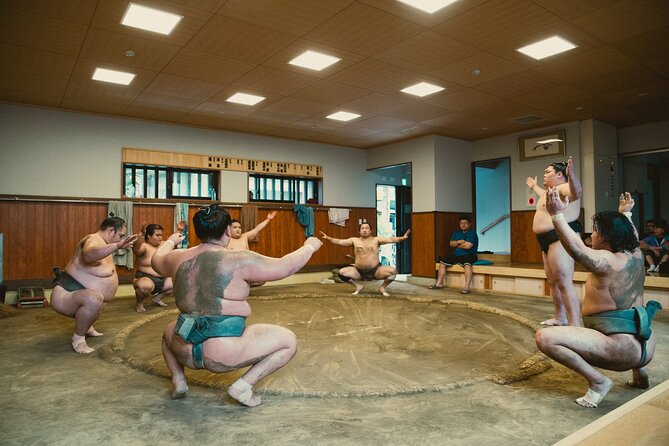
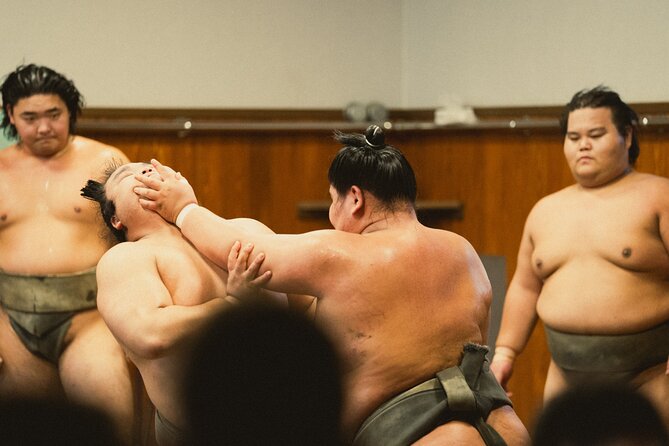
If your only plan is to watch a sumo bout in a tournament, you’ll get the drama. A morning practice adds something else: how the craft is built. You see wrestlers warming up, practicing technique, and repeating fundamentals like athletes in any sport—except sumo also carries shrine-style respect and deep rules about behavior.
What I like here is that you’re not left to guess what the rituals mean. The tour is designed to teach sumo’s rules and regulations in a way you can actually use while you’re watching. The second big plus is how close the experience can feel. Being near the training action in the stable turns sumo from a TV sport into a human one—large bodies moving with surprising speed and control.
One consideration: this is training. If you’re chasing that constant, full-contact, emotionally charged action from a flashy match photo, you might feel slightly underfed. The good news is that training is often where you understand the sport’s logic.
Other ringside bookings readers scored
- Tokyo: Sumo Show and Dining Experience
★ 4.8 · 2,742 reviews - the SUMO show
★ 5.0 · 1,960 reviews - Tokyo Shinjuku Sumo Show & Experience with Photo
★ 5.0 · 1,750 reviews - Tokyo: Sumo Show and Experience in Shinjuku
★ 4.8 · 1,001 reviews
Meeting at Oshiage and Getting to the Stable Without Stress
You meet at 7:30am at the foot of Tokyo Skytree area, specifically at 1-chōme-8-21 Oshiage, Sumida City. The instruction is clear: arrive by 7:10am. They leave at 7:30 sharp, and if you’re late you may not be able to enter the stable without contacting the tour team.
From the meeting point, it’s about a 15-minute walk to the stable. That’s short, but early mornings can be damp. If rain is possible, bring a towel to wipe your feet on the way over. Once inside, shoes come off immediately.
Also note the headcount limit: the tour caps at 25 travelers. That matters because it keeps the stable experience from feeling like a theme-park queue. Still, it’s early and you’ll be on the floor later, so wear shoes you can slip off easily.
Stop 1: Oshiage Primer on Sumo, Religion, and Rules
This first leg is mostly about getting oriented. You meet your guide and then move toward the stable area with a chance to hear the basics before you’re staring at wrestlers up close.
The tour’s angle is cultural, not just athletic. You’ll learn that sumo originated from Shinto religion. You’ll also get a grounding in sumo rules and regulations—what’s sacred, what’s impolite, and what the movements generally mean. This is smart prep. When you know why certain steps are treated like a big deal, the rest of the morning makes more sense.
In practice, this stop is also a buffer against confusion. A stable is not like a museum. If you show up without context, you might miss the point and just focus on how enormous everyone looks. With a guide up front, you can watch with understanding.
Stop 2: Sumida Morning Training, Etiquette, and What You’ll Actually See
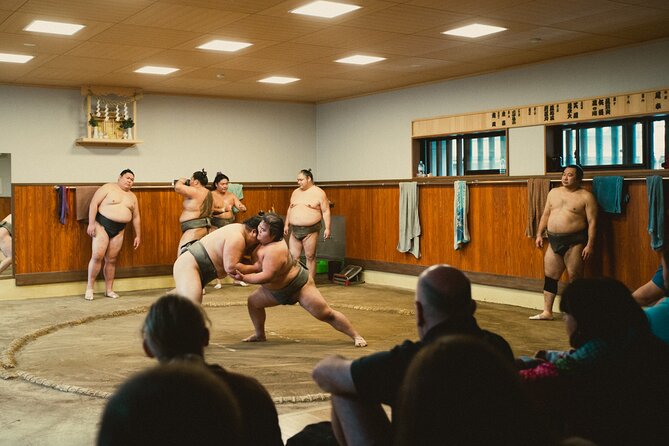
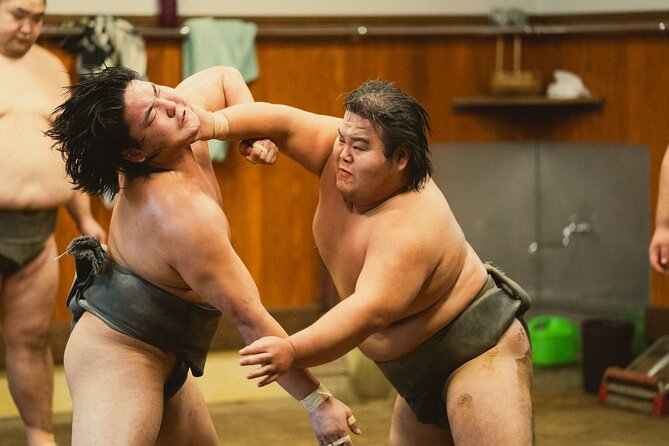
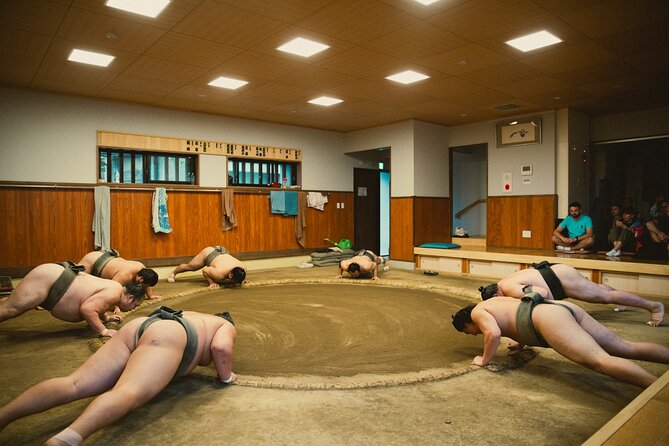
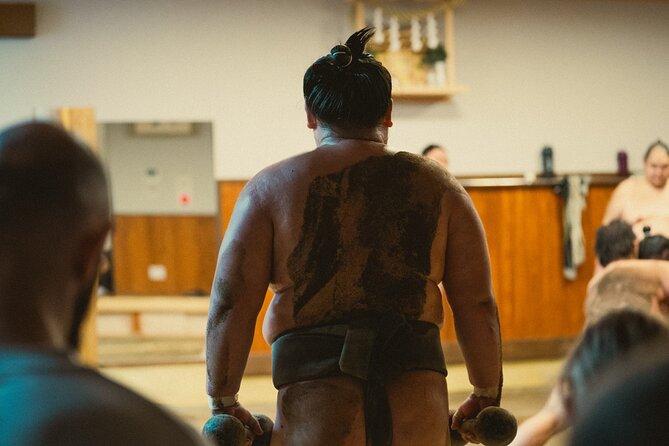
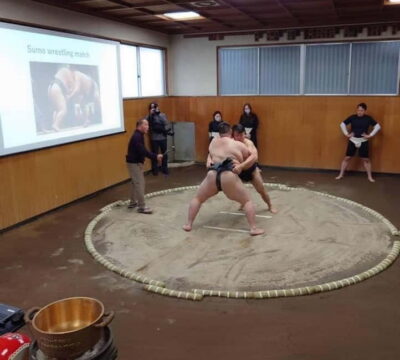
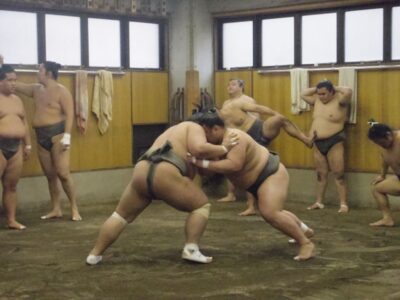
This is the heart of the experience. You quietly watch the wrestlers go through their daily routine, typically for around 1 hour 30 minutes. No chairs. No wandering. No stretching your legs toward the ring.
Here’s what you should expect and how to make it work:
- You’ll sit on the floor cross-legged for a long block. If cross-legged seating for about 1.5 hours sounds uncomfortable, skip the tour. They’re direct about it: no chairs in the stable.
- You’ll take part by doing the opposite of a typical tourist move. Stay still. Watch respectfully. Don’t stand up or shift around.
- The ring is sacred. Don’t step down onto the ring or the sandy area.
There are also a few behavior rules that are easy to overlook if you’re new to Japanese etiquette:
- No food. No chewing gum/candies. No smoking. You can bring and drink water.
- Cellphones must be on silent. Photos are okay, but without flash and without the shutter sound.
- Sunglasses and hats are not allowed in the stable.
- Modest clothing only.
What about learning? This is where the tour can really shine. The goal isn’t only to show technique; it’s to give you the “why.” In some experiences like this, you also get time for questions with the stable manager or owner after the practice. When that happens, you can learn about daily life and even training-related topics like diet habits. Even if you don’t get a long explanation while everything is going on, the guide’s job is to help translate what’s happening into something you can understand.
And yes, there’s a training reality check. Practice can look different from tournament bouts. You might see drills and focused routines rather than a full tournament style bout. That mismatch is what can create disappointment for people expecting constant match-style action. If you come with the right expectation—how technique and discipline are built—you’ll likely find it fascinating.
Stop 3: Photo Time With Wrestlers and a Practice-Length Reality Check
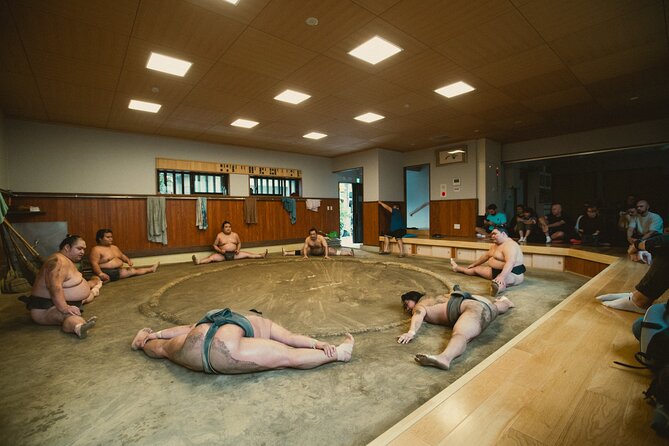
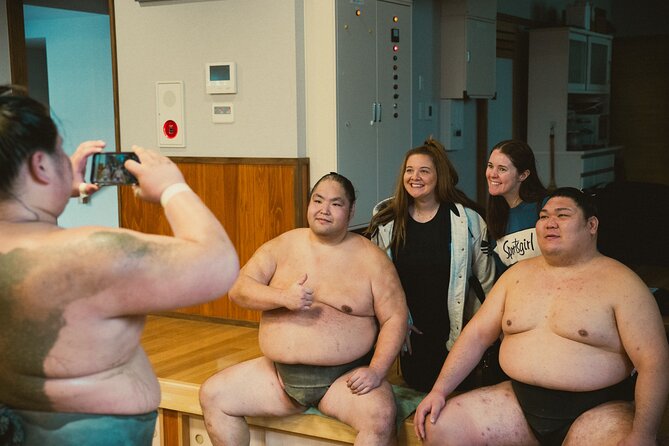
After training, you finish with a photo opportunity with the wrestlers. The schedule shows a short final segment—about 15 minutes—and then you wrap up.
One important detail: practice may end earlier than usual. The tour can be shorter than the stated time depending on what happens that day. That’s not a “problem” so much as how authentic practice works. The wrestlers’ schedule comes first.
When photo time happens, treat it like a respectful handoff. Follow the guide’s instructions and don’t push your way forward. If your group is larger, you might not get every ideal photo angle you’re imagining—so keep your expectations flexible and aim for the best moment you can get.
Readers also shortlisted these Tokyo bookings:
- Tokyo: Sumo Morning Practice Viewing Tour★ 4.8 · 570 reviews
- Tokyo: Sumo Morning Training Visit★ 4.4 · 370 reviews
- Tokyo: Visit Sumo Morning Practice with English Guide★ 4.7 · 343 reviews
- Tokyo: Sumo Morning Practice Tour at Sumida City★ 4.8 · 308 reviews
- Tokyo Sumo Morning Practice Tour at Stable★ 5.0 · 298 reviews
Price and Logistics: Is $83.23 Good Value?
At $83.23 per person for about 2 hours, the price isn’t cheap in absolute terms. But it can feel fair when you break down what you’re paying for: early access to a stable morning routine plus guided interpretation plus respectful photo time.
Here’s why it can be good value:
- You’re not just watching a sport; you’re getting translation of rules and cultural context.
- The stable environment is structured, and you’re guided on etiquette so you don’t accidentally do the wrong thing.
- You’re getting most of your experience in a single morning window, leaving the rest of the day open for Tokyo sightseeing.
Where value can disappoint you:
- If you came specifically hoping for nonstop full-contact wrestling like a tournament highlight reel, you might feel the price didn’t buy enough “action.” Practice isn’t performance.
- The experience depends on stable conditions and timing. Some days feel longer or more talk-heavy than others.
Also, the tour uses a mobile ticket, which is a practical plus. Less paper. Less fuss.
Who Should Book This Sumo Morning Practice Tour (and Who Should Skip)
This is a great fit for you if:
- you want a deeper look at sumo culture, not just watching a bout
- you like early mornings when the city feels calm
- you can sit quietly and follow instructions without needing constant movement
- you appreciate sports as discipline and routine
You should probably skip if:
- sitting cross-legged on the floor for around 1.5 hours is a deal-breaker (no chairs here)
- you need an energetic, show-like atmosphere
- you’re bringing kids who can’t stay seated quietly—there’s a minimum age of 6, and if children are noisy or move around, you may be asked to leave
This is also a smart choice if you want a tour that doesn’t eat your whole day. You get the sumo experience in the morning, and then you’re free to plan the rest of your Tokyo day.
Should You Book This Sumo Morning Practice Tour?
Book it if you’re excited by discipline, rules, and cultural etiquette as much as by athletic power. The morning stable setting is special because it’s not about spectacle. It’s about craft, routine, and respecting a sacred space.
Don’t book it if your main goal is constant match-style action on camera. This experience is about training and learning what you’re seeing. Go in with that expectation, follow the stable rules, and you’ll likely walk away with a far better understanding of sumo than a typical ticket-only match day.
FAQ
What time does the tour start and where do I meet?
The tour starts at 7:30am. You should be at the meeting point by 7:10am at 1-chōme-8-21 Oshiage, Sumida City, Tokyo 131-0045, Japan.
How long is the Sumo Wrestlers Morning Practice Tour?
It’s about 2 hours (approx.). The practice can end earlier than usual, so the tour may be shorter depending on the day.
Is there seating in the sumo stable?
No. There are no chairs in the stable. You’ll need to sit on the floor cross-legged for about 1.5 hours.
Can I take photos or videos during the tour?
Photos are allowed, but flash or shutter sounds are not allowed. Videos may be taken, but you cannot upload photos or videos to social media platforms.
Do I need to be quiet during the practice?
Yes. You must watch quietly and respectfully, and you should not move around or stand up during practice.
What should I wear or bring?
Wear modest clothing. Bring a towel if you think your feet might get wet on the walk to the stable. You can bring water, but no food is allowed in the stable.
Are there restrictions on what I can wear inside the stable?
Yes. Sunglasses and hats are not allowed in the stable. You also need to remove your shoes when you enter.
Is the tour suitable for children?
The minimum age is 6 years old. If kids are noisy or can’t watch quietly, you may be asked to leave the stable during the tour.
More Tours in Tokyo
- Mt Fuji and Hakone 1-Day Bus Tour Return by Bullet Train
★ 5.0 · 26,383 reviews - 1-Day Tokyo Bus Tour
★ 5.0 · 14,250 reviews - Tokyo: Shinjuku Food Tour (13 Dishes at 4 Local Eateries)
★ 5.0 · 6,603 reviews - Tokyo Mt Fuji 5th St & Hakone Cruise Bus Tour w/Bullet Train
★ 4.4 · 5,024 reviews - Flagship 2-Hours Official Street Go-Kart Tour – Tokyo Bay Shop
★ 5.0 · 4,974 reviews
More Tour Reviews in Tokyo
- Mt Fuji and Hakone 1-Day Bus Tour Return by Bullet Train
★ 5.0 · 26,383 reviews - 1-Day Tokyo Bus Tour
★ 5.0 · 14,250 reviews - Tokyo: teamLab Planets TOKYO Digital Art Museum Entry Ticket
★ 4.6 · 9,779 reviews - Mt Fuji & Hakone Cruise, Drum Show Bullet Train 1 Day from Tokyo
★ 4.0 · 7,413 reviews - Tokyo: Shinjuku Food Tour (13 Dishes at 4 Local Eateries)
★ 5.0 · 6,603 reviews
More Sumo, Ringside and Rated
- Tokyo: Sumo Show and Dining Experience
★ 4.8 · 2,742 reviews - the SUMO show
★ 5.0 · 1,960 reviews - Tokyo Shinjuku Sumo Show & Experience with Photo
★ 5.0 · 1,750 reviews - Tokyo: Sumo Show and Experience in Shinjuku
★ 4.8 · 1,001 reviews - Tokyo Grand Sumo Tournament Viewing Tour with Tickets
★ 5.0 · 692 reviews
Latest Tokyo reviews off our desk



Sumo Tournaments & Shows, compared.
 ★ 4.8Sumo Show and Dining ExperienceFrom $792,742 reviews
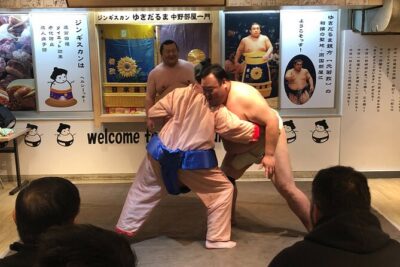 ★ 5.0the SUMO showFrom $891,960 reviews
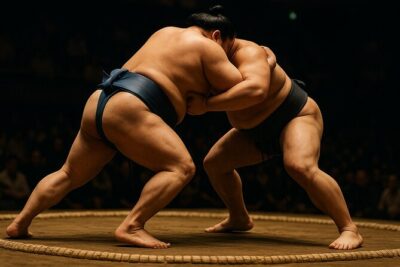 ★ 5.0Tokyo Shinjuku Sumo Show & Experience with PhotoFrom $791,750 reviews
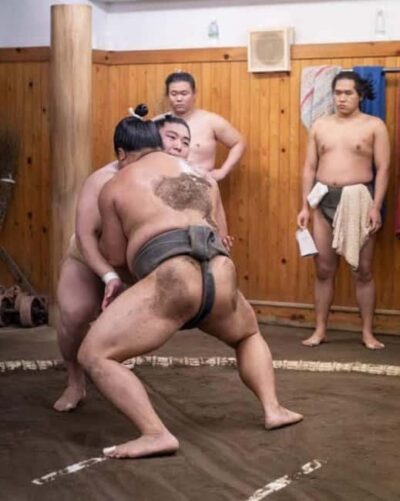 ★ 4.8Sumo Show and Experience in ShinjukuFrom $691,001 reviews
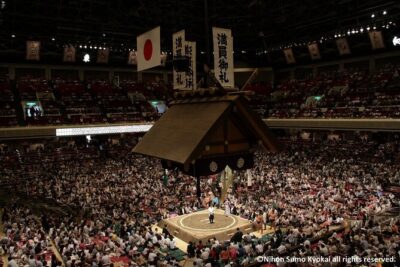 ★ 5.0Tokyo Grand Sumo Tournament Viewing Tour with TicketsFrom $124692 reviews
 ★ 5.0Tokyo Sumo Wrestling Tournament ExperienceFrom $124660 reviews
 ★ 4.7Luxury Sumo Show Experience & Japanese cuisine & DrinkFrom $103577 reviews
 ★ 4.8Sumo Morning Practice Viewing TourFrom $81570 reviews
Browse the lists this tour appears in