
Reviewed · SUMO TOURNAMENTS & SHOWS
Tokyo Sumo Morning Practice Tour at Stable
Sumo training sounds like thunder in a temple. This tour gets you into a real sumo stable for morning practice and explains the rules and rituals as the action happens.
What I love: the guide ties sumo back to Shinto traditions and walks you through the six 15-day Grand Tournaments. I also like the close-up viewing setup and running English commentary through headsets in a small group capped at 20, with guides such as Seiji or Noriko on different dates.
One possible drawback: headset audio quality can be hit or miss, so keep your eyes on the ring as much as your ears.
In This Review
- Key things that make this tour worth your morning
- Entering a real sumo stable at sunrise
- How the morning schedule runs (and why timing matters)
- Stop 1: Ryogoku Station Gallery briefing before you sit down
- Stop 2: Quiet viewing inside the stable (this is the whole point)
- What you’ll notice in sumo practice up close
- The guide and headsets: useful, but don’t rely on perfect audio
- Stable rules you should know before you go in
- Seating, sightlines, and the “arrive early” advantage
- Photos at the end: a memorable closer, with expectations managed
- Price and value: is $83.57 fair for two hours?
- Who this tour is best for (and who should skip it)
- Quick packing and practical tips for a Tokyo morning
- Should you book this Tokyo sumo morning practice tour?
- FAQ
- What time do I need to meet the guide?
- Where is the tour located in Tokyo?
- How long is the sumo morning practice tour?
- Is there a minimum age to enter the stable?
- Are photos and videos allowed?
- Can I eat or drink during the tour?
- What should I bring for summer weather?
- What’s the cancellation policy?
Key things that make this tour worth your morning
- Real stable access, not a costume-and-ceremony show
- Shinto roots + tournament map early on, so matches make sense later
- Small group cap (max 20) for a calmer, less chaotic experience
- Very strict ring etiquette that protects the wrestlers’ focus
- Photo moment after practice for a memorable finish (when the session allows)
- Early arrival helps you get a better seat, since some front areas are reserved
Entering a real sumo stable at sunrise
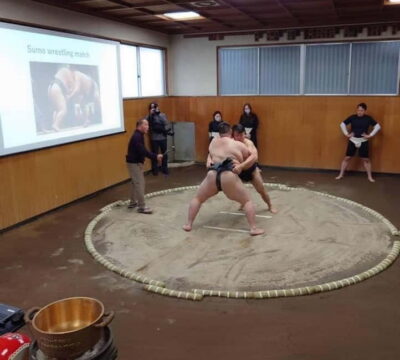
There’s a big difference between watching sumo on TV and seeing it before breakfast. In the stable, you feel the work behind the spectacle—warmups, repeated bouts, and the constant push to get better.
This is also a tour where you’re taught how to watch. You don’t just stare at two people trying to become a human wrecking ball; you learn what you’re seeing and why it matters.
Other ringside bookings readers scored
- Tokyo: Sumo Show and Dining Experience
★ 4.8 · 2,742 reviews - the SUMO show
★ 5.0 · 1,960 reviews - Tokyo Shinjuku Sumo Show & Experience with Photo
★ 5.0 · 1,750 reviews - Tokyo: Sumo Show and Experience in Shinjuku
★ 4.8 · 1,001 reviews
How the morning schedule runs (and why timing matters)
The day starts early. You meet around 7:45am at the nearby station area, then your group heads to the stable. The total tour time is about 2 hours, with a short intro and then longer viewing inside.
It’s structured for one goal: help you understand the practice while you’re watching it. That way, by the time the wrestlers start going hard, you’re not lost—you know what each exchange is doing for training.
Stop 1: Ryogoku Station Gallery briefing before you sit down
Before you enter the stable proper, you get a quick grounding session for roughly 15 minutes. This is where the guide sets the frame: sumo’s connections to Shinto rituals and how old traditions still shape the sport today.
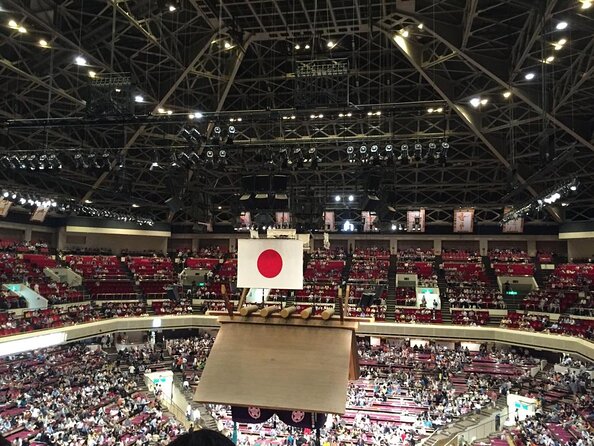
You’ll also learn the basics of the six annual Grand Tournaments, each lasting 15 days. The guide explains where they happen—Tokyo, Osaka, Nagoya, and Fukuoka—and how that schedule shapes the year for wrestlers.
This first stop is short, but it’s a big deal. It turns the practice from random chaos into a sport with rhythm and meaning.
Stop 2: Quiet viewing inside the stable (this is the whole point)
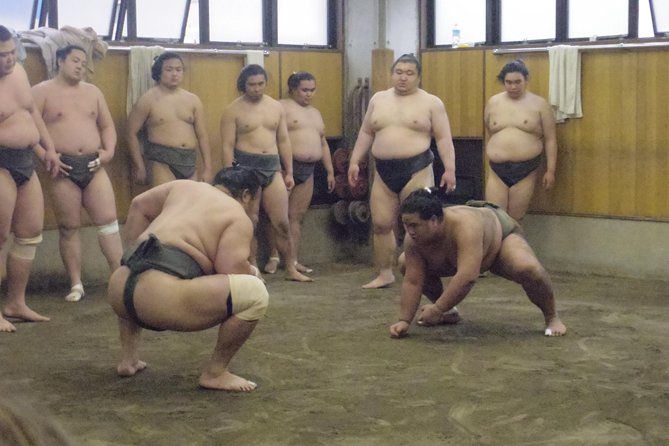
Inside the stable, you’re expected to watch quietly and respectfully. Cellphones must be on silent, and you follow the guide’s cues so you don’t disrupt concentration.
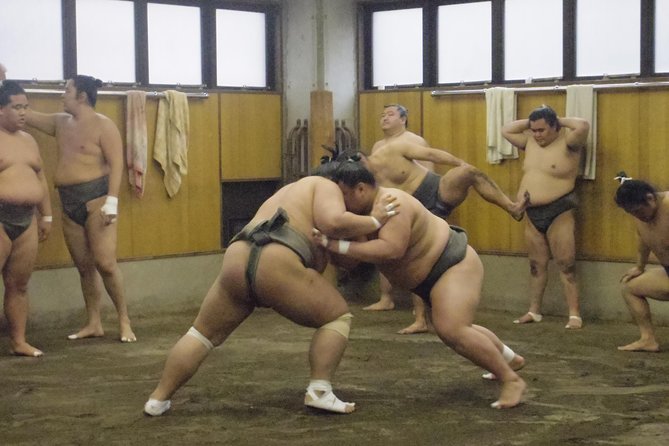
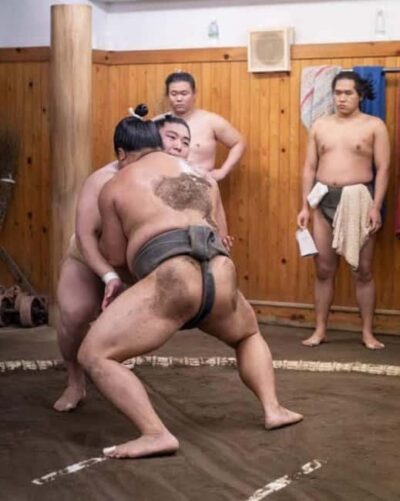
The viewing time is about 1 hour 30 minutes. During that stretch, you’ll see the daily training routine up close—warmups, repeated grappling, and practice sparring. Depending on the session, you might notice lots of intense bouts; sometimes the session runs longer than expected.
What you’ll notice in sumo practice up close
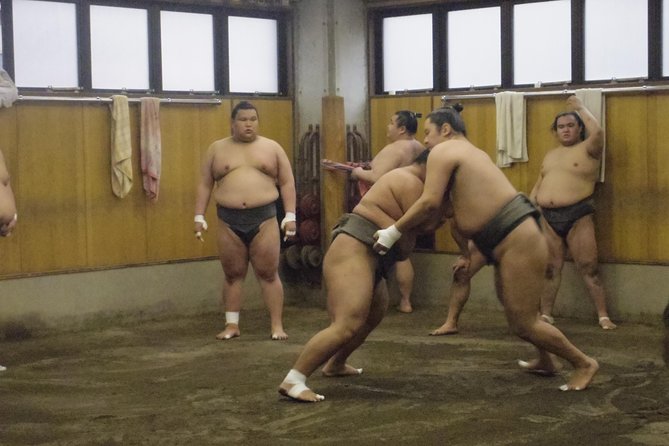
If you only know sumo as tournament ceremony, practice can feel surprisingly direct. Wrestlers go through repeated exchanges, and you start seeing patterns: who likes to control space, who attacks quickly, and who seems to win through timing rather than pure force.
You’ll also get context for the sport beyond moves. With the guide’s commentary, you learn how the system works—rankings and the lifestyle the wrestlers live to pursue their goals. That background matters because it explains why training looks like discipline first and violence second.
Readers also shortlisted these Tokyo bookings:
- Tokyo: Sumo Morning Practice Viewing Tour★ 4.8 · 570 reviews
- Tokyo: Sumo Morning Training Visit★ 4.4 · 370 reviews
- Tokyo: Visit Sumo Morning Practice with English Guide★ 4.7 · 343 reviews
- Tokyo: Sumo Morning Practice Tour at Sumida City★ 4.8 · 308 reviews
- Tokyo Sumo Morning Practice Tour at Stable★ 5.0 · 298 reviews
The guide and headsets: useful, but don’t rely on perfect audio
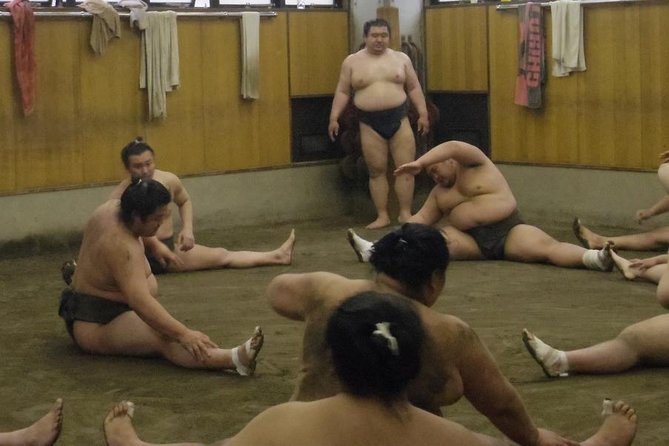
A major reason this tour earns strong marks is the guide narration. Guides like Seiji, Yumi, Cameo, Noriko, and Nobu show up on different runs, and the common theme is clear, structured explanation while you watch.
Headsets are part of the setup, so you can follow the commentary without turning around or talking. Still, audio quality can vary, and at least one experience notes static or difficulty hearing. My practical advice: watch the ring closely, and treat the headset as helpful context, not your only source of meaning.
Stable rules you should know before you go in
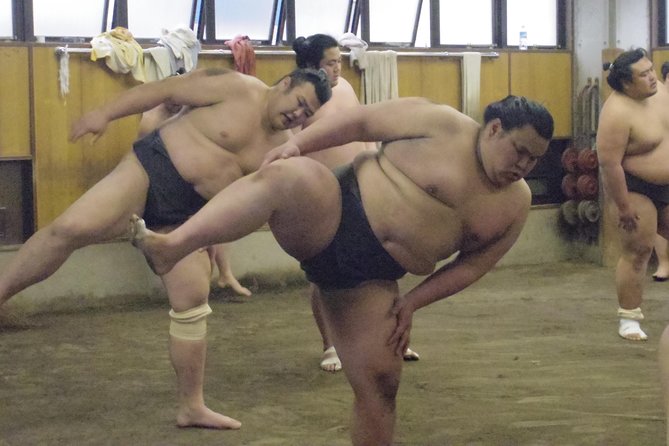
This is not a casual hang. The stable is a sacred workspace, so the rules are strict—and that’s a good thing for everyone’s experience.
Key do’s and don’ts:
- Don’t step down into the ring or sandy ground area.
- Don’t stretch your legs toward the ring, since showing the soles of your feet is considered impolite.
- Photos are allowed, but keep them no flash / no shutter sounds.
- Videos aren’t allowed.
- Eating and drinking aren’t allowed, but in Tokyo summer conditions you’re allowed water and sports drinks inside the stable.
- Sunglasses and hats aren’t allowed in the stable.
- Once you leave, you can’t re-enter, so use the restroom before you arrive.
If you follow these, you’ll feel like you’re part of the training day, not an interruption.
Seating, sightlines, and the “arrive early” advantage
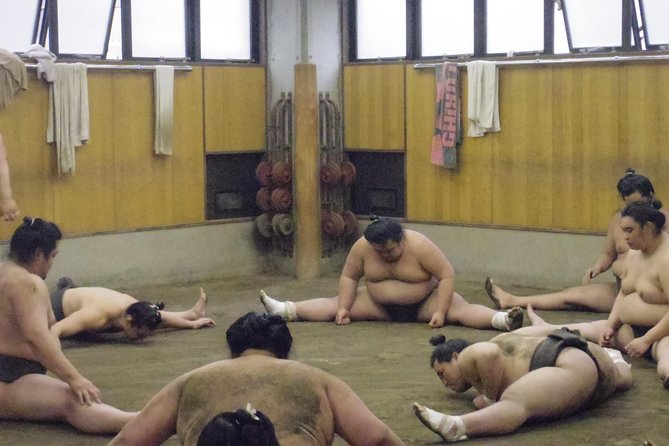
You’re close, but close doesn’t always mean equal views. Seat position can matter, and some areas may be reserved (for sponsors and similar arrangements), which can affect how full the view feels.
The fix is simple: arrive early and be ready to line up. One strong tip is that arriving first helps you secure better seats, often leading to a good second-row position behind a reserved front section.
Also, the stable setup can include stools rather than mats, so you may find standing unnecessary. You’ll still want comfortable shoes and a plan for sitting quietly for the full stretch.
Photos at the end: a memorable closer, with expectations managed
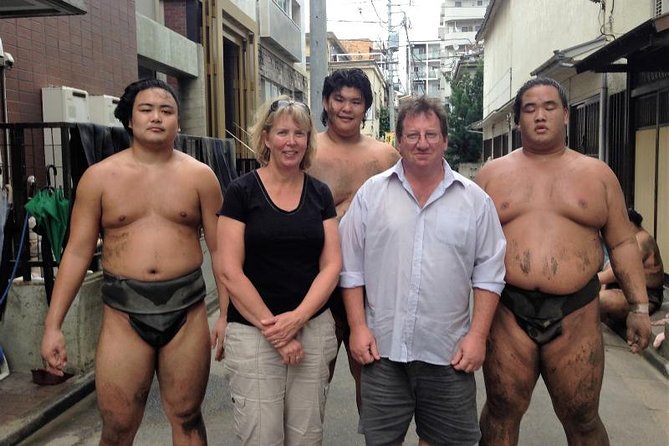
At the finish, there’s often a photo moment after practice. Some runs mention wrestlers posing for pictures with groups, while other sessions may have a shorter photo window.
Either way, treat it like a respectful add-on, not a long interaction. And remember: you’re not supposed to ask wrestlers for a photo while the practice is still going.
Price and value: is $83.57 fair for two hours?
At $83.57 per person for about 2 hours, this is not a bargain-basement activity. But it’s also not priced like a generic walking tour.
What you’re paying for is a rare combination:
- entry into a real stable morning practice
- a guide who explains what you’re seeing (not just where to stand)
- small-group conditions (max 20)
- time to watch multiple rounds of training, not a brief staged demonstration
If you’re someone who likes sports culture and you want to understand sumo instead of just observing it, this price starts to look reasonable fast. If your main goal is action only, you could argue it’s expensive—but the explanation is what turns the action into understanding.
Who this tour is best for (and who should skip it)
This works especially well if you:
- are a first-time visitor who wants the real sumo world before you hit tournaments
- enjoy learning the rules and traditions, not just taking pictures
- like quiet, respectful cultural experiences where behavior matters
Consider skipping if:
- you’re sensitive to headset audio or you need perfect sound for information
- you want lots of interactive Q&A time (some sessions may be more talk-heavy than others)
- you’re uncomfortable following many etiquette rules inside the stable
Quick packing and practical tips for a Tokyo morning
A little prep makes this run smoother:
- Dress for morning cold, but plan for daytime heat in summer since there’s no air conditioning in the stable.
- Bring something to cool down like a cold towel or ice pack.
- Use the restroom before the meeting point because you can’t leave and come back once you’re inside.
- Keep your phone silent and ready for no-flash photos only.
- Leave your hat and sunglasses outside the stable.
This is one of those tours where good behavior equals better access to the experience.
Should you book this Tokyo sumo morning practice tour?
Book it if you want sumo as a working sport, not a show. The biggest win is the mix of close viewing and structured explanation: Shinto roots, tournament basics, and a live look at training routines.
You should also book if you like small-group energy and early starts that pay off. If you’re okay with strict etiquette and you can watch with your eyes (even if the headset audio isn’t perfect), this is an excellent use of time in Tokyo.
FAQ
What time do I need to meet the guide?
You meet your guide in the morning at about 7:45am near the train station, then you head to the sumo stable.
Where is the tour located in Tokyo?
The tour takes place in Tokyo, and it includes the Ryogoku area for the stable visit.
How long is the sumo morning practice tour?
It’s about 2 hours (approx.).
Is there a minimum age to enter the stable?
Yes. The minimum age is 12 years old. Kids 11 and under cannot enter the stable.
Are photos and videos allowed?
Photos are allowed without flash or shutter sounds. Videos are not allowed.
Can I eat or drink during the tour?
Eating and drinking aren’t allowed. During Tokyo summer, guests are allowed to drink water and sports drinks inside the stable.
What should I bring for summer weather?
Because there’s no air conditioning, it can get hot. The tour advises bringing something like an ice pack or cold towel to help you keep cool.
What’s the cancellation policy?
You can cancel for a full refund up to 24 hours in advance of the experience start time. If you cancel less than 24 hours before, the amount paid is not refunded.
More Tours in Tokyo
- Mt Fuji and Hakone 1-Day Bus Tour Return by Bullet Train
★ 5.0 · 26,383 reviews - 1-Day Tokyo Bus Tour
★ 5.0 · 14,250 reviews - Tokyo: Shinjuku Food Tour (13 Dishes at 4 Local Eateries)
★ 5.0 · 6,603 reviews - Tokyo Mt Fuji 5th St & Hakone Cruise Bus Tour w/Bullet Train
★ 4.4 · 5,024 reviews - Flagship 2-Hours Official Street Go-Kart Tour – Tokyo Bay Shop
★ 5.0 · 4,974 reviews
More Tour Reviews in Tokyo
- Mt Fuji and Hakone 1-Day Bus Tour Return by Bullet Train
★ 5.0 · 26,383 reviews - 1-Day Tokyo Bus Tour
★ 5.0 · 14,250 reviews - Tokyo: teamLab Planets TOKYO Digital Art Museum Entry Ticket
★ 4.6 · 9,779 reviews - Mt Fuji & Hakone Cruise, Drum Show Bullet Train 1 Day from Tokyo
★ 4.0 · 7,413 reviews - Tokyo: Shinjuku Food Tour (13 Dishes at 4 Local Eateries)
★ 5.0 · 6,603 reviews
More Sumo, Ringside and Rated
- Tokyo: Sumo Show and Dining Experience
★ 4.8 · 2,742 reviews - the SUMO show
★ 5.0 · 1,960 reviews - Tokyo Shinjuku Sumo Show & Experience with Photo
★ 5.0 · 1,750 reviews - Tokyo: Sumo Show and Experience in Shinjuku
★ 4.8 · 1,001 reviews - Tokyo Grand Sumo Tournament Viewing Tour with Tickets
★ 5.0 · 692 reviews
Latest Tokyo reviews off our desk






Sumo Tournaments & Shows, compared.
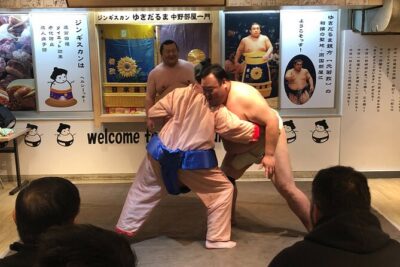
 ★ 4.8Sumo Show and Dining ExperienceFrom $792,742 reviews
 ★ 5.0the SUMO showFrom $891,960 reviews
 ★ 5.0Tokyo Shinjuku Sumo Show & Experience with PhotoFrom $791,750 reviews
 ★ 4.8Sumo Show and Experience in ShinjukuFrom $691,001 reviews
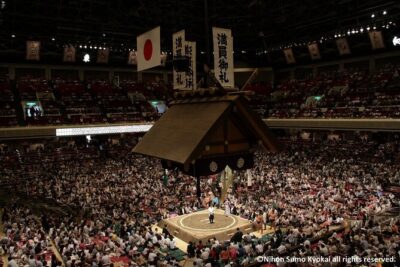 ★ 5.0Tokyo Grand Sumo Tournament Viewing Tour with TicketsFrom $124692 reviews
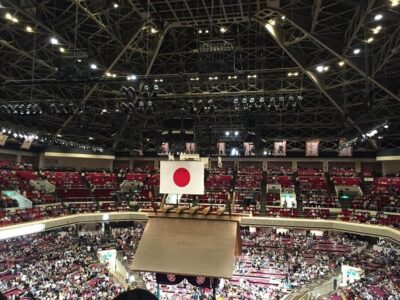 ★ 5.0Tokyo Sumo Wrestling Tournament ExperienceFrom $124660 reviews
 ★ 4.7Luxury Sumo Show Experience & Japanese cuisine & DrinkFrom $103577 reviews
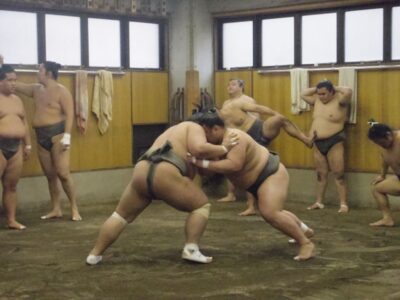 ★ 4.8Sumo Morning Practice Viewing TourFrom $81570 reviews
Browse the lists this tour appears in