
Reviewed · TEA CEREMONY & MATCHA
Tea ceremony experience in Japanese-style room 60min
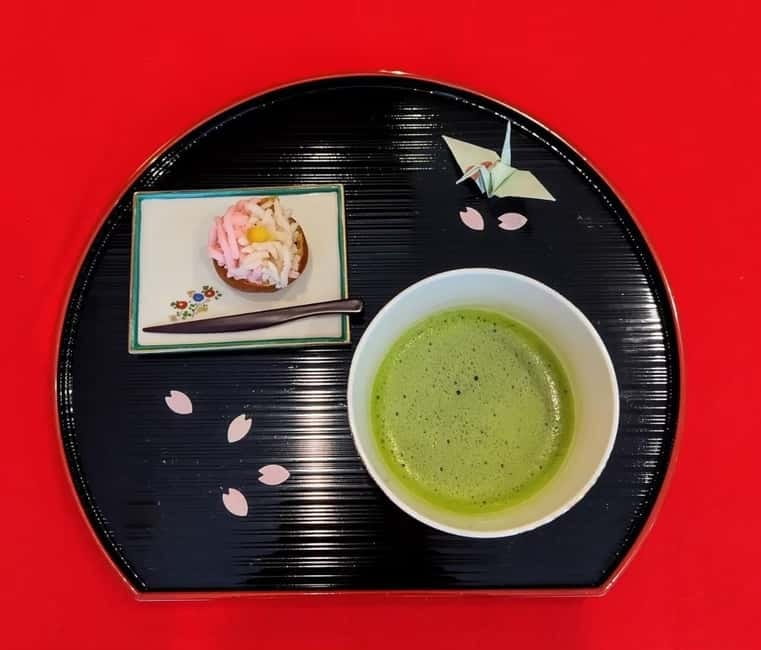
Matcha tastes better when you slow down. At Wasako (inside Charyo-Ichimatsu), you pick your tea sweets and matcha bowl and then learn hands-on matcha in a Japanese-style room that feels calm the second you sit. For $45, the value is in the personal attention and participation, not in a long, showy spectacle.
I also like that the experience is built for small groups (up to 7), with an English/Japanese instructor who can explain what you’re seeing as well as what you’re doing. The one consideration: you’ll need socks for tatami, and the experience length can vary a lot (from 45 minutes to several hours), so pick your time slot based on your day’s pace.
In This Review
- Key points before you go
- Wasako inside Charyo-Ichimatsu: the room that makes tea feel ceremonial
- Finding Wasako near Asakusa: stations, shoes, and tatami socks
- Timing and group size: how the 45-minute to 4-hour range feels on the ground
- Choosing sweets and matcha bowls: where personalization starts
- Watching the demonstration: what to notice in scrolls and utensils
- Making your own matcha: the steps you practice at the table
- Photos in a cultural room: turning a calm ritual into real memories
- Price and value at about $45: what you’re really paying for
- Who this Japanese tea ceremony suits best
- Should you book Wasako’s tea ceremony experience?
- FAQ
- Where do I meet for the Wasako tea ceremony experience?
- What time slots are available?
- Is socks required, and what if I don’t have them?
- What’s included in the experience?
- How big is the group?
- Can I cancel and get a refund?
Key points before you go
- Pick your sweets and matcha bowl: each bowl has a unique design, and you’ll learn about it.
- Watch while you snack: you can enjoy the sweets and drink matcha during the demonstration.
- Learn, then make: you’ll be taught how to prepare matcha and get to brew it yourself.
- Small group care: limited to 7 participants for more hands-on guidance.
- Photo-friendly cultural details: the historic-style room and furnishings make it easy to take great pictures.
- No shoes indoors: you’ll need socks to get comfortable on tatami.
Wasako inside Charyo-Ichimatsu: the room that makes tea feel ceremonial
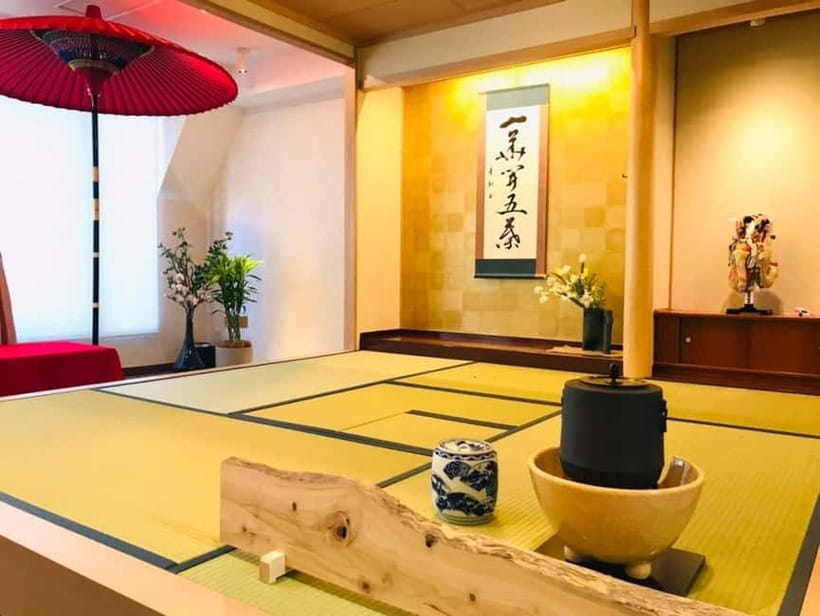
This tea ceremony happens in a Japanese-style room at Wasako, located inside the Charyo-Ichimatsu restaurant area. That matters, because you’re not watching tea-from-a-distance. You’re seated inside the setting where the ceremony is meant to happen: quiet surfaces, careful placement of tools, and a pace that gives your eyes time to catch details.
What I’d focus on when you arrive is the atmosphere. The room is designed for stillness, and that’s what turns a “class” into something more memorable. A few guests even mention how the ambiance, lighting, and sound helped them feel like they’d stepped into a different rhythm.
It also helps that the host’s explanations are practical. Instead of tossing history at you like facts in a textbook, you’ll get guidance on what things mean—like the hanging scrolls and the furnishings—while you’re watching the actions unfold.
More tea rooms our readers rated
- Matcha Making Class in Tokyo with Authentic Japanese Sweets Set
★ 5.0 · 744 reviews - Tokyo: Traditional Tea Ceremony with a Tea Master
★ 5.0 · 528 reviews - Tokyo: Matcha Making Experience with Mochi Sweets in Asakusa
★ 4.9 · 388 reviews - Tokyo: Matcha and Kimono Experience
★ 4.7 · 219 reviews
Finding Wasako near Asakusa: stations, shoes, and tatami socks
You’ll meet about a 5-minute walk from Tawaramachi Station (Tokyo Metro Ginza Line, Exit 3) or about a 10-minute walk from Asakusa Station (Toei Asakusa Line, Exit A4). In other words: you can fit this into a typical Asakusa half-day without a complicated transfer plan.
Plan for one rule that affects comfort: no shoes indoors. Even if you’re only thinking, This is Japan, I’ll just take my shoes off, you’ll still want to be ready for tatami. The experience specifically notes that you should bring socks if you want to get on the tatami. If you forget, socks can be purchased for 500 yen.
This is one of those “small” travel details that actually changes the experience. Tatami + barefoot-friendly socks = you relax and participate more naturally. If you’re cold or uncomfortable, it’s harder to stay present when the host is teaching hand movements and serving steps.
Timing and group size: how the 45-minute to 4-hour range feels on the ground
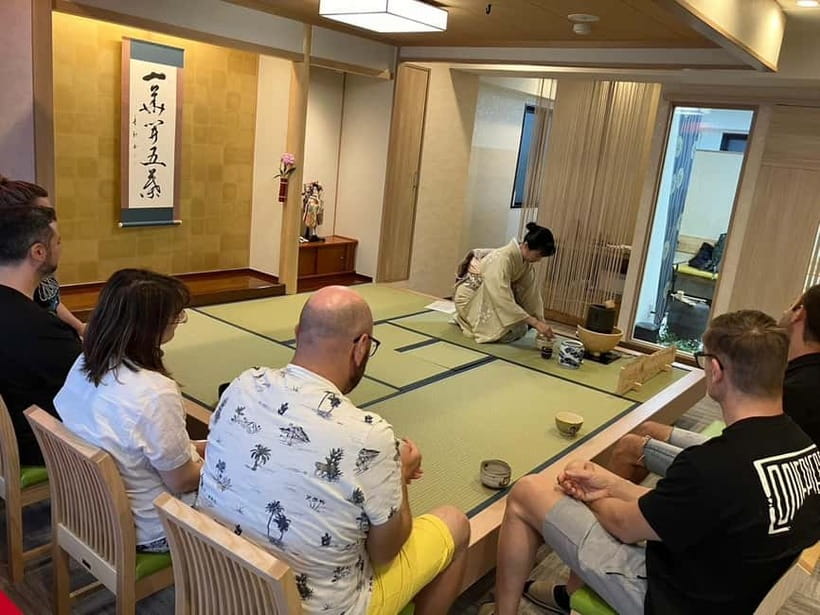
You’ll have four start times: 10:00, 11:30, 13:30, and 15:00. Even though the experience is listed as “60 minutes,” the duration window runs from 45 minutes to 4 hours depending on availability and how the session is paced.
Here’s how I’d think about it: a tea ceremony has built-in “slow time.” There’s a demonstration, guided explanations, time to enjoy sweets and matcha, and then instruction plus hands-on brewing. If your group has more questions, or if the host takes extra time with bowl explanations and utensil walkthroughs, the session can run longer than you expect.
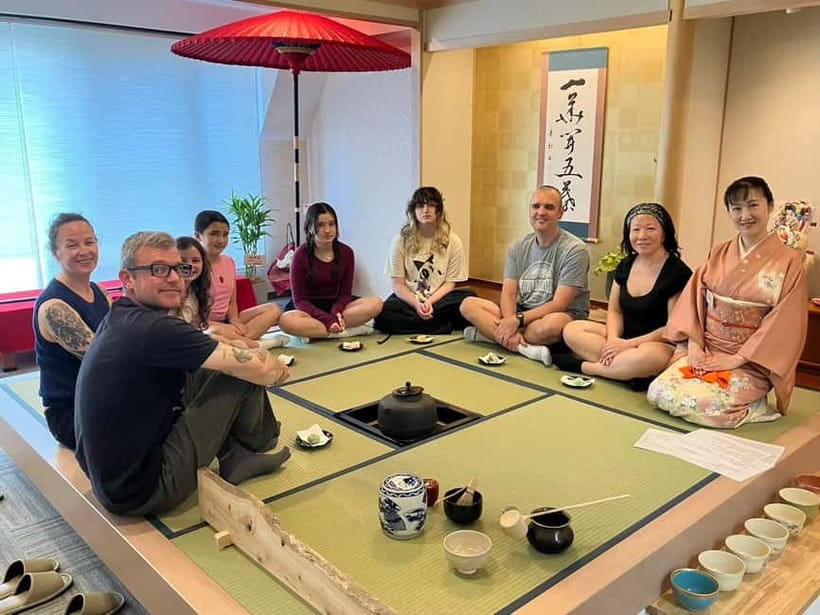
The good news is the group size stays tight: up to 7 participants. That’s a big deal for a hands-on class. You’re not just watching the tea master work while a crowd drifts in and out. You’re in a setting where you’re more likely to be corrected gently, shown how to hold something, and encouraged as you try.
Choosing sweets and matcha bowls: where personalization starts
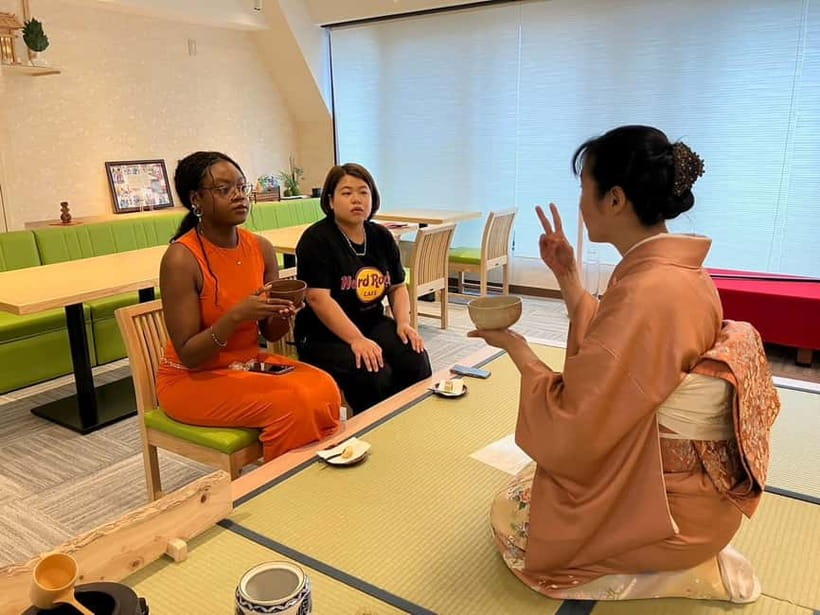
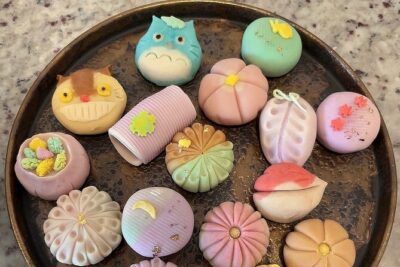
One of the best parts is that you don’t just get a generic set. You’ll choose your tea sweets and your matcha bowl before the ceremony begins. That simple choice turns it into a personal experience, because you’re seeing how aesthetics and taste connect.
Each matcha bowl has a unique design, and you’ll get an explanation of that bowl during the session. It’s worth paying attention here. In a tea ceremony, the bowl isn’t just a container—it’s part of the visual story. The host’s bowl descriptions are also where you’ll learn how to look at the ceremony beyond the drink itself.
As for the sweets, you’ll be able to enjoy them while watching the demonstration. That’s a comfort advantage: you’re not sitting through the whole thing on an empty stomach, and you get to start tasting right away instead of waiting until the end.
Watching the demonstration: what to notice in scrolls and utensils
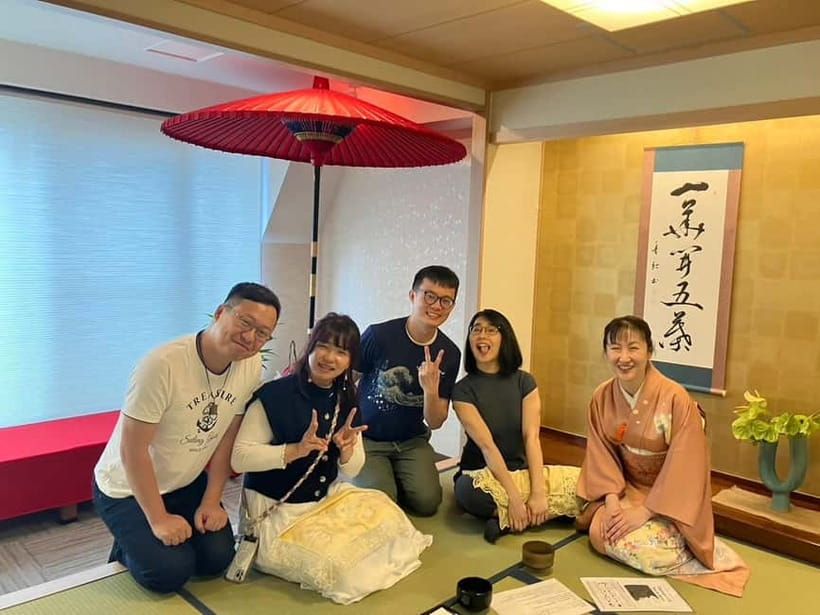
The experience is structured so you can watch a demonstration while you enjoy the sweets and drink matcha. While the tea master performs the steps, you’ll also receive explanations as needed. These typically cover things you might otherwise miss: the hanging scrolls, the room furnishings, and how the tea ceremony developed over time.
A practical tip: don’t try to memorize everything at once. Instead, choose one “thread” to follow while watching. You can focus on:
- how utensils are handled and placed,
- how the host explains the meaning behind an object,
- or how the rhythm of preparing matcha builds calm.
Because the room is designed for attention, these details land better than they do in a rushed sightseeing stop. If you’re the type who likes small cultural mechanics—how people hold things, how they move, why certain items matter—this is where the experience earns its strong reputation.
- Tokyo: Shinjuku Food Tour (13 Dishes at 4 Local Eateries)★ 5.0 · 6,603 reviews
- Tokyo Mt Fuji 5th St & Hakone Cruise Bus Tour w/Bullet Train★ 4.4 · 5,024 reviews
- Flagship 2-Hours Official Street Go-Kart Tour – Tokyo Bay Shop★ 5.0 · 4,974 reviews
- From Tokyo: Mount Fuji Full-Day Sightseeing Trip★ 4.5 · 4,970 reviews
- Tokyo: Hop-On Hop-Off Sightseeing Bus Ticket★ 3.9 · 4,207 reviews
Making your own matcha: the steps you practice at the table
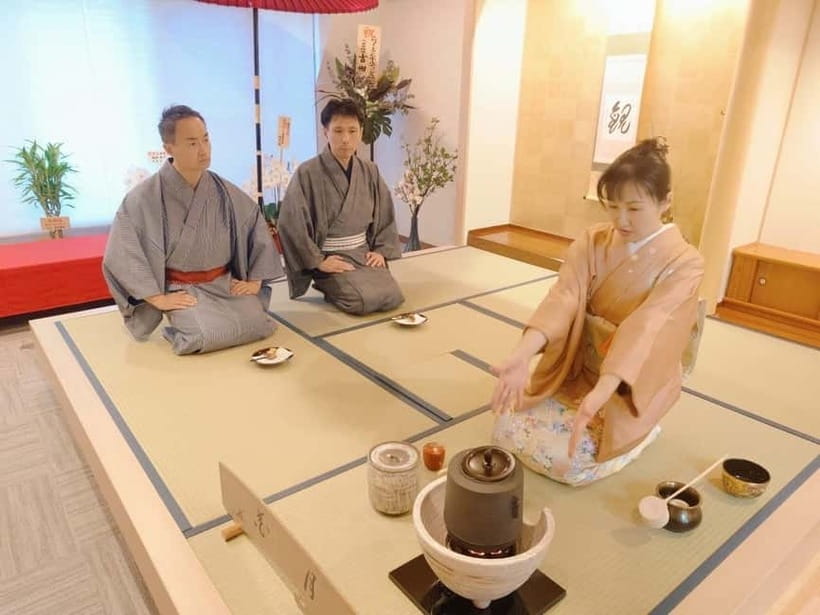
This is the hands-on core: you’ll be taught how to prepare matcha, and you’ll brew your own matcha yourself. That part matters for two reasons.
First, matcha is technique. Even if you’ve tasted matcha before, making it is different. The experience gives you the method, and your participation makes it stick.
Second, you learn by doing in the same environment where the ceremony happens. When the host helps you prepare the tea, you’re not trying to translate instructions from a video later. You’re getting real-time corrections and watching how the tea master handles each step.
I’d recommend going into this with a “practice mindset,” not a “performer mindset.” Your goal isn’t to nail perfection in one go. It’s to understand the logic of the movements and the feel of the process.
Photos in a cultural room: turning a calm ritual into real memories
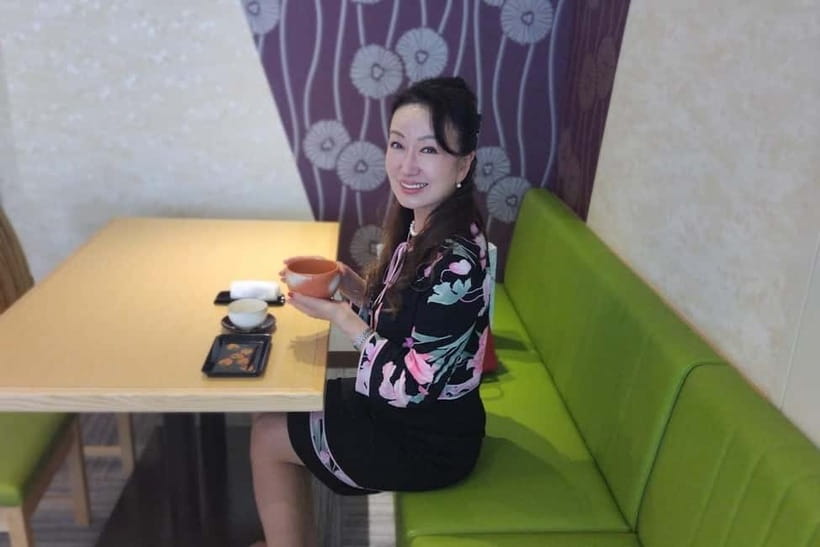
The setting is built for pictures. Ichimatsu (the building) is described as a registered tangible cultural property, and that’s why the place has so many photo-worthy spots. Expect plenty of angles: the interior design, furnishings, and the overall feel of a traditional Japanese room.
Many hosts also help with photos during the ceremony, so you’re not stuck asking strangers to take shots of you mid-process. There’s also an obvious reason this works: you’re seated and the action has a natural rhythm, so it’s easier to catch without disrupting the ceremony.
One more photography note: if you’re adding a kimono rental option, you’ll likely get help with dressing and it can make your photos feel even more “of the place.” Some participants mention this as a highlight because it adds visual authenticity and makes the experience feel like a complete ritual moment.
Price and value at about $45: what you’re really paying for
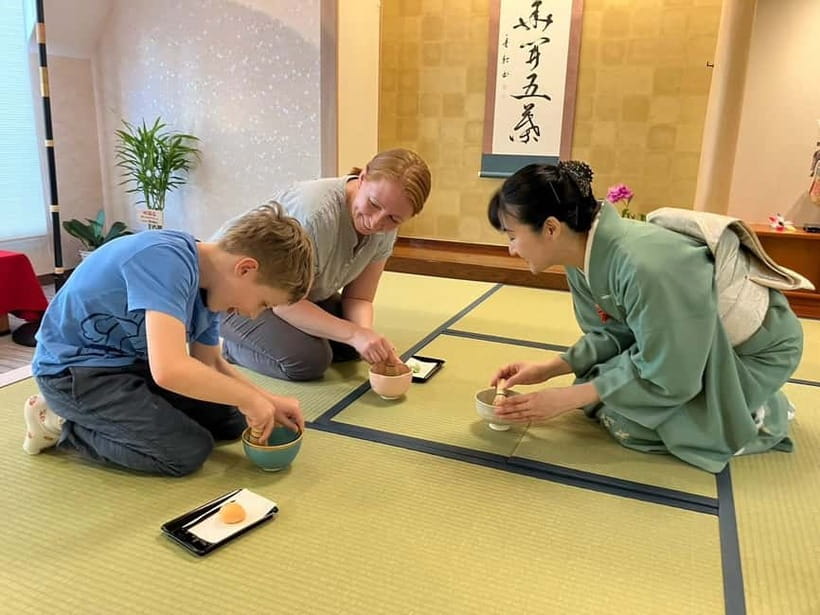
At $45 per person, this isn’t a bargain, and it shouldn’t be compared to a quick ticketed attraction. The value here is in three things that cost real time and training:
- hands-on matcha preparation (not just watching),
- a small group size (up to 7),
- and guided context while you’re tasting and participating.
If you’re looking for a short, surface-level “tea tasting,” you might feel it’s too expensive for the time. But if you want something more practical—how to make matcha correctly, what the tools mean, and how the ceremony flows—this price starts to make sense.
Also, the venue’s cultural setting and photo-friendly details add another layer of value. You’re not just buying tea. You’re buying a carefully controlled, respectful experience in a historic-style interior near Asakusa.
Who this Japanese tea ceremony suits best
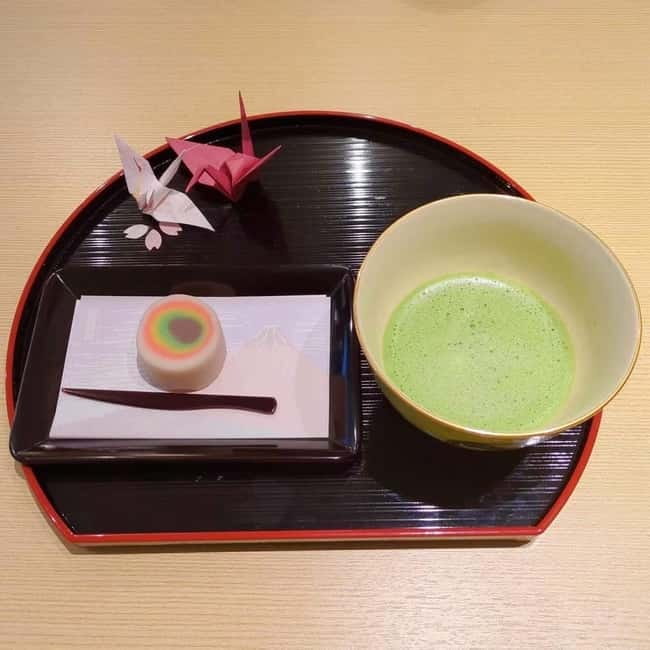
This works best if you enjoy slow, detailed cultural activities and you like learning through participation.
It’s a good fit for:
- couples and friends who want a calm shared activity,
- anyone with a Japan-culture curiosity (the meaning behind tools and steps),
- travelers who want a small-group class with practical instruction.
It may not suit you if:
- you need a wheelchair-accessible setup (it’s noted as not suitable for wheelchair users),
- you’re traveling with very young kids (children under 6 years aren’t suitable),
- or you want a fast stop with no rules about socks and indoor footwear.
Should you book Wasako’s tea ceremony experience?
If your goal is an authentic-feeling Japanese tea moment with real participation—choosing sweets, learning about your bowl, watching a demonstration, and then actually making matcha yourself—then yes, it’s worth booking. The small group size and guided explanations are the difference between this and a generic tea tasting.
Book it especially if your schedule lines up with one of the four start times and you’ll show up with socks. If you’re tight on time, double-check your planned window, since the duration range can stretch beyond the “60 minutes” label.
If you’re the kind of traveler who wants to bring home a skill (and not just a photo), this is one of the better ways to do it in Tokyo’s Asakusa area.
FAQ
Where do I meet for the Wasako tea ceremony experience?
You’ll meet about a 5-minute walk from Tawaramachi Station (Tokyo Metro Ginza Line, Exit 3) or about a 10-minute walk from Asakusa Station (Toei Asakusa Line, Exit A4).
What time slots are available?
There are four start times: 10:00, 11:30, 13:30, and 15:00. Availability determines the exact duration you’ll experience.
Is socks required, and what if I don’t have them?
Yes. If you want to get on the tatami, bring socks. If you don’t have them, socks can be sold for 500 yen.
What’s included in the experience?
Tea sweets, matcha green tea, watching the tea ceremony demonstration, and making your own matcha. You’ll also have time for photos.
How big is the group?
The group is limited to 7 participants.
Can I cancel and get a refund?
Free cancellation is available up to 24 hours in advance for a full refund. A 50% cancellation fee applies for cancellations made the day before, and 100% applies on the day of the event.
More Tour Reviews in Tokyo
- Mt Fuji and Hakone 1-Day Bus Tour Return by Bullet Train
★ 5.0 · 26,383 reviews - 1-Day Tokyo Bus Tour
★ 5.0 · 14,250 reviews - Tokyo: teamLab Planets TOKYO Digital Art Museum Entry Ticket
★ 4.6 · 9,779 reviews - Mt Fuji & Hakone Cruise, Drum Show Bullet Train 1 Day from Tokyo
★ 4.0 · 7,413 reviews - Tokyo: Shinjuku Food Tour (13 Dishes at 4 Local Eateries)
★ 5.0 · 6,603 reviews
More Tea and Matcha Rooms
- Matcha Making Class in Tokyo with Authentic Japanese Sweets Set
★ 5.0 · 744 reviews - Tokyo: Traditional Tea Ceremony with a Tea Master
★ 5.0 · 528 reviews - Tokyo: Matcha Making Experience with Mochi Sweets in Asakusa
★ 4.9 · 388 reviews - Tokyo: Matcha and Kimono Experience
★ 4.7 · 219 reviews - Tea Ceremony Workshop in Tokyo by the Experienced Instrucor
★ 5.0 · 189 reviews
Latest Tokyo reviews off our desk






Tea Ceremony & Matcha, compared.
 ★ 5.0Matcha Making Class in Tokyo with Authentic Japanese Sweets SetFrom $21744 reviews
 ★ 5.0Traditional Tea Ceremony with a Tea MasterFrom $38528 reviews
 ★ 4.9Matcha Making Experience with Mochi Sweets in AsakusaFrom $22388 reviews
 ★ 4.7Matcha and Kimono ExperienceFrom $57219 reviews
 ★ 5.0Tea Ceremony Workshop in Tokyo by the Experienced InstrucorFrom $38189 reviews
 ★ 4.9Asakusa Kimono Dressing and Matcha ExperienceFrom $56173 reviews
 ★ 4.9Asakusa: Kimono Tea Ceremony with Matcha and SweetFrom $66153 reviews
 ★ 5.0Make Traditional Nerikiri Sweets & Matcha experience in ShibuyaFrom $60130 reviews
Browse the lists this tour appears in