
Reviewed · CRAFT & ARTISAN WORKSHOPS
Tokyo: Calligraphy Experience with yukata or Samue
Calligraphy feels serious in Japan, but this class makes it practical and calm. I like the way you learn brush control step by step, and I love that you end with your own take-home artwork instead of just watching someone else write. You also get context on the characters’ spirituality and history, not just a how-to sheet.
One thing to consider: you should come ready for mess. The class uses ink and brushes, so plan on clothes that can get stained or smudged, and note it isn’t designed for very young kids or older adults over 70.
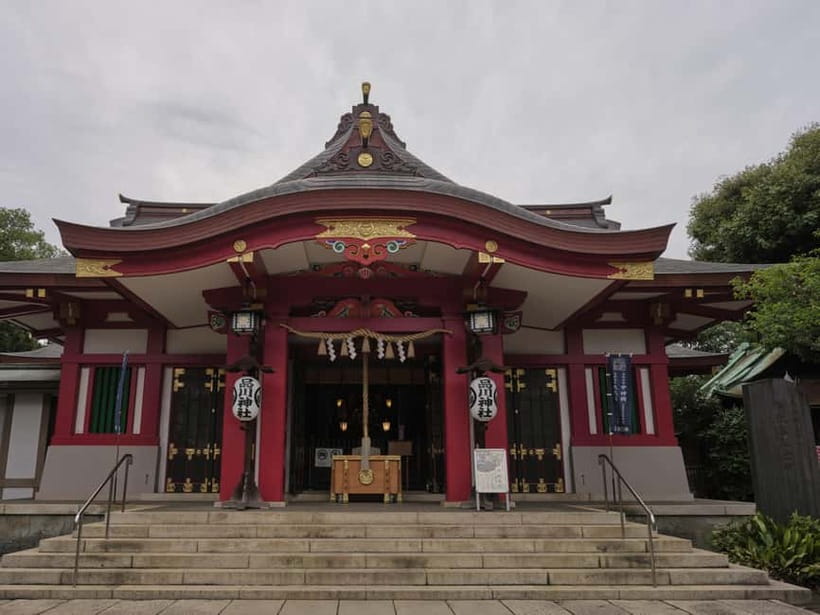
You’ll be meeting the team near a preschool and the temple 海德寺 (Kaideji). From there, it’s a focused 90 minutes with professional instruction, an English/French-speaking guide, and a small group capped at 10.
In This Review
- Key points to know before you go
- What Happens in Your First Minutes: Yukata or Samue, Then a Brush Lesson
- Learning the Basics of Brush Control and Classic Strokes
- The Meaning Behind the Characters: Spirituality and History in Plain Language
- Your Finished Calligraphy Work: A Real Souvenir You’ll Keep
- Tea, Calm Timing, and the Small-Group Experience
- Price and Value: Is $64 Worth 90 Minutes?
- Getting There: Meeting Near a Preschool and Kaideji (海德寺)
- Who Should Book This Calligraphy Workshop (and Who Should Skip)
- Quick “Do This, Don’t Do This” Tips
- Should You Book This Tokyo Calligraphy Class?
- FAQ
- How long is the calligraphy experience in Tokyo?
- How much does it cost?
- Is this class a small group?
- What languages are offered?
- What should I bring?
- Is it suitable for very young children or older adults?
Key points to know before you go
- Yukata or samue at the start makes the lesson feel like a real cultural moment, not a studio demo
- Hands-on kanji practice means you’ll actually move the brush and get coached while you do it
- Spiritual and historical meaning is explained in a way that helps the strokes feel purposeful
- Your finished piece goes home as a souvenir you can display (and re-make later if you keep practicing)
- Small-group size (max 10) helps you get corrections without waiting around
- Tea during the session keeps the pace gentle and gives you a real break between learning and writing
What Happens in Your First Minutes: Yukata or Samue, Then a Brush Lesson
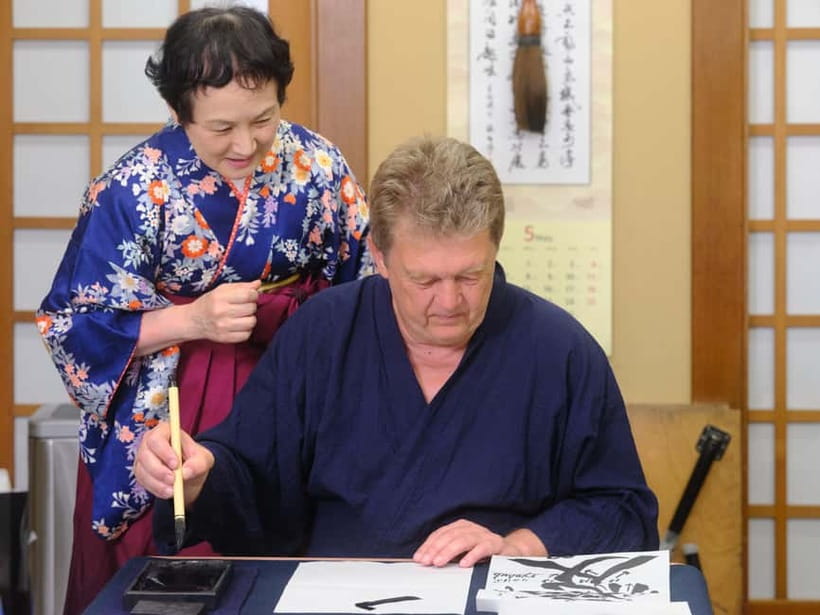
This is a short, 90-minute calligraphy class in Tokyo run by 日本書鏡院, designed for people who want real instruction without needing months of preparation. The experience starts by getting you into traditional clothing—often yukata or samue—so you’re not just learning a craft, you’re stepping into the setting that shapes the craft.
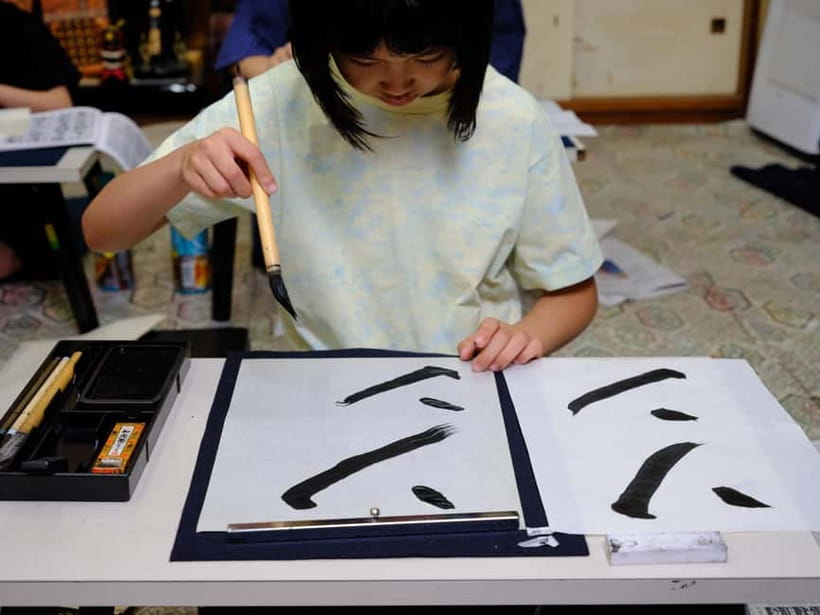
Then the tone turns focused and friendly. An English or French-speaking guide helps you follow along, while professional calligraphers teach technique. Expect a short warm-up where the instructor explains what you should do with your brush: how to hold it, how to control pressure, and how to set up the stroke so the ink lands the way it’s supposed to.
The lesson isn’t about making a perfect work on your first try. It’s about learning the rules that make calligraphy look right—basic stroke direction, consistent line weight, and the right rhythm. That’s why this class works even if you think you have no artistic talent. You’re not asked to “be an artist.” You’re taught to use the tools.
More hands-on studios our readers booked
- Tokyo Shinjuku Chopsticks Making Class
★ 5.0 · 1,763 reviews - Chopstick Making Workshop in Ginza
★ 4.8 · 1,366 reviews - Kintsugi Experience: Art of Golden Joinery in Tokyo
★ 5.0 · 467 reviews - Tokyo Chopstick Making Workshop with Artisan
★ 5.0 · 466 reviews
Learning the Basics of Brush Control and Classic Strokes
Calligraphy trips people up when they treat it like handwriting. In this class, you’re guided to do it like calligraphy: controlled movement, deliberate sequencing, and attention to the flow of ink.
You’ll practice things like:
- tracing or repeating basic lines and stroke order
- using the brush correctly so you get the shape of the character, not a blob
- writing a kanji as a guided exercise
- doing enough repetition to understand what the instructor means when they say slower, steadier, or lighter
What makes this especially valuable is that you’re not just copying a sample. Your instructor corrects what you’re doing as you go. In past sessions, the teaching style stood out: instructors such as Hana, Tomo, and Koushi are described as patient, structured, and very good at breaking the steps down. If you prefer a calm pace where you can ask questions, that matters.
The small group format (up to 10 people) also helps. If you’re struggling, you’re more likely to get direct guidance rather than a one-size-fits-all explanation.
The Meaning Behind the Characters: Spirituality and History in Plain Language
One of the most rewarding parts of calligraphy is that it’s never only about shapes. The strokes are connected to meaning—often linked to values, mindset, and cultural history.
In this class, you’ll get “insider knowledge” about the spiritual and historical background behind the characters. Even if you don’t read Japanese, this is taught in a way that connects the character to why people write it: focus, respect, discipline, and the idea that ink is a record of intention.
You’ll also notice something practical happening: when you understand what the character represents, the strokes stop feeling like random practice marks. They become a message. That’s the sort of mental shift you can carry home, whether you keep doing calligraphy or just remember how the process felt.
Your Finished Calligraphy Work: A Real Souvenir You’ll Keep
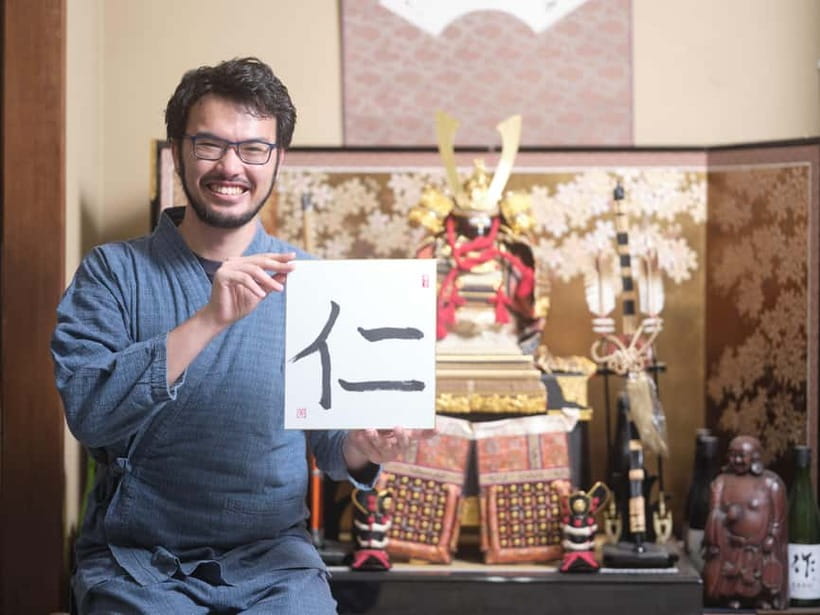
The best souvenir is the one you made with your own hands. Here, you take home a finished piece created during the class. You start with guided practice, then you produce a final work on the provided materials (often described as writing on a card or carton-like surface meant to be kept).
Many people like that the instructor doesn’t only supervise—if you want something personal, you may be able to incorporate that. In some sessions, instructors wrote the participant’s name as part of the final result, turning the piece into something more meaningful than a generic character.
Even if your final piece isn’t museum-perfect (because it’s your first real attempt), it has a strong “this is mine” feeling. And because it’s tangible calligraphy, it also makes a great conversation starter when you’re home and someone asks what you did in Japan.
Important practical tip: if you want to transport it safely, bring a little care on the way back to your hotel. Ink work deserves gentle handling.
Tea, Calm Timing, and the Small-Group Experience
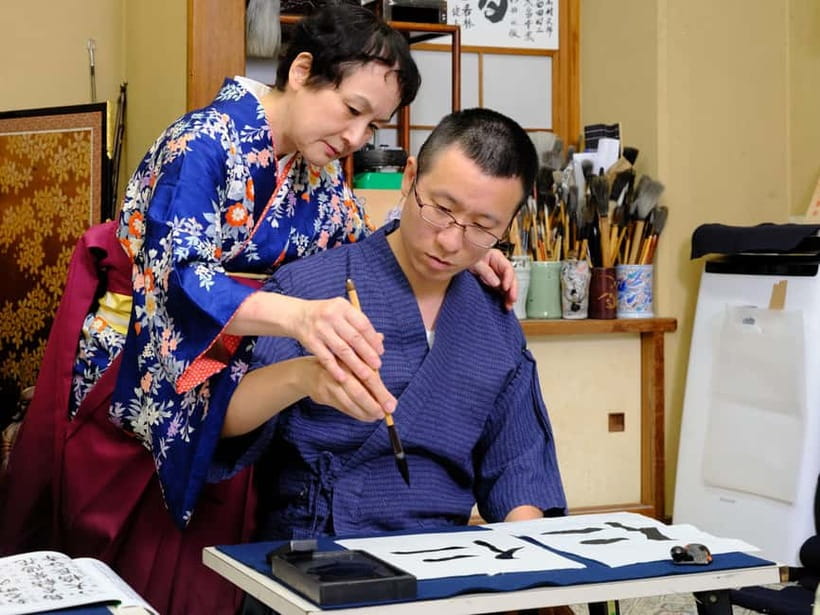
A lot of Tokyo activities feel rushed. This one has a slower rhythm built in. You’ll have a relaxing tea break with Japanese tea, which gives you a breather between practice and finishing. That matters because calligraphy rewards patience. When you’re calm, your hand does better work.
The group is limited to 10 participants, which helps in two ways. First, the teacher can spot issues faster—like uneven pressure or incorrect stroke direction. Second, it keeps the room from turning into a noisy classroom where your questions get lost.
Language is also a real factor. Instruction is offered in English and French, and an English/French-speaking guide supports you. If you’re deciding based on comfort with your language, this class is set up so you’re not stuck guessing what the teacher means.
And yes, people value the friendliness. In several accounts, assistants and instructors were praised for being attentive before and after the class—helping people feel at ease and, in at least one case, even supporting extra needs like arranging next steps around getting around town or finding calligraphy supplies.
- Tokyo: Shinjuku Food Tour (13 Dishes at 4 Local Eateries)★ 5.0 · 6,603 reviews
- Tokyo Mt Fuji 5th St & Hakone Cruise Bus Tour w/Bullet Train★ 4.4 · 5,024 reviews
- Flagship 2-Hours Official Street Go-Kart Tour – Tokyo Bay Shop★ 5.0 · 4,974 reviews
- From Tokyo: Mount Fuji Full-Day Sightseeing Trip★ 4.5 · 4,970 reviews
- Tokyo: Hop-On Hop-Off Sightseeing Bus Ticket★ 3.9 · 4,207 reviews
Price and Value: Is $64 Worth 90 Minutes?
At $64 per person for 90 minutes, you’re paying for more than “someone showing you brush strokes.” You’re paying for professional calligraphy teaching plus the tools, plus the finished souvenir piece, plus a tea break, plus English/French support in a small group.
Here’s the value angle I’d use when you’re deciding:
- You get real instruction (not a passive demo)
- Tools are handled for you, so you can show up without shopping for brushes and ink
- You leave with a finished item you can keep
- The class size supports better coaching
- The cultural framing (spiritual/historical meaning) makes the craft feel more grounded
If you were to buy supplies and teach yourself from scratch, the “learning curve cost” is real. This class compresses the basics into one focused session with corrections and context.
Getting There: Meeting Near a Preschool and Kaideji (海德寺)
You’ll meet at a spot described by landmarks: next to a preschool, and right beside 海德寺 (Kaideji). That’s a bit different from “Meet at Station X,” so I’d handle logistics early.
My practical advice:
- Save the meeting description in your phone notes and zoom in on the area before you head over
- If you’re using a taxi or ride-hail, show the name 海德寺 (Kaideji) to your driver or map app
- Plan to arrive a few minutes early so you’re not rushing when you’re changing into yukata or samue
Because the class is only 90 minutes, being late can hurt your experience fast.
Who Should Book This Calligraphy Workshop (and Who Should Skip)
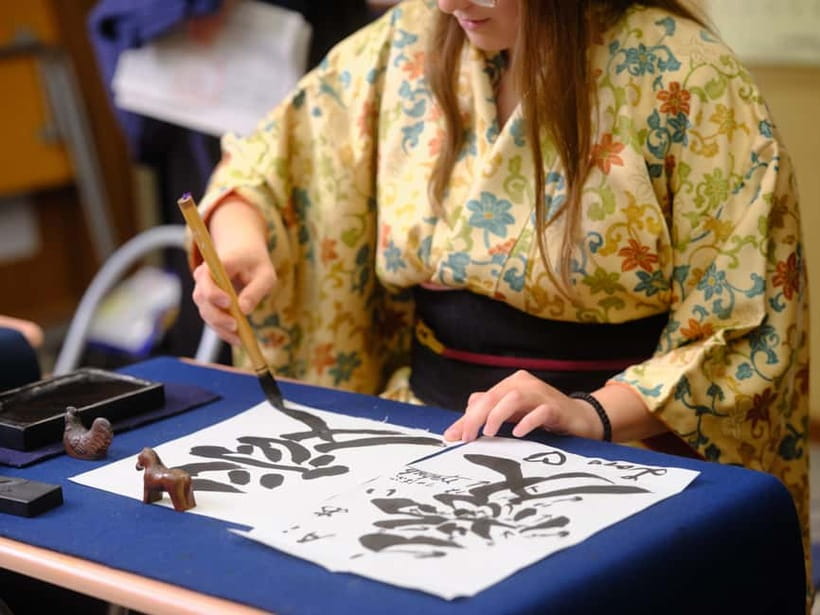
This class is best for you if you want:
- a hands-on cultural activity you can actually take home
- a short workshop with professional guidance
- a calm break with Japanese tea instead of a high-energy sightseeing sprint
- a chance to learn a meaningful element of Japanese culture, not just a photo-op
It’s also a good fit for families in some cases, since the teaching style is reported as patient and supportive. That said, the class has clear boundaries: it isn’t suitable for children under 4, and it isn’t recommended for people over 70.
Clothing matters. Bring clothes you don’t mind getting stained or inked. Even if you’re careful, calligraphy is messy by nature. Plan around that and you’ll enjoy it more.
Quick “Do This, Don’t Do This” Tips
If you want your session to go smoothly, these are the practical moves:
- Wear or bring clothes that can get dirty
- Expect a bit of ink on your hands or sleeves during brush practice
- Slow down and listen for corrections. In calligraphy, small changes matter.
- Take your time finishing your final piece. The goal isn’t speed—it’s control.
Also, if you’re choosing between English and French instruction, pick the one you’re most comfortable speaking. The clearer you are, the easier it is to ask questions and follow coaching.
Should You Book This Tokyo Calligraphy Class?
If you want one Tokyo experience that feels meaningful, teachable, and worth the money, this class is a strong choice. The format checks the boxes that matter: small group size, professional instruction, hands-on practice, a souvenir you keep, and a calm tea break.
I’d book it if you like activities where your hands do the work and your brain gets the cultural context. And I’d skip it only if you have trouble with messy materials or if the age recommendation doesn’t fit your group.
One final thought: calligraphy isn’t about producing a “perfect” piece. It’s about learning how the stroke carries intention. If that sounds like your kind of souvenir, you’ll likely leave with more than a nice card in your bag.
FAQ
How long is the calligraphy experience in Tokyo?
The class lasts 90 minutes.
How much does it cost?
The price is $64 per person.
Is this class a small group?
Yes. The group is limited to 10 participants.
What languages are offered?
Instruction and support are available in English and French.
What should I bring?
Bring clothes that can get dirty, since ink and brush work can leave smudges.
Is it suitable for very young children or older adults?
It is not suitable for children under 4 years and not suitable for people over 70 years.
More Tour Reviews in Tokyo
- Mt Fuji and Hakone 1-Day Bus Tour Return by Bullet Train
★ 5.0 · 26,383 reviews - 1-Day Tokyo Bus Tour
★ 5.0 · 14,250 reviews - Tokyo: teamLab Planets TOKYO Digital Art Museum Entry Ticket
★ 4.6 · 9,779 reviews - Mt Fuji & Hakone Cruise, Drum Show Bullet Train 1 Day from Tokyo
★ 4.0 · 7,413 reviews - Tokyo: Shinjuku Food Tour (13 Dishes at 4 Local Eateries)
★ 5.0 · 6,603 reviews
More Artisan Workshops in Tokyo
- Tokyo Shinjuku Chopsticks Making Class
★ 5.0 · 1,763 reviews - Chopstick Making Workshop in Ginza
★ 4.8 · 1,366 reviews - Kintsugi Experience: Art of Golden Joinery in Tokyo
★ 5.0 · 467 reviews - Tokyo Chopstick Making Workshop with Artisan
★ 5.0 · 466 reviews - Tokyo: Shinjuku Chopstick Making Class
★ 4.9 · 440 reviews
Latest Tokyo reviews off our desk




Craft & Artisan Workshops, compared.
 ★ 5.0Tokyo Shinjuku Chopsticks Making ClassFrom $201,763 reviews
 ★ 4.8Chopstick Making Workshop in GinzaFrom $251,366 reviews
 ★ 5.0Kintsugi Experience: Art of Golden Joinery in TokyoFrom $59467 reviews
 ★ 5.0Tokyo Chopstick Making Workshop with ArtisanFrom $26466 reviews
 ★ 5.0Authentic Pure Gold Kintsugi Workshop with Master Taku in TokyoFrom $142217 reviews
 ★ 5.0Calligraphy on Kanji Fan & Scroll with DrinkFrom $53210 reviews
Browse the lists this tour appears in