
Reviewed · CRAFT & ARTISAN WORKSHOPS
Tokyo: Discover the Art of Kintsugi in Ginza
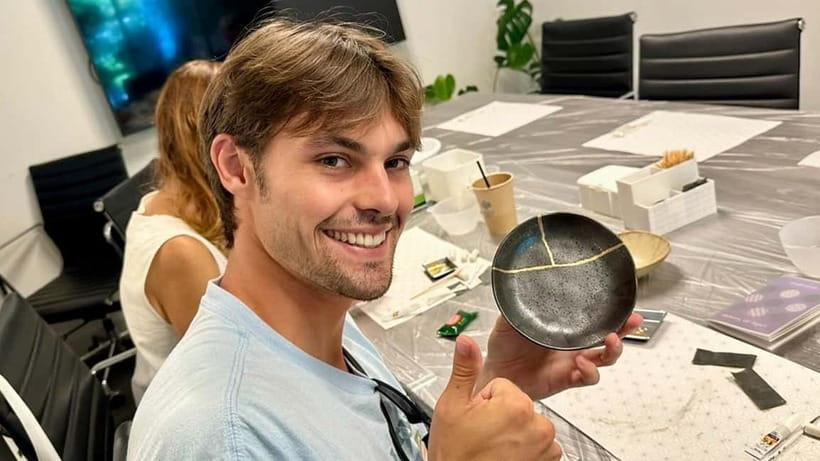
Tokyo has a way of teaching quiet lessons. This one pairs hands-on Kintsugi with a Tokyo location that’s easy to reach. You’ll fix a broken ceramic using lacquer lines that turn damage into design.
I especially like two things about this workshop: the small group (max 8) setup that keeps the pace manageable, and the fact you leave with a finished souvenir you made yourself. The instructor support matters too, and past sessions have been guided by teachers including Tatsu and Teki Sensei, who share stories while walking you through each step.
One consideration: this is a 90-minute, take-home Kintsugi version. That means it’s not the traditional month-long method using natural materials, so if you’re chasing the exact traditional finish, you’ll want to calibrate your expectations.
In This Review
- Key takeaways before you go
- Kintsugi in Ginza: a 90-minute lesson with real results
- Where you meet at Cafe AOU Ginza forest and how to show up smoothly
- Step one to step finish: what you’ll make and take home
- The Kintsugi method you’ll use: synthetic lacquer and metallic powder
- How the workshop pacing works in a small group (max 8)
- Complementary soft drink and the café-to-craft vibe near Ginza Station
- Packaging for the flight home: one of the underrated wins
- Price and value: is $75 worth it in Ginza?
- Who should book this Kintsugi workshop (and who should skip)
- Should you book Kintsugi in Ginza?
- FAQ
- Where is the meeting point for the Kintsugi workshop?
- How long is the workshop, and what do I take home?
- Is this workshop traditional Kintsugi, or a faster version?
- What language is the instruction, and how many people are in the group?
- Is the repaired ceramic microwave-safe?
- What’s the cancellation policy?
Key takeaways before you go
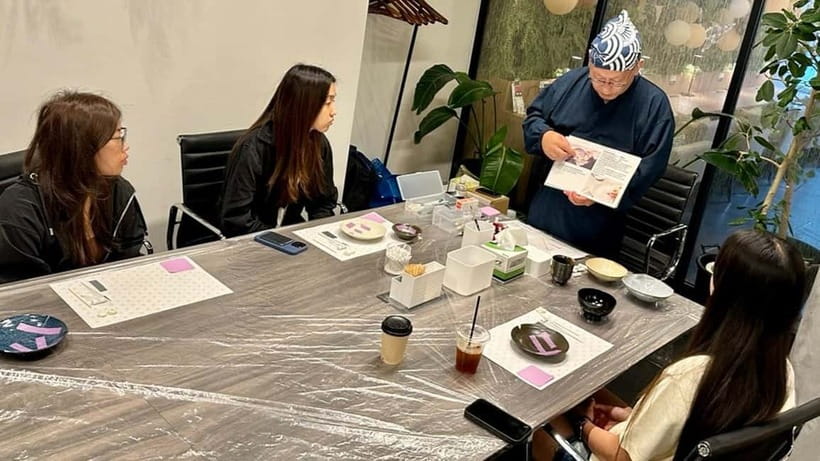
- Ginza access without the hassle: the room is about 3 minutes from Ginza Station and starts from a café at Daiwa Ginza Building.
- Take-home art you made: you repair a ceramic piece and package it for transport.
- Fast Kintsugi, modern materials: synthetic lacquer and metallic powder help you finish in 90 minutes.
- Clear step-by-step guidance: you work through the process with an instructor who answers questions as you go.
- A calmer break from shopping streets: the workshop feels more like a focused craft session than a tourist stop.
- Not for everyone: the class isn’t suitable for children under 10, and it’s not recommended if you’re dealing with a cold.
Kintsugi in Ginza: a 90-minute lesson with real results
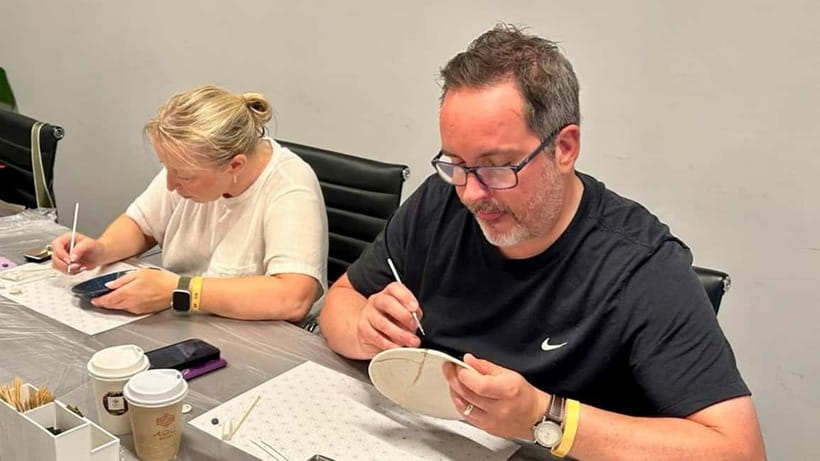
Kintsugi is the idea that breakage doesn’t have to mean the end. Instead of hiding cracks, you treat them like part of the object’s story—then you make those lines beautiful. In Ginza, that philosophy gets turned into a practical craft session you can actually finish in one sitting.
For me, the best part is the immediacy. You start with a cracked ceramic, and you end with a repaired piece that looks intentional, not patched up. And because everything is set up for you, you’re not hunting for tools or figuring out materials on your own.
This workshop is also timed well for a city break. Ninety minutes is long enough to feel you learned something real, but short enough that you’re not sacrificing an entire day. You’ll get the cultural context too, not just the technique, so the gold-like crack lines make more sense as an aesthetic choice rather than a gimmick.
More hands-on studios our readers booked
- Tokyo Shinjuku Chopsticks Making Class
★ 5.0 · 1,763 reviews - Chopstick Making Workshop in Ginza
★ 4.8 · 1,366 reviews - Kintsugi Experience: Art of Golden Joinery in Tokyo
★ 5.0 · 467 reviews - Tokyo Chopstick Making Workshop with Artisan
★ 5.0 · 466 reviews
Where you meet at Cafe AOU Ginza forest and how to show up smoothly
You’ll meet at Cafe AOU Ginza forest, on the ground level of the Daiwa Ginza Building. The venue is close to Ginza Station—about three minutes—so you’re not stuck in long station corridors.
In a busy place like Ginza, that matters. Tokyo station areas can be disorienting when you’re hungry or carrying bags. Here, having a ground-level café meeting point makes the first step easier.
One helpful detail from past participants: in at least some sessions, the instructor has met people right outside the building, which reduces the “where do I go” stress. I’d still suggest you arrive a few minutes early, since you want time to orient yourself in the building without rushing.
Also note: the workshop venue may change depending on availability and number of reservations. If that happens, you’ll be emailed the new location details one day before. It’s rare in most workshops, but it’s worth knowing so you don’t assume the meeting address always equals the exact room location.
Step one to step finish: what you’ll make and take home
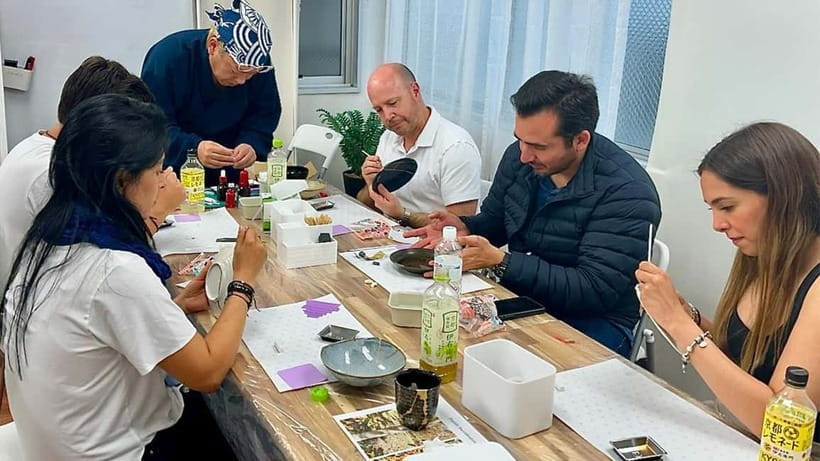
Your main output is simple and satisfying: you repair a ceramic piece and take it home afterward. That’s not just a “watch and craft” activity. You’ll do the hands-on work that creates the crack-line design.
Most people come for the philosophy, but leave thinking about the craft. The tactile part is key: working carefully along the break, applying lacquer, and following the steps your instructor lays out. You’ll see how small choices in placement and neatness affect the final look.
A nice touch is that the piece is packaged for travel. Multiple past participants pointed out how well it was protected for getting home safely. That’s a big practical win in Tokyo, where you might be carrying it through trains, stairs, and luggage transfers.
Some sessions may also offer choices—one past participant mentioned getting to select between two colored cracked plates. You may see options like that depending on what’s prepared for the group, but don’t count on a specific color.
Finally, keep expectations realistic about use. The repaired piece is recommended for decorative purposes only, and it is not microwave-safe due to ignition risk. Treat it like art you display, not like a daily dish.
The Kintsugi method you’ll use: synthetic lacquer and metallic powder
Traditional Kintsugi often takes weeks. The reason is time for materials to set properly, and the fact that authentic methods use natural lacquer processes that are slower. This workshop gives you a practical alternative.
In this class, you’ll use synthetic lacquer instead of natural lacquer. Metallic powder is used as a substitute for gold so you can finish and take home your repaired ceramic within the full 90 minutes. That’s the big reason this feels doable as a Tokyo activity: you get a complete result the same day.
What you learn, though, still connects to the core idea of Kintsugi: repairing the break lines with an intentional visual treatment. You’re not just gluing a crack and hoping nobody sees it. You’re creating a decorative pattern that highlights damage as part of the object.
I also like that the workshop emphasizes process over perfection. The goal is not a museum-grade piece; it’s a genuine, personal souvenir made through a real craft workflow. With guidance available as you go, you can focus on your technique rather than getting stuck troubleshooting materials.
One more practical note: because you’re using take-home materials and moving through a timed workshop, plan to handle your piece carefully during and after class. The packaging is meant to help, but you’ll still want to treat it gently until you’ve settled into your next part of the trip.
How the workshop pacing works in a small group (max 8)
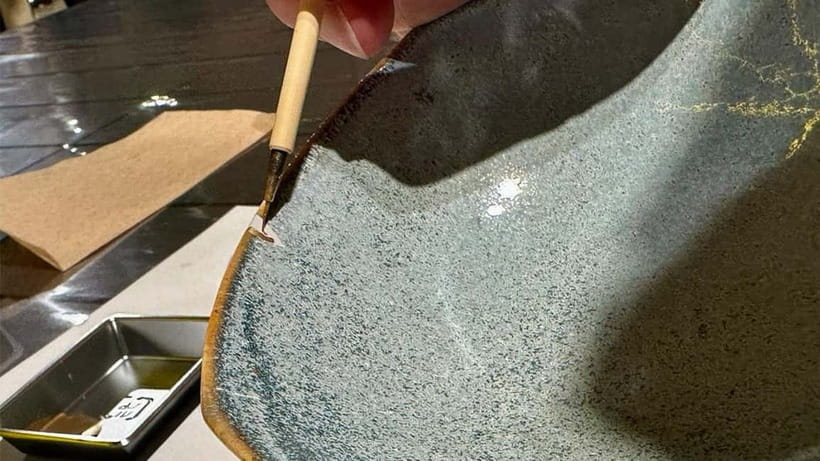
With a small group—limited to 8 participants—you’re not lost in a crowd. That shows up in two ways: you get more attention when you need it, and you can keep your hands moving instead of waiting forever for supervision.
Past experiences also suggest that the instruction team can be flexible with timing. One participant wished for more hands-on time, explaining that if someone finishes slower, others may need to keep pace so everyone completes within the session. That’s normal in a craft workshop with a hard end time.
So here’s my practical advice: go in ready to concentrate for the full 90 minutes. If you try to multitask, you’ll feel it when the steps move forward. If you stay focused, you’ll likely feel you had enough time to actually participate, not just observe.
You’ll have an instructor who can speak English and Japanese, which helps a lot when you have questions about technique. And since past classes were described as friendly and story-filled, the session tends to feel like a conversation with craft in the middle, not a rigid lecture.
- Tokyo: Shinjuku Food Tour (13 Dishes at 4 Local Eateries)★ 5.0 · 6,603 reviews
- Tokyo Mt Fuji 5th St & Hakone Cruise Bus Tour w/Bullet Train★ 4.4 · 5,024 reviews
- Flagship 2-Hours Official Street Go-Kart Tour – Tokyo Bay Shop★ 5.0 · 4,974 reviews
- From Tokyo: Mount Fuji Full-Day Sightseeing Trip★ 4.5 · 4,970 reviews
- Tokyo: Hop-On Hop-Off Sightseeing Bus Ticket★ 3.9 · 4,207 reviews
Complementary soft drink and the café-to-craft vibe near Ginza Station
This workshop is set in a cozy private room near the café meeting point. That café-to-craft transition is more than ambiance. It helps you settle quickly in the middle of a commercial area.
You’ll also get a complimentary soft drink. Some participants mentioned coffee as part of the welcome, so you can expect something refreshing that makes the start feel smooth after you’ve walked around Ginza.
I like that this isn’t framed as a rushed “photo stop” activity. The tone feels calm and focused, which is exactly what I want during a trip where the streets can feel loud. You end up with a craft result and a mental reset.
Packaging for the flight home: one of the underrated wins
Taking home your own repaired ceramic sounds great—until you have to transport it. This is where the workshop does something smart: it packages your piece carefully.
More than one participant highlighted the packaging as a surprise in a good way. The point isn’t just protection; it’s confidence. When you know your souvenir is stabilized for travel, you can stop worrying about where to store it on the train or how to pack it around other bags.
If you’re juggling a shopping-heavy Ginza day, this matters even more. You’re going to carry things. Having the Kintsugi piece already packaged means you can plan your luggage strategy without improvising fragile packing at the last minute.
Price and value: is $75 worth it in Ginza?
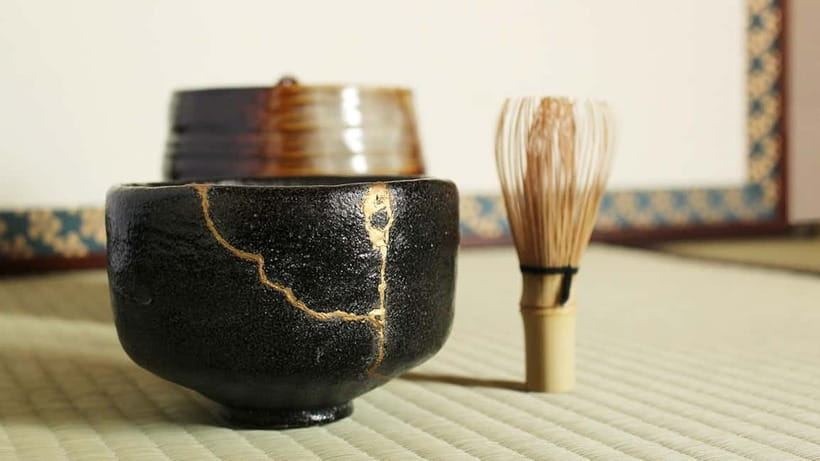
$75 for a 90-minute Kintsugi workshop in central Ginza is not “budget,” but it doesn’t feel overpriced either for what’s included. You’re paying for:
- a real instructor-led process (English/Japanese support)
- all tools and materials
- a ceramic piece to repair
- a take-home souvenir
- and a soft drink
- plus the practical advantage of packaging it well enough for travel
In other words, you’re not paying just for a performance or a demo. You’re buying time, guidance, and materials that you’d otherwise have to source yourself. And because you finish the project within the session using synthetic lacquer and metallic powder, you’re not paying for a course that drags into next month.
If you compare this to the cost of buying a Kintsugi-style ceramic in Tokyo, it can also make sense. Handmade work is rarely cheap, and here you get the story that comes with making it yourself, plus the hands-on learning.
Who should book this Kintsugi workshop (and who should skip)
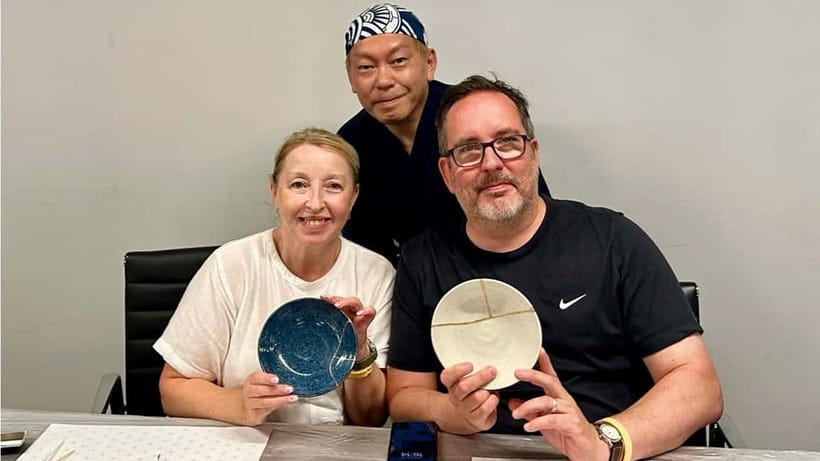
This is a strong fit if you:
- want a Ginza activity that isn’t only shopping or museum wandering
- like hands-on crafts and want step-by-step instruction
- enjoy cultural aesthetics with a practical result you can display at home
- appreciate small groups and a calmer pace
You might want to skip or reconsider if you fall into the activity’s listed limitations. The workshop isn’t suitable for children under 10, babies under 1, people with mobility impairments, people with a cold, and hearing-impaired people. That’s not picky policy; it’s about keeping the session safe and workable for everyone.
It’s also worth booking only if you can accept the workshop’s format: it’s a 90-minute take-home Kintsugi using quicker-set materials. If you’re hoping for the exact traditional timeline and methods, you’ll get the spirit and the technique, but not the month-long authentic process.
Should you book Kintsugi in Ginza?
If you’re in Tokyo and you want one meaningful activity that you can finish in a single block of time, I think this is a solid choice. The combination of small group size, instruction support, and taking home the repaired ceramic makes the class feel like more than a tour—more like a crafted memory.
Book it if you want a hands-on souvenir and you like the idea of repairing rather than replacing. I’d also book it if you’re already in the Ginza area and you want something quiet and artsy without leaving the center of the city.
Skip it if fragile craft makes you nervous or if you’re looking for the traditional month-long method. The workshop is designed for completion in 90 minutes, and the use of synthetic lacquer is part of that trade.
If you want a calm craft session near Ginza Station with a real result in your hands—and a package ready for travel—this one fits the bill.
FAQ
Where is the meeting point for the Kintsugi workshop?
You’ll meet at Cafe AOU Ginza forest, located on the ground level of the Daiwa Ginza Building.
How long is the workshop, and what do I take home?
The workshop lasts 90 minutes. You take home the repaired ceramic piece that you restore during the class.
Is this workshop traditional Kintsugi, or a faster version?
It uses synthetic lacquer instead of natural lacquer, and metallic powder instead of gold, so you can complete and take home your piece within 90 minutes.
What language is the instruction, and how many people are in the group?
The instructor speaks English and Japanese. The group is small, limited to 8 participants.
Is the repaired ceramic microwave-safe?
No. The repaired item is not microwave-safe due to the risk of ignition, and it’s recommended for decorative use only.
What’s the cancellation policy?
You can cancel up to 24 hours in advance for a full refund.
More Tour Reviews in Tokyo
- Mt Fuji and Hakone 1-Day Bus Tour Return by Bullet Train
★ 5.0 · 26,383 reviews - 1-Day Tokyo Bus Tour
★ 5.0 · 14,250 reviews - Tokyo: teamLab Planets TOKYO Digital Art Museum Entry Ticket
★ 4.6 · 9,779 reviews - Mt Fuji & Hakone Cruise, Drum Show Bullet Train 1 Day from Tokyo
★ 4.0 · 7,413 reviews - Tokyo: Shinjuku Food Tour (13 Dishes at 4 Local Eateries)
★ 5.0 · 6,603 reviews
More Artisan Workshops in Tokyo
- Tokyo Shinjuku Chopsticks Making Class
★ 5.0 · 1,763 reviews - Chopstick Making Workshop in Ginza
★ 4.8 · 1,366 reviews - Kintsugi Experience: Art of Golden Joinery in Tokyo
★ 5.0 · 467 reviews - Tokyo Chopstick Making Workshop with Artisan
★ 5.0 · 466 reviews - Tokyo: Shinjuku Chopstick Making Class
★ 4.9 · 440 reviews
Latest Tokyo reviews off our desk






Craft & Artisan Workshops, compared.
 ★ 5.0Tokyo Shinjuku Chopsticks Making ClassFrom $201,763 reviews
 ★ 4.8Chopstick Making Workshop in GinzaFrom $251,366 reviews
 ★ 5.0Kintsugi Experience: Art of Golden Joinery in TokyoFrom $59467 reviews
 ★ 5.0Tokyo Chopstick Making Workshop with ArtisanFrom $26466 reviews
 ★ 5.0Authentic Pure Gold Kintsugi Workshop with Master Taku in TokyoFrom $142217 reviews
 ★ 5.0Calligraphy on Kanji Fan & Scroll with DrinkFrom $53210 reviews
Browse the lists this tour appears in