
Reviewed · SUMO TOURNAMENTS & SHOWS
Tokyo: Grand Sumo Morning Training Tour
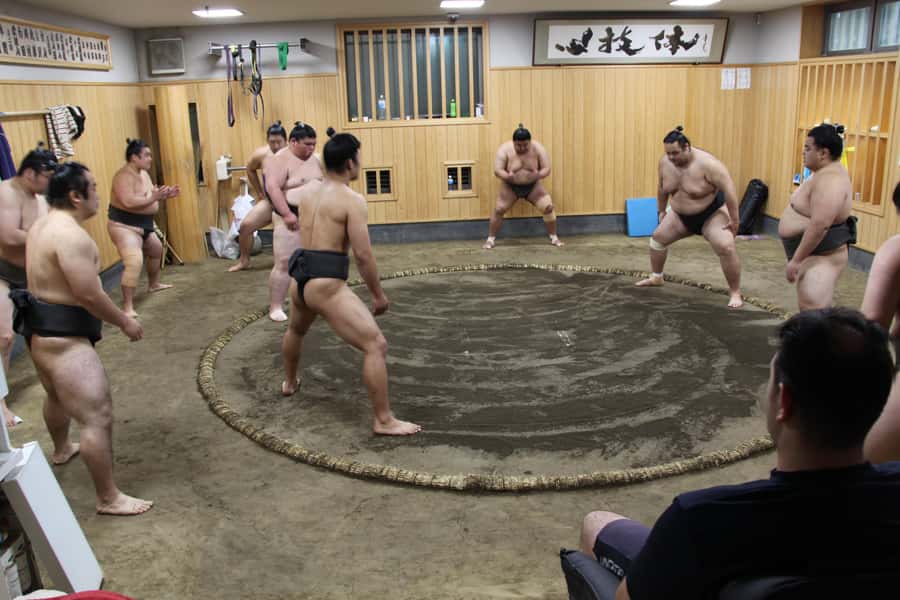
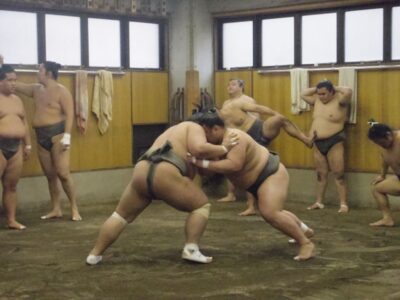
Sumo practice hits different in Tokyo. You’ll watch professional wrestlers work at a sumo stable during a morning training session, guided in English, with a chance to get very close to the action.
What I like most is the up-close training feeling—you can actually see the effort, focus, and discipline—and the ceremonial photo at the end. It’s one of those experiences where you leave with a memory that feels personal, not staged.
One thing to plan for: you’ll sit on the floor during the lesson and there are rules on movement, plus you’ll need to be there early and follow the stable staff instructions exactly.
In This Review
- Key things worth knowing
- Finding Honjo-Azumabashi: The Start Is Easy, But Be Early
- Getting Into the Sumo Stable: Permission and Procedure
- The Morning Training Session: Watching Close Up (Without a Distraction)
- Floor Seating Rules: Comfort Prep for a 2-Hour Session
- What You Can (and Can’t) Film: Photo Rules That Matter
- The End Moment: Ceremonial Photo With a Sumo Wrestler
- After the Tour: Asakusa Is Nearby for a Second Morning
- Price and Value: Why This 2-Hour Tour Can Be Worth It
- Who This Sumo Training Tour Is For
- Small Practical Tips That Make the Difference
- Should You Book This Tokyo Grand Sumo Morning Training Tour?
- FAQ
- Where is the meeting point for the tour?
- What time should I arrive at the meeting point?
- How long is the tour?
- Is the tour guided in English?
- Can I take photos or record video?
- Will there be chairs to sit on during the lesson?
- What should I bring and wear?
- Is this tour suitable for wheelchair users or young children?
- Can I cancel and get a full refund?
Key things worth knowing
- Meet at Honjo-Azumabashi Station (Exit A4): Clear meeting point, but you still need to show up at least 10 minutes early.
- A real sumo stable session: You’re not watching from a distance in a theater vibe.
- Floor seating only: No chairs, and stretching out your legs isn’t allowed.
- Rules around photography and recording: Flash photography, selfie sticks, and video/audio recording are not permitted.
- You get a formal photo moment: After training, you can take a ceremonial photo with a wrestler.
- You can’t re-enter once you leave your seat: So make sure you’re settled when they call everyone in.
Finding Honjo-Azumabashi: The Start Is Easy, But Be Early
This tour starts at Honjo-Azumabashi Station, Exit A4. The coordinates in the listing are roughly 35.7087, 139.8049, which is handy if you like a GPS check before you leave the hotel.
Plan to arrive at least 10 minutes early. The session proceeds on time, and late arrivals won’t be accommodated. That matters because once you’re in, you’re dealing with stable staff rules and set seating.
Other ringside bookings readers scored
- Tokyo: Sumo Show and Dining Experience
★ 4.8 · 2,742 reviews - the SUMO show
★ 5.0 · 1,960 reviews - Tokyo Shinjuku Sumo Show & Experience with Photo
★ 5.0 · 1,750 reviews - Tokyo: Sumo Show and Experience in Shinjuku
★ 4.8 · 1,001 reviews
Getting Into the Sumo Stable: Permission and Procedure
Once you meet your English-speaking guide, you’ll be led to the sumo stable for the morning practice. This part has a real-world feel: you don’t just walk in casually. Visitors must get permission before entering, and you can’t re-enter once you leave your seat.
So treat it like a controlled access area. Listen closely to your guide and the staff. The tour also notes that the session can change based on the wrestlers’ physical condition or other unforeseen circumstances—Japan is careful about safety and respect, and this tour reflects that.
The Morning Training Session: Watching Close Up (Without a Distraction)
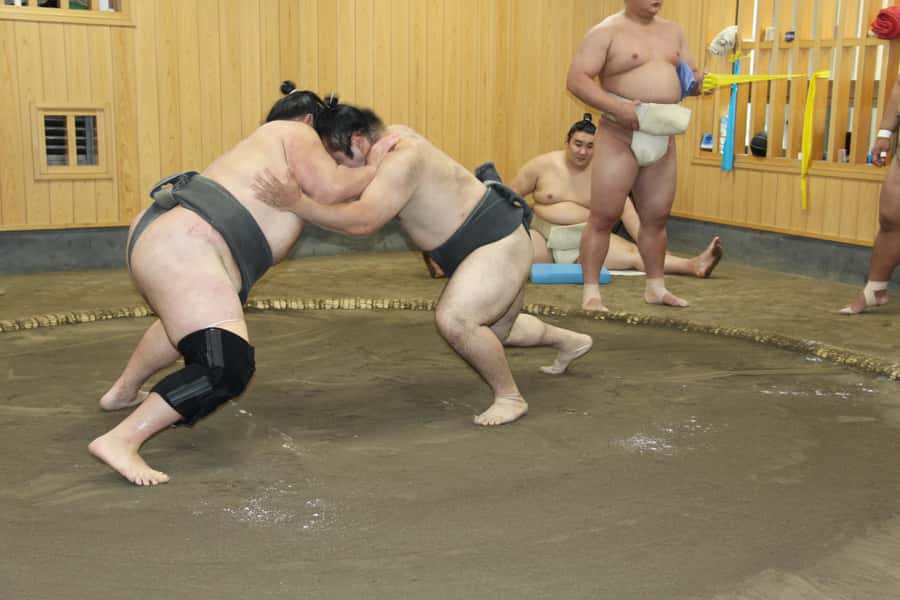
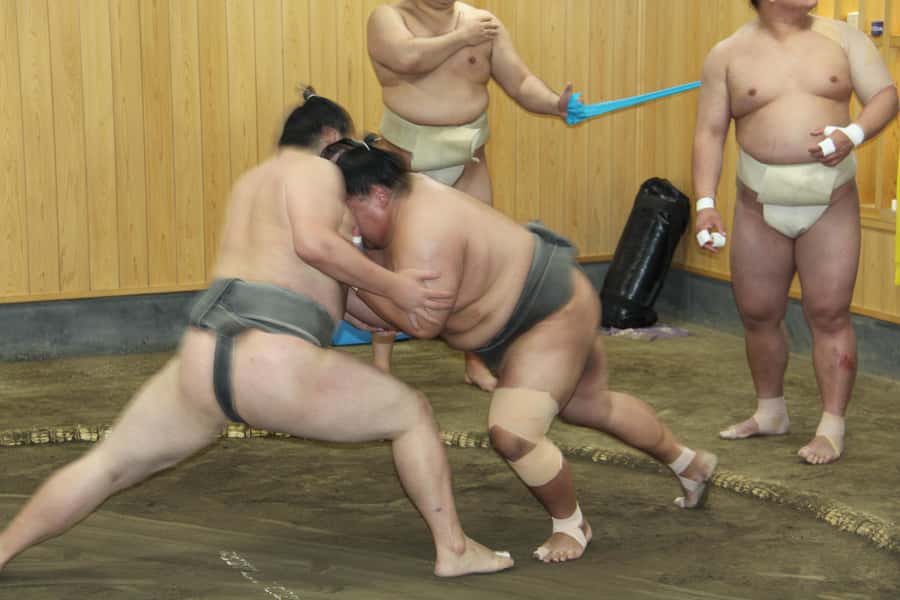
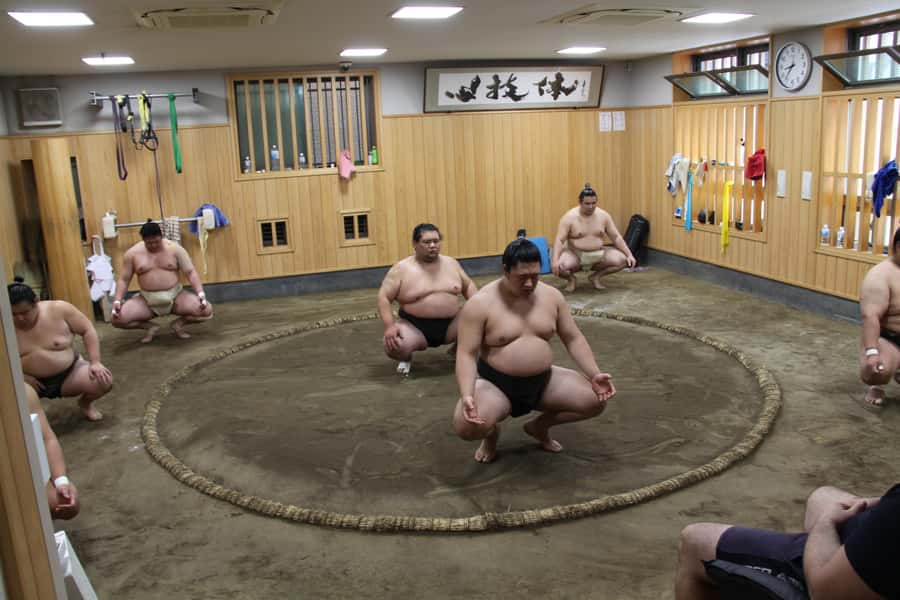
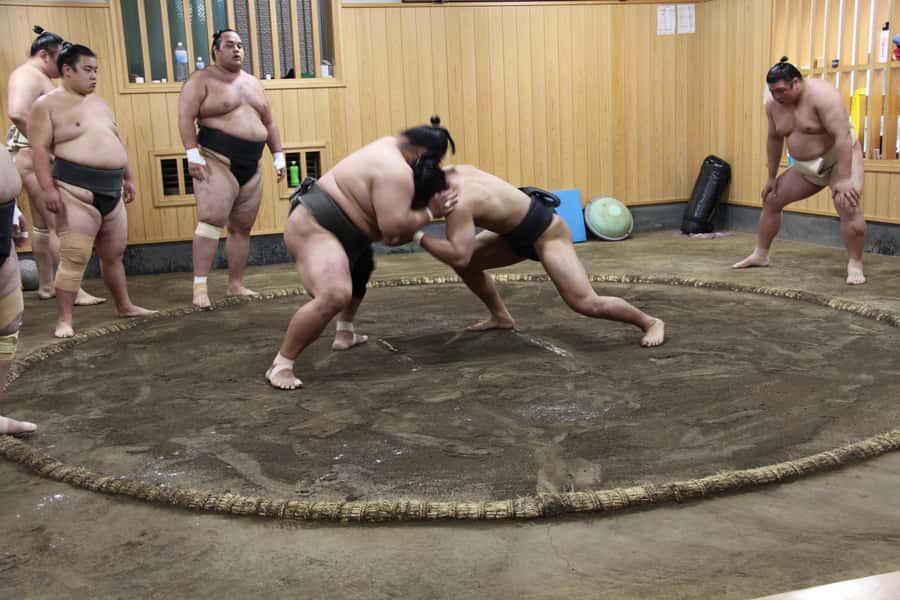
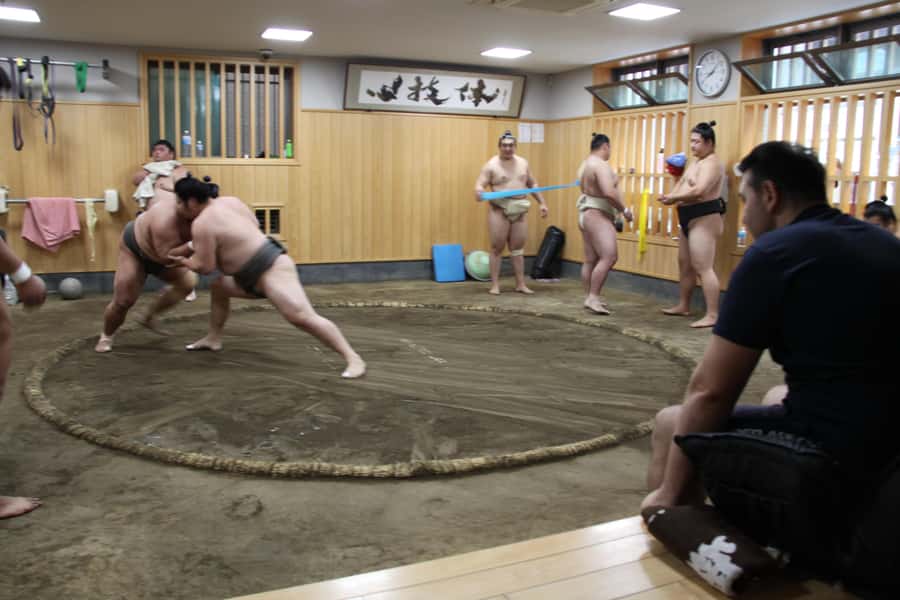
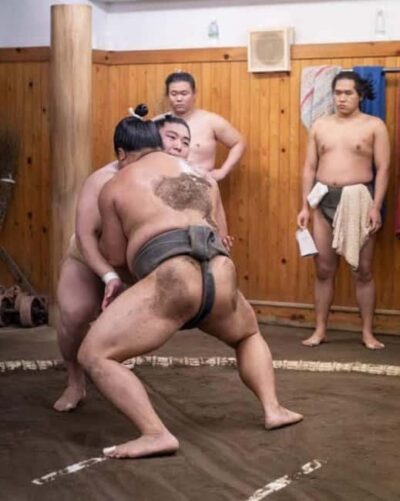
The main event is the training itself. You get to watch professional sumo wrestlers practice in the stable during a structured morning session, close enough that it feels intense rather than distant. The standout theme from the experience is how close you are to what they’re doing, with people frequently highlighting that the wrestlers are right in front of you.
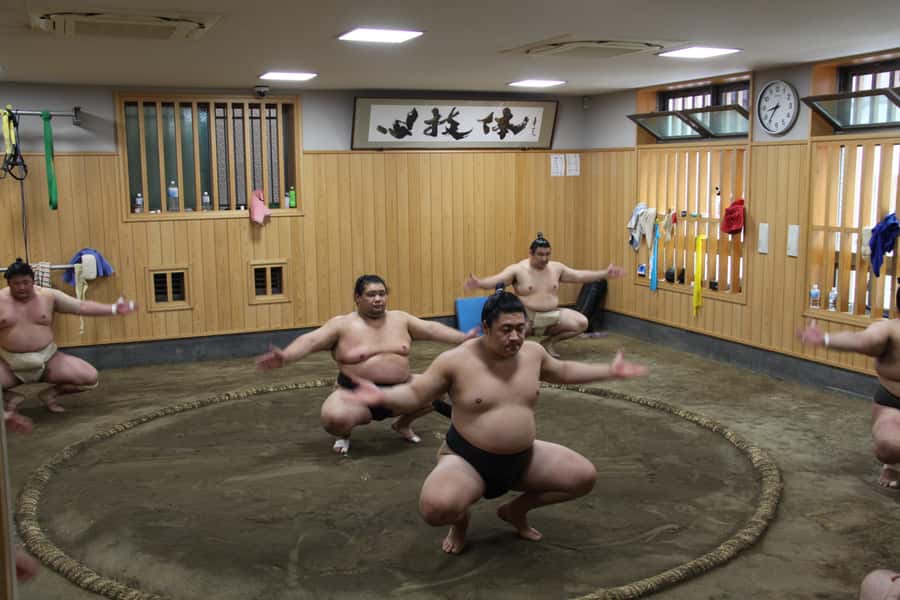
You’ll likely be struck by the level of discipline you can see in the way they train. Even without extra commentary, the routine makes it obvious why sumo is more than a sport—it’s a full practice mindset. The atmosphere is about effort and determination, not performance for the crowd.
Floor Seating Rules: Comfort Prep for a 2-Hour Session
This is where people either enjoy it a lot or feel grumpy halfway through, so plan smart. Chairs are not provided. During the lesson, you’ll sit on the floor, and you should avoid stretching your legs out.
Also note the rule: you can’t re-enter once you leave your seats. That means bathroom breaks and water planning should be handled before you settle. If you’re stiff in the morning, wear comfortable clothes and consider bringing a small layer you can tolerate for sitting.
Other key restrictions also help you understand the setting:
- No luggage or large bags
- No short skirts
- No baby strollers
- No weapons or sharp objects
- No smoking or vaping
That’s not just “housekeeping.” The stable environment is tight, formal, and staff-focused, so the rules keep things orderly.
What You Can (and Can’t) Film: Photo Rules That Matter
You’ll want pictures, but you also need to follow the stable rules. Here’s what’s clearly not allowed:
- Video recording
- Audio recording
- Flash photography
- Selfie sticks
- Photography inside while using flash is specifically called out, along with the other recording limits
So what’s a practical approach? Use your phone or camera normally, skip anything that looks like a tripod situation, and turn off flash. Keep it simple. The goal is to watch the training, not turn it into a tech demo.
And yes, there’s a special photo moment at the end. After the training concludes, you’ll have the chance for a ceremonial photograph with a sumo wrestler. One of the most liked parts of the experience is that you’re not just watching and leaving—you get that final memory at the right time.
Readers also shortlisted these Tokyo bookings:
- Tokyo: Sumo Morning Practice Viewing Tour★ 4.8 · 570 reviews
- Tokyo: Sumo Morning Training Visit★ 4.4 · 370 reviews
- Tokyo: Visit Sumo Morning Practice with English Guide★ 4.7 · 343 reviews
- Tokyo: Sumo Morning Practice Tour at Sumida City★ 4.8 · 308 reviews
- Tokyo Sumo Morning Practice Tour at Stable★ 5.0 · 298 reviews
The End Moment: Ceremonial Photo With a Sumo Wrestler
After the lesson concludes, the tour includes a ceremonial photograph opportunity with a sumo wrestler. People often talk about how much they appreciate that the photo part is organized and that there’s time taken to make it happen properly.
This is worth mentally preparing for. You’ll be dealing with the energy of the training session, then switching gears into a more formal photo moment. Think of it as a short, respectful interaction to cap off the experience.
After the Tour: Asakusa Is Nearby for a Second Morning
Once you finish at the stable, you’ll say farewell and you have the option to explore nearby sights, especially the historic district of Asakusa. Since the tour is only 2 hours, it’s a nice way to cover something deeply Japanese early on, then move into sightseeing without burning your whole day.
If you’ve never walked Asakusa before, this is a solid time to do it. You’ll already be in the vibe of old Tokyo routines, and you can keep the morning theme going.
Price and Value: Why This 2-Hour Tour Can Be Worth It
There’s no point pretending this is a casual “walk by and watch” moment. You’re paying for access, timing, and an English-speaking guide who knows how to work within the stable rules. That kind of smooth coordination is the whole value here—skip the ticket line is specifically included.
You’re also getting something most sumo experiences don’t: close-up viewing in an active training environment plus the structured end photo moment. If you want a memory that’s more than a generic sightseeing snapshot, this format is a strong fit.
Who This Sumo Training Tour Is For
This tour suits you if:
- You want to see professional wrestlers training up close
- You prefer structured, guided cultural access over DIY hunting
- You’re okay with sitting on the floor and following strict stable etiquette
- You like the idea of an end-of-session ceremonial photo moment
It may not suit you if:
- You need wheelchair accessibility—this is listed as not suitable for wheelchair users
- You’re traveling with children under 3 years
- You don’t tolerate rules well (the stable removes non-compliance and the tour requires you to follow staff instructions)
- You dislike early starts, since the meeting point is fixed and the tour moves on schedule
Small Practical Tips That Make the Difference
Based on the rules and how these sessions typically run, I’d do these things:
- Wear comfortable clothes. You’ll sit on the floor.
- Travel light. Large bags and luggage aren’t allowed.
- Skip flash and filming gadgets like selfie sticks.
- Be ready for the tour to adjust if the wrestlers’ condition changes. It happens, and the tour notes it clearly.
One more smart move: keep your expectations grounded. This isn’t a variety show. It’s a training session with strict behavior rules, and that seriousness is part of why the experience feels real.
Should You Book This Tokyo Grand Sumo Morning Training Tour?
If your goal is a close-up, hands-on look at sumo training with a guide handling the tricky parts, this is a strong choice. The biggest reasons to book are simple: you get intense, front-row-style viewing and you end with a ceremonial photo that turns observation into a tangible memory.
I’d hesitate only if you strongly dislike floor seating or you need accessibility accommodations. If those are deal-breakers, you’ll likely feel uncomfortable rather than impressed.
If you’re a fit for it, this is exactly the kind of Tokyo experience that makes you feel like you actually stepped into a working tradition, not just looked at something behind glass.
FAQ
Where is the meeting point for the tour?
You meet at Honjo-Azumabashi Station, Exit A4. The guide will be waiting near Exit A4.
What time should I arrive at the meeting point?
Arrive at least ten minutes before the stated departure time. Late arrivals will not be accommodated.
How long is the tour?
The tour lasts about 2 hours.
Is the tour guided in English?
Yes. The tour includes a live English-speaking guide.
Can I take photos or record video?
Flash photography is not allowed, and video recording is not allowed. Audio recording is also not allowed. Selfie sticks are not allowed either.
Will there be chairs to sit on during the lesson?
No. Chairs are not provided, and you must sit on the floor.
What should I bring and wear?
Bring comfortable clothes. You should also avoid items that are not permitted, like large bags and restricted clothing.
Is this tour suitable for wheelchair users or young children?
No, it is not suitable for wheelchair users. Children under 3 years are also not suitable.
Can I cancel and get a full refund?
Yes. You can cancel up to 24 hours in advance for a full refund.
More Tours in Tokyo
- Mt Fuji and Hakone 1-Day Bus Tour Return by Bullet Train
★ 5.0 · 26,383 reviews - 1-Day Tokyo Bus Tour
★ 5.0 · 14,250 reviews - Tokyo: Shinjuku Food Tour (13 Dishes at 4 Local Eateries)
★ 5.0 · 6,603 reviews - Tokyo Mt Fuji 5th St & Hakone Cruise Bus Tour w/Bullet Train
★ 4.4 · 5,024 reviews - Flagship 2-Hours Official Street Go-Kart Tour – Tokyo Bay Shop
★ 5.0 · 4,974 reviews
More Tour Reviews in Tokyo
- Mt Fuji and Hakone 1-Day Bus Tour Return by Bullet Train
★ 5.0 · 26,383 reviews - 1-Day Tokyo Bus Tour
★ 5.0 · 14,250 reviews - Tokyo: teamLab Planets TOKYO Digital Art Museum Entry Ticket
★ 4.6 · 9,779 reviews - Mt Fuji & Hakone Cruise, Drum Show Bullet Train 1 Day from Tokyo
★ 4.0 · 7,413 reviews - Tokyo: Shinjuku Food Tour (13 Dishes at 4 Local Eateries)
★ 5.0 · 6,603 reviews
More Sumo, Ringside and Rated
- Tokyo: Sumo Show and Dining Experience
★ 4.8 · 2,742 reviews - the SUMO show
★ 5.0 · 1,960 reviews - Tokyo Shinjuku Sumo Show & Experience with Photo
★ 5.0 · 1,750 reviews - Tokyo: Sumo Show and Experience in Shinjuku
★ 4.8 · 1,001 reviews - Tokyo Grand Sumo Tournament Viewing Tour with Tickets
★ 5.0 · 692 reviews
Latest Tokyo reviews off our desk






Sumo Tournaments & Shows, compared.
 ★ 4.8Sumo Show and Dining ExperienceFrom $792,742 reviews
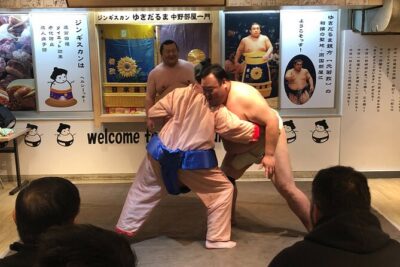 ★ 5.0the SUMO showFrom $891,960 reviews
 ★ 5.0Tokyo Shinjuku Sumo Show & Experience with PhotoFrom $791,750 reviews
 ★ 4.8Sumo Show and Experience in ShinjukuFrom $691,001 reviews
 ★ 5.0Tokyo Grand Sumo Tournament Viewing Tour with TicketsFrom $124692 reviews
 ★ 5.0Tokyo Sumo Wrestling Tournament ExperienceFrom $124660 reviews
 ★ 4.7Luxury Sumo Show Experience & Japanese cuisine & DrinkFrom $103577 reviews
 ★ 4.8Sumo Morning Practice Viewing TourFrom $81570 reviews
Browse the lists this tour appears in