
Reviewed · CRAFT & ARTISAN WORKSHOPS
Tokyo Ikebana, Japanese Traditional Flower Arrangement Experience
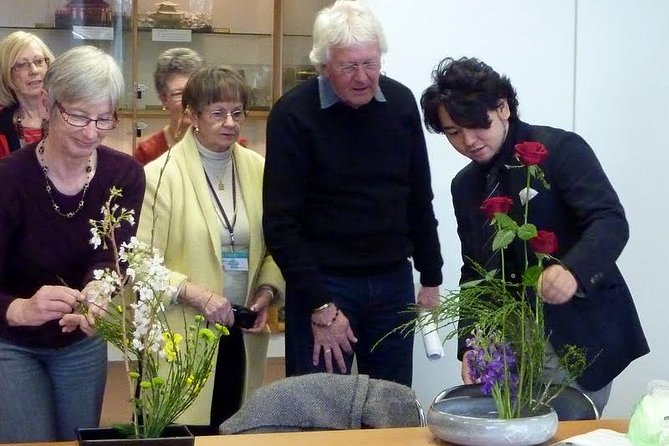
A flower lesson with Zen math. This beginner-focused ikebana class blends basic principles and then gets you arranging right away, so it stops feeling mysterious fast. I love that it teaches you step-by-step without making you feel behind.
I also love that everything is set up for an easy win: all materials are provided, and the class uses seasonal local flowers that match what’s fresh in Japan right now. The instructors’ energy matters too, and you may get guidance from instructors like Sensei Naohiro Kasuya or Mrs. Shimakawa.
One possible drawback: it’s only about 1 hour 10 minutes, so if you want long practice time, you may wish it were longer.
In This Review
- Key points worth knowing
- Ikebana in Nakano: what you’re actually making
- Where 一葉式いけ花本部 is and how to find it
- The 70-minute lesson flow: from basics to a finished arrangement
- The fundamentals that make your arrangement look right fast
- Seasonal local flowers and why that matters
- Materials included: the best part of traveling light
- Instructors, language, and the “patient by design” vibe
- Price and value: what $67.28 buys you in the real world
- Who should book this ikebana class?
- Should you book Tokyo Ikebana?
- FAQ
- FAQ
- How long is the Tokyo Ikebana experience?
- Is this class beginner-friendly?
- What is included in the price?
- Do I need to bring my own flowers or tools?
- What kind of flowers will I use?
- Where does the experience meet?
- How big is the group?
- Can children join?
- Is there a hotel pickup option?
- What is the cancellation/refund policy?
Key points worth knowing
- Beginner-first teaching with instruction matched to your level
- Hands-on arranging after a clear explanation of angles and form
- Seasonal local flowers used for your final composition
- Materials and tools included, so you can travel light
- Small group size (max 10 people) for calmer, more personal guidance
- Plenty of photos once your arrangement is finished
Ikebana in Nakano: what you’re actually making
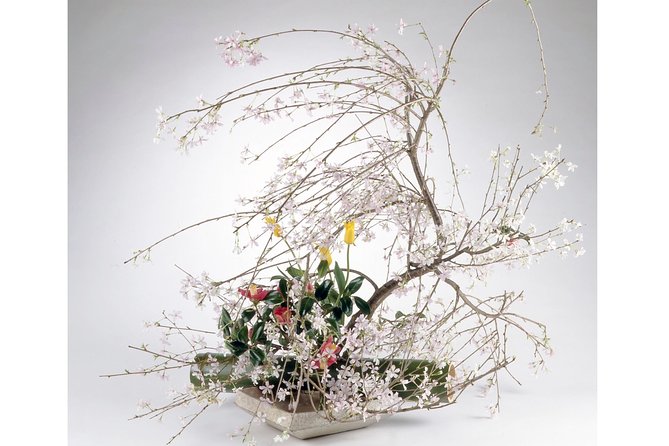
Ikebana is flower arranging with rules—and freedom. The goal isn’t to make something loud. It’s to shape stems and materials so the arrangement feels balanced, intentional, and expressive.
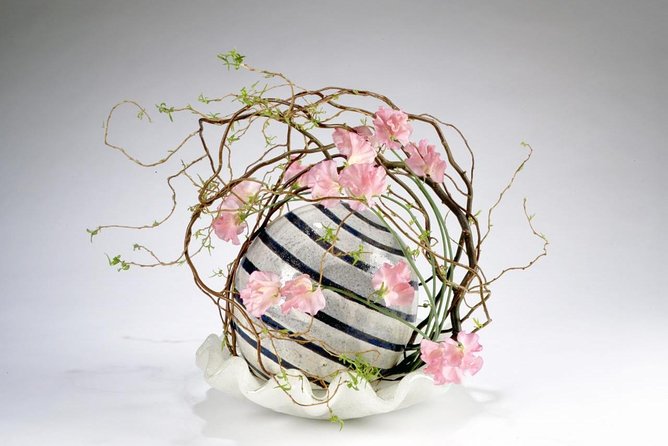
In this class, you learn the core idea: the most important part is to bring out the charm of the materials—plants, vase, and everything in between—so they communicate. You’ll get a sense of which angles look attractive and how to create a pleasing structure. Then you put those ideas into your own arrangement during the main hands-on part.
Even if you’ve never touched floral wire or soaked anything in water, the format is designed to get you creating. You’ll finish with something you can take photos of and then recreate at home with flowers you find in your country.
More hands-on studios our readers booked
- Tokyo Shinjuku Chopsticks Making Class
★ 5.0 · 1,763 reviews - Chopstick Making Workshop in Ginza
★ 4.8 · 1,366 reviews - Kintsugi Experience: Art of Golden Joinery in Tokyo
★ 5.0 · 467 reviews - Tokyo Chopstick Making Workshop with Artisan
★ 5.0 · 466 reviews
Where 一葉式いけ花本部 is and how to find it
The class meets at 一葉式いけ花本部 at 4-chōme-20-5 Nakano, Nakano City, Tokyo 164-0001. The venue is described as being near public transportation, which matters in Tokyo where door-to-door directions can be a guessing game.
If you’re staying in Tokyo and you’d rather not worry about getting yourself there, the instructor can be sent to your hotel. That option is useful if you want the experience without the transit time.
For planning: the activity ends back at the meeting point, so you’ll want a plan for how you’ll get back to where you’re staying after class.
The 70-minute lesson flow: from basics to a finished arrangement
This is a single-session experience lasting about 1 hour 10 minutes. That time window sounds short—until you see how the class is structured. You don’t spend the whole hour watching. You spend it doing.
The flow usually looks like this:
1) You learn the basics of ikebana, including how to think about form and movement.
2) Then you create your own arrangement using the provided vase and seasonal flowers.
3) When you’re done, the instructor checks it and gives advice to help you improve.
4) Finally, you take plenty of pictures of your work.
What makes the timing work is that the teaching is paced to your level. One strong theme from past students is the balance between explanation and application, not just theory.
The fundamentals that make your arrangement look right fast
Ikebana can look complicated from the outside. In class, it becomes practical.
You start with the idea that the arrangement should express the beauty of each material. That doesn’t mean every stem gets shoved into a vase at random. Instead, you learn what styles tend to look good and how to choose an attractive angle.
You’ll also learn how to refine your style. The instructor teaches to your level, so first-timers aren’t expected to perform like they’ve done this for years. The result is that your arrangement gradually starts to make sense as a design.
If you like clear instructions, this class fits. If you like to learn by watching someone’s hands move, you’ll also get that. Either way, you’ll leave with a real process you can use again.
Seasonal local flowers and why that matters
A small detail that becomes a big difference: the flowers used are described as local and in season. That means your arrangement feels connected to Japan right now, not like generic classroom flowers shipped in for the show.
It also changes the experience emotionally. Seasonal materials tend to look more alive, and you’re more likely to notice subtle differences in shape and texture while you’re arranging.
You’ll also get a moment to take photos after the instructor has seen your work. This matters because ikebana isn’t just something you finish; it’s something you learn to see. When you can photograph your composition, you get a reference for what you did and how the different angles read.
- Tokyo: Shinjuku Food Tour (13 Dishes at 4 Local Eateries)★ 5.0 · 6,603 reviews
- Tokyo Mt Fuji 5th St & Hakone Cruise Bus Tour w/Bullet Train★ 4.4 · 5,024 reviews
- Flagship 2-Hours Official Street Go-Kart Tour – Tokyo Bay Shop★ 5.0 · 4,974 reviews
- From Tokyo: Mount Fuji Full-Day Sightseeing Trip★ 4.5 · 4,970 reviews
- Tokyo: Hop-On Hop-Off Sightseeing Bus Ticket★ 3.9 · 4,207 reviews
Materials included: the best part of traveling light
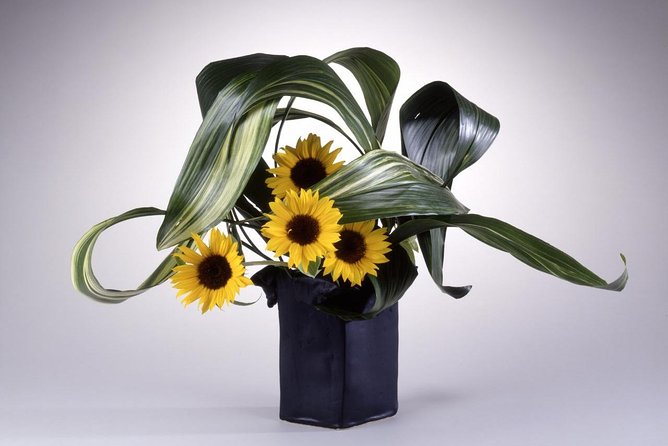
You don’t need to bring flowers, tools, or special supplies. The class is built as a stress-free experience because equipment and flowers are provided.
That includes what you typically worry about in a hands-on class:
- where to store anything messy,
- whether you brought the right vase size,
- and whether you’ll look awkward searching for materials.
Here, that’s handled for you. The only thing you really need is yourself—and whatever confidence you can borrow from the fact that the instructor helps you improve after you create your arrangement.
One other practical win: since you’re not carrying supplies from home, you can keep your day open for other Tokyo plans before or after the class.
Instructors, language, and the “patient by design” vibe
What really comes through in the feedback is that the instructors take time. The teaching approach seems to combine clear explanations with supportive, hands-on guidance. People mention that the teachers are kind and patient, and that the experience feels interactive rather than instructional in the cold, lecture-only sense.
You may meet different instructors depending on scheduling. Names that show up include Sensei Naohiro Kasuya and Mrs. Shimakawa. One standout pattern is how the teacher adjusts pacing so the steps are understandable, even if English isn’t the instructor’s first language.
Small group size helps here. The program has a maximum of 10 people, which typically means you’re not lost in a crowd. Instead, you can ask questions and get feedback on your arrangement without feeling rushed.
Price and value: what $67.28 buys you in the real world
At $67.28 per person for about 1 hour 10 minutes, you’re paying for more than a craft session. You’re paying for:
- guided instruction (not just a self-serve kit),
- feedback on your own arrangement,
- and the benefit of working with seasonal local flowers and provided materials.
If you’ve done DIY workshops where you mostly follow a poster, this feels different. Here, the lesson includes basics, a structure for how to arrange, and improvement tips at the end. That’s what turns a simple craft into a skill you can repeat.
It also includes a practical souvenir: you get something you created plus photos you can use to rebuild the steps later. Even if you never become a serious hobbyist, you’ll come away with a new way to look at flowers.
Who should book this ikebana class?
This class is a great fit if:
- You’re a beginner and want real fundamentals, not vague inspiration.
- You enjoy hands-on activities and want guidance while you build.
- You want a calmer, focused experience that’s easy to schedule into a Tokyo day.
- You like traditional arts but don’t want a long, formal cultural event.
It’s designed for people 6 years of age and over. If you’re bringing kids, children aged 12 and younger must be accompanied by a parent.
This is also ideal if you like learning from masters. Some past students describe learning from an instructor connected to an internationally known ikebana school, with explanations that go beyond simple how-to steps.
Should you book Tokyo Ikebana?
If you want a memorable Tokyo experience that doesn’t require advanced skill, I’d book it. The beginner-friendly format, the fact that materials are provided, and the chance to get feedback on your arrangement are the big reasons this works.
One reason to think twice: if you’re hoping for a long practice session or a multi-day deep course, this is short by design. But for a first taste of ikebana basics—made with seasonal blooms and guided with real attention—this is a very solid use of your time.
FAQ
FAQ
How long is the Tokyo Ikebana experience?
It lasts about 1 hour 10 minutes.
Is this class beginner-friendly?
Yes. It’s described as perfect for beginners, and the instructor teaches to your level.
What is included in the price?
The class provides the flowers and equipment/materials you need for your arrangement.
Do I need to bring my own flowers or tools?
No. You don’t need to bring anything, since flowers and equipment are provided.
What kind of flowers will I use?
You’ll use local flowers that are in season.
Where does the experience meet?
The meeting point is 一葉式いけ花本部, located at 4-chōme-20-5 Nakano, Nakano City, Tokyo 164-0001, Japan.
How big is the group?
The experience has a maximum of 10 travelers.
Can children join?
The program is designed for people age 6 and over. Children aged 12 and younger must be accompanied by a parent.
Is there a hotel pickup option?
The instructor can be sent to any hotel you stay in Tokyo.
What is the cancellation/refund policy?
This experience is non-refundable and cannot be changed for any reason.
More Tour Reviews in Tokyo
- Mt Fuji and Hakone 1-Day Bus Tour Return by Bullet Train
★ 5.0 · 26,383 reviews - 1-Day Tokyo Bus Tour
★ 5.0 · 14,250 reviews - Tokyo: teamLab Planets TOKYO Digital Art Museum Entry Ticket
★ 4.6 · 9,779 reviews - Mt Fuji & Hakone Cruise, Drum Show Bullet Train 1 Day from Tokyo
★ 4.0 · 7,413 reviews - Tokyo: Shinjuku Food Tour (13 Dishes at 4 Local Eateries)
★ 5.0 · 6,603 reviews
More Artisan Workshops in Tokyo
- Tokyo Shinjuku Chopsticks Making Class
★ 5.0 · 1,763 reviews - Chopstick Making Workshop in Ginza
★ 4.8 · 1,366 reviews - Kintsugi Experience: Art of Golden Joinery in Tokyo
★ 5.0 · 467 reviews - Tokyo Chopstick Making Workshop with Artisan
★ 5.0 · 466 reviews - Tokyo: Shinjuku Chopstick Making Class
★ 4.9 · 440 reviews
Latest Tokyo reviews off our desk






Craft & Artisan Workshops, compared.
 ★ 5.0Tokyo Shinjuku Chopsticks Making ClassFrom $201,763 reviews
 ★ 4.8Chopstick Making Workshop in GinzaFrom $251,366 reviews
 ★ 5.0Kintsugi Experience: Art of Golden Joinery in TokyoFrom $59467 reviews
 ★ 5.0Tokyo Chopstick Making Workshop with ArtisanFrom $26466 reviews
 ★ 5.0Authentic Pure Gold Kintsugi Workshop with Master Taku in TokyoFrom $142217 reviews
 ★ 5.0Calligraphy on Kanji Fan & Scroll with DrinkFrom $53210 reviews
Browse the lists this tour appears in