
Temple bells and sea air in one packed day. I like the simple hotel pickup and drop-off that removes train-hopping, and you roll into Kamakura with a bilingual chauffeur handling the timing. The private format also helps keep the day calm instead of turning into a sprint.
I love the stop at Kōtoku-in, home to Kamakura’s 13-meter Great Buddha, bronze and still standing since the 15th century. I also love Sankeien Garden, where preserved Japanese residences let you see how different eras of domestic life fit inside a botanical park.
One consideration: it’s a 10-hour day with several temple walks, and outdoor time can feel tougher in colder or drier months; comfortable shoes are non-negotiable.
In This Review
- Key highlights that make this day trip work
- Private pickup that makes Kamakura and Yokohama feel easy
- Kōtoku-in, Hasedera, and Tsurugaoka Hachimangu: the Kamakura temple circuit
- Hokokuji bamboo forest: quiet steps and camera time
- Sankeien Garden in Yokohama: preserved residences in a botanical park
- Yokohama Chinatown and Shin-Yokohama Ramen Museum: food culture without the chaos
- Minato Mirai and Landmark Tower: the seaside finish
- Price and value: $474 per group (up to 6 people)
- The one thing to get right: guide quality and day-of communication
- Who this day trip suits best (and who should skip it)
- Should you book this Kamakura and Yokohama private day trip?
- FAQ
- How long is the Tokyo to Kamakura and Yokohama private day trip?
- Is hotel pickup and drop-off included?
- What languages does the guide speak?
- How many people are included in the $474 price?
- Are meals included?
- Are entrance fees included?
- Can I cancel for a full refund?
- Is this tour suitable for wheelchair users or pregnant women?
Key highlights that make this day trip work
- Kōtoku-in Great Buddha (about 13 meters tall), one of Kamakura’s most iconic sights
- Sankeien Garden’s preserved homes across eras, not just flowers and paths
- Kamakura’s temple sequence: Hasedera, Tsurugaoka Hachimangu, plus the bamboo hush at Hokokuji
- Yokohama flavor stops with Chinatown and the Shin-Yokohama Ramen Museum
- Minato Mirai waterfront + Landmark Tower (296 meters) for skyline photos and a breezy end to the day
- Private pickup from your hotel in Tokyo, which saves you energy for the sights
Private pickup that makes Kamakura and Yokohama feel easy
This tour is designed for comfort first: you start with pickup from your Tokyo hotel, then you’re driven between stops with a bilingual guide (English and Japanese). That matters because Kamakura and Yokohama can be easy to over-plan when you’re doing it on your own.
You’re also looking at a full 10 hours on the clock, including commuting. So instead of “when we get there,” you get a plan: see the big Kamakura icons, then shift to Yokohama’s city sights and food culture.
Coast-and-Buddha days near Kamakura, rated
- Tokyo: Mt. Fuji, Kamakura, Big Buddha, & Lake Ashi Day Trip
★ 4.5 · 867 reviews - Tokyo:Sea of Mount Fuji, Hakone Ropeway, Ōwakudani, Enoshima
★ 4.9 · 84 reviews - Kamakura 8 hr Private Walking Tour with Licensed Guide from Tokyo
★ 5.0 · 80 reviews - Tokyo: Kamakura & Enoshima Day Tour with Pickup & Train Ride
★ 4.1 · 61 reviews
Kōtoku-in, Hasedera, and Tsurugaoka Hachimangu: the Kamakura temple circuit
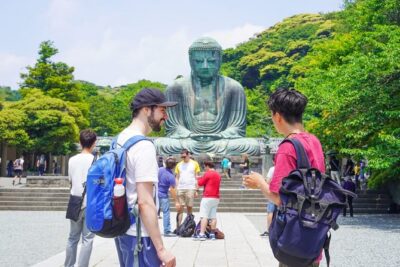
Kamakura is the kind of place where one shrine leads naturally to the next. The day starts with Kōtoku-in (Great Buddha), where you’re up close to a bronze statue roughly 13 meters high. It’s famous for a reason: it’s massive in real life, and the fact that it’s been there since the 15th century gives the photos a weight a screen can’t match.
Next comes Hasedera, a temple visit with time to walk the grounds. It’s a good follow-up to the Great Buddha because it shifts you from one monumental landmark to a calmer, more stepped-in temple experience.
Then you land at Tsurugaoka Hachimangu, one of Kamakura’s key shrines. This stop helps balance the day: you get the grand-feeling shrine setting, plus the easy-to-navigate walking loop that keeps the pace friendly rather than exhausting.
Practical note: these are temple stops, so you’ll want to move at a steady walking pace and wear shoes you trust. You’ll be on your feet long enough that socks and blisters become a real issue if you cut corners.
Hokokuji bamboo forest: quiet steps and camera time
After the shrine energy, you hit Hokokuji Bamboo Forest. Even if you’ve seen bamboo photos before, this one tends to work because it’s not just a photo back-drop. It’s a short walk into a cooler, more hushed space that feels like it changes the volume in your head.
If you care about good photos, go ready: hat down, camera up, and take a few minutes to try different angles. The “best shot” often comes from simply walking a little farther, not from snapping the first frame you see.
Sankeien Garden in Yokohama: preserved residences in a botanical park
Sankeien Garden is the tour’s most thoughtful contrast piece. Instead of another temple, you get a botanical park with preserved Japanese homes from different eras. That makes it more than greenery and paths. You’re essentially stepping into a curated slice of domestic architecture and garden planning.
Here’s the catch: Sankeien is outdoors, so season affects the experience. One published note pointed out that December may not be the best time for the garden. I take that to mean: in colder months, you’ll want realistic expectations about how much you’ll love long garden wandering.
Still, the “homes inside a garden” idea is smart. It slows the day down after the urban stops, and it’s a break from constant crowds and signage.
Yokohama Chinatown and Shin-Yokohama Ramen Museum: food culture without the chaos
Once you reach Yokohama, the tour leans into food and pop culture in a way that’s easy to enjoy even if you’re not a hardcore museum person.
First is Yokohama Chinatown, a dense area with hundreds of Chinese restaurants and shops. You’ll have time to browse and shop, and this stop is where the day starts to feel more like hanging out in a real neighborhood. Even if you don’t eat a full meal, you’ll likely snack and wander enough to feel satisfied.
Then the route heads to the Shin-Yokohama Ramen Museum. It’s a solid one-hour cultural detour because it gives you a Yokohama connection that’s playful and accessible. Plan to move inside efficiently—this is not the kind of museum where you need two hours to appreciate what it offers.
If you’re hungry, don’t wait until you’re starving. Chinatown and ramen places work best when you eat earlier rather than later, especially if you want options and a calmer pace.
The harbour city next door, reviewed
- Narita Airport: One Way Private Transfer to Tokyo|Yokohama Hotels★ 4.5 · 69 reviews
- Tokyo/Yokohama: Mt. Fuji and Hakone Private Day Tour★ 5.0 · 64 reviews
- Tokyo: Private One-Way Transfers to/from Yokohama Port★ 4.5 · 50 reviews
- Private Car Tour to see Highlights of Kamakura, Enoshima, Yokohama from Tokyo★ 5.0 · 48 reviews
- Haneda Airport: One Way Private Transfer to Tokyo|Yokohama Hotels★ 4.0 · 28 reviews
Minato Mirai and Landmark Tower: the seaside finish
The final sightseeing stretch is Minato Mirai, Yokohama’s seaside district. This is where the tour switches from temples and old buildings to a more modern waterfront vibe.
You’ll have a chance to see Landmark Tower, a 296-meter landmark that anchors the skyline. The area is a great place to reset your legs after earlier walks: you can stroll, take photos, and watch the city move.
The day also includes a short window of free time near the end. Use it like a smart traveler: grab water, use restrooms, and pick one or two things you still want to see. With a packed day, that small breathing space is more valuable than it sounds.
Price and value: $474 per group (up to 6 people)
The price is $474 per group up to 6, for a 10-hour private day. That’s the key value math: you’re not paying per person. If you fill the group, your cost per traveler drops fast compared with many solo-priced day tours.
Also, you’re getting hotel pickup and drop-off in Tokyo, plus a live bilingual chauffeur/guide and water bottles. Those sound small until you do the trip on your own and realize how much time and energy you’d spend sorting trains, schedules, and “where do we meet?”
One more practical value point: entrance fees and meals aren’t included. That’s normal for this type of day tour, but it does mean you should budget a bit for ticketed stops and your own lunch/snacks.
The one thing to get right: guide quality and day-of communication
This is where experiences can diverge, based on real-world reports. The majority of accounts praise an organized, smooth day and a comfortable pace. Some even mention a specific guide by name—Kasim Ali was highlighted for safe driving and great explanations, with stops handled in a way that didn’t feel rushed.
But there are also caution flags from a smaller set of experiences: one account described poor communication before pickup and frustration with timing, while another complained the guide wasn’t able to share meaningful context and that water and joining at certain activities were handled inconsistently. There was also a note about confusion around an entrance ticket at one activity, even though entrance fees are not included.
So here’s the smart way to protect your day:
- Confirm pickup timing and meeting details the moment you book, not the day before.
- Carry some cash or a card for entrance tickets, since they’re not included.
- Bring a water plan. Bottles are included, but if you have a sensitive stomach or you walk a lot, you’ll feel better with your own backup.
- If your tour schedule is tight, politely ask your guide to confirm which stops are fully part of the day and where you have free time.
A private day trip can be excellent—or disappointing—depending on execution. Your job is to minimize surprises.
Who this day trip suits best (and who should skip it)
This works best for people who want a lot of top sights in one day without handling transit. It’s a good match for first-time visitors to Japan who want Kamakura’s icons, then a Yokohama mix of neighborhoods, museums, and skyline views.
It’s also a solid pick for couples or small groups who like a structured day but still want time to walk and look around.
Two clear limits from the tour info: it’s not suitable for wheelchair users and it’s not suitable for pregnant women. It also involves walking, so if your mobility is limited, plan carefully before booking.
Should you book this Kamakura and Yokohama private day trip?
Book it if you want an organized, private day that connects Kamakura’s Great Buddha and temple atmosphere to Yokohama’s garden stop, food culture, ramen museum, and modern waterfront views—without the stress of figuring out trains and timing.
Pass or reconsider if you:
- hate long walking days (this is a lot of steps in about 10 hours),
- need strict mobility accommodations,
- or expect the garden stop to be your main highlight no matter the season.
If you do book, do the small homework: comfortable shoes, sunscreen/hat for sun days, and a little budget for entrance fees and meals. Then you’ll get what this tour is built for—a day that feels like you’re following a local route, just with a chauffeur and guide handling the hard parts.
FAQ
How long is the Tokyo to Kamakura and Yokohama private day trip?
The tour is approximately 10 hours, including commuting time.
Is hotel pickup and drop-off included?
Yes. Pickup starts from your Tokyo location, and the tour includes drop-off back in Tokyo.
What languages does the guide speak?
The live tour guide provides English and Japanese.
How many people are included in the $474 price?
The listed price is for a private group up to 6 people. If you have more than 5 people, the tour can be facilitated at an additional cost.
Are meals included?
No, meals are not included.
Are entrance fees included?
No, entrance fees are not included.
Can I cancel for a full refund?
Yes. You can cancel up to 24 hours in advance for a full refund.
Is this tour suitable for wheelchair users or pregnant women?
No. It is not suitable for wheelchair users or pregnant women.
More Tour Reviews in Tokyo
- Mt Fuji and Hakone 1-Day Bus Tour Return by Bullet Train
★ 5.0 · 26,383 reviews - 1-Day Tokyo Bus Tour
★ 5.0 · 14,250 reviews - Tokyo: teamLab Planets TOKYO Digital Art Museum Entry Ticket
★ 4.6 · 9,779 reviews - Mt Fuji & Hakone Cruise, Drum Show Bullet Train 1 Day from Tokyo
★ 4.0 · 7,413 reviews - Tokyo: Shinjuku Food Tour (13 Dishes at 4 Local Eateries)
★ 5.0 · 6,603 reviews
The Harbour City Next Door, Rated
- Narita Airport: One Way Private Transfer to Tokyo|Yokohama Hotels
★ 4.5 · 69 reviews - Tokyo/Yokohama: Mt. Fuji and Hakone Private Day Tour
★ 5.0 · 64 reviews - Tokyo: Private One-Way Transfers to/from Yokohama Port
★ 4.5 · 50 reviews - Private Car Tour to see Highlights of Kamakura, Enoshima, Yokohama from Tokyo
★ 5.0 · 48 reviews - Private Kamakura plus Yokohama Tour – English Speaking Driver
★ 4.5 · 28 reviews
More Kamakura and Enoshima Days
- Tokyo: Mt. Fuji, Kamakura, Big Buddha, & Lake Ashi Day Trip
★ 4.5 · 867 reviews - Tokyo:Sea of Mount Fuji, Hakone Ropeway, Ōwakudani, Enoshima
★ 4.9 · 84 reviews - Kamakura 8 hr Private Walking Tour with Licensed Guide from Tokyo
★ 5.0 · 80 reviews - Tokyo: Kamakura & Enoshima Day Tour with Pickup & Train Ride
★ 4.1 · 61 reviews - Kamakura Private & Customizable Tour – All-in-One Experience
★ 5.0 · 49 reviews
Latest Tokyo reviews off our desk

Kamakura Day Trips, compared.
 ★ 4.5Kamakura & Enoshima Day Trip including Temple TicketsFrom $581,375 reviews
 ★ 4.5Mt. Fuji, Kamakura, Big Buddha, & Lake Ashi Day TripFrom $49867 reviews
 ★ 4.5From Tokyo: Kamakura & Enoshima 1-Day Bus TourFrom $66189 reviews
 ★ 5.0Kamakura Historical Walking Tour with the Great BuddhaFrom $98129 reviews
 ★ 5.0Kamakura Private Tour: Temples, Nature, and the Great BuddhaFrom $98121 reviews
 ★ 5.0Kamakura Walking Tour – The City of ShogunFrom $35100 reviews
 ★ 4.9Sea of Mount Fuji, Hakone Ropeway, Ōwakudani, EnoshimaFrom $5084 reviews
 ★ 5.0Kamakura 8 hr Private Walking Tour with Licensed Guide from TokyoFrom $20180 reviews
Browse the lists this tour appears in