
Reviewed · SUMO TOURNAMENTS & SHOWS
Tokyo: Morning Sumo Practice Viewing
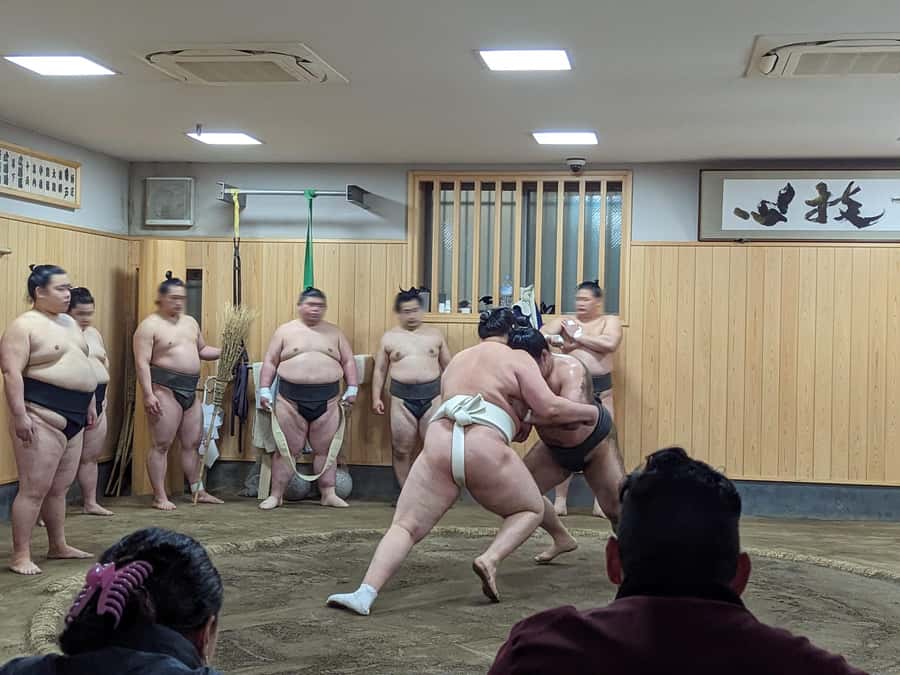
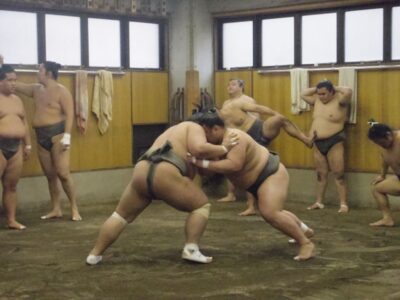
Sumo starts before sunrise. This Tokyo experience lets you watch a real morning sumo practice at a stable, guided in English by people like Jeff or Dawn. It’s the kind of thing that feels more like training camp than a show, with English guidance that helps you read what’s happening.
I love the tense, no-nonsense atmosphere inside the sumo stable. I also love how the guide connects the practice to the Japan Sumo Association and the fact that these wrestlers train for grand tournaments held six times a year.
One thing to plan for: you sit on floor cushions (no chairs), and the practice has strict rules about staying still and not talking. If you need accessible seating or you dislike quiet, this may be a tougher fit than a typical Tokyo activity.
In This Review
- Key points to know before you go
- Why Morning Practice Feels Different Than Sumo Shows
- The 3-Hour Flow: What Happens During This Tokyo Sumo Visit
- Meeting at Hanami Zaka Square (Skytree Station): Getting There Without Stress
- Before You Enter: Etiquette and Context That Actually Helps You Watch
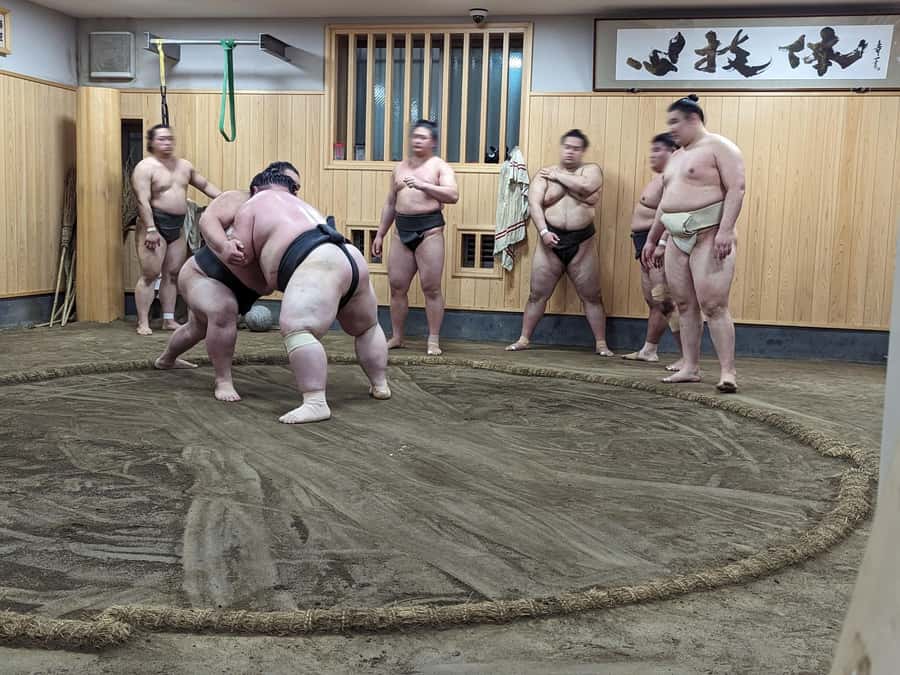
- Inside the Stable: Watching Top-Division Rikishi Train
- The Big Contrast: Professionals vs Performers
- After Practice: Photos and the Human Side of Rikishi
- What to Bring (and What to Leave Behind in Your Mind)
- Small Group Advantage: Why Max 8 Matters Here
- Price and Value: Why This Beats Most One-Off Sumo Options
- Who Should Book This Tokyo Morning Sumo Practice Viewing
- Should You Book This Tokyo Sumo Morning Tour or Skip It?
- FAQ
- How long is the Tokyo morning sumo practice viewing?
- Where do I meet for the tour?
- Is the tour guide available in English?
- Is the group size small?
- Will there be chairs to sit on?
- Is this experience wheelchair accessible?
- Can I cancel for a full refund?
- Can I reserve now and pay later?
Key points to know before you go
- Real stable practice: You see the serious rhythm of training, not a staged performance.
- Top-division vs challengers: Your stable includes two top-division wrestlers, and the drills around them are intense.
- Better than sumo shows: Professionals focus on rank climbing, not entertainment for visitors.
- Etiquette matters: You’ll get clear instructions on how to sit, when to be silent, and how to act in the stable.
- Rikishi interaction after: After practice, you can take commemorative photos with wrestlers who are more relaxed outside the ring.
- Small group size: Limited to 8 participants, so the briefing and guidance actually feel usable.
Why Morning Practice Feels Different Than Sumo Shows
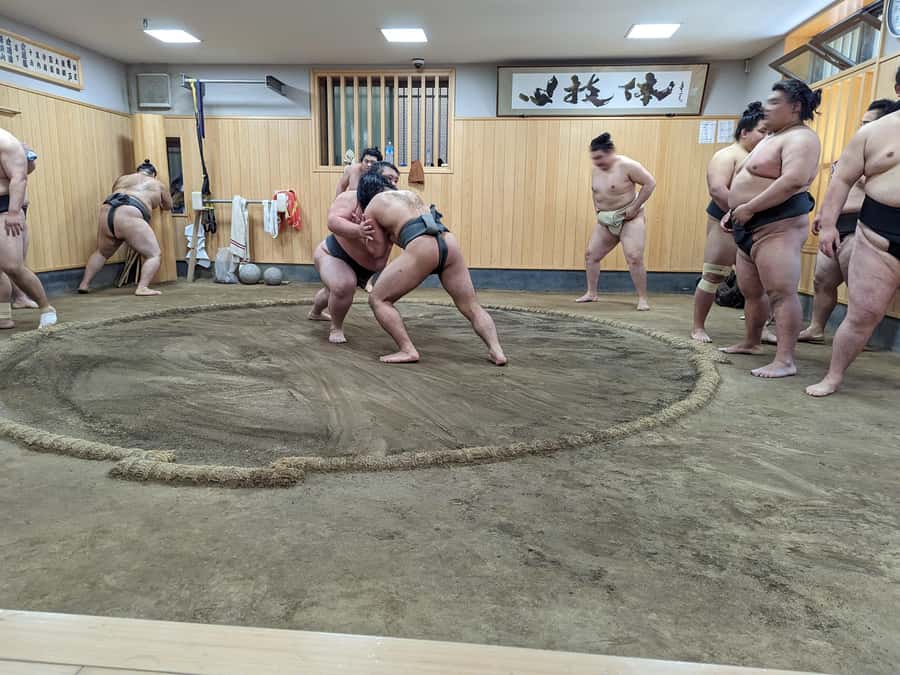
Tokyo has sumo shows aimed at visitors, and they can be fun. They often lean into humor and spectacle, and some even let audience members interact with the wrestlers. Morning stable practice is a totally different scene.
In the stable, everything points to training. The wrestlers you’ll see are part of the Japan Sumo Association, the governing body of professional sumo in Japan. That matters, because it explains the culture: this is not a job created for the spotlight. It’s work built for the next tournament, and rank climbing is the goal.
The atmosphere is part of the show, even though it’s not trying to be one. You’ll notice the more you watch: professionals can feel unapproachable while they’re in training mode, then warmer once the practice is done.
Other ringside bookings readers scored
- Tokyo: Sumo Show and Dining Experience
★ 4.8 · 2,742 reviews - the SUMO show
★ 5.0 · 1,960 reviews - Tokyo Shinjuku Sumo Show & Experience with Photo
★ 5.0 · 1,750 reviews - Tokyo: Sumo Show and Experience in Shinjuku
★ 4.8 · 1,001 reviews
The 3-Hour Flow: What Happens During This Tokyo Sumo Visit
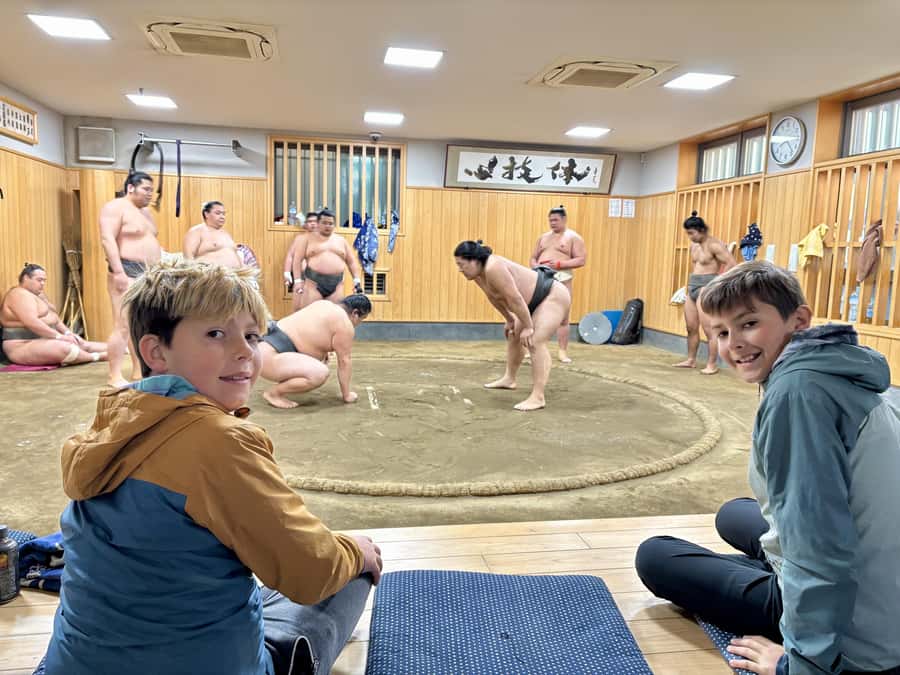
This is a compact 3-hour experience designed around the training session itself. You’re not going to get a museum tour or a long lecture. You’ll get a briefing, you’ll sit close, you’ll watch, and then you’ll have the chance for photos after practice.
Expect a simple arc. First comes the meeting point and a short walk to the stable area. Then your guide explains key context and stable etiquette before you enter, so you understand what you’re looking at and how you should behave.
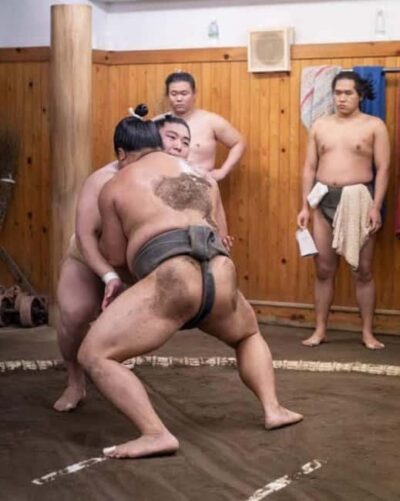
During the actual practice, you’ll sit on a cushion on a flat floor and watch bouts and drills. The time can feel both fast and long, depending on your comfort level sitting still. After practice, you’ll get that rare human moment: commemorative photos with the wrestlers.
Meeting at Hanami Zaka Square (Skytree Station): Getting There Without Stress
Your meeting point is Hanami Zaka Square at Tokyo Skytree Station (Tobu Skytree Line, TS02). If you like arriving early and not speed-walking with your head on a swivel, this is the kind of detail that helps you feel calm before the experience starts.
From that meeting area, the stable visit is handled by your guide. You don’t need to figure out route puzzle pieces once you’re with the group. Just make sure you show up on time, because the stable schedule is serious and early.
Tip for your planning brain: build in a little buffer around Skytree-area crowds. Tokyo stations are easy to navigate when you’re ready, but they can turn into a maze if you’re late and rushed.
Before You Enter: Etiquette and Context That Actually Helps You Watch
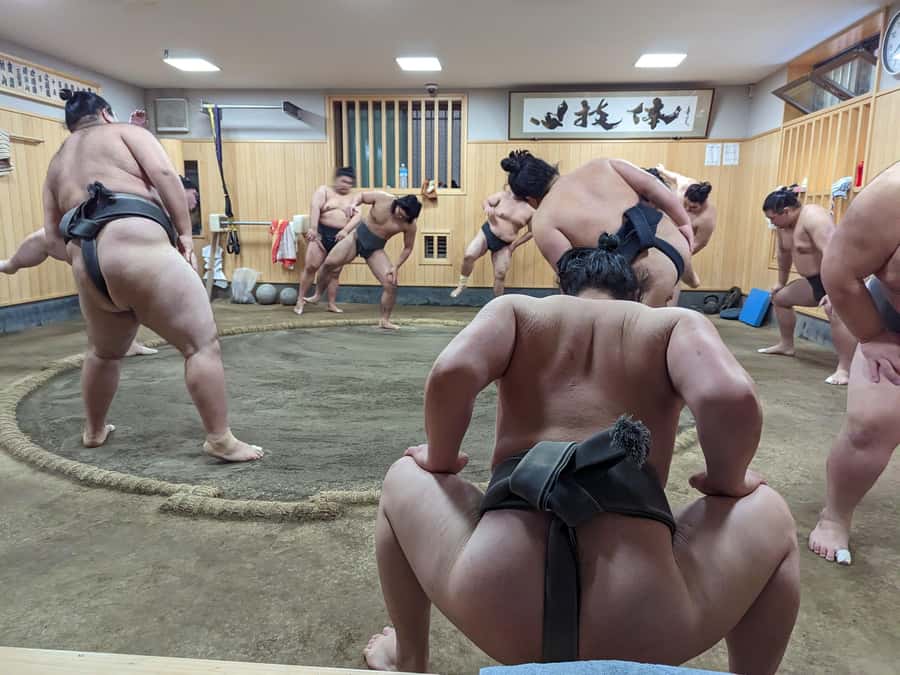
In a stable, behavior isn’t “polite suggestions.” It’s part of the training environment. Your guide will set expectations and you’ll follow them at all times.
Here’s what’s clearly required:
- You’ll sit on a cushion on a flat floor; no chairs are provided.
- You must stay still during the practice.
- You must not talk to other guests during training.
This is where the guide’s job turns from translation into meaning. A good briefing helps you see what looks like “just wrestling” at first glance: you start noticing how wrestlers use timing, how they adjust their stance, and how training supports the tournament calendar.
You’ll also hear practical context, like how professional sumo works under the Japan Sumo Association and how the tournament cycle drives the seriousness of each session. That’s one reason this experience feels real: you’re watching people working toward a system, not just “doing exercises.”
Inside the Stable: Watching Top-Division Rikishi Train
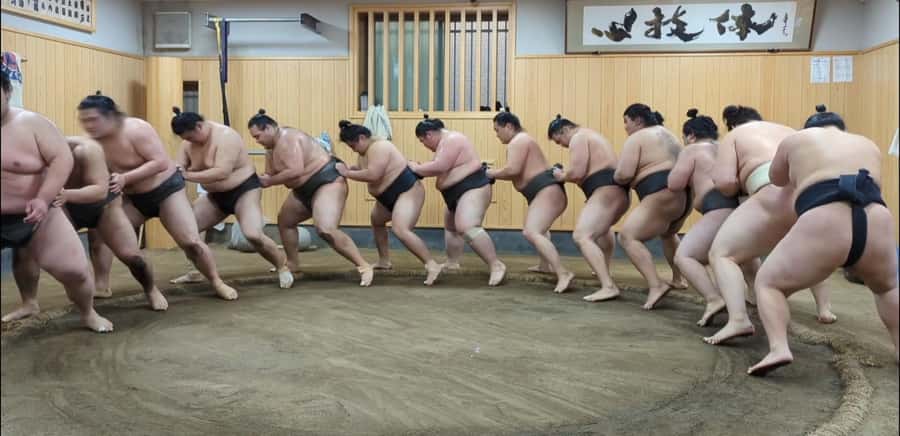
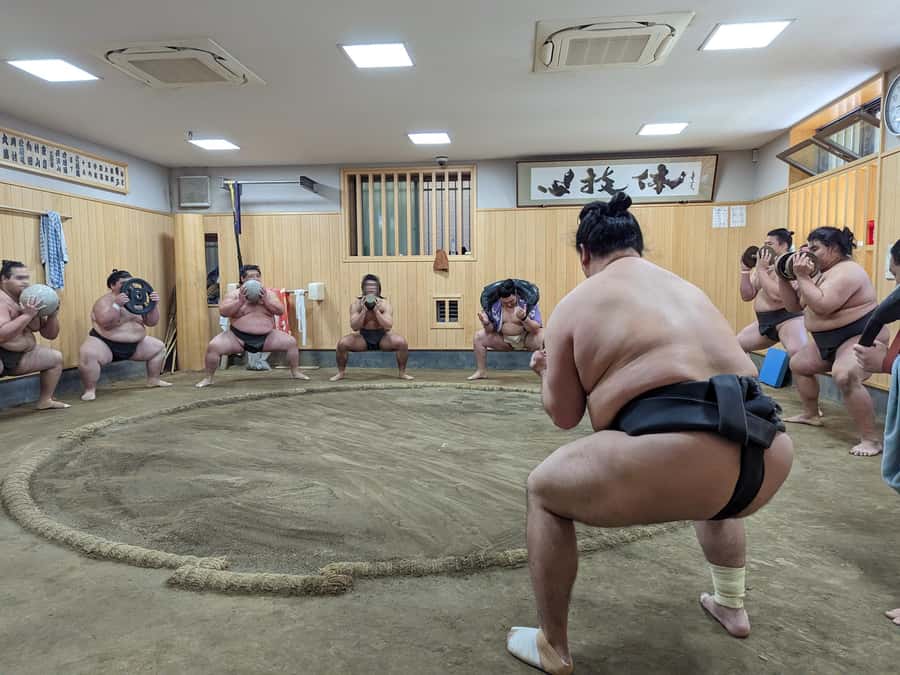
This stable visit includes two top-division wrestlers. That detail changes your viewing experience, because it explains what you’re about to witness: grueling practice around the standard set by the top wrestlers.
In many sports, the best athletes get to look relaxed while others chase them. In sumo training, the “chasing” is the work. Lower-ranked wrestlers wrestle to earn positions, improve technique, and keep pressure on their own consistency. Up close, you’ll see it isn’t about showmanship. It’s about repetition that builds strength, balance, and control.
The stable atmosphere can also feel sharp. During the practice, the professionals keep an unapproachable focus. That’s not rudeness—it’s concentration. Once they’re off the ring, the mood softens, and you’ll see that they can be surprisingly friendly.
If you’ve only seen sumo as a spectacle, this is the moment that flips the script. You start recognizing how much of the sport is training discipline, not just match day drama.
Readers also shortlisted these Tokyo bookings:
- Tokyo: Sumo Morning Practice Viewing Tour★ 4.8 · 570 reviews
- Tokyo: Sumo Morning Training Visit★ 4.4 · 370 reviews
- Tokyo: Visit Sumo Morning Practice with English Guide★ 4.7 · 343 reviews
- Tokyo: Sumo Morning Practice Tour at Sumida City★ 4.8 · 308 reviews
- Tokyo Sumo Morning Practice Tour at Stable★ 5.0 · 298 reviews
The Big Contrast: Professionals vs Performers
I love this part because it clears up a common confusion before you even finish your first session. In many visitor-facing sumo options, you’re seeing performers. They may be skilled, and the experience can be entertaining, but the purpose is different.
In a real stable:
- The wrestlers belong to the Japan Sumo Association.
- Their practice is focused on climbing the ranks.
- The grand tournaments happen six times a year, which shapes training intensity and goals.
That contrast also affects your emotional experience as a viewer. A show is designed to pull you into the moment. Morning practice is designed to train the wrestlers, and your job is to watch respectfully.
For some people, that quiet discipline is exactly the point. For others, it’s the challenge: there’s less “tourist fun,” and more real sport seriousness.
After Practice: Photos and the Human Side of Rikishi
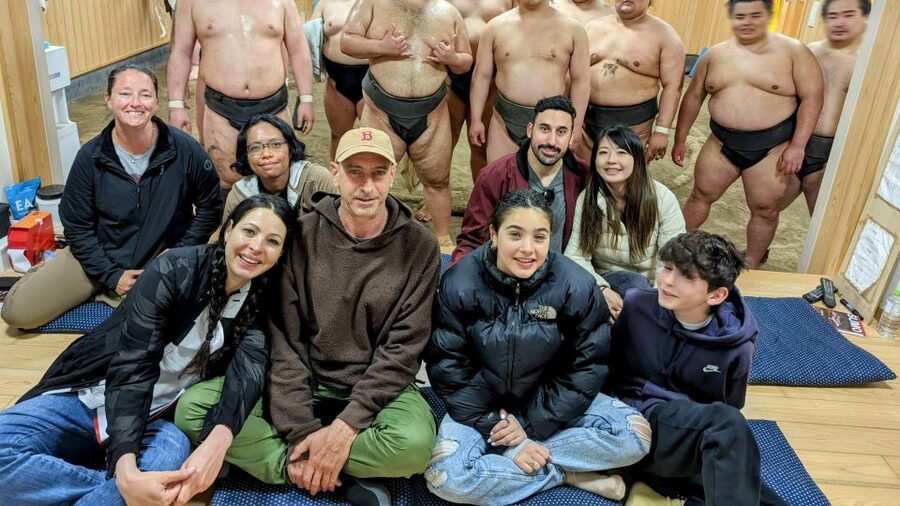
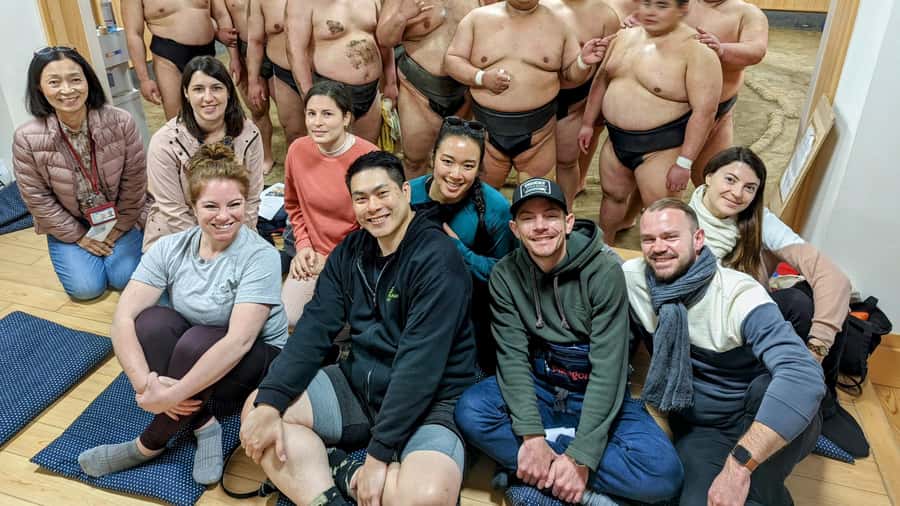
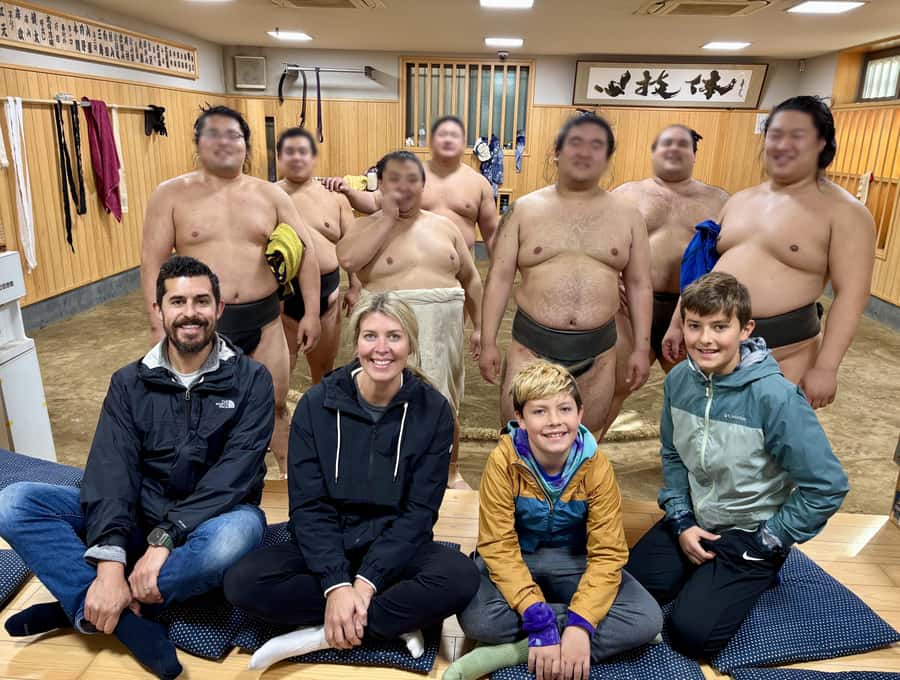
This experience doesn’t end when the training stops. After practice, you’ll have time for commemorative photos with the wrestlers.
That part surprises people in a good way. During the practice, the wrestlers can feel far away—focused, guarded, and very much in their professional world. Afterward, they’re described as affable, and the vibe shifts. You get a direct reminder that these are athletes with personalities, not just figures in traditional clothing.
If you’re a fan of sports photography, this is a rare chance to do it in a respectful way. Just remember: the stable’s rules still matter. Follow what your guide directs so you don’t accidentally turn “thank you” into chaos.
What to Bring (and What to Leave Behind in Your Mind)
Your main “packing” is mental. You need patience for the rules and comfort with quiet sitting. Since there are no chairs and you’ll sit on cushions on a flat floor, plan your body for the duration.
Other practical points based on the tour rules:
- You must stay still during the practice.
- You must not talk during the training.
Also note: this experience is not suitable for wheelchair users. If mobility access is a big concern for your group, it’s worth choosing a different sumo option designed for accessibility.
As for food and drinks, the strict stable etiquette in general implies you should follow your guide’s instruction closely. You don’t want anything that could interfere with the training flow, so listen first, ask second, and act exactly as directed.
Small Group Advantage: Why Max 8 Matters Here
A limit of 8 participants isn’t just a comfort perk. It improves the experience.
In a stable setting, the group needs to be manageable so your guide can give proper instructions and keep everyone aligned with etiquette. A small group also makes it easier to hear explanations in English and to ask questions during the briefing time.
Guides such as Jeff, Taka, Aki, Sue, and Yasu have been highlighted for being passionate about sumo and for giving room for questions. Even if the exact guide differs by day, the format is set up so you don’t get lost in a crowd while trying to understand what you’re watching.
Price and Value: Why This Beats Most One-Off Sumo Options
No price numbers are listed here, so I’ll judge value the way I actually would in Tokyo: by what you get for your time.
For about three hours, you’re getting:
- up-close access to a real stable environment,
- a serious training session led by professional wrestlers,
- context on how the Japan Sumo Association and tournament cycle shape what you see,
- and photo time after practice.
A sumo show can be entertaining, and it can help you learn the basics quickly. But this morning practice is what makes you understand sumo as a discipline. You’re not just seeing the sport’s big moments; you’re seeing the daily effort behind them.
If you want your Tokyo experience to feel like you stepped into a working tradition rather than watched something staged for visitors, this is strong value.
Who Should Book This Tokyo Morning Sumo Practice Viewing
This is a great fit if you:
- want authentic sport, not performance-only entertainment,
- enjoy watching technique and training rather than only match results,
- want a serious intro to professional sumo culture,
- and you’re okay with quiet etiquette and floor seating.
It’s less ideal if you:
- need wheelchair accessibility,
- dislike sitting on the floor for an extended time,
- or you’re hoping for a loud, interactive, audience-participation style experience.
Also, if you’re in Tokyo for a short stay, this is a smart way to spend a morning because it’s compact and focused. You’re not trading half a day for something generic.
Should You Book This Tokyo Sumo Morning Tour or Skip It?
Book it if you want the real thing: a stable training session guided in English, with a small group and clear rules. You’ll get a strong sense of what professional sumo looks like when it isn’t being packaged as a show.
Skip it if you’re sensitive to strict etiquette, sitting on the floor, and the quiet expectations of the stable. Also skip if accessibility needs make floor seating a dealbreaker.
If you’re the type of traveler who likes early starts, loves traditional sport, and values respectful access, you’ll likely consider this one of your most memorable Tokyo mornings.
FAQ
How long is the Tokyo morning sumo practice viewing?
The experience lasts 3 hours.
Where do I meet for the tour?
Meet at Hanami Zaka Square at Tokyo Skytree Station (Tobu Skytree Line, TS02).
Is the tour guide available in English?
Yes. The tour includes a live English-speaking guide.
Is the group size small?
Yes. The group is limited to 8 participants.
Will there be chairs to sit on?
No. You sit on a cushion on a flat floor, and chairs are not provided.
Is this experience wheelchair accessible?
No. It is not suitable for wheelchair users.
Can I cancel for a full refund?
Yes. Free cancellation is available up to 24 hours in advance for a full refund.
Can I reserve now and pay later?
Yes. You can reserve now and pay later to keep your plans flexible.
More Morning in Tokyo
- Tokyo: Sumo Morning Practice Viewing Tour
★ 4.8 · 570 reviews - Tokyo: Sumo Morning Training Visit
★ 4.4 · 370 reviews - Tokyo: Visit Sumo Morning Practice with English Guide
★ 4.7 · 343 reviews - Tokyo: Sumo Morning Practice Tour at Sumida City
★ 4.8 · 308 reviews - Tokyo Sumo Morning Practice Tour at Stable
★ 5.0 · 298 reviews
More Tour Reviews in Tokyo
- Mt Fuji and Hakone 1-Day Bus Tour Return by Bullet Train
★ 5.0 · 26,383 reviews - 1-Day Tokyo Bus Tour
★ 5.0 · 14,250 reviews - Tokyo: teamLab Planets TOKYO Digital Art Museum Entry Ticket
★ 4.6 · 9,779 reviews - Mt Fuji & Hakone Cruise, Drum Show Bullet Train 1 Day from Tokyo
★ 4.0 · 7,413 reviews - Tokyo: Shinjuku Food Tour (13 Dishes at 4 Local Eateries)
★ 5.0 · 6,603 reviews
More Sumo, Ringside and Rated
- Tokyo: Sumo Show and Dining Experience
★ 4.8 · 2,742 reviews - the SUMO show
★ 5.0 · 1,960 reviews - Tokyo Shinjuku Sumo Show & Experience with Photo
★ 5.0 · 1,750 reviews - Tokyo: Sumo Show and Experience in Shinjuku
★ 4.8 · 1,001 reviews - Tokyo Grand Sumo Tournament Viewing Tour with Tickets
★ 5.0 · 692 reviews
Latest Tokyo reviews off our desk






Sumo Tournaments & Shows, compared.
 ★ 4.8Sumo Show and Dining ExperienceFrom $792,742 reviews
 ★ 5.0the SUMO showFrom $891,960 reviews
 ★ 5.0Tokyo Shinjuku Sumo Show & Experience with PhotoFrom $791,750 reviews
 ★ 4.8Sumo Show and Experience in ShinjukuFrom $691,001 reviews
 ★ 5.0Tokyo Grand Sumo Tournament Viewing Tour with TicketsFrom $124692 reviews
 ★ 5.0Tokyo Sumo Wrestling Tournament ExperienceFrom $124660 reviews
 ★ 4.7Luxury Sumo Show Experience & Japanese cuisine & DrinkFrom $103577 reviews
 ★ 4.8Sumo Morning Practice Viewing TourFrom $81570 reviews
Browse the lists this tour appears in