
Reviewed · TEA CEREMONY & MATCHA
Tokyo: Private Japanese Traditional Tea Ceremony
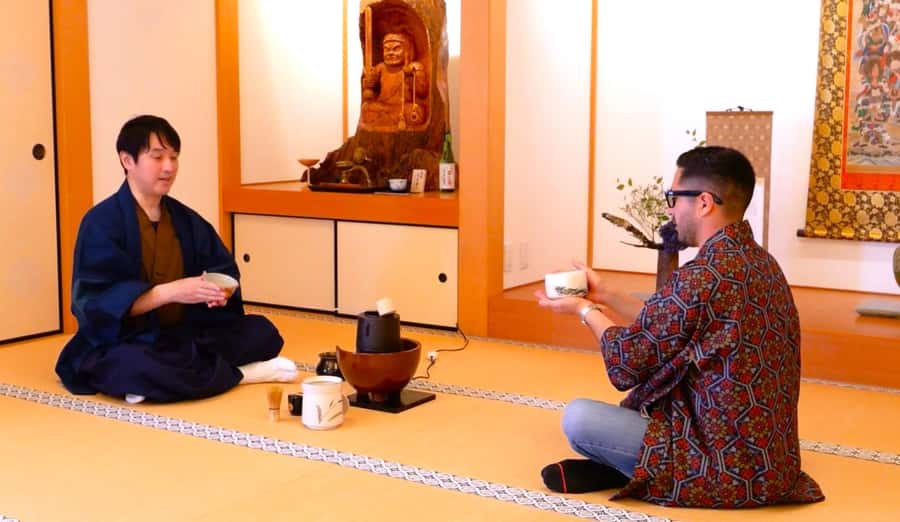
Tea on tatami feels like time slows. This private (or semi-private) Japanese traditional tea ceremony at Mita Koboji Temple turns a matcha lesson into something calm, guided, and very Tokyo-in-the-best-way.
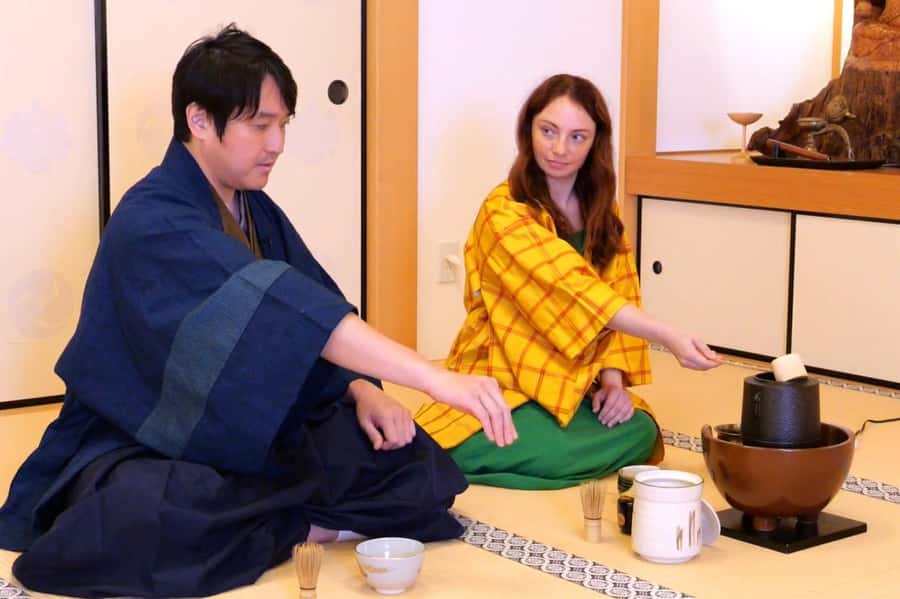
I love how you get a real teaching moment, not just a show: you’re walked through the tea ceremony utensils and etiquette by a kimono-clad teishu. I also love the practical part, where you actively participate and even make the tea yourself, alongside wagashi (Japanese sweets). One consideration: the experience runs about an hour, and if you’re hoping for kimono try-on by default, know that kimono and the rarer Oshima Tsumugi haori are optional add-ons.
In This Review
- Key highlights at a glance
- Koboji Temple on Mita: where the tea ceremony happens in Tokyo
- The 24-mat tatami room: what your 60 minutes really looks like
- Teishu-led matcha and wagashi: learning etiquette without rushing
- Making tea yourself: utensils, pacing, and photo manners
- Kimono and Oshima Tsumugi haori options: what you can (and can’t) expect
- Price in context: is $74 worth a private tea ceremony?
- Who should book this Tokyo tea ceremony and who might want something else
- Should you book this Tokyo tea ceremony at Koboji Temple?
- FAQ
- How long is the tea ceremony experience?
- Where do I meet for the tea ceremony?
- What will I drink and eat during the ceremony?
- Is the experience private or group-based?
- What languages are available during the ceremony?
- Do I need to bring anything for the kimono option?
- Can I choose a kimono or Oshima Tsumugi haori?
- Is there a lesson as part of the experience?
Key highlights at a glance
- Koboji Temple setting in Tokyo: A Buddhist temple atmosphere in a very established, centuries-old space.
- 60 minutes in a 24-mat tatami room: Traditional room layout that keeps the pace respectful and focused.
- Matcha and wagashi only: You’ll taste and learn with green tea and Japanese sweets, not a full meal.
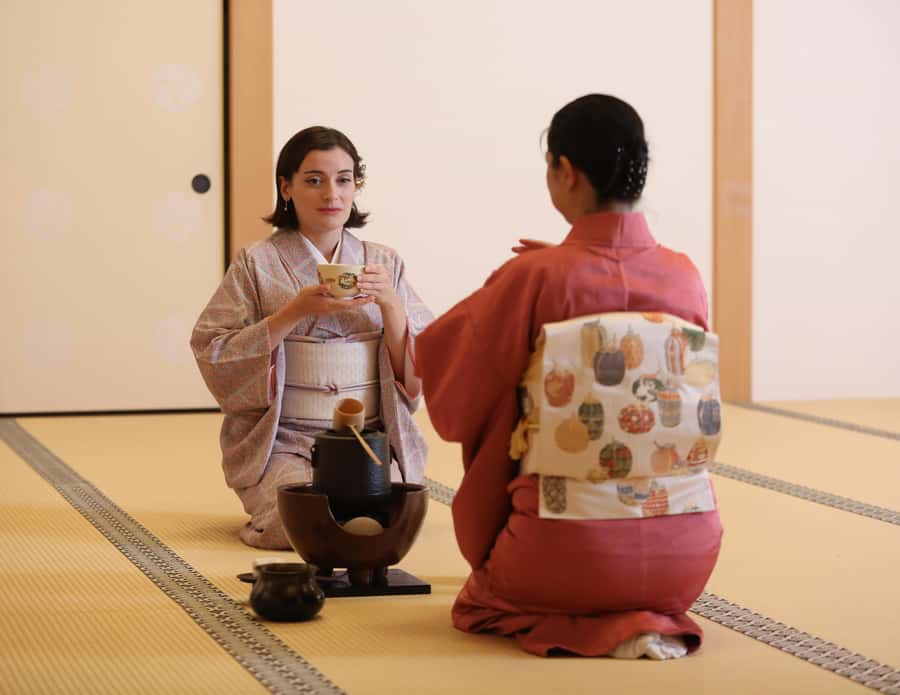
- You learn etiquette, not just how to drink: The teishu explains proper utensil use and ceremony flow.
- Optional kimono and Oshima Tsumugi haori: A dressing-and-photo upgrade if you want it.
- English and Japanese guidance available: Helpful for first-timers who want cultural context.
Koboji Temple on Mita: where the tea ceremony happens in Tokyo
This experience starts at Mita Koboji Temple, and that matters more than you’d think. You’re not doing tea ceremony in a studio or a hotel room. You’re in a real temple environment where the sounds, the calm, and the formality all help you switch gears from sightseeing mode to ceremony mode.
The temple’s age is part of the draw too: it’s described as a 1200-year-old setting. Even if you don’t go deep into temple history during your session, the location quietly supports what the tea ceremony is trying to do—slow your attention and focus it. That’s why tea ceremony works well as an “activity” in Tokyo: it’s not crowded with distractions, and it’s easy to remember because your senses are used the whole time.
You’ll meet at the temple and end back where you started, which makes planning simpler. Just give yourself enough buffer time to get there without stress. In Japan, a few minutes of scrambling can make a quiet experience feel rushed, and tea ceremony is the opposite of rushed.
More tea rooms our readers rated
- Matcha Making Class in Tokyo with Authentic Japanese Sweets Set
★ 5.0 · 744 reviews - Tokyo: Traditional Tea Ceremony with a Tea Master
★ 5.0 · 528 reviews - Tokyo: Matcha Making Experience with Mochi Sweets in Asakusa
★ 4.9 · 388 reviews - Tokyo: Matcha and Kimono Experience
★ 4.7 · 219 reviews
The 24-mat tatami room: what your 60 minutes really looks like
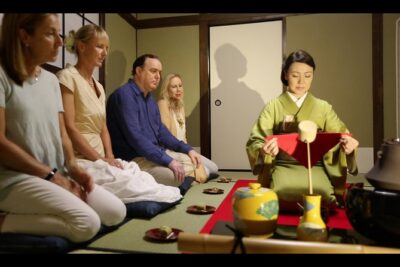
Your main ceremony happens in a 24-mat tatami room, which is a very specific kind of traditional space. Mat-by-mat, it signals “this is serious,” and it helps keep the group’s posture, movement, and pace restrained.
The scheduled time is about 60 minutes. In most cases, that feels long enough to (1) learn what’s going on, (2) watch, (3) participate, and (4) take the edge off your jet-lag brain with something slow. It’s also short enough that you won’t feel stuck for half a day.
Expect a structured flow:
- You begin with a lecture on tea ceremonies, including how to approach the tools and what to pay attention to.
- Then you move into the actual tea moments—tasting, observing, and participating.
- The session wraps with everything complete back in the same calm room, and you finish where you started.
You’ll also appreciate that this is private or semi-private. That usually means fewer distractions than a big group session. You’re more likely to hear your explanations clearly and ask questions without feeling like you’re interrupting a wave of other people.
Teishu-led matcha and wagashi: learning etiquette without rushing
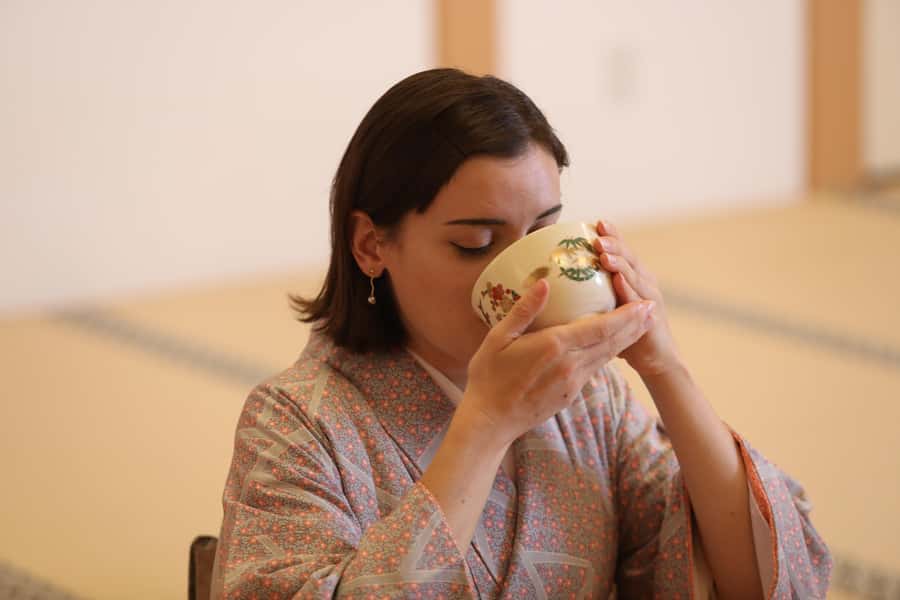
Tea ceremony isn’t “tea tasting.” It’s a set of movements and manners built around attention. In this experience, your teishu (the person guiding the ceremony) leads everything from a formal greeting style to how the utensils are used.
The key content you’re given:
- A lecture on the ceremony and its traditions
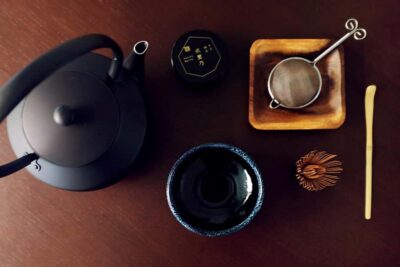
- Explanation of special utensils
- Guidance on etiquette—how to behave during the ceremony while you watch and participate
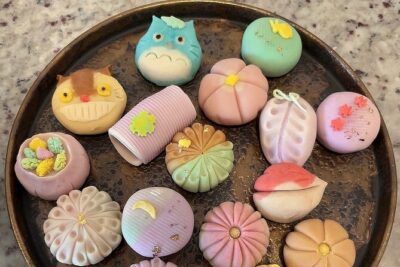
- Japanese sweets (wagashi) paired with matcha
- Guided support in English and Japanese
Your drinks and snacks are also very specific: it’s matcha green tea and Japanese sweets only. That keeps the experience focused. But it also means you shouldn’t treat it like a meal replacement. If you show up hungry expecting food beyond wagashi, you’ll be surprised.
This is where the temple setting helps again. Tea ceremony etiquette is easier to “get” when the room feels respectful and quiet. You’re not fighting background noise or rushing in and out. Instead, you’re given time to notice small details—how matcha looks, how wagashi pairs with it, and how the ceremony flow works step by step.
Also, because guidance is available in English, you can ask questions instead of guessing. That cultural context is often what makes tea ceremony stick in your memory.
Making tea yourself: utensils, pacing, and photo manners
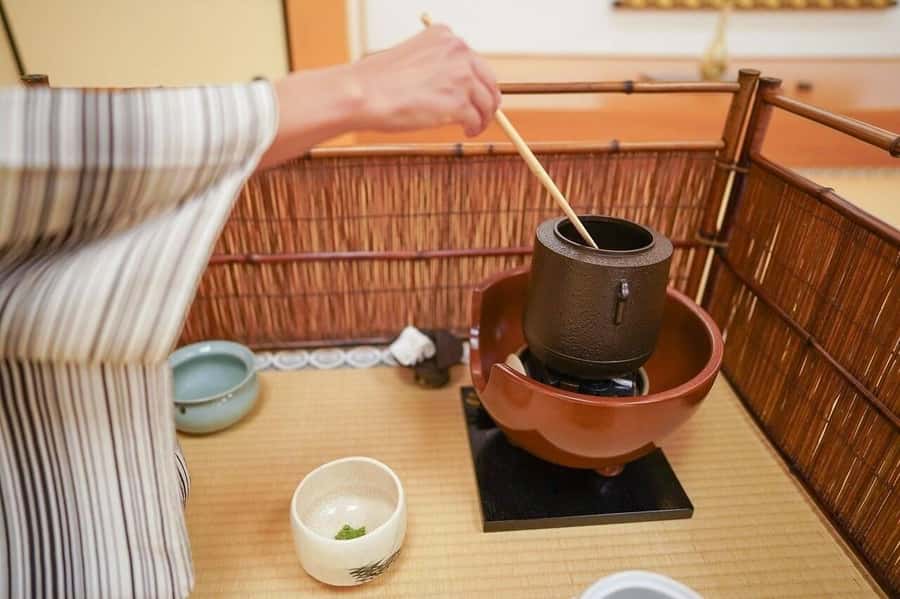
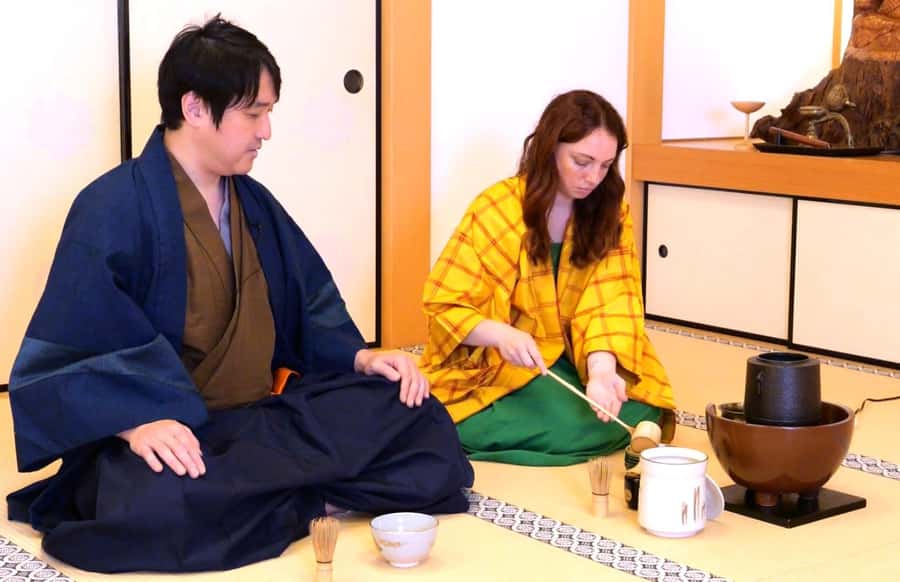
One of the best parts of this kind of tea ceremony is when you stop being a spectator. In this experience, you don’t just watch from a distance—you make the tea yourself with the master’s guidance, and then you experience more tea prepared by the teishu.
That “participation” piece is worth valuing. Watching is nice, but making matcha yourself forces your brain to slow down and pay attention. You learn by doing: how your actions fit into the ceremony timing, and how the utensils get used in a real sequence.
Pacing matters too. Tea ceremony is a slow craft, and your session is designed around that. That said, there is a practical reality: while the experience is listed as 60 minutes, you might find the time runs closer to three quarters of an hour in practice. If your schedule is tight, don’t book another must-do activity right after.
For photos, the ceremony itself is respectful, so treat photographing like a quiet activity. If you’re adding optional kimono or haori (more on that below), that typically increases photo opportunities. But even then, you’ll want to follow your host’s cues so you don’t disrupt the flow.
If you’re the type who enjoys learning through hands-on practice, this is the tea ceremony style that works best.
Kimono and Oshima Tsumugi haori options: what you can (and can’t) expect
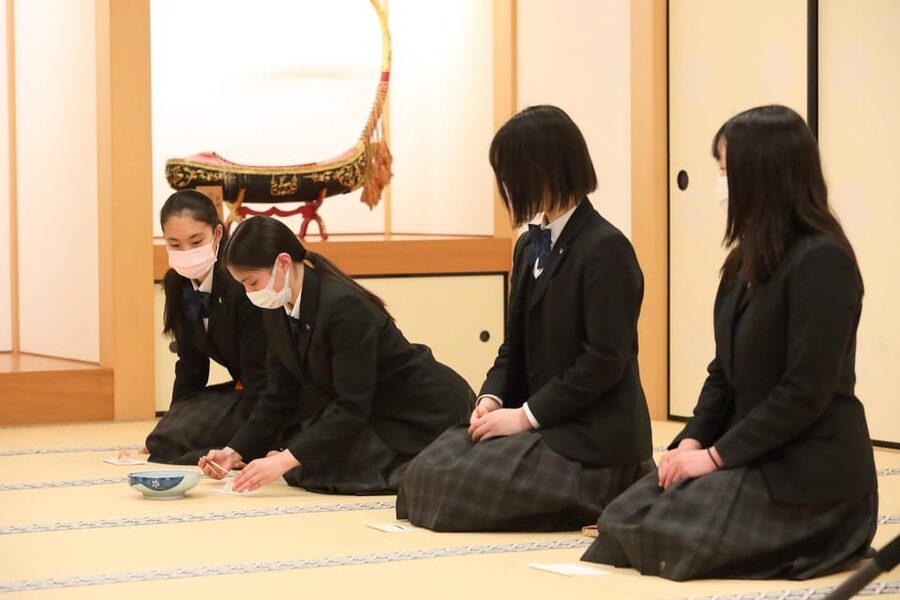
You can choose clothing add-ons, and this is where expectations can make or break your experience.
What’s available:
- A traditional kimono option
- A rarer optional upgrade: Oshima Tsumugi haori
Oshima Tsumugi is described as a luxurious silk textile, mud-dyed for rich color, woven with kasuri patterns, and known for being lightweight and supple. That kind of detail isn’t just marketing—what it means for you is that the garment is designed to drape well for photos and feel comfortable enough to wear during a short session.
How dressing works:
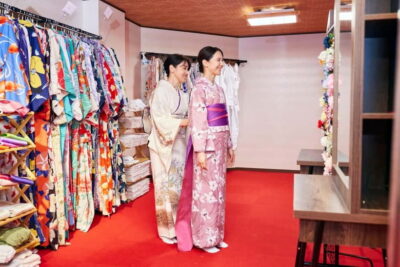
- A certified kimono master dresses you comfortably over a T-shirt or kimono undergarment.
- You’re told to come as you are—no need to bring anything for the dressing process.
- The emphasis is on commemorative photos and stepping into the elegance of the look, while still keeping it easy to wear.
One important caution: kimono and especially the Oshima Tsumugi haori are optional add-ons. Some people choose this expectation and some don’t, so if photos and costume are your #1 reason for booking, confirm what’s included with your specific selection.
Also, note that the ceremony itself is still the main event. Even with clothing add-ons, you’re not at a fashion show—you’re in a tea ceremony. That’s a good thing, just know what you’re buying.
Readers also shortlisted these Tokyo bookings:
- Tokyo 6hr Private Tour with Government-Licensed Guide★ 5.0 · 3,902 reviews
- Private Tour to Mt. Fuji and Hakone (Fully Licenced Operator)★ 5.0 · 1,910 reviews
- Tokyo Customized Private Tour (Must See Places in 1 Day)★ 5.0 · 1,499 reviews
- Mount Fuji Full-Day Private Tour from Tokyo (Customizable)★ 4.9 · 1,470 reviews
- Tokyo: Private City Highlights Tour with Local Guide★ 4.8 · 1,433 reviews
Price in context: is $74 worth a private tea ceremony?
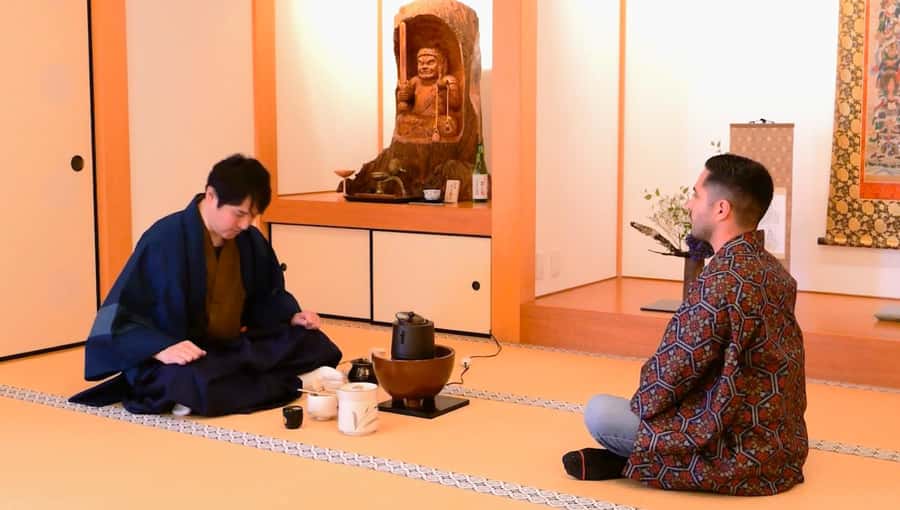
At $74 per person, the sticker shock is real, especially when you’re used to cheaper cultural activities in Tokyo. The right way to judge the value is to look at what you’re getting for that money, not just what you’re not getting.
In this package, you’re paying for:
- A 60-minute guided ceremony (lecture + etiquette + tea moments)
- A teishu-led experience in a traditional setting
- Matcha and wagashi included (tea and sweets, not a full meal)
- Private or semi-private format, which often means more attention per person
- English and Japanese guidance available
- Optional dressing upgrades with kimono and Oshima Tsumugi haori
So when does $74 feel like a win?
- When you want a quiet, structured cultural activity with direct instruction.
- When you care about learning utensils and manners, not just taking photos.
- When you want the added attention of private or semi-private pacing.
When does it feel like a miss?
- If you’re only looking for a quick tea tasting without instruction.
- If you expect kimono try-on to be included without add-ons.
- If your expectations for time or language clarity are high and you’re booking a very tight schedule.
There’s also a reality check worth saying out loud: some people consider the price high for the amount of time. If that concern keeps popping into your head, your best move is to treat this as a “once in Tokyo” cultural activity and choose it for what it does uniquely well—teishu-led learning in a temple setting.
Who should book this Tokyo tea ceremony and who might want something else
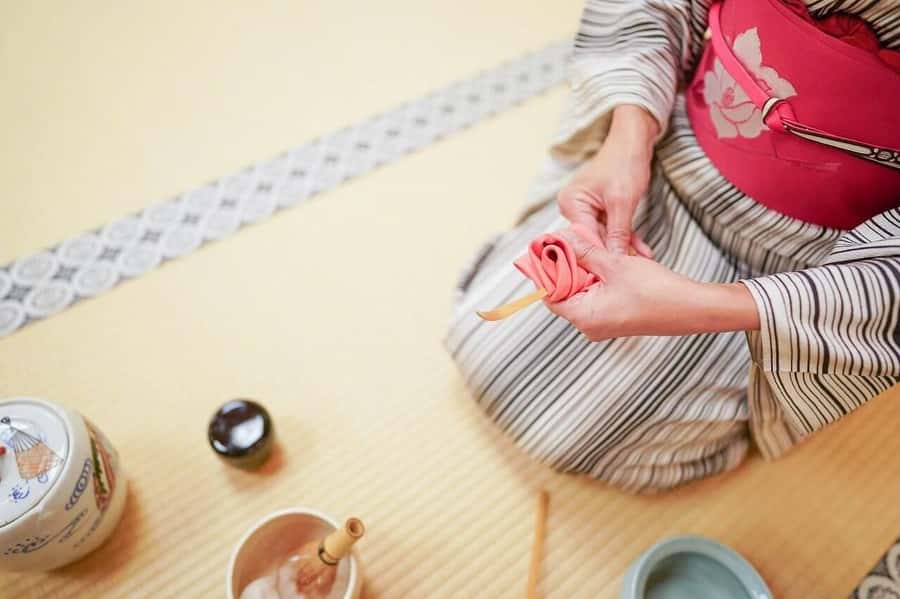
This tea ceremony is a strong match for you if:
- You’re interested in Japanese culture and want a guided explanation.
- You like traditional craft-style activities where you participate.
- You enjoy matcha and want to understand it in context, with wagashi pairing.
- You want a calmer alternative to another crowded museum stop.
It may not be the best fit if:
- You’re looking for a long, multi-course food experience (this is matcha and sweets only).
- You want a heavy focus on kimono costume unless you’ve selected the add-ons.
- You’re extremely time-sensitive, since the session is listed as 60 minutes but can run a bit shorter in practice.
For solo travelers, it’s also a win because private or semi-private format usually means you’ll get more back-and-forth. For couples or small groups, it’s great if you want the attention of a guided host in a traditional room instead of a large crowd experience.
Should you book this Tokyo tea ceremony at Koboji Temple?

If you want a calm, guided cultural experience in a real temple setting, I think this is a good booking. The biggest reasons: you learn etiquette and utensils, you get to make matcha, and you’re in a 24-mat tatami room led by a kimono-clad teishu.
Before you pay, do one quick expectation check:
- Confirm your language needs (English or Japanese).
- Decide whether kimono and the Oshima Tsumugi haori upgrade is worth it for you.
- Treat it as an activity, not a meal substitute.
If your goal is cultural learning with a peaceful pace, this is exactly the kind of Tokyo moment that feels worth it.
FAQ
How long is the tea ceremony experience?
It’s a 60-minute experience.
Where do I meet for the tea ceremony?
The start point is Mita Koboji Temple, and the activity ends back at the meeting point.
What will I drink and eat during the ceremony?
You’ll have matcha green tea and Japanese sweets (wagashi). Other meals aren’t included.
Is the experience private or group-based?
It’s described as private or semi-private.
What languages are available during the ceremony?
Guided activity is available in English and Japanese.
Do I need to bring anything for the kimono option?
You can come as you are, and the kimono master will dress you. There’s no need to bring anything for the dressing process.
Can I choose a kimono or Oshima Tsumugi haori?
Yes. A traditional kimono and the Oshima Tsumugi haori are optional add-ons you can choose.
Is there a lesson as part of the experience?
Yes. You’ll receive a lecture on tea ceremonies, plus guided instruction during the ceremony itself.
More Private in Tokyo
- Tokyo 6hr Private Tour with Government-Licensed Guide
★ 5.0 · 3,902 reviews - Private Tour to Mt. Fuji and Hakone (Fully Licenced Operator)
★ 5.0 · 1,910 reviews - Tokyo Customized Private Tour (Must See Places in 1 Day)
★ 5.0 · 1,499 reviews - Mount Fuji Full-Day Private Tour from Tokyo (Customizable)
★ 4.9 · 1,470 reviews - Tokyo: Private City Highlights Tour with Local Guide
★ 4.8 · 1,433 reviews
More Tour Reviews in Tokyo
- Mt Fuji and Hakone 1-Day Bus Tour Return by Bullet Train
★ 5.0 · 26,383 reviews - 1-Day Tokyo Bus Tour
★ 5.0 · 14,250 reviews - Tokyo: teamLab Planets TOKYO Digital Art Museum Entry Ticket
★ 4.6 · 9,779 reviews - Mt Fuji & Hakone Cruise, Drum Show Bullet Train 1 Day from Tokyo
★ 4.0 · 7,413 reviews - Tokyo: Shinjuku Food Tour (13 Dishes at 4 Local Eateries)
★ 5.0 · 6,603 reviews
More Tea and Matcha Rooms
- Matcha Making Class in Tokyo with Authentic Japanese Sweets Set
★ 5.0 · 744 reviews - Tokyo: Traditional Tea Ceremony with a Tea Master
★ 5.0 · 528 reviews - Tokyo: Matcha Making Experience with Mochi Sweets in Asakusa
★ 4.9 · 388 reviews - Tokyo: Matcha and Kimono Experience
★ 4.7 · 219 reviews - Tea Ceremony Workshop in Tokyo by the Experienced Instrucor
★ 5.0 · 189 reviews
Latest Tokyo reviews off our desk




Tea Ceremony & Matcha, compared.
 ★ 5.0Matcha Making Class in Tokyo with Authentic Japanese Sweets SetFrom $21744 reviews
 ★ 5.0Traditional Tea Ceremony with a Tea MasterFrom $38528 reviews
 ★ 4.9Matcha Making Experience with Mochi Sweets in AsakusaFrom $22388 reviews
 ★ 4.7Matcha and Kimono ExperienceFrom $57219 reviews
 ★ 5.0Tea Ceremony Workshop in Tokyo by the Experienced InstrucorFrom $38189 reviews
 ★ 4.9Asakusa Kimono Dressing and Matcha ExperienceFrom $56173 reviews
 ★ 4.9Asakusa: Kimono Tea Ceremony with Matcha and SweetFrom $66153 reviews
 ★ 5.0Make Traditional Nerikiri Sweets & Matcha experience in ShibuyaFrom $60130 reviews
Browse the lists this tour appears in