
Reviewed · SAMURAI & NINJA CLASSES
Tokyo: Samurai Sword Academy in the Hometown of the Last Samurai
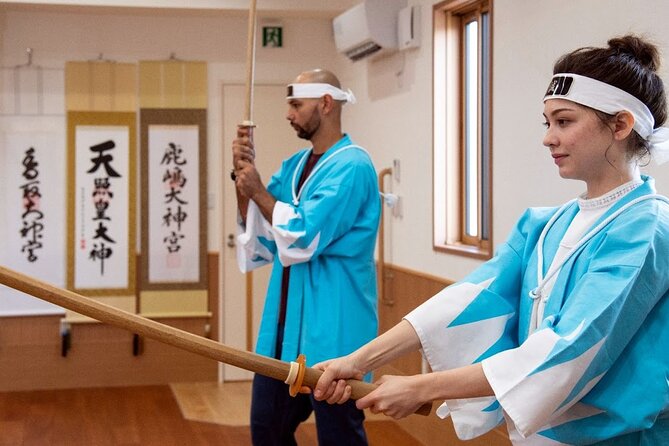
Two hours, one authentic dojo. In Hino, Tokyo, you learn Tennen Rishin-ryu sword basics with the story of the Shinsengumi close at hand, taught at the actual dojo. It’s not a souvenir-style show. It’s hands-on kenjutsu training in a place where the practice still matters.
I love that this is led by the dojo’s chairman, Masao Inoue, and that you’re learning from a direct descendant linked to the Shinsengumi legacy. I also like the practical focus: you learn basic forms, handle a Japanese sword, and work toward a supervised trial cutting experience.
One possible drawback: this is training, not sightseeing. You’ll need moderate physical fitness and a willingness to pay attention to safety and etiquette, because swords are the whole point here.
In This Review
- Key highlights you can plan around
- Hino’s Shinsengumi connection, and why it matters
- Starting at Genzaburo Inoue Shiryokan: you begin with a story, not a script
- The dojo lesson: how Tennen Rishin-ryu is taught in plain steps
- Handling the Japanese sword: more than a photo moment
- Who teaches you: Masao Inoue, the family lineage, and English support
- The trial cutting moment (試し斬り): where technique meets real nerves
- Group size and pace: why this feels personal
- Price and value: what $118.60 is really buying
- The best-fit traveler (and the one who should reconsider)
- Practical tips so you get the most out of it
- Should you book the Samurai Sword Academy in Hino?
- FAQ
- FAQ
- How long is the sword academy experience?
- How much does the experience cost?
- Where do I meet for the experience?
- What time does the experience start?
- Is this experience beginner-friendly?
- Who leads the training?
- Do you teach Tennen Rishin-ryu?
- Can I handle a Japanese sword during the experience?
- Is there English support?
- Is the group small?
Key highlights you can plan around
- Real-dojo kenjutsu focus in Hino, Tokyo, not a staged performance
- Tennen Rishin-ryu basics taught as core forms and stance work
- Leadership by Masao Inoue at the Tennen Rishin-ryu Hino Dojo
- Try handling a Japanese sword meant to embody samurai spirit
- Small group size (max 4), so you’re not lost in the shuffle
- You may try trial cutting (試し斬り) under instruction
Hino’s Shinsengumi connection, and why it matters
Hino City is treated as more than a backdrop here. This experience is built around the idea that the Shinsengumi’s sword culture didn’t just disappear with the Edo period. It’s still practiced through Tennen Rishin-ryu at the Tennen Rishin-ryu Hino Dojo.
That connection changes the tone. Instead of hearing a history lecture while you watch someone else perform, you’re learning the physical habits that go with the tradition: how you stand, how you hold, and how you move through basic forms. The point is to feel why a style becomes a style. It’s in the repetition, the posture, and the discipline.
And yes, the “Last Samurai” angle is part of the framing. The swordsmen practicing in Hino were said to form the Shinsengumi, described here as the strongest group active at the end of the Edo period. If you like cultural context that actually touches real practice, you’ll appreciate how directly this is tied to the dojo setting.
Readers booked these Tokyo Prefecture options in the same breath. Here is how each one scored:
- Vegan/Vegetarian Ramen and Gyoza by Bentoya cooking
★ 5.0 · 59 reviews - Tokyo: Samurai Sword Academy in the Hometown of the Last Samurai
★ 5.0 · 24 reviews - 3-Hour Guided Musubi Japanese Home Cooking Class
★ 5.0 · 21 reviews - Tokyo: Mt. Takao Tour with Ramen and Tattoo-Okay Hot Spring
★ 5.0 · 12 reviews
Starting at Genzaburo Inoue Shiryokan: you begin with a story, not a script
Your meeting point is Genzaburo Inoue Shiryokan in Hinohonmachi (Tokyo, 191-0011). You start and finish back at the same spot, and the session begins at 1:00 pm.
That first location matters because the program is anchored to names, not vague “samurai vibes.” The chairman, Masao Inoue, is described as a descendant of Genzaburo Inoue, an executive in the Shinsengumi line. Starting near the Shiryokan helps you connect the training to the people behind it, instead of treating the swords as props.
What to expect right when you arrive? You’ll likely be guided into the training flow quickly. This is designed to move from orientation into practice in a short window (about two hours). Come with your questions ready, and don’t expect a long buffer of casual strolling.
The dojo lesson: how Tennen Rishin-ryu is taught in plain steps
This is repeatedly described as an authentic dojo experience. That word matters here. Anyone can be handed a sword for photos, but a real dojo teaches process.
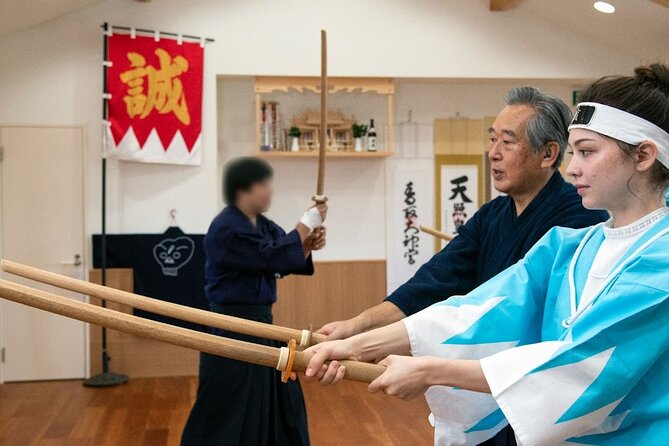
In your session, you learn the basic forms of Tennen Rishin-ryu. The focus is on core technique building blocks: stance, structure, and form sequencing. Even if you’ve never held a sword before, the program is positioned as beginner-friendly in the sense that you can learn the art of swordsmanship in this true dojo setting.
You’ll also be taught etiquette and sword posture as part of the training. That’s not “extra” here. In Japanese martial traditions, how you carry yourself is part of the technique. The respect comes through in the way you prepare, handle the sword, and respond to instruction.
One thing I’d plan for mentally: in just two hours, you’re not trying to become a master. You’re trying to learn how to not fight your own body. If you show up ready to listen and repeat, you’ll get more out of it than someone who tries to rush toward dramatic moves.
Handling the Japanese sword: more than a photo moment
A big part of the experience is that you can actually handle a Japanese sword, described as the soul of the samurai. That phrasing can sound dramatic, but in practice it points to something simple: the sword changes how your whole body behaves.
When you hold it, you can feel balance, weight, and the way your hands and shoulders have to coordinate. That’s why this experience is framed as training at the dojo rather than an outdoor demonstration. The physical feedback is immediate, and the instruction helps you translate what you’re feeling into what you’re doing.
You should also expect close supervision and careful handling. Even the reviews that mention trial cutting and kata describe it as tightly taught, not a free-for-all. Plan on being a little nervous at first. That tension is normal. The instructors guide you through it.
And if your goal is confidence, this is one of the best kinds of confidence. Not “I waved a sword once,” but “I learned how to stand, hold, and move correctly for a beginner level.”
Who teaches you: Masao Inoue, the family lineage, and English support
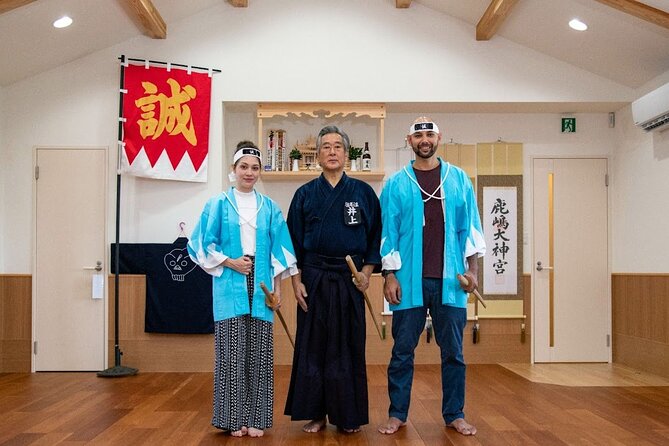
Leadership is one of the strongest signals in this program. Masao Inoue leads the experience program, tied to the Tennen Rishin-ryu Hino Dojo and described as a descendant of Shinsengumi executive Genzaburo Inoue.
That kind of connection affects how the session feels. The tradition isn’t presented as history behind glass. It’s presented like something people still practice as part of their identity.
Language support is also part of the package. One review specifically notes English guidance from Yu Ma. If you’re not comfortable in Japanese, that’s a reassuring detail. It suggests you’ll have help communicating what you need and understanding corrections as you work.
For your planning: don’t assume the session will be long-winded in any language. Two hours is tight. You’ll get instruction, feedback, and repetition. The best mindset is to focus on small corrections rather than trying to absorb every concept at once.
- (Private car)Fake It Then Taste It:Japan’s Quirky Cuisine Journey★ 5.0 · 8 reviews
The trial cutting moment (試し斬り): where technique meets real nerves
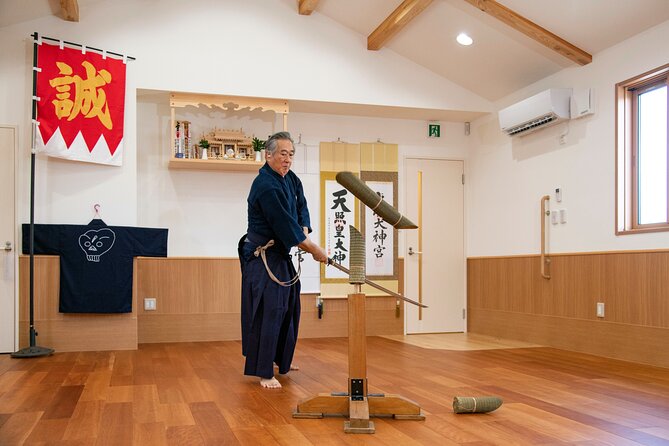
One of the most memorable parts people talk about is 試し斬り, often translated as trial cutting. You learn the basic forms and try the experience of cutting under supervision, taught by your instructors with careful guidance.
Here’s the value for you: trial cutting is a reality check. It turns sword practice from a purely mechanical drill into something that demands coordination, commitment, and timing. In a short program, that’s exactly the kind of milestone that makes the experience feel complete.
It’s also the part where nervousness is most likely to show up. That’s normal, even if you consider yourself athletic. A sword isn’t a foam prop. Your body has to coordinate safely and correctly.
The takeaway: treat trial cutting as the program’s highlight, but not as the only goal. If you walk in hoping to look cool, you’ll likely stress yourself out. If you walk in hoping to learn how to move correctly, you’ll enjoy it more—because the instruction is the point.
Group size and pace: why this feels personal
The group size is capped at 4 travelers. That’s a big deal for a hands-on class. With a small group, instructors can adjust your stance and grip without turning your lesson into a queue.
It also keeps the pacing human. In larger groups, you can feel like you’re watching more than doing. Here, you should expect more chances to practice during the session, because there simply aren’t many people to cover.
Duration is about two hours. You’ll start, learn, practice, and attempt trial cutting within that time. That means you should come ready to focus from the first instruction, not after you’ve settled into the environment.
If you like experiences that feel more like training than a guided tour, this is likely a fit. You’ll spend most of the time doing something with your body, not standing around.
Price and value: what $118.60 is really buying
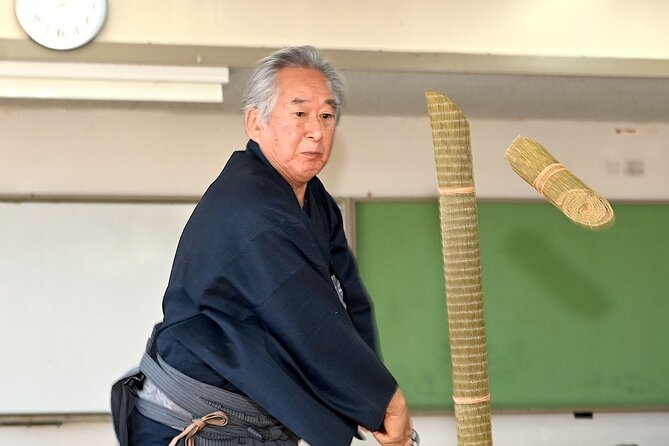
At $118.60 per person for an experience of roughly two hours, you’re paying for more than a demo. You’re paying for:
- A real dojo environment (not a performance space)
- Instruction tied to Tennen Rishin-ryu forms
- Access to a Japanese sword for hands-on learning
- Small group teaching (max 4)
- Leadership by Masao Inoue
- The chance to try trial cutting under supervision
If you compare this kind of activity to generic “samurai sword shows” priced similarly, the difference is clear. Shows can be fun, but they rarely teach you technique with feedback. Here, the teaching model is closer to a lesson.
Also, the timing is practical. A 1:00 pm start in Tokyo can work well with a morning plan, then you still have plenty of day left afterward. And the tour uses a mobile ticket, which is convenient for day-of logistics.
Is it expensive? It’s not bargain-bin. But if your goal is genuine skill practice—basic forms, posture, handling a sword—this looks like one of the more direct value options in Tokyo.
The best-fit traveler (and the one who should reconsider)
This experience is ideal if you:
- Want a real martial arts dojo experience rather than a photo stop
- Are curious about the Shinsengumi in Hino through practice, not just narration
- Like small-group classes where you get feedback
- Want to handle a Japanese sword and learn basic forms properly
- Prefer structured instruction (etiquette, stance, kata) over free roaming
You might want to reconsider if:
- You hate hands-on activities and prefer passive sightseeing
- You’re dealing with limited physical ability, because moderate fitness is requested
- You only want a quick history glance with zero training involvement
Remember, this is training. Not a theme-park act. That’s the point, and that’s also what can make or break it for you.
Practical tips so you get the most out of it
Because it’s an authentic dojo setting, your results improve when you show up ready to follow instructions.
- Arrive on time. A two-hour session doesn’t have room for delays.
- Go in with a beginner mindset. The program is designed for learning.
- Be ready to focus on etiquette and posture, not just movement.
- If you’re nervous about trial cutting, don’t fake confidence. Your instructor will work with you better when you admit you’re paying attention.
Also, since the meeting point is near public transportation and you’ll start at Genzaburo Inoue Shiryokan, you can build your day around it without a complicated commute plan.
Should you book the Samurai Sword Academy in Hino?
If you want a Tokyo experience that feels real, this is a strong choice. You’re learning Tennen Rishin-ryu basics in the Tennen Rishin-ryu Hino Dojo, led by Masao Inoue, with small-group attention. The chance to handle a Japanese sword and try trial cutting (試し斬り) makes it more than a story you hear. It’s a story you do with your hands and body.
I’d book it if you’re the type who likes technique, etiquette, and feedback. If that doesn’t sound like your vacation style, then you might find the focus too serious.
Bottom line: for $118.60, you’re buying an authentic lesson in a real dojo—short, intense, and very hands-on. That’s exactly the kind of experience that pays off when you remember it later.
FAQ
FAQ
How long is the sword academy experience?
It lasts about 2 hours.
How much does the experience cost?
The price is $118.60 per person.
Where do I meet for the experience?
You meet at Genzaburo Inoue Shiryokan in Hinohonmachi, Hino, Tokyo (191-0011).
What time does the experience start?
The start time listed is 1:00 pm.
Is this experience beginner-friendly?
Yes. The program is described as an experience where anyone can learn swordsmanship in a true dojo setting.
Who leads the training?
Masao Inoue, chairman of the Tennen Rishin-ryu Hino Dojo, leads the experience.
Do you teach Tennen Rishin-ryu?
Yes. You learn basic forms of Tennen Rishin-ryu and practice in the dojo setting.
Can I handle a Japanese sword during the experience?
Yes. You can actually handle a Japanese sword under instruction.
Is there English support?
English guidance is mentioned (Yu Ma is referenced in a review).
Is the group small?
Yes. The maximum group size is 4 travelers.
More Tour Reviews in Tokyo Prefecture
- Vegan/Vegetarian Ramen and Gyoza by Bentoya cooking
★ 5.0 · 59 reviews - Tokyo Half-Day Canyoning Adventure
★ 5.0 · 25 reviews - 3-Hour Guided Musubi Japanese Home Cooking Class
★ 5.0 · 21 reviews - Tokyo: Mt. Takao Tour with Ramen and Tattoo-Okay Hot Spring
★ 5.0 · 12 reviews - (Private car)Fake It Then Taste It:Japan’s Quirky Cuisine Journey
★ 5.0 · 8 reviews
Latest Tokyo Prefecture reviews off our desk

Samurai & Ninja Classes, compared.
 ★ 4.6Samurai Ninja Museum Guided tour and ExperienceFrom $271,010 reviews
 ★ 5.0Samurai Sword & Archery Class from Samurai DescendantFrom $193603 reviews
 ★ 5.0Best Samurai Experience in TokyoFrom $65458 reviews
 ★ 5.0Ninja Experience (Family Friendly) at Samurai Ninja Museum TOKYOFrom $47441 reviews
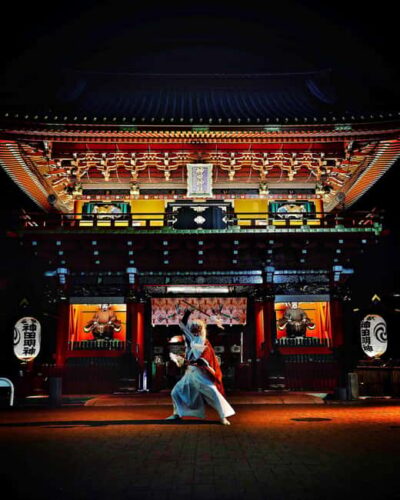 ★ 4.6Samurai Entertainment Night Show in Kanda ShrineFrom $41417 reviews
 ★ 4.2Ninja Kabuki PerformanceFrom $29330 reviews
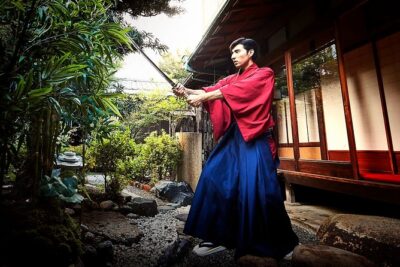 ★ 5.0Tokyo Sword Experience – includes Museum Ticket/Ninja ExperienceFrom $84314 reviews
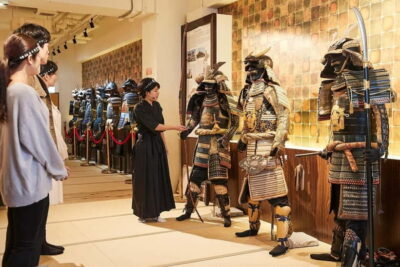 ★ 4.8Samurai Ninja Museum Asakusa: Samurai Sword Lesson & TourFrom $63306 reviews
Browse the lists this tour appears in