
Reviewed · SUMO TOURNAMENTS & SHOWS
Tokyo Sumo Morning Practice: Viewing & Exclusive Interaction
A calm morning, then raw power. This Tokyo sumo morning practice puts you close to an active stable session, with explanations that make the rituals make sense fast—without turning it into a staged show. I especially like the wrestler interaction part, plus the official Banzuke souvenir in a folder you’ll actually keep.
Two things I really liked: first, the chance to sit close enough to feel the discipline of practice, with zabuton cushions up front or stools in the back for comfort. Second, the guided questions after training, where you can ask about daily life and training and even hear personal mindsets—guides like Haru, Momo, Ryoko, Sarah, and Sana are repeatedly praised for making this smooth and respectful.
The only real consideration is that the stable rules are strict: no flash, no video or audio recording, and you’ll need to stay quiet during training. If you want casual, camera-first tourism, this may feel like less fun and more etiquette.
In This Review
- Key highlights worth waking up for
- Why this Tokyo sumo morning practice feels more real than a show
- Meeting at Narihira Park: get your bearings and your manners
- The short walk to the stable: where the energy changes
- Watching practice up close: seating choices that keep it comfortable
- The exclusive interaction: Q&A and photos with active wrestlers
- The Banzuke souvenir: why a ranking sheet is more than paper
- The final Deep Q&A at the park: asking the questions you held back
- Timing reality check: how tournament weeks change the schedule
- Price and value: what $93 gets you (and what it doesn’t)
- Who this tour suits best (and who should think twice)
- Practical etiquette checklist for the stable
- Should you book Tokyo Sumo Morning Practice?
- FAQ
- Where do I meet for the tour?
- How long is the Tokyo sumo morning practice experience?
- Is transportation included?
- What seating options are available during training?
- Can I take photos and videos?
- Are food and drinks allowed during the experience?
- What do I receive as a souvenir?
- What happens during the Grand Sumo Tournament period?
- Is this tour suitable for young children?
Key highlights worth waking up for
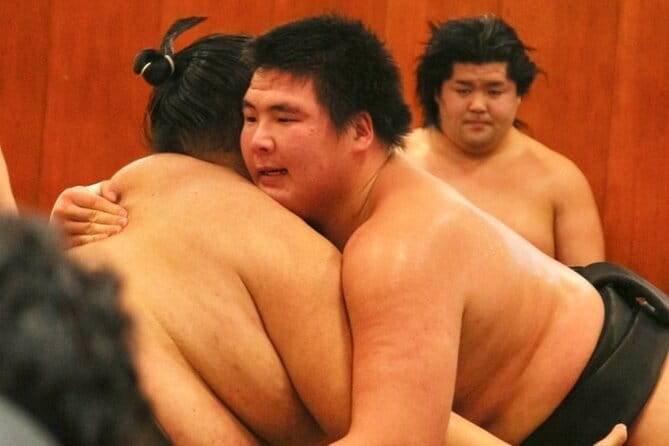
- Real training in an active sumo stable, not a performance
- English-speaking guidance that translates rules and rituals into plain talk
- Up-close seating flexibility: front-row floor cushions or back-row stools
- Direct Q&A and photo time with active wrestlers through the guide
- Official “Banzuke” ranking sheet provided as a souvenir in a folder
- A final deep Q&A at Narihira Park so you can ask follow-ups before you leave
Why this Tokyo sumo morning practice feels more real than a show
Tokyo has plenty of sumo-related experiences. This one is different because it’s built around a working stable atmosphere—early, focused, and quiet in a way that makes the sport feel sacred rather than entertainment.
I like that the start happens in the calmer hours, when you can learn the basics (history, rules, etiquette) before you’re dropped into the thick of training. That order matters. You’re not just watching bodies collide; you’re picking up why sumo looks the way it does, how rituals fit into daily routine, and what’s expected from spectators.
The atmosphere can also be a little overwhelming at first, even if you’re a sports fan. You’ll see real dedication up close: warmups, practice patterns, and the intense energy of professional training. Then you get to turn questions from curiosity into conversation.
Other ringside bookings readers scored
- Tokyo: Sumo Show and Dining Experience
★ 4.8 · 2,742 reviews - the SUMO show
★ 5.0 · 1,960 reviews - Tokyo Shinjuku Sumo Show & Experience with Photo
★ 5.0 · 1,750 reviews - Tokyo: Sumo Show and Experience in Shinjuku
★ 4.8 · 1,001 reviews
Meeting at Narihira Park: get your bearings and your manners
You’ll gather near the multipurpose restroom at Narihira Park. The guide checks your name, hands you materials related to sumo, and sets the rules up front so you’re not fumbling once you’re inside.
This matters more than it sounds. In a stable environment, small etiquette mistakes stand out. The guide’s role is to help you understand what’s respectful, when to stay still, and how to position yourself for the best view without blocking others.
A practical tip: go a little earlier than you think you need. Not because you’ll be late, but because you’ll get oriented faster. That gives you headspace to absorb the explanations and keep your camera (or phone) ready without distractions.
The short walk to the stable: where the energy changes
After a brief introduction at Narihira Park, you’ll take a short walk to an active sumo stable. This short transfer is part of the vibe shift. The city noise fades, and you start feeling that you’re about to watch something normally closed to the public.
From here, the tour stays grounded in real training. You’re not entering a museum setup or a photo backdrop. You’re stepping into a working space where the schedule drives everything.
And once you’re there, your guide helps translate what you’re seeing. That’s a big reason this experience gets such high praise: you come away understanding the sport’s structure instead of leaving with only a few dramatic moments.
Watching practice up close: seating choices that keep it comfortable
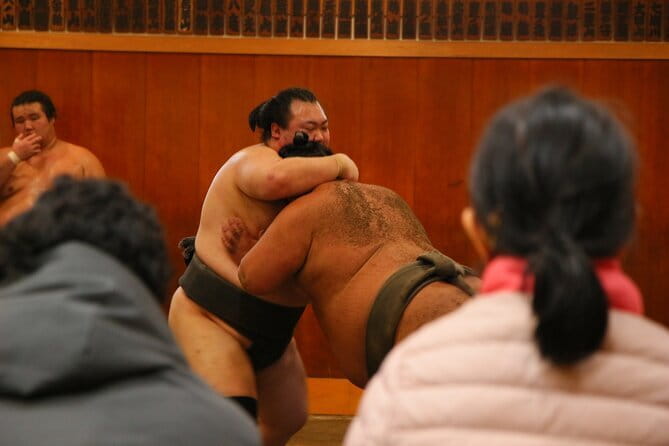
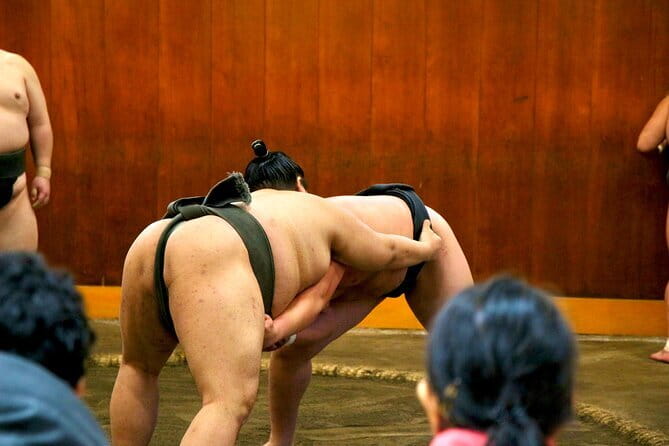
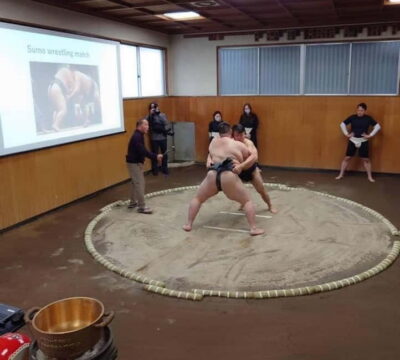
Inside the stable, you get flexible seating based on your comfort level. Front-row options use traditional zabuton floor cushions. If you’d rather avoid sitting low on the ground, there are stools available toward the back.
This is one of those small details that changes everything. Sitting on the floor can be more immersive—close to the movement, close to the rhythm. But it’s not for everyone, especially if you have knee or back issues. The stools option makes the tour more accessible to more people without turning the experience into something watered down.
What you should expect during training is focus: warmups, practice, and the hard physical intensity of repeated drills. Rules in the stable are strict, so the crowd stays quiet and photography is controlled.
Also remember the restrictions:
- Food is not allowed.
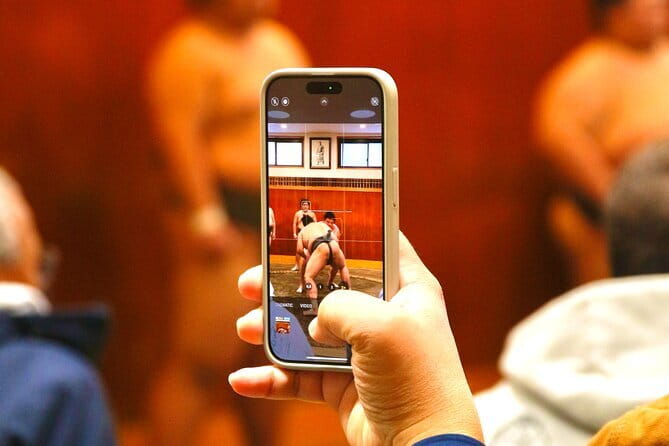
- Flash photography is not allowed.
- Video recording and audio recording are not allowed.
- Alcohol and drugs are not allowed.
Photography is allowed, but quiet and rule-following are part of the deal. If you want great photos, shoot patiently and stay out of the wrestlers’ space.
The exclusive interaction: Q&A and photos with active wrestlers
This is the part most people come for, and it’s also the part that feels most meaningful. After practice, you’ll have a rare opportunity to talk directly with active wrestlers—not just quick nods, but guided conversation through the English-speaking guide.
Because a translator is there, you’re not stuck with guessing what to ask. You can learn about:
- daily life as a wrestler
- training routines
- mindset and discipline
Then there’s a commemorative photo session arranged through your guide. It turns the experience from observation into connection.
A few guide names pop up repeatedly in strong feedback—Haru, Momo, Ryoko, Sarah, and Sana—and the common thread is how well they manage the flow: they set expectations, help you ask the right questions, and keep interactions respectful of the stable environment.
One note for your expectations: you’re not there to interrupt training habits. Your interaction happens at the right time, and you’ll be guided on how to behave during the photo and Q&A moments.
Readers also shortlisted these Tokyo bookings:
- Tokyo: Sumo Morning Practice Viewing Tour★ 4.8 · 570 reviews
- Tokyo: Sumo Morning Training Visit★ 4.4 · 370 reviews
- Tokyo: Visit Sumo Morning Practice with English Guide★ 4.7 · 343 reviews
- Tokyo: Sumo Morning Practice Tour at Sumida City★ 4.8 · 308 reviews
- Tokyo Sumo Morning Practice Tour at Stable★ 5.0 · 298 reviews
The Banzuke souvenir: why a ranking sheet is more than paper
After practice, you return to Narihira Park for a special closing session. Here’s one of the most satisfying souvenirs you can get on a Tokyo cultural tour: an official Banzuke (sumo ranking sheet), provided in a souvenir folder.
Why it’s valuable: a Banzuke isn’t just decoration. It’s an object tied to how sumo is organized and how rankings matter throughout tournaments. Getting one as a gift helps you take the sport home in a more concrete way than a generic photo or themed postcard.
If you’re the type who likes to understand what you’re collecting, this souvenir does that job. It gives you something to reference later if you start following sumo more closely.
The final Deep Q&A at the park: asking the questions you held back
Instead of rushing you into a meal stop, the tour builds time for a deep Q&A session at the park. Your guide stays with you so you can ask the questions that might not fit during the immediate wrestler interaction.
This is where I think the tour earns extra value. You’ve already seen training. You’ve already gotten a few answers from wrestlers. Now you can ask follow-ups like how rituals connect to training days, what certain etiquette signals mean, or how to watch matches with better understanding.
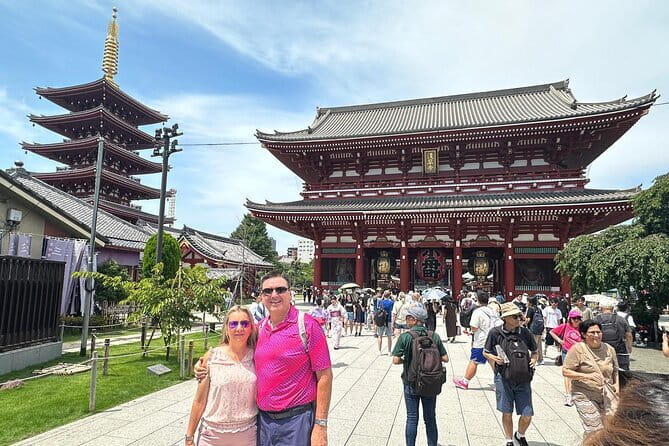
You’ll also be positioned to continue your Tokyo day. The tour wraps around 11:00 AM, which is early enough to head to nearby areas like Tokyo Skytree or Asakusa without feeling rushed.
Timing reality check: how tournament weeks change the schedule
There’s an important note if your visit overlaps with the Grand Sumo Tournament (about two weeks in January, May, and September). During tournament periods, practice starts about 30 minutes earlier, and viewing time is about 1 hour.
So the tour still works the same way, but the pacing compresses. If you like planning your day tightly, check your specific date and be ready to move earlier than a normal morning schedule.
This is one reason early-morning experiences can feel different: your body may not be fully awake, but the stable timing is locked in. Bring water, keep expectations realistic, and let the guide set the tempo.
Price and value: what $93 gets you (and what it doesn’t)
At about $93 per person for roughly 3 hours, this isn’t the cheapest thing in Tokyo. But it also isn’t trying to be cheap.
You’re paying for:
- access to an active stable training session
- an English-speaking guide who explains rules and etiquette
- an exclusive wrestler Q&A and photo session
- an official Banzuke souvenir
The biggest value is quality of access. Many sumo experiences are basically watching from a distance or consuming an entertainment version of training. Here, you’re close enough to appreciate effort and routine, and you get time to ask questions that turn curiosity into understanding.
What’s not included is also clear: you’ll need your own transportation to the meeting point. Still, because the tour ends near late morning, it’s easy to chain into Asakusa or Skytree without spending your whole day in transit.
If you’re a first-time visitor to sumo, or you’ve watched some bouts but want the context behind the rituals, this price starts to make sense quickly.
Who this tour suits best (and who should think twice)
This tour is a strong match if you:
- like real cultural access over theme-park style shows
- want to understand sumo etiquette and rituals, not just watch motion
- enjoy guided Q&A and conversation-based learning
- don’t mind early mornings and quiet environments
It’s not suitable for children under 6.
If you’re bringing a camera for constant filming or you’re more comfortable with casual, noisy group activities, the stable rules may feel limiting. Remember: quiet during practice is part of respect.
Also consider comfort. If floor seating sounds rough, choose stools. The tour is designed with both options in mind.
Practical etiquette checklist for the stable
To get the best experience (and to keep things smooth for everyone), I’d follow these simple rules:
- Arrive early so you can get briefed calmly.
- Keep your voice low and listen to the guide during practice.
- Avoid blocking views. Move only when your guide says it’s okay.
- Don’t use flash and don’t record video or audio.
- Keep food and drinks off-limits inside.
This isn’t about being strict. It’s about letting the training happen without disruption.
Should you book Tokyo Sumo Morning Practice?
Yes, if you want the closest thing to an authentic sumo stable morning experience that Tokyo offers. The mix of real training viewing, wrestler interaction, and the official Banzuke souvenir makes it feel like more than a sightseeing stop.
Book it especially if you like learning through questions. The tour isn’t just a camera session; it’s structured so you leave with a better grasp of how sumo works day-to-day.
If you dislike rules, hate quiet environments, or need heavy filming to feel satisfied, you may prefer a more performance-focused option. But if you’re here for respect, access, and understanding, this is a strong way to spend your morning.
FAQ
Where do I meet for the tour?
Meet near the multipurpose restroom at Narihira Park. The guide will check your name there and explain important manners and rules before you go to the stable.
How long is the Tokyo sumo morning practice experience?
The tour lasts about 3 hours.
Is transportation included?
No. Transportation to the meeting point is not included.
What seating options are available during training?
You can choose traditional zabuton floor cushions for front-row seating, or stools available toward the back if you don’t want to sit on the floor.
Can I take photos and videos?
Photography is allowed, but flash photography is not allowed. Video recording and audio recording are not allowed.
Are food and drinks allowed during the experience?
No. Food is not allowed.
What do I receive as a souvenir?
You receive an official Banzuke (sumo ranking sheet) in a specially designed souvenir folder.
What happens during the Grand Sumo Tournament period?
During the tournament (about two weeks in Jan, May, or Sept), practice starts about 30 minutes earlier, and viewing time is about 1 hour.
Is this tour suitable for young children?
It is not suitable for children under 6 years.
More Morning in Tokyo
- Tokyo: Sumo Morning Practice Viewing Tour
★ 4.8 · 570 reviews - Tokyo: Sumo Morning Training Visit
★ 4.4 · 370 reviews - Tokyo: Visit Sumo Morning Practice with English Guide
★ 4.7 · 343 reviews - Tokyo: Sumo Morning Practice Tour at Sumida City
★ 4.8 · 308 reviews - Tokyo Sumo Morning Practice Tour at Stable
★ 5.0 · 298 reviews
More Tour Reviews in Tokyo
- Mt Fuji and Hakone 1-Day Bus Tour Return by Bullet Train
★ 5.0 · 26,383 reviews - 1-Day Tokyo Bus Tour
★ 5.0 · 14,250 reviews - Tokyo: teamLab Planets TOKYO Digital Art Museum Entry Ticket
★ 4.6 · 9,779 reviews - Mt Fuji & Hakone Cruise, Drum Show Bullet Train 1 Day from Tokyo
★ 4.0 · 7,413 reviews - Tokyo: Shinjuku Food Tour (13 Dishes at 4 Local Eateries)
★ 5.0 · 6,603 reviews
More Sumo, Ringside and Rated
- Tokyo: Sumo Show and Dining Experience
★ 4.8 · 2,742 reviews - the SUMO show
★ 5.0 · 1,960 reviews - Tokyo Shinjuku Sumo Show & Experience with Photo
★ 5.0 · 1,750 reviews - Tokyo: Sumo Show and Experience in Shinjuku
★ 4.8 · 1,001 reviews - Tokyo Grand Sumo Tournament Viewing Tour with Tickets
★ 5.0 · 692 reviews
Latest Tokyo reviews off our desk






Sumo Tournaments & Shows, compared.
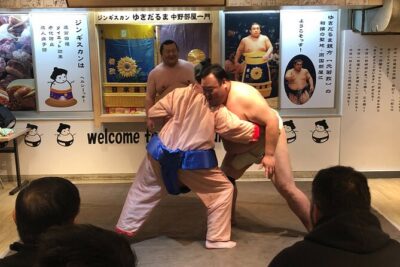
 ★ 4.8Sumo Show and Dining ExperienceFrom $792,742 reviews
 ★ 5.0the SUMO showFrom $891,960 reviews
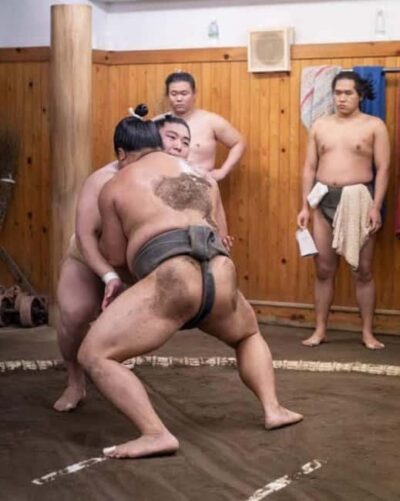
 ★ 5.0Tokyo Shinjuku Sumo Show & Experience with PhotoFrom $791,750 reviews
 ★ 4.8Sumo Show and Experience in ShinjukuFrom $691,001 reviews
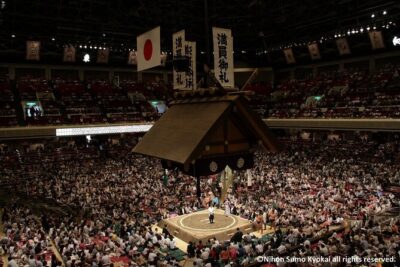 ★ 5.0Tokyo Grand Sumo Tournament Viewing Tour with TicketsFrom $124692 reviews
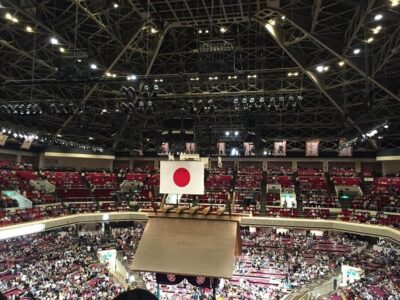 ★ 5.0Tokyo Sumo Wrestling Tournament ExperienceFrom $124660 reviews
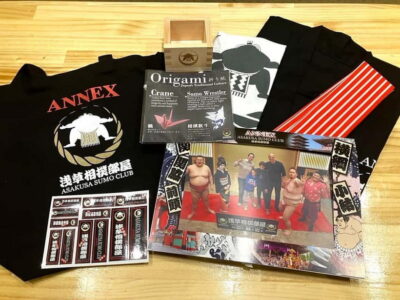 ★ 4.7Luxury Sumo Show Experience & Japanese cuisine & DrinkFrom $103577 reviews
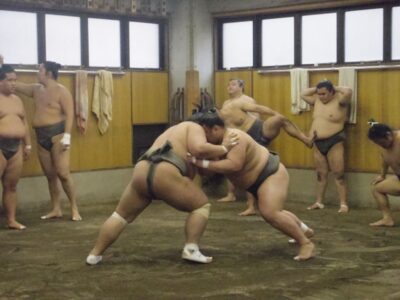 ★ 4.8Sumo Morning Practice Viewing TourFrom $81570 reviews
Browse the lists this tour appears in