
Reviewed · SUMO TOURNAMENTS & SHOWS
Tokyo: Sumo Morning Practice Viewing Tour at a Real Stable
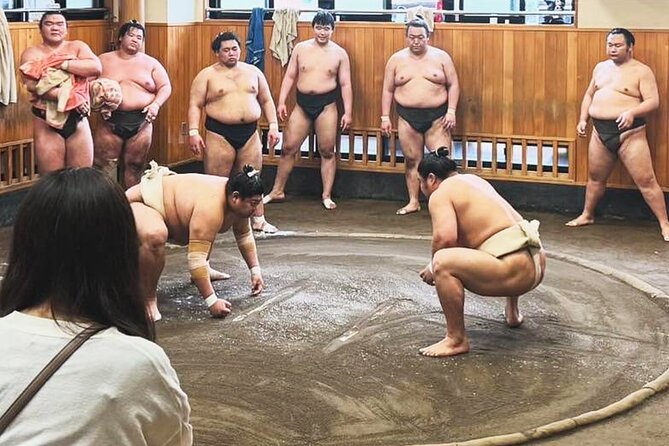
Early morning sumo hits different. You get up-close access to a real training stable, not a staged show, with an English guide who puts the sport in context. I love how the experience focuses on training intensity and the meaning of each movement, and you’ll get a rare peek into a workplace that also happens to be home.
There is one real consideration: you have to follow strict stable rules and stay for the full practice window, so plan your morning carefully and give yourself extra travel time.
In This Review
- Key highlights you’ll feel right away
- Why a working sumo stable feels more real than a show
- Kiyosumi-Shirakawa meeting point and how not to be late
- What your English guide teaches you before practice starts
- Inside the ring: what sumo training looks like up close
- The rituals and rules you’ll actually be able to spot
- Meeting the rikishi: conversation time outside training hours
- Dress code and behavior rules you must follow
- Who this tour suits best (and who should skip it)
- Price and value: does $98 make sense?
- What to do the night before and the morning of
- The booking call: should you book this sumo morning practice viewing tour?
- FAQ
- FAQ
- How long is the sumo morning practice viewing tour?
- Where do I meet the guide?
- What train lines can I use to reach Kiyosumi-Shirakawa Station?
- Is the tour available in English?
- Can I speak with the wrestlers?
- What should I wear?
- Are there rules about noise or phone use during practice?
- Do I need to stay for the entire practice?
- Is this tour suitable for children?
- Where will the tour end?
Key highlights you’ll feel right away
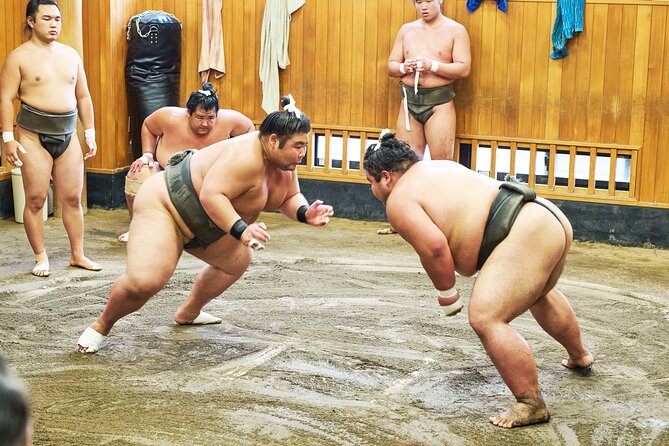
- Real stable access, not a tourist performance: You watch a working morning session where the wrestlers stay in training mode.
- English guidance that makes the rules click: You learn the why behind rituals, not just the what.
- Ringside closeness: You’re positioned to see and even catch the sound and energy of practice.
- Q&A and conversation time: You may be able to speak with wrestlers outside training hours.
- Strict conduct for a reason: Silence, modest dress, phone silent, and no standing are part of respecting the space.
- Early-morning Tokyo logistics: You start at Kiyosumi-Shirakawa and may take a train afterward, so show up early.
Why a working sumo stable feels more real than a show
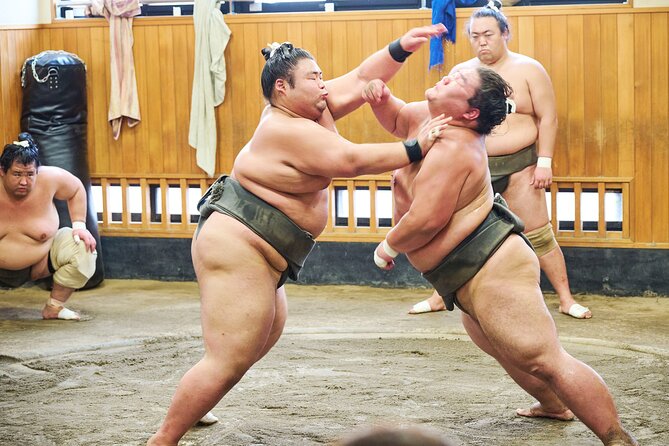
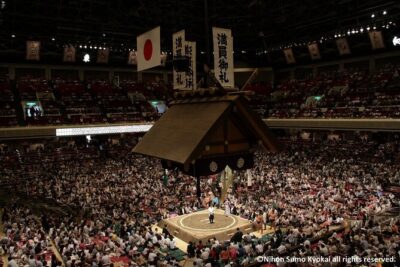
Sumo in Tokyo usually comes to you as spectacle: lights, crowds, commentary. This experience is different because you’re stepping into a place where wrestlers train, live, and commit their mornings to the same hard work over and over.
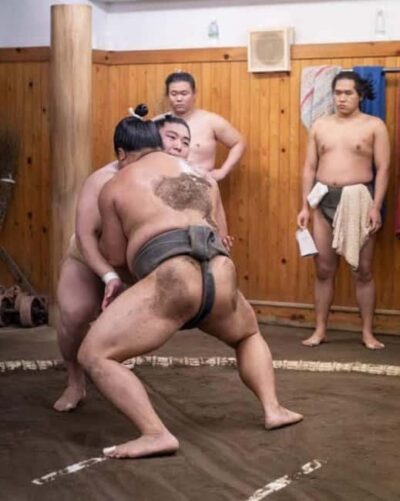
That changes what you notice. You don’t just watch fighting. You watch preparation—warmups, repeated techniques, and the calm focus that comes before the intensity. The ring looks familiar in concept, but up close it feels physical: the closeness, the speed, and the sheer athletic control.
And because the stable is a place of work, the wrestlers don’t shift into performer mode for you. One of the best things I think you’ll appreciate is that the training stays the priority.
Other ringside bookings readers scored
- Tokyo: Sumo Show and Dining Experience
★ 4.8 · 2,742 reviews - the SUMO show
★ 5.0 · 1,960 reviews - Tokyo Shinjuku Sumo Show & Experience with Photo
★ 5.0 · 1,750 reviews - Tokyo: Sumo Show and Experience in Shinjuku
★ 4.8 · 1,001 reviews
Kiyosumi-Shirakawa meeting point and how not to be late
Your meeting point is Kiyosumi-Shirakawa Station, Exit A1. You can reach it via the Toei Oedo Line or the Hanzomon Line. You’ll look for a guide holding a sign that says Local Guide Stars.
After meeting, you may take a train to the sumo stable. That matters because the timing is tight at both ends: you’re expected to arrive, gather as a group, then travel onward before practice starts.
Here’s the practical tip that keeps this smooth: aim to arrive about 30 minutes early. If you’re late, entry may not be possible. And the practice/tour can run a bit shorter or longer than you expect, so treat the rest of your morning like it’s flexible.
What your English guide teaches you before practice starts
This is not just a walk-in and watch. You’ll get an English-speaking guide who explains the rules, rituals, and meaning behind sumo. The goal is to help you see what’s happening beyond the obvious action.
You’ll also learn how sumo connects to spiritual tradition. Sumo has roots in Shinto beliefs, so there are ritual elements that set the tone for training and competition. Once you understand that, the movements stop looking like random gestures and start looking like disciplined tradition.
Guides can vary by group, and you might be guided by people like Mao, Kawa, Yuki, or Tomo. The common thread in what you should look for is clarity: they’ll help you follow what you’re seeing so you don’t leave with only blurry impressions.
Inside the ring: what sumo training looks like up close
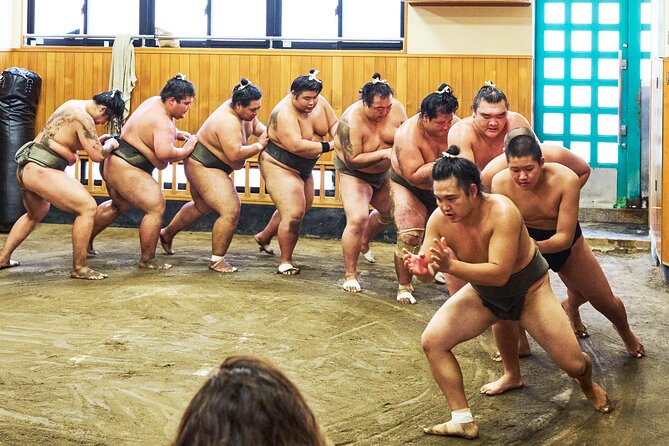
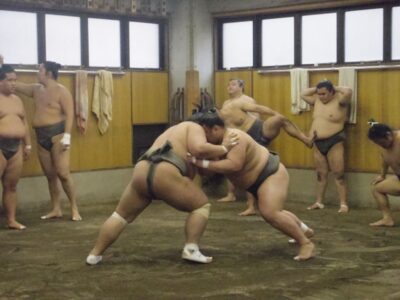
Practice time is the heart of the tour, and you’ll need to treat it like a quiet workplace. You must stay until the end of the practice, roughly 09:00 to 10:00 AM. Once you leave the stable, there is no re-entry, so use restroom time wisely before you go in.
During the practice, you’re expected to sit and watch. You don’t stand up or move around, and you should keep your phone on silent. Noise is also a no-go. In practice, that means your camera will probably stay mostly in your bag during training unless your guide gives clear permission.
Position matters here. People describe being seated on the side of the ring, close enough to feel like you’re in the action. That closeness is where you’ll pick up details most tourists never notice: the speed of footwork, how quickly grip and balance change, and how controlled everything looks even when it’s intense.
You’ll also notice that wrestlers take training seriously even while you’re there. They may barely register the presence of visitors, which is exactly what you want. This is why it feels authentic.
The rituals and rules you’ll actually be able to spot
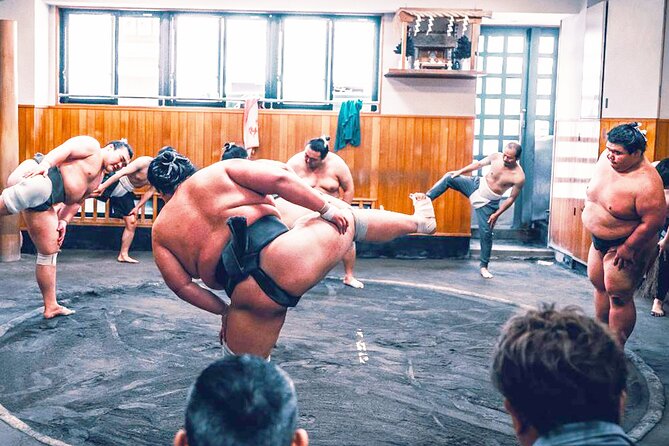
Sumo’s rules can sound simple until you’re watching in real time. The tour experience gives you the basics in a way that helps you read the session as it happens.
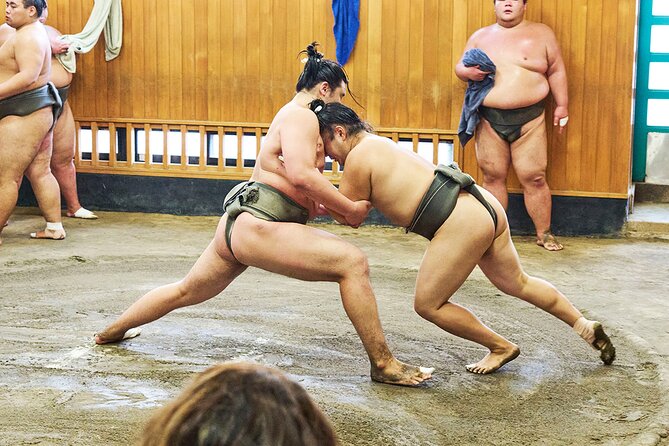
You’ll learn how matches are won: forcing your opponent out of the ring or making any part of their body touch the ground. That concept shows up everywhere in practice, not just in the moments that look like a bout.
You’ll also learn that sumo has ceremonial meaning. The religious/spiritual side shows through in ritual practices tied to tradition. Even if you don’t know the language, you’ll start recognizing sequences as purposeful, not random.
When the guide explains those pieces beforehand, you’re more likely to catch the intention behind the training rhythm—how wrestlers reset, how they repeat, and how technique becomes almost mechanical through repetition.
Readers also shortlisted these Tokyo bookings:
- Tokyo: Sumo Morning Practice Viewing Tour★ 4.8 · 570 reviews
- Tokyo: Sumo Morning Training Visit★ 4.4 · 370 reviews
- Tokyo: Visit Sumo Morning Practice with English Guide★ 4.7 · 343 reviews
- Tokyo: Sumo Morning Practice Tour at Sumida City★ 4.8 · 308 reviews
- Tokyo Sumo Morning Practice Tour at Stable★ 5.0 · 298 reviews
Meeting the rikishi: conversation time outside training hours
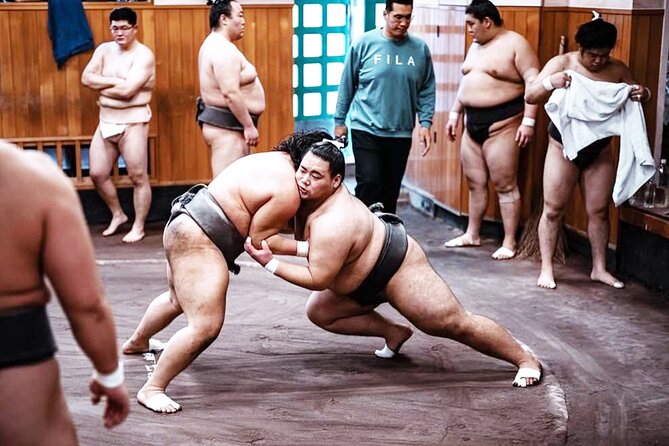
One of the most appealing parts of this tour is the chance to speak with the wrestlers (outside training hours). That’s a huge difference from most cultural tours, where you watch quietly and leave.
You should think of this as short, respectful conversation time. The stable setting has etiquette, and your guide will help you frame questions. If you want to ask about tournament goals or daily training life, this is where that curiosity can turn into a real human exchange.
In some groups, there may also be an opportunity for photos with wrestlers if the stable and your guide allow it. Don’t count on it as guaranteed, but if it happens, keep it calm and follow whatever instructions you’re given.
Either way, the value is that you get a glimpse of the sport as a full lifestyle, not just a match day event.
Dress code and behavior rules you must follow
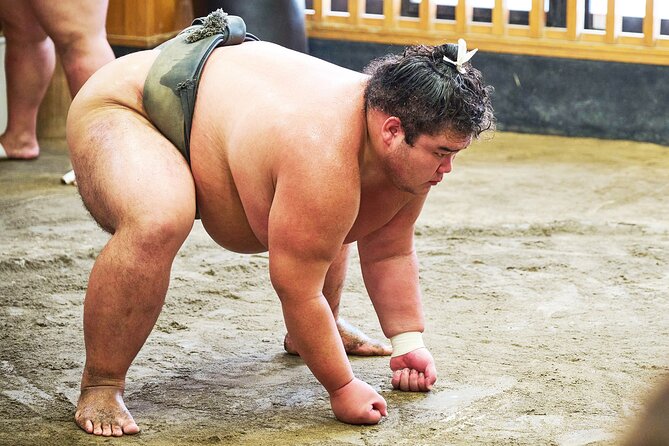
This is the part that decides whether the experience stays smooth and respectful.
You’ll need modest clothing only, and you should avoid anything that feels casual or distracting. During practice, you must not stand, and you should keep your phone silent. Making noise is not allowed.
One more practical rule to keep in mind: you may be asked not to eat or drink during practice aside from water. That sounds strict, but it helps protect the focus of the stable and the viewing space.
If you’re someone who likes to move around to get photos or chat through the action, this is not the best fit. The tour is built around quiet observation.
Who this tour suits best (and who should skip it)
This experience is best for you if you want authenticity over performance. If you’re interested in sports culture, Japanese ritual, or simply seeing elite athletes in training mode, you’ll likely love it.
It’s also a good fit if you enjoy learning as you go. The English guide’s explanations mean you can understand what you’re seeing without needing to research for days.
There’s also a clear limit: it’s not suitable for children under 11. If you’re traveling with younger kids, you’ll need another option.
And if you hate early starts or strict rules during a core portion of the morning, you may find the conduct requirements a bit much.
Price and value: does $98 make sense?
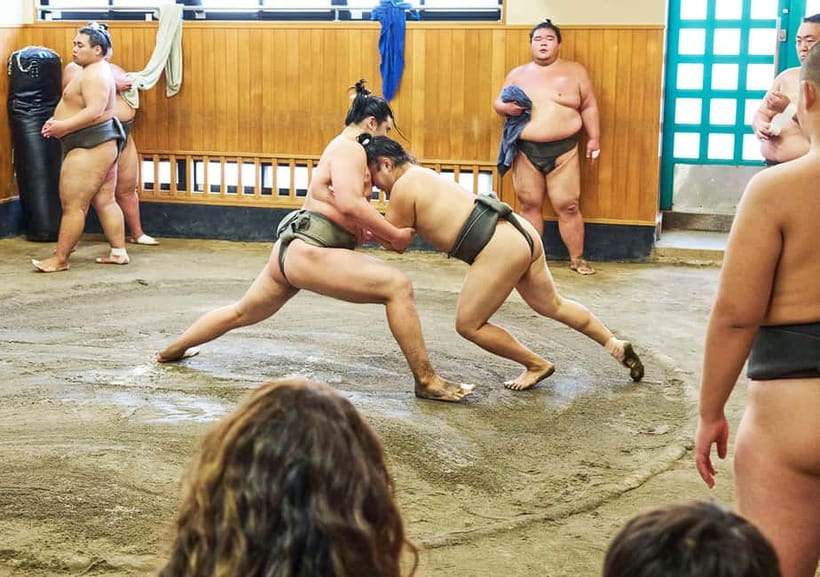
At $98 per person for about 2 hours, it’s not a budget activity. But it can feel like good value for what you’re actually getting: a rare chance to enter a real sumo training stable, which is normally closed to the public.
You’re paying for access, timing, and interpretation. The stable visit is the expensive part because you’re not just viewing from a safe distance. You’re in a working environment, watched over by an English-speaking guide who translates the sport’s structure and meaning.
It also helps that the experience length lines up with training intensity. You’re not spending half the time on travel while missing the key portion. You’re there for the practice window and then you get the added bonus of speaking with wrestlers outside training hours.
Finally, group size seems kept reasonably small in practice, which usually improves the experience because you can hear and understand the guide and you’re not blocking anyone’s view.
What to do the night before and the morning of
To make this feel effortless, do a little prep.
Wear modest clothing. Keep your phone on silent. Decide in advance that you’ll stay seated and quiet during training. And charge your camera if you plan to use it during any permitted moments.
In the morning, build in extra travel buffer. Starting at Kiyosumi-Shirakawa and possibly taking a train afterward means delays can cascade. Showing up early is the simplest way to protect your spot.
And once you’re in, remember: you can’t leave and come back. So treat the stable entry like the start of the main event, not a drop-in.
The booking call: should you book this sumo morning practice viewing tour?
If you want sumo as lived training, not a tourist show, I’d say book it. The combination of real stable access, an English guide explaining rules and rituals, and the chance to speak with wrestlers outside training hours is exactly the kind of experience that’s hard to replicate on your own.
Skip it if you need a casual, flexible schedule or if strict behavior rules aren’t your thing. You’ll be sitting, staying until the end of practice, and keeping things quiet.
If your morning is already committed, double-check how much flexibility you have. This tour is all about being there at the right time and staying through the full session.
FAQ
FAQ
How long is the sumo morning practice viewing tour?
The tour runs for about 2 hours, and you must stay until the end of the practice, which is roughly 09:00 to 10:00 AM.
Where do I meet the guide?
You meet at Kiyosumi-Shirakawa Station, Exit A1.
What train lines can I use to reach Kiyosumi-Shirakawa Station?
You can reach the station via the Toei Oedo Line or the Hanzomon Line.
Is the tour available in English?
Yes. The guide is English-speaking.
Can I speak with the wrestlers?
You have an opportunity to speak with the wrestlers outside training hours.
What should I wear?
You need modest clothing only.
Are there rules about noise or phone use during practice?
Yes. Making noise is not allowed, and your phone should be on silent during the practice.
Do I need to stay for the entire practice?
Yes. You must stay until the end of the practice, and once you leave the stable, there is no re-entry.
Is this tour suitable for children?
It is not suitable for those under 11 years of age.
Where will the tour end?
Depending on the schedule, the ending location may differ from the meeting place.
More Tours in Tokyo
- Mt Fuji and Hakone 1-Day Bus Tour Return by Bullet Train
★ 5.0 · 26,383 reviews - 1-Day Tokyo Bus Tour
★ 5.0 · 14,250 reviews - Tokyo: Shinjuku Food Tour (13 Dishes at 4 Local Eateries)
★ 5.0 · 6,603 reviews - Tokyo Mt Fuji 5th St & Hakone Cruise Bus Tour w/Bullet Train
★ 4.4 · 5,024 reviews - Flagship 2-Hours Official Street Go-Kart Tour – Tokyo Bay Shop
★ 5.0 · 4,974 reviews
More Tour Reviews in Tokyo
- Mt Fuji and Hakone 1-Day Bus Tour Return by Bullet Train
★ 5.0 · 26,383 reviews - 1-Day Tokyo Bus Tour
★ 5.0 · 14,250 reviews - Tokyo: teamLab Planets TOKYO Digital Art Museum Entry Ticket
★ 4.6 · 9,779 reviews - Mt Fuji & Hakone Cruise, Drum Show Bullet Train 1 Day from Tokyo
★ 4.0 · 7,413 reviews - Tokyo: Shinjuku Food Tour (13 Dishes at 4 Local Eateries)
★ 5.0 · 6,603 reviews
More Sumo, Ringside and Rated
- Tokyo: Sumo Show and Dining Experience
★ 4.8 · 2,742 reviews - the SUMO show
★ 5.0 · 1,960 reviews - Tokyo Shinjuku Sumo Show & Experience with Photo
★ 5.0 · 1,750 reviews - Tokyo: Sumo Show and Experience in Shinjuku
★ 4.8 · 1,001 reviews - Tokyo Grand Sumo Tournament Viewing Tour with Tickets
★ 5.0 · 692 reviews
Latest Tokyo reviews off our desk






Sumo Tournaments & Shows, compared.
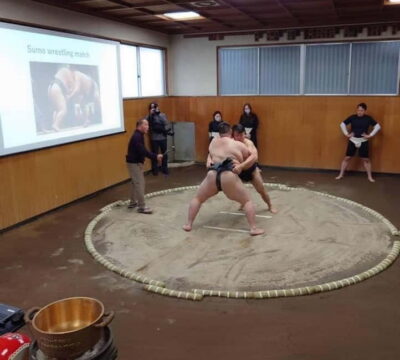 ★ 4.8Sumo Show and Dining ExperienceFrom $792,742 reviews
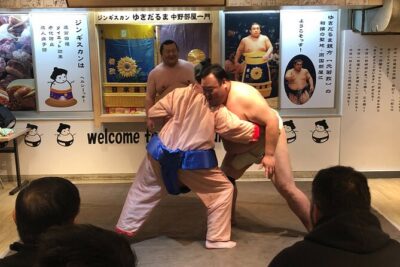 ★ 5.0the SUMO showFrom $891,960 reviews
 ★ 5.0Tokyo Shinjuku Sumo Show & Experience with PhotoFrom $791,750 reviews
 ★ 4.8Sumo Show and Experience in ShinjukuFrom $691,001 reviews
 ★ 5.0Tokyo Grand Sumo Tournament Viewing Tour with TicketsFrom $124692 reviews
 ★ 5.0Tokyo Sumo Wrestling Tournament ExperienceFrom $124660 reviews
 ★ 4.7Luxury Sumo Show Experience & Japanese cuisine & DrinkFrom $103577 reviews
 ★ 4.8Sumo Morning Practice Viewing TourFrom $81570 reviews
Browse the lists this tour appears in