
Reviewed · SUMO TOURNAMENTS & SHOWS
Tokyo Sumo Morning Practice: Witness the Life of a Wrestler
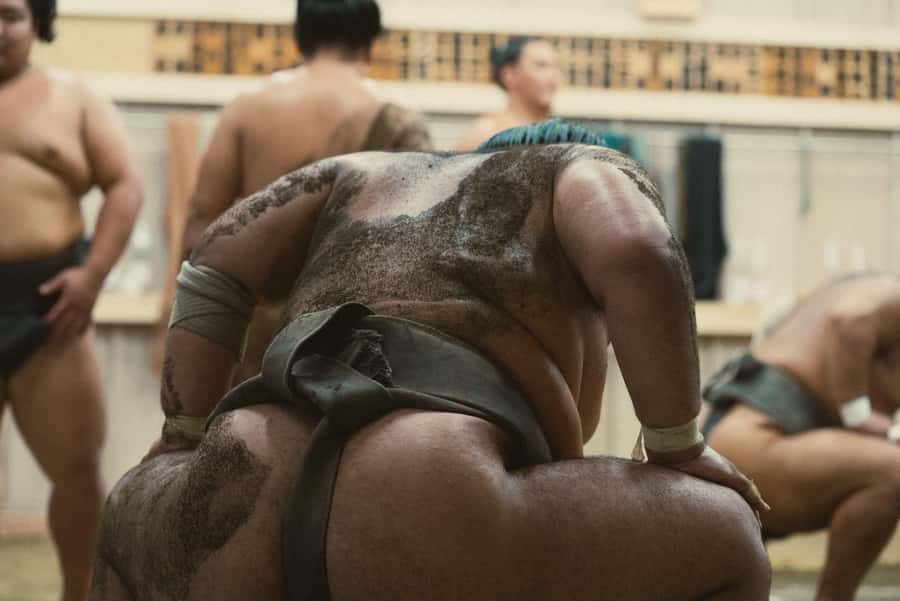
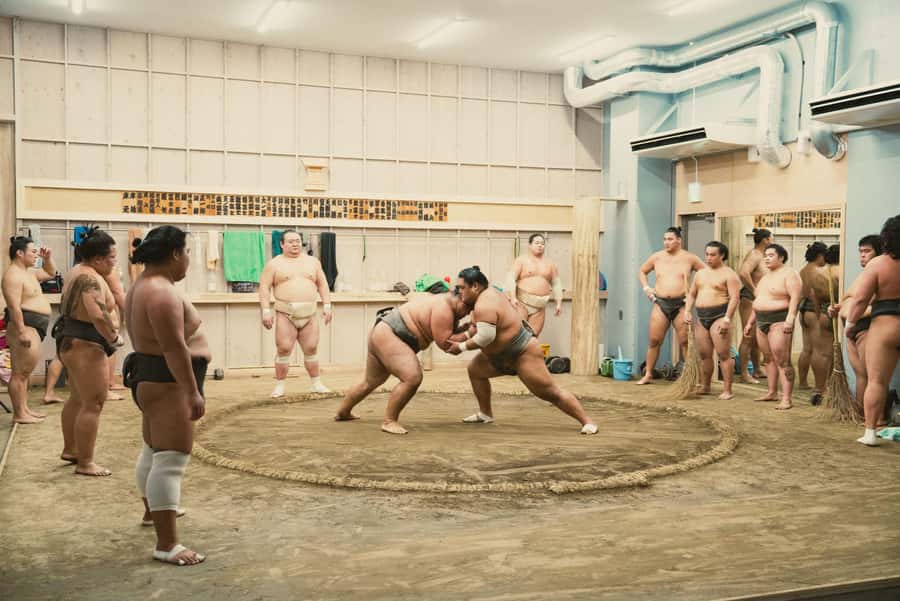
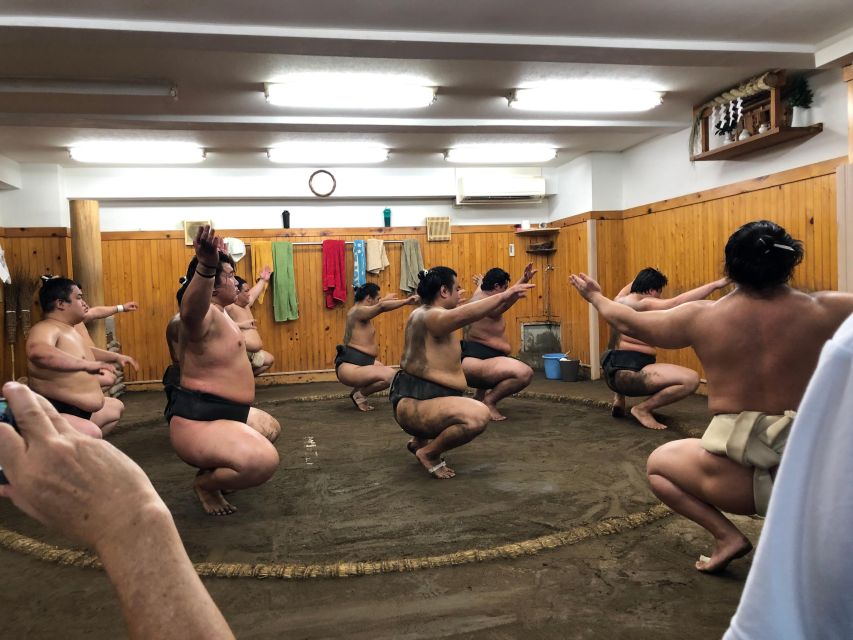
Sumo practice is loud and close. This Tokyo morning tour takes you into a real champion’s sumo stable for training you can see and hear from just feet away, with a guide explaining what’s happening in real time through earbuds. It’s one of those rare Japan experiences that feels less like a show and more like a working routine with ancient rules.
I especially like the hands-on context you get as you watch: the guide walks you through sumo rules, rankings, and rituals while the wrestlers drill and spar. I also like the access. You’re not viewing from a distant platform—you’re seated on the same level as the beya workflow, close enough to clock the speed, footwork, and raw effort.
One possible drawback: this is a strict, silent format with floor seating (zabuton cushions) for roughly 1 hour 45 minutes, and the Yokozuna’s presence isn’t guaranteed. If you need lots of movement, or you dislike rule-heavy experiences, you’ll feel it.
In This Review
- Key things you’ll notice on this Yokozuna-stable tour
- A Yokozuna stable, where mornings have structure
- Getting to the stable and walking in the right direction
- What happens once you’re inside: shoes off, sit still, watch closely
- Watching training the way rikishi actually train
- The etiquette rules that affect your comfort (and respect)
- If the Yokozuna is there, you’ll feel it immediately
- The guide makes the difference: history, rules, and real-time decoding
- Price and value: what you’re paying for at $121
- Who this tour suits best (and who should think twice)
- Practical tips to make your morning smoother
- Should you book this Tokyo sumo morning practice?
- FAQ
- Where do I meet for the Tokyo sumo morning practice tour?
- How long is the main practice part?
- Can I take photos or record video?
- Are sunglasses or food allowed?
- Will the Yokozuna definitely be there?
- Are there rules about talking or phone use?
- Is this tour wheelchair friendly or suitable when sick?
Key things you’ll notice on this Yokozuna-stable tour
- Earbuds live commentary that keeps the training understandable minute by minute
- Close seating behind the stablemaster’s area, so you actually see technique (and intensity)
- Floor etiquette: shoes off, silent watching, and careful body language
- Photo time after practice, including group photos with rikishi depending on timing
- Unpredictable day-of lineup: the stable’s champion might be there—or might not
- No shortcuts: you can’t leave during practice, so plan for a quiet stretch
A Yokozuna stable, where mornings have structure
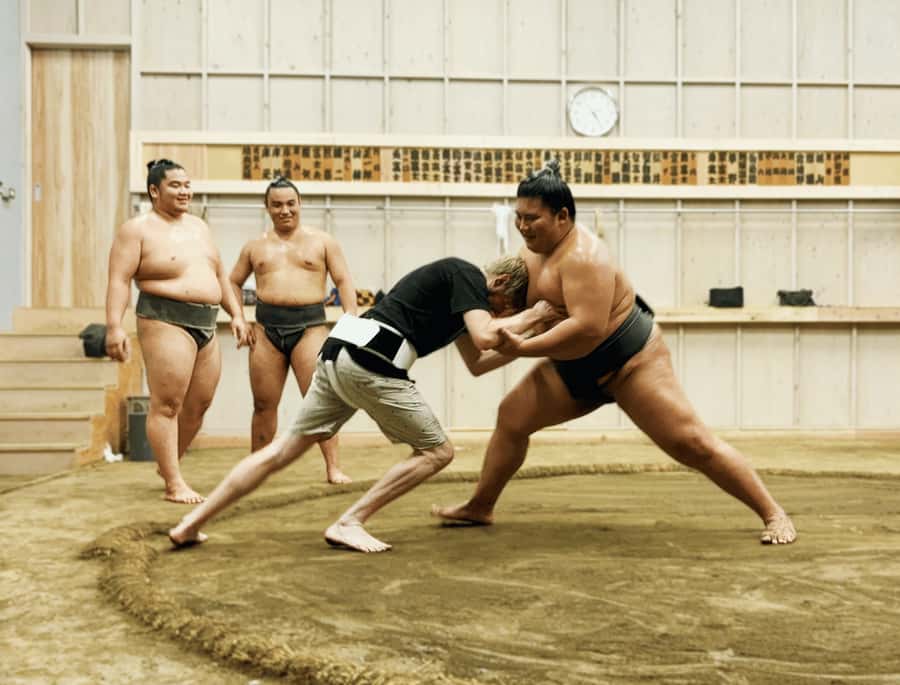
A sumo beya (stable) is not just a training hall—it’s a home, a workplace, and a hierarchy system all at once. When the morning session begins, everything you see fits into that rhythm: wrestlers arrive, prepare, spar, reset, and repeat. That routine is exactly why this tour feels real. You’re watching professionals practice with the kind of focus that makes even simple movements look deliberate.
What makes this tour stand out as an experience is that it’s built around understanding, not just watching. The guide gives live commentary through earbuds, so you’re not left guessing why wrestlers are circling, grappling, breaking contact, or practicing specific setups. And because the session is a morning practice, the mood is practical—less pageantry, more grind.
Also, it’s a limited kind of access. Even in Japan, stable visits aren’t something you stumble into every day. That scarcity adds to the value, because your time isn’t “shared” with a huge crowd the way it often is at more touristic events.
Other ringside bookings readers scored
- Tokyo: Sumo Show and Dining Experience
★ 4.8 · 2,742 reviews - the SUMO show
★ 5.0 · 1,960 reviews - Tokyo Shinjuku Sumo Show & Experience with Photo
★ 5.0 · 1,750 reviews - Tokyo: Sumo Show and Experience in Shinjuku
★ 4.8 · 1,001 reviews
Getting to the stable and walking in the right direction
Meeting is straightforward: you meet at a designated spot in front of the stable, and the guide carries a board for Japan Wonder Travel so it’s easy to spot the group. After you assemble, you’ll walk to the beya area (one common walk time given is about 7 minutes).
Here’s the first practical thing to know: once you arrive, you’ll remove your shoes. This isn’t a “maybe” instruction—it’s part of how the stable works. Expect to step into an interior space with floor seating and a layout that’s designed for how rikishi move and train, not for tourists wandering around.
Before you go, plan your timing around the fact that you should use the restroom before arriving at the meeting point. During the main practice window, you won’t have bathroom access in the middle of things, because the group stays in observation mode.
What happens once you’re inside: shoes off, sit still, watch closely
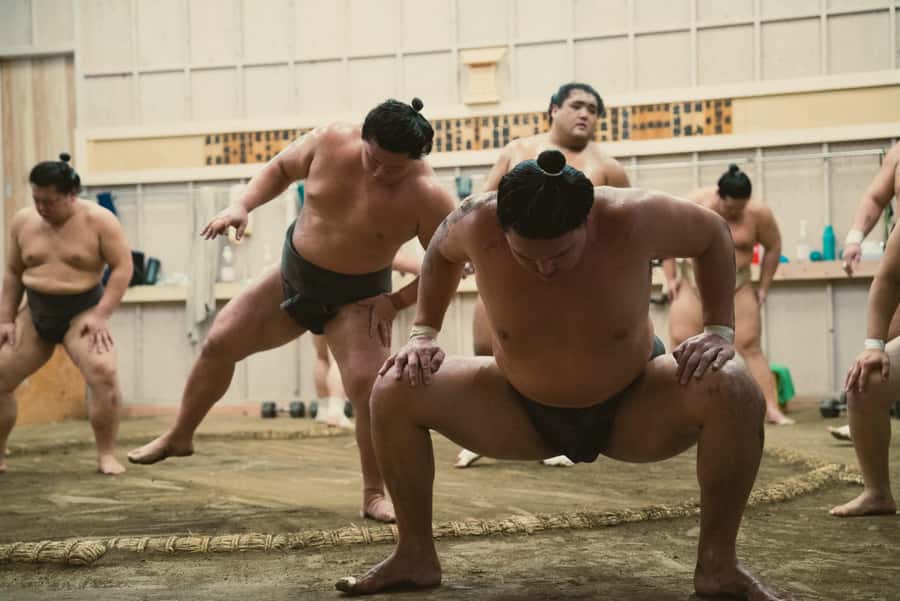
After the short walk, the tour shifts into observation etiquette. You’ll sit on zabuton cushions on the floor for most of the session. Based on the timing shared, it’s often around 75 to 80 minutes of watching, and the full event can run closer to about 2 to 3 hours including walk-in and photo time.
The silence rule is not just “quiet voices.” You’re asked to watch the practice silently and respectfully. That’s important, because the training isn’t meant to be interrupted. If you’ve ever visited a temple or shrine and felt the difference when people were whispering versus speaking normally, you’ll understand the vibe here—only the training focus is even more intense.
Two details I’d treat as non-negotiables:
- Cellphones must be on silent.
- You can’t leave the stable mid-practice.
That means you should show up ready for the duration. If you’re someone who needs frequent breaks, this format will feel like a test. On the other hand, if you’re happy to sit and watch technique close up, you’ll get more out of it than you would with a fast, stop-start tour.
Watching training the way rikishi actually train
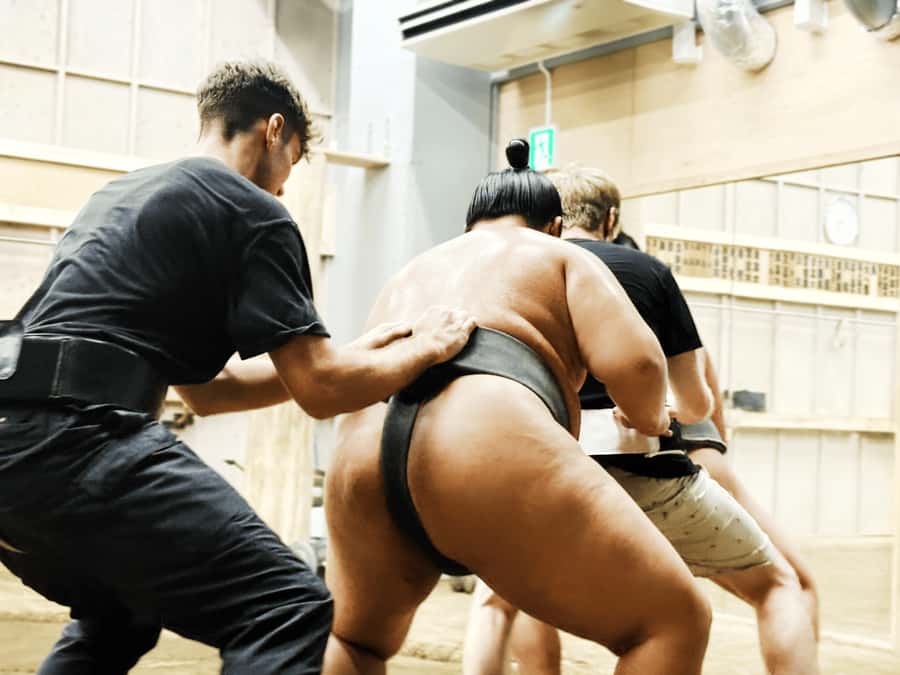
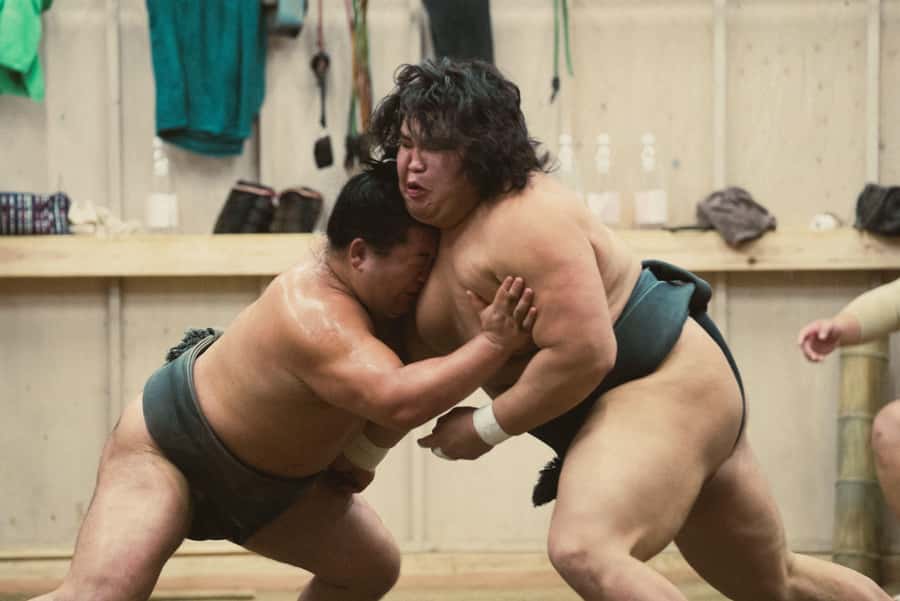
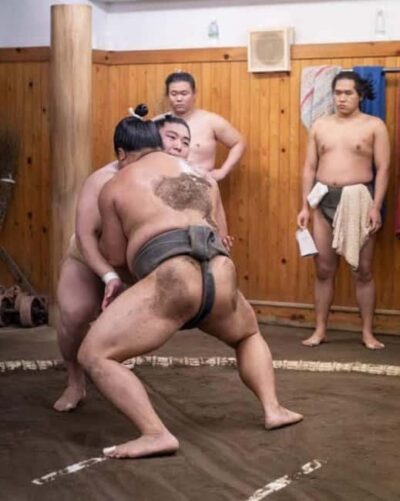
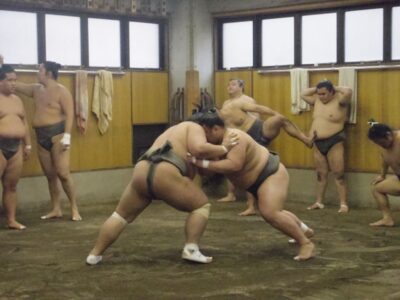
Once the session starts, the training has a clear logic: warm-up, drills, and sparring practice that builds physical skill and tactical timing. You’ll see wrestlers hone techniques to overcome sparring partners, not just “perform” moves for an audience.
Because the guide is giving real-time explanation through earbuds, you’ll be able to connect what you’re seeing to sumo structure:
- how training sessions fit into the daily work of the stable
- how the ranking system shapes relationships and hierarchy
- why certain rituals show up around bouts and practice
In plain terms: you’re not just seeing bodies collide. You’re seeing a system at work.
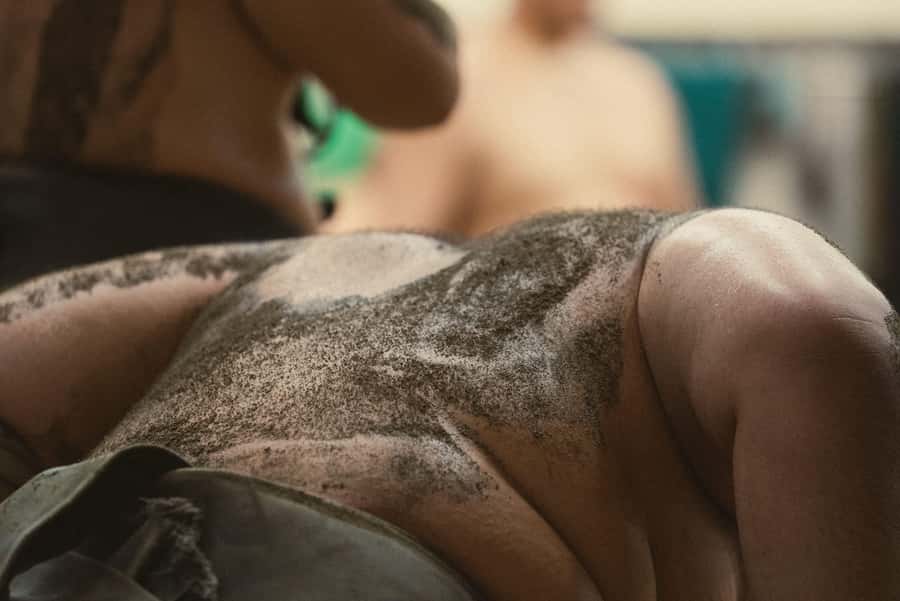
Up close, you’ll also notice how physical sumo is beyond the stereotype. The speed shows up in footwork and hand control. The strength shows up in how they keep balance while pressing, resisting, and resetting. Even when they look calm between bursts, their posture and readiness are sharp.
One more interesting note: photo opportunities are part of the experience, but they happen after practice ends (not during sparring). The exact photo setup can vary depending on timing, like whether you take group photos outside in front of the building or inside with more wrestlers present.
The etiquette rules that affect your comfort (and respect)
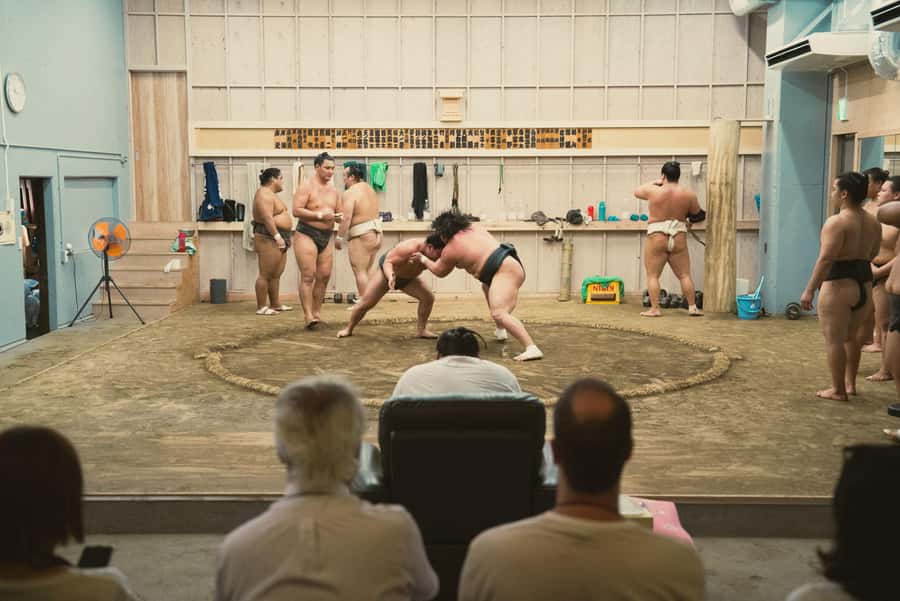
This tour comes with clear rules. They’re there to protect the stable’s routine and keep the session respectful.
The big ones to remember:
- No sunglasses
- No food
- No flash photography
- No video recording
- Don’t stretch your legs toward the ring (showing soles of feet is considered impolite)
If you’re thinking, I’m just sitting—why does it matter? It matters because sumo culture is deeply about respect and nonverbal manners. In a quiet room, small signals stand out. Keeping your body language neutral is part of being a good observer.
Also, there’s a strict rule about the day being quiet for everyone—so don’t plan to multitask. Turn off distracting sounds. Keep your focus forward. The more you follow the rhythm, the easier it is to read what’s happening with technique.
One more consideration: the tour may run slightly shorter or longer than expected depending on the morning’s practice. That’s normal for a working stable schedule, so don’t build a tight connection right after.
Readers also shortlisted these Tokyo bookings:
- Tokyo: Sumo Morning Practice Viewing Tour★ 4.8 · 570 reviews
- Tokyo: Sumo Morning Training Visit★ 4.4 · 370 reviews
- Tokyo: Visit Sumo Morning Practice with English Guide★ 4.7 · 343 reviews
- Tokyo: Sumo Morning Practice Tour at Sumida City★ 4.8 · 308 reviews
- Tokyo Sumo Morning Practice Tour at Stable★ 5.0 · 298 reviews
If the Yokozuna is there, you’ll feel it immediately
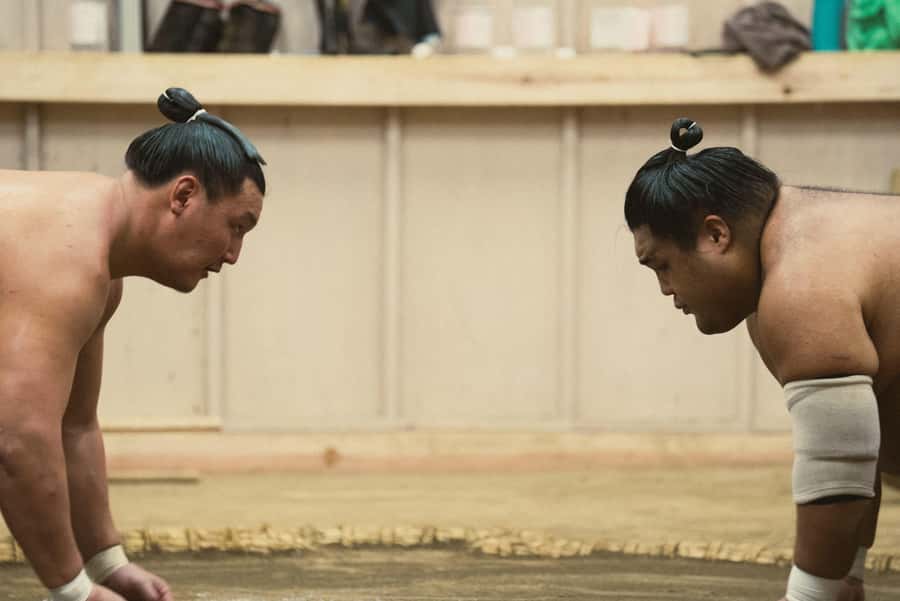
This is a key point for planning expectations: while you’re visiting the stable where the Yokozuna (champion) trains, it’s not guaranteed that the champion will be present on your specific date.
That unpredictability is part of what makes it exciting, but also why you should approach the day without feeling entitled to a specific star sighting. If the Yokozuna is there, you’ll likely notice the energy shift because the stablemaster role concentrates attention. If not, you’ll still be seeing serious training from top-level rikishi in the same environment.
On some real tour days, well-known names have been present in the stable setting (for example, Terunofuji has been cited as instructing on one visit day, and Enho has also been mentioned as attending). But treat those as possibilities, not promises.
The guide makes the difference: history, rules, and real-time decoding
A lot of Japan tours can give you a script. This one leans into interpretation while you’re watching. Before you settle in, the guide typically sets context: what sumo is, why it’s such a big deal in Japan, and how the rules and rankings shape the sport’s culture.
Then, through earbuds, you get commentary as the training unfolds. That live explanation helps you catch the details you’d otherwise miss:
- why wrestlers reset positions
- what kind of practice phase you’re seeing
- how the hierarchy shows up in everyday stable behavior
One guide name that’s been shared is Yuki, and the vibe described is consistently clear: you’re not handed a leaflet and left alone.
If you’ve ever watched sumo without knowing the scoring or ranking structure, you’ll appreciate this. Even if you’re a casual fan, the guide turns the session into something you can follow.
Price and value: what you’re paying for at $121
At $121 per person, you’re paying for more than “entry” into a building. You’re paying for:
- access to a working Yokozuna stable
- a guided explanation during the training window
- help with etiquette so you don’t accidentally disrupt the session
- photo opportunities after practice
- a structured, limited-capacity format
When you compare this to buying a ticket for a bigger public sumo event, the value is different. Public venues are about spectacle and scale. This is about proximity and meaning—seeing the human, daily side of the sport. The cost is also a reflection of rarity. Even within Japan, stable access isn’t a casual thing.
One more value point: the stable setting is compact and sensory. The sound of training—heavy footwork and physical contact—lands differently when you’re close. That kind of intensity is hard to replicate with a standard sightseeing walk.
Who this tour suits best (and who should think twice)
This experience is a strong fit if you:
- are a sumo fan, even a beginner-level one
- want cultural context, not just photos
- don’t mind silence and floor seating for about 1.5 to 2 hours
- like small-group, instruction-led experiences
It’s less ideal if you:
- need wheelchair access (it’s noted as not suitable for wheelchair users)
- are dealing with illness like a cold (it’s noted as not suitable for people with a cold)
- hate rule-heavy experiences (there are many specific restrictions)
If you’re older or have mobility limits, treat the zabuton seating and “no leaving mid-practice” as your biggest planning factor. You can still enjoy the idea of the tour—you just need to be honest about your comfort level during the quiet stretch.
Practical tips to make your morning smoother
A few small actions will make the experience easier:
- Use the restroom before you leave for the meeting point, since you won’t have access in the middle of practice.
- Wear comfortable layers. This is a morning session with extended sitting.
- Keep your phone on silent, and make sure camera settings won’t create shutter sounds you can’t control.
- Follow the no-food and no-flash rules. If you feel hungry, plan that around the timing of the tour.
- Bring your best “respect mode.” Don’t point, don’t stretch toward the ring, and don’t treat the space like a casual museum corner.
If you care about photo outcomes, remember that photo timing can vary. Some days, you’ll take group photos with a handful of rikishi outside in front of the building; other days, the setup might allow photos inside when the full group is standing near the ring area. So your photos depend on the session flow.
Should you book this Tokyo sumo morning practice?
Book it if you want a genuine slice of sumo life—training as it’s meant to happen, with a guide helping you understand what you’re seeing while you’re still seated close enough to notice technique. The earbuds commentary and the quiet, close-up format are a powerful combo for turning curiosity into real understanding.
Skip (or at least think carefully) if you dislike sitting on the floor for close to two hours, don’t handle silence well, or need more accessibility flexibility. Also, if you’re coming mainly for a specific big-name sighting, remember the champion’s presence isn’t guaranteed on the day.
If you’re open-minded and respectful, this is one of the more memorable ways to experience Tokyo that isn’t “just another photo stop.”
FAQ
Where do I meet for the Tokyo sumo morning practice tour?
You meet at the location in front of the stable. After you reserve, the specific meeting point and time are sent to you, and the guide holds up a Japan Wonder Travel board.
How long is the main practice part?
Plan for about 75 to 80 minutes of watching on zabuton cushions, and the overall event can run around 2 to 3 hours depending on the practice that morning.
Can I take photos or record video?
You can take photo ops with the wrestlers, and flash photography is not allowed. Video recording is also not allowed during the experience.
Are sunglasses or food allowed?
No. Sunglasses are not allowed, and food is not allowed during the tour.
Will the Yokozuna definitely be there?
No. Even though you’re visiting the stable where the Yokozuna trains, it’s not known until the morning of the experience whether he will actually be present.
Are there rules about talking or phone use?
Yes. You must watch silently and respectfully, and cellphones must be on silent.
Is this tour wheelchair friendly or suitable when sick?
No. It’s not suitable for wheelchair users, and it’s also noted as not suitable for people with a cold.
More Morning in Tokyo
- Tokyo: Sumo Morning Practice Viewing Tour
★ 4.8 · 570 reviews - Tokyo: Sumo Morning Training Visit
★ 4.4 · 370 reviews - Tokyo: Visit Sumo Morning Practice with English Guide
★ 4.7 · 343 reviews - Tokyo: Sumo Morning Practice Tour at Sumida City
★ 4.8 · 308 reviews - Tokyo Sumo Morning Practice Tour at Stable
★ 5.0 · 298 reviews
More Tour Reviews in Tokyo
- Mt Fuji and Hakone 1-Day Bus Tour Return by Bullet Train
★ 5.0 · 26,383 reviews - 1-Day Tokyo Bus Tour
★ 5.0 · 14,250 reviews - Tokyo: teamLab Planets TOKYO Digital Art Museum Entry Ticket
★ 4.6 · 9,779 reviews - Mt Fuji & Hakone Cruise, Drum Show Bullet Train 1 Day from Tokyo
★ 4.0 · 7,413 reviews - Tokyo: Shinjuku Food Tour (13 Dishes at 4 Local Eateries)
★ 5.0 · 6,603 reviews
More Sumo, Ringside and Rated
- Tokyo: Sumo Show and Dining Experience
★ 4.8 · 2,742 reviews - the SUMO show
★ 5.0 · 1,960 reviews - Tokyo Shinjuku Sumo Show & Experience with Photo
★ 5.0 · 1,750 reviews - Tokyo: Sumo Show and Experience in Shinjuku
★ 4.8 · 1,001 reviews - Tokyo Grand Sumo Tournament Viewing Tour with Tickets
★ 5.0 · 692 reviews
Latest Tokyo reviews off our desk






Sumo Tournaments & Shows, compared.
 ★ 4.8Sumo Show and Dining ExperienceFrom $792,742 reviews
 ★ 5.0the SUMO showFrom $891,960 reviews
 ★ 5.0Tokyo Shinjuku Sumo Show & Experience with PhotoFrom $791,750 reviews
 ★ 4.8Sumo Show and Experience in ShinjukuFrom $691,001 reviews
 ★ 5.0Tokyo Grand Sumo Tournament Viewing Tour with TicketsFrom $124692 reviews
 ★ 5.0Tokyo Sumo Wrestling Tournament ExperienceFrom $124660 reviews
 ★ 4.7Luxury Sumo Show Experience & Japanese cuisine & DrinkFrom $103577 reviews
 ★ 4.8Sumo Morning Practice Viewing TourFrom $81570 reviews
Browse the lists this tour appears in