
Reviewed · KAMAKURA DAY TRIPS
Yokohama and Kamakura Private Day Trip from Tokyo
Two towns, one relaxed private ride. I like how this trip mixes Yokohama’s harbor modernity with Kamakura’s famous temples without you having to stitch together trains all day. You get a comfortable private vehicle, an English-speaking chauffeur, and a flexible plan that you can shape to your interests.
The only real trade-off is time and cost management: the day runs about 9–10 hours, and there’s no walking guide—so most explanations happen while you’re traveling between stops. Also, several key sights (gardens and lookouts) have admission fees that you pay on-site.
In This Review
- Key things that make this trip worth it
- Why Yokohama and Kamakura fit together so well in one day
- Price and value for a private group of up to 3
- Meeting your English-speaking chauffeur and staying comfortable
- Minato Mirai 21: waterfront views and photo-friendly modern Japan
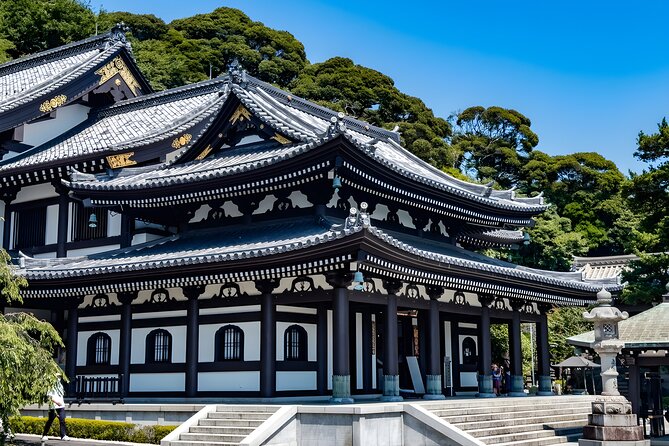
- Sankeien Gardens: a calm 2-hour reset with relocated buildings
- Yokohama Landmark Tower Sky Garden: one ticket, big city panoramas
- Yokohama Chinatown: easy strolling and practical food-stop hunting
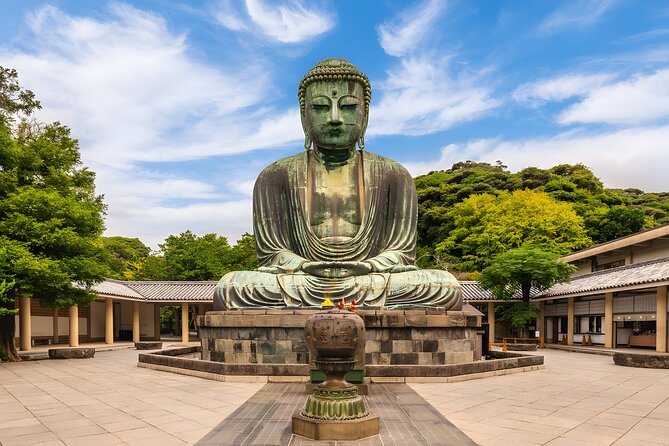
- Kotoku-in Great Buddha: the Kamakura must-see moment
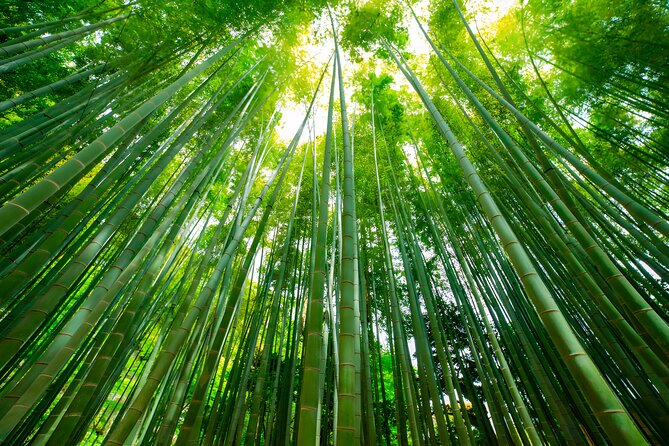
- Hokoku-ji Temple bamboo grove: quiet foot traffic and a tea-house mood
- Tsurugaoka Hachimangu Shrine: Kamakura’s center of gravity
- Hasedera Temple: ocean views, Kannon statue, and seasonal hydrangeas
- The day’s pacing: how to use the flexibility to your advantage
- What’s included versus what you should budget for
- Who this private trip is best for
- Should you book this Yokohama and Kamakura private day trip?
- FAQ
- How much does the Yokohama and Kamakura private day trip cost?
- How long is the tour?
- Do I get pickup from Tokyo?
- Is there an English-speaking chauffeur?
- What tickets are included, and do I need to pay for attractions?
- Are there entry fees included in the price?
- Is this a private tour?
- Is there a walking guide during the stops?
- What is the cancellation policy?
Key things that make this trip worth it
- Private door-to-door pickup from Tokyo makes the route feel effortless from the first hour.
- English-speaking chauffeur keeps the day moving and helps you understand what you’re seeing.
- A balanced route: modern waterfront + Chinatown food streets + classic Kamakura landmarks.
- Sankeien Garden is time well spent, with ponds, tea houses, and historic buildings moved from across Japan.
- Kamakura big hitters are covered: Kotoku-in Great Buddha, Hokoku-ji bamboo grove, Tsurugaoka Hachimangu, and Hasedera Temple.
- Budget for optional admissions since several attractions are not included and must be paid on-site.
Why Yokohama and Kamakura fit together so well in one day
If you only have one day outside central Tokyo, this pairing makes practical sense. Yokohama gives you that sense of Japan’s newer face—clean waterfront views and big city scale—then Kamakura slows the pace down with temples, shrines, and old stone-and-wood landmarks.
What I like most is that the itinerary doesn’t feel like one long museum checklist. It’s built around strolling, photo stops, and a couple of signature cultural stops. If you’re the kind of traveler who likes a day that moves, but not a day where you sprint between places, this hits the sweet spot.
Also, because it’s private, you’re not forced into someone else’s pacing. You can linger where you care, and speed up where you don’t.
Coast-and-Buddha days near Kamakura, rated
- Tokyo: Mt. Fuji, Kamakura, Big Buddha, & Lake Ashi Day Trip
★ 4.5 · 867 reviews - Tokyo:Sea of Mount Fuji, Hakone Ropeway, Ōwakudani, Enoshima
★ 4.9 · 84 reviews - Kamakura 8 hr Private Walking Tour with Licensed Guide from Tokyo
★ 5.0 · 80 reviews - Tokyo: Kamakura & Enoshima Day Tour with Pickup & Train Ride
★ 4.1 · 61 reviews
Price and value for a private group of up to 3
The price is $360 per group (up to 3), and it’s designed for a small party. That matters, because you’re not paying per person for a private vehicle—you’re splitting the cost. If you’re two or three people traveling together, the value gets much more comfortable than it would for a solo traveler.
A key detail: fuel, parking, and tolls are included, and you get bottled water plus an air-conditioned vehicle. That’s the stuff that quietly balloons the cost on your own. On top of that, you receive a mobile ticket, and the tour offers pickup. All of that reduces friction.
The other side of value is budgeting for optional entry fees. Some stops are free, and others are not included and must be paid on-site. If you plan to do the lookouts and gardens, you should treat the tour as a full-day experience with extra admissions on top, not as a fixed-price sightseeing package.
Meeting your English-speaking chauffeur and staying comfortable
The day starts with pickup offered, and you’ll travel by private vehicle with an English-speaking chauffeur. In a private setup like this, your biggest advantage is not just convenience—it’s flow. You’re not waiting for transfers, and you’re not doing mental math on how long each leg will take.
One practical note: there’s no walking guide. That doesn’t mean you’ll be left in the dark. Explanations and insights are provided mostly while you’re in the car between destinations. So you’ll get context as you go, rather than a full-on guided walk at every stop.
Because the vehicle is air-conditioned and bottled water is included, you also avoid the common Japan-day-trip problem of arriving at temples already tired from transit. You can use that energy for actual sightseeing.
Minato Mirai 21: waterfront views and photo-friendly modern Japan
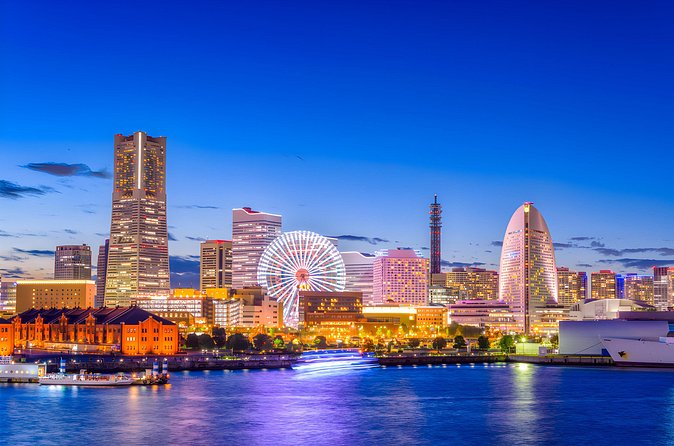
Your first stop is Yokohama Minato Mirai 21 for about 1 hour, and admission is free. This is the part of Yokohama that looks like a future city that decided to stay put. You’ll get harbor views, shopping areas, and big recognizable landmarks—Cosmo Clock Ferris Wheel and Landmark Tower are the names to look for.
I like this stop as a warm-up. It’s easy, low-stakes walking, and it helps your brain switch gears from Tokyo’s feel to Yokohama’s. If you want photos, this is where you’ll likely want them, because you get open views and skyline angles without needing tickets.
What to watch for: one hour can feel short if you get photo-happy. If views are your priority, decide early where you want to stand for pictures. If shopping is your priority, keep the walking loop efficient so you don’t run late for the calmer stops later.
Sankeien Gardens: a calm 2-hour reset with relocated buildings
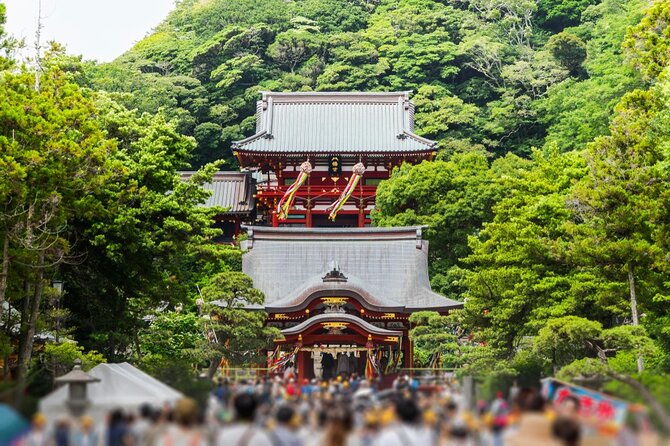
Sankeien Gardens is where the day starts to feel more like a true cultural break. You’ll have about 2 hours here, and admission is not included.
What makes Sankeien special is the way the garden is staged: it has ponds, tea houses, and historic buildings brought from across Japan. That means the experience isn’t just about modern landscaping. You’re walking through a garden that’s basically curated as a living story of different eras and regions.
Timing matters a bit. Sankeien is especially beautiful in spring and autumn, which is helpful if you’re planning a trip around seasonal scenery. Even if you’re not there in peak season, I still think the layout makes it a good pause in a long day. Two hours is long enough to slow down and actually notice details.
The drawback: if you’re the type who needs a lot of direct, narrated guidance while walking, this part may feel a little self-led. Since the tour offers insights mostly from the car, you’ll benefit from keeping your eyes open and letting the garden do the work.
The harbour city next door, reviewed
- Narita Airport: One Way Private Transfer to Tokyo|Yokohama Hotels★ 4.5 · 69 reviews
- Tokyo/Yokohama: Mt. Fuji and Hakone Private Day Tour★ 5.0 · 64 reviews
- Tokyo: Private One-Way Transfers to/from Yokohama Port★ 4.5 · 50 reviews
- Private Car Tour to see Highlights of Kamakura, Enoshima, Yokohama from Tokyo★ 5.0 · 48 reviews
- Haneda Airport: One Way Private Transfer to Tokyo|Yokohama Hotels★ 4.0 · 28 reviews
Yokohama Landmark Tower Sky Garden: one ticket, big city panoramas
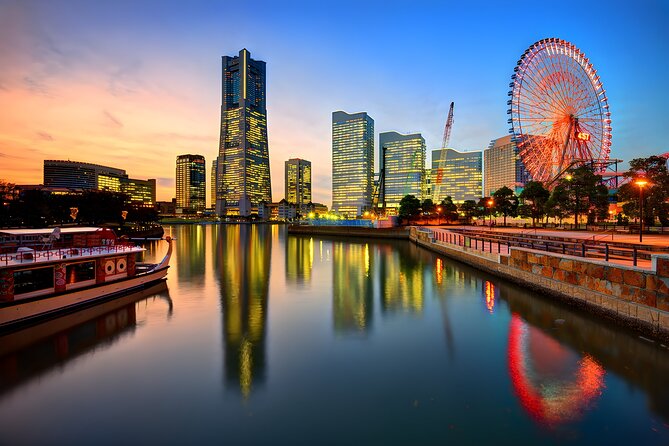
Next up is Landmark Tower Sky Garden for about 1 hour. Admission isn’t included.
This stop is built for one thing: views. The tower is 296 meters tall, and the Sky Garden observatory is on the 69th floor. From there, you can see Yokohama, Tokyo, and on clear days, you may be able to see even farther.
I like using an observation deck like this as a way to understand the geography you’ve been driving through. You see the bay shape, the urban spread, and how the day’s route connects in a bigger picture.
Practical consideration: because admission is extra, double-check what you want to pay for. If you’re already comfortable with outdoor views and don’t care about skyline photos, you might skip it. But if you want a high, clean view to close out the Yokohama portion, it’s a strong choice.
Yokohama Chinatown: easy strolling and practical food-stop hunting
You’ll spend about 1 hour in Yokohama Chinatown, and admission is free. This is the largest Chinatown in Japan, and it’s the type of place where the best plans are flexible.
The streets are lined with shops and street food stalls, and you’ll likely see familiar items like steamed buns and dumplings. Bubble tea is also a common choice here, and it’s a handy way to cool off mid-day.
Why this stop works in a private day trip: it’s not dependent on a schedule. You can snack, walk, and pick a rhythm that fits your hunger level. If you’ve had a “too early for lunch, too late for breakfast” day, this is a lifesaver.
One caution: one hour disappears fast in a food street. If you’re serious about shopping or a specific snack, pick your first target before you enter. Then you’ll have a clear win early, and wandering afterward feels fun rather than stressful.
Kotoku-in Great Buddha: the Kamakura must-see moment
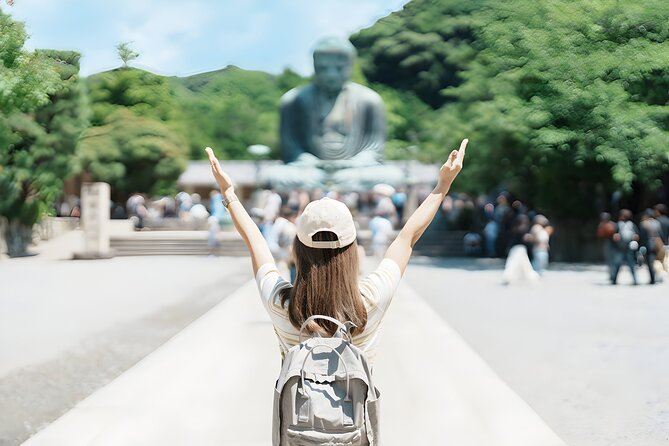
Kotoku-in (the Great Buddha of Kamakura) is a highlight stop for about 1 hour, and admission isn’t included.
This is one of those sights that carries weight even if you don’t know all the details. The bronze statue is iconic, and it dates back to the 13th century. Standing there, you get a sense of why Kamakura became a major name in Japanese religious and cultural life.
I also like that this stop is timed for attention. It’s long enough to look closely and take photos, but not so long that it drains your energy for the rest of the day.
Practical consideration: because admissions are optional and not included, budget time and money for entry. Also, plan your visit to avoid being rushed. The best part of the Great Buddha is not speed-reading—it’s letting the scale land.
Hokoku-ji Temple bamboo grove: quiet foot traffic and a tea-house mood
Hokoku-ji is about 1 hour, and admission isn’t included. This stop is famous for its bamboo grove, plus a traditional tea house.
If you want a contrast after the busy food street and the open-city feel, Hokoku-ji does that job. The bamboo creates a built-in slow atmosphere. Even if you’re not doing anything fancy, the grove makes you move a little slower without asking.
The practical value here is stress reduction. In a day that also includes multiple major stops, it’s helpful to have one place where the main objective is calm.
What you should know: like many temple settings, walking can be uneven or packed depending on the day. Comfortable shoes help, especially since you’ll have more stops after this.
Tsurugaoka Hachimangu Shrine: Kamakura’s center of gravity
Tsurugaoka Hachimangu is another about 1 hour stop, and admission is free.
This is Kamakura’s most important Shinto shrine in the area, and the background is anchored in specific names and dates. It was founded in 1063 by Minamoto no Yoriyoshi, and later expanded by Minamoto no Yoritomo—the founder of the Kamakura shogunate.
Why I think this stop matters: it gives you a framework. After seeing the Great Buddha and the bamboo grove, you’re still living inside one cultural web. Tsurugaoka Hachimangu helps connect Kamakura’s religious sites to the political and social story of the period.
This one is also a good pacing stop. Shrines can be straightforward to visit, and the free entry makes it an easy choice if you’re trying to control spending.
Hasedera Temple: ocean views, Kannon statue, and seasonal hydrangeas
Your final major temple stop is Hasedera Temple for about 1 hour, with admission not included.
Hasedera is known for a large wooden statue of Kannon (Goddess of Mercy). You also get ocean views, a cave, and—depending on when you go—a hydrangea path in early summer.
This stop feels like a satisfying closer because it hits multiple senses at once: you’re in temple grounds with sculpture and atmosphere, and you’re also aware of the sea nearby. If the hydrangeas line up with your dates, it adds another layer to the visit.
Practical note: because it’s a full day, the order matters. Saving Hasedera for later often works well because by the time you arrive, you’re ready for a slower, more reflective pace rather than one more high-energy stop.
The day’s pacing: how to use the flexibility to your advantage
One of the most useful parts of this tour is that it’s customizable. Your driver helps set the stops based on your preferences, and you can set the pace.
Here’s how to use that smartly. If you’re the type who likes skyline views, lean into Minato Mirai and the Sky Garden. If you’re a temple-focused person, prioritize the Great Buddha, Hokoku-ji, and Hasedera, and treat Chinatown as a flexible lunch. If you’re there in spring or autumn, Sankeien becomes more of a centerpiece.
Also, pay attention to the rhythm: you’ll be in transit a fair amount, so build breaks into your day by planning short, purposeful stops rather than wandering randomly everywhere.
And yes—since most insights are shared while you’re in the vehicle, it helps to be a little curious in advance. If you want the story behind a statue, shrine founding, or garden design, ask a question when you’re on the move.
What’s included versus what you should budget for
Included:
- Bottled water
- Air-conditioned vehicle
- English-speaking chauffeur
- Fuel/parking/toll fees
Not included (paid on-site when you choose):
- Sankeien Gardens admission
- Yokohama Landmark Tower Sky Garden admission
- Kotoku-in (Great Buddha) admission
- Hokoku-ji Temple bamboo grove admission
- Hasedera Temple admission
Free stops in the route:
- Minato Mirai 21
- Yokohama Chinatown
- Tsurugaoka Hachimangu Shrine
That mix is actually good for value. You get several free anchors, and then you pay extra only for the experiences you care about most—especially gardens and lookouts.
Who this private trip is best for
This day trip is ideal if you want:
- A private, comfortable ride with pickup offered
- A manageable full day that covers both Yokohama and Kamakura highlights
- English guidance that’s built into the driving time
- Flexibility to linger or skip based on your own interests
It’s also a strong choice for couples or small groups who don’t want to wrestle with train changes. If you enjoy walking but also like having a plan, this works.
If you’re traveling solo and you’re price-sensitive, the cost may feel steep compared with public transportation. But if comfort, English help, and a packed-but-not-rushed itinerary matter to you, it can still be worth it.
Should you book this Yokohama and Kamakura private day trip?
I’d book it if you want a one-day taste of two very different worlds—modern Yokohama waterfront and iconic Kamakura temple culture—without the stress of routing yourself. The value makes the most sense for groups of up to 3, and the private vehicle + pickup is the kind of convenience that really changes the feel of a day.
I’d think twice if you know you hate paying multiple on-site admissions or if you prefer a stop-by-stop walking guide. Since the guidance is mostly while riding between destinations, you’ll want to be comfortable reading a bit on your own and letting each site speak for itself.
FAQ
How much does the Yokohama and Kamakura private day trip cost?
It costs $360 per group, up to 3 people.
How long is the tour?
The duration is about 9 to 10 hours.
Do I get pickup from Tokyo?
Yes, pickup is offered.
Is there an English-speaking chauffeur?
Yes, the tour includes an English-speaking chauffeur.
What tickets are included, and do I need to pay for attractions?
You’ll have a mobile ticket, and some admissions are optional and must be paid on-site by guests. Certain stops are free (like Minato Mirai 21, Yokohama Chinatown, and Tsurugaoka Hachimangu), while others require admission payments.
Are there entry fees included in the price?
No. Entry/admission fees are not included if they are marked as not included, and you pay those on-site.
Is this a private tour?
Yes. It’s private, and only your group participates.
Is there a walking guide during the stops?
No. There is no walking guide; insights are given mostly while in the car between destinations.
What is the cancellation policy?
You can cancel for free up to 24 hours in advance for a full refund. If you cancel less than 24 hours before the experience’s start time, the amount you paid will not be refunded.
More Tour Reviews in Tokyo
- Mt Fuji and Hakone 1-Day Bus Tour Return by Bullet Train
★ 5.0 · 26,383 reviews - 1-Day Tokyo Bus Tour
★ 5.0 · 14,250 reviews - Tokyo: teamLab Planets TOKYO Digital Art Museum Entry Ticket
★ 4.6 · 9,779 reviews - Mt Fuji & Hakone Cruise, Drum Show Bullet Train 1 Day from Tokyo
★ 4.0 · 7,413 reviews - Tokyo: Shinjuku Food Tour (13 Dishes at 4 Local Eateries)
★ 5.0 · 6,603 reviews
The Harbour City Next Door, Rated
- Narita Airport: One Way Private Transfer to Tokyo|Yokohama Hotels
★ 4.5 · 69 reviews - Tokyo/Yokohama: Mt. Fuji and Hakone Private Day Tour
★ 5.0 · 64 reviews - Tokyo: Private One-Way Transfers to/from Yokohama Port
★ 4.5 · 50 reviews - Private Car Tour to see Highlights of Kamakura, Enoshima, Yokohama from Tokyo
★ 5.0 · 48 reviews - Private Kamakura plus Yokohama Tour – English Speaking Driver
★ 4.5 · 28 reviews
More Kamakura and Enoshima Days
- Tokyo: Mt. Fuji, Kamakura, Big Buddha, & Lake Ashi Day Trip
★ 4.5 · 867 reviews - Tokyo:Sea of Mount Fuji, Hakone Ropeway, Ōwakudani, Enoshima
★ 4.9 · 84 reviews - Kamakura 8 hr Private Walking Tour with Licensed Guide from Tokyo
★ 5.0 · 80 reviews - Tokyo: Kamakura & Enoshima Day Tour with Pickup & Train Ride
★ 4.1 · 61 reviews - Kamakura Private & Customizable Tour – All-in-One Experience
★ 5.0 · 49 reviews
Latest Tokyo reviews off our desk






Kamakura Day Trips, compared.
 ★ 4.5Kamakura & Enoshima Day Trip including Temple TicketsFrom $581,375 reviews
 ★ 4.5Mt. Fuji, Kamakura, Big Buddha, & Lake Ashi Day TripFrom $49867 reviews
 ★ 4.5From Tokyo: Kamakura & Enoshima 1-Day Bus TourFrom $66189 reviews
 ★ 5.0Kamakura Historical Walking Tour with the Great BuddhaFrom $98129 reviews
 ★ 5.0Kamakura Private Tour: Temples, Nature, and the Great BuddhaFrom $98121 reviews
 ★ 5.0Kamakura Walking Tour – The City of ShogunFrom $35100 reviews
 ★ 4.9Sea of Mount Fuji, Hakone Ropeway, Ōwakudani, EnoshimaFrom $5084 reviews
 ★ 5.0Kamakura 8 hr Private Walking Tour with Licensed Guide from TokyoFrom $20180 reviews
Browse the lists this tour appears in