
Reviewed · ASAKUSA & SENSOJI TOURS
Asakusa:Japanese Calligraphy & Make your original folding fan!
Turn scribbles into a souvenir in an hour.
This Asakusa Japanese calligraphy workshop is a neat break from sightseeing: you start with a short video on kanji and calligraphy, then you practice brush control, and finally you write your own word on a folding fan. I especially love the hands-on step-by-step teaching (including how to hold the brush and the basic 8strokes) and the fact you leave with something you made yourself, not a generic preprinted keepsake. One thing to consider: it is best as a beginner intro. If you already work calligraphy regularly, you may want more time than the class gives you to keep refining.
You’ll meet in Nishiasakusa, then spend time around Senso-ji Temple and the Asakusa area. The pace is relaxed and supportive, and the small-group format makes it feel personal instead of rushed. You’re not just watching. You’re doing.
In This Review
- Key Highlights You’ll Actually Care About
- Why Asakusa and Senso-ji Pair Perfectly With Calligraphy
- From Brush Basics to the 8 Strokes: What You Learn First
- Choosing Your Name in Japanese (Or a Kanji You Actually Like)
- Practice Before the Final Piece: Getting Your Hand Under Control
- Making Your Original Folding Fan in Asakusa
- Staff Support, English-Friendly Teaching, and the Group Feel
- Price and Value: Is $43 Worth It in Tokyo?
- Practical Tips so Your Fan Looks Like You Tried
- Should You Book This Asakusa Calligraphy and Folding Fan Class?
- FAQ
- How long is the calligraphy and folding fan experience?
- How much does the experience cost?
- Is this a private tour?
- Where is the meeting point?
- How does the ticket work?
- Is it near public transportation?
- What will I write during the class?
- Can I print my calligraphy on clothes?
- What is the cancellation policy?
Key Highlights You’ll Actually Care About
- A real calligraphy lesson, not just photos: you get instruction on posture, brush holding, and stroke basics before you write.
- Pick your own word: write your Japanese name or a favorite kanji so the result feels personal.
- Practice sheets first: you can try strokes and characters before writing onto your folding fan.
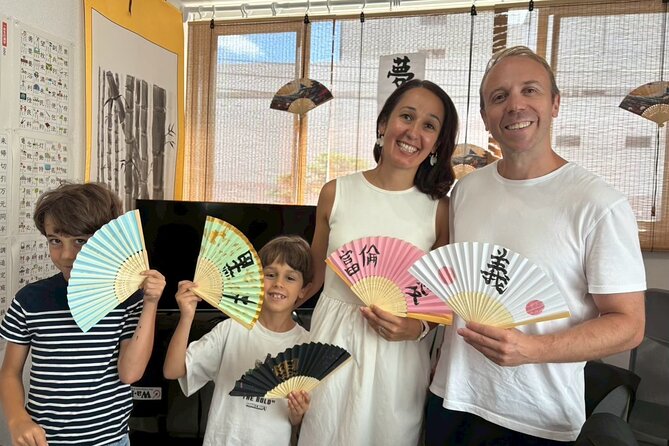
- You take home a folding fan you made: it’s the kind of souvenir that sparks conversations later.
- Support from the instructor: classes are patient and guided, with help if your strokes wobble.
- Optional character printing on clothes: you may be able to transfer your writing to a T-shirt or similar item.
Why Asakusa and Senso-ji Pair Perfectly With Calligraphy
Asakusa is the right neighborhood for this kind of workshop because it feels historical without trying too hard. You’re near Senso-ji Temple, one of Tokyo’s most recognizable landmarks, and the streets around it give you that old-meets-today feeling. That matters, because calligraphy is not just aesthetics. It’s a visual language with roots in writing traditions and everyday discipline.
The schedule gives you time to connect the dots. You see the temple area first, then you move into the classroom mindset. The result is that when you start learning brush strokes, you’re not thinking, Okay, what am I doing here? You’re already in the mood. It feels like you’re making something meaningful, not just filling an hour.
Also, Asakusa is easy to reach by public transportation. That’s a big deal if you want to tack this onto a normal Tokyo day without stressing over logistics.
More temple mornings in old Asakusa
- Tokyo: Japanese Dance Cabaret Theater Asakusa-Kaguwa Ticket
★ 4.8 · 2,270 reviews - Tokyo: Meiji Shrine, Asakusa, Skytree Bus Tour and Cruise
★ 4.7 · 1,986 reviews - Tokyo: Roll and Authentic Sushi Making Class in Asakusa
★ 4.9 · 1,957 reviews - Tokyo: Asakusa Walking Tour with Sensoji Temple Visit
★ 4.8 · 1,583 reviews
From Brush Basics to the 8 Strokes: What You Learn First
This class starts with the kind of prep that helps your hand behave. Before you write on the final item, you watch a short video about the history of Japanese language and calligraphy. It’s the sort of quick grounding that keeps your lesson from feeling random.
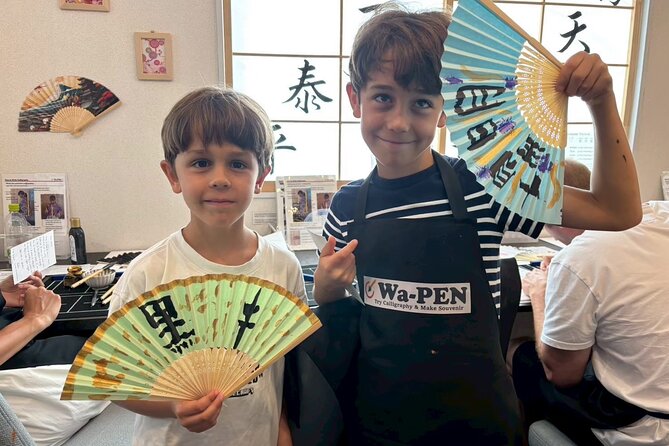
Then comes the practical part. You learn how to hold and use the brush with the right posture and writing style. The key skill is stroke control. The class focuses on the basic 8strokes, which is smart because it gives you a foundation you can apply whether you choose your name or a kanji character.
One of the things I like about this approach is that it keeps expectations realistic. Your first strokes will not look like a museum piece. That’s fine. The goal is to help your hand understand the difference between a shaky start and a controlled stroke.
In one class example, the instructor also helped participants get their ink ready and showed technique clearly. That mix of technique plus encouragement is why the experience feels doable even if you’ve never touched a calligraphy brush before.
Choosing Your Name in Japanese (Or a Kanji You Actually Like)
This is where the workshop becomes personal fast. You pick the Japanese word you want to write. Many people choose their name in Japanese characters. Others pick a favorite kanji. That choice changes the whole vibe of the class, because you’re writing something you care about, not copying random practice marks.
A nice detail is that the instructor may help explain meanings. In one example, the instructor wrote names in Japanese and shared what they mean. Even if you only catch part of the explanation, it adds context. You see that kanji isn’t just a shape. It’s a story told with strokes.
If you’re worried about choosing the wrong character for your name, don’t panic. The class supports you while you decide what to write. And even after you choose, you don’t go straight to your final fan. You practice first.
Practice Before the Final Piece: Getting Your Hand Under Control
Your hand needs warm-up. The workshop includes practice sheets, which I think is one of the best value features here. Instead of forcing you to learn by making mistakes on your final souvenir, you get sheets to test how characters look with your brush pressure and pace.
This is especially important for kanji. Kanji can feel intimidating because it has multiple strokes, and it’s easy to lose your rhythm. Practicing on paper first lets you correct the big stuff: direction, length, and where you pause between strokes.
The class also supports you if you’re stuck. In examples shared by past participants, the teaching style is patient and friendly, with clear guidance on technique. One instructor named Mana (called Love in one response) is described as friendly and patient, and her English was noted as good. That matters if you want to ask questions and not just follow along silently.
Practical tip: if you know the word you want in advance, bring it in whatever format you have (your name spelled in Japanese, or the kanji you want). If you don’t, you’ll still be able to choose during the session, but having it ready can save time.
Making Your Original Folding Fan in Asakusa
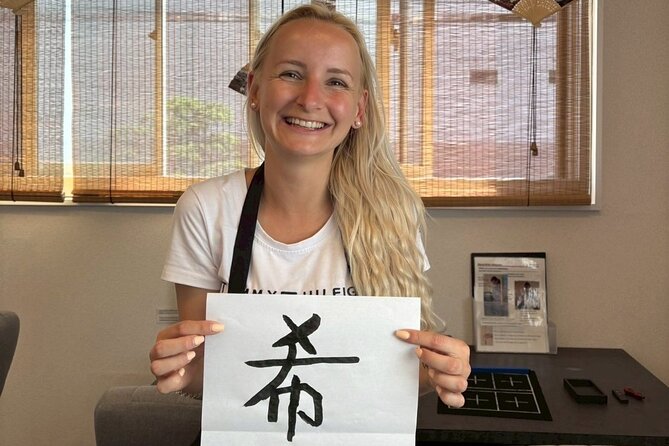
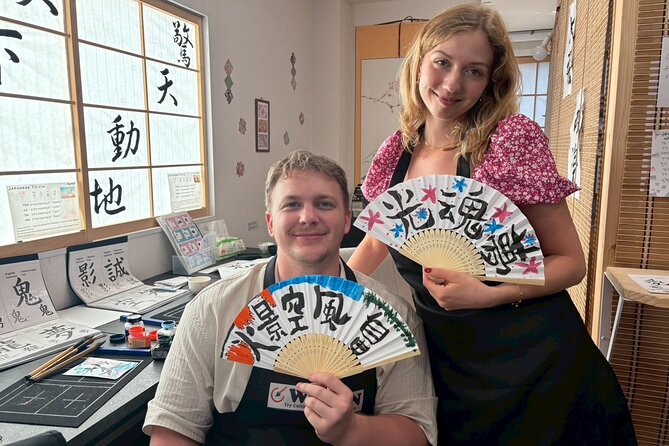
The finale is the folding fan. This is the souvenir you’ll actually use or display, and it’s hard to beat as a memory object. A fan also fits the setting. In Japan, folding fans are practical and aesthetic, and a homemade one feels extra special.
Once you’re ready, you transfer what you practiced into a final version on the fan. The difference between practice sheets and the fan is real. On paper, you can keep going. On a final item, you have to commit.
That pressure is why practice time is so helpful. When you start writing on the fan, you’re not starting from zero. You’re correcting based on what you already tried.
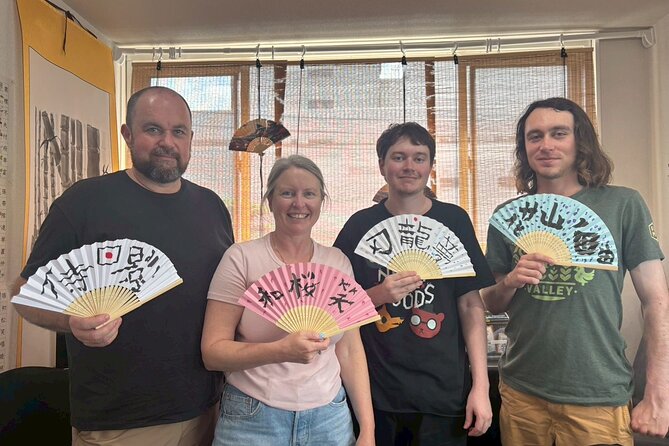
The fan becomes a visual proof of effort. You can look at it later and remember the moment your strokes finally clicked. Even if your calligraphy isn’t perfect, it’s still yours.
There’s also an option to print the characters you wrote on clothes, like a T-shirt. Not every class setup is the same for this option, but if it’s offered during your time slot, it’s a fun way to wear your souvenir instead of only storing it.
More hands-on studios our readers booked
- Tokyo Shinjuku Chopsticks Making Class★ 5.0 · 1,763 reviews
- Chopstick Making Workshop in Ginza★ 4.8 · 1,366 reviews
- Kintsugi Experience: Art of Golden Joinery in Tokyo★ 5.0 · 467 reviews
- Tokyo Chopstick Making Workshop with Artisan★ 5.0 · 466 reviews
- Tokyo: Shinjuku Chopstick Making Class★ 4.9 · 440 reviews
Staff Support, English-Friendly Teaching, and the Group Feel
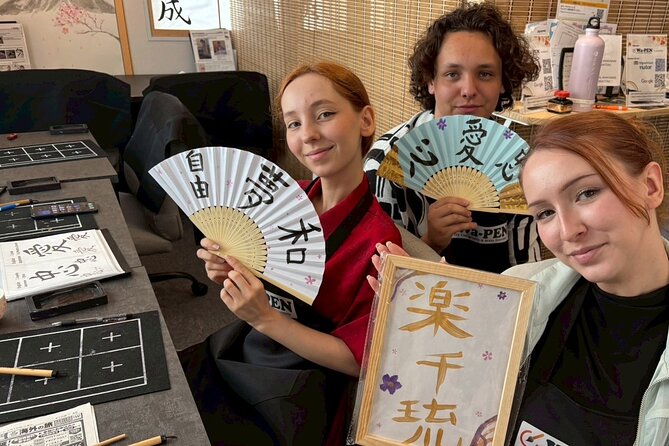
This is described as a private tour/activity, meaning it’s only your group. That changes the energy. Instead of weaving around strangers while you learn, you get attention and correction when you need it. It also makes it easier to ask a question when you’re unsure about a stroke or character order.
Expect an instructor who supports you through the steps. In one example, the instructor provided green tea, with a sweet taste. Small touches like that make the workshop feel calm rather than formal.
The lesson length is about 1 hour (approx.), so the flow needs to be efficient. The teaching style helps you get there. If your group includes people who are slower to warm up, patience from the instructor makes a difference.
If you’re traveling with someone, this also works well as a shared activity. One participant noted their spouse couldn’t stop watching the process. That’s a good sign. Calligraphy is visual. Watching your word take shape is half the fun.
Price and Value: Is $43 Worth It in Tokyo?
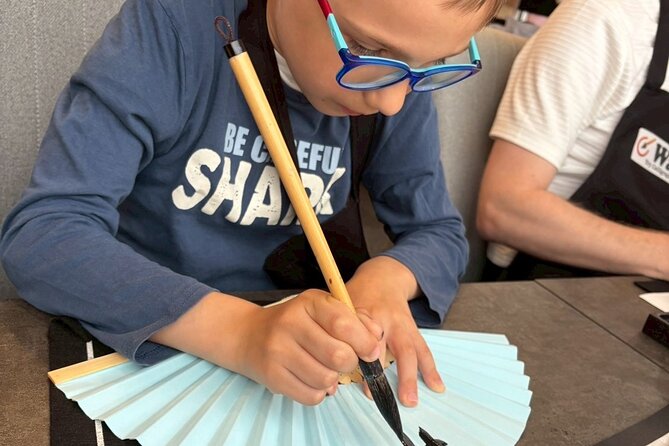
At $43 per person, this sits in the reasonable range for an experience that includes real instruction plus a take-home item. The value question is simple: do you leave with more than you started with?
Here, you learn stroke basics, get help choosing and writing a word, and leave with a handmade folding fan. That’s more than a photo stop and more than a souvenir shop purchase.
Also, you’re not just doing a generic craft. You’re learning to make calligraphy happen: brush hold, posture, ink handling, and the structure behind the strokes. The class also includes practice time before the final piece, which usually costs extra in other workshops.
Finally, private format matters. In Tokyo, many popular experiences are shared. A private setup gives you time for your group, and you’re less likely to feel rushed.
The one trade-off is that the class is short. You’ll get a solid intro, but you won’t become fluent in kanji calligraphy in 60 minutes. If you expect expert-level mastery, you’ll be disappointed. If you want a meaningful, doable souvenir lesson, the price looks fair.
Practical Tips so Your Fan Looks Like You Tried
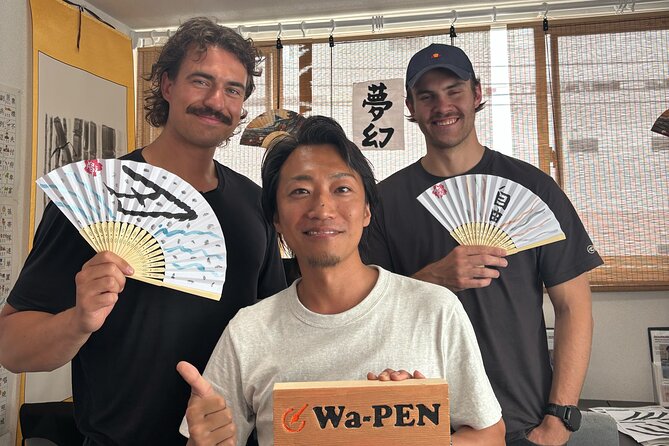
A calligraphy workshop is one of those activities where tiny choices help a lot. Here’s how to get the best result without overthinking it.
First, pick a word that you can focus on for an hour. Your name is popular for a reason. You can spend time on strokes instead of constantly debating what to write.
Second, don’t rush the practice phase. Use it to correct stroke order and direction. If something looks off on the practice sheet, treat that as useful feedback. The goal is not to copy exactly. The goal is to control the brush more confidently.
Third, go into it with a calm mindset. Calligraphy rewards steady movement. If you tense up, your strokes get shaky.
Fourth, if the clothes-print option is available, ask early. You’ll want to know what’s possible with what you wrote. That way, you can plan whether you want your souvenir just as a fan or also as wearable art.
Lastly, wear something comfortable. You’ll be seated and focused. This isn’t a walking tour you’ll sweat through. You want to keep your hands and shoulders relaxed.
Should You Book This Asakusa Calligraphy and Folding Fan Class?
If you want an authentic Tokyo experience that produces a tangible memory, I think this is a solid pick. It’s beginner-friendly, structured, and guided. You get actual instruction on brush technique and stroke basics, and you leave with something handmade that fits the local culture of Asakusa and the area’s temple atmosphere.
Book it if:
- you like hands-on cultural experiences
- you want a personal souvenir tied to your name or a kanji you choose
- you’re traveling with someone and want an activity that’s calm and shared
Skip it if:
- you’re already doing calligraphy at a high level and want a longer training session
- you only want quick sightseeing and don’t care about making anything
FAQ
How long is the calligraphy and folding fan experience?
It’s about 1 hour (approx.).
How much does the experience cost?
The price is $43.00 per person.
Is this a private tour?
Yes. It’s a private tour/activity, so only your group participates.
Where is the meeting point?
The start is Wa-PEN Calligraphy Attractions&Make Design clothes at 111-0035 Tokyo, Taito City, Nishiasakusa, 3-chōme 272 三丁目ビル 3F.
How does the ticket work?
It uses a mobile ticket.
Is it near public transportation?
Yes. It’s near public transportation.
What will I write during the class?
You can choose your Japanese name or a favorite kanji to write.
Can I print my calligraphy on clothes?
There is an option to print the characters you wrote on clothes.
What is the cancellation policy?
Cancellation is free. You can cancel up to 24 hours in advance of the experience for a full refund. If you cancel less than 24 hours before the start time, the amount paid will not be refunded.
More Tour Reviews in Tokyo
- Mt Fuji and Hakone 1-Day Bus Tour Return by Bullet Train
★ 5.0 · 26,383 reviews - 1-Day Tokyo Bus Tour
★ 5.0 · 14,250 reviews - Tokyo: teamLab Planets TOKYO Digital Art Museum Entry Ticket
★ 4.6 · 9,779 reviews - Mt Fuji & Hakone Cruise, Drum Show Bullet Train 1 Day from Tokyo
★ 4.0 · 7,413 reviews - Tokyo: Shinjuku Food Tour (13 Dishes at 4 Local Eateries)
★ 5.0 · 6,603 reviews
More Artisan Workshops in Tokyo
- Tokyo Shinjuku Chopsticks Making Class
★ 5.0 · 1,763 reviews - Chopstick Making Workshop in Ginza
★ 4.8 · 1,366 reviews - Kintsugi Experience: Art of Golden Joinery in Tokyo
★ 5.0 · 467 reviews - Tokyo Chopstick Making Workshop with Artisan
★ 5.0 · 466 reviews - Tokyo: Shinjuku Chopstick Making Class
★ 4.9 · 440 reviews
More Mornings in Old Asakusa
- Tokyo: Japanese Dance Cabaret Theater Asakusa-Kaguwa Ticket
★ 4.8 · 2,270 reviews - Tokyo: Meiji Shrine, Asakusa, Skytree Bus Tour and Cruise
★ 4.7 · 1,986 reviews - Tokyo: Roll and Authentic Sushi Making Class in Asakusa
★ 4.9 · 1,957 reviews - Tokyo: Asakusa Walking Tour with Sensoji Temple Visit
★ 4.8 · 1,583 reviews - Tokyo Asakusa Rickshaw Tour
★ 5.0 · 1,375 reviews
Latest Tokyo reviews off our desk




Asakusa & Sensoji Tours, compared.
 ★ 4.8Japanese Dance Cabaret Theater Asakusa-Kaguwa TicketFrom $492,270 reviews
 ★ 4.7Meiji Shrine, Asakusa, Skytree Bus Tour and CruiseFrom $1221,986 reviews
 ★ 4.9Roll and Authentic Sushi Making Class in AsakusaFrom $581,957 reviews
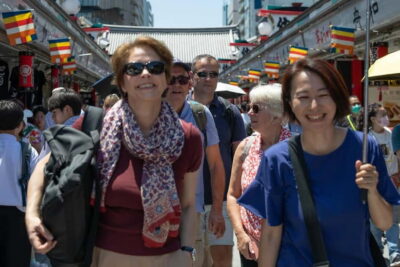 ★ 4.8Asakusa Walking Tour with Sensoji Temple VisitFrom $221,583 reviews
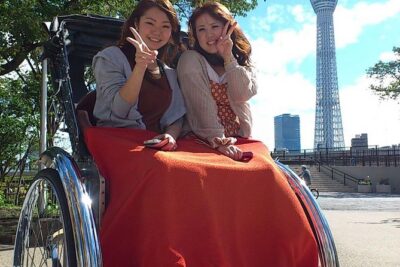 ★ 5.0Tokyo Asakusa Rickshaw TourFrom $421,375 reviews
 ★ 4.5Tokyo Panoramic 1 Day: Meiji Shrine, Asakusa, Odaiba and SKYTREE®From $851,222 reviews
 ★ 5.0Tokyo Go Kart: Asakusa, Skytree, and Akihabara **IDP MUST**From $99988 reviews
 ★ 4.7Asakusa, Skytree & Akhihabara Go-Kart City ExperienceFrom $96761 reviews
Browse the lists this tour appears in