
Reviewed · CRAFT & ARTISAN WORKSHOPS
Authentic Japanese calligraphy class in Tokyo! Kanji your name
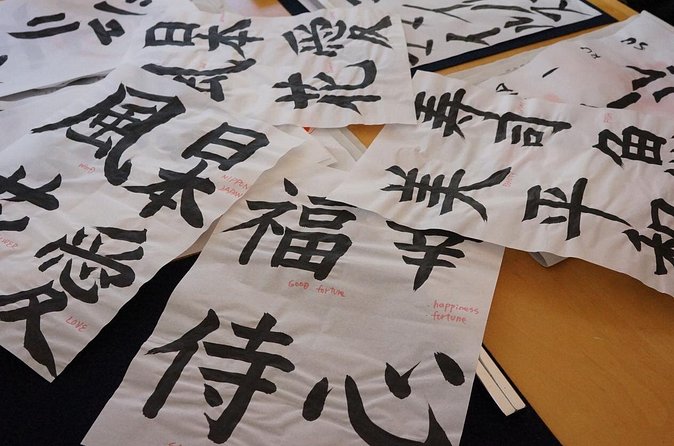
A calligraphy class in someone’s home hits different. You’ll get one-to-one guidance with Maki in an atmospheric living-room setting, then leave with your own kanji piece on traditional paper. It’s hands-on, practical, and very Tokyo in the best way—quiet, personal, and focused.
I love how step-by-step the teaching is. You’ll learn the writing systems basics, the tools you need, plus the correct posture and how to hold the brush—without feeling rushed. I also really like that you’re not just copying an example; you’re guided toward writing your own word or character.
One consideration: you’ll need to make your way there on your own. Private transportation isn’t included, and the meeting point is in a residential area near Yōga Station.
In This Review
- Key moments to pay attention to
- A private shodo lesson in a real Tokyo home
- Meet Maki: teaching style that makes kanji feel less scary
- What you’ll learn: tools, posture, and the basics of Japanese writing
- Your main output: writing your word or kanji character on traditional paper
- The 90 minutes: how the session feels from start to finish
- Price and what makes $56 feel fair
- Getting to the meeting point near Yōga Station
- Who this class is best for
- Quick FAQ-style tips before you book
- Should you book Kanji your name with Maki?
- FAQ
- How long is the calligraphy class?
- Is this a private class?
- Where does the class meet in Tokyo?
- What will I create during the lesson?
- What’s included in the price?
- Is transportation included?
- Is it refundable if I cancel?
Key moments to pay attention to
- Private, one-on-one instruction that keeps you from guessing what went wrong
- Clear English teaching from Maki, with repeated explanations when needed
- Home setting for a more cultural, relaxed feel than a studio class
- Practice to take home: you’ll write on traditional paper and keep your creations
- Everything supplied: brush/calligraphy tool, practice paper, and consumables
A private shodo lesson in a real Tokyo home
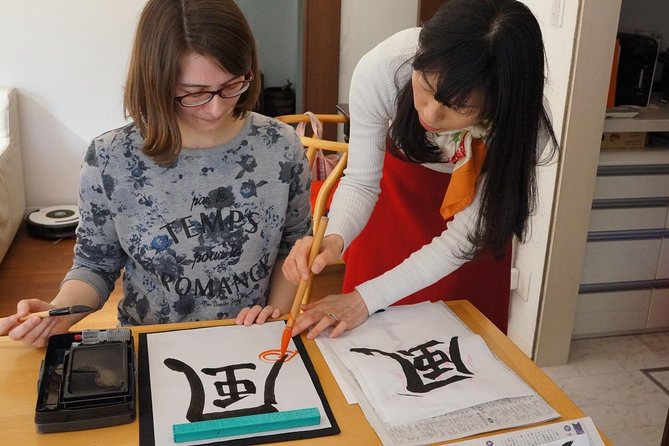
This class is built around a simple idea: learning shodo works best when someone watches your hand and corrects it early. You won’t be stuck in a crowded room doing the “copy this, hope for the best” thing. Instead, you work one-to-one, at a pace that lets you actually feel the strokes.
Maki teaches from a local’s home setting, not a generic workshop space. That matters more than it sounds. In a home, the experience tends to stay calm, conversational, and less performative. It also makes it easier to ask questions about what you’re writing and how calligraphy fits into Japanese culture and daily life.
And yes, it can feel like a tiny cultural exchange. Several students highlight how Maki is welcoming and careful, and how the class stays participative. You’re not just following instructions—you’re learning why they matter.
More hands-on studios our readers booked
- Tokyo Shinjuku Chopsticks Making Class
★ 5.0 · 1,763 reviews - Chopstick Making Workshop in Ginza
★ 4.8 · 1,366 reviews - Kintsugi Experience: Art of Golden Joinery in Tokyo
★ 5.0 · 467 reviews - Tokyo Chopstick Making Workshop with Artisan
★ 5.0 · 466 reviews
Meet Maki: teaching style that makes kanji feel less scary
The big win here is the teaching. Maki is known for explaining techniques carefully and clearly, and for repeating key points as often as needed. If you’ve ever tried to learn a craft from a video and still felt lost, this format fixes that problem fast: your questions come at the exact moment your brain starts to stall.
You’ll get guidance on both the mechanics and the “flow.” Calligraphy isn’t only about the shape of a kanji character. It’s about posture, how the brush moves, and how much pressure you use. When your instructor can watch those details in real time, your work improves much quicker than you’d expect from a short session.
One nice touch mentioned in the experience is how Maki handles small comforts during the class—like offering drinks to try. It’s not a gimmick; it helps the whole session feel more like a friendly lesson than a transaction.
If you’re doing this for a special occasion, the tone can be warm and thoughtful. One student shared it was a surprise birthday gift, and Maki helped make it feel special without turning the class into a chaotic party. That’s a good sign if you want something meaningful that still stays focused.
What you’ll learn: tools, posture, and the basics of Japanese writing
The lesson covers more than just writing one character. You’ll start by understanding different writing systems and what you’re working with in Japanese calligraphy. That’s useful even if your goal is only to write your name in kanji, because it helps you understand what you’re looking at on the page.
Then you move into tools and technique. Expect instruction on:
- the calligraphy tools you’ll use
- how to hold the brush correctly
- correct posture for controlled strokes
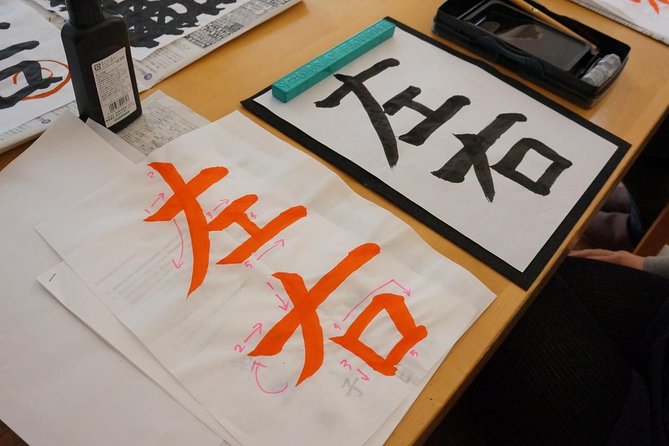
This is the part that makes the class practical. A lot of beginners struggle because they treat calligraphy like drawing. In shodo, the brush has its own behavior. Your wrist, arm, and grip need to work together, and posture affects how steady your lines look.
Also, you’re not thrown into a single final piece right away. You’ll practice and refine your strokes based on Maki’s feedback. That step is the difference between a souvenir and a real learning moment.
Your main output: writing your word or kanji character on traditional paper
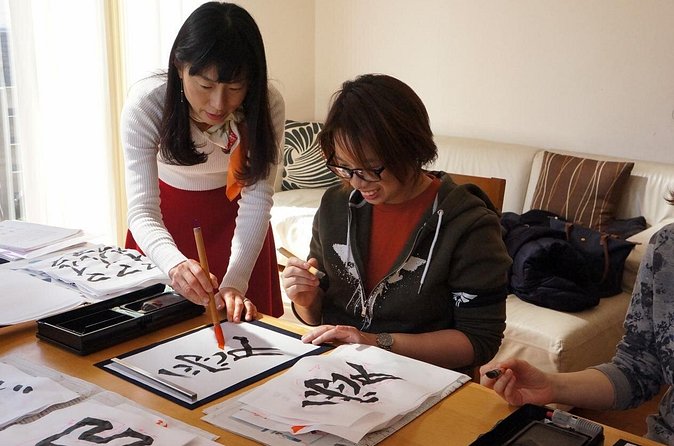
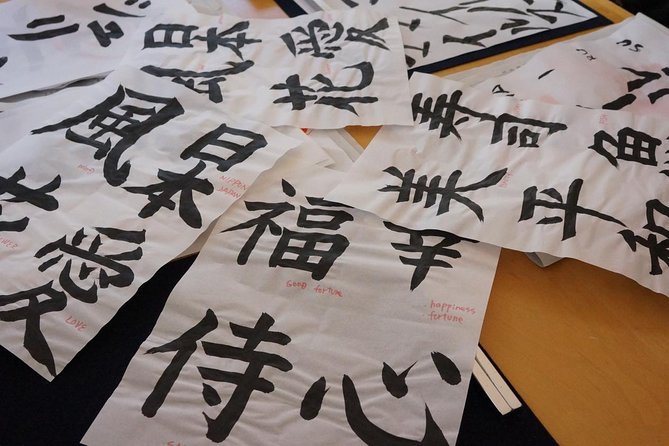
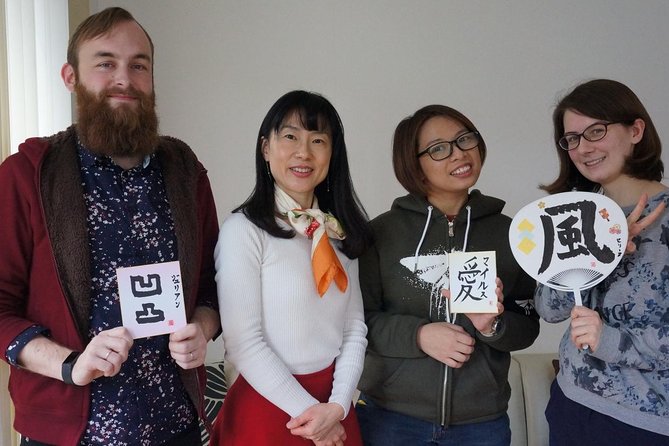
By the end, you’ll be able to write a word or character on Japanese traditional paper. That’s the core “take-home” moment, and it’s also the moment the class starts to feel personal. Watching your own piece come together is motivating in a way that reading about calligraphy never is.
The exact subject you create depends on what you choose for your name or character. The lesson is designed around you making something specific, not doing generic homework. You’ll get guidance while you work, so you’re not left alone with a blank sheet and a brush that feels mysteriously alive.
Materials matter here. You’ll be given paper for practice, plus the items used to create your final piece. The class also includes colored paper (or a fan), depending on what’s part of the session materials. This gives you options for how you display what you make at home.
Take-home value is real in this experience. A calligraphy piece isn’t just a photo prop. It’s a physical object you can frame or keep as a reminder, and you’ll understand more about how it was made than you would with many “watch and leave” activities.
The 90 minutes: how the session feels from start to finish
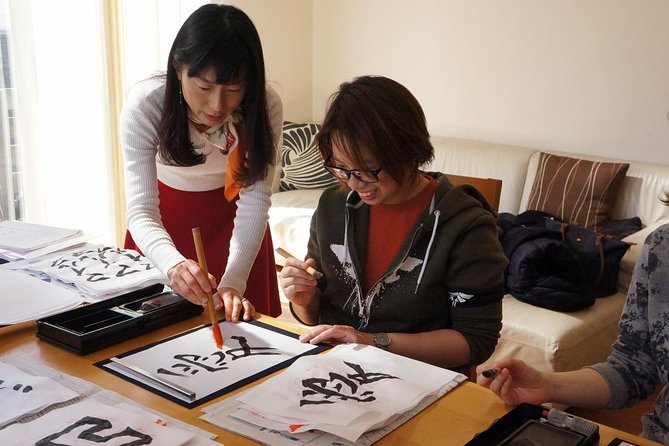
The experience runs about 1 hour 30 minutes. That’s long enough to learn basics and still short enough to fit neatly into a Tokyo day. For most people, that length is ideal: you get focus without feeling like you’re committing to a full afternoon workshop.
The lesson itself unfolds in a natural rhythm:
1) You meet and settle in near the activity’s meeting point.
2) Maki introduces the tools and the correct posture and brush grip.
3) You practice stroke control and technique with step-by-step guidance.
4) You then write your word or character on traditional paper.
5) You finish with something you can take home.
Stop 1 is tied to the Yoga Shrine area. Practically, it functions as your reference point for where the experience starts. If you’re using transit, this is good to know because it anchors where you’re going before you reach the instructor’s home.
You’ll also likely spend time adjusting based on feedback. Shodo is not “one size fits all,” and Maki’s style includes careful correction. A few students mention she doesn’t mind repeating explanations, which tells you the class is designed to keep you moving forward even if your first attempts are messy.
Readers also shortlisted these Tokyo bookings:
- Sushi Making Tokyo Roll and Authentic Japanese Sushi Class★ 5.0 · 3,971 reviews
- Tokyo: Roll and Authentic Sushi Making Class in Asakusa★ 4.9 · 1,957 reviews
- Tokyo Shinjuku Chopsticks Making Class★ 5.0 · 1,763 reviews
- Tokyo: Sushi Making Class in a Happi Coat near a Famous Spot★ 4.9 · 1,377 reviews
- Chopstick Making Workshop in Ginza★ 4.8 · 1,366 reviews
Price and what makes $56 feel fair
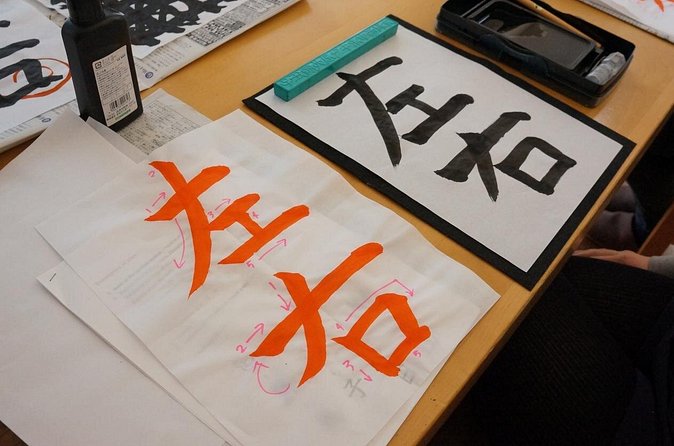
The price is listed at $56, for about 1.5 hours of private instruction, plus supplies and consumption tax. On paper, $56 may sound “small” for a craft experience—until you consider what’s included and what private teaching costs in a city like Tokyo.
Here’s what you get that most people would otherwise have to buy:
- the calligraphy tool
- paper for practice
- consumable supplies
- colored paper (or a fan)
- traditional paper for the calligraphy creation
- consumption tax
Since you’re taking your materials and final piece home, you’re not just paying for time. You’re paying for instruction plus a tangible result.
Private, one-on-one teaching is also a major factor in value. If you’ve tried group classes before, you know the frustration: one instructor, many hands, limited correction time. Here, your corrections happen as you make them, which makes the learning stick better.
If you’re traveling with a tight schedule, this is also a practical way to add depth without losing a whole day. Tokyo has tons to do, and this kind of class offers something tactile and calming among the chaos.
Getting to the meeting point near Yōga Station
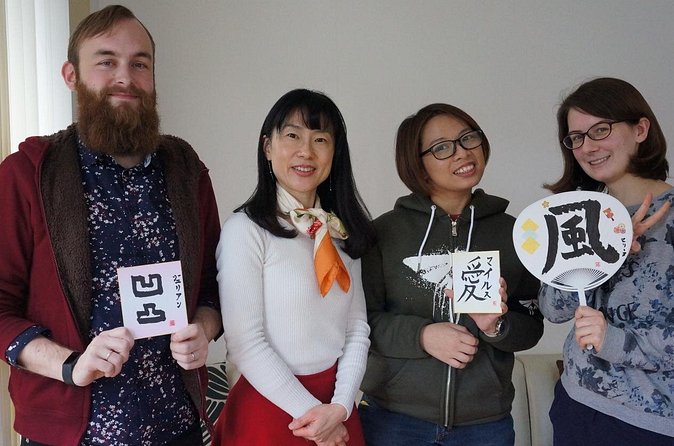
The start point is near Yōga Sta., in Setagaya City (address listed as Yōga Sta.2 Chome-39 Yoga, Setagaya City, Tokyo 158-0097). It ends back near the meeting point.
Because private transportation isn’t included, plan to arrive using public transit. The good news: it’s described as near public transportation, and the meeting location is clearly tied to a station area. That makes it easier than lessons that meet somewhere vague.
Bring comfortable shoes and a little buffer time. Residential streets can feel slower than you expect, especially if you’re walking with bags or trying to find the exact house address. Once you’re there, the rest is straightforward.
Who this class is best for
This experience fits especially well if you want:
- real cultural learning, not just a photo stop
- hands-on instruction with direct correction
- a meaningful souvenir that you made yourself
- a calmer activity that still feels engaging
It’s also a great choice if you’re traveling with someone who likes personal experiences. Because it’s private, you can ask questions and set your own pace rather than trying to match a group schedule.
If your Japanese is limited, don’t worry. Maki teaches in English very well, and the class is described as carefully explained and step-by-step. You’ll still benefit even if you only understand pieces of the conversation, since the core guidance is shown through the technique.
If you’re someone who needs structure and reassurance while learning a new skill, this is a strong match. The way the instruction is repeated and the class stays participative helps you avoid the classic beginner spiral of getting frustrated and then freezing.
Quick FAQ-style tips before you book
You don’t need to be an expert. Most people can participate, and the session is designed for learning.
I’d suggest thinking about what you want your final piece to be. If your goal is to “kanji your name,” decide on the word or character you want before you arrive. That way, you can focus on the brush technique rather than deciding at the last second.
Also, mentally expect your first attempts to look rough. Shodo is a skill. The lesson’s strength is that it helps you improve during the time you’re there, not that it demands instant perfection.
Should you book Kanji your name with Maki?
I think you should book it if you want a genuinely hands-on shodo experience in Tokyo, with private guidance and real materials to take home. The home setting makes it feel human and cultural rather than like a production line. And Maki’s careful, repeat-friendly teaching style is exactly what beginners need.
Skip it only if you strongly prefer big-group activities, or if you don’t want to handle your own transit to a residential neighborhood. Otherwise, this is a smart use of time: you get a skill-focused class, plus a finished piece you can live with after the trip ends.
If you want a Tokyo memory you can display—and understand—this one delivers.
FAQ
How long is the calligraphy class?
The lesson runs about 1 hour 30 minutes.
Is this a private class?
Yes. It’s private, so only your group participates.
Where does the class meet in Tokyo?
You start at Yōga Sta.2 Chome-39 Yoga, Setagaya City, Tokyo 158-0097, Japan.
What will I create during the lesson?
You’ll write a word or character on Japanese traditional paper with guidance from the instructor.
What’s included in the price?
The experience includes the experience fee, a calligraphy tool, colored paper (or a fan), practice paper, consumable supplies, and consumption tax.
Is transportation included?
No. Private transportation is not included.
Is it refundable if I cancel?
Yes. You can cancel for a full refund up to 24 hours in advance of the experience start time.
More Workshops in Tokyo
- Sushi Making Tokyo Roll and Authentic Japanese Sushi Class
★ 5.0 · 3,971 reviews - Tokyo: Roll and Authentic Sushi Making Class in Asakusa
★ 4.9 · 1,957 reviews - Tokyo Shinjuku Chopsticks Making Class
★ 5.0 · 1,763 reviews - Tokyo: Sushi Making Class in a Happi Coat near a Famous Spot
★ 4.9 · 1,377 reviews - Chopstick Making Workshop in Ginza
★ 4.8 · 1,366 reviews
More Tour Reviews in Tokyo
- Mt Fuji and Hakone 1-Day Bus Tour Return by Bullet Train
★ 5.0 · 26,383 reviews - 1-Day Tokyo Bus Tour
★ 5.0 · 14,250 reviews - Tokyo: teamLab Planets TOKYO Digital Art Museum Entry Ticket
★ 4.6 · 9,779 reviews - Mt Fuji & Hakone Cruise, Drum Show Bullet Train 1 Day from Tokyo
★ 4.0 · 7,413 reviews - Tokyo: Shinjuku Food Tour (13 Dishes at 4 Local Eateries)
★ 5.0 · 6,603 reviews
More Artisan Workshops in Tokyo
- Tokyo Shinjuku Chopsticks Making Class
★ 5.0 · 1,763 reviews - Chopstick Making Workshop in Ginza
★ 4.8 · 1,366 reviews - Kintsugi Experience: Art of Golden Joinery in Tokyo
★ 5.0 · 467 reviews - Tokyo Chopstick Making Workshop with Artisan
★ 5.0 · 466 reviews - Tokyo: Shinjuku Chopstick Making Class
★ 4.9 · 440 reviews
Latest Tokyo reviews off our desk




Craft & Artisan Workshops, compared.
 ★ 5.0Tokyo Shinjuku Chopsticks Making ClassFrom $201,763 reviews
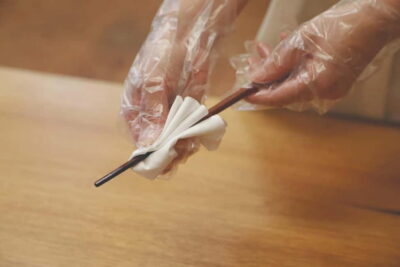 ★ 4.8Chopstick Making Workshop in GinzaFrom $251,366 reviews
 ★ 5.0Kintsugi Experience: Art of Golden Joinery in TokyoFrom $59467 reviews
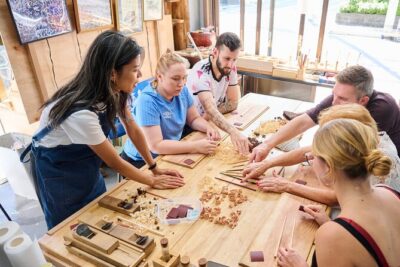 ★ 5.0Tokyo Chopstick Making Workshop with ArtisanFrom $26466 reviews
 ★ 5.0Authentic Pure Gold Kintsugi Workshop with Master Taku in TokyoFrom $142217 reviews
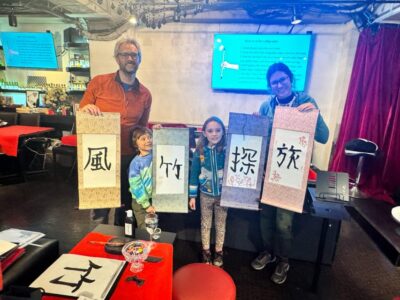 ★ 5.0Calligraphy on Kanji Fan & Scroll with DrinkFrom $53210 reviews
Browse the lists this tour appears in