
Reviewed · COOKING CLASSES
Gyoza Making from Scratch- Tokyo Ultimate Cooking Class
Gyoza is better when you make it. This hands-on class at Patia Kitchen in central Tokyo has you kneading dough, mixing filling, and learning the folding and cooking steps that make Japanese dumplings taste right. You’ll also compare what happens when you use handmade wrappers versus store-bought.
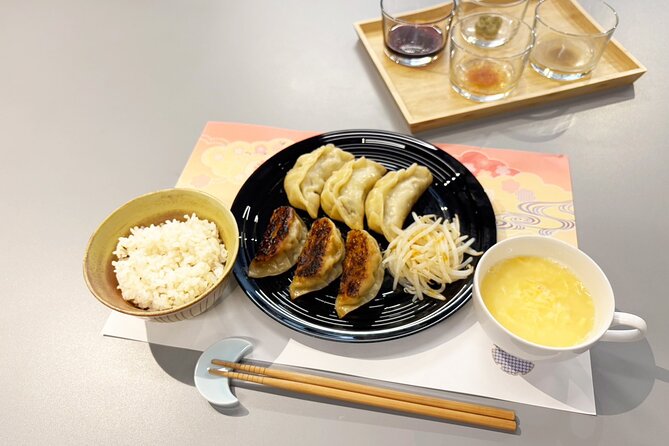
What I like most is the focus on fundamentals: making wrappers and filling from scratch so you understand the texture you’re aiming for. I also love that you practice the full chain—fold, pan-fry yaki-gyoza, then eat with multiple dipping sauces—instead of stopping after the cooking part.
One thing to consider: you need to get to the studio on your own since hotel pickup and drop-off aren’t included, and the class time is about 1 hour 50 minutes, so it moves at a working-kitchen pace.
In This Review
- Key things to know before you go
- A Tokyo kitchen workshop built around real gyoza skills
- What you’ll do: wrappers, filling, folding, and the pan-fry
- 1) Start with the wrapper dough and fresh filling
- 2) Learn folding techniques that actually seal
- 3) Compare handmade wrappers with store-bought
- 4) Cook yaki-gyoza in the pan
- Eating what you make: sauces, soup, and a side dish
- English recipe and photos: the best souvenir isn’t a fridge magnet
- Price and value: what $92.24 buys you in Tokyo
- Logistics that matter: mobile ticket, location, and pace
- Who this gyoza class is best for (and who might skip it)
- Should you book this gyoza class in Tokyo?
- FAQ
- FAQ
- What does the gyoza class include?
- How long is the class?
- Is hotel pickup included?
- Where does the class take place?
- Are the wrappers and filling made from scratch?
- Can I request chicken instead of pork?
- Will I learn folding and cooking steps?
- Are there sauces and sides included with the meal?
- Is there an English recipe I can take home?
- Is free cancellation available?
Key things to know before you go
- True from-scratch method: you’ll make gyoza wrappers and the filling, not just assemble with shortcuts
- Folding techniques you can actually repeat at home after you leave
- Taste and texture comparison between handmade and store-bought wrappers
- Pan-fried yaki-gyoza practice with the timing that affects browning and juiciness
- Eat what you make with soup, a side dish, and several dipping sauces
- English recipe and digital photos so you have something to recreate later
A Tokyo kitchen workshop built around real gyoza skills
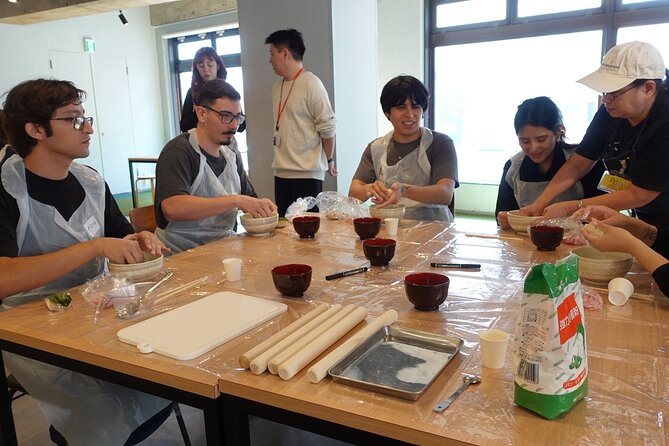
This isn’t a sit-and-watch demo. The class is structured like a small workshop where you’ll handle ingredients, follow steps in order, and learn why certain moves matter. In roughly 1 hour 50 minutes, you’ll go from dough and filling to finished pan-fried yaki-gyoza, then enjoy them immediately.
The setting helps. The class takes place in the modern Patia Kitchen studios in central Tokyo, with a fully equipped workspace and enough room to work comfortably. With a maximum group size of 12, you’re not lost in a crowd, and you can get help when your folding gets weird.
If you’re traveling with kids, older adults, or a mixed group, the format is set up for all age groups. That matters because gyoza is tactile: kneading, mixing, shaping, and pan-frying give everyone a role without requiring advanced knife skills.
Readers also shortlisted these Tokyo bookings:
- Ramen & Gyoza Cooking Class in Tokyo with Local Supermarket Visit
★ 5.0 · 823 reviews - Tokyo: Easy Ramen Cooking Experience in Kabukicho, Shinjuku
★ 4.6 · 321 reviews - Ramen and Sushi Cooking Class with Sake Pairing Set in Tokyo
★ 5.0 · 291 reviews - Tokyo: Wagyu and 7 Japanese Dishes Cooking Class
★ 4.9 · 273 reviews
What you’ll do: wrappers, filling, folding, and the pan-fry
1) Start with the wrapper dough and fresh filling
The class begins with making gyoza wrappers from scratch using fresh ingredients. That includes kneading the dough and learning how to get it ready for rolling and shaping. Even if you’ve had gyoza before, learning the wrapper basics changes how you read the dumpling later—especially the difference between a wrapper that’s thin and flexible versus one that turns chewy or tears.
Then you move to the filling. The instructor guides you through mixing the filling ingredients and gives you the key idea behind getting juicy gyoza filling—the kind of detail that’s hard to guess from a recipe alone. You’re not just told to add things. You learn how the texture and seasoning should feel as it comes together.
One helpful option: chicken filling is available if you request it at least 48 hours in advance (so you’ll need to plan ahead). Otherwise, you’ll make the standard filling.
2) Learn folding techniques that actually seal
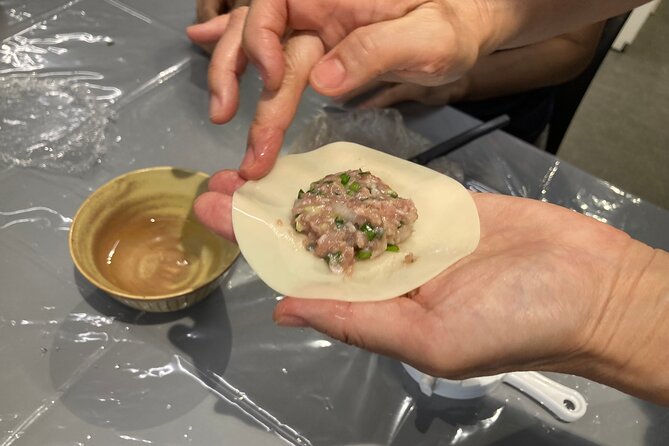
After dough and filling, you’ll practice the folding technique. This is where many dumpling classes lose people, because folding can look simple until you’re pinching the edges and trying to keep the dumpling from opening.
Here, the instructor steps you through the method so you can feel the fold rather than just copy it. You’ll also learn the practical reason for the design: the fold helps with grip at the edges and supports a proper bite when pan-fried.
3) Compare handmade wrappers with store-bought
A smart part of this class is the comparison. You’ll cook and evaluate both handmade wrappers and store-bought ones. That’s valuable because it turns a theory question into a food experiment. You can taste the difference in thickness, texture, and mouthfeel, and it gives you a clearer idea of what to prioritize if you try making gyoza at home.
Store-bought wrappers can be great, but after you make your own dough, you’ll know which differences matter most to you.
Readers also shortlisted these Tokyo bookings:
- Sushi Making Tokyo Roll and Authentic Japanese Sushi Class★ 5.0 · 3,971 reviews
- Tokyo: Roll and Authentic Sushi Making Class in Asakusa★ 4.9 · 1,957 reviews
- Tokyo Shinjuku Chopsticks Making Class★ 5.0 · 1,763 reviews
- Tokyo: Sushi Making Class in a Happi Coat near a Famous Spot★ 4.9 · 1,377 reviews
- Chopstick Making Workshop in Ginza★ 4.8 · 1,366 reviews
4) Cook yaki-gyoza in the pan
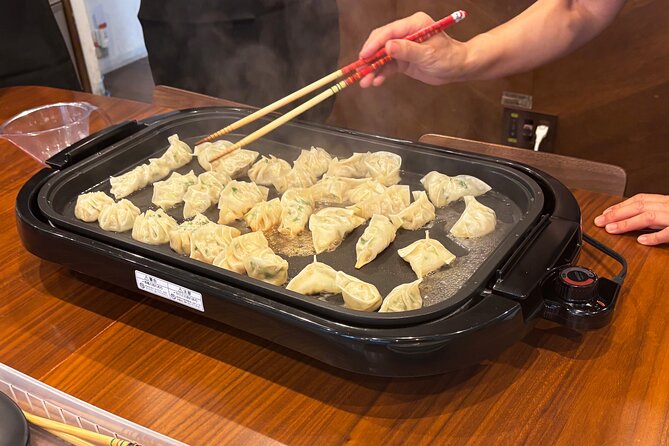
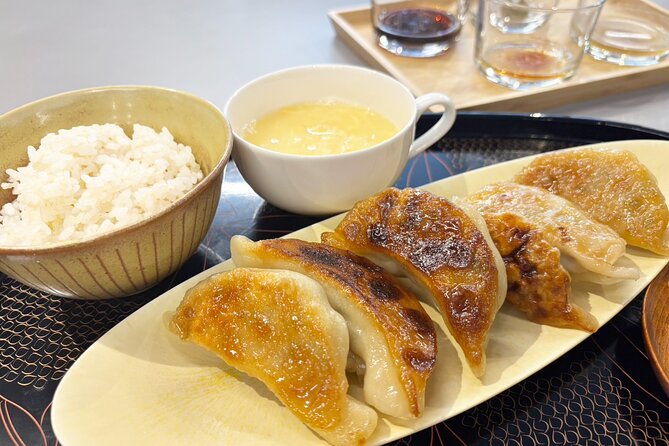
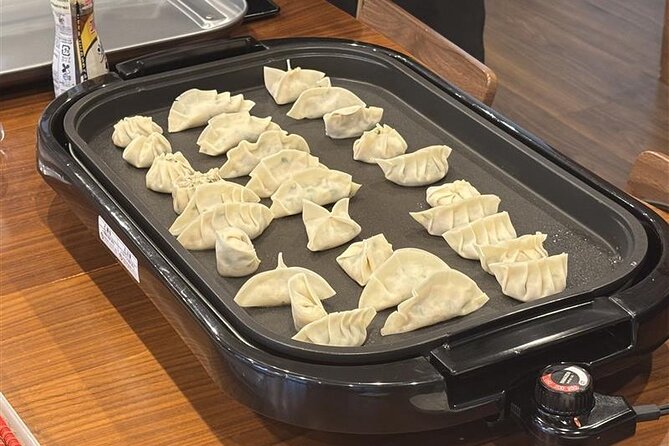
Then you get to the main event: pan-fried yaki-gyoza. You’ll cook the dumplings in a way that develops the signature browned bottom while still keeping the inside tender and juicy.
The best part is you’re cooking in real time, not waiting for someone else to do it. You’ll see how heat and timing affect the result—because you can’t fake that crispy base. This cooking step is also where the “secret” filling lesson pays off: if your filling is right, the dumpling stays satisfying instead of tasting dry or bland.
Eating what you make: sauces, soup, and a side dish
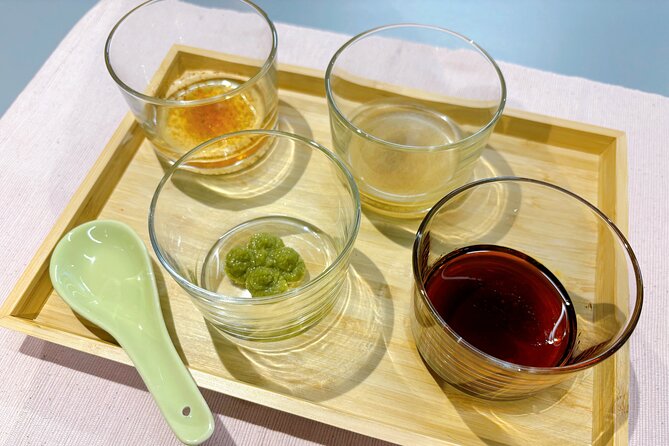
After cooking, you’ll eat your gyoza with several different dipping sauces. This is more than extra condiments. Different sauces highlight different elements of the dumpling: the crispiness, the seasoning, and the balance of savory flavors. If you’re the type who likes to adjust your meals, tasting multiple pairings is a fun way to learn what works together.
You’ll also prepare soup and a side dish to enjoy with your gyoza. The class doesn’t leave you with only dumplings and hunger. It gives you a fuller meal rhythm—something you can copy when you cook at home.
Meals are included, which helps justify the price. You’re not only paying for instruction; you’re also eating what you produce during the session.
English recipe and photos: the best souvenir isn’t a fridge magnet
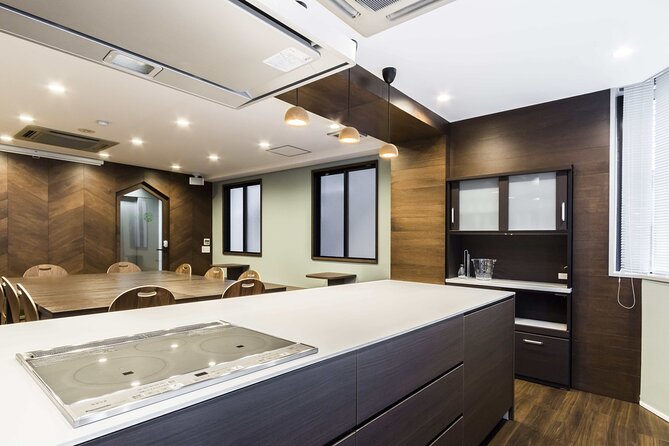
Two of the most practical takeaways are the English recipe and the downloadable photos. The recipe helps you recreate the process at home, including the steps you practiced in class. That’s especially useful if you’ve ever tried making gyoza once, failed to get the texture right, and then gave up.
And the digital photos act like your visual checklist. If you’re learning folding or want to compare your finished dumplings to a reference, having images afterward is a real help.
In the reviews, people consistently highlight that the instructor was patient and informative, and that the food was delicious. That lines up with what you’re trying to do here: learn how to get good results, not just leave with a plate of dumplings.
Price and value: what $92.24 buys you in Tokyo
At $92.24 per person, this class isn’t a bargain-bag activity. But it also isn’t overpriced for what you get. You’re paying for several things at once:
- Instruction for both wrapper making and folding
- Guidance through a pan-fry cooking process
- A meal outcome (you eat the gyoza plus soup and a side dish)
- Take-home value: an English recipe and downloadable photos
The class is also capped at 12 people, which tends to support better attention when you’re learning a hands-on technique like folding. If you’ve done cooking classes in other places, you know some are really just assembly with extra steps. This one leans hard into technique—especially the dough and folding part—which is where your money turns into skill.
If you compare it to buying ingredients and teaching yourself, you’re also buying time and correction. In cooking, correction matters.
Logistics that matter: mobile ticket, location, and pace
This is a studio-based class in central Tokyo. You’ll want to plan to reach the meeting point via public transportation, since hotel pickup and drop-off aren’t included.
The activity uses a mobile ticket, which is convenient. The duration is about 1 hour 50 minutes, so don’t schedule tight sightseeing right before it. Think of it as a dedicated block in your day where you’ll work, cook, eat, and learn.
Also note the class has a minimum number of travelers. If it doesn’t meet that threshold, you’ll be offered another date or a full refund—so it helps to book with enough flexibility if your plans are still changing.
Who this gyoza class is best for (and who might skip it)
This class is a great fit if you:
- want to learn folding techniques and not just copy a finished shape
- enjoy food-focused activities where you leave with a repeatable skill
- like comparing results, like handmade versus store-bought wrappers
- want a small-group workshop in central Tokyo
You might consider skipping or adjusting expectations if you:
- prefer casual food browsing over cooking work
- need an activity with very long breaks, since the session has a kitchen rhythm
- are looking for a low-cost snack experience instead of a full meal plus instruction
Because it’s designed for all age groups, it can work for families too, as long as everyone is comfortable with hands-on cooking.
Should you book this gyoza class in Tokyo?
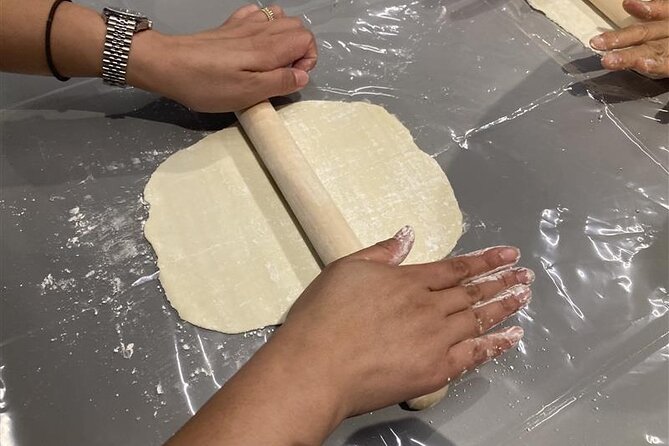
If you like Japanese food and want to understand what makes gyoza taste right, I’d book it. The best reason is simple: it teaches the parts you can’t fully learn from eating—wrapper texture, folding mechanics, and pan-frying timing—and then feeds you with the results. The price makes more sense when you remember you’re getting both a skill-building session and a complete meal.
Book it especially if you’ve ever looked at gyoza at home and thought it tasted close but never quite right. This class gives you the fixes, not just instructions.
FAQ
FAQ
What does the gyoza class include?
The class includes meals, the cooking experience, and later-downloadable photographs.
How long is the class?
It runs for about 1 hour 50 minutes.
Is hotel pickup included?
No. Hotel pickup and drop-off aren’t included.
Where does the class take place?
It takes place in a central Tokyo studio at Patia Kitchen.
Are the wrappers and filling made from scratch?
Yes. You’ll make gyoza wrappers and the filling from scratch using fresh ingredients.
Can I request chicken instead of pork?
Yes, chicken filling is available upon request if you let the provider know more than 48 hours in advance.
Will I learn folding and cooking steps?
Yes. You’ll learn folding techniques and cook pan-fried yaki-gyoza.
Are there sauces and sides included with the meal?
Yes. You’ll enjoy your gyoza with several different dipping sauces, plus soup and a side dish.
Is there an English recipe I can take home?
Yes. You’ll receive an English recipe to recreate gyoza at home, and you’ll also get digital photos later.
Is free cancellation available?
Yes. You can cancel up to 24 hours in advance for a full refund.
More Workshops in Tokyo
- Sushi Making Tokyo Roll and Authentic Japanese Sushi Class
★ 5.0 · 3,971 reviews - Tokyo: Roll and Authentic Sushi Making Class in Asakusa
★ 4.9 · 1,957 reviews - Tokyo Shinjuku Chopsticks Making Class
★ 5.0 · 1,763 reviews - Tokyo: Sushi Making Class in a Happi Coat near a Famous Spot
★ 4.9 · 1,377 reviews - Chopstick Making Workshop in Ginza
★ 4.8 · 1,366 reviews
More Cooking Classes in Tokyo
- Ramen & Gyoza Cooking Class in Tokyo with Local Supermarket Visit
★ 5.0 · 823 reviews - Tokyo: Easy Ramen Cooking Experience in Kabukicho, Shinjuku
★ 4.6 · 321 reviews - Ramen and Sushi Cooking Class with Sake Pairing Set in Tokyo
★ 5.0 · 291 reviews - Tokyo: Wagyu and 7 Japanese Dishes Cooking Class
★ 4.9 · 273 reviews - Tokyo Washoku 4-hour Cooking Class: From Market to Table
★ 5.0 · 253 reviews
More Tour Reviews in Tokyo
- Mt Fuji and Hakone 1-Day Bus Tour Return by Bullet Train
★ 5.0 · 26,383 reviews - 1-Day Tokyo Bus Tour
★ 5.0 · 14,250 reviews - Tokyo: teamLab Planets TOKYO Digital Art Museum Entry Ticket
★ 4.6 · 9,779 reviews - Mt Fuji & Hakone Cruise, Drum Show Bullet Train 1 Day from Tokyo
★ 4.0 · 7,413 reviews - Tokyo: Shinjuku Food Tour (13 Dishes at 4 Local Eateries)
★ 5.0 · 6,603 reviews
Latest Tokyo reviews off our desk






Cooking Classes, compared.
 ★ 5.0Ramen & Gyoza Cooking Class in Tokyo with Local Supermarket VisitFrom $122823 reviews
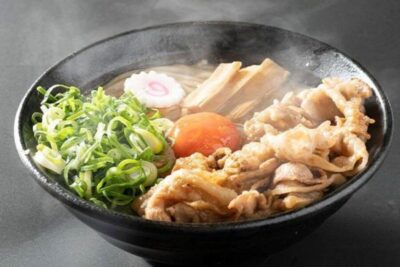 ★ 4.6Easy Ramen Cooking Experience in Kabukicho, ShinjukuFrom $29321 reviews
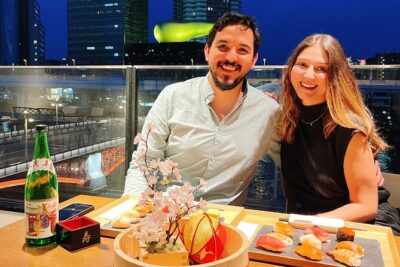 ★ 5.0Ramen and Sushi Cooking Class with Sake Pairing Set in TokyoFrom $79291 reviews
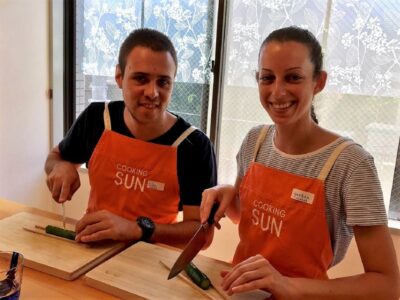 ★ 4.9Wagyu and 7 Japanese Dishes Cooking ClassFrom $67273 reviews
 ★ 5.0Tokyo Washoku 4-hour Cooking Class: From Market to TableFrom $79253 reviews
 ★ 5.0Small-Group Wagyu Beef and 7 Japanese Dishes Tokyo Cooking ClassFrom $72190 reviews
 ★ 5.0Private Home Cooking in Yanaka – Local Flavors in a Warm SettingFrom $122173 reviews
 ★ 5.0Tokyo Sushi Making Experience & Japanese Cooking ClassFrom $59150 reviews
Browse the lists this tour appears in