
Reviewed · CRAFT & ARTISAN WORKSHOPS
Japanese flower arranging (Ikebana) Experience/Workshop in Tokyo
Your hands will slow down in Tokyo. This 90-minute ikebana class turns a busy city stop into a mindful, hands-on flower arranging session with a small-group feel.
I love the personal coaching style, where the instructor explains the history behind ikebana and also helps you make real design choices. I also love that you get practical take-home memories: you’ll receive shared photos taken during the workshop, not just a finished arrangement.
One thing to watch: containers and the kenzan aren’t included in the price, so if you want your arrangement to look great after you leave, budget a little extra for optional purchases.
In This Review
- Key highlights you’ll care about
- Arriving near Kōjimachi: the workshop setting and what to expect
- The 90-minute ikebana lesson: history, tools, and design choices
- How you build your arrangement: tools, kenzan, and that key placement moment
- Why this feels like a real break: mindful pacing without the fluff
- Photos as a memory tool: what you’ll get and why it’s worth it
- Price and value: what $100 covers, and what might cost extra
- Getting the most out of it: practical tips before you go
- Who this Tokyo ikebana workshop suits best
- Should you book this ikebana class in Tokyo?
- FAQ
- How long is the ikebana workshop in Tokyo?
- What’s the group size?
- Is this class beginner-friendly?
- Is it strict and rule-based ikebana?
- What’s included in the $100 price?
- What isn’t included, and can I buy it?
- Do kids and families get to join?
- Are pets allowed?
- What about photos after the workshop?
- Where does the workshop start, and where does it end?
Key highlights you’ll care about
- Small-group instruction (max 15): You get attention instead of feeling rushed.
- Mindful break from the city: Expect calmer pacing while you build an arrangement step by step.
- A free, playful approach: It’s not all strict rules; it’s about self-expression using ikebana tools.
- History + symbolism in the lesson: You learn why flowers matter, not just how to place them.
- Tools and flowers included: You’re not hunting supplies before class.
- Photos shared after the workshop: A nice memory keepsake when you’re back out exploring Tokyo.
Arriving near Kōjimachi: the workshop setting and what to expect
This ikebana workshop takes place in Tokyo’s Chiyoda area, near Kōjimachi—at 6-chōme in the Kōjimachi district (Japan, 102-0083, Chiyoda City). The class meets there and ends back at the same spot, so you don’t have to piece together extra transit plans after you’re done.
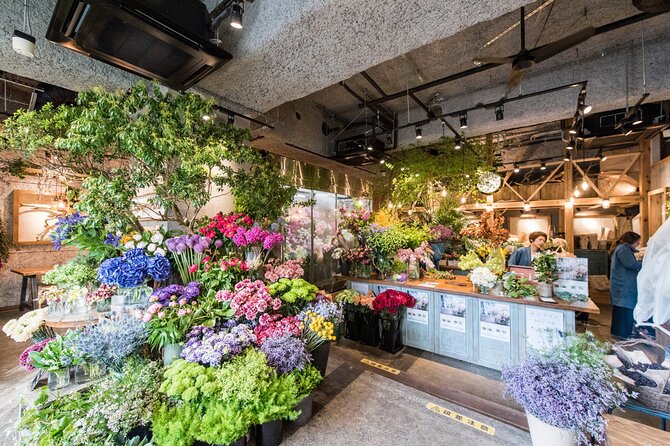
The vibe is intentionally low-pressure. You’re in a florist space surrounded by flowers and foliage, but the goal isn’t to make you perform. It’s to help you slow down and shape something with your own hands. That matters in Tokyo, where even good plans can feel like nonstop motion.
You’ll be in a small group (up to 15), which keeps the experience personal. If you’re the type who gets stuck when you’re trying to copy someone else’s work, this format helps because the instructor can guide you toward decisions that fit your choices and your comfort level.
Also, the practical side is handled for you: you’ll use the included ikebana tools and work with flowers provided for class. If you’re worried you’ll arrive and be told to figure out supplies, you can relax.
More hands-on studios our readers booked
- Tokyo Shinjuku Chopsticks Making Class
★ 5.0 · 1,763 reviews - Chopstick Making Workshop in Ginza
★ 4.8 · 1,366 reviews - Kintsugi Experience: Art of Golden Joinery in Tokyo
★ 5.0 · 467 reviews - Tokyo Chopstick Making Workshop with Artisan
★ 5.0 · 466 reviews
The 90-minute ikebana lesson: history, tools, and design choices
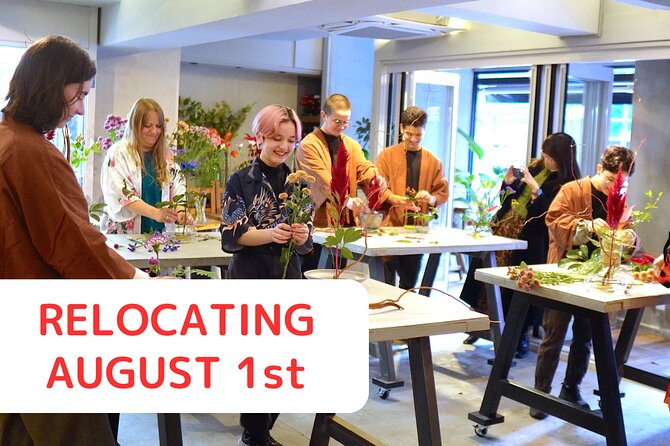
The workshop runs about 1 hour 30 minutes. In that time, you’ll learn the core story of ikebana and then apply it right away. The teaching isn’t just technical. It connects the craft to human history—why flowers became important, and how this art form carried meaning over time.
One of the best parts is that the class isn’t built like a strict test. You’ll hear about ikebana traditions, but the emphasis is on using the same tools for self-expression in a more free, playful way. That’s huge for beginners. It means you’re not locked into rules that feel impossible after jet lag and travel-stress.
You’ll also get guidance that feels practical, not vague. In past sessions, instructors such as Ruby and Aki have been praised for clear English and supportive coaching. The instruction tends to follow a pattern:
- first, what a flower can communicate (symbolism and meaning)
- then, how to handle stems and position them
- finally, how to adjust your arrangement as it takes shape
And yes, it can be harder than it looks—especially the placement decisions. The good news is you’re guided through it. You’re not left alone with a handful of flowers and a blank stare.
How you build your arrangement: tools, kenzan, and that key placement moment
In ikebana, the mechanics matter. That’s why the workshop provides the tools and flowers you’ll use. You’ll learn how to work with the included setup so your arrangement holds its shape as you adjust it.
A big detail from the experience: kenzan and containers are not included in the price. They’re available for purchase if you want to take your arrangement home in a specific way. In other words, your class focuses on making the arrangement, and optional items are there if you want the full “display at home” setup.
The good news is the instructor helps you with the in-class method so you’re not guessing. Some people specifically mention practicing asymmetry while arranging on a kenzan, which is a great reminder that ikebana often values balance that isn’t perfectly centered. If you’ve only seen Western bouquets, this different way of thinking can feel fresh fast.
If you’re curious whether your arrangement will look “right,” here’s the honest answer: it gets better as you make small adjustments. That’s one reason the workshop works well in a short window. You don’t need hours of practice to notice progress. You do need patience during the placement phase—and the instructor will help you get through it.
Also, because containers and kenzan are optional purchases, you can make a decision in the moment. If you love your design and want to display it, plan to spend a little more. If you’re mostly after the experience, you can keep it simple.
Why this feels like a real break: mindful pacing without the fluff
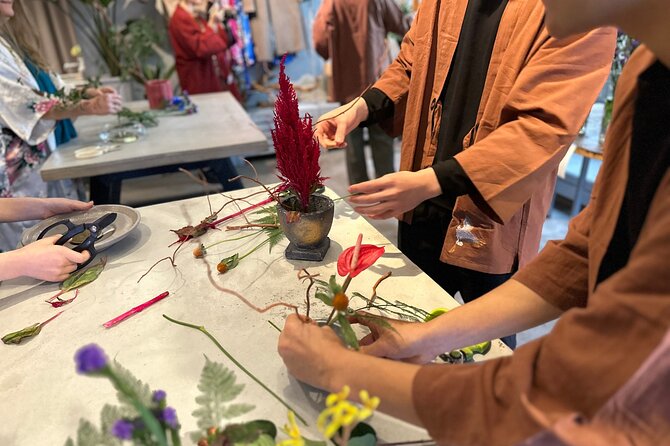
This workshop is pitched as a mindful activity, and the structure backs that up. You don’t just sit and listen. You hold stems, trim, reposition, and make choices. That physical focus naturally slows your thinking down.
The class is also designed to help you connect with the materials. One recurring theme in instructor coaching is encouraging you to connect with each bloom and understand how flowers behave—how they sit, how they change as you angle them, and how they work together in the same arrangement.
That’s where the “mental health” benefit comes from for most people: not from magic thinking, but from doing something hands-on that turns attention away from screens and schedules.
And because it’s not strictly about perfect form, you don’t have to fear messing up. You’re guided to experiment within the framework. That makes it a good choice when you want calm, but you still want to leave with something you made.
Photos as a memory tool: what you’ll get and why it’s worth it
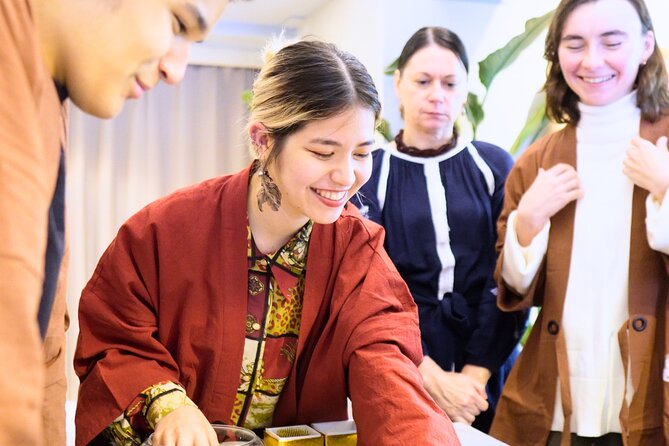
You’ll receive photos shared from the event. This is more useful than it sounds.
In a city full of sights, it’s easy to forget the smaller personal experiences. The photos give you a record of you in the middle of making the arrangement, not just the final flowers on a table. And if you purchase a vase or kenzan to take home (which is allowed), photos help you remember what you designed at class time—especially when your setup changes once you get back to your room.
If you’re worried you’ll walk in, create something, and immediately be too busy to care about your memory, the photo sharing is a nice safety net. You’ll have something to look back on when you’re sorting your Tokyo pictures later.
Readers also shortlisted these Tokyo bookings:
- Sushi Making Tokyo Roll and Authentic Japanese Sushi Class★ 5.0 · 3,971 reviews
- Tokyo: Roll and Authentic Sushi Making Class in Asakusa★ 4.9 · 1,957 reviews
- Tokyo Shinjuku Chopsticks Making Class★ 5.0 · 1,763 reviews
- Tokyo: Sushi Making Class in a Happi Coat near a Famous Spot★ 4.9 · 1,377 reviews
- Chopstick Making Workshop in Ginza★ 4.8 · 1,366 reviews
Price and value: what $100 covers, and what might cost extra
The price is $100 per person, and it’s reasonable for a private-feeling class with materials. Here’s what you’re getting:
- use of ikebana tools
- flowers used in your arrangement
- photos shared from the event
- the workshop itself with instructor guidance
What’s not included:
- containers used in the arrangement (available for purchase)
- kenzan used in the arrangement (available for purchase)
This structure makes sense. If you’re only interested in learning and creating, you’re not forced to buy display items. If you want to bring your arrangement home, you can choose what you need on-site.
So the value equation is pretty clear. You’re paying mostly for instructor time, coaching, and the fact that your materials are provided. You’re not paying like it’s a museum ticket where you stare and move on. You’re actively making something in the hands-on part of the price.
Also, because the group size is capped at 15, the class doesn’t feel like mass production. That kind of attention is the big driver of value in workshops.
Getting the most out of it: practical tips before you go
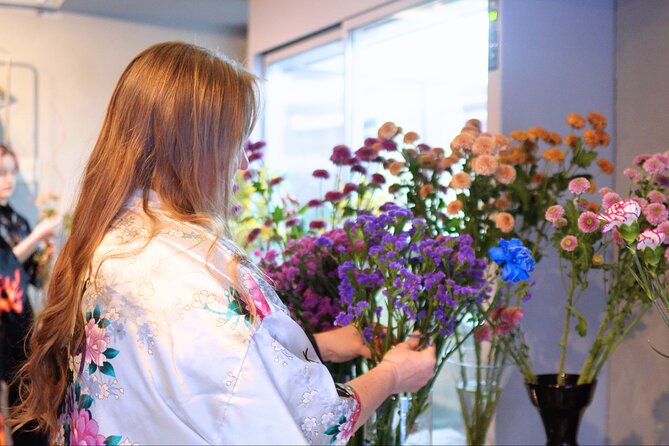
You’ll get the best results if you show up ready to work, even if you feel rusty. A few practical moves help:
- Wear sleeves you don’t mind adjusting around flowers.
- Expect you’ll spend more time on placement than you think. That’s normal.
- If you want to take a display setup home, keep some budget aside for containers and/or a kenzan.
If you plan to keep your arrangement, think ahead about transport. The workshop provides what it provides, but taking something delicate through Tokyo requires a little care. If you do buy display items, plan to handle them gently on the way back.
And for mindset: don’t try to make something that looks like a perfect textbook example. In this class, the point is to express yourself using ikebana’s tools and ideas, then refine what you’ve chosen. That’s a big reason people leave feeling proud instead of pressured.
Who this Tokyo ikebana workshop suits best
This is a smart pick if:
- you’re short on time in Tokyo and want a compact activity (about 90 minutes)
- you’re a beginner who still wants real coaching
- you want a calm break that doesn’t turn into a nap on a bus
- you like the idea of learning flower symbolism and history while doing something creative
It also works for families. The workshop welcomes kids and families, which is great if you’re traveling with younger people who need a hands-on activity. Pets are welcome too, and service animals are allowed. That makes it easier for more travelers to include everyone in the plan.
If you’re an experienced arranger, you might still like it for the relaxed approach and the chance to compare your style with this more playful interpretation. Just know it’s not positioned as a strict rules-only training session.
Should you book this ikebana class in Tokyo?
I’d book it if you want a genuine Tokyo craft experience without a full-day commitment. For $100, you’re getting guided instruction, tools, flowers, and shared photos. The setup is beginner-friendly in a way that still feels intentional, not watered down.
I’d skip or reconsider if you’re only interested in strict, traditional, rule-by-rule ikebana form, because this class leans toward self-expression and free, playful design. Also, if you hate the idea of optional purchases, remember that containers and kenzan are available for purchase if you want to display your work afterward.
Overall, it’s a strong choice for travelers who want something meaningful they can hold in their hands—and then keep as a memory, thanks to the photo sharing.
FAQ
How long is the ikebana workshop in Tokyo?
It lasts about 1 hour 30 minutes.
What’s the group size?
The workshop has a maximum of 15 travelers.
Is this class beginner-friendly?
Yes. Most travelers can participate, and it’s designed for a first introduction, with guidance throughout.
Is it strict and rule-based ikebana?
No. The class isn’t focused on strict, precise rules. It teaches the tools of ikebana in a freer, more playful way.
What’s included in the $100 price?
You get use of the ikebana tools, the flowers used in your arrangement, and photos shared from the event.
What isn’t included, and can I buy it?
Containers used in the arrangement and the kenzan are not included in the price, but they’re available for purchase.
Do kids and families get to join?
Yes. Kids and families are welcome.
Are pets allowed?
Pets are welcome, and service animals are allowed.
What about photos after the workshop?
Photos taken during the event are shared with you.
Where does the workshop start, and where does it end?
It starts at Japan, 102-0083 Tokyo, Chiyoda City, Kōjimachi, 6-chōme46 and ends back at the same meeting point.
More Workshops in Tokyo
- Sushi Making Tokyo Roll and Authentic Japanese Sushi Class
★ 5.0 · 3,971 reviews - Tokyo: Roll and Authentic Sushi Making Class in Asakusa
★ 4.9 · 1,957 reviews - Tokyo Shinjuku Chopsticks Making Class
★ 5.0 · 1,763 reviews - Tokyo: Sushi Making Class in a Happi Coat near a Famous Spot
★ 4.9 · 1,377 reviews - Chopstick Making Workshop in Ginza
★ 4.8 · 1,366 reviews
More Tour Reviews in Tokyo
- Mt Fuji and Hakone 1-Day Bus Tour Return by Bullet Train
★ 5.0 · 26,383 reviews - 1-Day Tokyo Bus Tour
★ 5.0 · 14,250 reviews - Tokyo: teamLab Planets TOKYO Digital Art Museum Entry Ticket
★ 4.6 · 9,779 reviews - Mt Fuji & Hakone Cruise, Drum Show Bullet Train 1 Day from Tokyo
★ 4.0 · 7,413 reviews - Tokyo: Shinjuku Food Tour (13 Dishes at 4 Local Eateries)
★ 5.0 · 6,603 reviews
More Artisan Workshops in Tokyo
- Tokyo Shinjuku Chopsticks Making Class
★ 5.0 · 1,763 reviews - Chopstick Making Workshop in Ginza
★ 4.8 · 1,366 reviews - Kintsugi Experience: Art of Golden Joinery in Tokyo
★ 5.0 · 467 reviews - Tokyo Chopstick Making Workshop with Artisan
★ 5.0 · 466 reviews - Tokyo: Shinjuku Chopstick Making Class
★ 4.9 · 440 reviews
Latest Tokyo reviews off our desk






Craft & Artisan Workshops, compared.
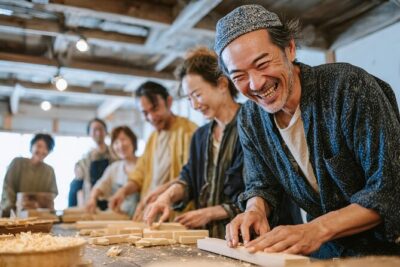 ★ 5.0Tokyo Shinjuku Chopsticks Making ClassFrom $201,763 reviews
 ★ 4.8Chopstick Making Workshop in GinzaFrom $251,366 reviews
 ★ 5.0Kintsugi Experience: Art of Golden Joinery in TokyoFrom $59467 reviews
 ★ 5.0Tokyo Chopstick Making Workshop with ArtisanFrom $26466 reviews
 ★ 5.0Authentic Pure Gold Kintsugi Workshop with Master Taku in TokyoFrom $142217 reviews
 ★ 5.0Calligraphy on Kanji Fan & Scroll with DrinkFrom $53210 reviews
Browse the lists this tour appears in