
Reviewed · COOKING CLASSES
Japanese Home Cooking Class with Local Supermarket Visit
Cooking lessons in Tokyo feel real, fast. This Japanese home cooking class with YUCa mixes practical kitchen skills with smart thinking about seasonal ingredients, nutrition balance, and menu planning, then adds a local supermarket visit after class. It’s hands-on, small-group (max 7), and built around traditional home-style dishes rather than restaurant showmanship.
I especially like how YUCa keeps things patient and question-friendly, even when you’re new to Japanese cooking. I also like the extra value of the post-class supermarket stop, because it turns your lunch into something you can actually re-create later. One possible drawback: with a 2.5-hour format, you’ll learn key techniques and steps, but you won’t have time to master everything from scratch like a long culinary workshop.
In This Review
- Key things worth knowing before you go
- Tokyo Home Cooking at YUCa’s: Small Group, Practical Skills
- Your 2.5-Hour Class Plan: Learn, Cook, Eat, Repeat
- What You’ll Actually Cook: Gyoza, Ramen, Omelettes, Pork Katsu
- Japanese Home Cooking Logic: Nutrition, Seasonality, and Menu Planning
- Seasonal ingredients
- Nutrition balance
- Menu planning
- The Local Supermarket Visit: Shopping Like a Tokyo Local
- Price and Logistics in Tokyo: What $162.88 Buys You
- Who Should Book This Cooking Class (and Who Might Not)
- You’ll likely love it if you:
- You might hesitate if:
- Booking Notes: Timing, Group Size, and Simple Planning
- Should You Book This Japanese Home Cooking Class?
- FAQ
- How long is the Japanese home cooking class?
- What time does the class start?
- Where is the meeting point?
- What does the experience include?
- Do you visit a supermarket as part of the class?
- How many people are in the group?
- Is the meeting point near public transportation?
- Is there a mobile ticket?
- What is the cancellation policy?
Key things worth knowing before you go
- Small group (up to 7): you get enough attention to ask questions without feeling lost
- Home-cooking focus: menu planning, nutrition balance, and seasonal ingredients, not just recipes
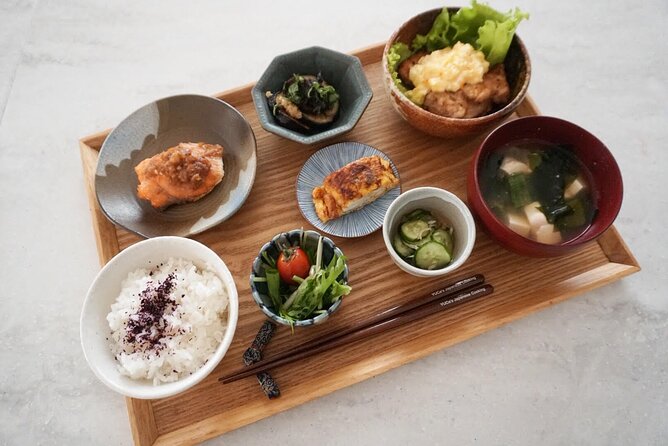
- Hands-on lunch: you make traditional Japanese home meals and eat what you cook
- Supermarket visit included: helpful for finding ingredients and understanding how locals shop
- Mobile ticket: easy to handle on the day
- Family-friendly energy: the class has worked well for families with kids
Tokyo Home Cooking at YUCa’s: Small Group, Practical Skills
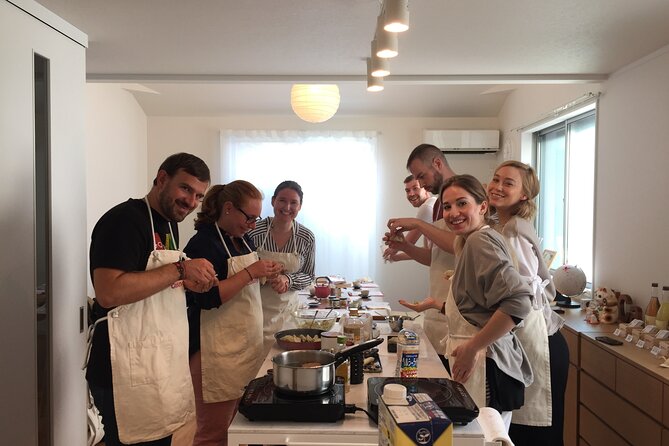
If you’ve ever watched Japanese cooking clips and thought, I want the method, not just the food, this is the right kind of class. You’re in a real home-cooking setting where the goal is to help you understand how Japanese families think about meals, not just what to cook once.
This experience runs with a tight group size, capped at seven travelers, which matters in a kitchen class. In larger groups, you can spend half the time waiting for space or equipment. Here, it’s easier to follow along, get feedback, and fix small technique issues before they become dinner problems.
It also helps that YUCa’s teaching style is built around being calm and direct. From the way the class is described, you can tell it’s designed for people who are curious, not people who already know everything. That’s a big deal if you’re the one in your travel group who wants to cook more than take photos.
Readers also shortlisted these Tokyo bookings:
- Ramen & Gyoza Cooking Class in Tokyo with Local Supermarket Visit
★ 5.0 · 823 reviews - Tokyo: Easy Ramen Cooking Experience in Kabukicho, Shinjuku
★ 4.6 · 321 reviews - Ramen and Sushi Cooking Class with Sake Pairing Set in Tokyo
★ 5.0 · 291 reviews - Tokyo: Wagyu and 7 Japanese Dishes Cooking Class
★ 4.9 · 273 reviews
Your 2.5-Hour Class Plan: Learn, Cook, Eat, Repeat
The session is about 2 hours 30 minutes, starting at 10:00 am. You meet at YUCa’s Japanese Cooking, located at 2-chōme-34-8 Nishiogu, Arakawa City, Tokyo 116-0011, and the activity ends back at the same meeting point.
Here’s the rhythm you can expect, based on how the class is set up:
- You’ll start by learning how Japanese home cooking works at a practical level, including menu planning and how to think about nutrition balance.
- Then you move into making traditional dishes together, using ingredients that can include meat, fish, and vegetables.
- You finish by eating lunch—the meal you’ve made.
What makes this timing work is that you leave with a full meal plus clear next steps. That’s the difference between a class that just feels fun and one that changes your cooking at home.
What You’ll Actually Cook: Gyoza, Ramen, Omelettes, Pork Katsu
A lot of Tokyo cooking classes advertise dishes, but you want the ones that build skills you’ll use again. This class uses traditional Japanese home foods, and the examples shared in the experience include:
- Gyoza
- Japanese ramen
- Japanese omelettes (tamagoyaki-style learning is often the vibe people look for, though the exact dish name can vary by class)
- Pork katsu
- Walnut miso sauce
You should think of the menu as home-style and approachable. These are not complicated showpieces. They’re the kinds of dishes that teach you technique: how to season, how to manage texture, and how to keep flavors in balance.
One more practical note: because the learning includes planning and seasonal thinking, the dishes you make may connect to what’s in season when you attend. That’s not just a foodie flex. It’s how real home cooks build meals without guessing.
Japanese Home Cooking Logic: Nutrition, Seasonality, and Menu Planning
This is where the class gets more interesting than a standard recipe swap.
You’re not only learning how to cook a dish. You’re learning how Japanese home cooking is organized around three ideas:
Seasonal ingredients
You’ll learn why seasonal produce matters and how it changes what ends up on a home table. Even if you shop in a different country, the underlying logic helps: choose ingredients that are at their best, and your seasoning and cooking time will fall into place more naturally.
Readers also shortlisted these Tokyo bookings:
- Sushi Making Tokyo Roll and Authentic Japanese Sushi Class★ 5.0 · 3,971 reviews
- Tokyo: Roll and Authentic Sushi Making Class in Asakusa★ 4.9 · 1,957 reviews
- Tokyo Shinjuku Chopsticks Making Class★ 5.0 · 1,763 reviews
- Tokyo: Sushi Making Class in a Happi Coat near a Famous Spot★ 4.9 · 1,377 reviews
- Chopstick Making Workshop in Ginza★ 4.8 · 1,366 reviews
Nutrition balance
Japanese home meals often treat balance as part of the cooking process, not something you fix later with supplements or guilt. The class gives you a framework for building a plate that feels complete, not just one “main dish moment.”
Menu planning
Menu planning is a skill you can use for years. You’ll get the idea that good meals come from thinking ahead—what flavors work together, what tastes great hot versus cool, and how to build a lunch that feels satisfying.
In practical terms, this means you’re more likely to cook the meal again at home, because you understand the why, not just the steps.
The Local Supermarket Visit: Shopping Like a Tokyo Local
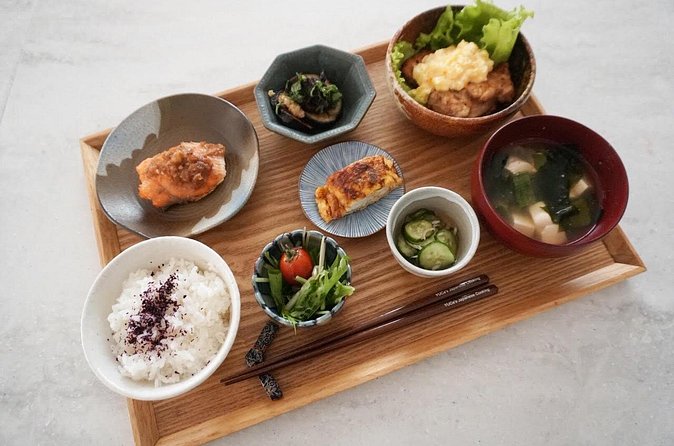
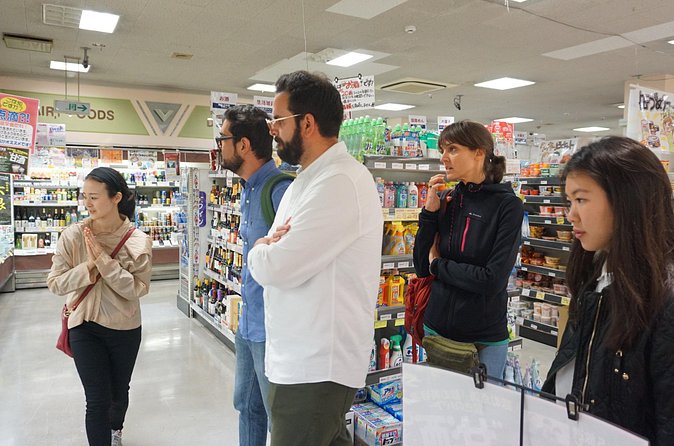
After class, you head to a local supermarket. This part is included, and it’s one of the smartest add-ons you can get in a cooking experience.
Why? Because Tokyo supermarket browsing teaches you things a recipe alone can’t:
- what ingredients look like in real packaging
- how common staples are stocked
- what you can reasonably substitute when you’re cooking at home in another country
People also describe the stop as fun for more than ingredients. It can be a good place to pick up small edible items and the kind of food souvenirs that actually get used.
A key benefit: you can leave class with a plan for your next grocery run. Without this, you often end up staring at a list like walnut miso sauce ingredients and guessing what to buy. With the supermarket visit, you get a clearer path.
Price and Logistics in Tokyo: What $162.88 Buys You
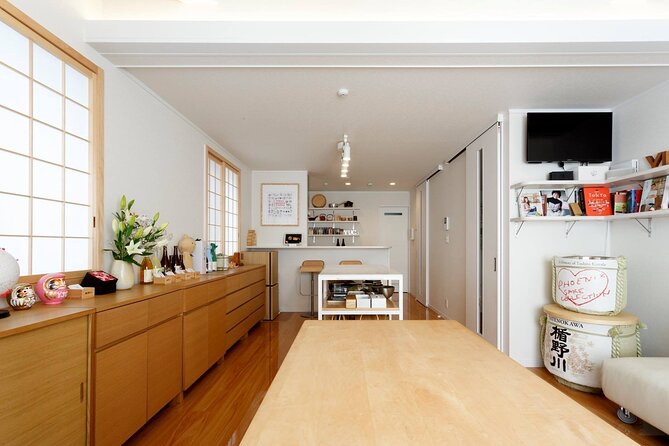
At $162.88 per person for a 2.5-hour experience that includes lunch and a supermarket visit, the price sits in the mid-range for Tokyo food activities.
Here’s how I think about value for this one:
- You’re paying for more than cooking. You’re paying for instruction plus real-life shopping context.
- The group is capped at seven travelers, which usually translates to more interaction and better pacing in a kitchen.
- You leave with instruction to take home, which turns the experience into a repeatable skill instead of a one-time lunch.
The main thing you should weigh is time. If you’re on a tight schedule and only want a quick taste, this might feel like more commitment than you want. If you’re the type who plans meals, loves learning techniques, or wants a hands-on cultural activity that gives you tools, it feels worth it.
Who Should Book This Cooking Class (and Who Might Not)
This class fits best if you want a practical Japanese cooking experience, not just a meal.
You’ll likely love it if you:
- enjoy hands-on cooking activities
- want to learn how home cooks think about seasonal ingredients and balanced menus
- like the idea of shopping at a local supermarket and learning what to buy
- travel with family and want an experience that can work with kids (YUCa is described as kind and patient in family settings)
You might hesitate if:
- you’re looking for a very long, multi-day cooking immersion (this is about 2.5 hours)
- you only want a single specific dish with no broader context (the class includes planning and nutrition ideas, so it’s not purely one-item focused)
Booking Notes: Timing, Group Size, and Simple Planning
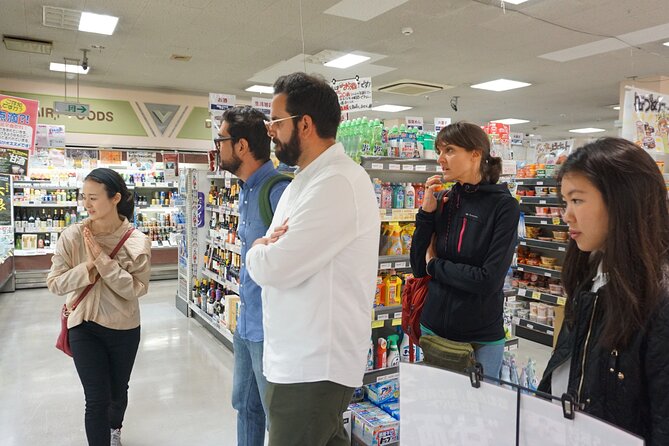
This is an easy one to plan around. The start time is 10:00 am, and you meet at YUCa’s Japanese Cooking in Nishiogu, Arakawa City. It’s noted as being near public transportation, which helps in a city where directions can get messy fast.
The group is small (max 7), and you’ll have a mobile ticket. Confirmation is received at booking time, and the end point is back at the meeting location, which saves you from scrambling for transit right after lunch.
If you’re booking close to your travel dates, just keep in mind the experience has a minimum number of travelers. If it doesn’t meet that threshold, you’ll be offered another date or a full refund.
Should You Book This Japanese Home Cooking Class?
If you want a Tokyo food experience that actually changes how you cook later, I’d book it. The combination of hands-on lunch, clear home-cooking logic (seasonal ingredients, nutrition balance, menu planning), and the included supermarket visit makes it more useful than most one-off tastings.
Choose this class especially if you fall into one of these groups:
- you love learning recipes but want the thinking behind them
- you want to shop smarter at home because you saw how it works locally
- you like small-group classes where it’s easier to ask questions
If you’re purely chasing novelty and don’t care about recreating dishes later, you might feel like the price and structure are more than you need. But for practical cooks, this is the kind of activity that pays off after the trip.
FAQ
How long is the Japanese home cooking class?
It runs for about 2 hours 30 minutes.
What time does the class start?
The start time is 10:00 am.
Where is the meeting point?
You meet at YUCa’s Japanese Cooking, 2-chōme-34-8 Nishiogu, Arakawa City, Tokyo 116-0011, Japan.
What does the experience include?
The class includes lunch: traditional Japanese home meals.
Do you visit a supermarket as part of the class?
Yes. You visit a local supermarket after the class.
How many people are in the group?
The experience has a maximum of 7 travelers.
Is the meeting point near public transportation?
Yes, it’s described as near public transportation.
Is there a mobile ticket?
Yes, the tour includes a mobile ticket.
What is the cancellation policy?
You can cancel for free up to 24 hours in advance for a full refund, based on the experience’s local time. The experience also requires a minimum number of travelers; if it’s canceled for that reason, you’ll be offered a different date/experience or a full refund.
More Workshops in Tokyo
- Sushi Making Tokyo Roll and Authentic Japanese Sushi Class
★ 5.0 · 3,971 reviews - Tokyo: Roll and Authentic Sushi Making Class in Asakusa
★ 4.9 · 1,957 reviews - Tokyo Shinjuku Chopsticks Making Class
★ 5.0 · 1,763 reviews - Tokyo: Sushi Making Class in a Happi Coat near a Famous Spot
★ 4.9 · 1,377 reviews - Chopstick Making Workshop in Ginza
★ 4.8 · 1,366 reviews
More Cooking Classes in Tokyo
- Ramen & Gyoza Cooking Class in Tokyo with Local Supermarket Visit
★ 5.0 · 823 reviews - Tokyo: Easy Ramen Cooking Experience in Kabukicho, Shinjuku
★ 4.6 · 321 reviews - Ramen and Sushi Cooking Class with Sake Pairing Set in Tokyo
★ 5.0 · 291 reviews - Tokyo: Wagyu and 7 Japanese Dishes Cooking Class
★ 4.9 · 273 reviews - Tokyo Washoku 4-hour Cooking Class: From Market to Table
★ 5.0 · 253 reviews
More Tour Reviews in Tokyo
- Mt Fuji and Hakone 1-Day Bus Tour Return by Bullet Train
★ 5.0 · 26,383 reviews - 1-Day Tokyo Bus Tour
★ 5.0 · 14,250 reviews - Tokyo: teamLab Planets TOKYO Digital Art Museum Entry Ticket
★ 4.6 · 9,779 reviews - Mt Fuji & Hakone Cruise, Drum Show Bullet Train 1 Day from Tokyo
★ 4.0 · 7,413 reviews - Tokyo: Shinjuku Food Tour (13 Dishes at 4 Local Eateries)
★ 5.0 · 6,603 reviews
Latest Tokyo reviews off our desk




Cooking Classes, compared.
 ★ 5.0Ramen & Gyoza Cooking Class in Tokyo with Local Supermarket VisitFrom $122823 reviews
 ★ 4.6Easy Ramen Cooking Experience in Kabukicho, ShinjukuFrom $29321 reviews
 ★ 5.0Ramen and Sushi Cooking Class with Sake Pairing Set in TokyoFrom $79291 reviews
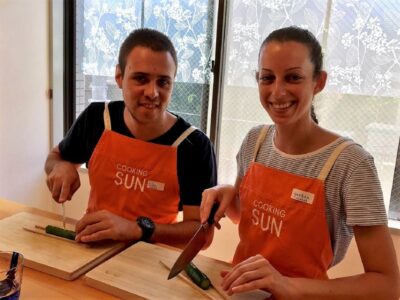 ★ 4.9Wagyu and 7 Japanese Dishes Cooking ClassFrom $67273 reviews
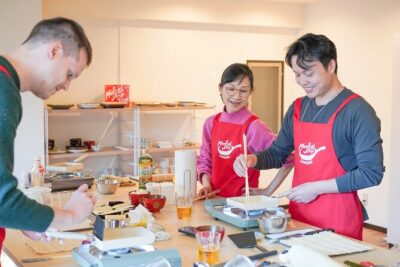 ★ 5.0Tokyo Washoku 4-hour Cooking Class: From Market to TableFrom $79253 reviews
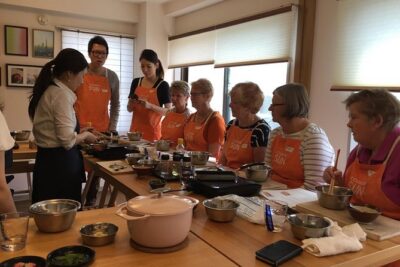 ★ 5.0Small-Group Wagyu Beef and 7 Japanese Dishes Tokyo Cooking ClassFrom $72190 reviews
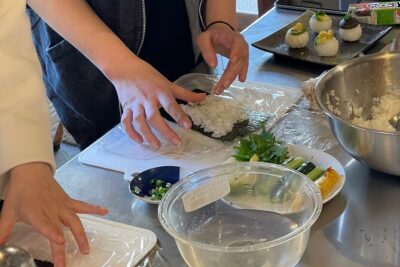 ★ 5.0Private Home Cooking in Yanaka – Local Flavors in a Warm SettingFrom $122173 reviews
 ★ 5.0Tokyo Sushi Making Experience & Japanese Cooking ClassFrom $59150 reviews
Browse the lists this tour appears in