
Reviewed · KAMAKURA DAY TRIPS
Kamakura: Great Buddha, Hase Temple, & Komachi Street Tour
A day in Kamakura feels like time travel. You get the Great Buddha in open air, Hase-dera with its seasonal flowers, and that local rhythm from the Enoden, all wrapped into one smooth Tokyo-to-Kamakura loop.
I especially like the stop at Kōtoku-in because the Great Buddha is the kind of sight that surprises you in person: it’s enormous and it sits outdoors. I also like that the guide connects the dots at each temple and shrine, from the statues you see to the wishes you can make for good fortune at Hase-dera.
The main drawback is simple: you’ll walk and use public transport, and some stations have limited escalators or elevators. If you need step-free routes, tell your guide early.
In This Review
- Key things I’d prioritize
- From Tokyo pickup to Kamakura: getting there without transit stress
- Kōtoku-in Great Buddha: the outdoor wow factor
- Hase-dera: hydrangeas, Kannon, and wishes for prosperity
- Enoden time: the local train that makes the day feel real
- Lunch in Kamakura: typical foods with a seafood-friendly reputation
- Hokokuji Bamboo Forest: a calm breather after temple crowds
- Tsurugaoka Hachimangu and Komachi Dori: shrine atmosphere plus shopping time
- Price and logistics: is $530 per group actually good value?
- Who should book this Kamakura day trip (and who might not love it)
- Should you book this Kamakura tour?
- FAQ
- FAQ
- How long is the Kamakura tour?
- Where do you get picked up in Tokyo?
- What languages are available for the live guide?
- Is this a private group tour?
- What does the $530 price include?
- Is lunch included, and can it be non-seafood?
- Do we ride the Enoden train?
- Is the tour very walk-heavy?
- What is the cancellation policy?
Key things I’d prioritize
- Open-air Great Buddha at Kōtoku-in: a big wow moment without a “go inside and forget it” vibe.
- Hase-dera’s flower focus: hydrangeas come up often, plus other seasonal blossoms.
- Enoden local train time: part sightseeing, part break from buses and crowds.
- Hokokuji Bamboo Forest: a quieter, cooling reset between spiritual stops and shopping.
- Tsurugaoka Hachimangu + Komachi Dori: shrine moments plus time to browse and snack.
- Private group guidance: you won’t feel lost, and you can ask questions as you go.
From Tokyo pickup to Kamakura: getting there without transit stress
This tour is built for people who don’t want to spend their energy figuring out trains. You’re picked up from your Tokyo hotel lobby in the Tokyo 23 wards, then you head out by train toward Kamakura. After a couple of short transit legs, you arrive ready to sightsee, not still decoding directions.
What I like about this setup is the pacing. It keeps the day from turning into a frantic “hop-on hop-off” routine. You’re moving, but in a way that still leaves room to actually look at what you came for.
You’ll also bounce between different transport modes through the day: trains, plus bus/coach segments when you go toward places like the bamboo forest. That’s normal for Kamakura. The practical move on your side: bring comfortable shoes and expect to walk. Your phone will handle photos; your legs handle the rest.
Coast-and-Buddha days near Kamakura, rated
- Tokyo: Kamakura & Enoshima Day Trip including Temple Tickets
★ 4.5 · 1,375 reviews - From Tokyo: Kamakura & Enoshima 1-Day Bus Tour
★ 4.5 · 189 reviews - Kamakura Historical Walking Tour with the Great Buddha
★ 5.0 · 129 reviews - Kamakura Private Tour: Temples, Nature, and the Great Buddha
★ 5.0 · 121 reviews
Kōtoku-in Great Buddha: the outdoor wow factor
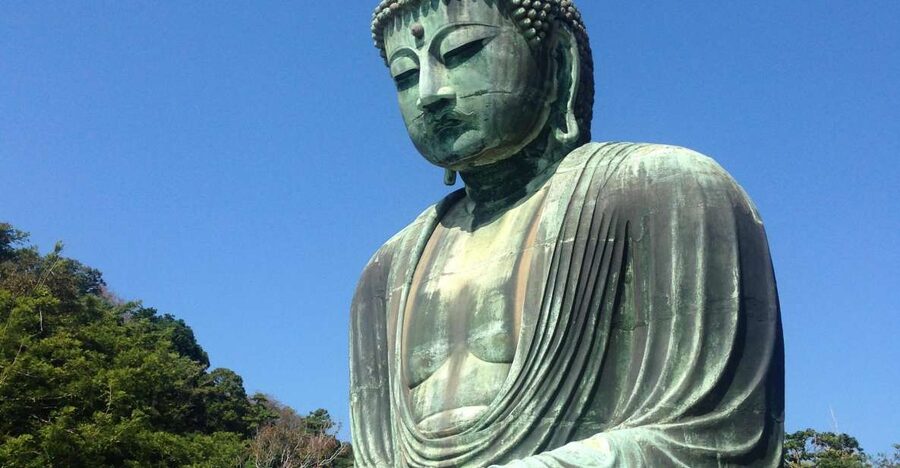
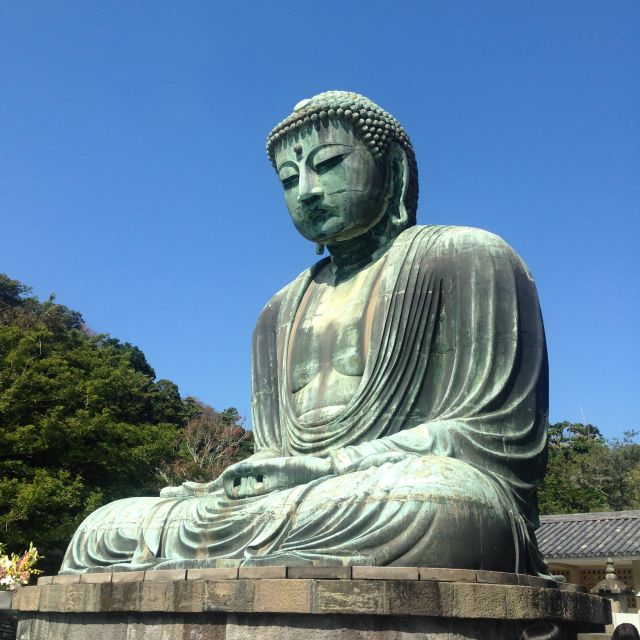
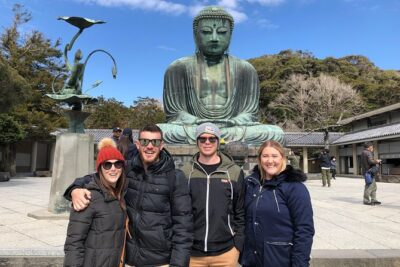
The highlight here is the Great Buddha at Kōtoku-in. What makes it special is the setting: it’s in the open air. You’re not just visiting a museum-style statue. You’re seeing a landmark that’s been shaped by weather, light, and the way people move around it day to day.
It’s also the reason you’ll feel “okay, I get it” once you’re standing there. The Great Buddha is noted as the second largest Buddha in Japan, and that scale lands more strongly outdoors. Indoors, big sculptures can feel curated. Outdoors, it feels lived-in.
A good guide makes this stop better. A local host can point out what to notice—how the space works, what the site represents, and how Kōtoku-in fits into the wider Kamakura spiritual world. You’ll spend enough time to look slowly rather than just doing the quick postcard loop.
Hase-dera: hydrangeas, Kannon, and wishes for prosperity
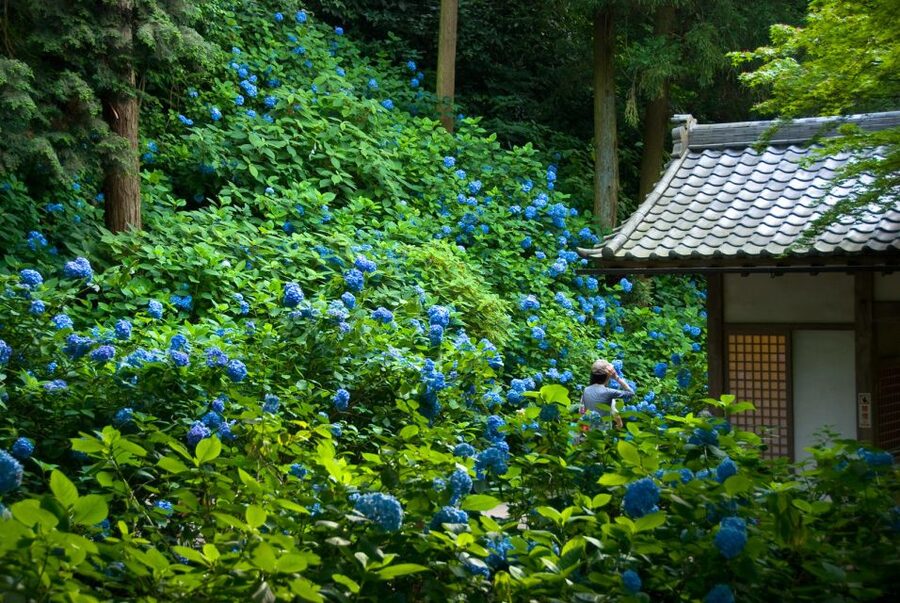
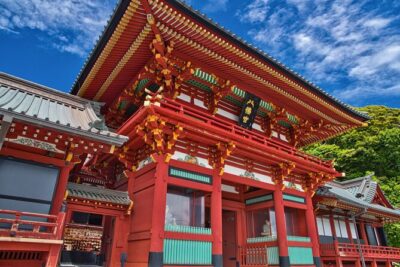
Next up is Hase-dera, a temple known for flowers. Hydrangeas are the big name, especially when they’re in season, but the key idea is that you’re likely to see different blooms depending on timing. If you love gardens and seasonal color, this stop is where Kamakura feels at its most “special day trip.”
Hase-dera isn’t only about flowers. It’s also about what you’ll find in the temple grounds: Buddha statues, Kannon (the compassionate figure), and even gods of wealth where you can make a wish. If you’re the type who likes small, personal rituals—writing a wish, making a proper look, pausing where you feel drawn—this is a good temple to do it.
What I’d suggest to you: don’t rush this part. The terrain and the number of points of interest make it easy to sprint for the next photo. Slow down instead. The combination of flowers plus religious icons creates a kind of contrast that you don’t get in every Japanese temple stop.
Enoden time: the local train that makes the day feel real
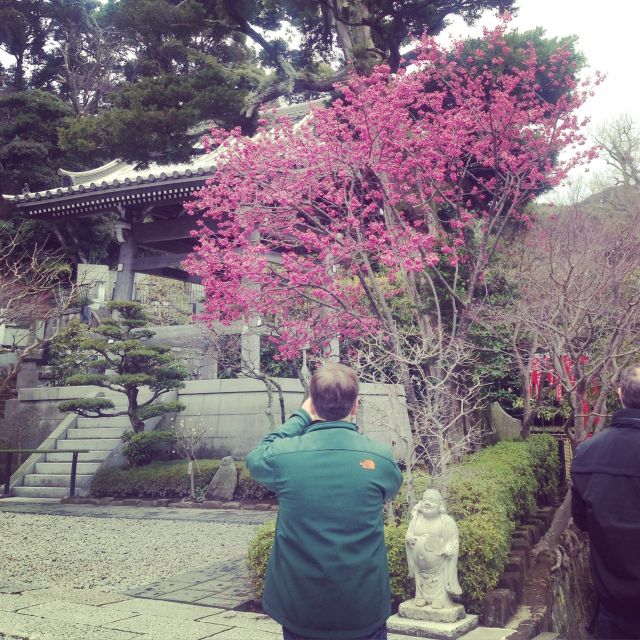
One of the best “background details” of Kamakura is the travel between areas, and the tour includes the Enoden, the local small train. This is where the day stops feeling like a checklist and starts feeling like an actual place.
The Enoden ride works as a reset. After standing near the Great Buddha, after walking temple paths, the train gives you a break while still keeping you on the move. You’re seeing Kamakura as locals experience it, not just as a museum map.
This is also useful for first-timers. If you’ve never ridden a local Japanese line, Enoden is a friendly introduction. You’re not stuck reading complex instructions at each transfer because the guide manages the flow.
Lunch in Kamakura: typical foods with a seafood-friendly reputation
Lunch is handled at a local restaurant, and the tour includes it for the group schedule (not for you individually). Kamakura is famous for seafood, but there’s flexibility: if you don’t like seafood, you can request other options.
This matters for value. If you’re traveling with picky eaters—or you just don’t want fish every day—this tour doesn’t force you into one narrow lane. And having a guide around helps you handle meal ordering smoothly, so you don’t spend lunch time playing guessing games.
In practice, guides also make sure you understand what you’re eating and how to order, which turns lunch into part of the experience instead of a stressful detour. If you like food as a cultural clue, you’ll appreciate this stop.
- Kamakura: Private Guided Walking Tour with Local Guide★ 4.8 · 60 reviews
- Kamakura 4hr Private Trip with Government-Licensed Guide★ 5.0 · 58 reviews
- Kamakura Rickshaw Tour★ 5.0 · 53 reviews
- From Tokyo: Kamakura Full Day Tour with a Local Expert Guide★ 4.6 · 43 reviews
- When Emperors Reigned and Shoguns Ruled★ 5.0 · 43 reviews
Hokokuji Bamboo Forest: a calm breather after temple crowds
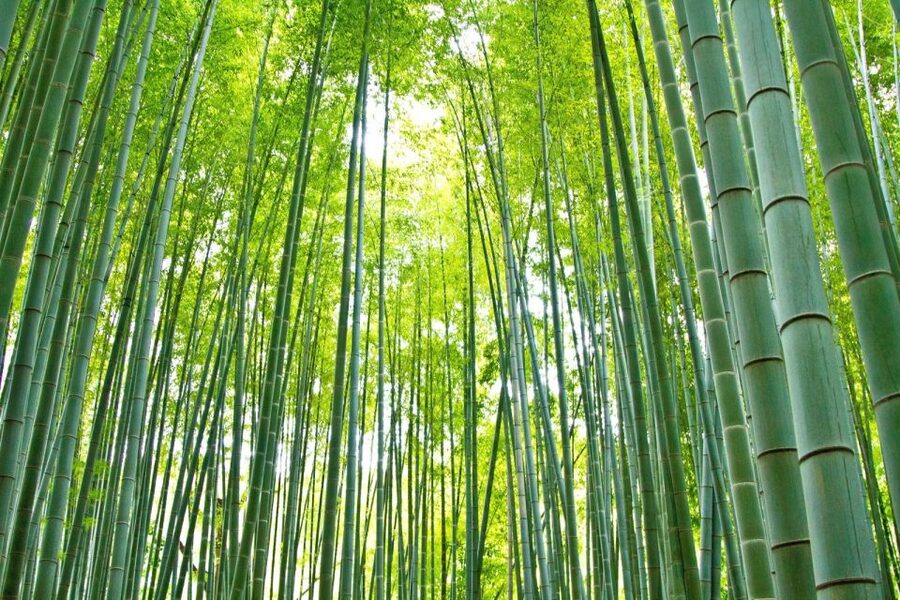
After lunch, the tour continues toward Hokokuji Bamboo Forest, reached via bus/coach. The bamboo forest is the tonal shift point of the day. You go from flower-and-statue energy into a quieter walkway where the atmosphere feels more meditative.
Even if you’ve seen bamboo photos before, being there in person changes the effect. The scale of the trunks and the way light moves through the grove are hard to recreate on a screen. It’s also a nice pause before you hit the shrine and shopping area, since you’ll likely be walking again.
If you want the best experience here, keep your expectations flexible. This is not a loud attraction. It’s for slowing down and enjoying that “soft quiet” feeling you get in wooded spaces.
Tsurugaoka Hachimangu and Komachi Dori: shrine atmosphere plus shopping time
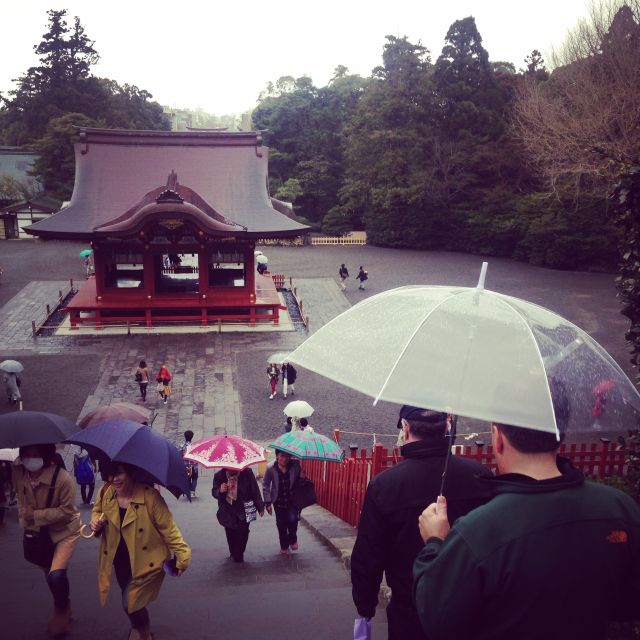
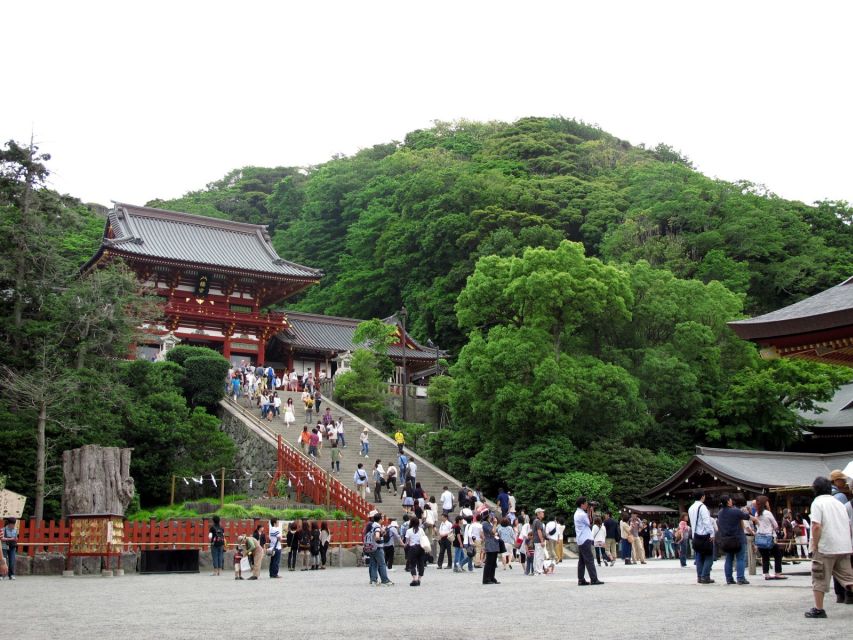
Next comes Tsurugaoka Hachimangu Shrine, one of Kamakura’s most famous spiritual stops. This is where the day’s energy shifts again—from nature and temple gardens into shrine grounds that feel central and social.
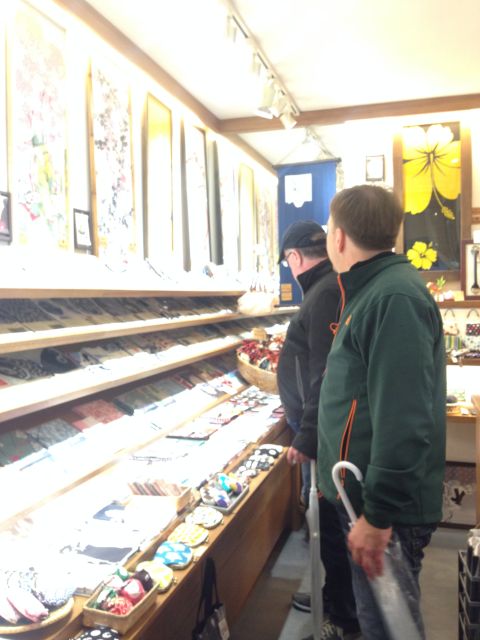
After the shrine visit, the tour moves to Komachi Dori Street, a shopping stretch where you can browse souvenirs and snacks. If you like bringing home practical memories (treats, small gifts, local items), this is where you’ll get that chance without needing to plan separately.
One more reason this ending works: your guide can help you notice what’s meaningful to the area. That’s huge when shopping is involved. Otherwise, you end up with random trinkets. With guidance, you’re more likely to find items connected to Kamakura’s themes and local craft.
And if you’re still in shopping mode after the tour wraps, there’s a chance to stay longer for browsing on your own. That flexibility is helpful if you’re the type who needs an extra 30 minutes to slow down and pick the right gift.
Price and logistics: is $530 per group actually good value?
The price is $530 per group up to 6 people for an 8-hour day. Private-group day trips can be expensive in Japan, so the value question matters.
Here’s the practical math: if you fill the group with 6 people, you’re effectively paying about $88 per person for the guided, organized day from Tokyo to Kamakura and back. Even if you have fewer people in your group, you’re still paying for a professional local guide plus a route that’s set up so you don’t waste time planning transfers.
What’s included:
- A professional local guide
- Pickup at your Tokyo hotel lobby (Tokyo 23 wards)
- A private group experience
What’s not included (this is important):
- Transportation fees for guests
- Entrance fees for guests (and a guide only when needed)
- Lunch for guests and a guide
So yes, the headline price looks straightforward, but you should budget for those extras. The good news is that your biggest costs are predictable: getting in and getting around, plus your personal meal spend.
Also keep in mind: the tour is offered in multiple languages—English, French, German, and Spanish. During busy seasons (March–May and September–November), certain language guides may be limited, so the earlier you lock in your schedule, the smoother it tends to be.
Who should book this Kamakura day trip (and who might not love it)
This tour is a strong fit if you:
- Want a guided Kamakura day without transit anxiety
- Like mixing major sights with local texture (especially the Enoden)
- Appreciate temples and shrines with context, not just photos
- Want time to shop at Komachi Dori without rushing
It might be less ideal if you:
- Have limited mobility or need frequent step-free access. Some stations have limited elevators or escalators, and the day involves walking and public transport.
- Prefer very slow travel. This is an active day across multiple areas.
One more small but real tip: since the tour is time-driven, it still ends at the planned time even if the start runs later due to the participants. If you’re hoping to take your time, make sure your group is aligned before you depart.
Should you book this Kamakura tour?
If you want an organized Kamakura day that includes the headline sights—Kōtoku-in, Hase-dera, Hokokuji Bamboo Forest, Tsurugaoka Hachimangu, and Komachi Dori—this is a smart booking. The private guide element is the glue. It turns each stop into more than a photo stop, and it helps you handle lunch and shopping without wasting time.
I’d especially recommend it if you’re visiting Tokyo and want Kamakura as a clean day trip with minimal planning. You get the big sights, the local train feel, and a route that makes sense.
FAQ
FAQ
How long is the Kamakura tour?
The tour duration is 8 hours.
Where do you get picked up in Tokyo?
Pickup is included from the lobby of your hotel in the Tokyo 23 wards.
What languages are available for the live guide?
The live tour guide is available in English, French, German, and Spanish.
Is this a private group tour?
Yes, it’s a private group.
What does the $530 price include?
The tour includes a professional local guide and pickup at your Tokyo hotel lobby. Transportation fees, entrance fees, and lunch for guests (and a guide when needed) are not included.
Is lunch included, and can it be non-seafood?
Lunch is not included for guests. Kamakura is known for seafood, but other food can be arranged based on your request.
Do we ride the Enoden train?
Yes. The tour includes riding the Enoden local small train.
Is the tour very walk-heavy?
Yes. The tour includes walking and public transportation, and most stations have few elevators or escalators, so you may want to tell your guide if you prefer fewer stairs.
What is the cancellation policy?
You can cancel up to 30 days in advance for a 50% refund.
More Tours in Kamakura
- From Tokyo: Kamakura & Enoshima 1-Day Bus Tour
★ 4.5 · 189 reviews - Kamakura Historical Walking Tour with the Great Buddha
★ 5.0 · 129 reviews - Kamakura Private Tour: Temples, Nature, and the Great Buddha
★ 5.0 · 121 reviews - Kamakura Walking Tour – The City of Shogun
★ 5.0 · 100 reviews - Kamakura: Private Guided Walking Tour with Local Guide
★ 4.8 · 60 reviews
More Tour Reviews in Kamakura
- Tokyo: Kamakura & Enoshima Day Trip including Temple Tickets
★ 4.5 · 1,375 reviews - From Tokyo: Kamakura & Enoshima 1-Day Bus Tour
★ 4.5 · 189 reviews - Kamakura Historical Walking Tour with the Great Buddha
★ 5.0 · 129 reviews - Kamakura Private Tour: Temples, Nature, and the Great Buddha
★ 5.0 · 121 reviews - Kamakura Walking Tour – The City of Shogun
★ 5.0 · 100 reviews
More Kamakura and Enoshima Days
- Tokyo: Kamakura & Enoshima Day Trip including Temple Tickets
★ 4.5 · 1,375 reviews - From Tokyo: Kamakura & Enoshima 1-Day Bus Tour
★ 4.5 · 189 reviews - Kamakura Historical Walking Tour with the Great Buddha
★ 5.0 · 129 reviews - Kamakura Private Tour: Temples, Nature, and the Great Buddha
★ 5.0 · 121 reviews - Kamakura Walking Tour – The City of Shogun
★ 5.0 · 100 reviews
Latest Kamakura reviews off our desk
Kamakura Day Trips, compared.
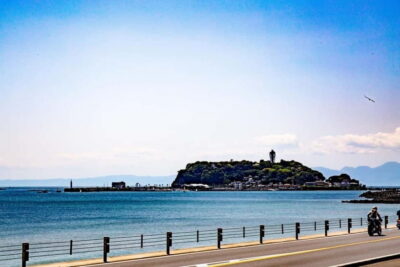 ★ 4.5Kamakura & Enoshima Day Trip including Temple TicketsFrom $581,375 reviews
 ★ 4.5Mt. Fuji, Kamakura, Big Buddha, & Lake Ashi Day TripFrom $49867 reviews
 ★ 4.5From Tokyo: Kamakura & Enoshima 1-Day Bus TourFrom $66189 reviews
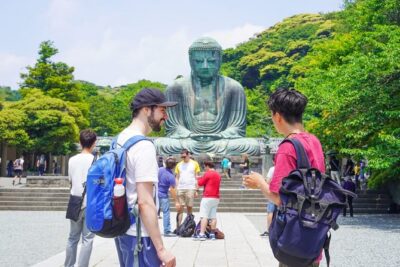 ★ 5.0Kamakura Historical Walking Tour with the Great BuddhaFrom $98129 reviews
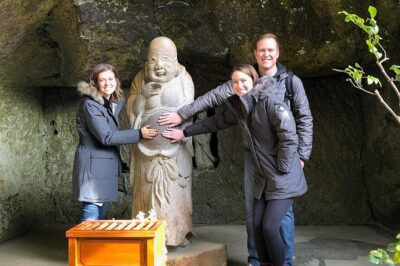 ★ 5.0Kamakura Private Tour: Temples, Nature, and the Great BuddhaFrom $98121 reviews
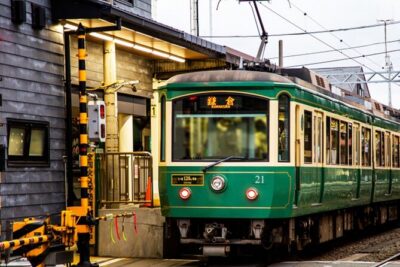 ★ 5.0Kamakura Walking Tour – The City of ShogunFrom $35100 reviews
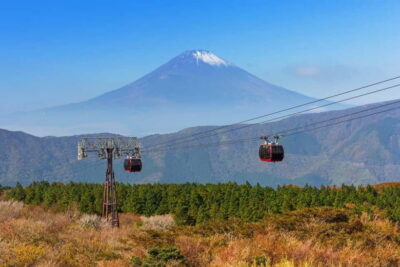 ★ 4.9Sea of Mount Fuji, Hakone Ropeway, Ōwakudani, EnoshimaFrom $5084 reviews
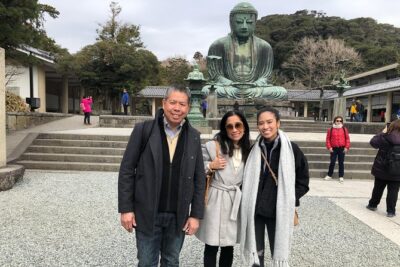 ★ 5.0Kamakura 8 hr Private Walking Tour with Licensed Guide from TokyoFrom $20180 reviews
Browse the lists this tour appears in