
Reviewed · COOKING CLASSES
Small-Group Osaka-Style Okonomiyaki Cooking Class
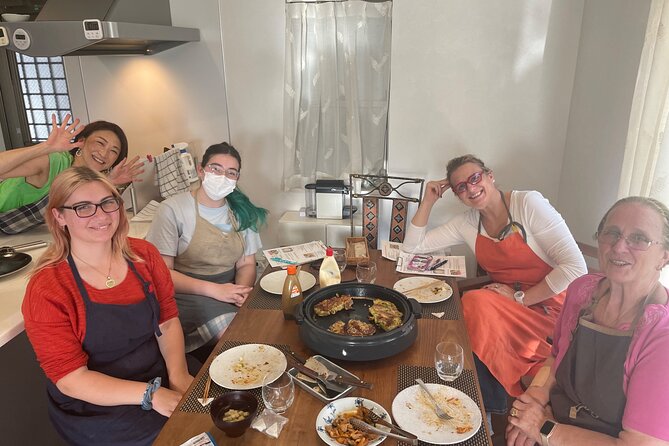
Osaka-style okonomiyaki, cooked in a real home. In small-group comfort (max 5), this class feels like you’re stepping into a neighbor’s kitchen rather than a tourist studio. You’ll make a build-your-own okonomiyaki the Osaka way, with hands-on flipping and toppings.
I especially love the focus on how to get fluffy batter—not just a vague recipe. You also get practical ingredient swaps, so you can recreate the flavors later, even if your country doesn’t carry the same brands or pantry items.
One possible drawback: this is a home-style setup. It’s not a polished cooking showroom, so the vibe is more casual and lived-in than staged for photos.
In This Review
- Key highlights you’ll actually care about
- Why Osaka-Style Okonomiyaki Feels Like Cooking With a Neighbor
- Getting to Asagaya and Eri’s Home Base
- Ingredient Basics: Dashi, Sauce, and the Fluffy Batter Blueprint
- Build Your Own Okonomiyaki: Layering, Flipping, and Toppings
- Side Dishes While You Wait: Pork Stir-Fry and Kimuchi
- Vegetarian and Vegan Adjustments Without Losing the Point
- How to Recreate It Back Home: Substitutions That Actually Help
- Price and Value for a Five-Person Home Kitchen Lesson
- Who Should Book This Osaka-Style Okonomiyaki Class in Tokyo
- Should You Book This Class in Tokyo?
- FAQ
- How long is the Osaka-style okonomiyaki cooking class?
- How many people are in the class?
- Where do I meet the instructor?
- Is instruction offered in English?
- Do you offer vegetarian or vegan options?
- What do we cook besides okonomiyaki?
- Do I get a mobile ticket?
- What is the cancellation policy?
Key highlights you’ll actually care about
- Max 5 people means more time with Eri and less standing around
- Homestay-like kitchen gives you a real view of daily cooking in Japan
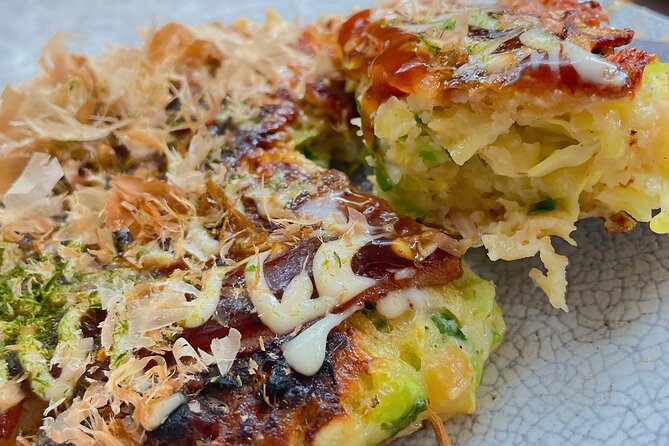
- Fluffy okonomiyaki technique with tips for mixing and flipping
- Ingredient substitutions for dashi, sauce, and other staples you can’t find at home
- Pick-your-fillings approach, with vegetarian and vegan options supported
- Pork stir-fry and kimuchi arrive while your okonomiyaki cooks, so the meal doesn’t feel slow
Why Osaka-Style Okonomiyaki Feels Like Cooking With a Neighbor
Okonomiyaki is one of those foods that sounds simple until you try to cook it. The Osaka-style version leans into thickness, texture, and that satisfying flip. What makes this class work is the way it teaches you what matters, not just what to do.
You’ll start with a clear ingredient foundation. Expect an explanation of Japanese essentials like dashi and the sauces that make okonomiyaki taste like okonomiyaki. Then you move into hands-on cooking where your job is to build a pancake that’s tender inside but holds together when it’s time to flip.
Another big plus: the class is not framed like a tourist show. It’s at a local home. That changes the whole feel. You’ll talk, ask questions, and learn why certain ingredients are used. And yes, you’ll learn how to make a version you can realistically reproduce later, not only something that works in a Japanese kitchen with perfect ingredients.
Readers also shortlisted these Tokyo bookings:
- Ramen & Gyoza Cooking Class in Tokyo with Local Supermarket Visit
★ 5.0 · 823 reviews - Tokyo: Easy Ramen Cooking Experience in Kabukicho, Shinjuku
★ 4.6 · 321 reviews - Ramen and Sushi Cooking Class with Sake Pairing Set in Tokyo
★ 5.0 · 291 reviews - Tokyo: Wagyu and 7 Japanese Dishes Cooking Class
★ 4.9 · 273 reviews
Getting to Asagaya and Eri’s Home Base
The meeting point is clearly set at NewDaysJapan (Asagaya). You meet at JR Asagaya Station’s Asagayakita area, at the 2nd floor exit gate outside the concourse. The activity ends back at the same meeting point, so you’re not left figuring out your way home hungry.
Most people arrive a few minutes early to get settled and find the exact spot. If you’re using transit, you’ll be happy it’s near public transportation. If you need a mobile ticket, you’re covered here too—just keep your phone ready for check-in.
One note for your expectations: the class is limited to five travelers, and that’s part of the point. You won’t get a huge “watch from the back” experience. You’ll get space at the station and time to cook.
Ingredient Basics: Dashi, Sauce, and the Fluffy Batter Blueprint
This class really starts before the pan heats up. You’ll go through Japanese ingredient basics so you understand what you’re tasting and why. Dashi is a good example. It’s not just a background flavor; it affects the whole body of the batter and how your toppings land on the finished pancake.
Then comes the part you’ll thank yourself for later: making the okonomiyaki fluffy. You’ll get tips aimed at texture—how to mix, how to handle the batter consistency, and how to keep the pancake light rather than heavy. This is the difference between okonomiyaki you can eat with joy versus okonomiyaki that turns into a dense mass.
Even better, you’re not just taught what to use. You’ll also learn substitutions. That matters because many travelers can’t shop like locals. If a specific ingredient doesn’t exist where you live, you’ll want a swap that still gives similar flavor and texture. Here, the goal is practical success at home.
And if you’re thinking, I’ll figure it out later. This class is built for the later. The substitution lesson is basically your insurance policy.
Build Your Own Okonomiyaki: Layering, Flipping, and Toppings
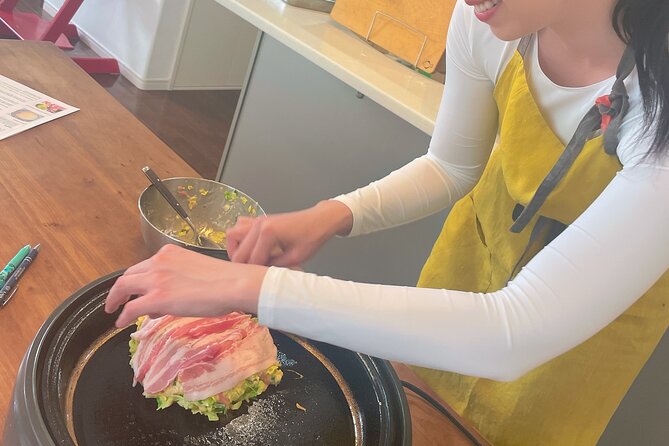
Now for the fun part. Your okonomiyaki is choose-your-own. You get to pick what to fill it with, with Eri supporting you as you go. The cooking flow is simple enough to follow, but hands-on enough that you actually learn the method.
You’ll work with a layered approach. That layering is more than decoration. It helps distribute ingredients so you get a pancake that cooks evenly and tastes balanced in every bite. You’ll also add toppings at the end, which is where you can personalize your version.
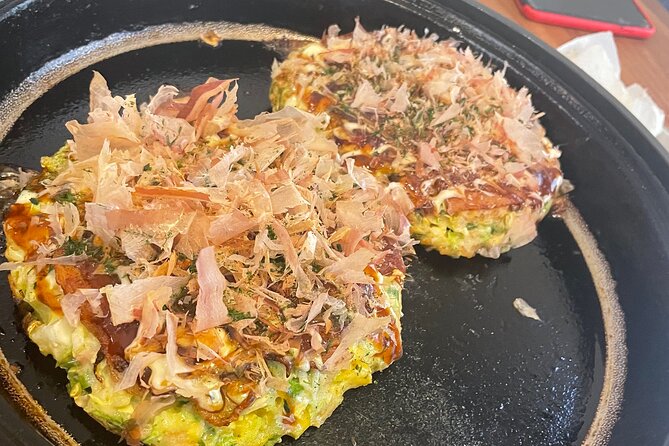
Flipping is a core skill here. You’ll cook it, flip it when the time is right, and adjust as needed. If you’re nervous about not getting it right, you’re exactly the person this class is for. The instruction focuses on tips that make flipping less intimidating, so you’re not relying on luck.
What makes this class especially satisfying is that you leave with confidence. You don’t just eat a great meal. You can make something that looks and tastes like the real thing, because you learned the technique behind it.
Side Dishes While You Wait: Pork Stir-Fry and Kimuchi
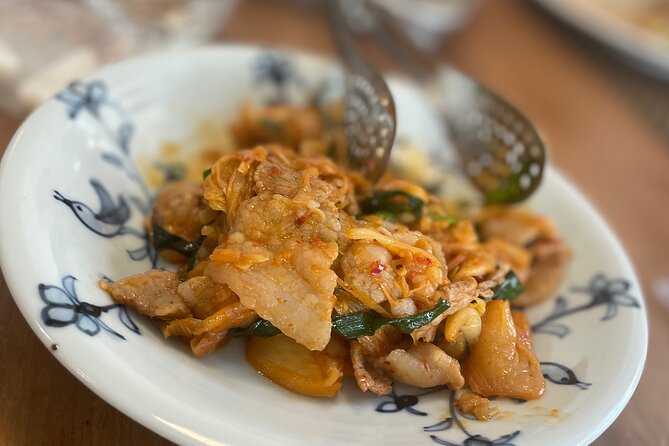
Good cooking classes don’t waste your time. While your okonomiyaki cooks and sets, you’ll make quick sides. Here, those are stir-fried pork and kimuchi.
It’s a smart pairing. Pork adds savory depth, and kimuchi brings tang and kick. The timing is also practical: you’re not stuck waiting with nothing to do. You get a second dish in the mix, so the meal feels like a full experience, not just one pancake.
And if you’re the kind of person who always wants to know what to order at restaurants, this teaches you the logic behind the combination. It’s not random. It’s built to keep flavors exciting while the main dish finishes.
Readers also shortlisted these Tokyo bookings:
- Sushi Making Tokyo Roll and Authentic Japanese Sushi Class★ 5.0 · 3,971 reviews
- Tokyo: Roll and Authentic Sushi Making Class in Asakusa★ 4.9 · 1,957 reviews
- Tokyo Shinjuku Chopsticks Making Class★ 5.0 · 1,763 reviews
- Tokyo: Sushi Making Class in a Happi Coat near a Famous Spot★ 4.9 · 1,377 reviews
- Chopstick Making Workshop in Ginza★ 4.8 · 1,366 reviews
Vegetarian and Vegan Adjustments Without Losing the Point
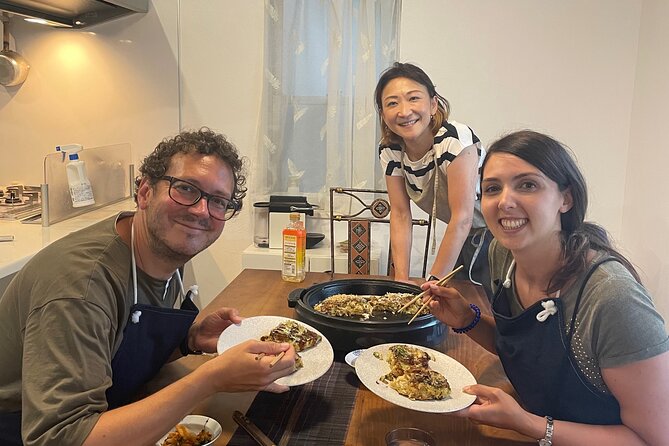
Okonomiyaki can be adapted, and the class explicitly supports vegetarian and vegan options. The key detail is that Eri makes adjustments rather than giving you a “hope it works” alternative.
In practice, that means you’ll talk through what you can eat and how ingredients can be swapped. You’ll learn about substitutes in a way that respects dietary needs, not just flavor goals. If you’re avoiding eggs, meat, or specific ingredients, you’ll still be able to build a version that feels like okonomiyaki, not like a substitute food pretending to be something else.
This is also why the small-group format matters. With max five people, adjustments don’t slow everything down. You get attention, and you’re not forced to cook on autopilot.
How to Recreate It Back Home: Substitutions That Actually Help
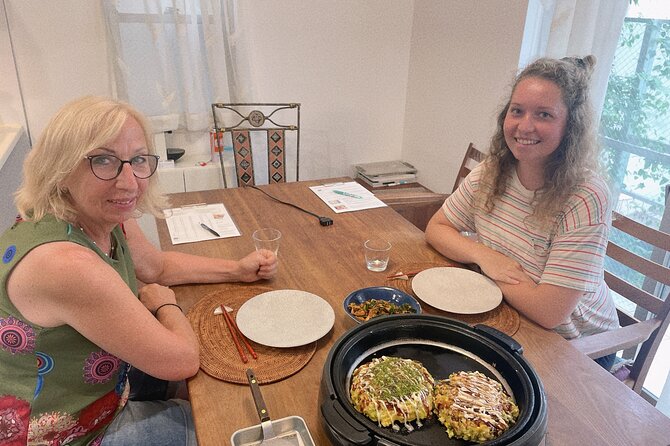
This is the part many cooking classes skip. You get a recipe card, then you get stuck. You can’t find the same brand of sauce, your dashi options are different, and your vegetables might not match what you saw in Japan.
Here, you’re taught how to substitute so you can make it delicious after your trip. The focus is on what you should swap and why it affects flavor. That makes your future cooking more than guesswork.
So when you’re shopping later, you’ll know what to look for. And if you’re cooking for friends back home, you’ll be able to talk through what makes the pancake fluffy and how the sauce direction changes the final taste.
This is also where the homestay vibe pays off. You’re not just following steps. You’re learning the logic behind them.
Price and Value for a Five-Person Home Kitchen Lesson
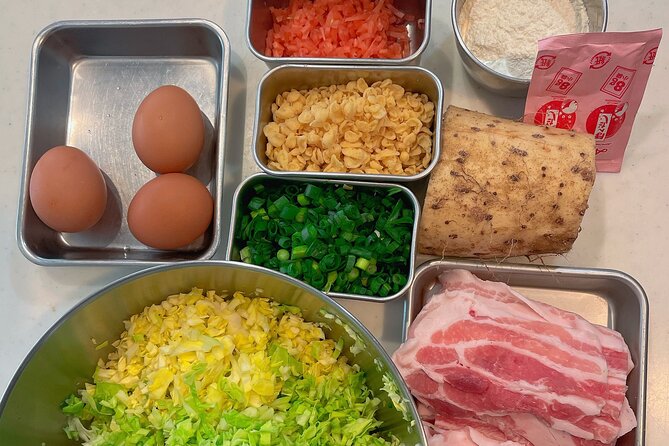
The price is $150 per person for about two hours, and you book it an average of about a week in advance. That’s not a bargain-basement activity. It’s closer to a premium hands-on lesson.
So is it worth it? In my view, the value comes from three things you don’t get in mass classes:
- Small group size (max 5), which makes the teaching personal
- A home-style experience rather than a staged studio, which changes how much you learn
- Instruction that covers fluff technique and substitutions, so the class keeps paying off after you leave Japan
If you’re the type who likes to learn a skill you can repeat, this price makes more sense. If you just want a quick meal with minimal effort, you might feel it’s more expensive than eating okonomiyaki at a restaurant.
But if you want to come away able to cook it yourself—and not only eat it—this is a solid deal.
Who Should Book This Osaka-Style Okonomiyaki Class in Tokyo
I’d point this class to three types of travelers.
First, if you love food and want a hands-on skill, not just a photo moment. This is cooking with flipping, layering, and toppings.
Second, if you care about dietary needs. The class offers vegetarian and vegan options and makes adjustments.
Third, if you enjoy talking with your host. Eri keeps things friendly and welcomes questions. It’s not only cooking; it’s a bit of daily-life conversation too. You’ll likely leave with more than a recipe—you’ll leave with a better sense of how okonomiyaki fits into Japanese home cooking.
One more practical fit: this is good for travelers who don’t want to spend half a day hunting ingredients or preparing complicated steps. In a couple of hours, you can learn enough to recreate the dish later.
Should You Book This Class in Tokyo?
Book it if you want a real home-cooking lesson focused on technique, especially fluff and substitution tips. The small group makes it feel personal, and the side dishes keep the meal satisfying and well-paced.
Skip it only if you prefer a large, high-energy group experience or you want a strictly commercial, studio-like class with no homestay feel. And if you’re only interested in eating okonomiyaki, not learning how to cook it, you might get more value by dining out.
FAQ
How long is the Osaka-style okonomiyaki cooking class?
It runs for about 2 hours (approx.).
How many people are in the class?
The maximum group size is 5 travelers.
Where do I meet the instructor?
Meet at NewDaysJapan in Asagaya: JR Asagaya Station, 2F exit gate outside the concourse (Asagayakita, 3-chōme 3361, Suginami City).
Is instruction offered in English?
Yes. The instructor states she speaks English well enough, and you can ask questions.
Do you offer vegetarian or vegan options?
Yes. Vegetarian and vegan options are available, and adjustments can be made for dietary restrictions.
What do we cook besides okonomiyaki?
While your okonomiyaki cooks, you also make stir-fried pork and kimuchi.
Do I get a mobile ticket?
Yes, a mobile ticket is part of the offering.
What is the cancellation policy?
Free cancellation is available up to 24 hours before the experience start time for a full refund.
More Workshops in Tokyo
- Sushi Making Tokyo Roll and Authentic Japanese Sushi Class
★ 5.0 · 3,971 reviews - Tokyo: Roll and Authentic Sushi Making Class in Asakusa
★ 4.9 · 1,957 reviews - Tokyo Shinjuku Chopsticks Making Class
★ 5.0 · 1,763 reviews - Tokyo: Sushi Making Class in a Happi Coat near a Famous Spot
★ 4.9 · 1,377 reviews - Chopstick Making Workshop in Ginza
★ 4.8 · 1,366 reviews
More Cooking Classes in Tokyo
- Ramen & Gyoza Cooking Class in Tokyo with Local Supermarket Visit
★ 5.0 · 823 reviews - Tokyo: Easy Ramen Cooking Experience in Kabukicho, Shinjuku
★ 4.6 · 321 reviews - Ramen and Sushi Cooking Class with Sake Pairing Set in Tokyo
★ 5.0 · 291 reviews - Tokyo: Wagyu and 7 Japanese Dishes Cooking Class
★ 4.9 · 273 reviews - Tokyo Washoku 4-hour Cooking Class: From Market to Table
★ 5.0 · 253 reviews
More Tour Reviews in Tokyo
- Mt Fuji and Hakone 1-Day Bus Tour Return by Bullet Train
★ 5.0 · 26,383 reviews - 1-Day Tokyo Bus Tour
★ 5.0 · 14,250 reviews - Tokyo: teamLab Planets TOKYO Digital Art Museum Entry Ticket
★ 4.6 · 9,779 reviews - Mt Fuji & Hakone Cruise, Drum Show Bullet Train 1 Day from Tokyo
★ 4.0 · 7,413 reviews - Tokyo: Shinjuku Food Tour (13 Dishes at 4 Local Eateries)
★ 5.0 · 6,603 reviews
Latest Tokyo reviews off our desk




Cooking Classes, compared.
 ★ 5.0Ramen & Gyoza Cooking Class in Tokyo with Local Supermarket VisitFrom $122823 reviews
 ★ 4.6Easy Ramen Cooking Experience in Kabukicho, ShinjukuFrom $29321 reviews
 ★ 5.0Ramen and Sushi Cooking Class with Sake Pairing Set in TokyoFrom $79291 reviews
 ★ 4.9Wagyu and 7 Japanese Dishes Cooking ClassFrom $67273 reviews
 ★ 5.0Tokyo Washoku 4-hour Cooking Class: From Market to TableFrom $79253 reviews
 ★ 5.0Small-Group Wagyu Beef and 7 Japanese Dishes Tokyo Cooking ClassFrom $72190 reviews
 ★ 5.0Private Home Cooking in Yanaka – Local Flavors in a Warm SettingFrom $122173 reviews
 ★ 5.0Tokyo Sushi Making Experience & Japanese Cooking ClassFrom $59150 reviews
Browse the lists this tour appears in