
Reviewed · CRAFT & ARTISAN WORKSHOPS
Tokyo: Calligraphy and Kakejiku (Hanging Scroll) Workshop
Brush-and-ink art becomes a hanging scroll. This workshop is interesting because you practice Japanese calligraphy from scratch and then turn your best result into a kakejiku the same day. You’re not aiming for perfection on the first try, either; the format is built around practice first, display second.
I also love the way the instruction is handled by Ryuta Toda, the kakejiku studio successor who teaches both brush technique and scroll-making details. With a small group (max 6), you get more hands-on attention than you’d expect from a typical studio demo.
One consideration: if you want an Authentic Kakejiku with professional finishing and shipping, that’s not same-day—it takes about two months and comes with extra costs.
In This Review
- Key Points to Know Before You Go
- Calligraphy Meets Kakejiku: What the Workshop Really Gives You
- Where You Meet in Tokyo (Shitaya, Taito City)
- Timing: How the 2 Hours 30 Minutes Feels in Real Life
- Your First Brush Strokes: Learning Calligraphy From Scratch
- Choosing Your Final Piece (So You Don’t Panic)
- Turning Writing Into a Kakejiku: The Scroll-Making Moment
- Course Options: Pick What You Want to Take Home
- What You Take Home the Same Day (and How to Handle It)
- Why the Teacher and the Studio Lineage Matter
- Price and Value: When $0.00 Makes Sense
- Who Should Book This Workshop
- Should You Book It? My Practical Take
- FAQ
- FAQ
- How long is the calligraphy and kakejiku workshop?
- Where does the workshop start and end?
- How many people are in a group?
- Do I need to know calligraphy before I go?
- What do I make during the workshop?
- Can I take my artwork home the same day?
- What course options are available?
- If I upgrade to Authentic Kakejiku, when will I get it?
- Is the location near public transportation?
- What ticket information do I receive?
- What is the cancellation policy?
Key Points to Know Before You Go
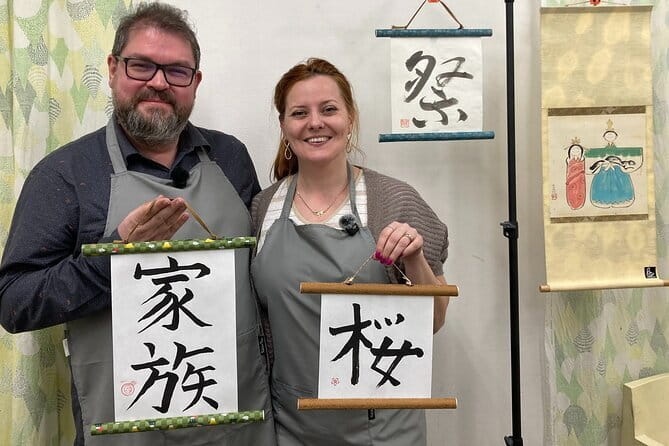
- Small group setting (max 6) means your questions don’t get swallowed up
- About an hour of calligraphy practice before you choose your final piece
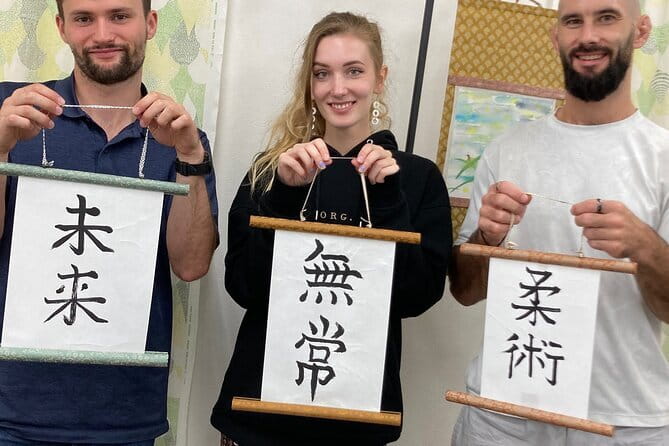
- You create calligraphy and kakejiku in one visit, so you leave with both the writing and the display format
- Course choices change what you take home (backing only, backing plus tapestry, or kakejiku with magnetic attachment)
- Authentic upgrade is a separate timeline (about two months for finishing and shipping)
Calligraphy Meets Kakejiku: What the Workshop Really Gives You
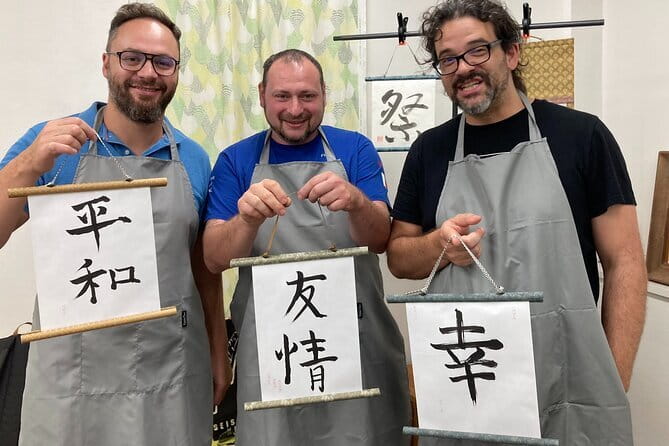
This isn’t just a hands-on calligraphy class where you get handed a finished-looking scroll. The bigger win is the two-part process: you write, then you convert that work into a traditional kakejiku hanging scroll. That change—from loose practice strokes to a display-ready piece—is the part that makes the day feel like more than a souvenir.
You can start from zero. The workshop is designed so beginners feel at ease, because you’re taught calligraphy from scratch and then given time to practice thoroughly. And since you select the best piece from your practice for the final artwork, you can relax about making mistakes early on.
It also helps that the teacher is Ryuta Toda, tied to a kakejiku studio lineage. You’re not only learning what to write; you’re learning how to present it in a format that’s meant to last.
More hands-on studios our readers booked
- Tokyo Shinjuku Chopsticks Making Class
★ 5.0 · 1,763 reviews - Chopstick Making Workshop in Ginza
★ 4.8 · 1,366 reviews - Kintsugi Experience: Art of Golden Joinery in Tokyo
★ 5.0 · 467 reviews - Tokyo: Shinjuku Chopstick Making Class
★ 4.9 · 440 reviews
Where You Meet in Tokyo (Shitaya, Taito City)
You’ll start at reboot – コワーキング / シェアオフィス / シェアアトリエ Japan, located at 〒110-0004 Tokyo, Taito City, Shitaya, 1-chōme−11−15 ソレイユ入谷 2F. The experience ends back at the same meeting point, which is convenient when you’re planning the rest of your day.
The location is described as near public transportation, so you shouldn’t need a complicated route to get there. Still, I’d treat it like any small studio setup: arrive a little early so you can settle in before the brush-and-ink start.
Timing: How the 2 Hours 30 Minutes Feels in Real Life
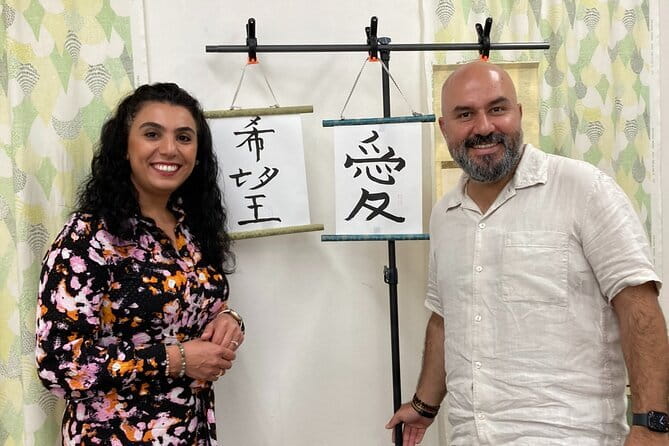
The duration is listed as about 2 hours 30 minutes. In practice, that’s long enough to do meaningful calligraphy work but not so long that you’ll feel rushed at the end.
Plan on the day having a clear block. You’ll spend about an hour practicing calligraphy thoroughly, and that practice time is the backbone of the experience. After that, you move into the scroll-making portion—turning your chosen calligraphy piece into a kakejiku.
If you’re the type who likes momentum, this timing works. You’re not only learning technique—you’re also using that technique right away in the final artwork.
Your First Brush Strokes: Learning Calligraphy From Scratch
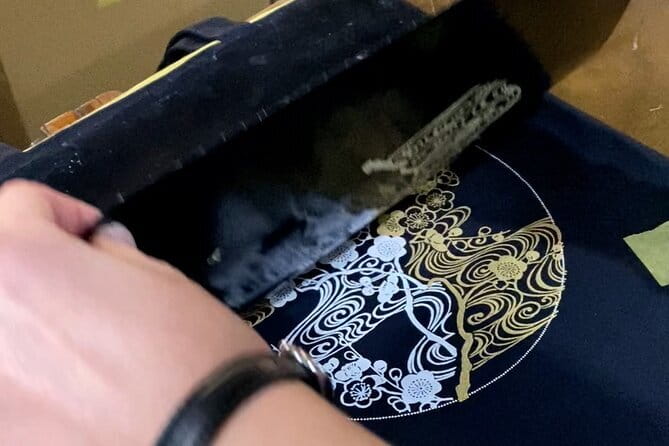
You’ll be guided through calligraphy basics with brush and ink. The key point is that you’re not thrown into a final product immediately. Instead, the workshop’s structure gives you space to practice, compare, and choose your best writing for the finished work.
That matters because calligraphy isn’t like filling in letters. Even small changes in how you start a stroke, how you control pressure, and how you finish can change the whole impression. The workshop approach helps you build those instincts without the pressure of creating the only acceptable piece on the first attempt.
You’ll also be able to write your own calligraphy, and the overall workshop flow includes the concept of turning your work into a traditional hanging scroll. The experience description even mentions calligraphy or painting with brush and ink, so if you’re more visually inclined than letter-focused, you might find the creative angle appealing.
Choosing Your Final Piece (So You Don’t Panic)
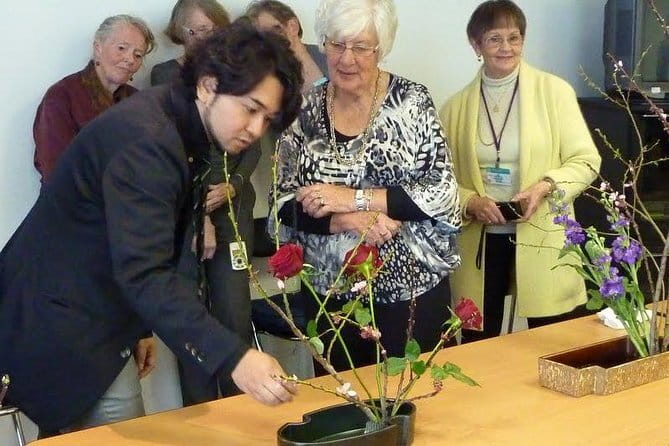
This is one of the best design choices in the whole setup: after practicing, you select the piece that becomes your final kakejiku. That means you’re not locked into one outcome.
I like this because it’s honest about how learning works. Calligraphy is hard at first. Giving you time to practice and then choose makes the day feel supportive, not exam-like.
And since the teacher is skilled in scroll-making—described as a successor of a kakejiku studio with over 100 years of history—you’re getting both sides of the craft: writing and presentation.
Readers also shortlisted these Tokyo bookings:
- Sushi Making Tokyo Roll and Authentic Japanese Sushi Class★ 5.0 · 3,971 reviews
- Tokyo: Roll and Authentic Sushi Making Class in Asakusa★ 4.9 · 1,957 reviews
- Tokyo Shinjuku Chopsticks Making Class★ 5.0 · 1,763 reviews
- Tokyo: Sushi Making Class in a Happi Coat near a Famous Spot★ 4.9 · 1,377 reviews
- Chopstick Making Workshop in Ginza★ 4.8 · 1,366 reviews
Turning Writing Into a Kakejiku: The Scroll-Making Moment
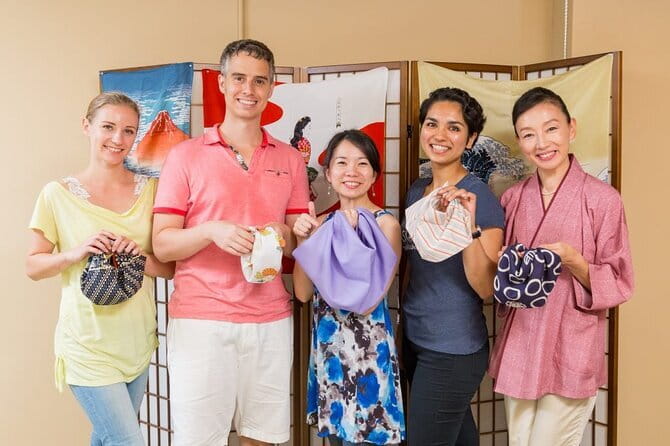
Once you’ve chosen your favorite calligraphy piece, the workshop guides you through making a traditional kakejiku (hanging scroll). You’re essentially taking your artwork and mounting it in a format built for Japanese display.
The experience is framed around traditional techniques refined over a very long time—described as over 1000 years of techniques for beauty and preservation. That’s a big claim, but the practical takeaway is clear: the scroll format isn’t just decorative. It’s meant to protect and present brushwork in a way that respects the medium.
Another practical benefit: you’re doing both steps in one day. Many craft experiences cover only the writing part, or only the mounting part. Here, you get the full arc, from ink to a home-ready display.
Course Options: Pick What You Want to Take Home
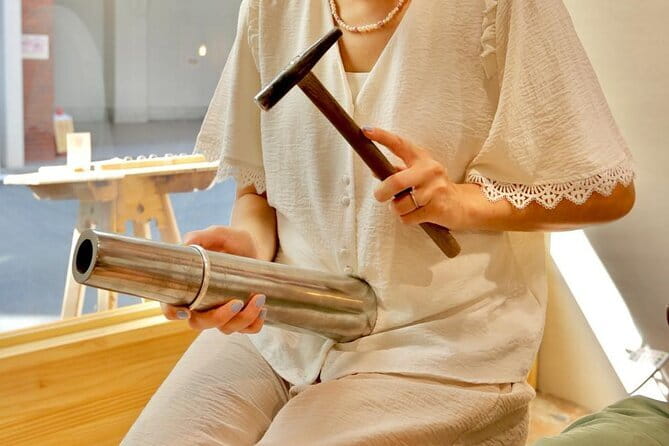
You choose from four course options, and what you pick affects your final take-home item.
1) Calligraphy and Backing Only
This is the simplest option. You’ll create calligraphy and end with backing, but you won’t necessarily receive a hanging scroll or tapestry elements in the way the other courses do.
2) Calligraphy, Backing, and Simple Traditional Tapestry
This adds a traditional display component. If you want a more “complete-looking” presentation without committing to the full kakejiku package, this might fit.
3) Calligraphy, Backing, and Kakejiku (Hanging Scroll with Magnetic Attachment)
This is the option that most directly gives you a traditional hanging-scroll experience. The magnetic attachment detail matters because it suggests an easier way to display the scroll without needing specialized setup.
4) Upgrade to Authentic Kakejiku (Hanging Scroll)
If you want the fully authentic version with professional finishing and shipping, this upgrade takes about two months. Extra costs for finishing and shipping are provided on the day of the workshop.
How to choose? If you want something for your wall soon, pick the same-day kakejiku option (or the tapestry option if that’s your preference). If you’re a collector-minded person who wants the most polished version and can wait, the Authentic upgrade is your route.
What You Take Home the Same Day (and How to Handle It)
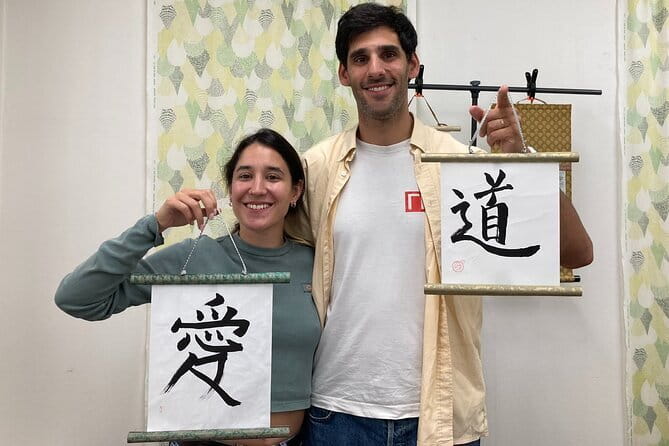
The workshop says you’ll take home the item you made on the same day. For the kakejiku and tapestry options, that means you’re leaving with a display-ready piece rather than just a practice sheet.
That changes how you pack your day. In Tokyo, it’s easy to carry a small shopping bag; it’s harder to carry a scroll-style artwork. Before you go, think about how you’ll transport it. A rollable art item usually needs careful handling so the surface stays protected.
If you choose the magnetic attachment kakejiku option, you’ll also likely be able to think about hanging it at home right away. Even if you don’t plan to hang it immediately, it’s a major convenience to have it finished and ready to display rather than shipped later.
And the workshop frames the kakejiku as something that can last for over 100 years, which is part of the emotional appeal. You’re not just taking home paper; you’re taking home a traditional format designed for long-term preservation.
Why the Teacher and the Studio Lineage Matter
The workshop explicitly notes that the studio was founded in 1936 and has offered traditional crafts for over 80 years. It also mentions the instructor as a successor of a kakejiku studio with more than 100 years of history.
You don’t need to be an expert to feel the difference. When the teacher understands scroll-making—not just calligraphy—the final result is more likely to look right and feel right. That’s important because the kakejiku isn’t only about writing beauty; it’s also about presentation, mounting, and preservation choices.
This also helps with pacing. When you’re learning something new, the most frustrating moments are the unclear ones. A practiced teacher can keep the process moving while still giving you what you need to produce a final piece you’ll be proud of.
Price and Value: When $0.00 Makes Sense
The price shown here is $0.00. If that’s accurate for your booking, it’s remarkable value for a 2.5-hour, small-group, hands-on craft that results in a take-home artwork.
Even without relying on the displayed price, consider the value structure. You’re paying for time, instruction, materials, and the creation of both the calligraphy and the kakejiku format. Many craft workshops either produce a finished result you can take home quickly, or they focus heavily on making the art but don’t include the traditional display conversion.
Here, the same session covers both halves. If you’re in Tokyo for a limited number of activities, this kind of “two-for-one” makes scheduling sense.
One caution on value: if you upgrade to Authentic Kakejiku, you’re signing up for additional costs and a two-month wait for professional finishing and shipping. That can be worth it, but it’s a different commitment than same-day take-home.
Who Should Book This Workshop
I think this is a strong fit if you:
- Want a hands-on Japanese culture experience without needing prior art skills
- Like the idea of learning traditional craft processes with real structure (practice, choice, then final assembly)
- Want something you can actually display at home, not just photos
- Prefer smaller groups (max 6) and a teacher who can guide you step by step
It’s also appealing if you enjoy the slower, careful side of travel. Brush work asks for patience, and the workshop format supports that rather than rushing you through.
If you’re extremely time-crunched or only want a quick photo stop, this may feel like more effort than you want. But if you’re choosing one meaningful creative activity, it has the right shape for a satisfying day.
Should You Book It? My Practical Take
If your goal is to leave Tokyo with a piece of Japanese craft that looks like it belongs in a home, I’d say yes. The combination of calligraphy practice plus kakejiku making in one visit is the central reason this works.
I’d book it especially if:
- You’re a beginner and you want a process that expects mistakes early and fixes them through practice
- You care about a result that’s designed for display, not just a one-time class artifact
- You’re choosing between a generic calligraphy session and something more traditional in the presentation
The main decision point is course selection. Make sure you pick the option that matches what you want to take home same day—backing, tapestry, or a hanging scroll with magnetic attachment. If you think you might want the Authentic Kakejiku later, consider the upgrade path early in your planning so you don’t feel surprised by the two-month timeline.
FAQ
FAQ
How long is the calligraphy and kakejiku workshop?
The workshop lasts about 2 hours 30 minutes.
Where does the workshop start and end?
It starts at reboot – コワーキング / シェアオフィス / シェアアトリエ Japan in Taito City, Shitaya (Soleil Inay 2F) and ends back at the same meeting point.
How many people are in a group?
The experience has a maximum of 6 travelers.
Do I need to know calligraphy before I go?
No. The workshop teaches calligraphy from scratch, so beginners can feel at ease.
What do I make during the workshop?
You practice calligraphy and then create a traditional kakejiku hanging scroll from your chosen piece.
Can I take my artwork home the same day?
Yes. You can take home the item you made on the same day.
What course options are available?
You can choose from four options: Calligraphy and Backing Only; Calligraphy, Backing, and Simple Traditional Tapestry; Calligraphy, Backing, and Kakejiku with Magnetic Attachment; and an optional upgrade to Authentic Kakejiku.
If I upgrade to Authentic Kakejiku, when will I get it?
Authentic Kakejiku finishing and shipping takes about two months after the workshop.
Is the location near public transportation?
Yes, the meeting point is near public transportation.
What ticket information do I receive?
You receive confirmation at the time of booking, and the workshop uses a mobile ticket.
What is the cancellation policy?
Free cancellation is available up to 24 hours in advance for a full refund. If you cancel less than 24 hours before the start time, the amount you paid is not refunded.
More Workshops in Tokyo
- Sushi Making Tokyo Roll and Authentic Japanese Sushi Class
★ 5.0 · 3,971 reviews - Tokyo: Roll and Authentic Sushi Making Class in Asakusa
★ 4.9 · 1,957 reviews - Tokyo Shinjuku Chopsticks Making Class
★ 5.0 · 1,763 reviews - Tokyo: Sushi Making Class in a Happi Coat near a Famous Spot
★ 4.9 · 1,377 reviews - Chopstick Making Workshop in Ginza
★ 4.8 · 1,366 reviews
More Tour Reviews in Tokyo
- Mt Fuji and Hakone 1-Day Bus Tour Return by Bullet Train
★ 5.0 · 26,383 reviews - 1-Day Tokyo Bus Tour
★ 5.0 · 14,250 reviews - Tokyo: teamLab Planets TOKYO Digital Art Museum Entry Ticket
★ 4.6 · 9,779 reviews - Mt Fuji & Hakone Cruise, Drum Show Bullet Train 1 Day from Tokyo
★ 4.0 · 7,413 reviews - Tokyo: Shinjuku Food Tour (13 Dishes at 4 Local Eateries)
★ 5.0 · 6,603 reviews
More Artisan Workshops in Tokyo
- Tokyo Shinjuku Chopsticks Making Class
★ 5.0 · 1,763 reviews - Chopstick Making Workshop in Ginza
★ 4.8 · 1,366 reviews - Kintsugi Experience: Art of Golden Joinery in Tokyo
★ 5.0 · 467 reviews - Tokyo Chopstick Making Workshop with Artisan
★ 5.0 · 466 reviews - Tokyo: Shinjuku Chopstick Making Class
★ 4.9 · 440 reviews
Latest Tokyo reviews off our desk






Craft & Artisan Workshops, compared.
 ★ 5.0Tokyo Shinjuku Chopsticks Making ClassFrom $201,763 reviews
 ★ 4.8Chopstick Making Workshop in GinzaFrom $251,366 reviews
 ★ 5.0Kintsugi Experience: Art of Golden Joinery in TokyoFrom $59467 reviews
 ★ 5.0Tokyo Chopstick Making Workshop with ArtisanFrom $26466 reviews
 ★ 5.0Authentic Pure Gold Kintsugi Workshop with Master Taku in TokyoFrom $142217 reviews
 ★ 5.0Calligraphy on Kanji Fan & Scroll with DrinkFrom $53210 reviews
Browse the lists this tour appears in