
Reviewed · CRAFT & ARTISAN WORKSHOPS
Tokyo: Japanese Calligraphy Lesson with Skilled Instructor
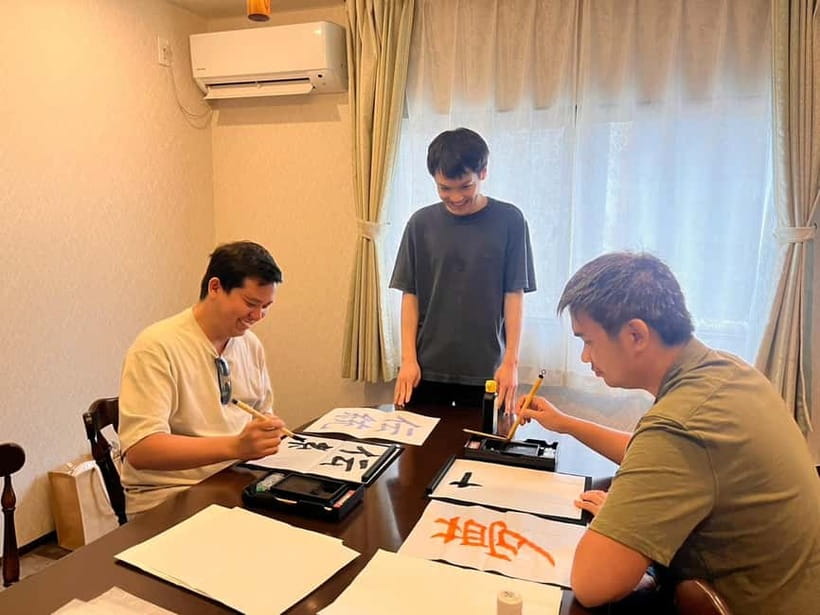
A brush, a word, instant meaning. In one focused hour in Asakusa, you choose a Japanese phrase, get it explained in easy English, and walk out with calligraphy you actually made.
I especially like the small-group feel (max 4) and the hands-on teaching style from Shusuke, a certified instructor with 10+ years in calligraphy instruction.
One possible drawback: this is a short lesson, so you’ll get one main piece perfected, not months of gradual improvement.
In This Review
- Key things to know before you try Japanese calligraphy in Asakusa
- Asakusa calligraphy lesson: what the hour actually feels like
- Meeting Shusuke in the rental room (and why the room matters)
- Picking your word or phrase: the part that makes it personal
- Practice on 20 sheets: how stroke learning works without overwhelm
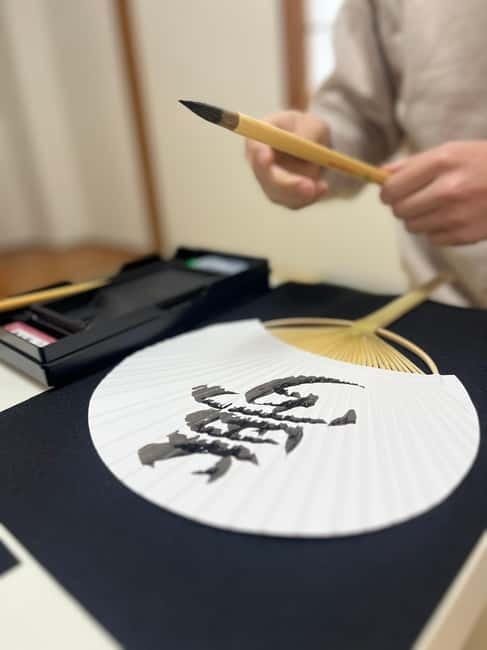
- Your souvenir choice: uchiwa, shikishi, or kakemono
- The photo moment: a tiny add-on with real value
- English meanings plus Japanese instruction: how to use the language gap
- Price and value: is $45 in Asakusa a good deal?
- Who should book this calligraphy lesson (and who might skip it)
- Quick tips to get better results during your hour
- Should you book this Japanese calligraphy lesson in Asakusa?
- FAQ
- Where is the meeting point for the calligraphy lesson?
- How long is the Japanese calligraphy lesson?
- Is the lesson taught in English?
- What do I get to practice with during the class?
- What souvenir can I make?
- Can I reserve without paying right away, and can I cancel?
Key things to know before you try Japanese calligraphy in Asakusa
- Choose your own word or phrase, with meaning explained in English so you’re not just copying symbols
- Practice on 20 sheets of hanshi, with guidance focused on your strokes
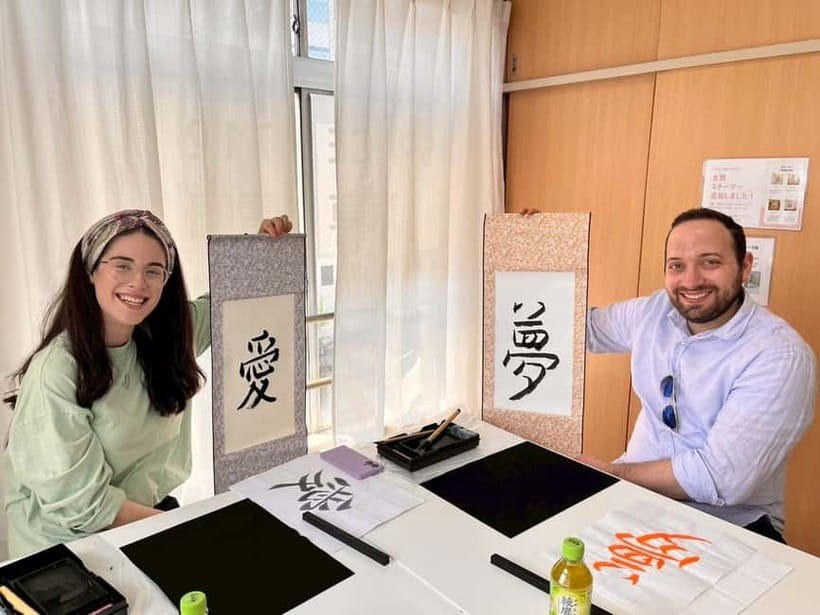
- Make a real souvenir: uchiwa (fan), shikishi (decorative board), or kakemono (hanging scroll)
- Small group max 4 keeps feedback personal and the room calm
- Shusuke takes photos so you can remember the exact look of your finished piece
- A rental room setup means tatami seating or table-and-chairs, depending on what’s available
Asakusa calligraphy lesson: what the hour actually feels like
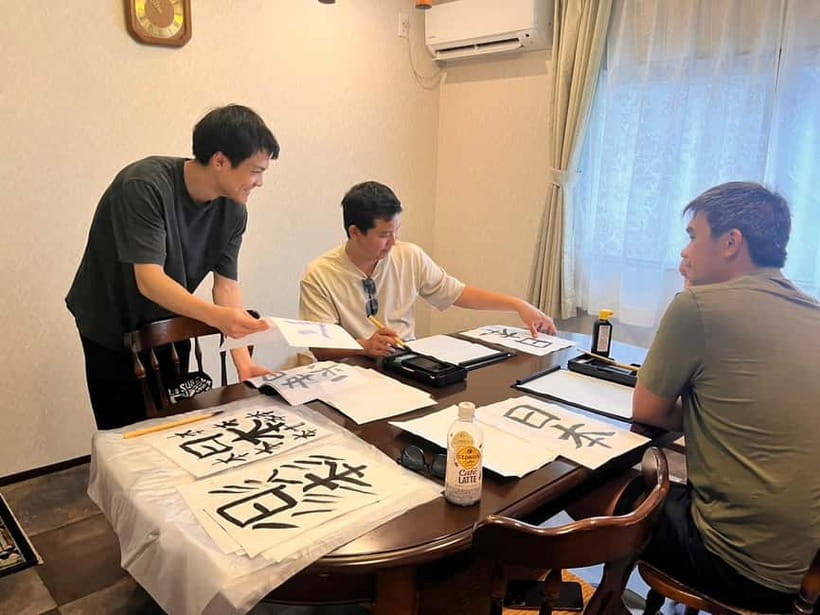
This isn’t a rushed workshop where you dip a brush and move on. The whole setup is designed for slow accuracy and calm attention. You start in a rental room in Asakusa, and whether it’s a Japanese tatami room or a more Western layout with table and chairs depends on availability.
The time is tight in a good way: 1 hour total. That means the instructor keeps you moving through a clear sequence—pick your phrase, practice the strokes, then transfer it to the souvenir. If you like hands-on cultural activities that don’t eat your whole day, this one fits nicely.
More hands-on studios our readers booked
- Tokyo Shinjuku Chopsticks Making Class
★ 5.0 · 1,763 reviews - Chopstick Making Workshop in Ginza
★ 4.8 · 1,366 reviews - Kintsugi Experience: Art of Golden Joinery in Tokyo
★ 5.0 · 467 reviews - Tokyo: Shinjuku Chopstick Making Class
★ 4.9 · 440 reviews
Meeting Shusuke in the rental room (and why the room matters)
Calligraphy can be either relaxing or stressful, depending on the space. Here, you get a small room experience, not a classroom with lots of strangers. The group is limited to 4 participants, so you’re less likely to feel lost or stuck while you wait for the next instruction.
Shusuke is the instructor (and the name matters here because you’re not just getting generic instruction). He’s certified in Japanese calligraphy (3rd Dan) with the Japan Educational Calligraphy Federation, and he has 10+ years teaching. That combination shows in the way he corrects your grip, stroke direction, and pacing without turning it into a lecture.
You also get communication support because the lesson is in English and Japanese. In case you’re Korean-speaking, he has beginner Korean too, which is useful if you’re trying to bridge languages while learning techniques.
Picking your word or phrase: the part that makes it personal
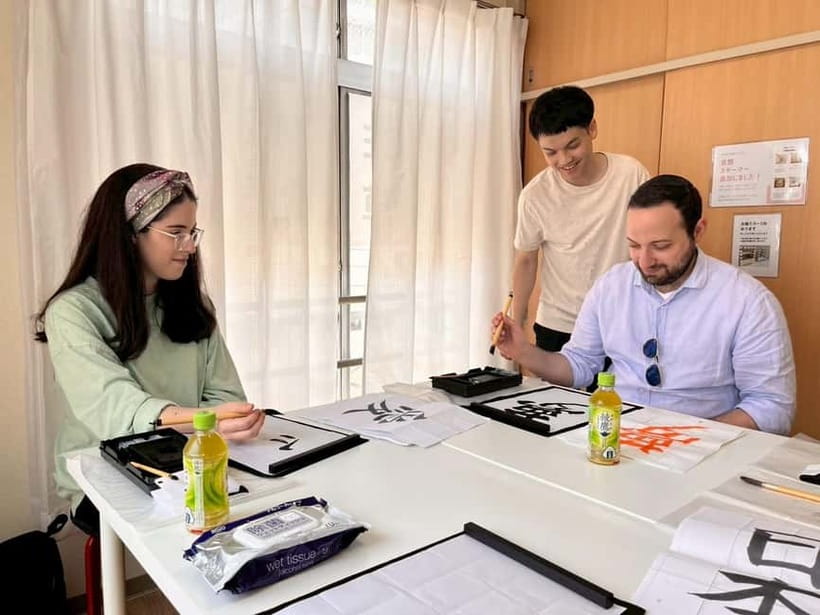
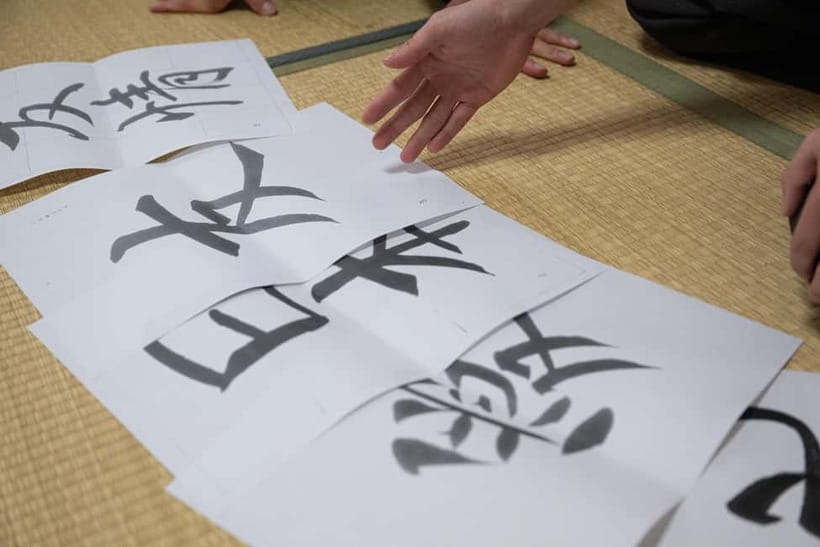
The best calligraphy souvenirs have meaning behind them. This lesson leans into that. You’ll start by looking at sample calligraphy works, each tied to a word or phrase with cultural significance. The instructor explains what those words mean clearly in English, so you can choose based on your intent, not just the look of the characters.
You have a real decision to make: do you pick something calm, something aspirational, something practical for daily life? The instructor helps you connect the writing to the meaning. That’s what turns a decorative keepsake into something you’ll actually want on a wall or in a drawer.
If you want your calligraphy to feel like a travel memory, this is a smart route. Instead of choosing a random kanji on the spot, you’re selecting a word that matches how you want to remember Japan.
Practice on 20 sheets: how stroke learning works without overwhelm
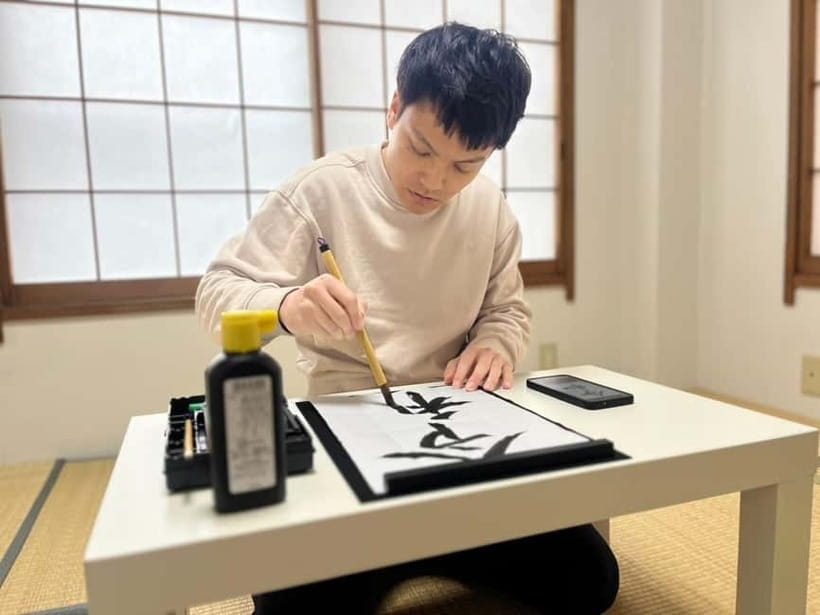
You’ll practice using hanshi (calligraphy paper), and the class includes 20 sheets for each participant. That sounds like a lot, and it’s not just for show. The idea is to give you enough paper to correct your form without fear.
Plan around this rhythm:
- You spend about 30 minutes practicing your chosen word or phrase.
- The instructor demonstrates technique first, then watches your strokes.
- You refine as you go, instead of trying to get everything perfect immediately.
Because it’s a short lesson, the teaching focuses on the strokes that matter most: how to start, how to control pressure, and how to finish with confidence. You’re not expected to become an expert calligrapher by the end. You are expected to get results that look good and feel earned.
One extra benefit: if you’re the type who likes understanding what you’re doing, Shusuke also explains the calligraphy styles you’re working with. A participant described learning about multiple calligraphy approaches and doing kanji-focused exercises, which lines up with the idea that you’ll learn more than just one mechanical copy.
Your souvenir choice: uchiwa, shikishi, or kakemono
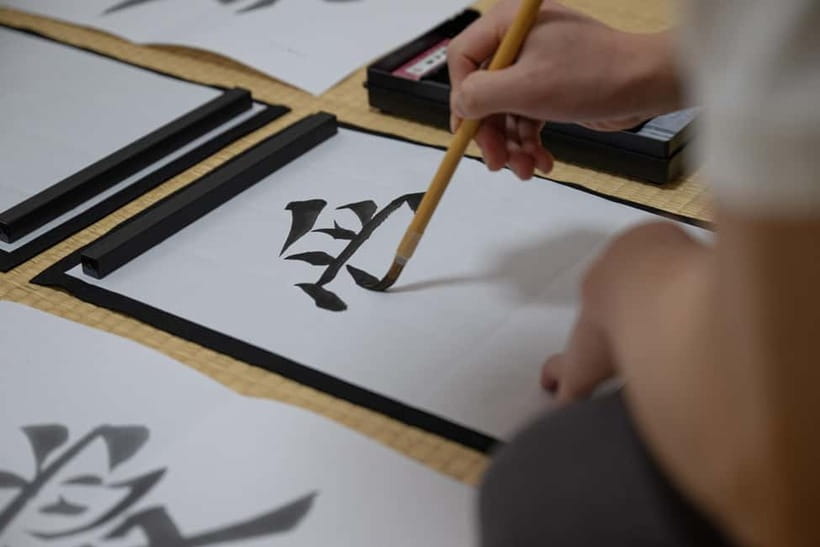
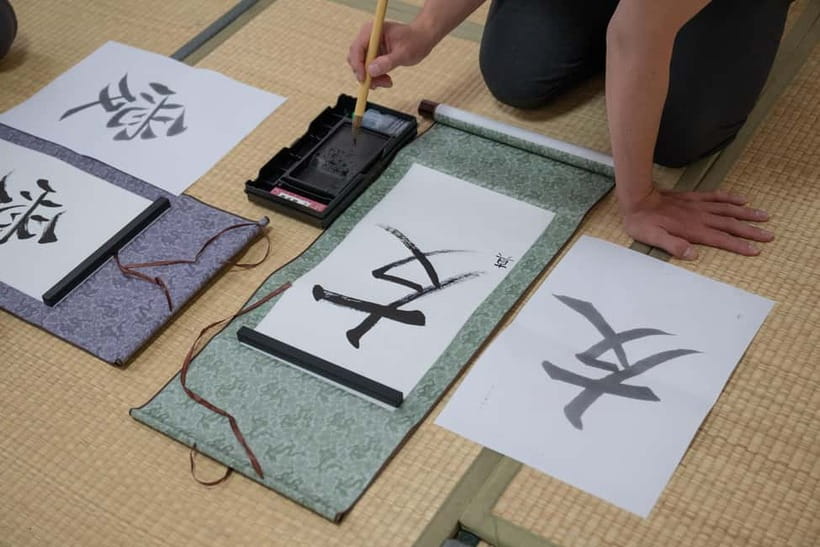
After you practice, you transfer your mastered phrase onto your chosen souvenir. You get to select one of three:
- Uchiwa: a traditional fan
- Shikishi: a decorative board
- Kakemono: a hanging scroll
Here’s how to choose fast, without overthinking it.
If you want something useful day-to-day, the uchiwa fan is practical. In Japan it makes sense year-round, especially when the weather gets hot. It also works well as a gift because it’s interactive—you can actually use it.
If you want something that feels like wall decor (and displays well even if you don’t frame it), shikishi is a great pick. It tends to look neat and intentional as a finished piece.
If you want the most traditional, dramatic presentation, go with kakemono. A hanging scroll has that museum feel, and it’s the one you’ll probably take out when you want to show people what you made in Asakusa.
In any case, the point is the same: your calligraphy becomes an object with a purpose. That’s a strong value feature for a $45 lesson because you’re not leaving with just paper practice—you leave with something meant to last.
Readers also shortlisted these Tokyo bookings:
- Sushi Making Tokyo Roll and Authentic Japanese Sushi Class★ 5.0 · 3,971 reviews
- Tokyo: Roll and Authentic Sushi Making Class in Asakusa★ 4.9 · 1,957 reviews
- Tokyo Shinjuku Chopsticks Making Class★ 5.0 · 1,763 reviews
- Tokyo: Sushi Making Class in a Happi Coat near a Famous Spot★ 4.9 · 1,377 reviews
- Chopstick Making Workshop in Ginza★ 4.8 · 1,366 reviews
The photo moment: a tiny add-on with real value
Calligraphy is visual, so documenting the finished piece is smart. A commemorative photo is included, and Shusuke is also known for taking plenty of pictures during the session.
That matters because your strokes will look slightly different each try. Seeing your final balance in a photo helps you remember the exact look you achieved. It’s also useful if you want to recreate your favorite version later at home.
English meanings plus Japanese instruction: how to use the language gap
One of the quiet advantages here is that you’re not forced to guess meaning. The instructor explains the word choices in English, which is crucial if you don’t read Japanese characters fluently. You get to connect the written form to the concept.
Then you learn technique through demonstration and hands-on correction in Japanese and English. That bilingual approach reduces frustration. You can focus on the physical skill—brush control and stroke timing—without losing the meaning of what you’re writing.
If you’re worried about language, don’t. The class is built for English-speaking visitors. And if you speak some Japanese already, you’ll likely enjoy the extra clarity when the instructor confirms technique terms.
Price and value: is $45 in Asakusa a good deal?
$45 for a 1-hour Japanese calligraphy lesson with a certified instructor, small group size, 20 sheets of hanshi, a completed souvenir, and a commemorative photo is generally strong value.
Here’s why that price makes sense:
- Materials are included: you’re practicing on multiple sheets, not just one scrap
- Instruction is real: you’re taught by someone certified at 3rd Dan and with 10+ years teaching
- You leave with something finished: fan, board, or scroll isn’t a token worksheet
- Limited group size: max 4 means you can actually get corrections
The only cost consideration is time. If you only have a few hours in Asakusa, this fits well. If you want a deeper, longer training path, you might feel the one-hour limit and want a follow-up workshop. But for a first taste of calligraphy that still produces a meaningful keepsake, $45 feels fair.
Who should book this calligraphy lesson (and who might skip it)
This lesson is a great fit if you:
- want an authentic souvenir you made, not one you bought
- like activities where meaning matters, not just aesthetics
- enjoy small, calm settings with one instructor focused on a few people
- want instruction in English while still getting authentic Japanese technique
You might skip it if:
- you’re expecting multiple finished pieces in one session
- you need a long class format to learn stroke control from scratch without pressure
- you’re mostly after a quick photo stop rather than learning a craft
For most people doing a Tokyo trip with a couple of cultural experiences, this is the kind of “short class, big memory” activity that works.
Quick tips to get better results during your hour
You’ll get the most out of the lesson if you show up with a mindset for correction. Calligraphy rewards small adjustments, not raw talent.
A few practical ideas:
- Choose a word or phrase you actually care about. You’ll pay more attention when the meaning matters to you.
- Don’t try to make every stroke perfect on the first try. Use the extra hanshi sheets for refining.
- Watch Shusuke’s demonstrations closely, especially how he starts and ends strokes. Those moments often make the biggest visual difference.
- Ask questions while you practice. With only a small group, it’s easier to get guidance fast.
Also, since the meeting point is in Asakusa and the exact room details are shared by email after you reserve, keep an eye on your inbox so you can arrive relaxed instead of rushing.
Should you book this Japanese calligraphy lesson in Asakusa?
Yes—if you want a meaningful, hands-on Tokyo activity that ends with a real souvenir, not just a worksheet. The standout strengths are the small-group setting, Shusuke’s certified 10+ years of teaching, and the fact that you create your own piece after practicing on 20 sheets.
Book it if your travel style is about doing one thoughtful thing well during your day. It’s also a great choice for couples, friends, or solo travelers who like a calm pace and don’t want a whole afternoon commitment.
If you’re expecting a long training journey or multiple finished works, consider pairing this with another craft experience later. But for a first calligraphy lesson with lasting results, this is an easy yes.
FAQ
Where is the meeting point for the calligraphy lesson?
The lesson takes place in a rental room in Asakusa, in Honshu, Japan. The specific address and meeting point details are shared by email after you make a reservation.
How long is the Japanese calligraphy lesson?
The duration is 1 hour.
Is the lesson taught in English?
Yes. The instruction is available in English and Japanese.
What do I get to practice with during the class?
You receive 20 sheets of hanshi (calligraphy paper) for practice.
What souvenir can I make?
You can choose one souvenir type: uchiwa (fan), shikishi (decorative board), or kakemono (hanging scroll).
Can I reserve without paying right away, and can I cancel?
Yes. You can reserve now and pay later. There is also free cancellation up to 24 hours in advance for a full refund.
More Workshops in Tokyo
- Sushi Making Tokyo Roll and Authentic Japanese Sushi Class
★ 5.0 · 3,971 reviews - Tokyo: Roll and Authentic Sushi Making Class in Asakusa
★ 4.9 · 1,957 reviews - Tokyo Shinjuku Chopsticks Making Class
★ 5.0 · 1,763 reviews - Tokyo: Sushi Making Class in a Happi Coat near a Famous Spot
★ 4.9 · 1,377 reviews - Chopstick Making Workshop in Ginza
★ 4.8 · 1,366 reviews
More Tour Reviews in Tokyo
- Mt Fuji and Hakone 1-Day Bus Tour Return by Bullet Train
★ 5.0 · 26,383 reviews - 1-Day Tokyo Bus Tour
★ 5.0 · 14,250 reviews - Tokyo: teamLab Planets TOKYO Digital Art Museum Entry Ticket
★ 4.6 · 9,779 reviews - Mt Fuji & Hakone Cruise, Drum Show Bullet Train 1 Day from Tokyo
★ 4.0 · 7,413 reviews - Tokyo: Shinjuku Food Tour (13 Dishes at 4 Local Eateries)
★ 5.0 · 6,603 reviews
More Artisan Workshops in Tokyo
- Tokyo Shinjuku Chopsticks Making Class
★ 5.0 · 1,763 reviews - Chopstick Making Workshop in Ginza
★ 4.8 · 1,366 reviews - Kintsugi Experience: Art of Golden Joinery in Tokyo
★ 5.0 · 467 reviews - Tokyo Chopstick Making Workshop with Artisan
★ 5.0 · 466 reviews - Tokyo: Shinjuku Chopstick Making Class
★ 4.9 · 440 reviews
Latest Tokyo reviews off our desk






Craft & Artisan Workshops, compared.
 ★ 5.0Tokyo Shinjuku Chopsticks Making ClassFrom $201,763 reviews
 ★ 4.8Chopstick Making Workshop in GinzaFrom $251,366 reviews
 ★ 5.0Kintsugi Experience: Art of Golden Joinery in TokyoFrom $59467 reviews
 ★ 5.0Tokyo Chopstick Making Workshop with ArtisanFrom $26466 reviews
 ★ 5.0Authentic Pure Gold Kintsugi Workshop with Master Taku in TokyoFrom $142217 reviews
 ★ 5.0Calligraphy on Kanji Fan & Scroll with DrinkFrom $53210 reviews
Browse the lists this tour appears in