
Karaage in a real Tokyo home kitchen. This hands-on workshop led by Yumiko Mizutani, supported by her daughter Yuri, is a small-group way to learn everyday Japanese dishes in French, not just watch a demo. I especially like that you cook a focused menu (karaage, miso soup, and rice/onigiri) and leave with recipes designed to be easy to remake with France-friendly ingredients.
One possible drawback: the house has cats, even though they’re kept away during cooking, and the activity isn’t suitable for people with animal allergies.
In This Review
- Key things to know before you cook
- Entering a Tokyo home kitchen: the small-group format in French
- What you’ll make: karaage, miso soup, teriyaki salmon, and onigiri
- Why karaage and miso soup are great “learners” for home cooks
- The French-language teaching approach that keeps you cooking, not waiting
- Plating with Japanese ceramics and tasting in a warm home atmosphere
- Easy ingredients you can find in France: the “repeat at home” payoff
- What’s included (and what’s not) so you can pack light
- Price and value: is $89 fair for a 150-minute Japanese cooking session?
- Who should book this workshop (and who should skip it)
- Should you book this Tokyo Japanese cooking class?
- FAQ
- What dishes are included in the class menu?
- How long is the cooking class?
- Where do I meet the instructor?
- What language is the workshop taught in?
- Is the group size small?
- Are vegetarian menus available?
- What is included with the price?
- Are cats present in the home?
- Can I cancel if my plans change?
Key things to know before you cook
- Up to 3 people means you get real help, not just a handout.
- French-language workshop with an assistant support, plus Yuri helps communication.
- Menu that you’ll actually eat at home: karaage, miso soup with pork and vegetables, and rice or onigiri.
- Ingredients you can find in France, so the learning sticks after your trip.
- Japanese ceramics for plating, plus a seasonal tea at the end of the meal.
- Cats in the house, and people with animal allergies or food allergies shouldn’t book.
Entering a Tokyo home kitchen: the small-group format in French
Tokyo cooking classes often fall into two buckets: big tourist groups where you chop quickly and forget everything, or pricey private sessions where you still don’t know what to do with the knowledge afterward. This one hits a sweet spot: a max-3 workshop that stays personal and practical, with a real home setting.
The class runs 150 minutes, and it’s conducted in French. An assistant supports communication in French during the workshop, and Yuri is there alongside her mom to help you understand and participate. That matters, because cooking is not just about knowing what goes where. It’s about timing, texture, and small decisions that you only catch when someone can correct what you’re doing in the moment.
You meet at a very specific spot: in front of the McDonald’s just outside the East exit of Futako-Tamagawa station (Den-en-toshi and Ōimachi lines). If you’re using transit, plan to arrive a few minutes early so you’re not stressed when you first find the place. From there, you’re going to a home kitchen where the vibe is warm and relaxed.
Readers also shortlisted these Tokyo bookings:
- Ramen & Gyoza Cooking Class in Tokyo with Local Supermarket Visit
★ 5.0 · 823 reviews - Tokyo: Easy Ramen Cooking Experience in Kabukicho, Shinjuku
★ 4.6 · 321 reviews - Ramen and Sushi Cooking Class with Sake Pairing Set in Tokyo
★ 5.0 · 291 reviews - Tokyo: Wagyu and 7 Japanese Dishes Cooking Class
★ 4.9 · 273 reviews
What you’ll make: karaage, miso soup, teriyaki salmon, and onigiri
This class isn’t a buffet of Japanese food concepts. It’s a clear, teachable menu that families actually cook and eat. The core is a practical set of dishes, including karaage, plus soup and rice.
Here’s what you can expect to cook:
- Main course: Karaage (Japanese fried chicken), built as a hands-on cooking session rather than a lecture.
- Side dishes: Teriyaki salmon and sesame vegetables (you’ll learn how to bring those flavors together without complicated techniques).
- Soup: Miso soup with pork and vegetables.
- Rice or Onigiri: you’ll make rice-based comfort food in a Japanese everyday style.
There’s also a note for flexibility: vegetarian menus are available if you message in advance so the menu can be adapted. That’s a big deal for value and enjoyment. Nobody wants to show up ready to cook and then feel like they’re stuck watching.
The menu is intentionally varied—crispy fried chicken, savory teriyaki-style fish, quick sesame vegetables, warm miso soup, and either rice or onigiri. That variety helps you learn different cooking approaches within one class, while still staying focused enough that you can reproduce it later.
Why karaage and miso soup are great “learners” for home cooks
I like this menu because it teaches skills that transfer. Karaage shows you how to get flavor and crunch in a fried dish without making the whole evening a research project. You’re working with techniques you can understand fast: prep, seasoning, frying, and serving.
Then you balance it with soup—miso soup with pork and vegetables—which is the kind of dish that makes a meal feel complete. It’s also a great contrast to fried foods: warm, comforting, and not dependent on fancy ingredients. In the feedback from the class, people specifically call out how the soup delivers the umami side of Japanese flavor in a way that’s easy to learn.
Finally, rice/onigiri is the practical glue. Once you know how to handle the rice, you can turn leftovers into lunches or build simple meals for friends. That’s the hidden value of a class like this: you don’t just learn recipes, you learn how to assemble a Japanese-style plate.
The French-language teaching approach that keeps you cooking, not waiting
Some classes in Japan are “educational,” but only in theory. You’re mostly watching. This one is built around you doing the work throughout the session, with clear explanations and ongoing support.
The structure is straightforward:
- You’re welcomed into the kitchen setting.
- You cook together as the menu progresses.
- You get help during the steps, not just at the start.
- You taste what you made as a full meal.
What makes that work in a French class is the added layer of communication support. Yuri, who has lived in France, helps bridge meaning and cooking instructions in a way that keeps the rhythm going. In the participant notes, people mention how they felt comfortable right away and that the explanations were easy to follow.
If you’re a beginner, that’s the point. This isn’t trying to turn you into a chef in 150 minutes. It’s teaching you the fundamentals in a way you can repeat later.
Plating with Japanese ceramics and tasting in a warm home atmosphere
After cooking, you eat what you made in a setting that feels deliberately thoughtful. You’re going to plate the dishes using Japanese ceramics, which sounds decorative until you realize what it does for the experience: it makes the meal feel like a real Japanese home table, not a classroom mess.
You’ll also get drinks during the class:
- a welcome tea when you arrive,
- and a free drink (tea) included in the experience.
At the end, you’ll be served a seasonal tea chosen by the hostess.
This tea part is more than a sweet finish. It marks the shift from cooking mode into eating mode, and it’s a gentle way to slow down. Even if you’re a fast worker in the kitchen, you’ll end up sitting with your food like you would at home.
One more real-life detail to know: there are cats in the house, and they’re kept away during the cooking session. The activity also isn’t suitable for people with animal allergies, so take that seriously. If you don’t have allergies, you’ll likely just see it as a quirky normal-home detail in Tokyo.
Readers also shortlisted these Tokyo bookings:
- Sushi Making Tokyo Roll and Authentic Japanese Sushi Class★ 5.0 · 3,971 reviews
- Tokyo: Roll and Authentic Sushi Making Class in Asakusa★ 4.9 · 1,957 reviews
- Tokyo Shinjuku Chopsticks Making Class★ 5.0 · 1,763 reviews
- Tokyo: Sushi Making Class in a Happi Coat near a Famous Spot★ 4.9 · 1,377 reviews
- Chopstick Making Workshop in Ginza★ 4.8 · 1,366 reviews
Easy ingredients you can find in France: the “repeat at home” payoff
I love classes that teach you recipes you can actually recreate on your own. This one explicitly aims for that. The dishes use ingredients that are described as easy to find in France, and that is what keeps the value high after the trip ends.
Here’s what that means for you in practical terms:
- Your grocery list won’t be a scavenger hunt.
- You can use the provided recipes as a real guide, not a souvenir.
- You can keep cooking Japanese meals for friends without needing specialty stores every time.
In the notes from the class, people also highlight that the recipes are easy to make at home, with clear instructions and participation throughout the activity. That combination—easy ingredients plus teaching that sticks—makes a bigger difference than it might sound at first.
If you want a “skills trip” instead of a “photo trip,” this fits.
What’s included (and what’s not) so you can pack light
This workshop is designed so you don’t arrive with gear problems. Included items:
- Meals (the food you cook and eat)
- Recipe (so you can recreate the dishes later)
- All ingredients and utensils
- Apron loan
- Welcome tea
- Free drink (tea)
- Welcome at the meeting point
Extra comfort details: aprons, towels, and slippers are provided, so you can come as you are and just cook.
Not included are the things you’d expect: your own transport, and anything personal beyond basic clothing. Also, smoking isn’t allowed, including smoking indoors.
If you’re planning a trip that’s already packed with neighborhoods and trains, this kind of “show up and cook” setup is worth its weight in time.
Price and value: is $89 fair for a 150-minute Japanese cooking session?
At $89 per person for 150 minutes, this is priced like a small, high-touch experience rather than a mass-market workshop. And that’s the key to whether it feels like a bargain or a splurge.
You’re paying for a few things that usually cost more when you buy them separately:
- a small-group class (max 3), which is rare at this time length,
- a French-language teaching setup with translation support,
- all ingredients and utensils,
- the meal itself,
- recipes to take home,
- and extra touches like tea service and plating in Japanese ceramics.
If you’ve ever taken a food tour where the “experience” is mostly tasting tiny samples and moving on, this is different. You’re doing the work and then eating a real meal you made. That’s the value angle: you leave with both knowledge and food, plus something you can repeat.
Who should book this workshop (and who should skip it)
This class is especially suited for:
- beginner cooks who want structured guidance,
- people who like Japanese food beyond sushi and ramen,
- anyone who wants a more authentic home-style meal experience,
- and solo travelers who want a welcoming, small setting.
It also reads like a great gift idea based on the feedback—people mention it worked well for someone traveling alone the first time and that Yumiko and Yuri were flexible and reassuring with communication.
Skip it if:
- you have animal allergies (cats are in the house),
- you have food allergies (the class is not suitable for people with food allergies),
- or you’re traveling with children under 6.
And remember: smoking isn’t allowed.
Should you book this Tokyo Japanese cooking class?
Book it if you want a Tokyo experience that feels personal, hands-on, and useful after your trip. The menu is smart—karaage, miso soup, teriyaki salmon, sesame vegetables, and rice/onigiri—and the way it’s taught in French with help from Yuri makes it practical, not just cultural.
Don’t book it if you’re dealing with animal or food allergies. Also, if your French is very limited, you’ll still have support, but this class is clearly built around French instruction.
If you’re aiming to eat your way through Tokyo with intention—and bring those flavors back to France—this is an easy yes.
FAQ
What dishes are included in the class menu?
The menu includes karaage (fried chicken), teriyaki salmon, sesame vegetables, miso soup with pork and vegetables, and rice or onigiri.
How long is the cooking class?
The duration is 150 minutes.
Where do I meet the instructor?
Meet in front of the McDonald’s just outside the East exit of Futako-Tamagawa station (Den-en-toshi and Ōimachi lines).
What language is the workshop taught in?
The class is in French. An assistant is present to facilitate communication in French during the experience.
Is the group size small?
Yes. It’s a small-group workshop limited to a maximum of 3 participants.
Are vegetarian menus available?
Vegetarian menus are available, but you need to message in advance so the menu can be adapted.
What is included with the price?
Meals, the recipe, all ingredients and utensils, an apron loan, welcome tea, a free tea drink, and welcome at the meeting point are included.
Are cats present in the home?
Yes, there are cats in the house, but they will be kept away during the cooking session. The experience is not suitable for people with animal allergies.
Can I cancel if my plans change?
Free cancellation is available up to 24 hours in advance for a full refund.
More Workshops in Tokyo
- Sushi Making Tokyo Roll and Authentic Japanese Sushi Class
★ 5.0 · 3,971 reviews - Tokyo: Roll and Authentic Sushi Making Class in Asakusa
★ 4.9 · 1,957 reviews - Tokyo Shinjuku Chopsticks Making Class
★ 5.0 · 1,763 reviews - Tokyo: Sushi Making Class in a Happi Coat near a Famous Spot
★ 4.9 · 1,377 reviews - Chopstick Making Workshop in Ginza
★ 4.8 · 1,366 reviews
More Cooking Classes in Tokyo
- Ramen & Gyoza Cooking Class in Tokyo with Local Supermarket Visit
★ 5.0 · 823 reviews - Tokyo: Easy Ramen Cooking Experience in Kabukicho, Shinjuku
★ 4.6 · 321 reviews - Ramen and Sushi Cooking Class with Sake Pairing Set in Tokyo
★ 5.0 · 291 reviews - Tokyo: Wagyu and 7 Japanese Dishes Cooking Class
★ 4.9 · 273 reviews - Tokyo Washoku 4-hour Cooking Class: From Market to Table
★ 5.0 · 253 reviews
More Tour Reviews in Tokyo
- Mt Fuji and Hakone 1-Day Bus Tour Return by Bullet Train
★ 5.0 · 26,383 reviews - 1-Day Tokyo Bus Tour
★ 5.0 · 14,250 reviews - Tokyo: teamLab Planets TOKYO Digital Art Museum Entry Ticket
★ 4.6 · 9,779 reviews - Mt Fuji & Hakone Cruise, Drum Show Bullet Train 1 Day from Tokyo
★ 4.0 · 7,413 reviews - Tokyo: Shinjuku Food Tour (13 Dishes at 4 Local Eateries)
★ 5.0 · 6,603 reviews
Latest Tokyo reviews off our desk




Cooking Classes, compared.
 ★ 5.0Ramen & Gyoza Cooking Class in Tokyo with Local Supermarket VisitFrom $122823 reviews
 ★ 4.6Easy Ramen Cooking Experience in Kabukicho, ShinjukuFrom $29321 reviews
 ★ 5.0Ramen and Sushi Cooking Class with Sake Pairing Set in TokyoFrom $79291 reviews
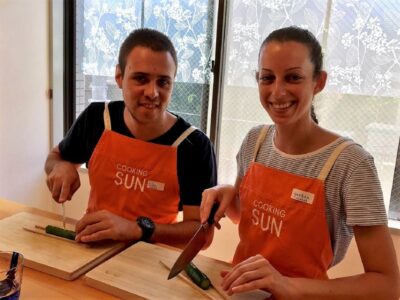 ★ 4.9Wagyu and 7 Japanese Dishes Cooking ClassFrom $67273 reviews
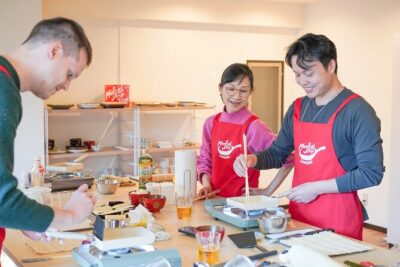 ★ 5.0Tokyo Washoku 4-hour Cooking Class: From Market to TableFrom $79253 reviews
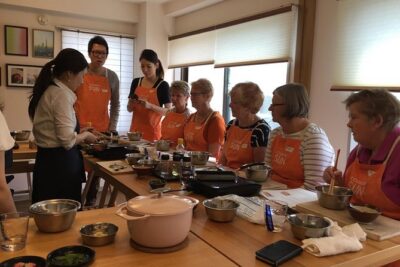 ★ 5.0Small-Group Wagyu Beef and 7 Japanese Dishes Tokyo Cooking ClassFrom $72190 reviews
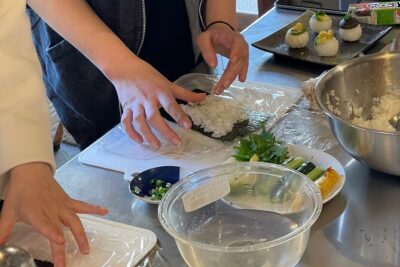 ★ 5.0Private Home Cooking in Yanaka – Local Flavors in a Warm SettingFrom $122173 reviews
 ★ 5.0Tokyo Sushi Making Experience & Japanese Cooking ClassFrom $59150 reviews
Browse the lists this tour appears in